




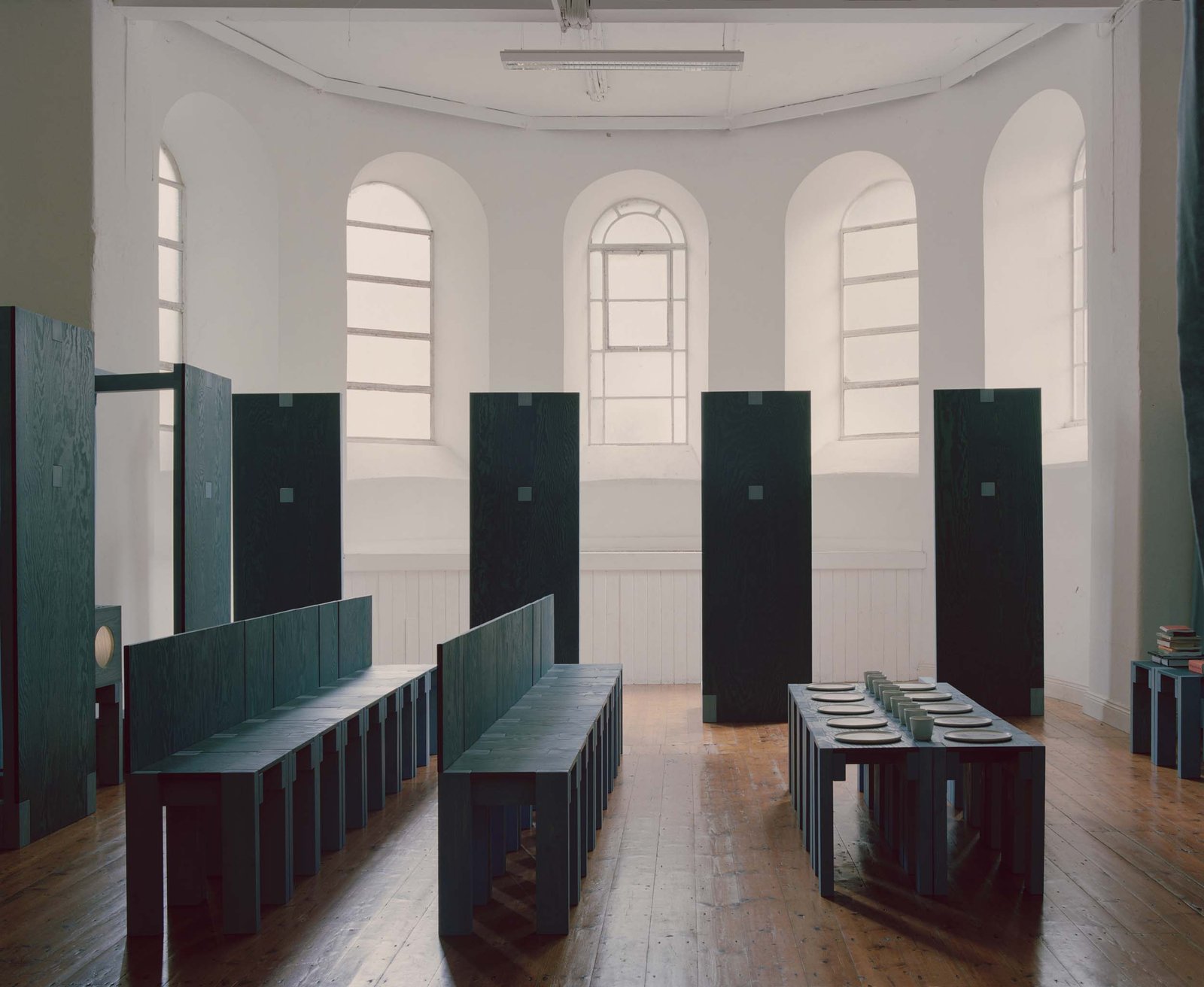
More often than not, a well-considered interior project is for a private space: a luxury residence, a member’s club, or a restaurant with a built-in wait list. It’s rare to see that same diligence and dignity in collective spaces. In an increasingly polarized and digital world, wouldn’t that be significant? TRESTLE, an architecture and research studio in London and Ireland, seems to think so. In a temporary exhibition, settle, the studio imagines a public interior for shifting, open-ended use. First presented in Cork, settle is now on view through September 27 at Festival Printworks Gallery in Galway, Ireland, part of the city’s Architecture At The Edge festival.
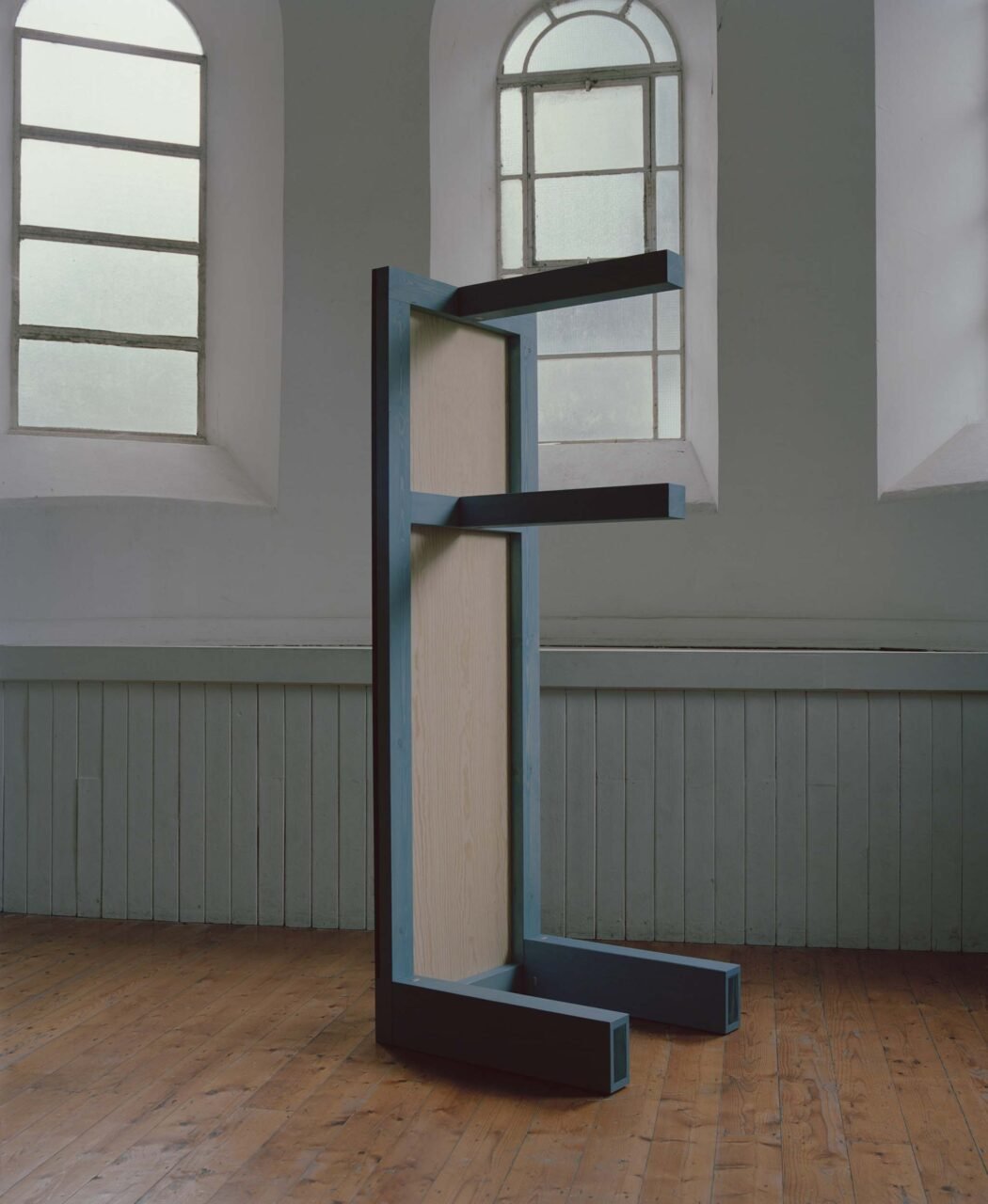
A good public interior is inviting and non-prescriptive. settle revels in this. TRESTLE designed the communal space with custom furnishings, drawn from furniture of Ireland’s rural domestic spaces. The typology, borne from harsh economic realities, is highly adaptable and rarely serves a single function. Fallen tables were hinged to walls and other furniture to double as space dividers. Beds functioned as storage, sleep areas, and seating as needed.
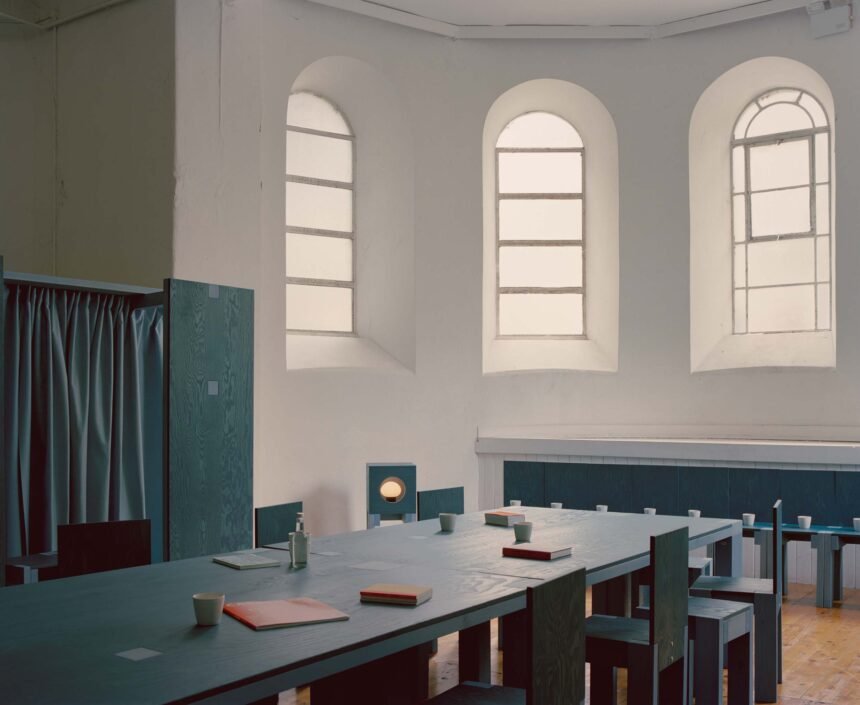
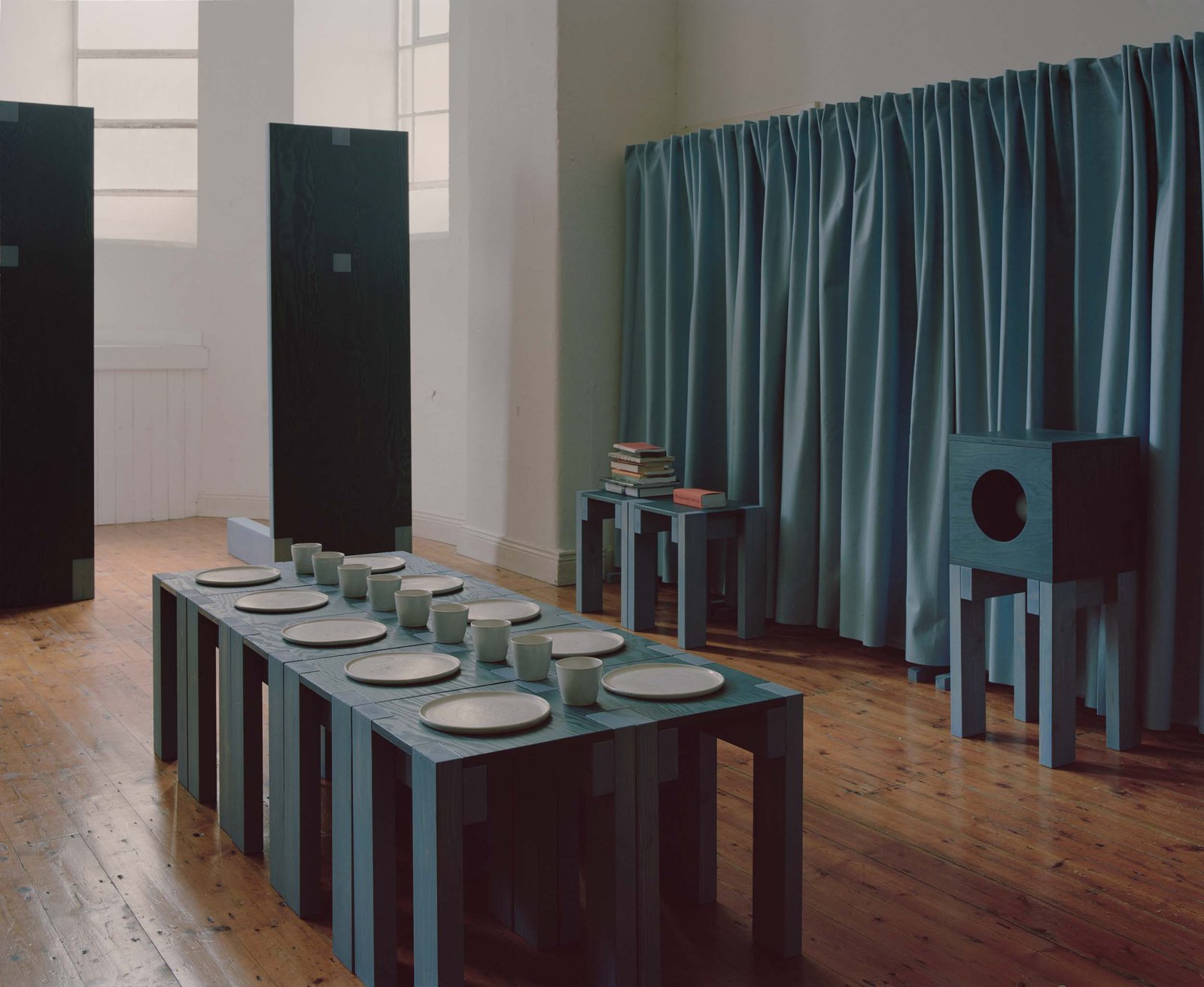
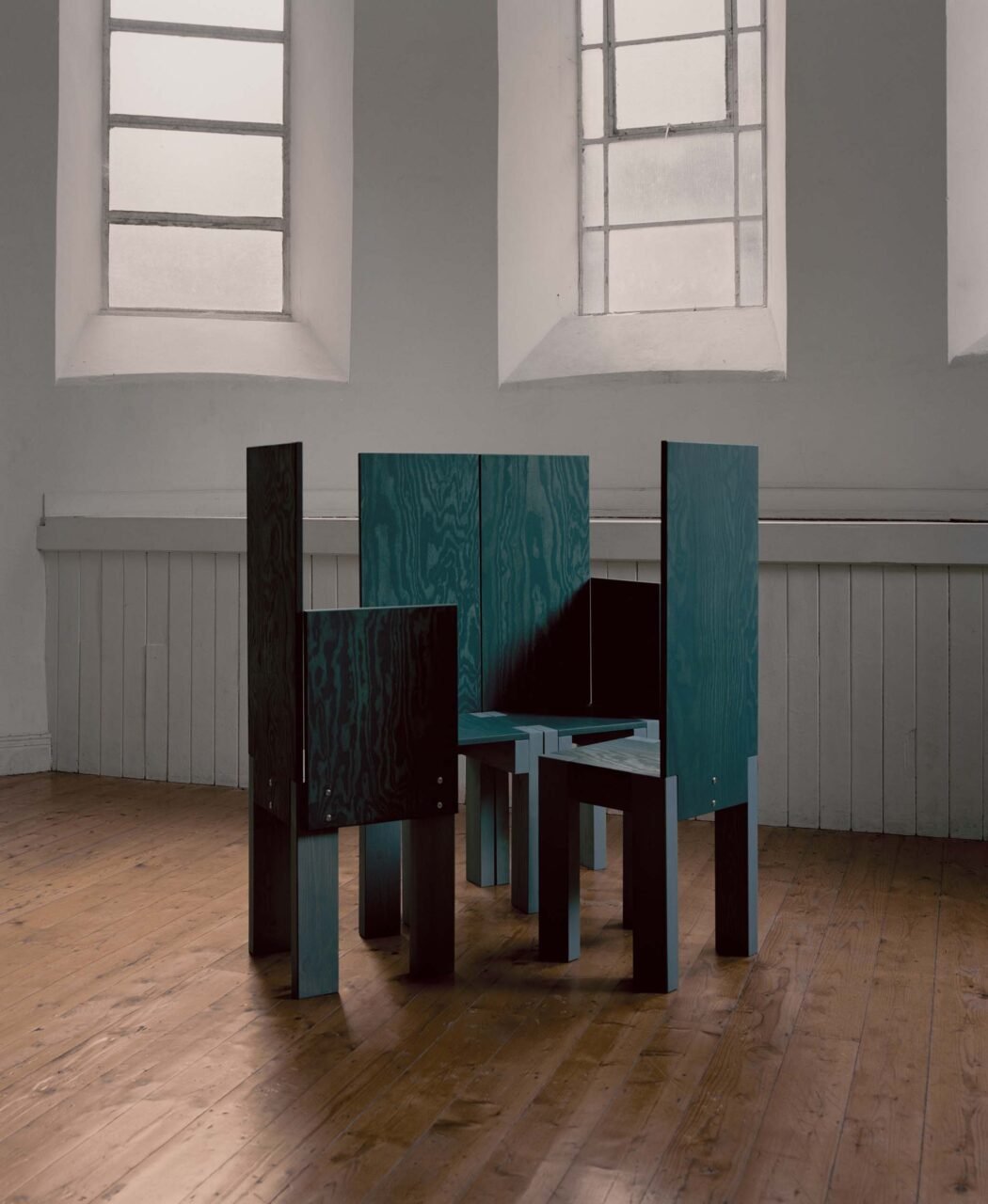
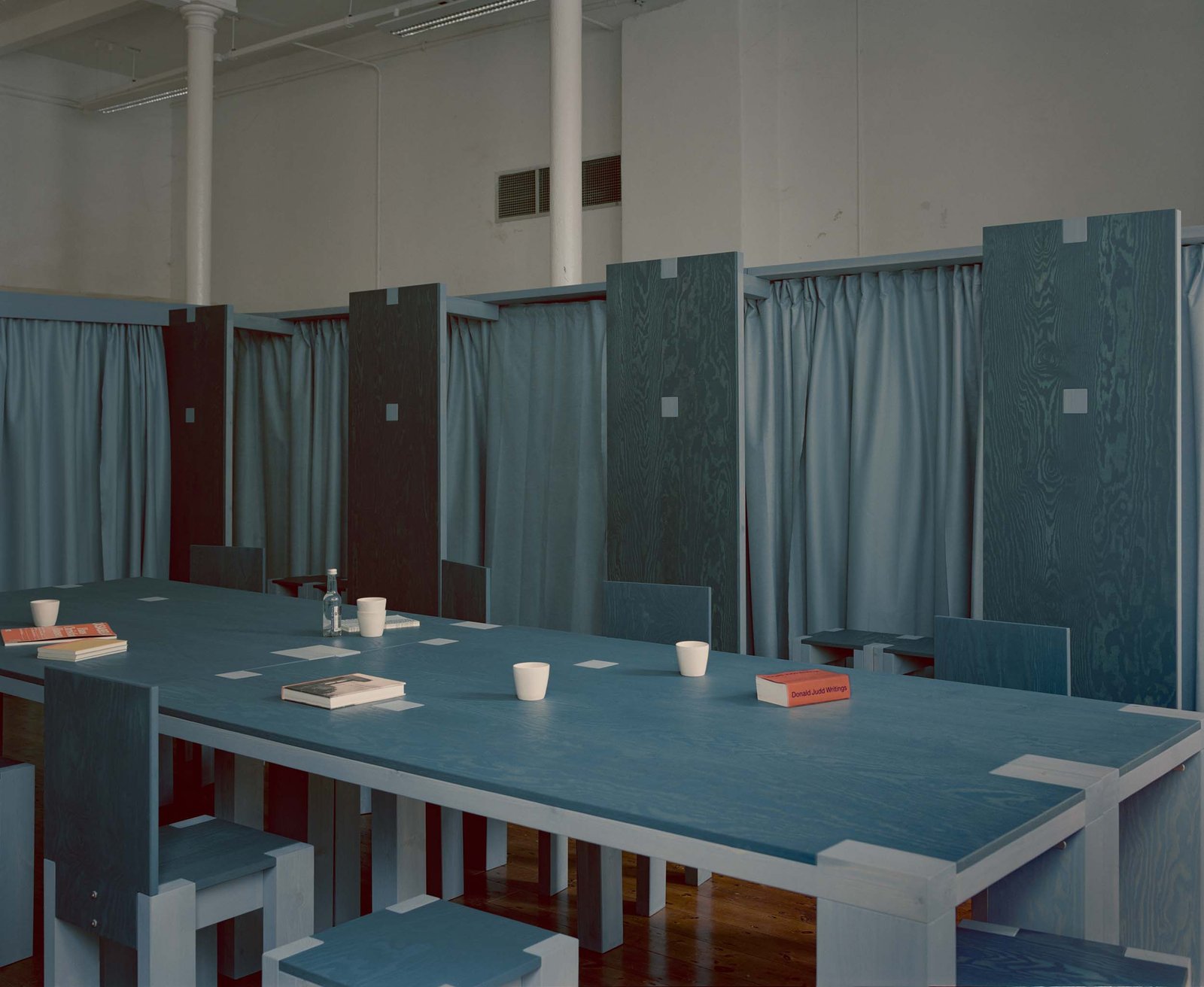
Ireland’s vernacular furniture offers no singular “right” way to use it. Its use here responds to the rigorous flexibility needed for the brief. The installation hosts a variety of programming, much of which was not confirmed before the design process began. TRESTLE’s furniture, fabricated by Stevan Hartung, is a seemingly simple collection that makes up for the ambiguity. It is made of locally sourced and elementally assembled materials. Civic in form, the pieces are upright and linear. Chairs with tall backrests and high panels for armrests link together to create benches, almost like pews. Cut away the back and armrests and you get stools that, when clustered together, create tables. Longer communal tables placed upright act as space dividers.
Everything is clad in blue, including the curtains that enveloped the installation in Cork. The hue was inspired by Richard Sennett’s description of Catherine de Vivonne, Marquise de Rambouillet ’s blue room from the 17th century. The room was a place for her to receive guests, thought to be the model for salons. A coat of blue clads all the furniture, just thin enough to expose the wood’s graining. It renders the pieces legible yet dynamic, what TRESTLE calls a “distinctly Irish sensibility.”
The material honesty at hand is not merely aesthetic; it’s visual shorthand of the manifesto of the exhibition, a call against capitalist individualism and towards collective life. TRESTLE’s rural forms stand in stark contrast to the affluence of furniture design today. Situated freely amongst empty space, settle invites the beauty of public activation and the spontaneous encounters that come along with it.
settle is on view at Festival Printworks Gallery, Market St. through September 27