






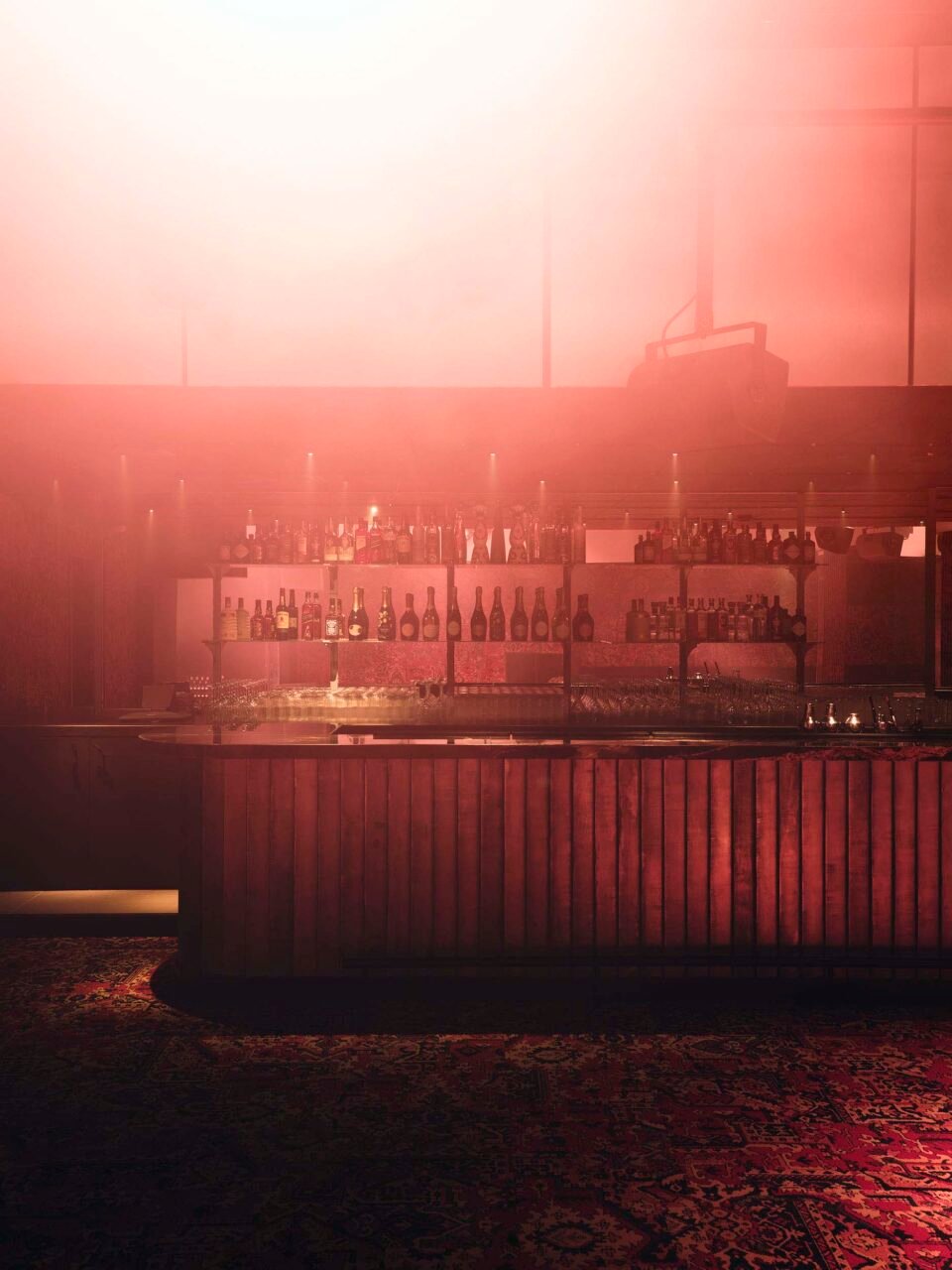
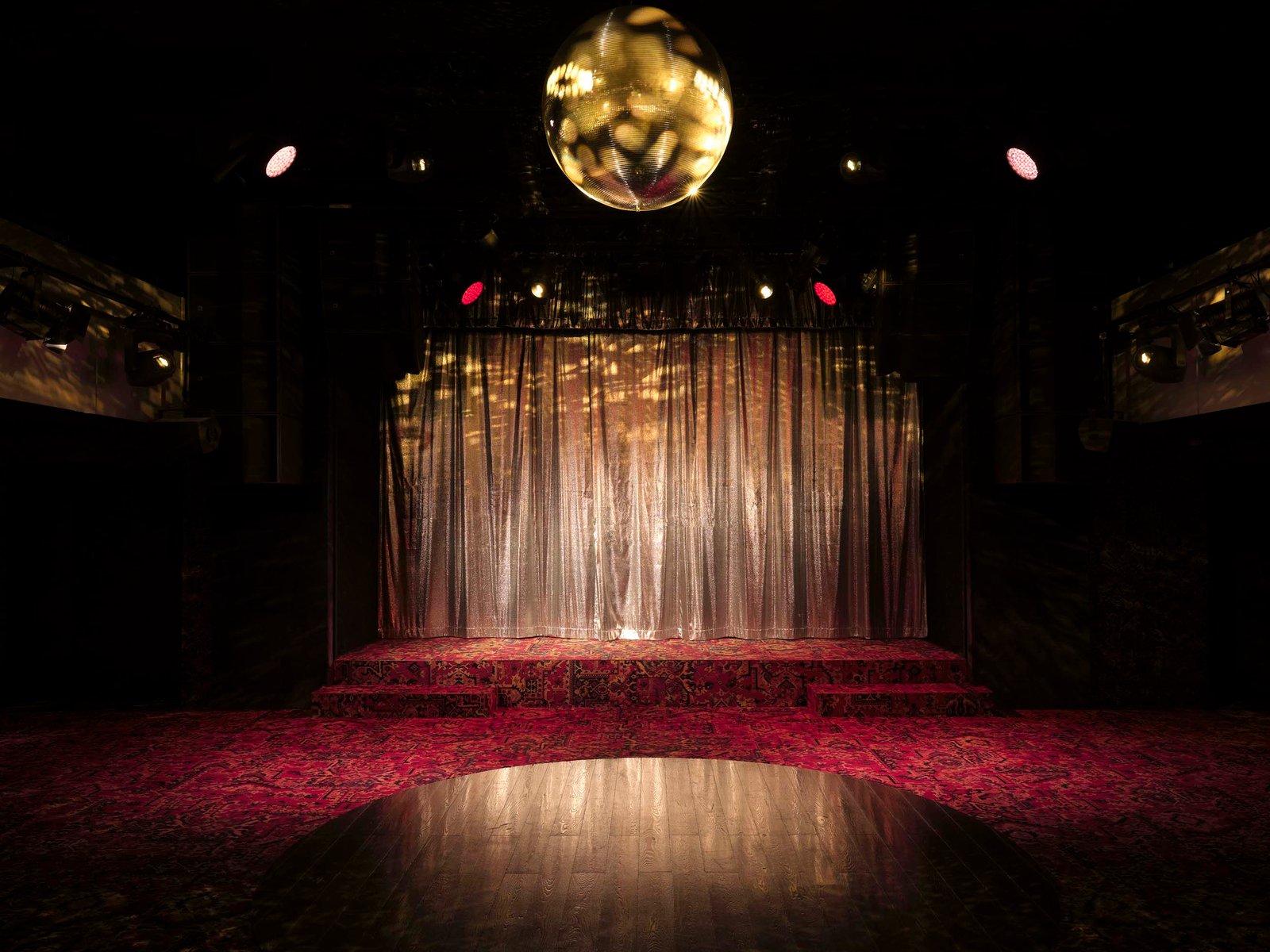
There is nothing quite like the spirit of Pigalle. Formerly Paris’s red-light district, the neighborhood is wedged between Moulin Rouge and rows of famous sex shops. The nightlife venue Bus Palladium, newly renovated by Studio KO, has played a large role in shaping the upper 9th arrondissement—and continues to do so. This past June, Charli XCX and Madonna hosted a Paris Fashion Week afterparty here.
Founded in 1965 as a nightclub by James Arch, then only 22 years old, Bus Palladium was an “anti-private club” whose regulars were a mélange of beatniks, Parisiennes decked out in Courrèges, and artists such as Serge Gainsbourg (who sang about the club in “Qui est in, qui est out”) and Salvador Dalí. For 57 years, the venue drew crowds to Rue Fontaine, making it one of the neighborhood’s most frequented streets.
Bus Palladium closed in 2022, only to reemerge four years later not only as a music venue, but as a five-star hotel with 35 rooms spread across its first and sixth floors. The renovation by Studio KO—the same team behind the Yves Saint Laurent Museum in Marrakech and the renovation of Chateau Marmont in Los Angeles—leaned heavily on the building’s storied past. The project is a love letter to Pigalle’s history.
“This new architecture had to retain an imprint of the original building, so that residents of the neighborhood who had known the Bus Palladium would feel that it had not really changed, and that it was waking up like a sleeping beauty,” shared Karl Fournier, cofounder of Studio KO.
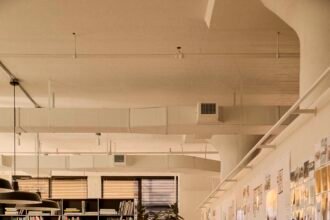
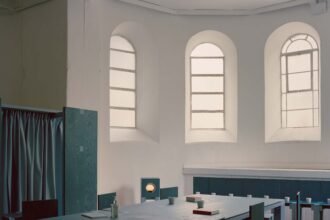
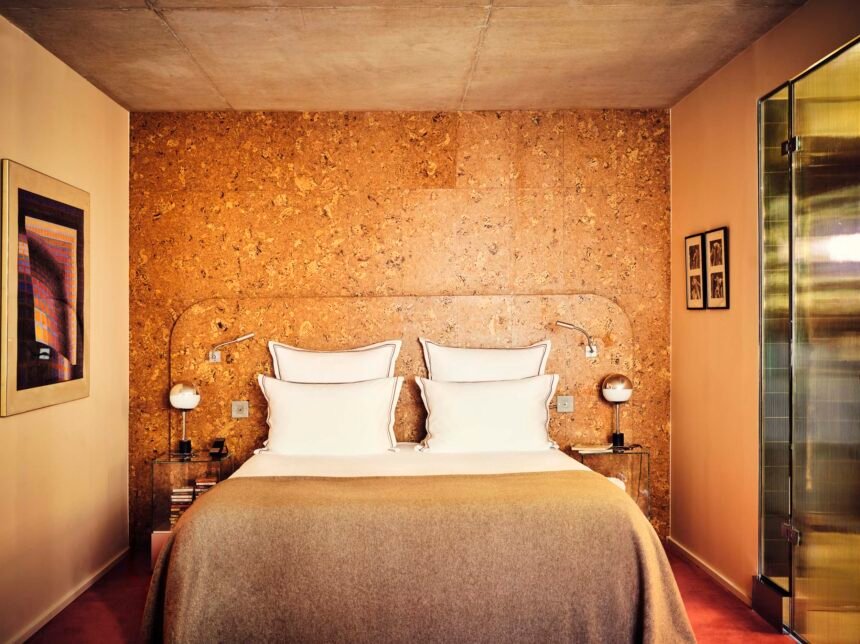
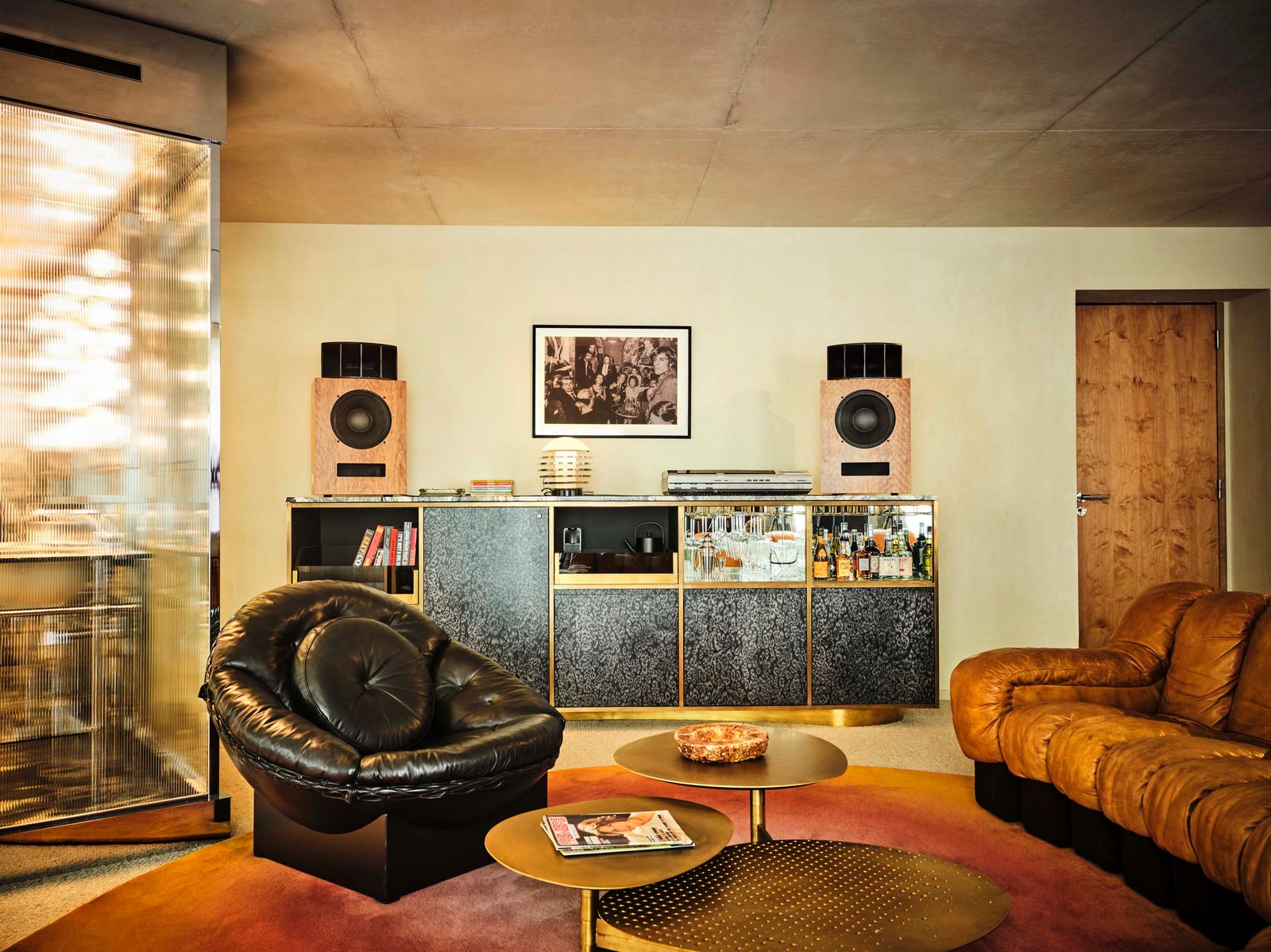
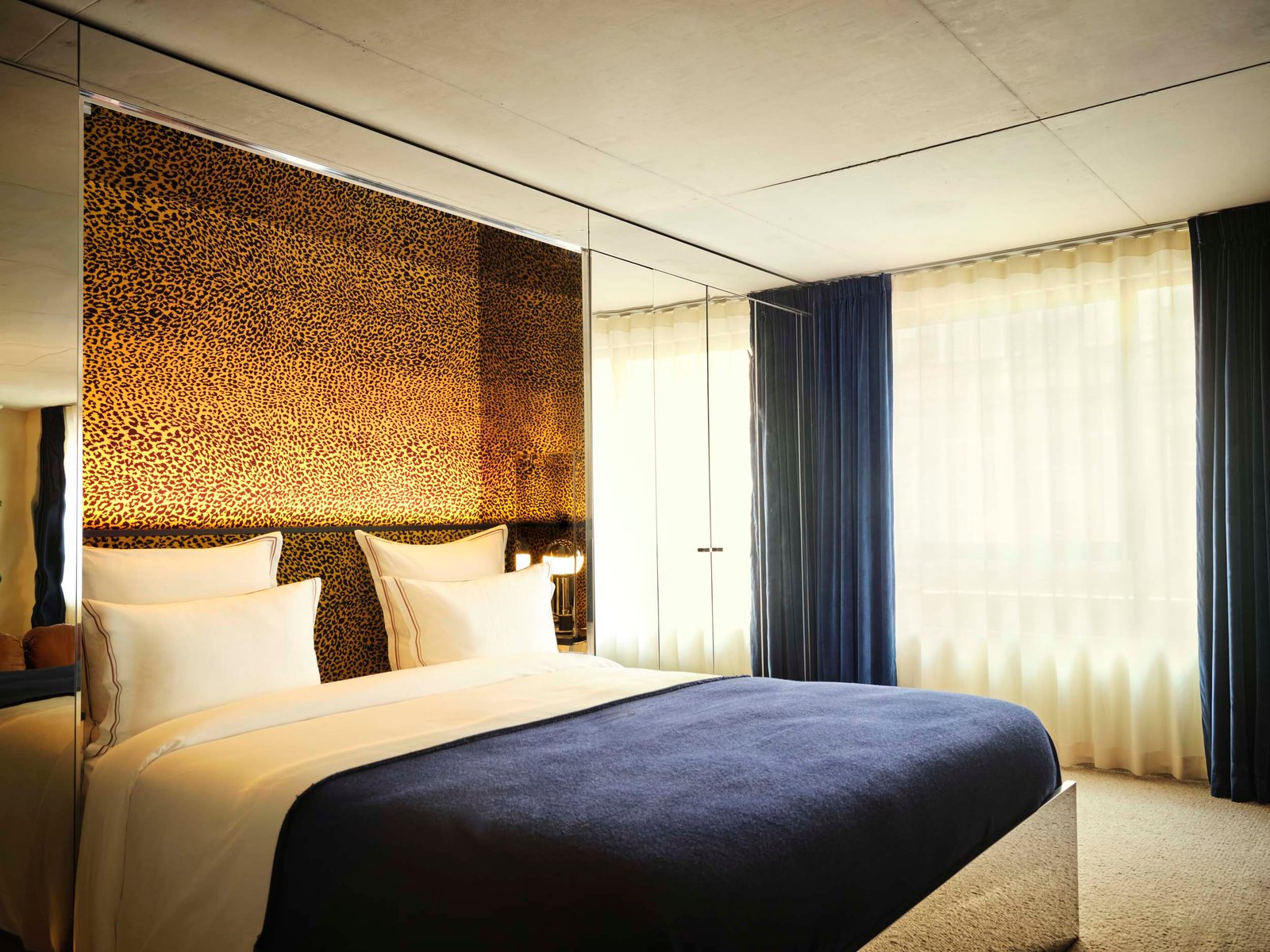
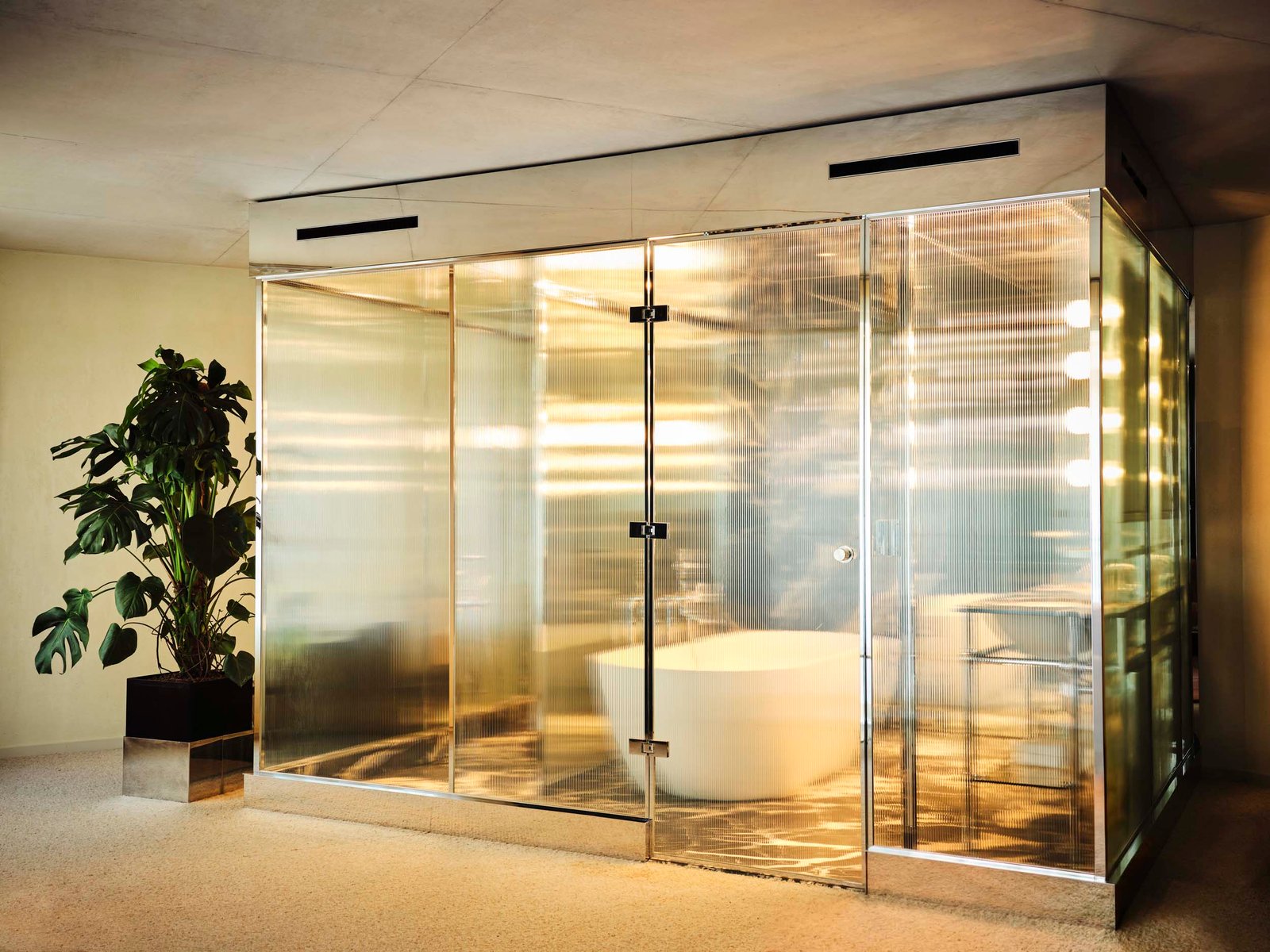
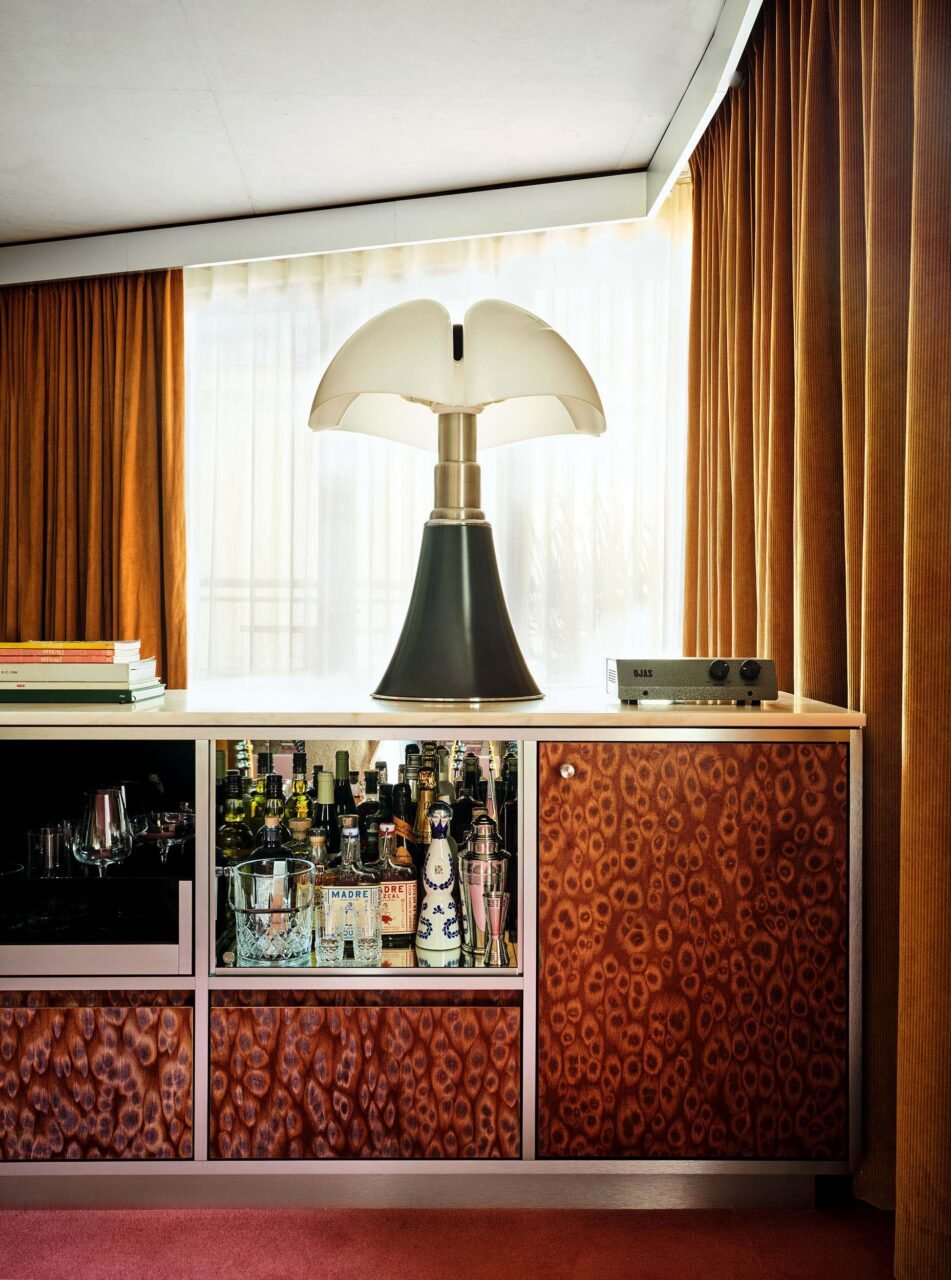
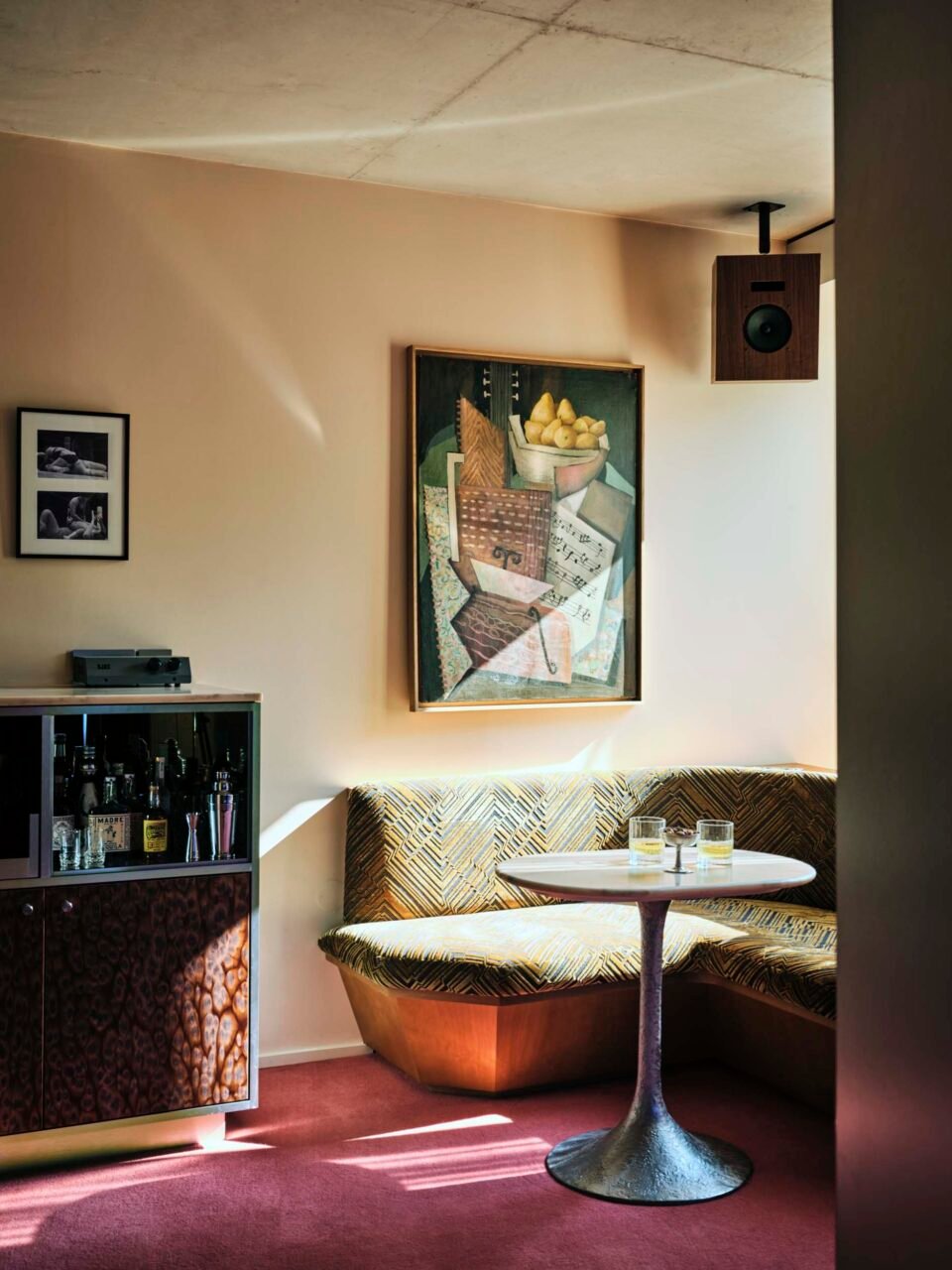
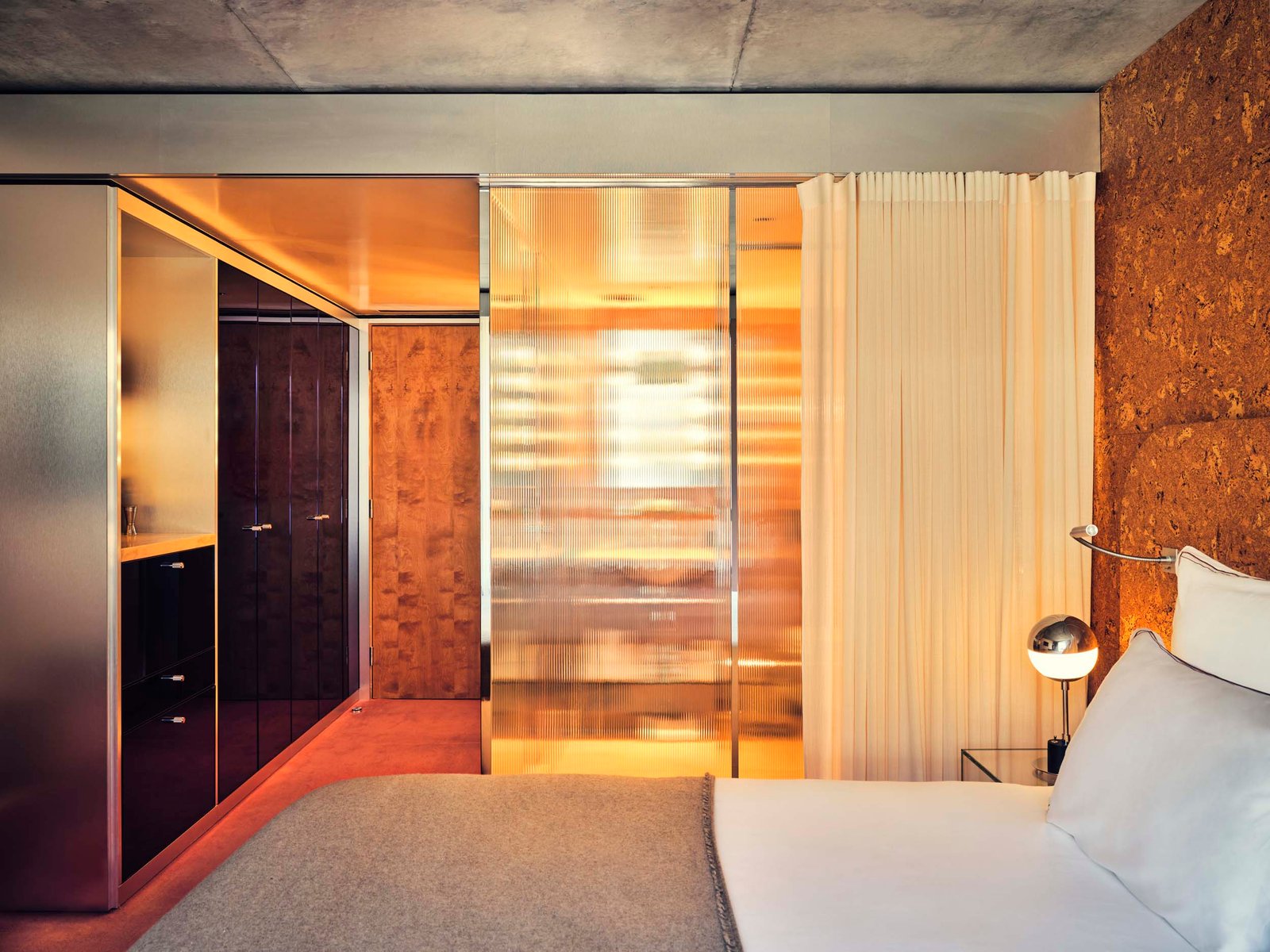
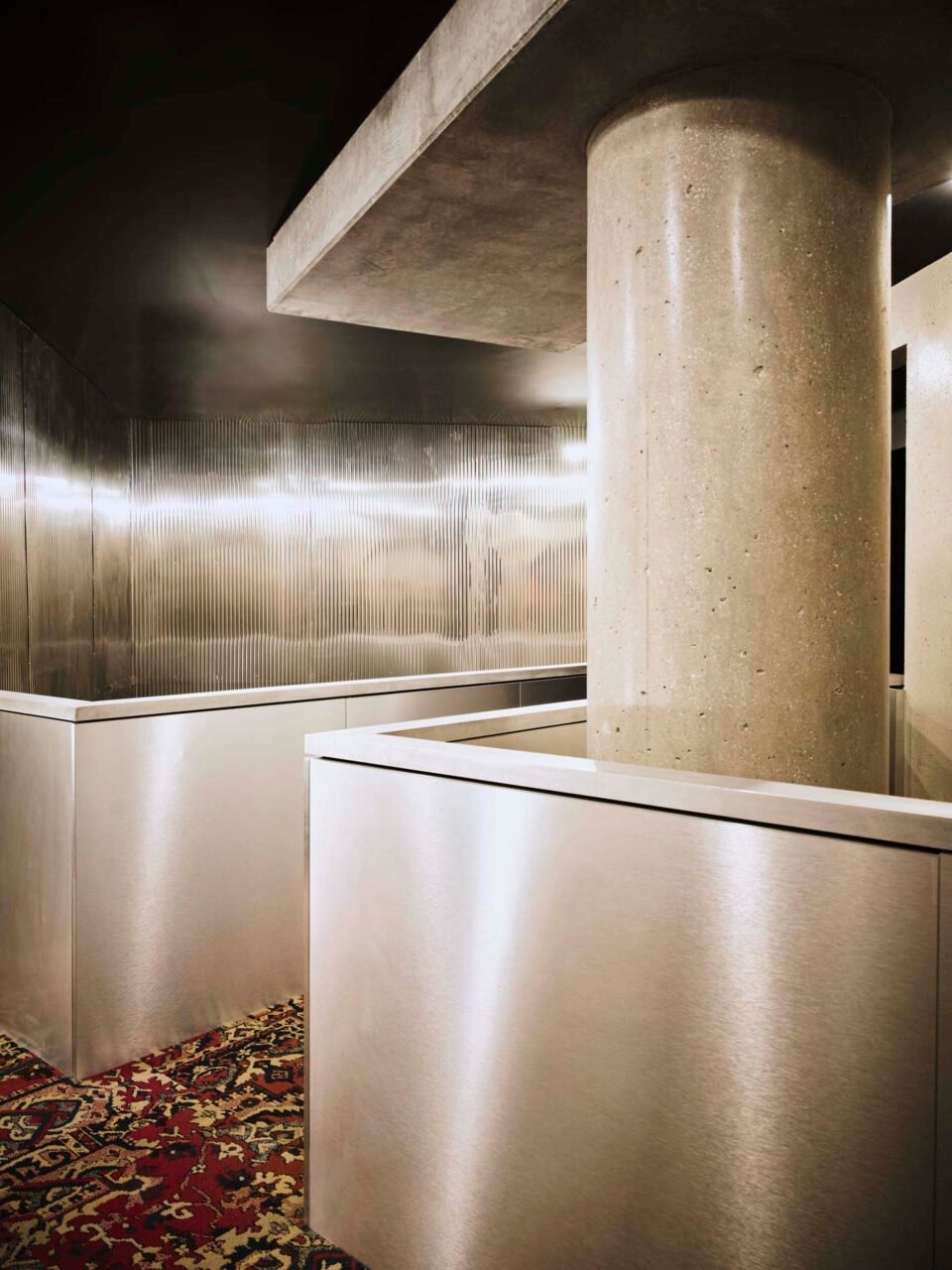
The venue blends modern, minimalist architecture with 1970s nostalgia, which bleeds through in its details. Its Brutalist exterior uses concrete mixed on-site, echoing the sandy tones of Haussmannian-style stones, which allow it to harmonize with the rest of the neighborhood. Inside, the visual tension continues: soft, Ottoman-pattern carpets rub up against concrete surfaces, and raw concrete ceilings juxtaposed cork walls for an enveloping effect. “For us, contrast is not just a visual effect, but a way of making space feel more alive,” Fournier explained.
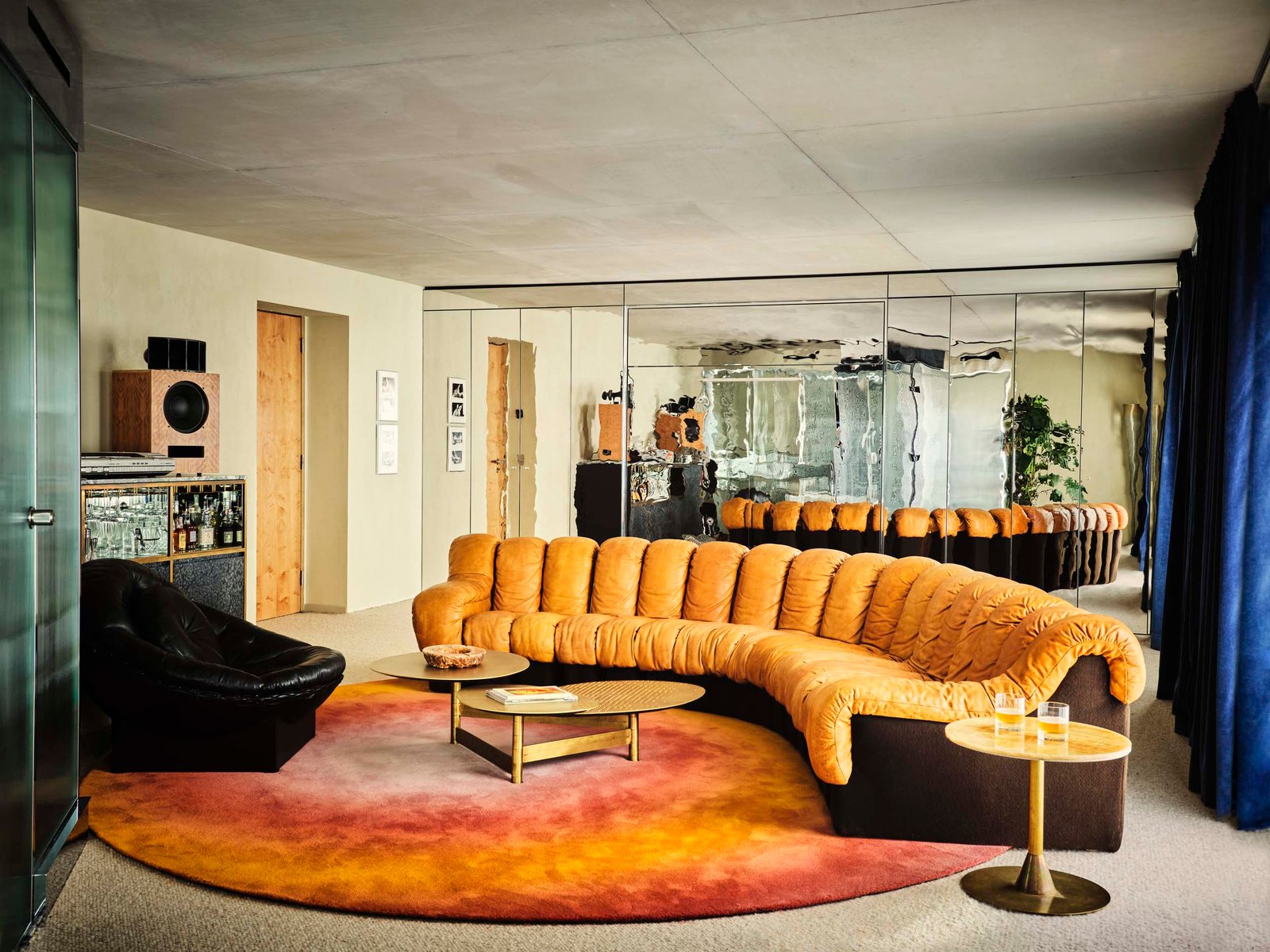
No two rooms are exactly alike. The Dalí Suite, for instance, features a modular DS-600 De Sede sofa. The rest feature powder-pink carpets and bathrooms with inky-blue tiles, fitted with voile curtains that can be drawn or left open, depending on the mood. Even the hardware stays on theme: door handles are microperforated, recalling microphone grilles, and light switches take their shape from vintage amplifiers.
Tables double as spaces for both eating and working, while sophisticated wooden speakers play the hotel’s playlists, curated by the hotel’s artistic director Caroline de Maigret—author, model, and Pigalle local herself. Guests can also use the speakers to listen to whatever’s happening live downstairs. It’s an atmosphere with culture at its heart; the hotel’s biggest “rock suite” even has direct private access to the club.
And how could one write about Bus Palladium without talking about its club? The goal was not simply to revive the nightclub, but to create a space that evokes its history, where music is transmitted instead of merely played. Getting there means descending a steel-lined staircase, part of the 46 feet (14 meters) Studio KO excavated underground to expand the building. Upon entering, a large disco ball glitters overhead, inviting regulars and curious newcomers, while a stage is framed by thick velvet curtains. The smoking room, a sleek mirrored box, encourages conversation. “We need moments where you don’t look at a screen, but into someone’s eyes,” shared Lionel Bensemoun, the club’s artistic director.
Things rarely stay the same for long. But for Pigalle locals, there is comfort in seeing the familiar red neon sign that reads Bus Palladium. Things change, sure, but the spirit stays the same.