


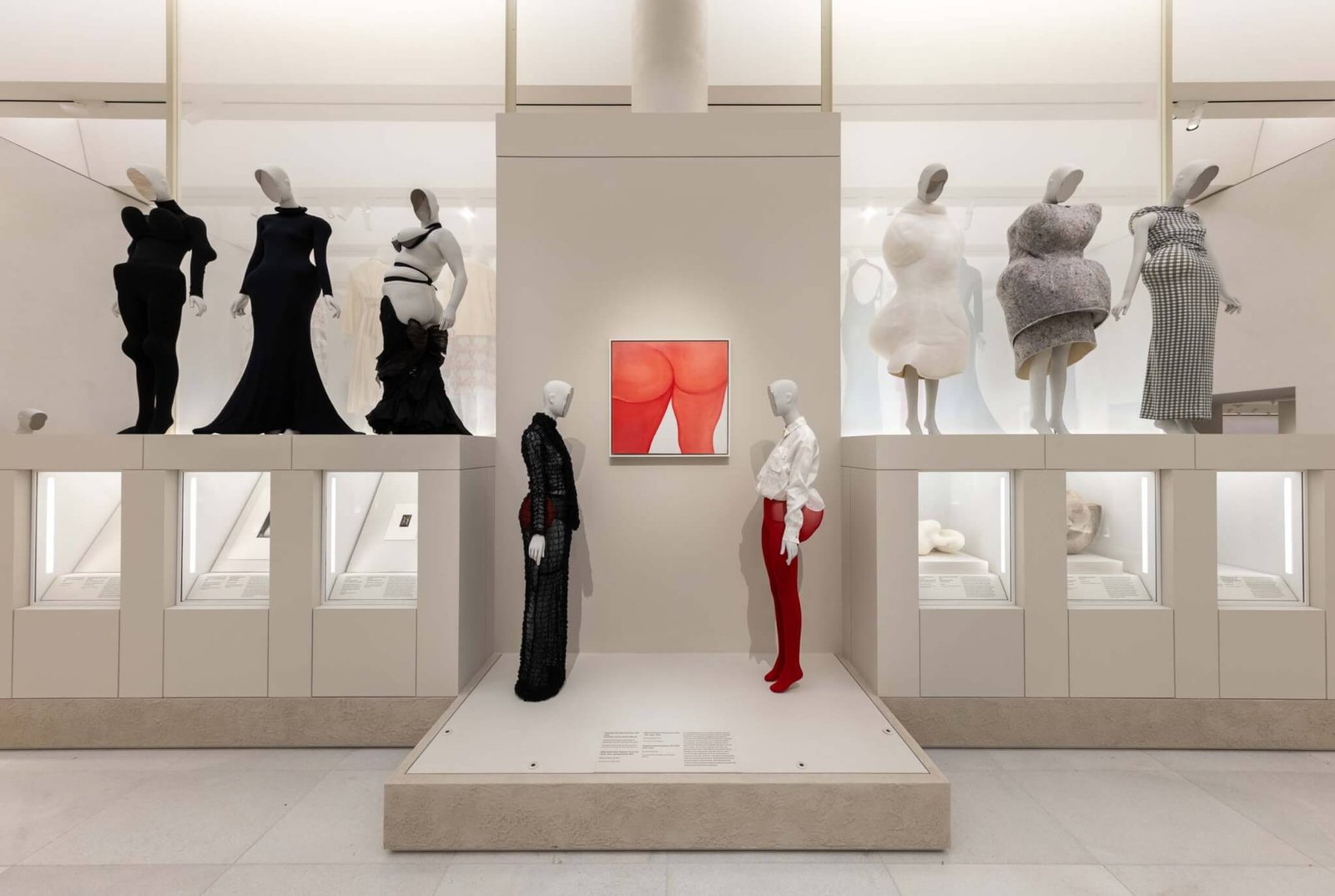
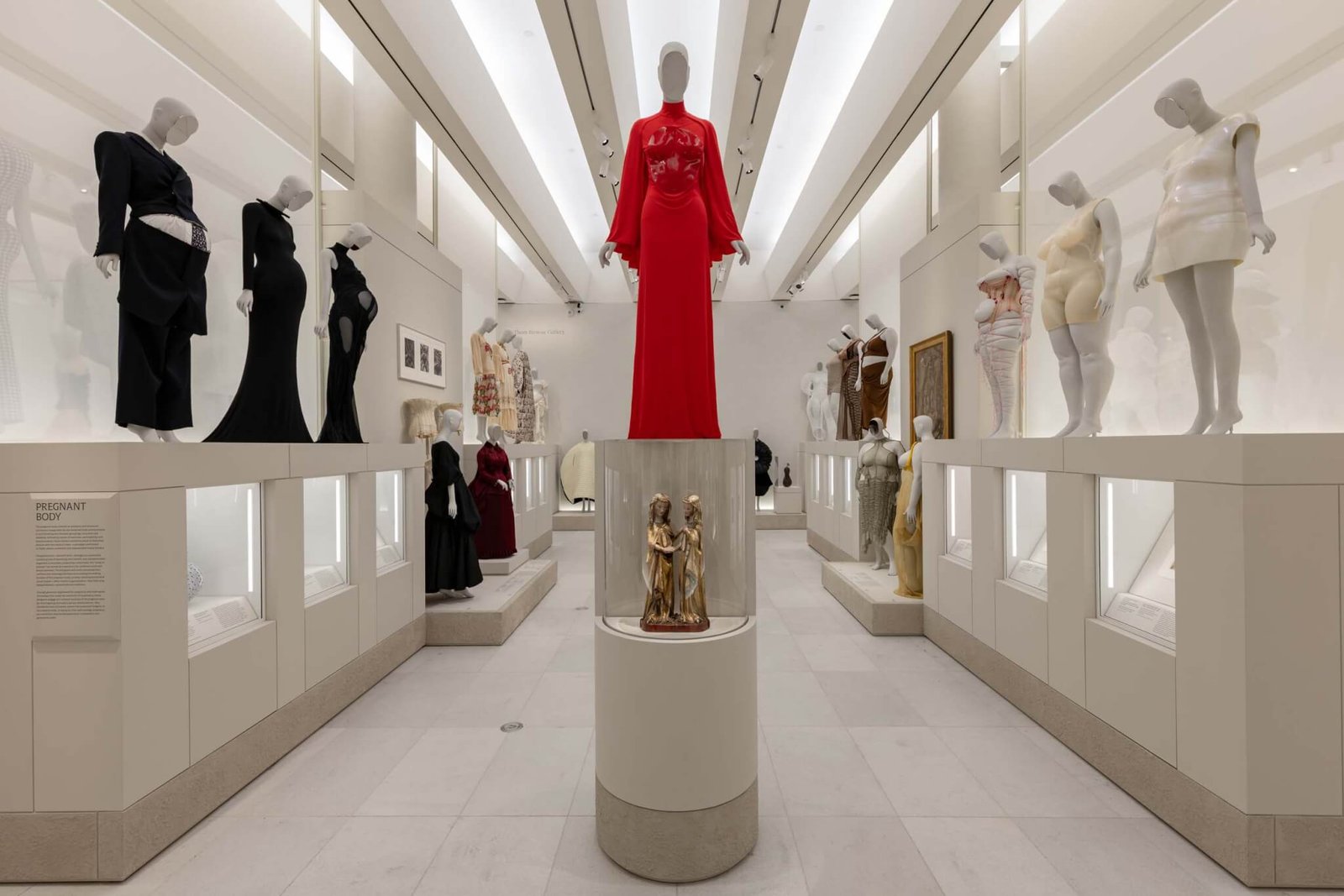
The Metropolitan Museum of Art is not one building but at least 21 separate structures constructed since its founding in 1870. In recent years, the museum has been on a renovation spree, with WHY Architecture’s Michael C. Rockefeller Wing opened last year and work in progress led by NADAAA and Frida Escobedo. Its latest completed improvement is the Condé M. Nast Galleries, almost 12,000 square feet of new exhibition space that infilled what was once a courtyard. The galleries are primarily dedicated to the Costume Institute’s annual spring show. In May, it opened with Costume Art, which pairs clothing with artworks and is organized by body types that vary by age, size, gender, and disability. The show is appropriately astounding for a group that holds the largest and most comprehensive costume collection in the world.
The ethereal interior, divided into five spaces, is the work of Peterson Rich Office (PRO), a Brooklyn firm with a growing portfolio of cultural commissions, from the Shepard in Detroit to Wesleyan University, Pioneer Works, MoMA’s design store in Soho, and the Brooklyn Museum. Here, PRO combines its display expertise with its adaptive reuse sensitivity.
Upon Arrival
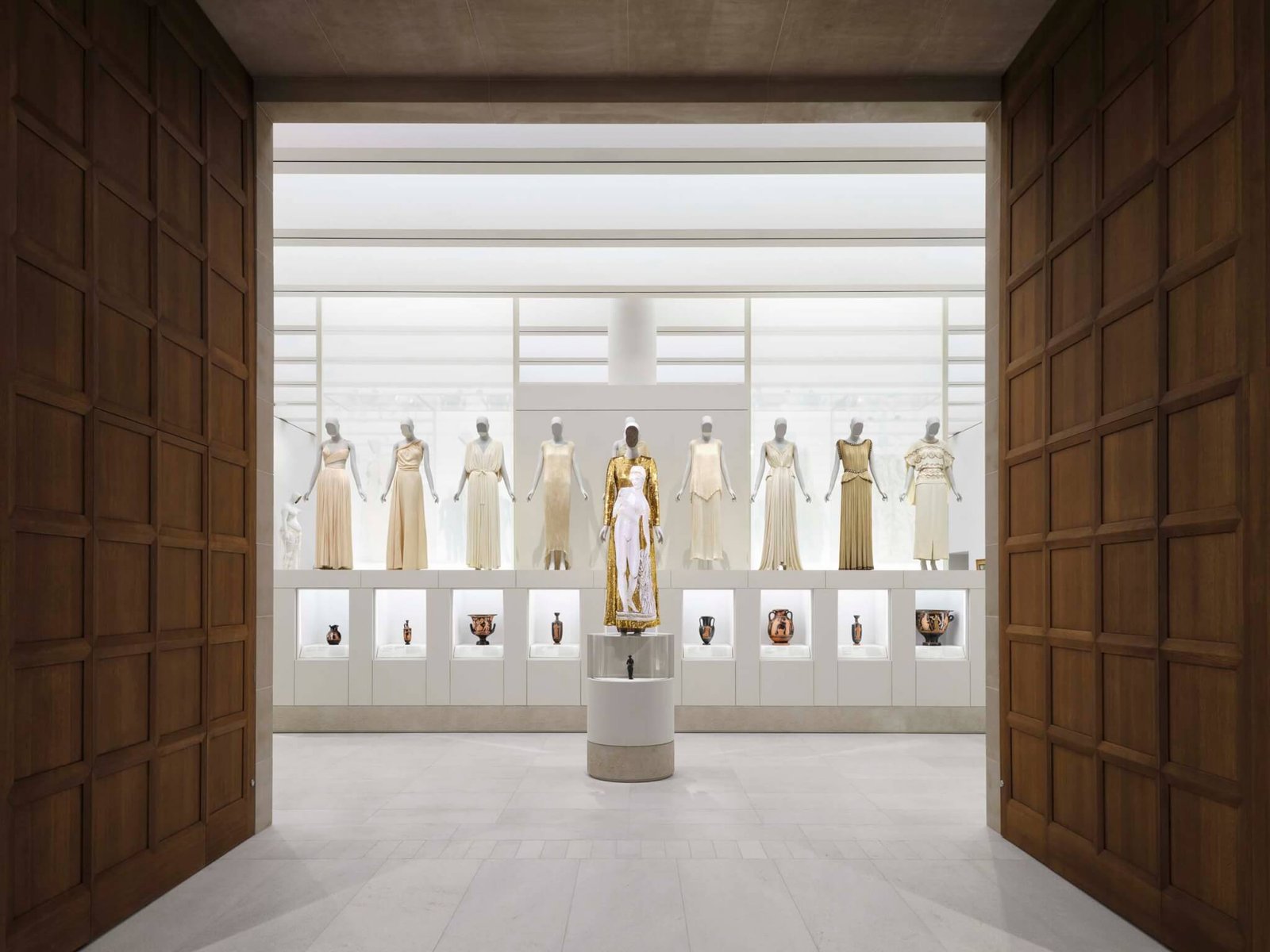
The Orientation Gallery blends with the Great Hall while offering a threshold moment into the exhibition space. But rather than using only solid walls, two large pieces of casework “allows for an introductory note to the curation that both addresses the broader public as they come in,” Miriam Peterson, founding partner of PRO, told AN. One vitrine faces Great Hall, while the other communicates to museumgoers ascending the grand staircase.
The entry uses limestone, which is “omnipresent in the Great Hall,” Nathan Rich, PRO’s other founding partner, said. Set atop the quartz floor, the paneled oak entry doors—each roughly 8 by 16 feet, perhaps the largest in the museum—can swing closed, which is useful, as the galleries will be closed for three months of the year when the next costume show is being installed.
An Architecture of Display
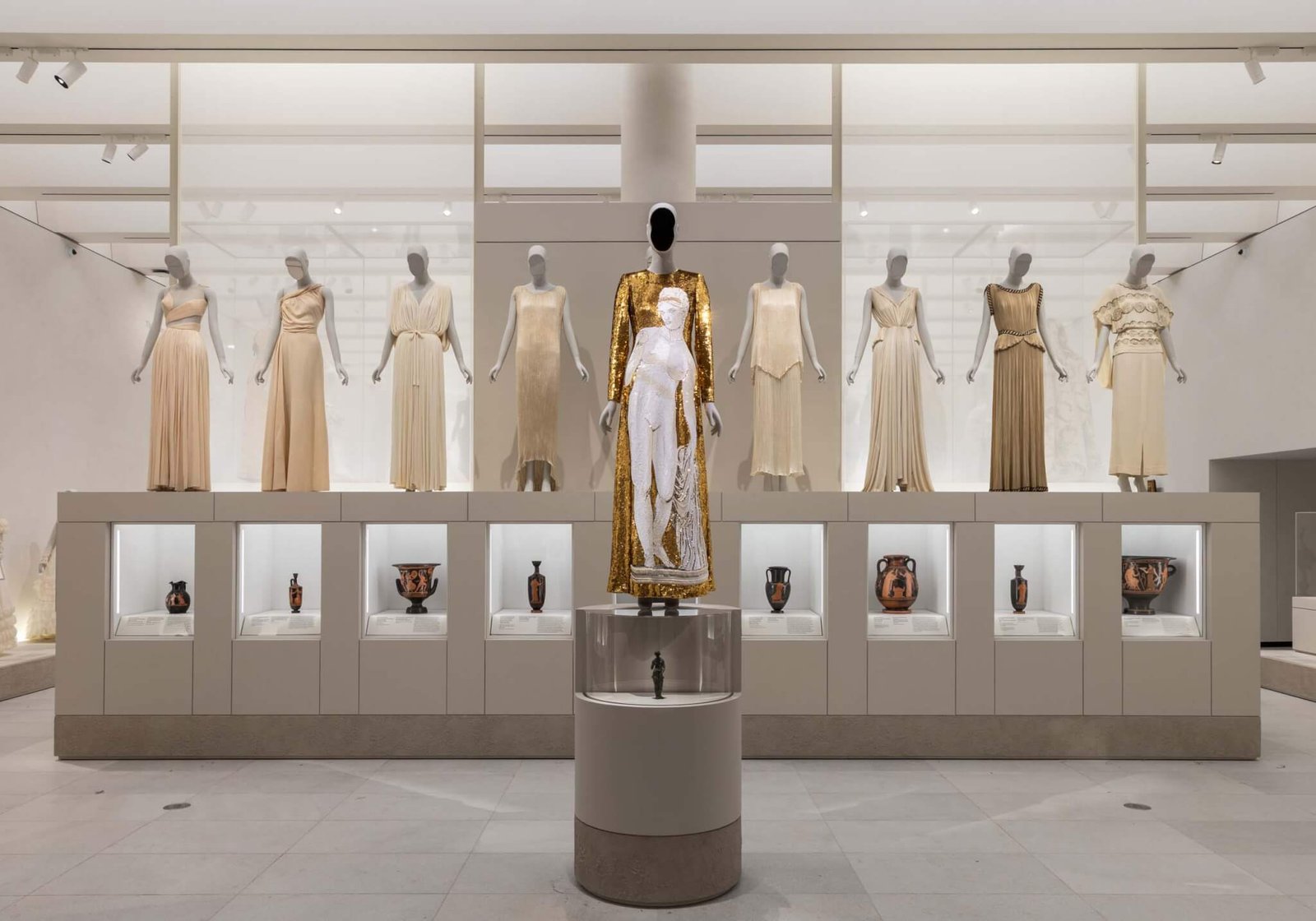
Inside, the taller, brighter High Gallery is paired with a shorter, darker Low Gallery. Rich said character is instilled the various spaces through the different qualities of light, an idea that was both architectural and curatorial. In the past, garments were spotlighted, which is dramatic; here, in the taller space, a more even lighting strategy is achieved through illuminating the ceiling above the infrastructural beams that span across the space.
Peterson said this also has to do with sightlines and thresholds: Like the classical galleries, this space appears as lit from above, perhaps even by daylight. It’s a move that uses “lightness and vertical expansion as a way of drawing visitors in from the Great Hall into the galleries,” she said.
Dot Dash handled the lighting, with exhibition lighting by CS Global. PRO’s team also included executive architect Beyer Blinder Belle, structural engineer TYLin, and MEP engineer Kohler Ronan.
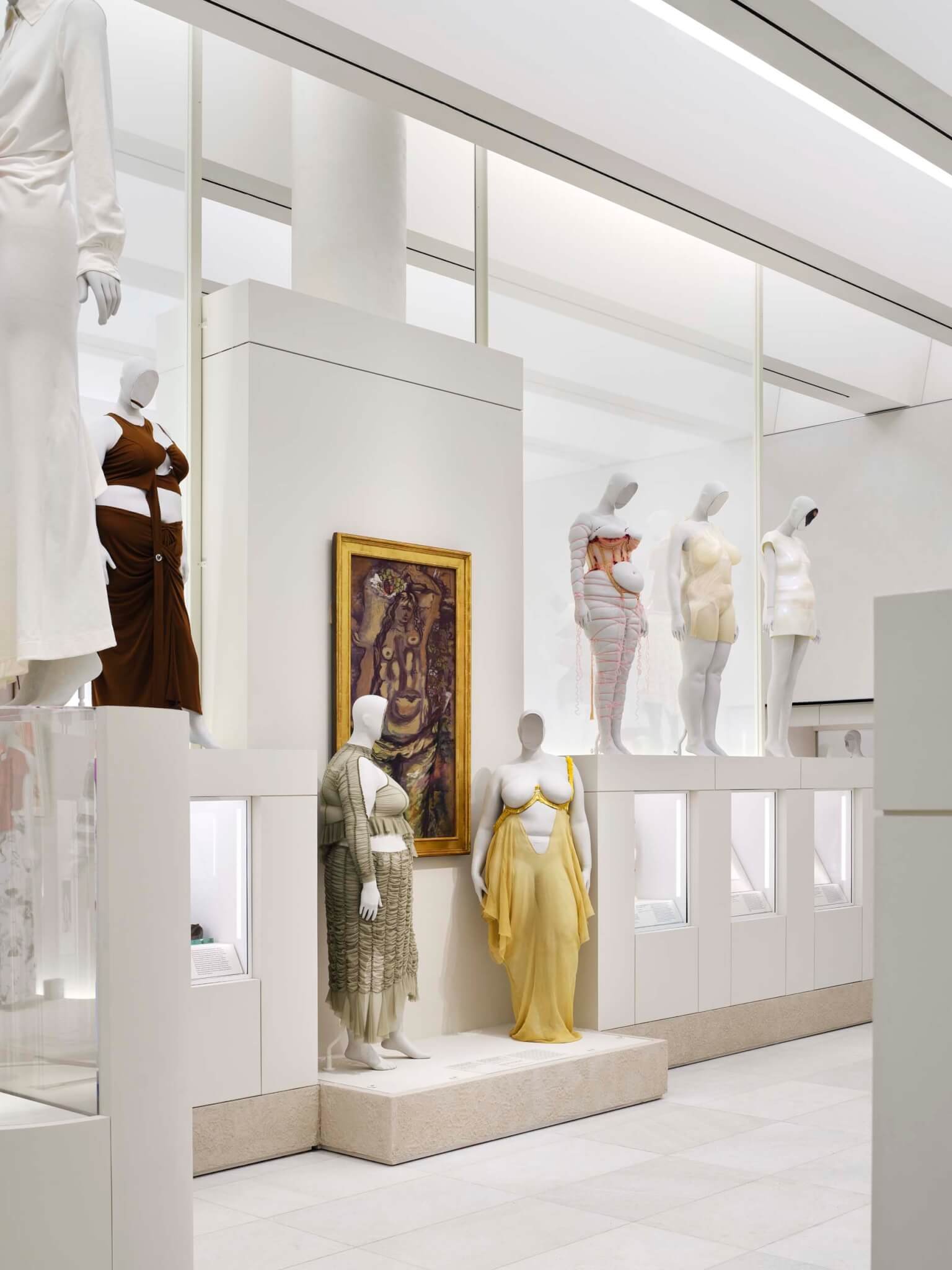
In the High Gallery, under 21-foot-tall ceilings, garments are displayed both at eye level and on elevated plinths six feet in the air. Mannequins have a sheared, mirrored face designed by artist Samar Hejazi, which allows visitors to catch a glimpse of themselves reflected across the body types.
In the Low Gallery, scrim dividers mark rows of space. Openings between the two galleries can be reconfigured as walkways or plugged with vitrines.
Throughout, the walls are finished in gray marmorino plaster rather than drywall. Its color relates to the nearby limestone and quartz, and its finish connects to the statues of antiquity displayed elsewhere. This permanence extends to the display cases, which will remain in place even as the shows change: A 12-inch-tall band of rough, rocky finish along the floor keeps a curious public at a safe touch distance from exposed pieces, while above, casework is articulated in bands that reference stone patterns.
A Pleasing Revelation
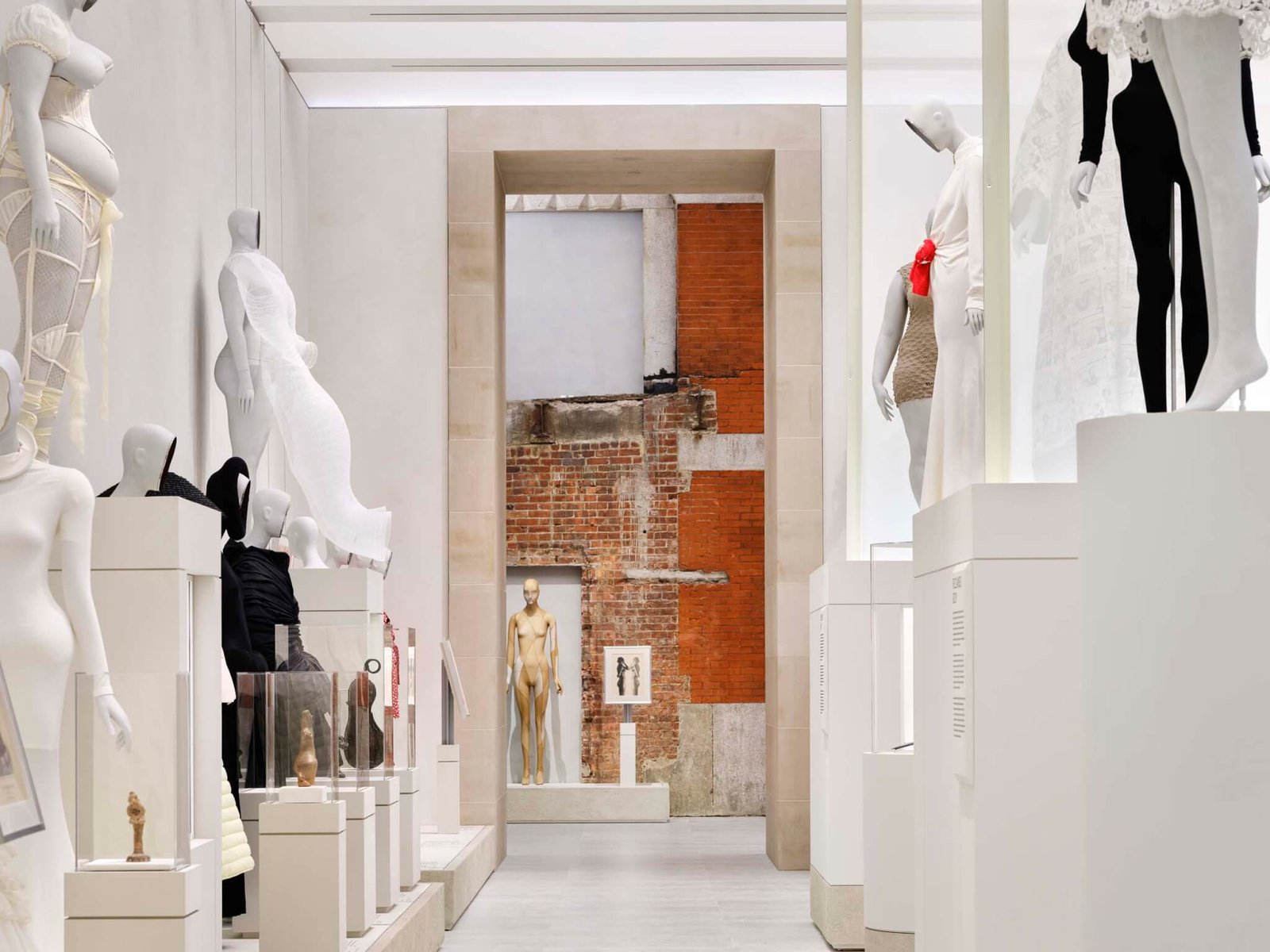
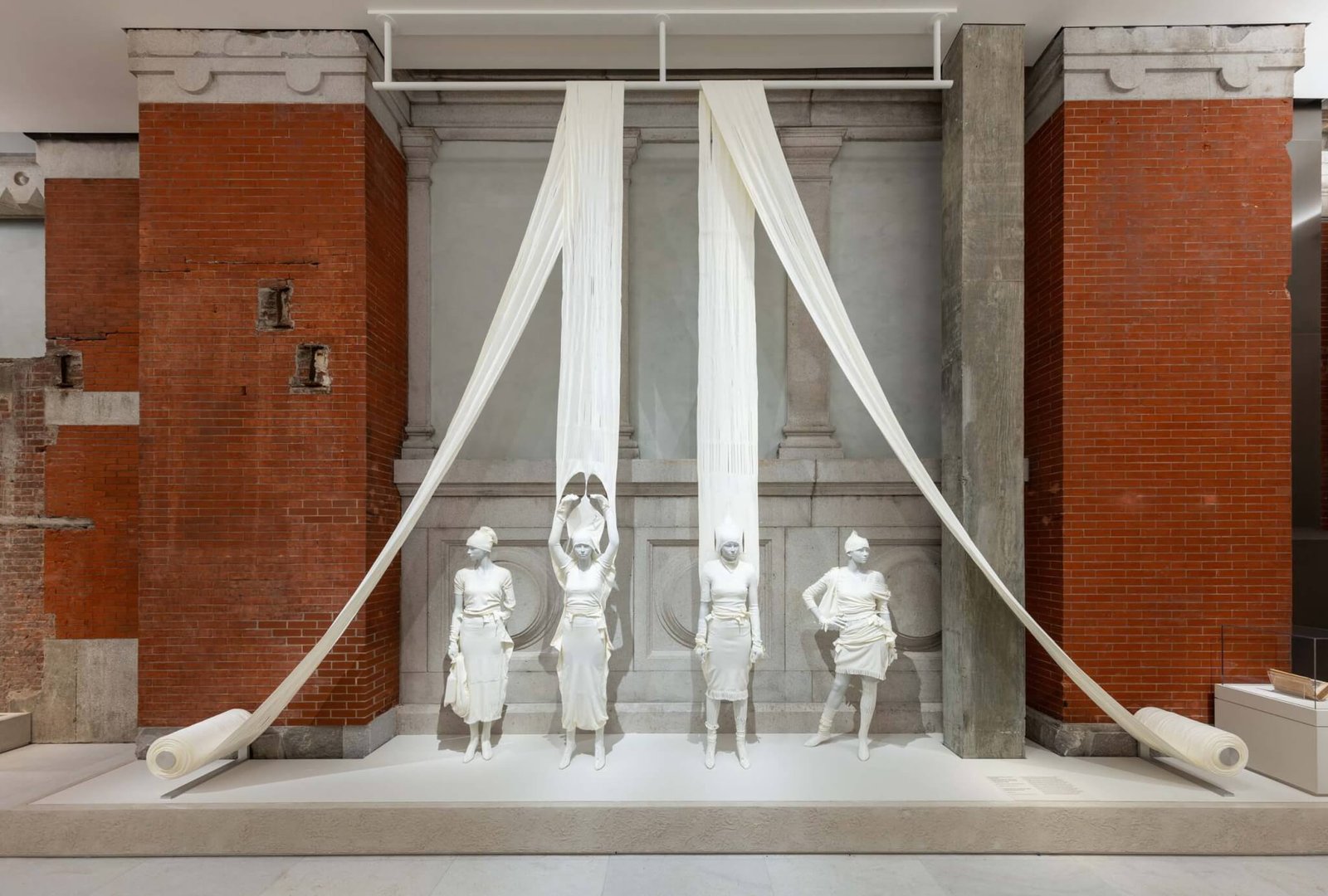
The show is the obvious attraction, but for the architecturally minded, the concluding Finale Gallery at the back is the most compelling aspect of PRO’s improvement, as it forms a weighty counterpart to the otherwise heavenly display apparatus. The architects chose to expose the collisions of previous structures: A wall from the original 1880 building by Calvert Vaux and one from the 1894 wing by Arthur Lyman Tuckerman were found behind “a sheetrock wall for selling tchotchkes,” Rich said. These were in decent condition, so PRO wanted to make them visible. The idea, present in the earliest phases of design, helped them land the commission.
The material contrast introduces an urban sense of collision, which is heightened by holding the new wall and coved ceiling off the existing wall. In one spot, there’s even a concrete column from Kevin Roche’s era that lands here, further adding to the palimpsest. The masonry assembly is a pleasing revelation. The small, dedicated shop also keeps this idea going, with an added built-in shelf for catalog displays.
Bodies, All
The reality of the rear walls underscores the parallel thinking between architecture and bodies, with the layers of bone, flesh, and dress corresponding to structure, enclosure, and interior.
“The fundamental kinship between architecture and costume—disciplines that exist only through their relationship to the human body—manifests itself in every aspect of the exhibition design,” the architects wrote in an essay for Costume Art’s catalog. The goal is always the acknowledgement of “our shared humanity.”
The move also demonstrates PRO’s interest in working with what is already in place by revealing historic layers and establishing a contemporary intervention, which is only the latest in a series of transformations. This dynamism means “the past” isn’t some precious relic that will stay the same forever, but instead it serves as an invitation for engagement and reinterpretation. This “democratizing gesture,” as Rich wrote in PIN–UP, “challenges hierarchies of cultural value and invites visitors to see themselves as part of an ongoing cultural conversation.”
While the celebrities and cameras of the Met Gala are gone (for now), PRO’s work will remain in place to serve museumgoers for decades. The goal was “to establish a visual and material vocabulary that future exhibitions can build upon, adapt, or intentionally subvert,” the architects wrote. This temporal tension is also how fashion works: Andrew Bolton’s curatorial argument, they wrote, is that “fashion, like the dressed body it celebrates, is simultaneously timeless and ever-changing, deeply personal and universally resonant.”
Even so, PRO is not done with the Met. It is also redesigning the museum’s dining and retail spaces in addition to its street-level entrance at 83rd Street and Fifth Avenue. When this work completes, PRO will have updated two of the four corners of the Met’s Great Hall to better serve tomorrow’s art lovers.