
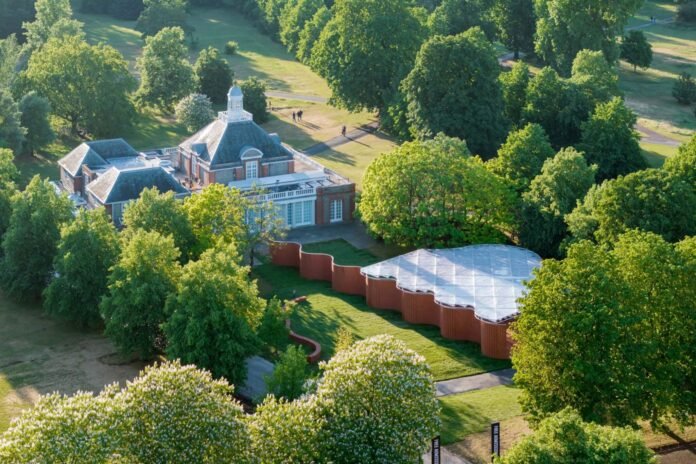

The Serpentine Pavilion turns 25 this year, marking a quarter century of temporary structures by international architects installed on the lawn outside Serpentine South in London’s Kensington Gardens—old enough for a series of fleeting buildings to have become a summer institution. Since Zaha Hadid’s first white canopy pitched itself onto the lawn in 2000, the commission has left behind a varied archive: Rem Koolhaas and Cecil Balmond’s inflatable ovoid canopy rising and falling over an amphitheater, SANAA’s hovering sheet of reflected park, Peter Zumthor’s black garden box, Francis Kéré’s blue, tree-like canopy, Marina Tabassum’s kinetic timber capsule. The commission exists as a London debut for international architects that have yet to build in the U.K.
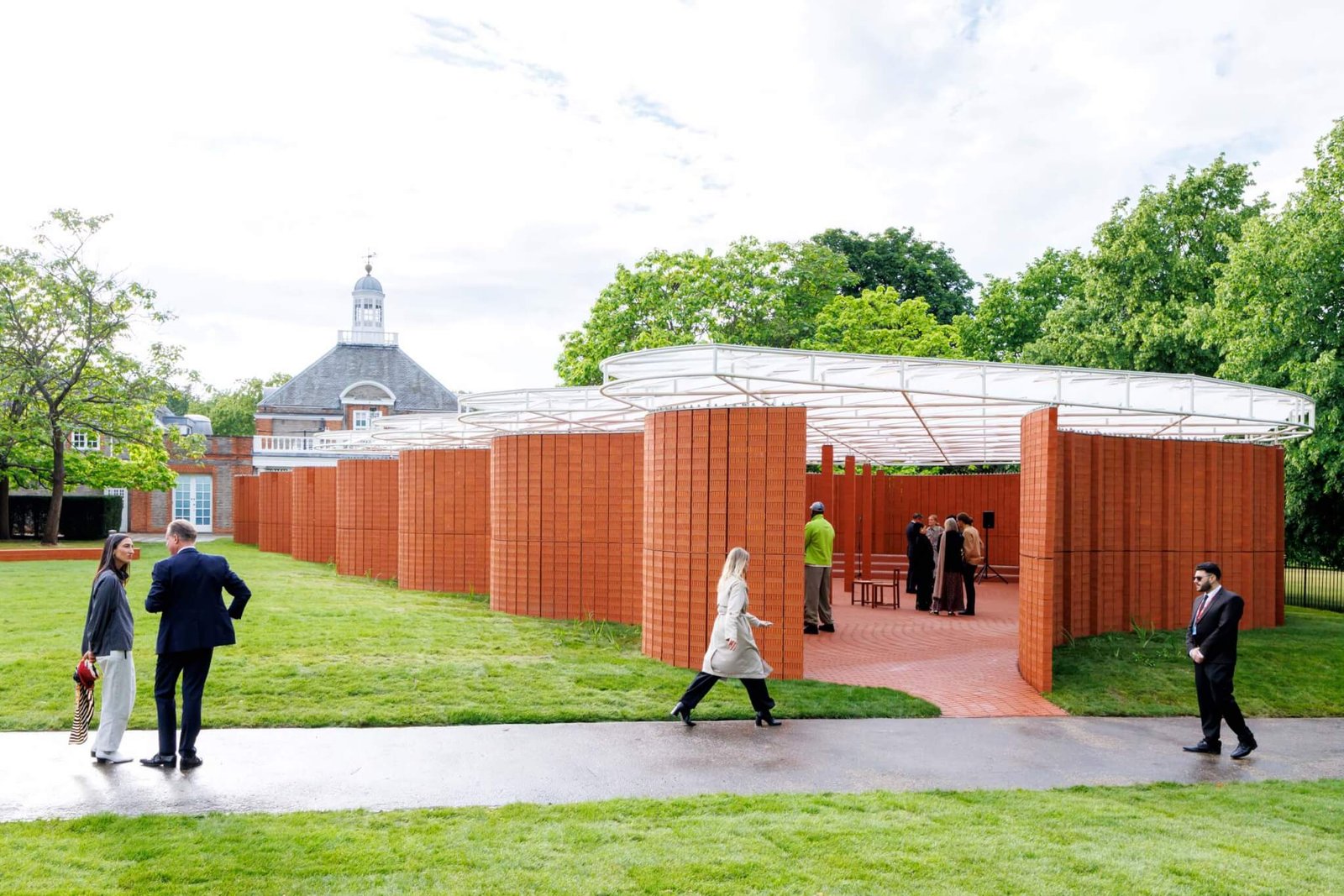
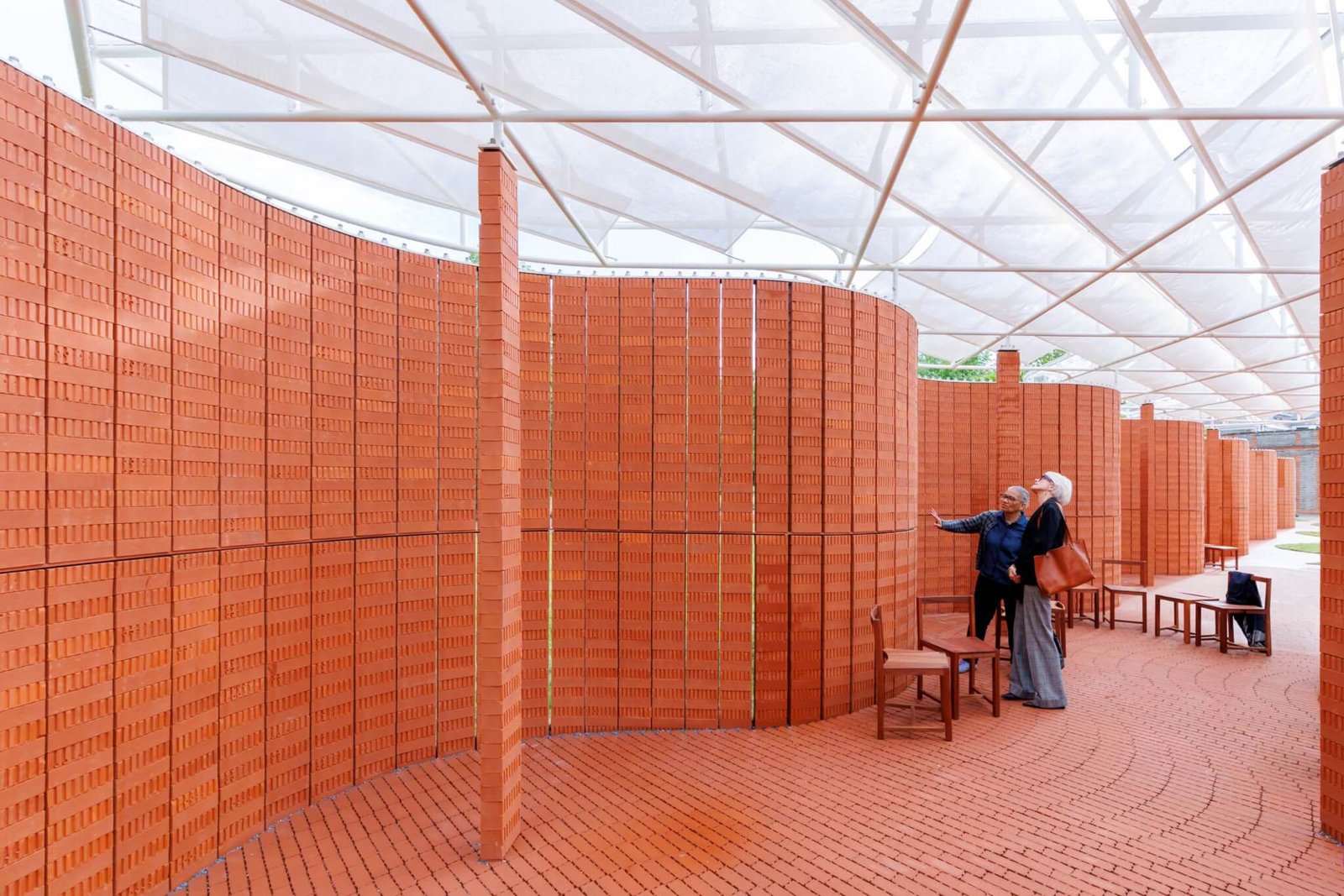
This year, LANZA Atelier, founded by Isabel Abascal and Alessandro Arienzo in Mexico City, takes the stage. The firm’s design is disarmingly direct: named A Serpentine, the pavilion takes shape around crinkle crankle walls, those undulating brick garden walls associated with England’s East Anglia region. The wall’s sinusoidal curves give lateral stability all while using fewer bricks than a straight wall would need to stand. The pun is almost too heavy-handed in its reference to its commissioner, but the literalness is strangely fresh in a commission often weighed down by its own intellectual apparatus.
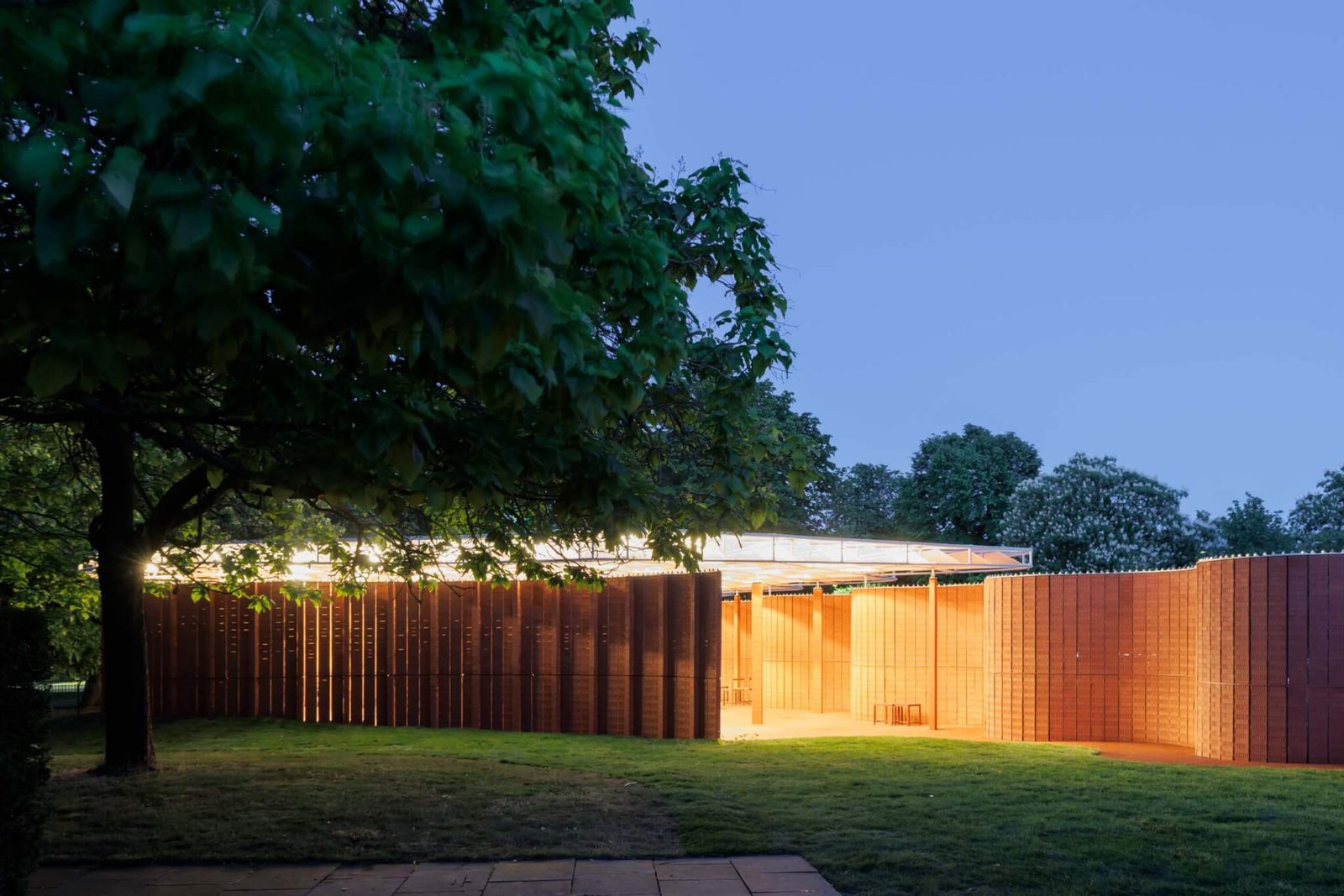
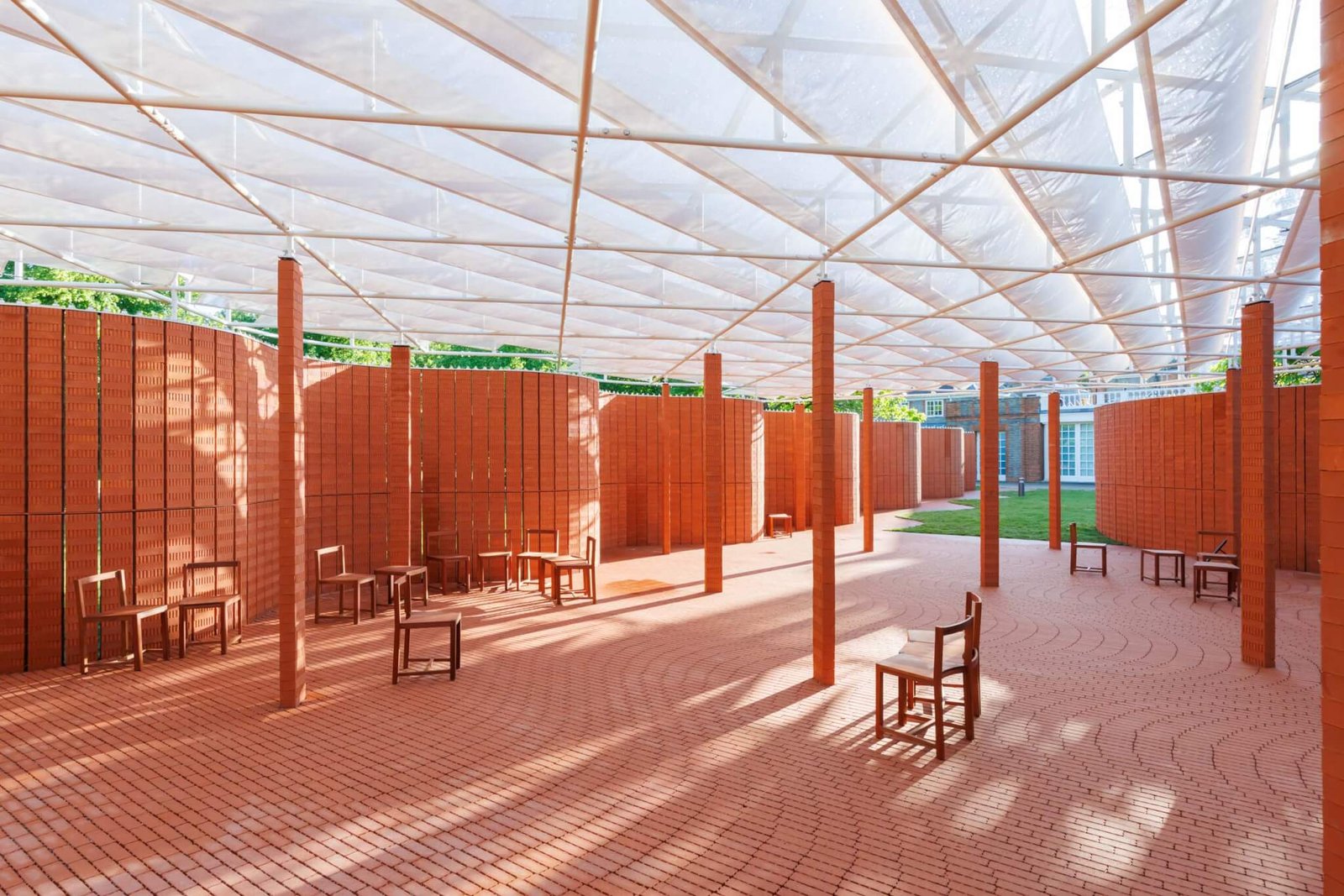
LANZA chose a red clay brick in conversation with Serpentine South’s own brick facade, and with the broader vernacular of the English garden wall. It is a material loaded with meaning, suggesting permanence and tradition; strange qualities for a building designed to disappear by autumn, but qualities that LANZA subtly subverts. Here, the bricks are dry-stacked and threaded onto metal rods, their scored faces alternated outwards to catch the light and tolerate unevenness that mortar usually absorbs, and allowing the wall to be easily taken apart. Sitting on the walls and a grid of brick columns made from the same dry-stacked system, a white steel space frame carries a roof of polycarbonate panels, shaded by fabric louvres.
“The mortar is gravity,” Arienzo said, “and the full wall is made of columns.” The pavilion’s crinkle crankle wall is not a continuous run of bonded brickwork, but a chain of narrow brick columns, held between metal plates at the top and bottom. These columns leave gaps between them for air, sound, and play, but the method complicates the structural logic of the reference. A traditional crinkle crankle wall gains its strength from its sinuous plan and the running bond of overlapping bricks, so that it is self-buttressing. In LANZA’s version, the steel rods and plates take on that work, so the crinkle crankle form becomes more of a reference than a structural method. Abascal described it as “an evocation or an allegory of a crinkle wall,” adding that gardens themselves are “allegories of the natural world.”
A series of sapele hardwood chairs and stools were also designed for the pavilion. Their seats are slightly wedge-shaped so when placed next together they start to curve like the walls. The pieces are movable, and can be gathered in clusters, dragged towards shade, or pulled in together for intimate conversations. At the opening, Abascal spoke of the pleasure of seeing the pavilion “inhabited by dozens of people for the first time”, with visitors using “the furniture, the coffee, the sun that’s coming out.” This is also important to the pavilion’s other function, beyond a cultural offering: it must work as a sponsor-ready summer room, a backdrop for private events and, indeed, it must sell coffee.
Remarkably, in its 25 years, this is the first Serpentine Pavilion constructed from brick. Perhaps it is a material considered too ordinary and commonplace in London; most of the city is built from it. LANZA uses that familiarity to unsettle the material and challenge its own assumptions of solidity; a material of permanence made temporary, a form of enclosure made sociable. “Gardens might look naive and picturesque,” Abascal said, “but they are tools for shaping the world, socially, and politically.”
Ellen Peirson is a London-based writer, editor, and designer.