
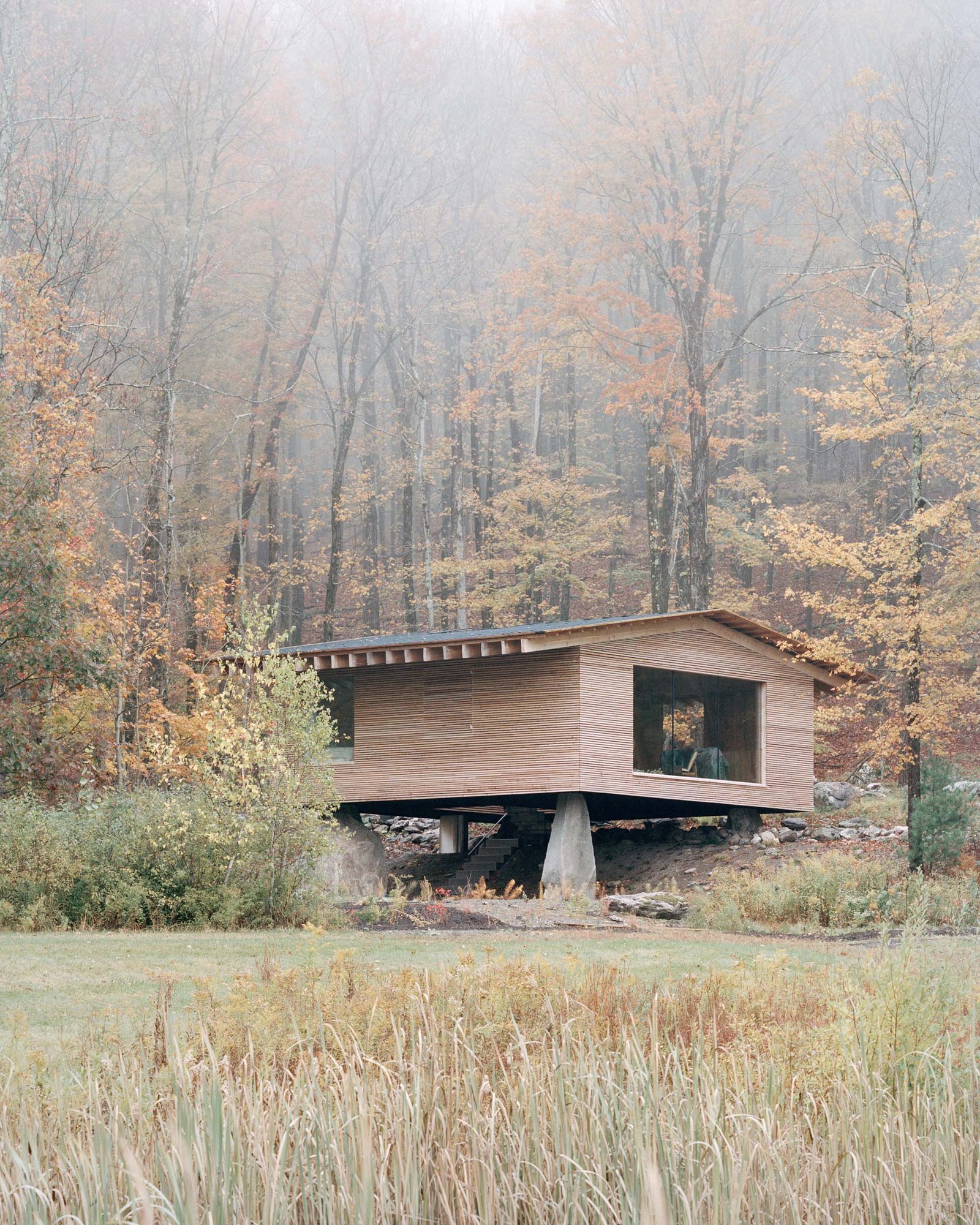

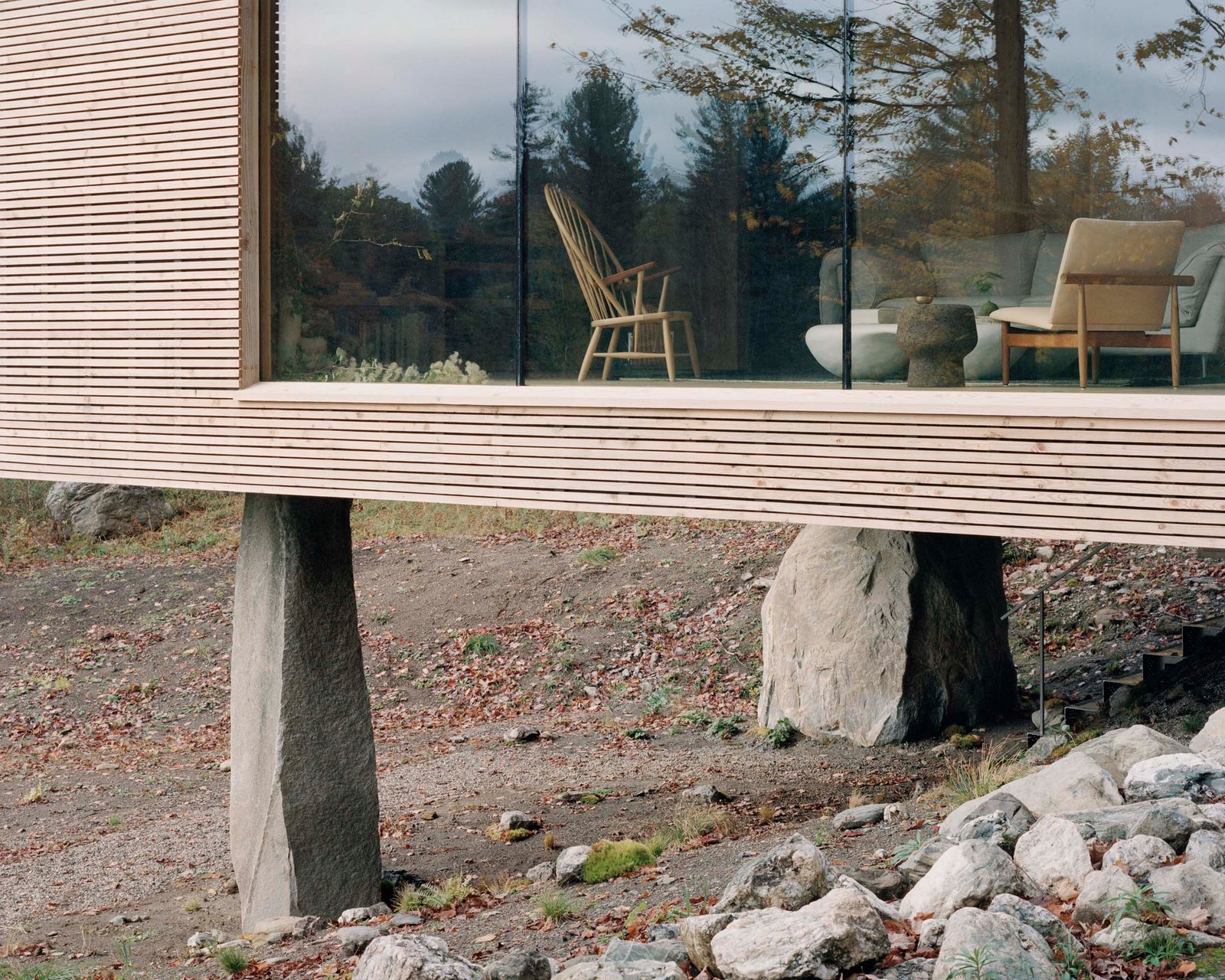
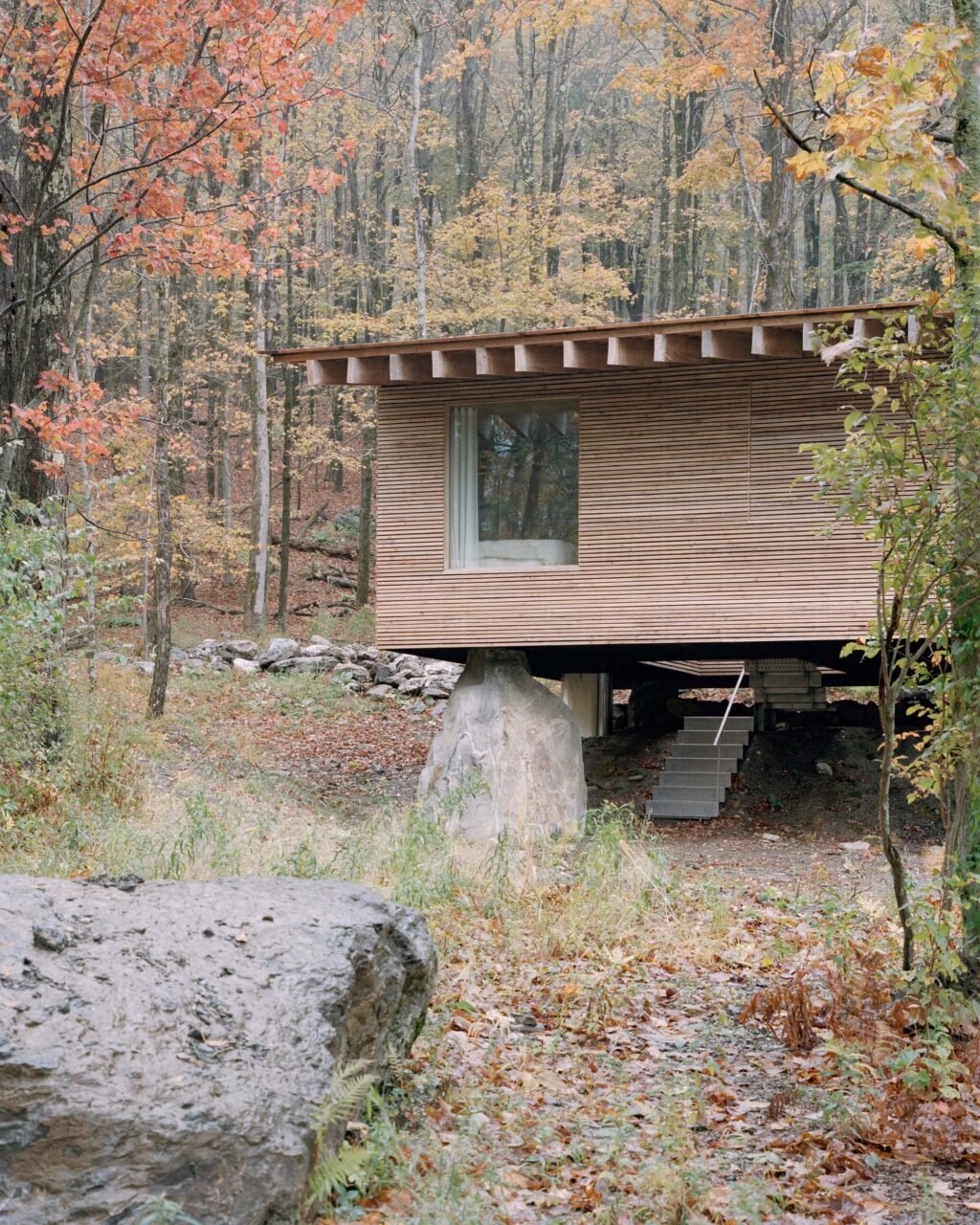
Two psychoanalysts in the city had developed a building on their property in Austerlitz, New York, but the experience was difficult. It left them adrift from the both the forested land and architecture as a whole. They came to Brooklyn-based firm Of Possible with an emotive brief: to build something new that would restore their connection to the site and building. The Findling connects the two literally: four 500-million-year old glacial erratic boulders (two of which are from the site) uphold the wood-clad retreat as it floats above a topographic change.
“There’s this old New England wall that was on the edge of the woods, and this beautiful section to that topography. When we saw that, we said maybe the house could fall over that wall,” Vincent Appel, founder of Of Possible, told AN Interior. At first, the design team tinkered with timber columns, but pricing was over budget and there was stone below grade. The architects found themselves between a rock and a hard place. Appel then remembered furniture-maker and poet Ethan Stebbins. The Maine-based designer crafts furniture with timber joinery and granite blocks. With two boulders already on the property, the team sourced two additional boulders from a nearby quarry and reinforced each with 1-inch stainless steel pins.
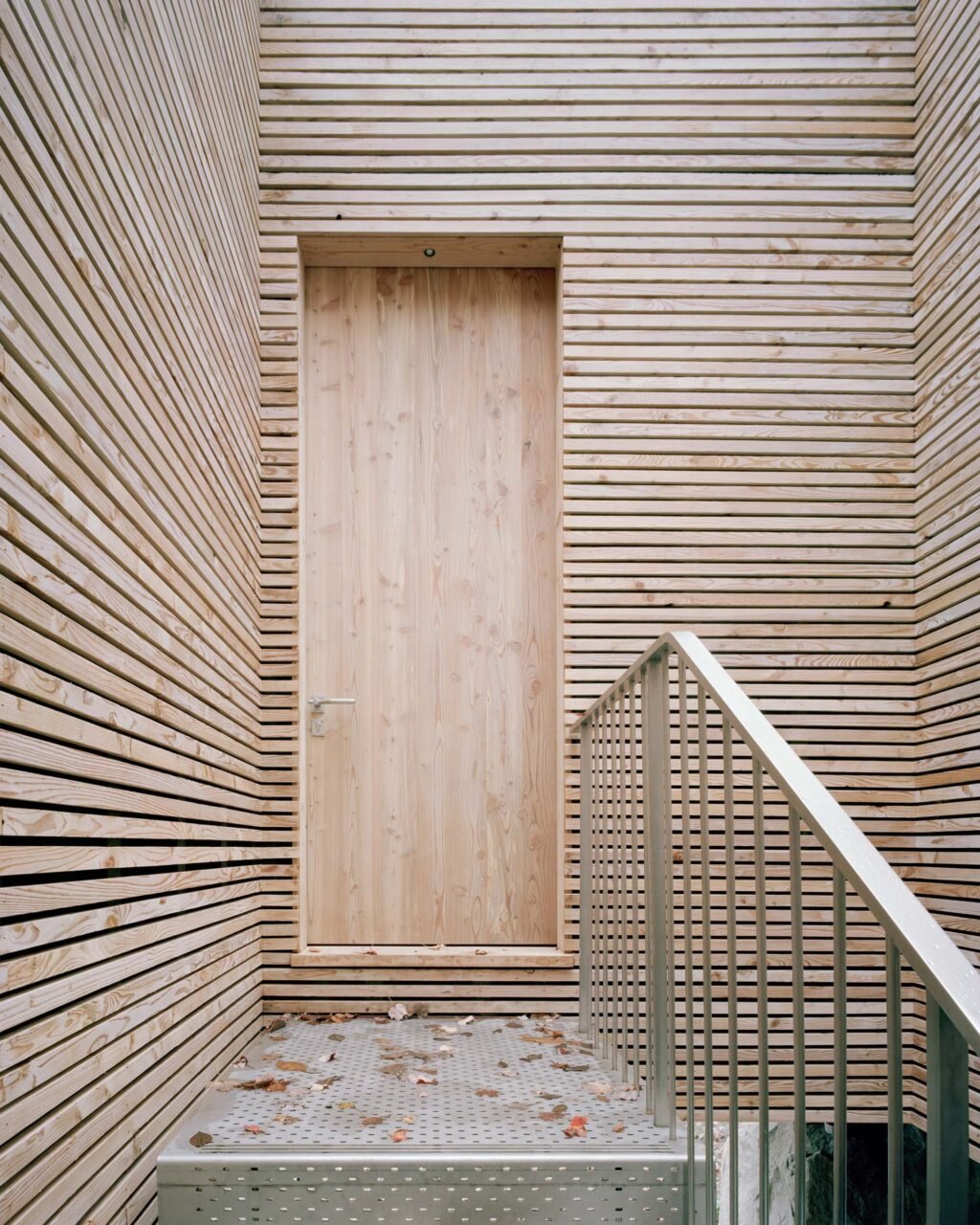
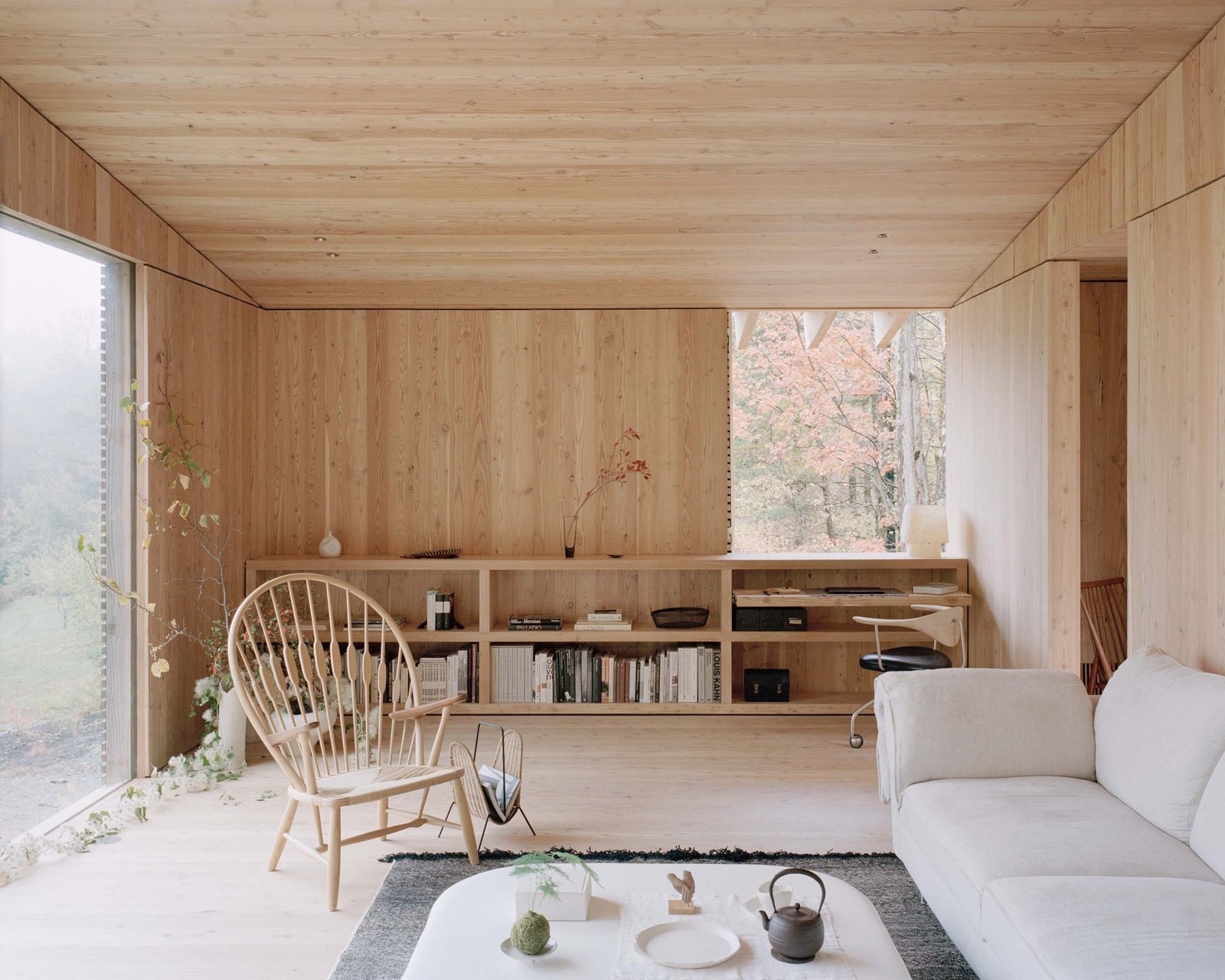
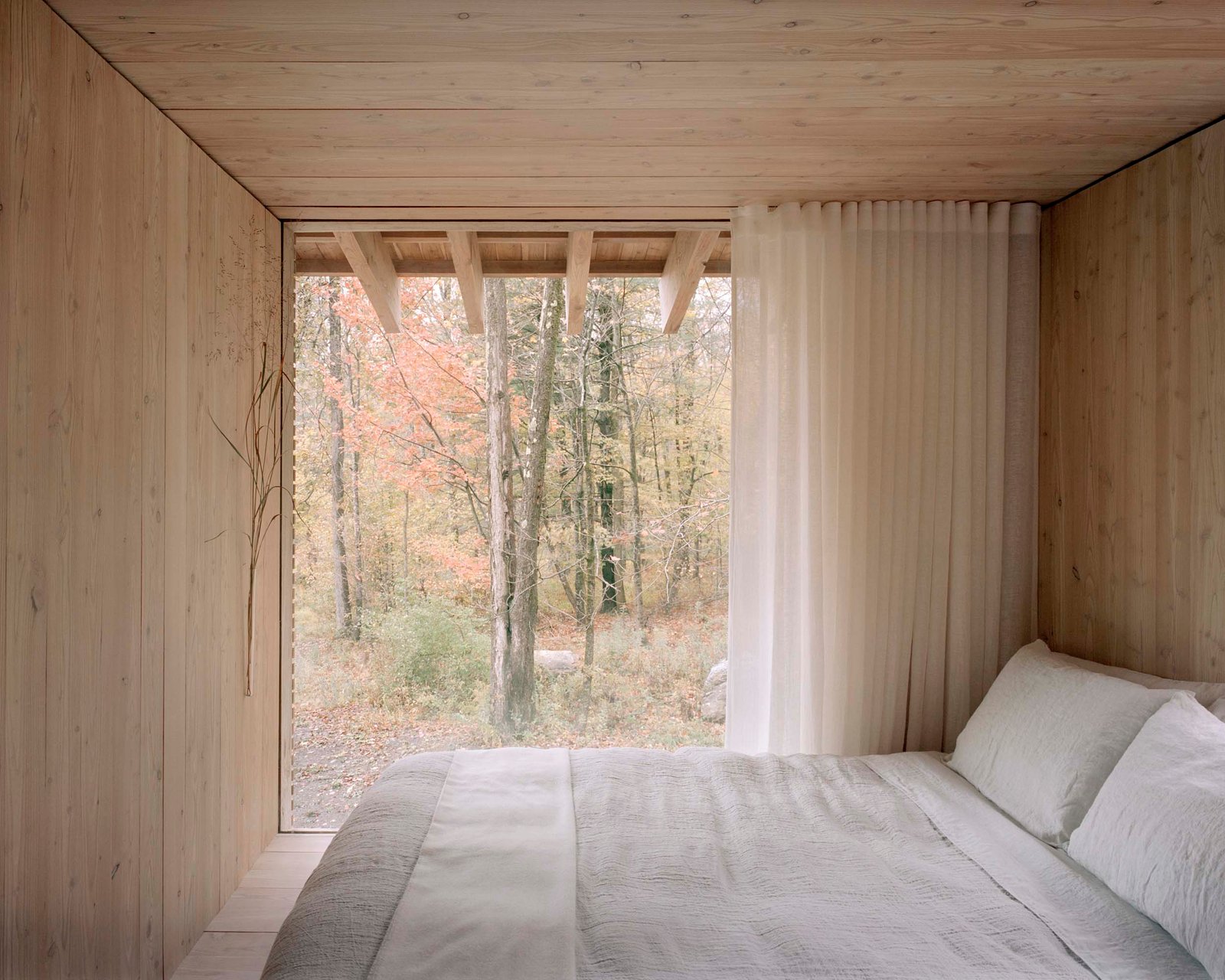
They support the 980-square-foot retreat, clad in more resources from the land: larch. “There’s a bunch of larch that’s stewarded by the Amish nearby,” said Appel. “The whole building is like one giant piece of cabinetry.” Larch completely clads the boxy volume atop black house wrap and spaced just right to ensure birds don’t try to nest between slats. The material is interrupted by panes of glass, but these are not operable. Buying large format, insulated glass with well-detailed mullions is costly. Buying high-quality, insulated glass units, glazed directly into wood jams built on site is less so. Ventilation was moved to shutters that open and close.
Appel continued, “The whole home behaves slightly differently in ways you wouldn’t expect.” This is true even for the front door—there isn’t one. Entry lies beneath the building through custom thin stainless steel which creates a ribbon-like spiral staircase, engineered so it appears to float at any angle. “These kinds of moves defamiliarize your relationship with the building, and it’s also, literally and metaphorically, an embrace, like a hug,” said the founder.
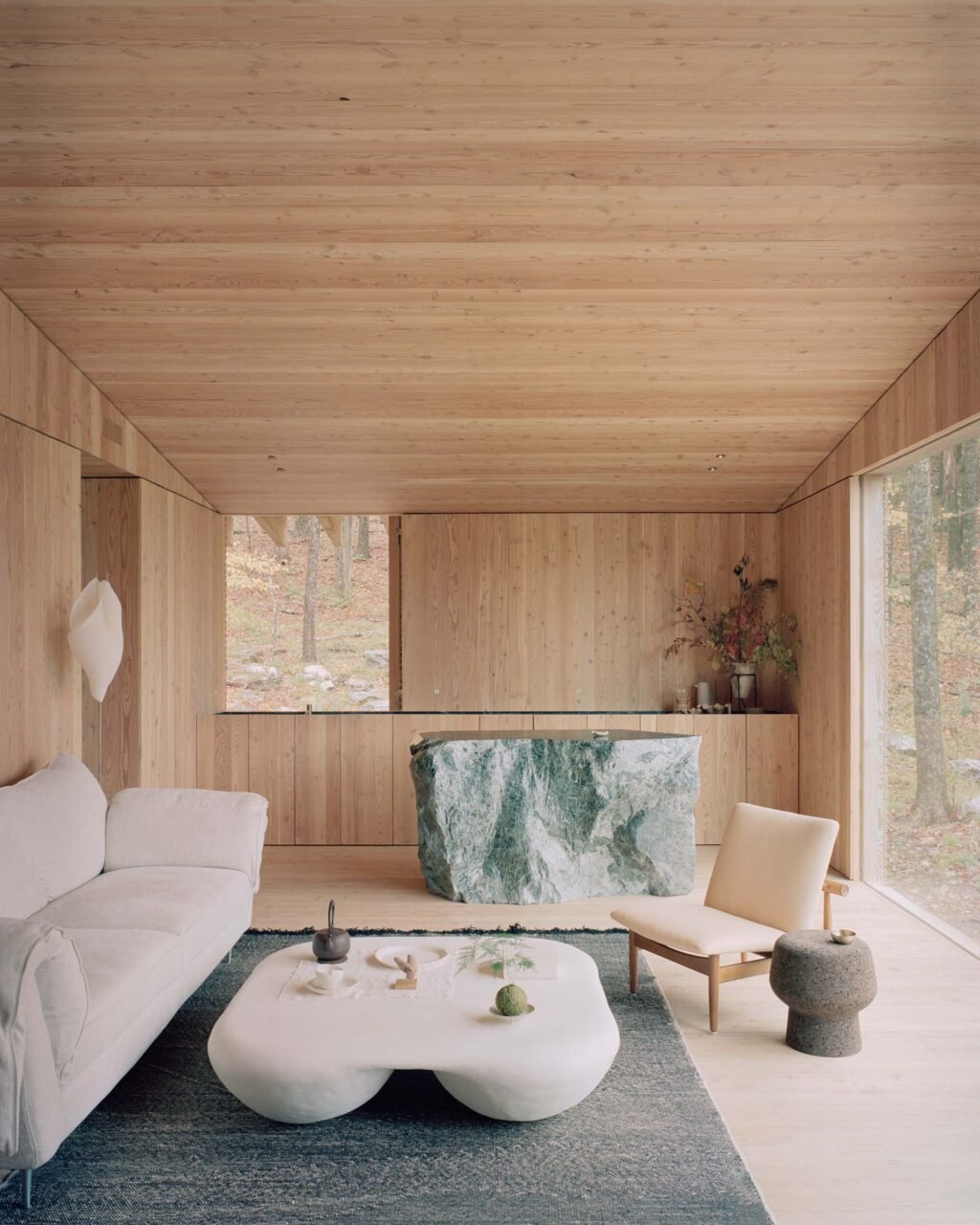
Inside, a simple approach lets the larch shine (especially in the bathroom where the sink is made of a log of larch, plumbed into and waterproofed). Even within the minimal styling, Of Possible tied in architectural details that connect the site to design history, helping unite the clients to the field in general. Green serpentine from Vermont, which Mies van der Rohe uses for the planters outside the Seagram Building, makes up the geologic kitchen island. It also clads the top of the kitchen counter beyond the cabinet’s full overlay panels. All the hardware in the home is from izé, using the company’s molds for the hardware in Le Corbusier’s Sainte Marie de La Tourette. Side tables are designed by Herzog & de Meuron for the Serpentine Pavilion.
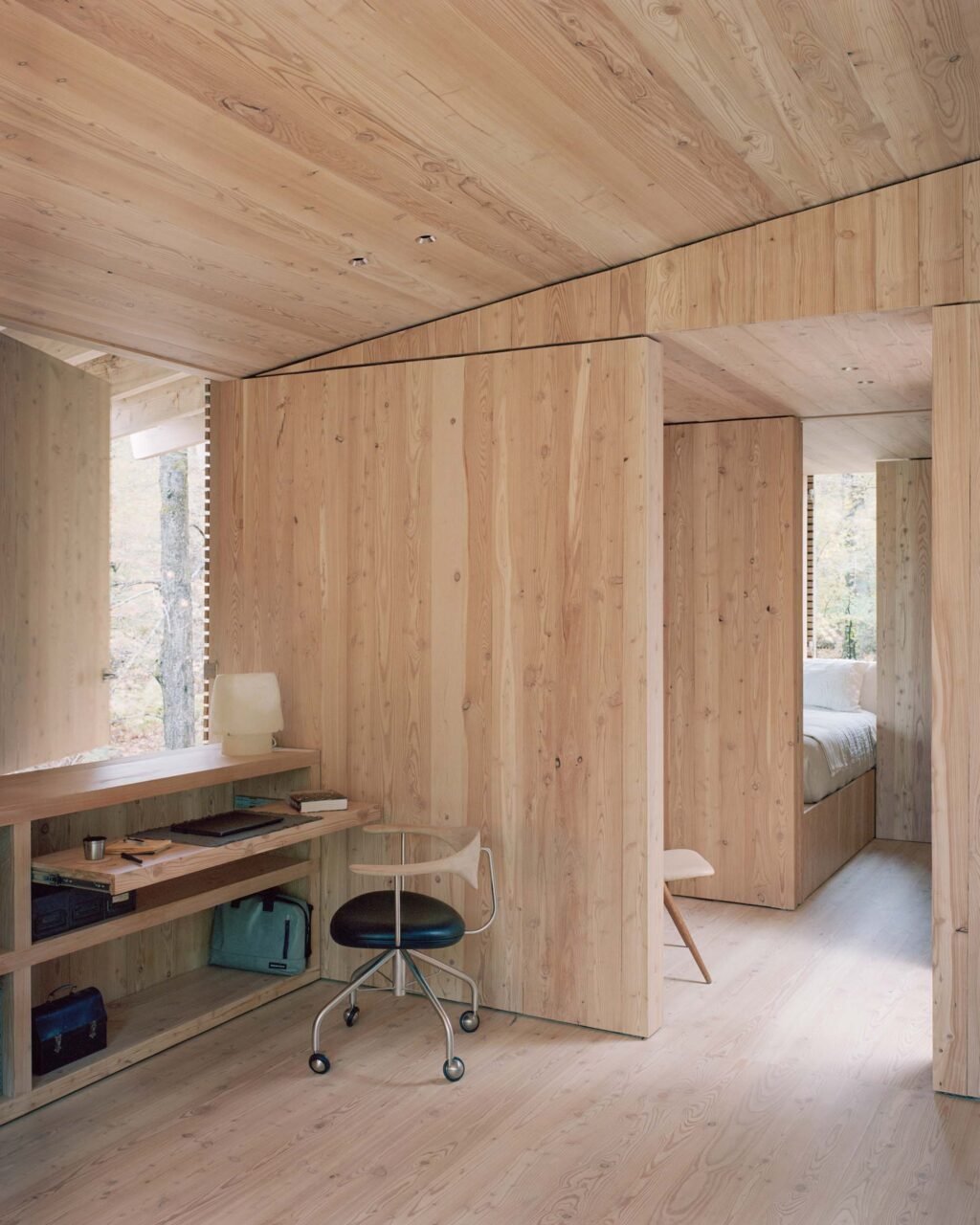
If The Findling is resourceful in its material makeup, it’s also resourceful about navigating its compact footprint. Spatially, the interior still feels gracious, especially when looking out through the residence’s large glazing onto the land. The team relies on clean lines and concealed elements to ensure the palette is clean yet efficient. The door’s exterior light is barely visible, while storage is integrated underneath the two beds, keeping the rooms reduced to the bed and views, uniting what’s built with what’s already there.