
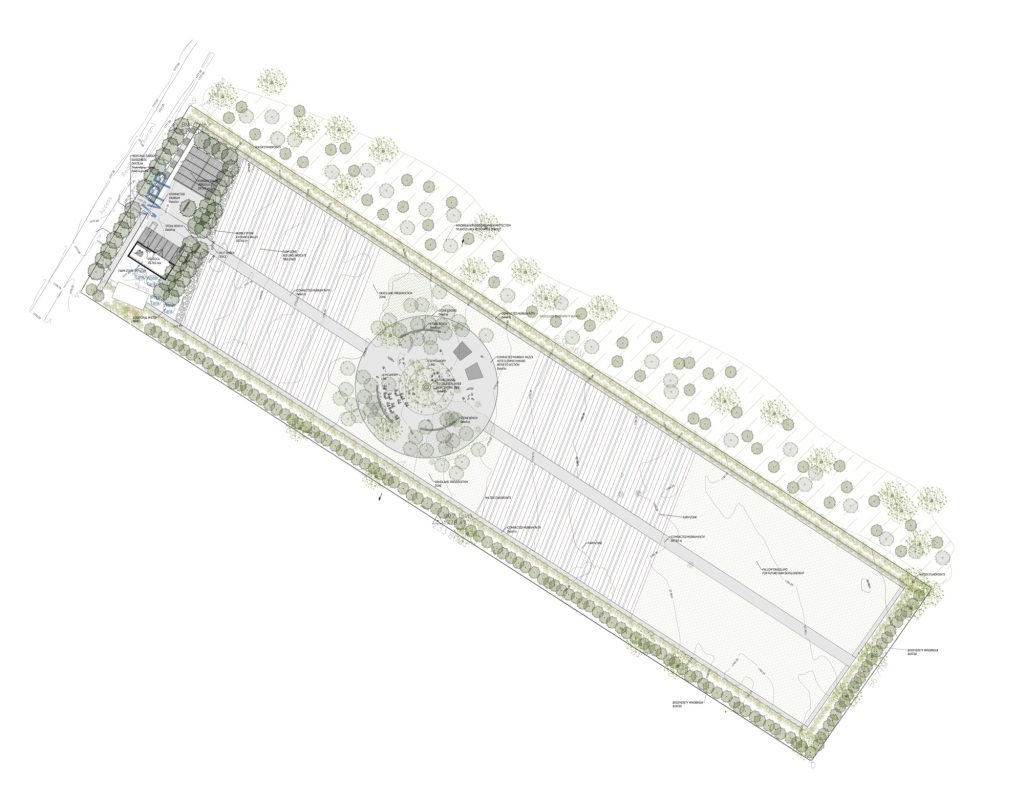

This project in Northern Kenya was conceived as a community-led initiative to address both nutritional insecurity and social wellbeing through landscape design. At its core, the project provides a productive garden where fresh, nutritious food can be grown locally, improving access to healthy produce in a region affected by climatic and economic challenges.
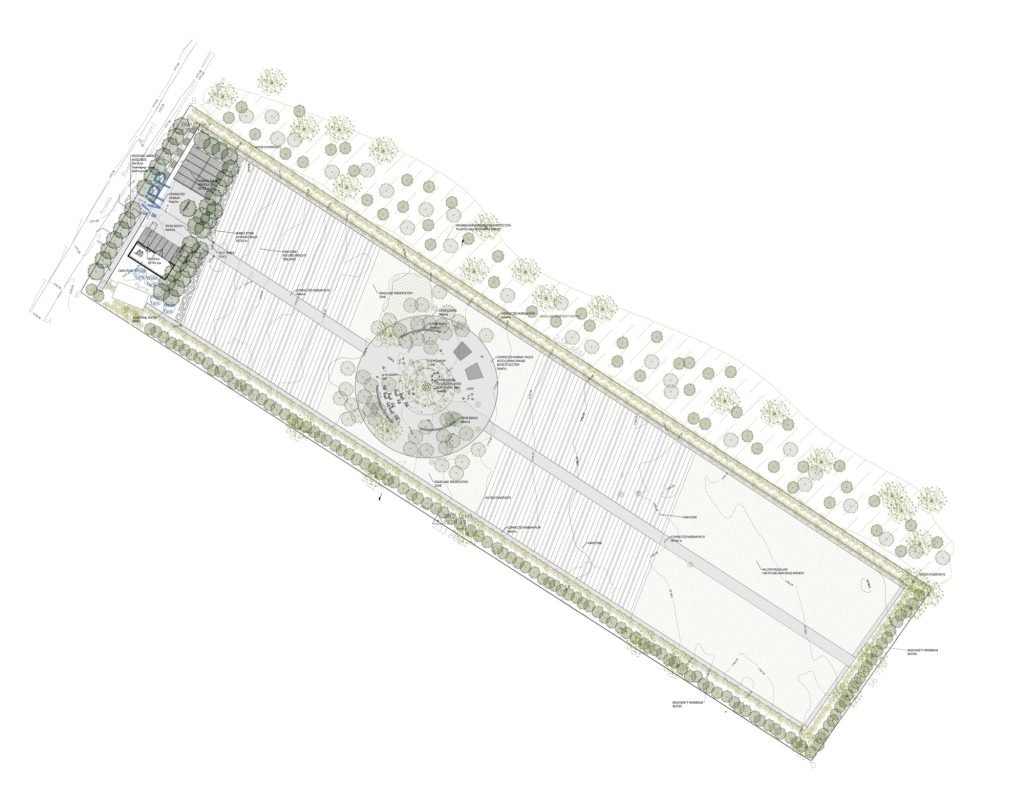
The farm also seeks to challenge the prevalence of monoculture farming practices within the region by demonstrating an alternative model based on food forest principles. In response to the ecological pressures of Northern Kenya’s semi-arid savannah landscape, the project embraces biodiversity, layered planting, and regenerative agricultural strategies to create a more resilient and productive system. By integrating a variety of edible, medicinal, and shade-giving species, the landscape supports healthier soils, improves water retention, encourages biodiversity, and reduces dependency on single-crop production. In doing so, the project offers a replicable model for addressing long-term food security while working in harmony with the environmental conditions of the region.
Equally important, the garden was designed as a shared gathering space — a safe and inclusive environment where community members can meet, exchange knowledge, and support one another. The space has become particularly important for local women’s groups and single parents, who gather regularly to discuss issues relating to health, family life, and community resilience.
The spatial form of the project uses simple stone walls and compacted murram pathways create a carefully choreographed sense of arrival, guiding visitors through the productive landscape towards a central communal space. This sequence of enclosure and opening establishes both intimacy and orientation within the garden, creating moments of shelter, pause, and gathering.
At the heart of the project lies a circular gathering space — a form deeply rooted in East African cultural traditions, where communities have historically gathered in circles to meet, exchange stories, resolve conflicts, and share knowledge, often beneath the canopy of a sacred fig tree. Reimagining this longstanding spatial tradition within the landscape, the circular space becomes both the symbolic and social centre of the garden.
Central to this gathering space is a newly planted Ficus sycomorus, a significant indigenous fig species that, over time, will grow to provide shade and protection for the community beneath it. As the tree matures, it will anchor the social life of the garden, transforming the circular clearing into a cool and welcoming environment for meetings, celebrations, learning, and daily interaction. The tree therefore becomes both a physical and cultural framework for collective life — connecting ecology, memory, and community identity within the landscape.
The material palette was intentionally grounded in the local context, using locally sourced Isiolo stone and compacted murram to create a robust and low-impact landscape. The warm tones and natural textures of the Isiolo stone establish a strong connection to the surrounding environment, while compacted murram pathways provide durable and accessible circulation throughout the garden with minimal environmental intervention. This restrained and locally rooted approach to materiality reinforces the project’s emphasis on simplicity, longevity, and community ownership, while reducing construction costs and supporting local craftsmanship and supply chains.
The project operates through a cooperative model in which each member contributes one day of labour per week, with the harvest distributed equally among participants. This system strengthens collective ownership while fostering responsibility, dignity, and social cohesion.
More than a productive landscape, the garden demonstrates how small-scale landscape interventions can create meaningful social impact. By combining food production with spaces for connection and dialogue, the project highlights the role of landscape architecture in nurturing healthier, more resilient, and empowered communities.
0.2035036998827718, 37.39023516145486