

本文由 承迹景观 授权mooool发表,欢迎转发,禁止以mooool编辑版本转载。
Thanks Change Studio for authorizing the publication of the project on mooool. Text description provided by Change Studio.
承迹景观: 东莞黄旗山下的火炼树村,有160多年的历史。随着城市的发展,一半城市一半烟火的交融,成为了这里有趣的生活。现在,东莞华润作为火炼树村更新项目的“总规划师”,委托我们和建筑师一起,通过道路系统的重塑、绿地系统的梳理、城市节点的提升,对未来的火炼树片区城市生活做了整体的更新。崭新的旗峰润府“中央公园,超级街区”将成为东莞城市生活的繁荣样本。
Change Studio: Nestled at the foot of Huangqi Mountain in Dongguan lies Huolianshu Village, a place rich with over 160 years of history. As the city expanded, this area has evolved into a fascinating blend of urban vibrancy and everyday tranquility. Acting as the “master planner” of the Huolianshu Village renewal project, CR Land has entrusted us, alongside architects, to undertake a comprehensive transformation of this urban fragment. Through the reconfiguration of road networks, restructuring of green systems, and enhancement of urban nodes, the future of Huolianshu District is being reimagined. The newly unveiled Qifeng Runfu, envisioned as a “Central Park and Superblock,” aspires to be a shining example of vibrant urban life in Dongguan.
▽山水溪谷公园 ©王宁
山水溪谷公园
Shanshui Valley Park: The Green Pulse of the City
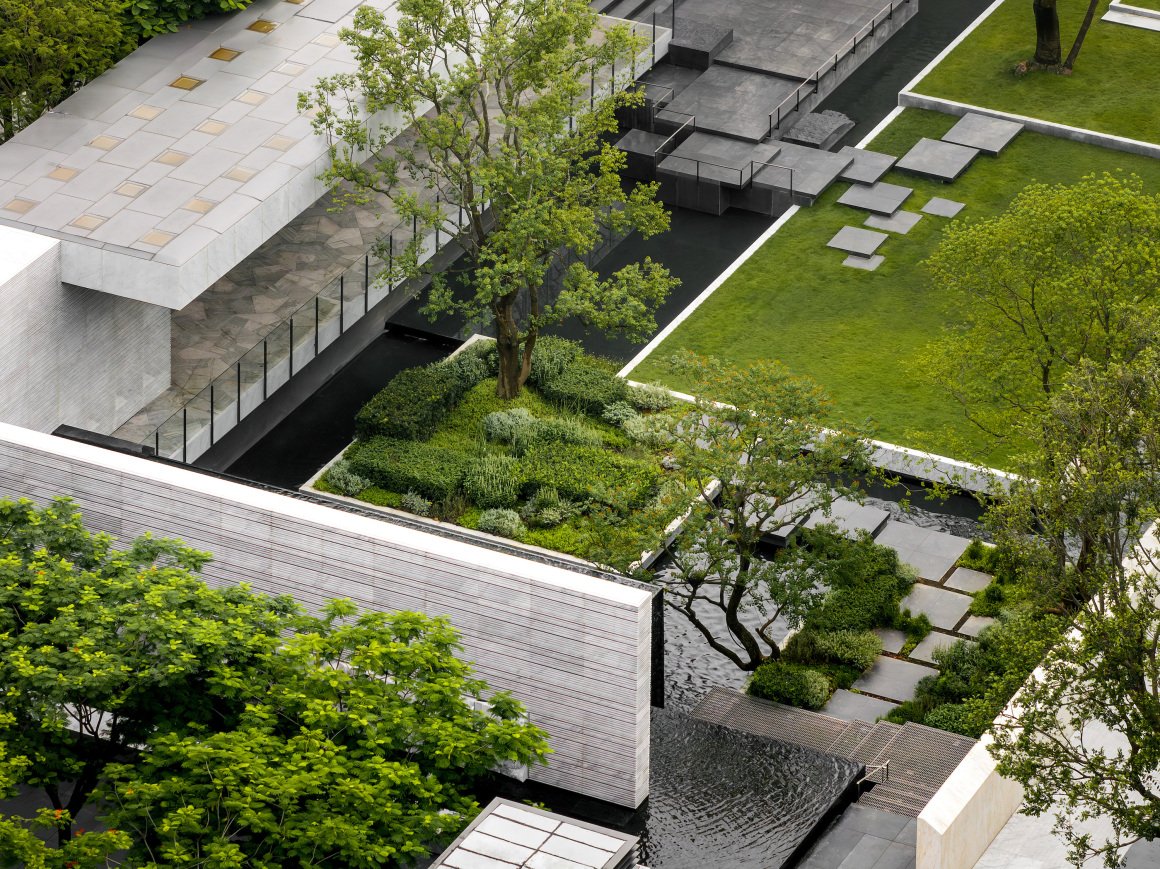
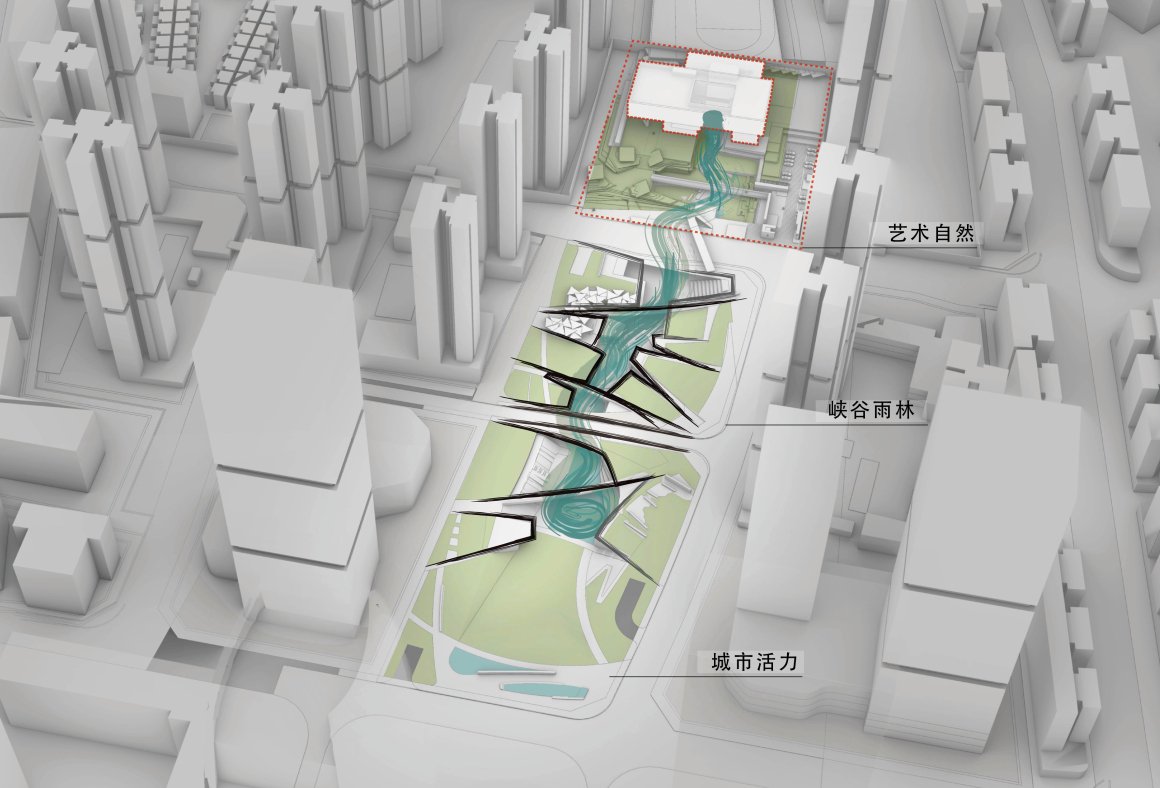
首先,我们在高楼林立,商业围绕的城市中心,规划了一片“山水溪谷公园”,它是该区域生活的绿色之心。公园用地贯穿三个街区,面积约32800平方米。溪谷公园是城市功能的超级链接器,因此我们结合公园周边不同的城市功能,赋予了公园三个地块不同的城市定位,由西向东分别是:城市活力、峡谷雨林和自然艺术。
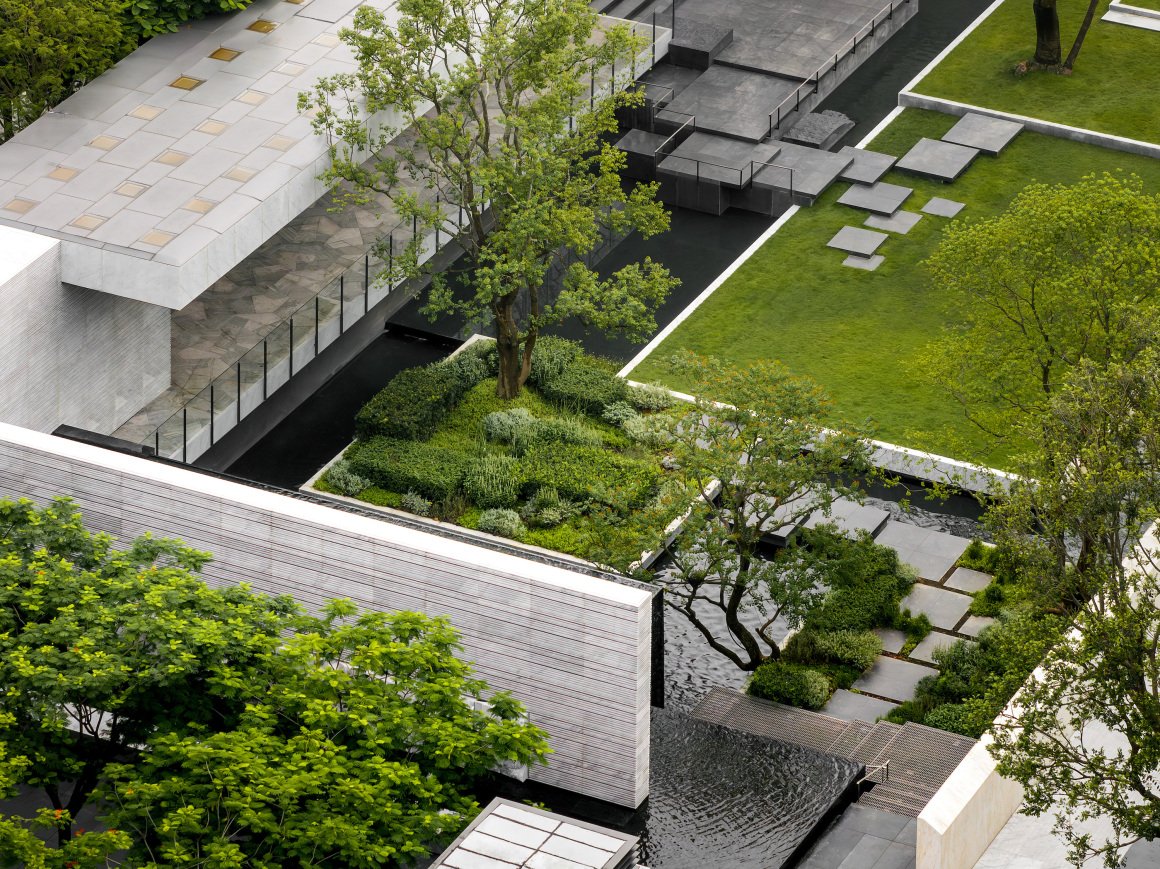
同时,人工瀑布在东面地块自然艺术展厅的凹谷从天而落,落到谷底形成溪流,贯穿三个公园地块。而公园就像被溪流冲刷、裂变成立体的峡谷空间。景观顺势而为,形成了瀑布、溪流、雨林等等。草地和树林也从地面延伸到谷底,让地下层的停车成为一道美丽的风景。
Amidst the towering high-rises and bustling commercial spaces, we planned Shanshui Valley Park, a green core spanning approximately 32,800 square meters and linking three urban blocks. Positioned as a multifunctional hub, the park is designed to integrate diverse urban needs and is divided into three thematic sections from west to east: Urban Vitality, Gorge Rainforest, and Natural Art.
A striking feature is the cascading artificial waterfall, which descends from the Natural Art Hall in the eastern block, flows into the gorge below, and connects the three park sections via a continuous stream. The park’s landscape is sculpted as though carved by the water itself, forming a three-dimensional gorge space with waterfalls, streams, and rainforests. Grasslands and trees extend seamlessly into the valley floor, transforming even the underground parking into a scenic feature.
▽项目构思 ©承迹景观
城市艺术展厅
Urban Art Hall: A Landmark of Modernity and Nature
自然艺术公园,位于山水溪谷公园的东面地块,被作为先行城市示范段呈现出来。它给崭新的火炼树村未来“旗峰润府”的城市生活,带来了更大的信心和精彩的城市面貌。
其中占地1800平方米的艺术展厅建筑,现代简约,既是溪谷公园东面公园的主角,又成为了城市新的形象和地标。特别是给公众展示未来城市规划,以及开展各种艺术活动,就需要依托展厅来布置。
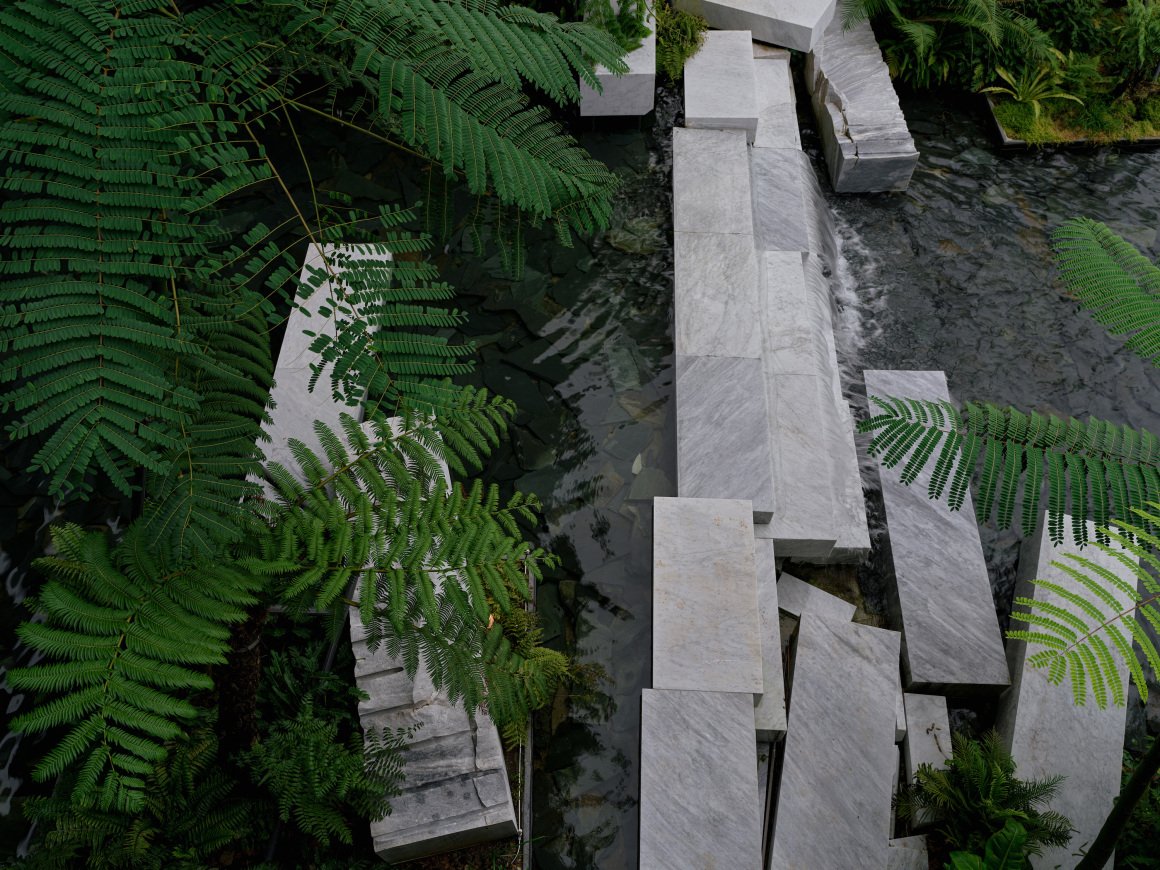
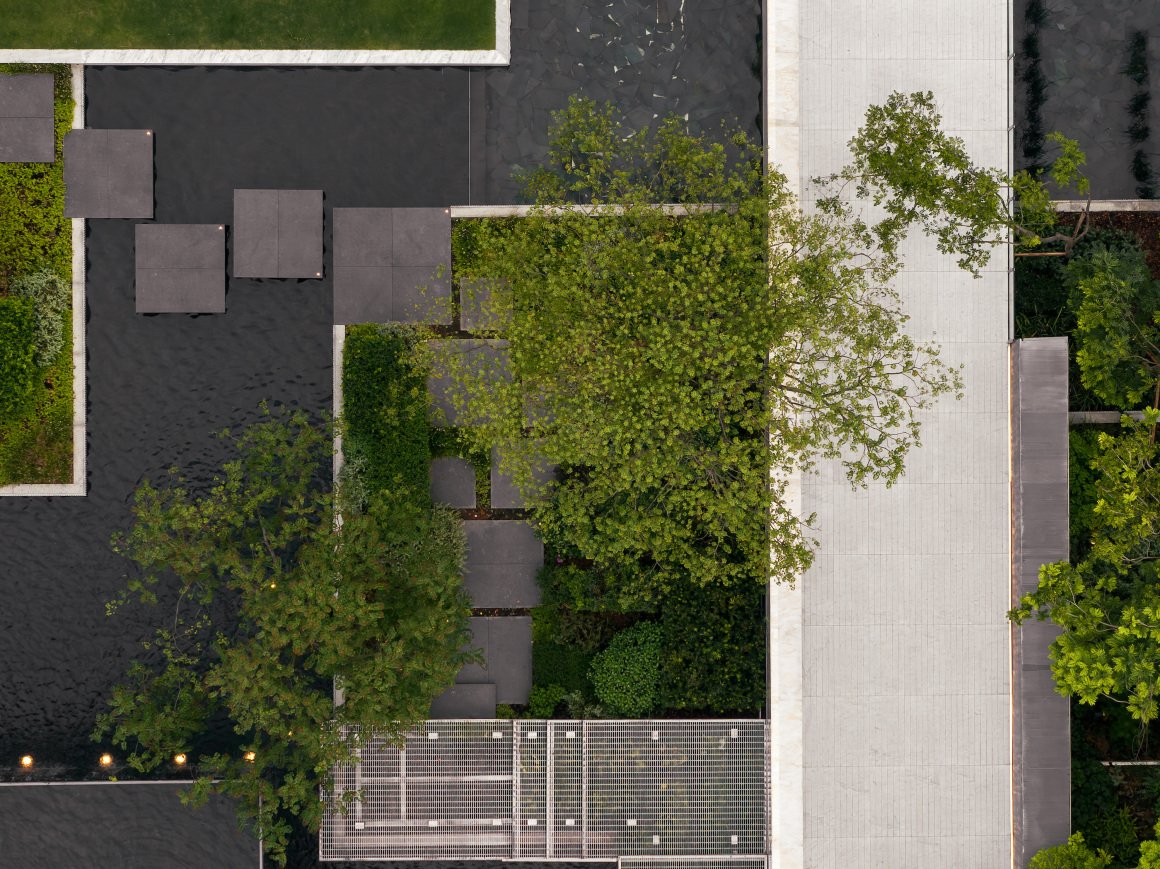
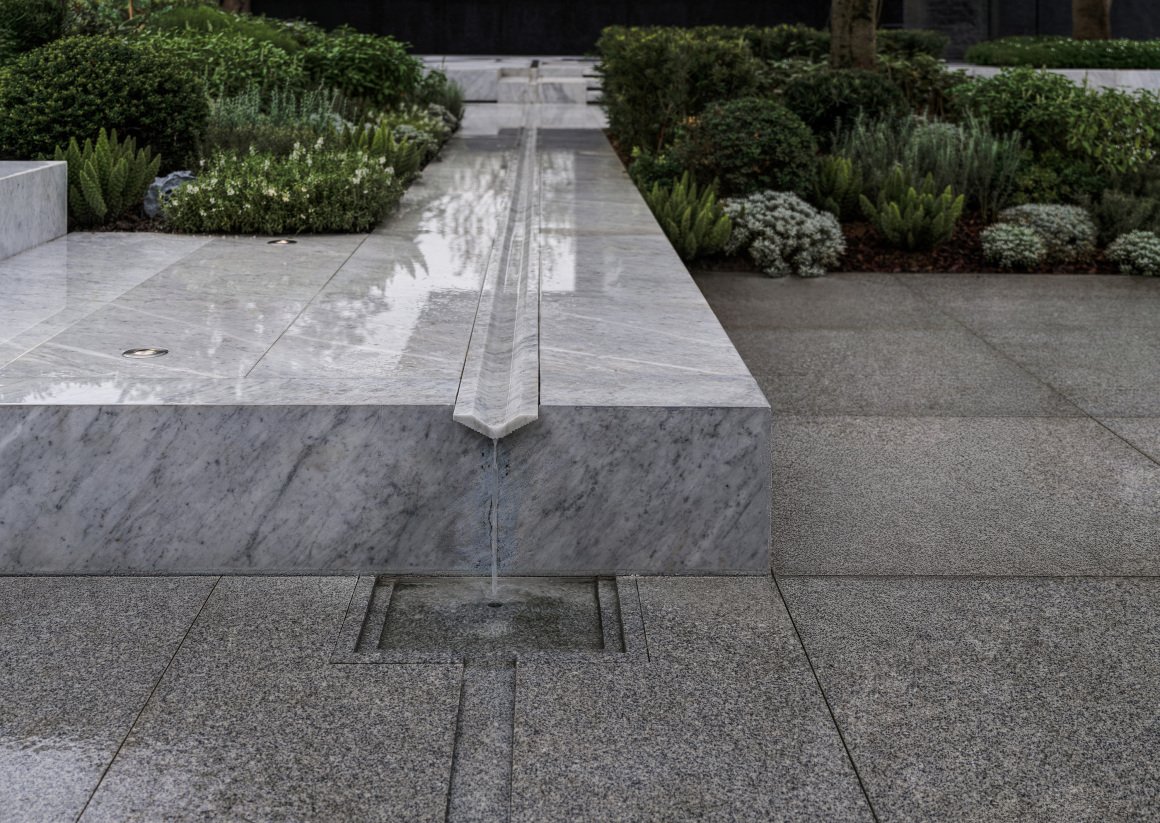
艺术展厅在公园里与自然环境融合,既被绿意包围又成为景观的一部分。瀑布从建筑二层跌落下来,在谷底形成溪流。水景沿着石条潺潺跌落,汇聚成水面。
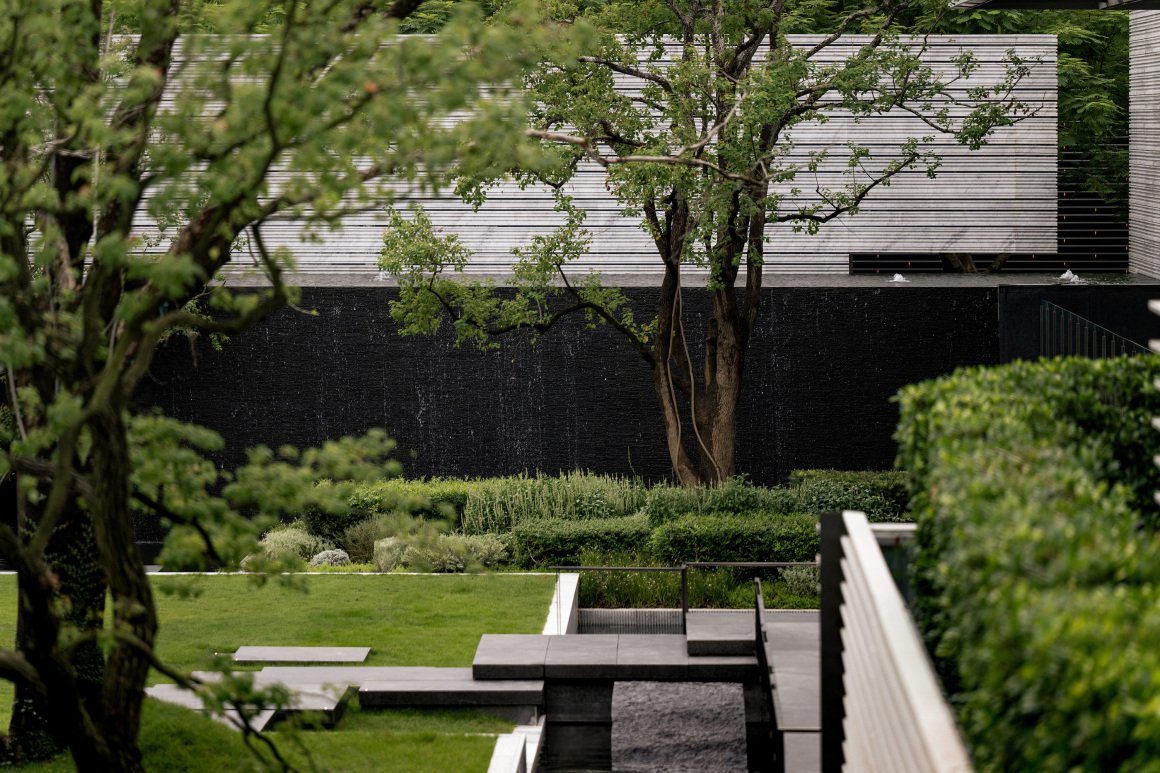
在溪谷里,葱郁阔叶类植物所构建的亚热带雨林群落应运而生,粘叶豆作骨架,点缀鸢尾、鸟巢蕨、富贵蕨、霸王蕨、小天使蔓绿绒等20多种品类相互交融。
The Natural Art Park, located on the eastern plot of the Shanshui Valley Park, is presented as a pilot urban demonstration zone. It brings renewed confidence and a vibrant urban outlook to the future urban life of the newly developed Huolian Tree Village and the “Qifeng Runfu” area.
At the heart of the park lies an 1800-square-meter Urban Art Hall. Designed with a modern minimalist aesthetic, the Art Hall not only serves as the central feature of the eastern section of the Shanshui Valley Park but also becomes a new symbol and landmark for the city. It plays a crucial role in showcasing future urban planning to the public and provides a space for a variety of art activities.
The pavilion seamlessly integrates with the surrounding natural environment, enveloped by greenery and becoming an integral part of the landscape. A waterfall cascades from the second floor of the building, flowing down into the valley below, forming a creek that weaves through the entire park. The water meanders over stone pathways, gradually converging into reflective pools.
Within the valley, a subtropical rainforest ecosystem thrives, created through a rich tapestry of lush broadleaf plants. The backbone of the landscape is formed by the sticky-leafed beans, with over 20 species of plants, including irises, bird’s nest ferns, fortune ferns, ostrich ferns, and angel’s hair creeping vines, interwoven to create a vibrant, biodiverse environment.
▽城市艺术展厅 ©王宁


跨桥入景
Bridging the Gorge: A Pathway of Discovery
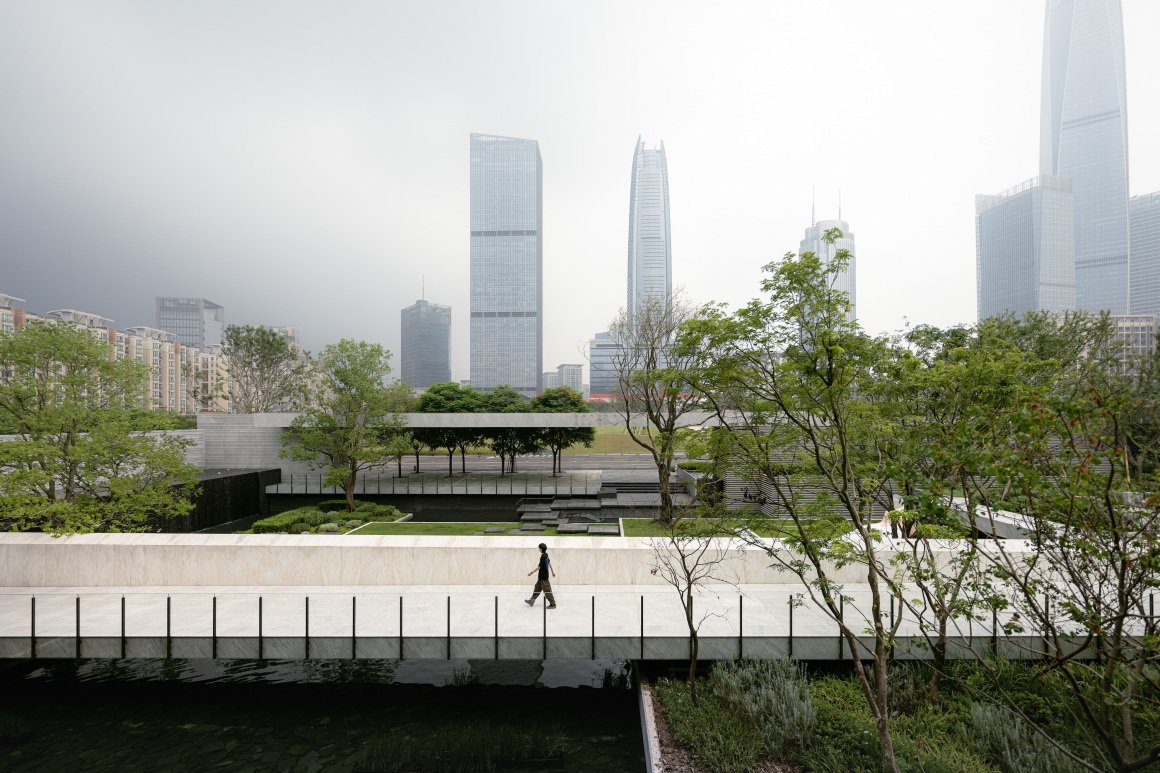
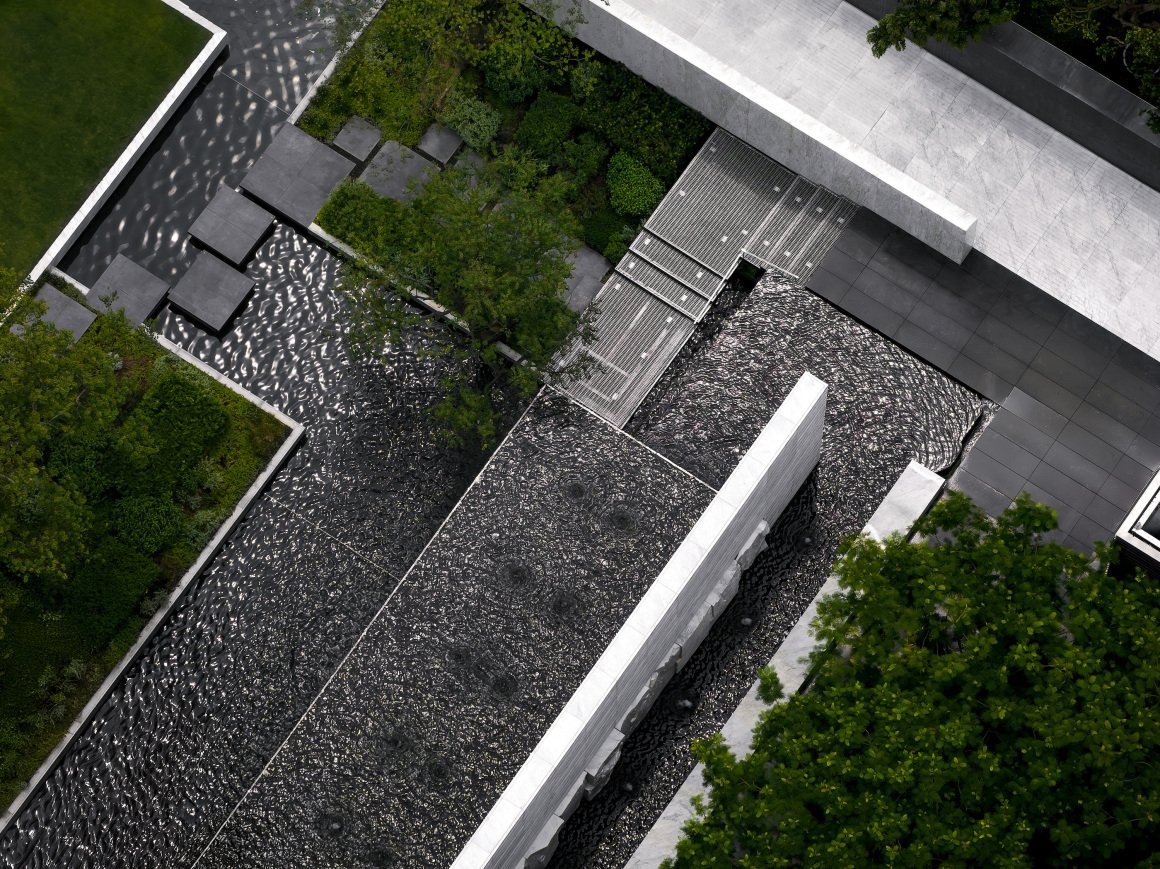
想要到达展厅,需要跨过水溪形成的“自然谷地”。那么,搭桥入景就成为了必然的方式,这也是我们希望通过设计来形成的参观仪式。桥的形式,既能成为风景,又能与整体环境结合,还可以有独特的行径体验,因此它首先需要融合在建筑的整体设计语汇当中。桥的尺度很长,跨度有60米,面向城市窗口的一边设计成一条长长的白色透光石材景墙。白天,云桥跨溪,桥的一头从树林中穿出来,连接另一边的大树花园,它是在建筑前画出的纯洁的“一笔”。夜晚,桥灯开启,它又成为公园里最神秘的长虹。走在桥上,可以远观北面的黄旗山,可以近距离的仰望建筑的尺度和瀑布的气势,可以凝听着自然溪谷水声的洗礼,这就是进入艺术展厅最有趣的仪式。
To reach the Urban Art Hall, visitors must cross the “natural valley” formed by the flowing creek. The bridge, therefore, becomes an inevitable design element, creating a deliberate and immersive experience that introduces visitors to the site.
The form of the bridge is designed not only to enhance the landscape but also to harmonize with the overall environment, offering a unique experiential journey. It is seamlessly integrated into the architectural design language of the pavilion. The bridge spans 60 meters and is characterized by a long, translucent white stone wall facing the urban side, which serves as both a visual element and a functional connection.
By day, the “cloud bridge” stretches across the creek, with one end emerging from the forest to link with the large tree garden on the opposite side. It forms a pure and elegant “stroke” in front of the architecture. By night, as the bridge lights up, it transforms into a mysterious, radiant arc across the park.
Walking along the bridge, one can enjoy a distant view of the Yellow Flag Mountain to the north, experience the grandeur of the building’s scale and the cascading waterfall up close, and be enveloped by the soothing sounds of the natural creek below. This creates the most intriguing and memorable ritual for entering the Urban Art Hall.
▽桥 ©王宁


大树庭院和桥下花园
The Great Tree Courtyard and the Garden Below
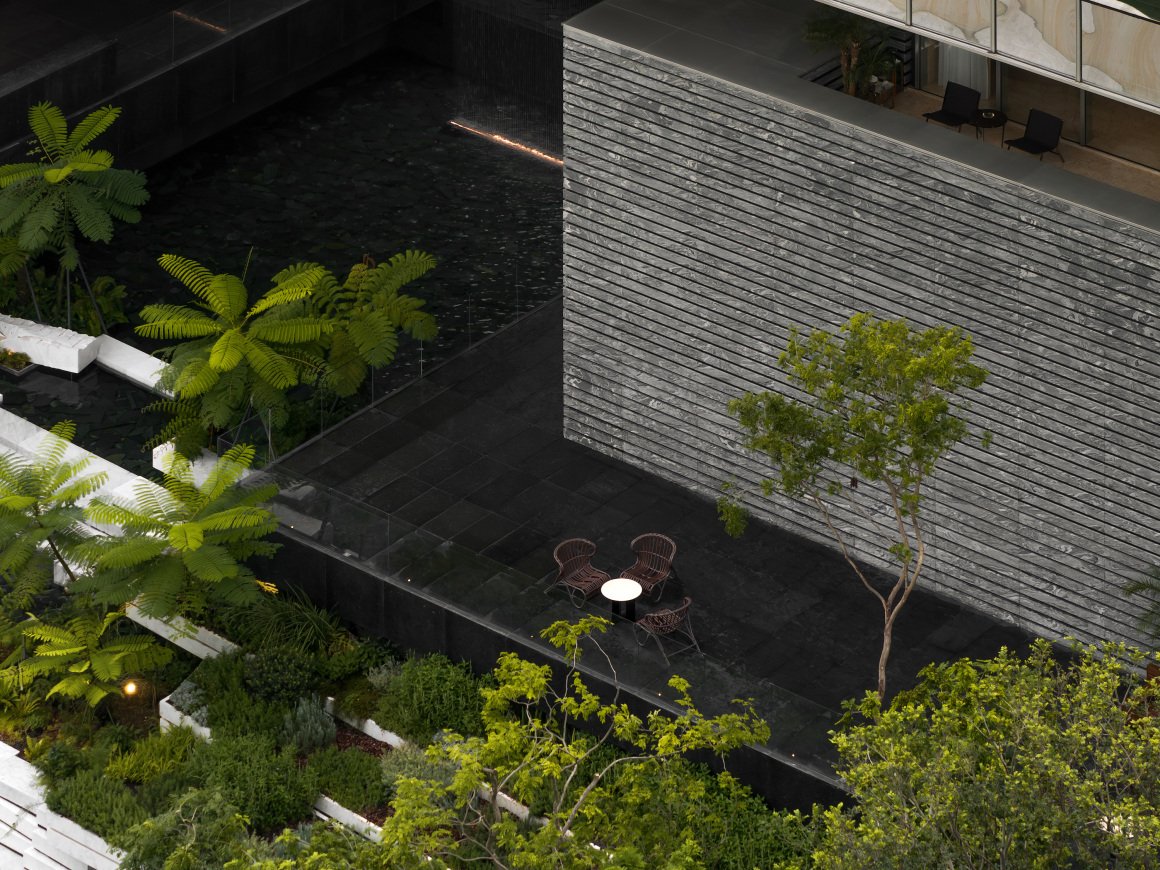
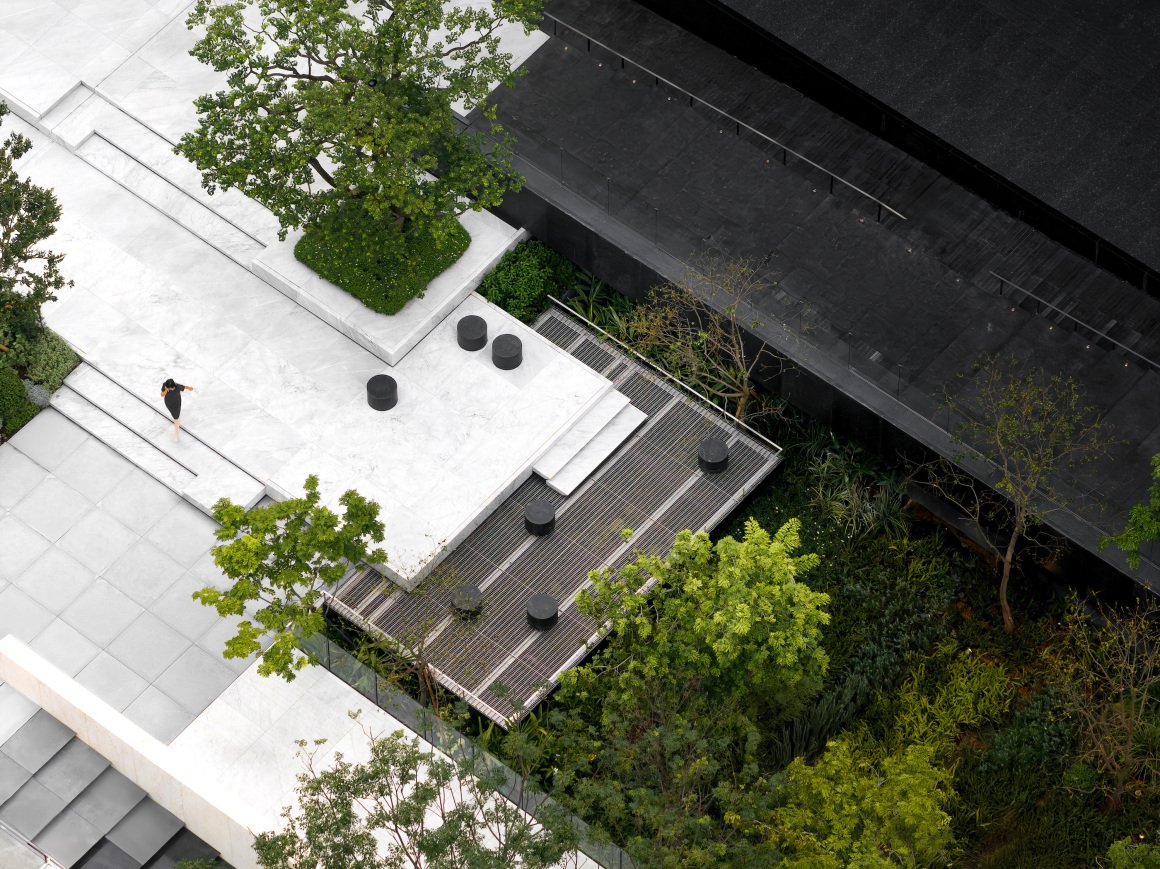
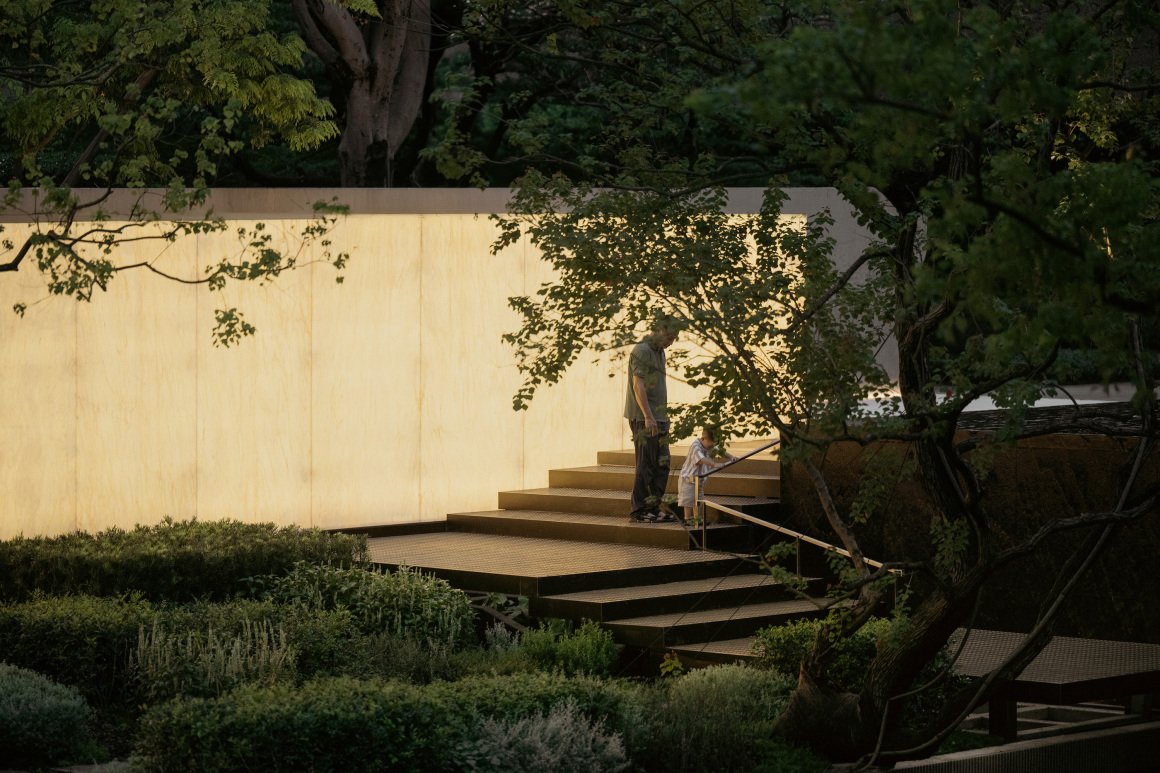
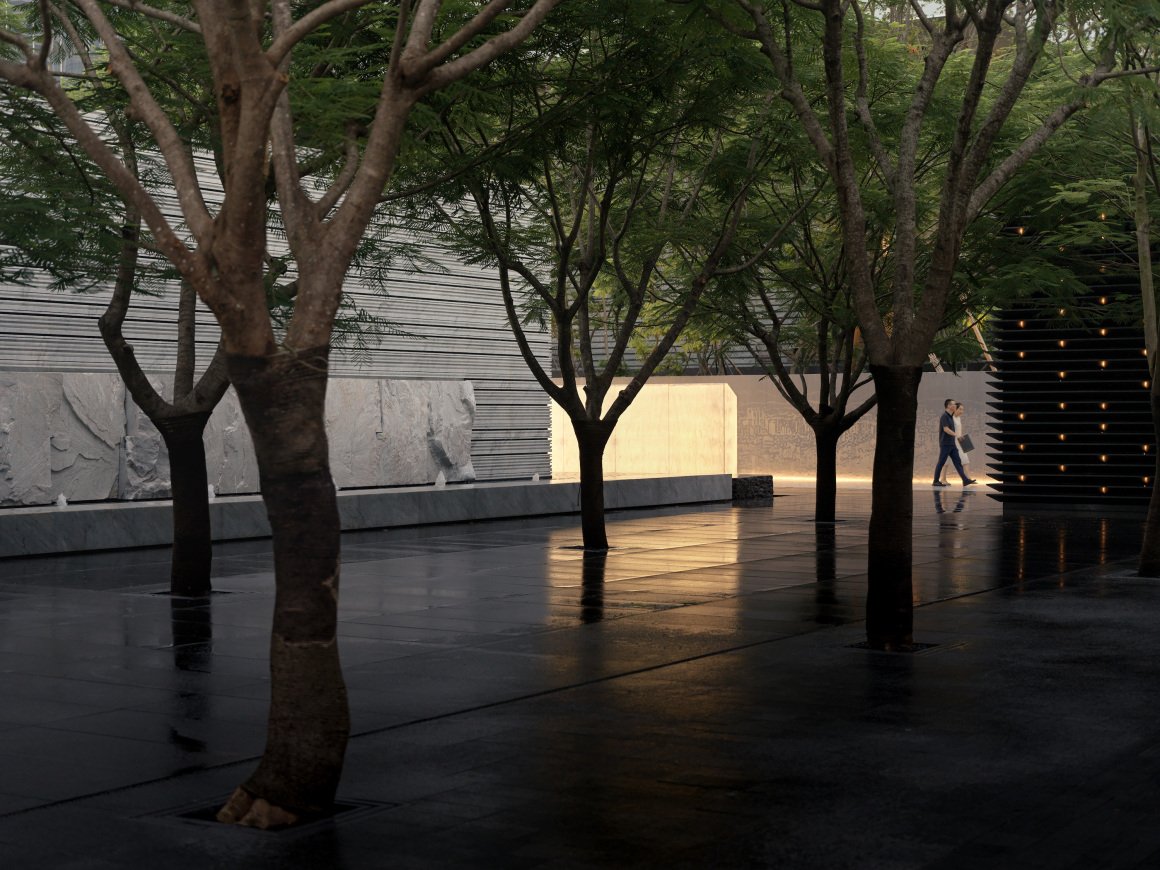
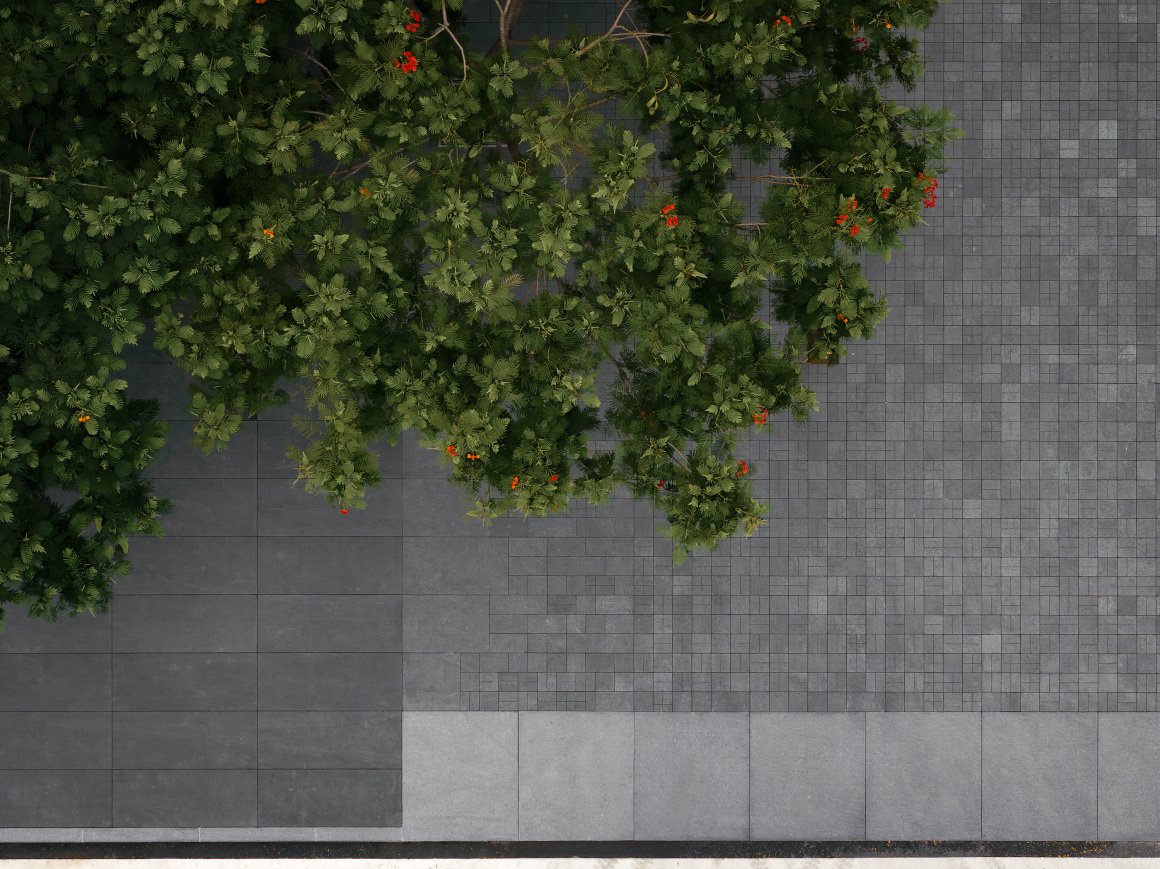
过桥之后,在大树包裹下的空间氛围突然安静下来。我们把周边用地拆牵后的原生朴树、苦楝树移植到庭院里。这些大树曾经见证了火炼树村的生活和发展,未来他们会在这里继续守护这座城市新的繁荣。生机勃勃的庭院里,镶嵌了几处精致打造的”包厢”,搭配上舒适的软垫,这是城市当中惬意的街角花园。
Upon crossing the bridge, visitors enter the Great Tree Courtyard, a tranquil space enveloped by transplanted native trees such as Chinese hackberries and Melia azedarach. These trees, once witnesses to the life of Huolianshu Village, now stand as guardians of the city’s flourishing future. Nestled within this vibrant courtyard are intimate seating “pavilions,” offering serene retreats for relaxation amidst nature.
▽街角花园 ©王宁

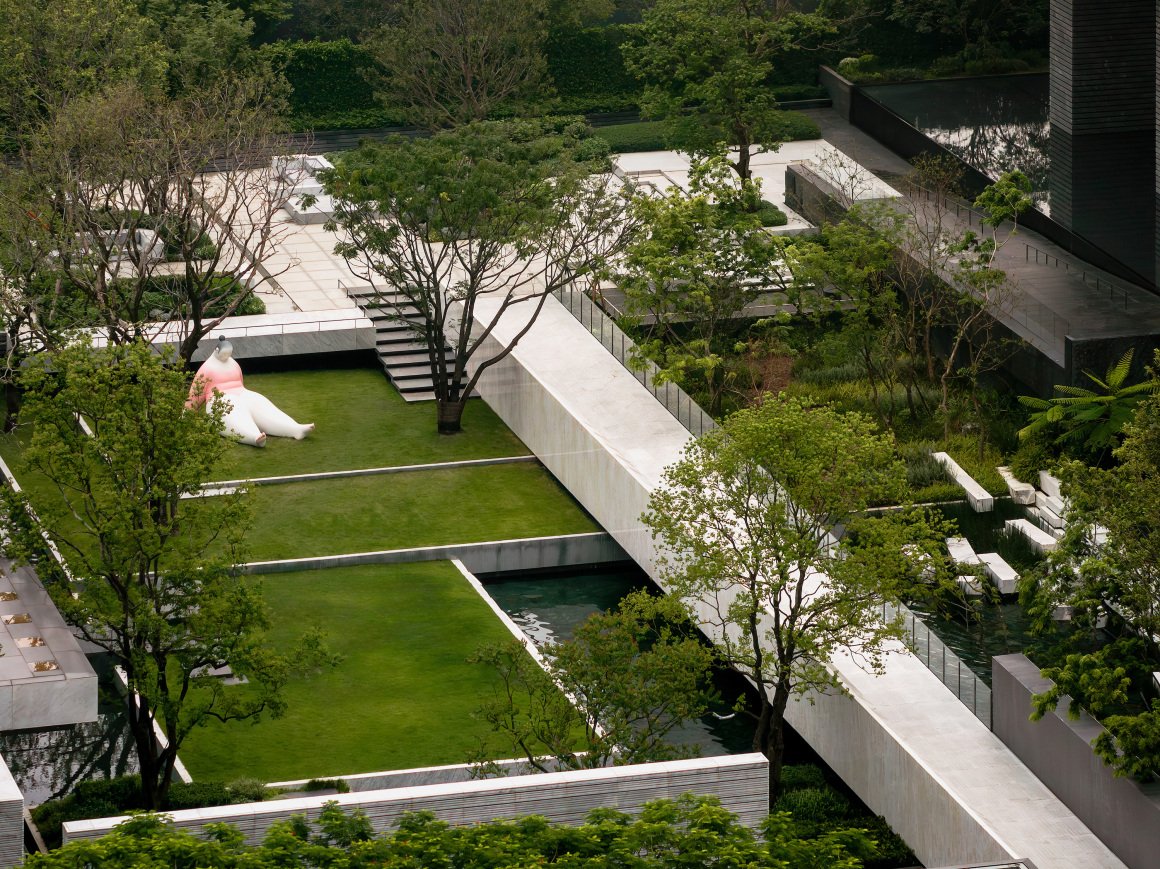
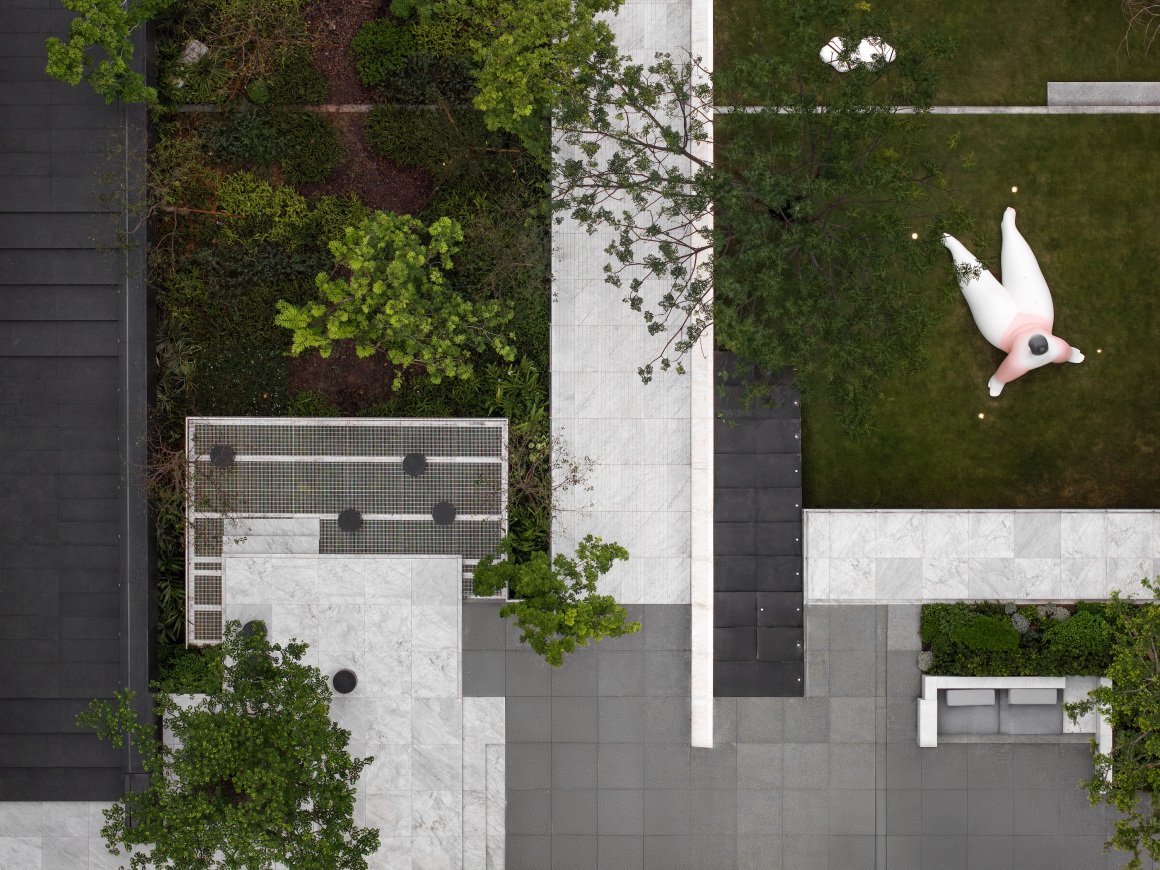
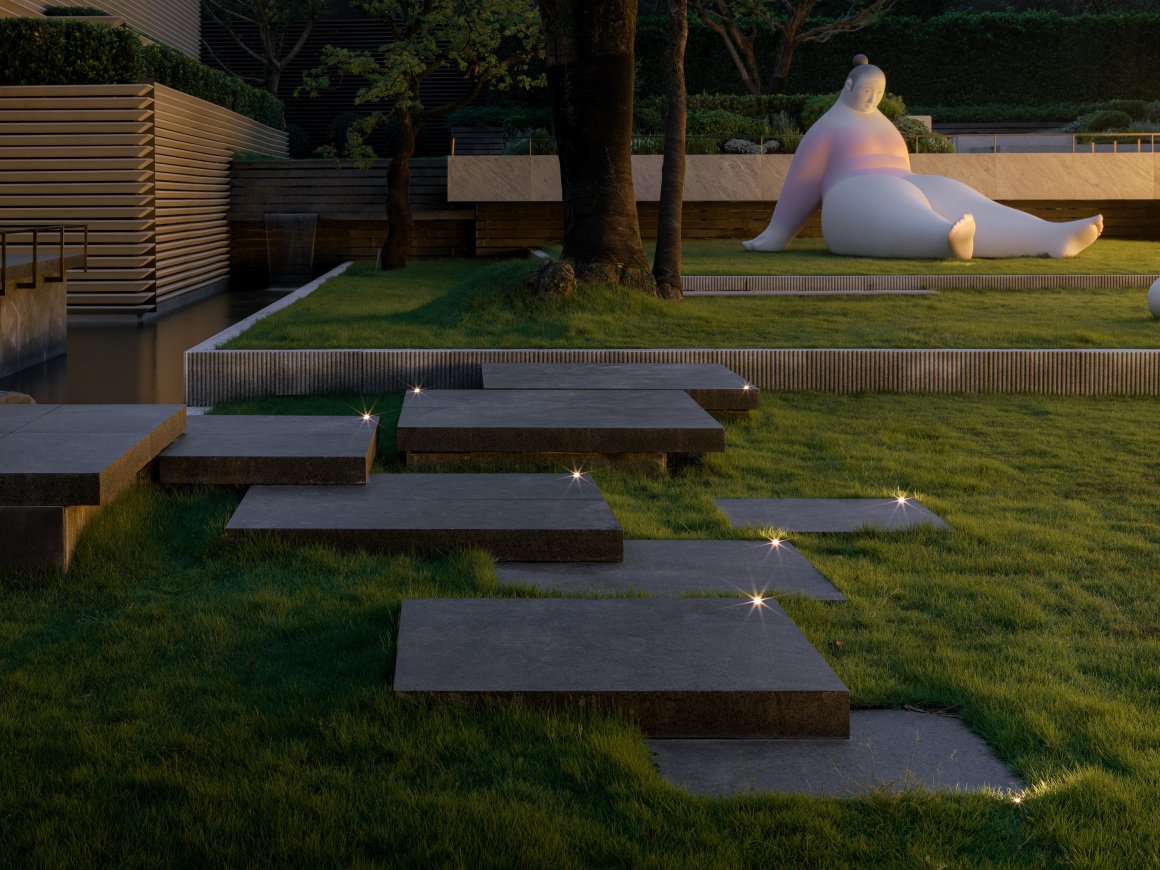
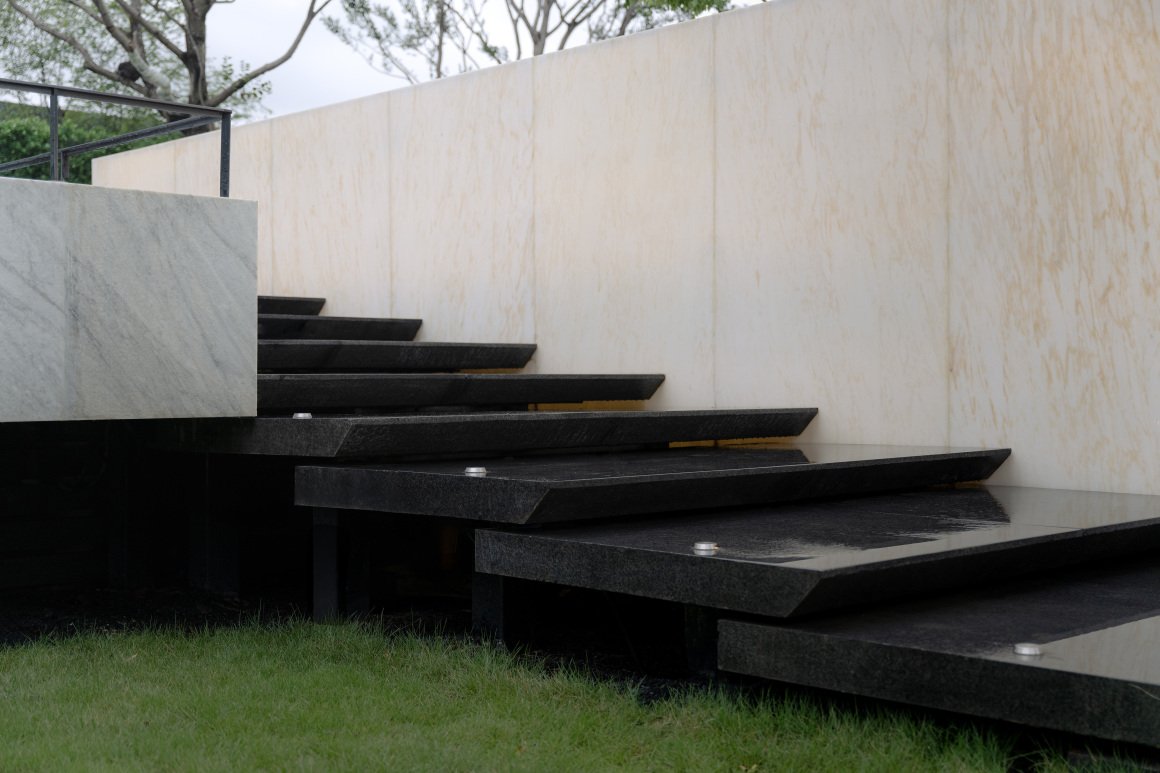
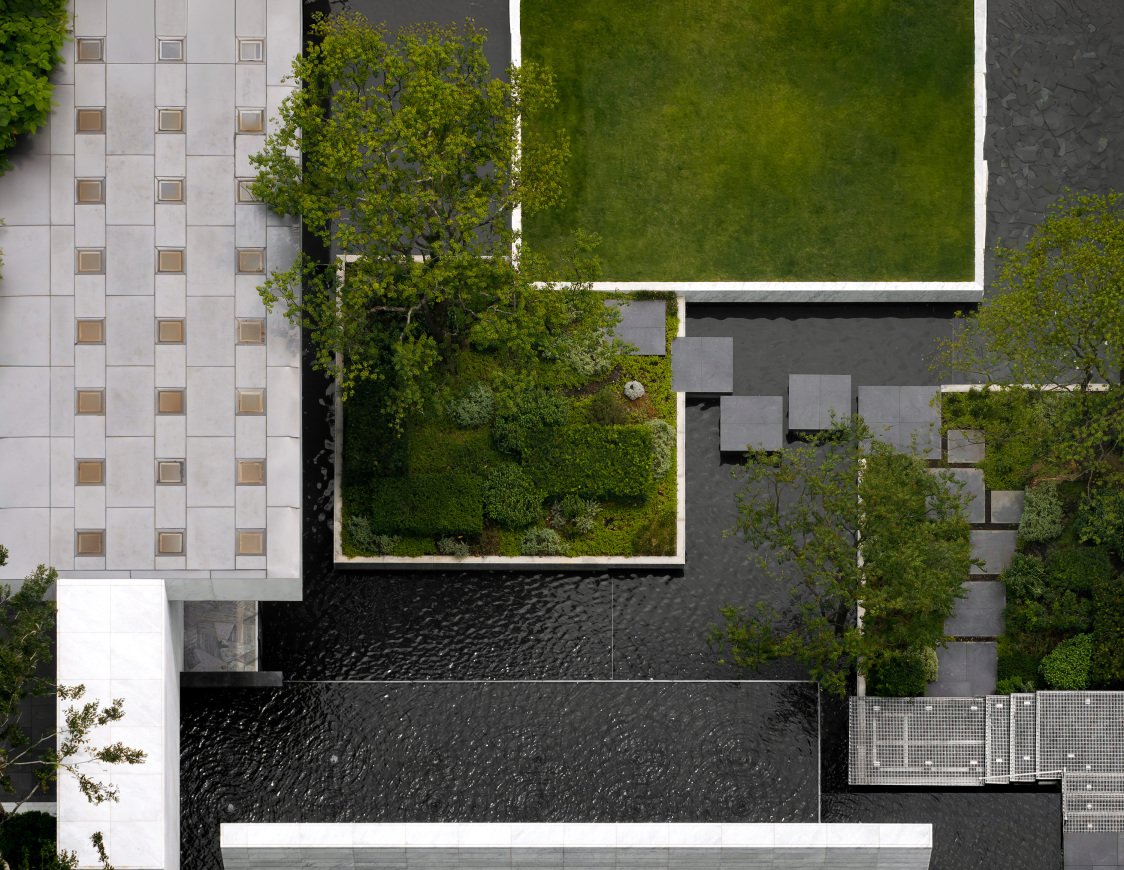
几步石材台阶通向桥下的花园。花园结合高差,草坪台地相互穿插、跌落,并延伸向桥下的水潭。草台空地成为了艺术家展示优秀作品的绝佳空间。目前,艺术家罗旦的铸铜彩绘雕塑作品就慵懒的坐在草地上,还有几件同系列的艺术作品在展厅里与桥下花园遥相呼应。
A few steps of stone stairs lead to the garden beneath the bridge. The garden, designed with varying elevations, features interwoven terraces and grassy platforms that cascade down and extend toward the reflecting pool under the bridge. The open spaces between the grass terraces provide an ideal setting for artists to display their work. Currently, bronze-painted sculptures by artist Luo Dan rest lazily on the grass, with several other pieces from the same collection echoing the garden’s themes within the exhibition hall.
▽展厅与桥下花园遥相呼应 ©王宁
从建筑前水景引流下的水线,穿过花园,流入桥下花园的水潭。瀑布和建筑前的镜面水体,分别是不同的水系,最后在桥下花园里汇集在一起。同时,水景也成为了通向展厅入口的重要溯源。
The water from the building’s front cascades through the garden, flowing into the reflecting pool beneath the bridge. The waterfall and the building’s mirror-like water feature are distinct water systems, ultimately converging in the garden below. This continuous water flow not only integrates the landscape but also forms a symbolic source that guides visitors toward the entrance of the exhibition hall.
▽水景©王宁

城市之窗
The City Window: Framing Urban Life
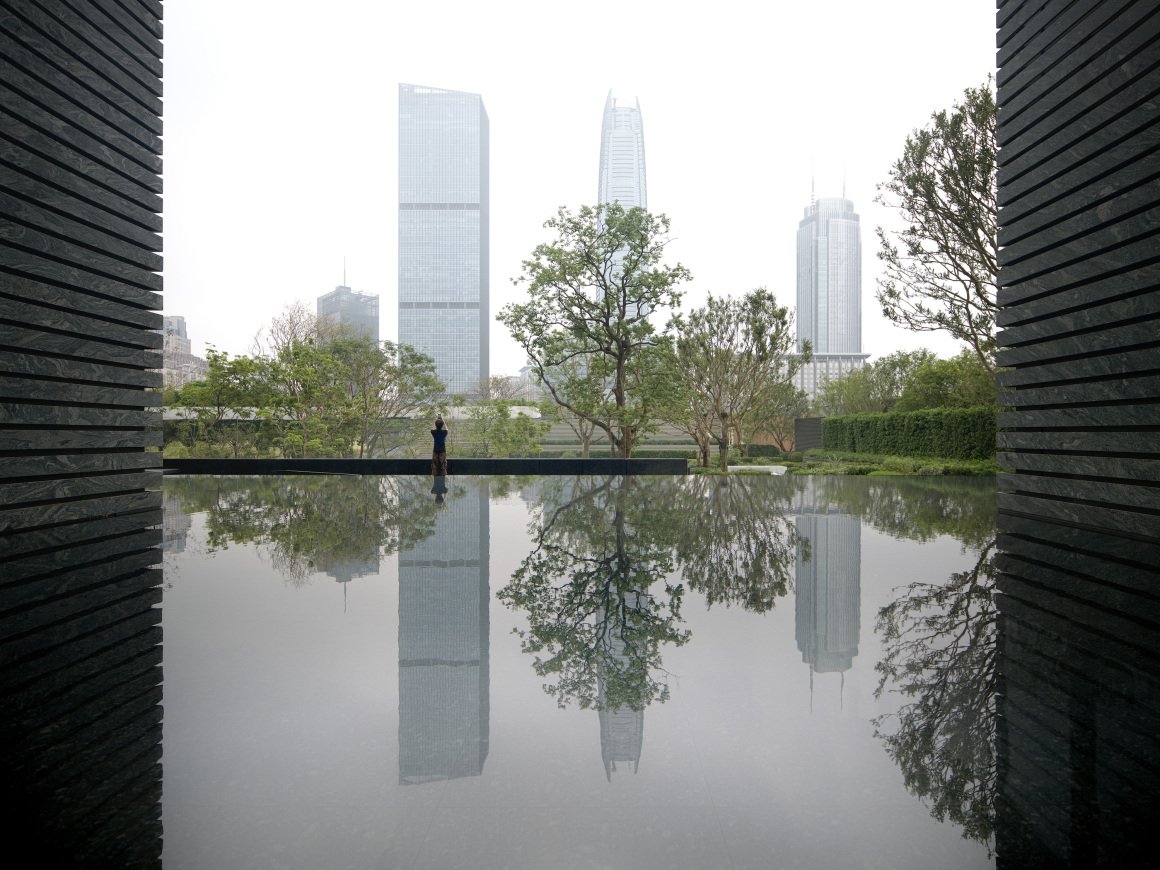
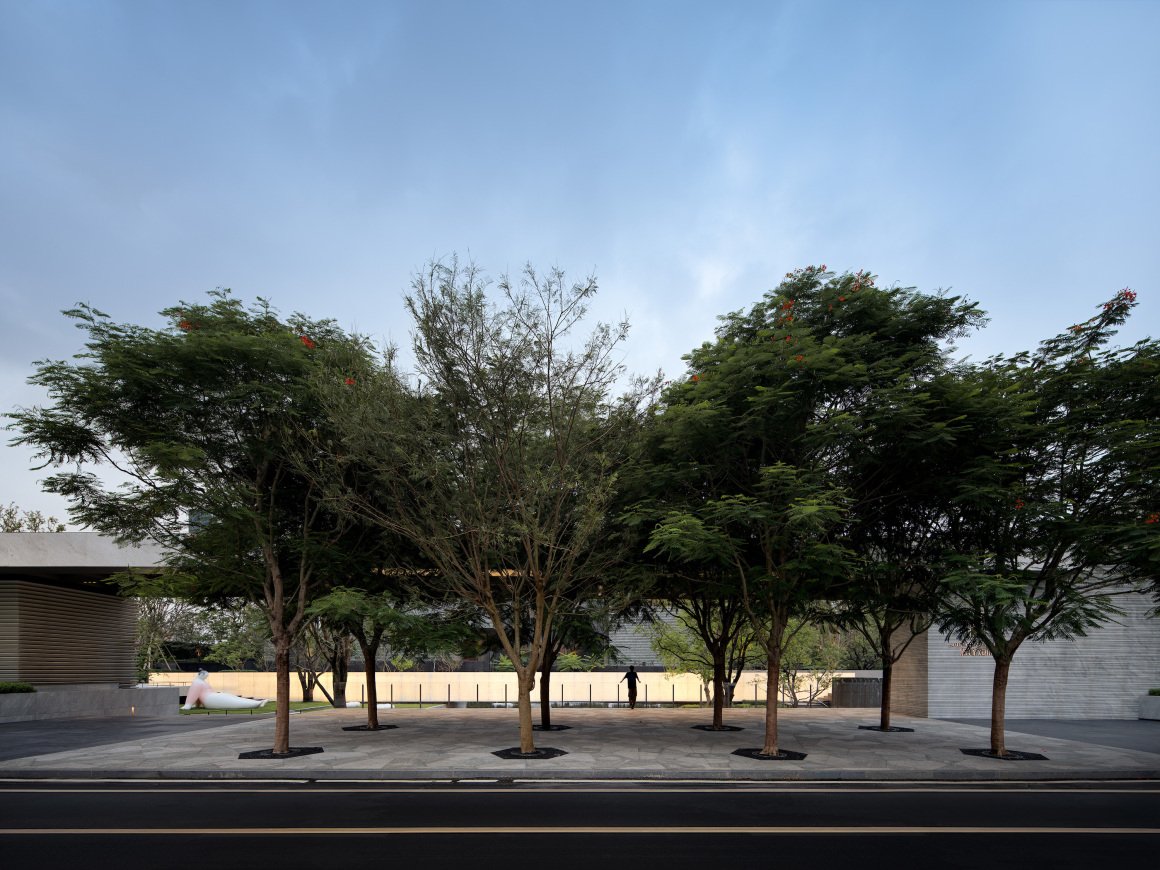
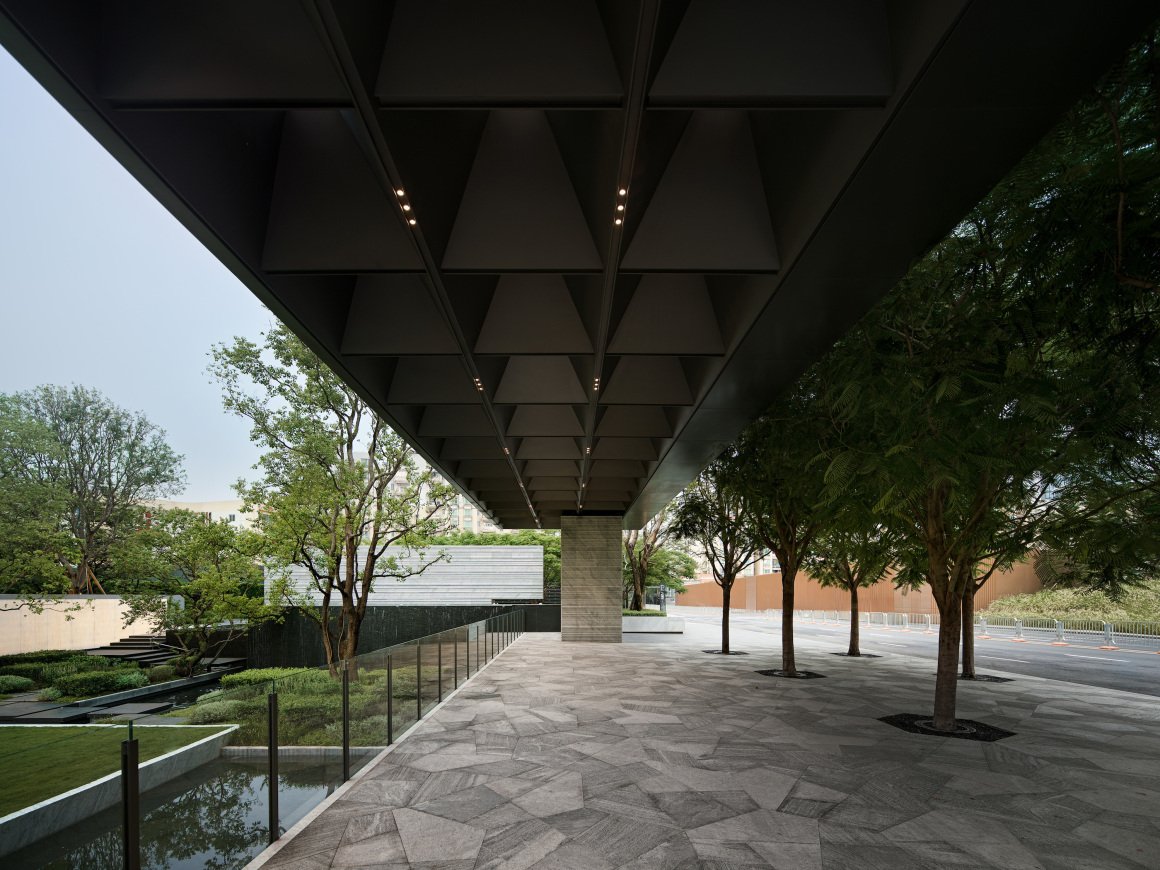
东面自然艺术公园与中段规划中的峡谷雨林部分一街相隔。延着城市界面,我们设计了一幅36米宽画幅的“城市之窗”。它其实是一处长廊驿站,是方便行人驻足停留的林下广场。站在街边,透过画窗往内看,建筑、瀑布、长桥、流水、大树、游人……构成了一幅生动的公园画卷。在公园里往外看,城市高楼、树林、车辆、行人……又是一番繁荣的城市风景。
Adjacent to the Gorge Rainforest section, the eastern park features the City Window, a 36-meter-wide framed vista that serves as both an entrance and a viewing gallery. From the street, the frame captures a vivid tableau of waterfalls, bridges, flowing streams, and greenery. From within the park, it showcases the bustling urban skyline, blending the tranquility of nature with the vibrancy of city life.
▽城市展厅 ©王宁
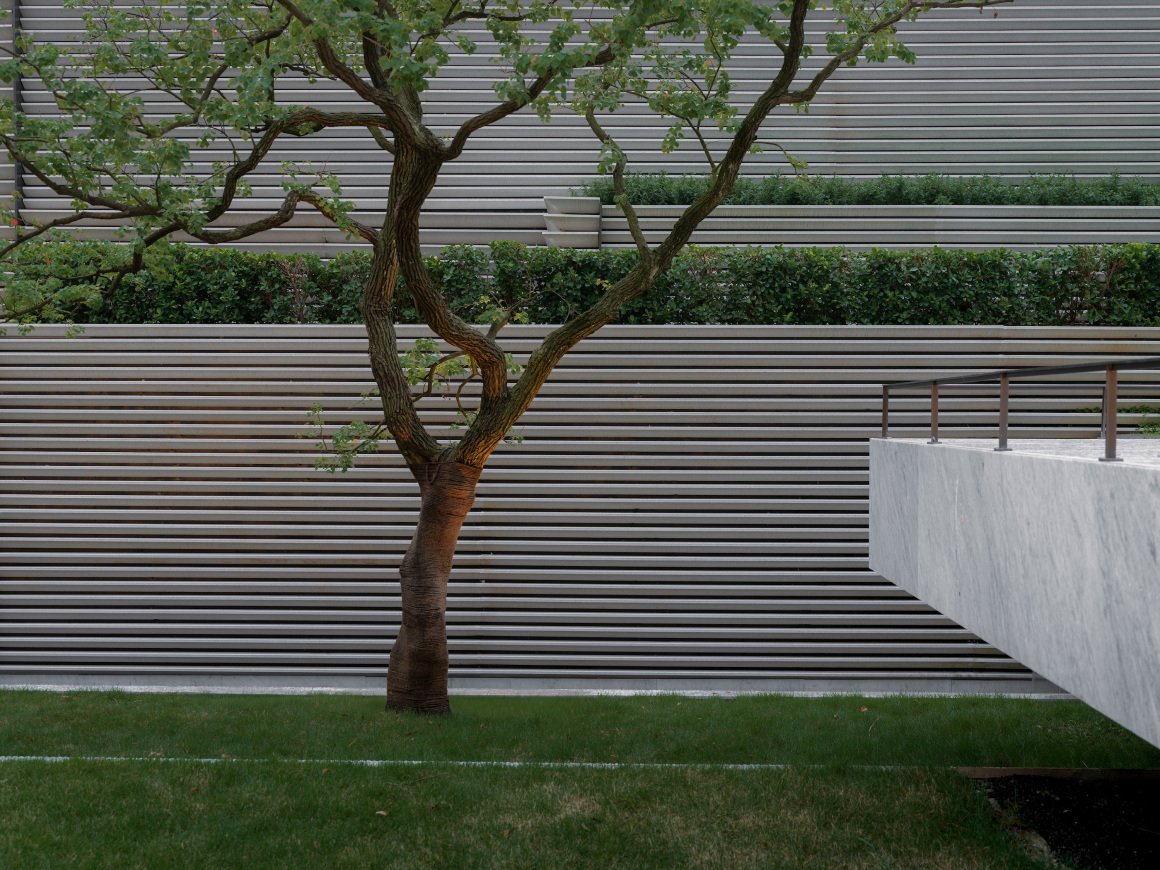
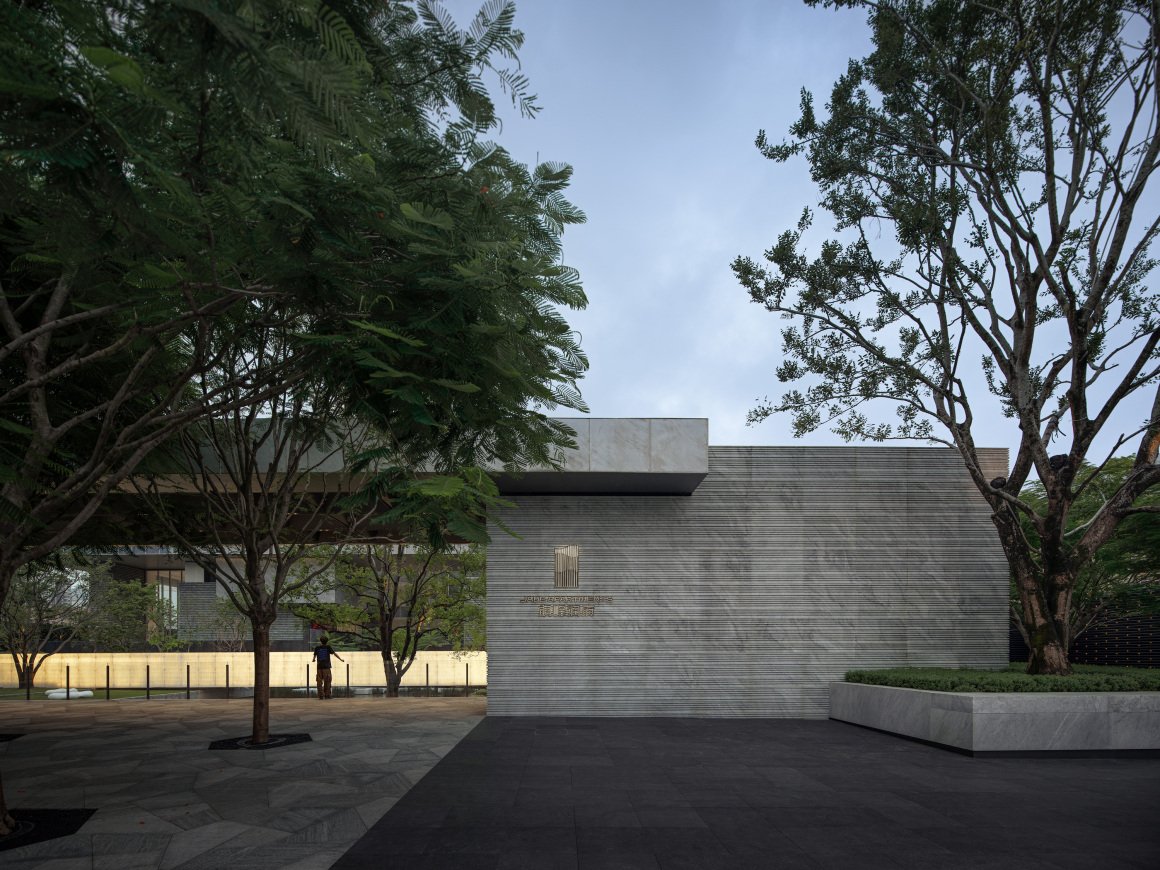
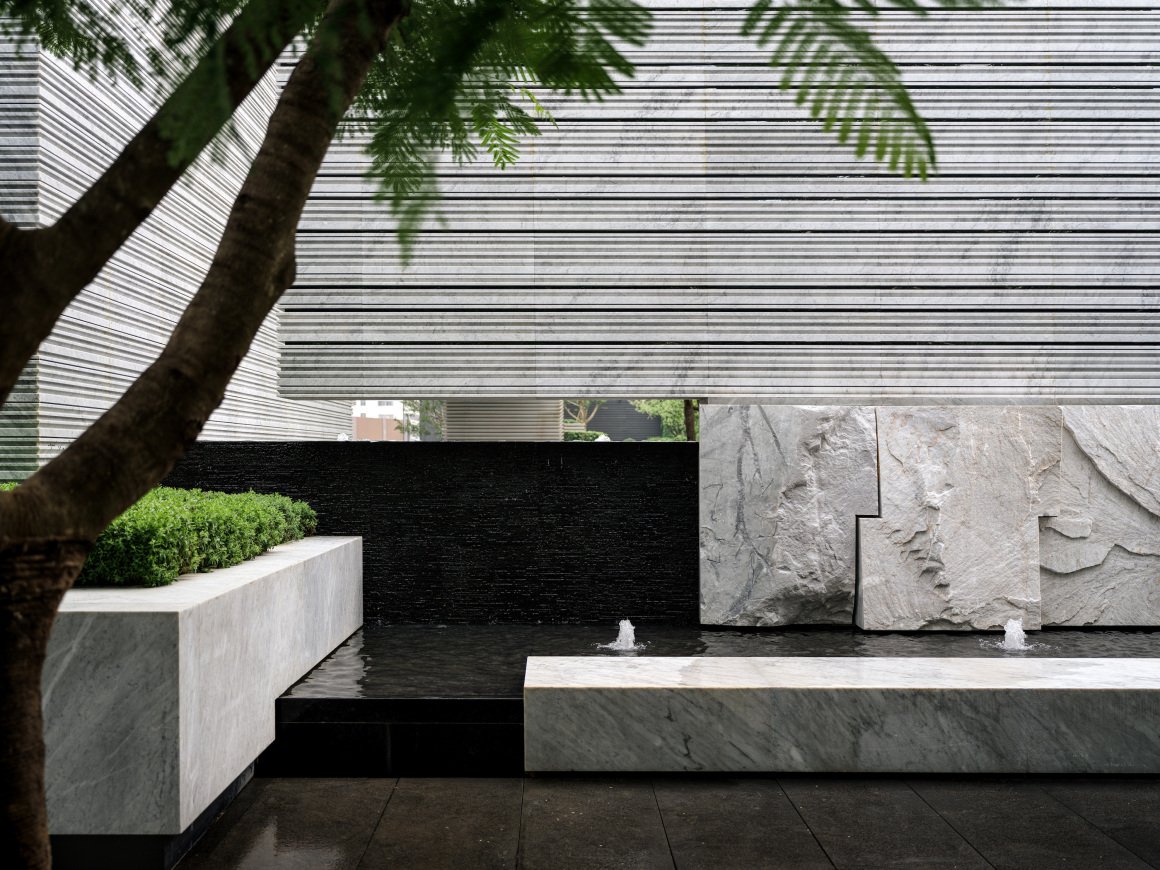
城市与公园之间,不仅有可穿越视野的窗口,还需要有隔断喧嚣的屏障。我们挑选了白色的大理石,经过匠心的细节工艺作为分隔空间的墙体材料,同建筑立面肌理一致,强调细腻的横向水平线条。墙体不仅是公园入口的形象,同时也是成为了进入公园的指引。
To balance connectivity and tranquility, we used finely textured white marble for the frame. This material not only acts as an acoustic barrier but also aligns with the hall’s architectural aesthetics, reinforcing the park’s serene yet sophisticated atmosphere.
▽公园入口 ©王宁
细腻的材质变化不仅界定了空间的功能,更加强调了景观情绪。
以自然设计城市,而未来的生活需要高质量的城市绿地。自然艺术公园作为先行呈现的公园绿地,它是旗峰润府片区生活体验的范本。未来完整的山水溪谷公园,连接着城市与自然,连接着浓浓的烟火气与未来城市活力的新时代。
The refined materiality aligns with the architectural language, reinforcing the park’s serene yet sophisticated atmosphere.
Through the lens of landscape design, we have crafted a dialogue between city and nature, memory and modernity. Natural Art Park, as the pilot project of the Qifeng Runfu area, exemplifies a new paradigm for urban living—a seamless integration of ecological harmony and cultural vibrancy. When completed, Shanshui Valley Park will connect people and nature, bridging the warmth of everyday life with the boundless possibilities of a thriving, green urban future.
▽材质与细节 ©王宁


项目名称:东莞旗峰润府城市展厅
项目地址:东莞东城
景观面积:8000㎡
业主单位:华润置地(东莞)有限公司
业主团队:李玮、于智超、李传亮、钟美娜、赵双伟、王鹏飞、梁倬、周力、郑元启、
景观设计:承迹景观
景观施工:厦门溢景园林绿化工程有限公司
花境实施:深圳本末度景观
建筑方案设计 :上海正象建筑设计有限公司
室内设计:水相设计
艺术雕塑:罗旦
摄 影:王宁
Project Name: Dongguan CR Qifeng Runfu Urban Exhibition Hall
Project Location: Dongcheng, Dongguan
Landscape Area: 8,000㎡
Client: CR Land (Dongguan) Co., Ltd.
Landscape Design: Change Studio
Construction: Xiamen Yijing Landscape Engineering Co., Ltd.
Planting Implementation: Shenzhen Benmodu Landscape
Architectural Design: Shanghai Zhengxiang Architectural Design Co., Ltd.
Interior Design: Waterform Design
Art Sculptures: Luo Dan
Photography: Wang Ning
“ 城市里的自然艺术公园。”
审稿编辑:junjun
更多 Read more about: 承迹景观
Nguồn: mooool