


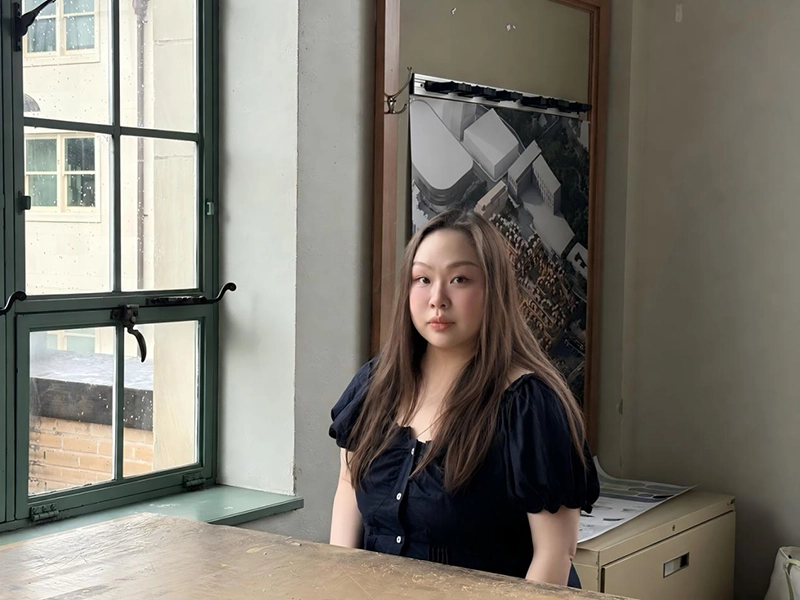

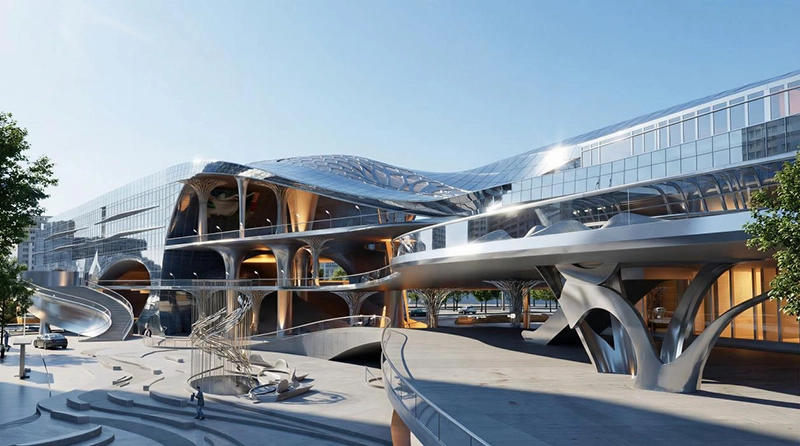




Yuzheng Gan approaches architecture and interiors through an interest in how spaces influence human behaviour, perception, and everyday experiences. After spending more than six years at Huahui Engineering Design Group in China, where she contributed to healthcare facilities, corporate headquarters, and commercial environments, Gan pursued a Master of Interior Design at the University of Texas at Austin. Her professional experience includes projects such as Glodon’s Digital Building Product Center, Run Run Shaw Hospital’s Shaoxing campus, and the Mercedes-Benz AMG Experience Center. Her recent work has received recognition from international design competitions, including the NY Architectural Design Awards, London Design Awards, and A’ Design Award.
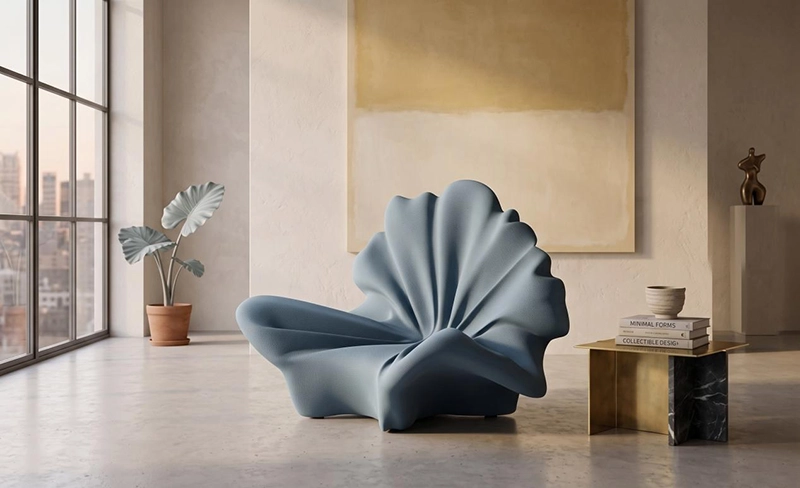
Alongside her architectural practice, Gan explores the possibilities of ordinary materials through experimental objects and installations. Her Pleat Lounge was presented during NYCxDESIGN 2026, while Within White, exhibited at Dutch Design Week, investigates the interaction of light, transparency, and perception through a composition of white surfaces and iridescent acrylic. Her conceptual healthcare project OpenCare examines how spatial design can make medical technology more accessible and understandable. In conversation with ARCHISCENE’s Maya Lane, Gan discusses the influence of working across different design cultures, the importance of physical experimentation, and her vision for environments that respond to changing human needs.
You spent several years working as an interior designer before pursuing your master’s degree at the University of Texas at Austin. What prompted you to return to academia, and how has that experience changed your approach to design? – Before joining UT Austin, I spent more than six years working as an interior designer in China, contributing to projects across healthcare, commercial, corporate, and public spaces. During that time, I gained experience throughout the design process, from concept development and construction documentation to on-site coordination, and worked directly with International clients. These experiences taught me how to balance design vision with technical requirements and real-world constraints.
As technology continues to evolve, I have become increasingly interested in how design can respond to broader social and technological changes. At UT Austin, I began to think beyond creating functional spaces and explore how space shapes human behavior and relationships.
My recent work has received recognition from several international design awards, including the MUSE Design Awards, NY Architectural Design Awards, A’ Design Award, and London Design Awards. I have also been appointed as a professional judge for the Wonder Global Design Awards (WGA). For me, returning to academia was not about leaving my professional experience behind, but about building on it and broadening my perspective.
Your work frequently explores the relationship between people, space, and society. What makes a space truly meaningful to you, beyond its visual appearance or intended function? – A meaningful space can shape how people feel and behave, while bringing people closer together. I pay attention to circulation, light, materials, and how people move through and experience a space. I am particularly interested in spaces that can adapt to different needs rather than being limited to a single way of use. Working on international projects has exposed me to different cultural perspectives and diverse approaches to spatial design. For me, design is not just about creating a visually appealing environment, but about shaping experiences and fostering more meaningful connections between people and their surroundings.
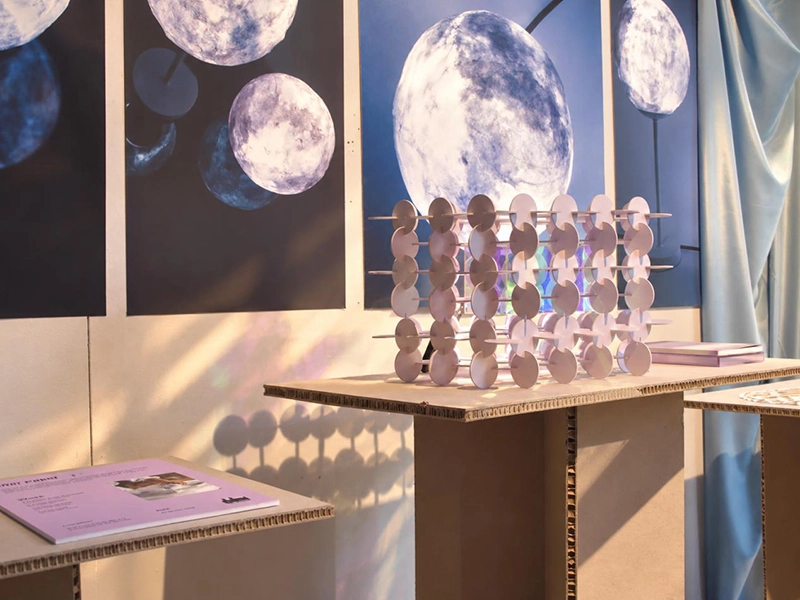
Your project Within White, presented at Dutch Design Week 2026, transforms simple white paper through light, reflection, and transparency. What initially drew you to paper as a material, and what surprised you most during the process? – I was drawn to the simplicity of white paper and became curious about what it could do beyond serving as a flat surface. In Within White, I arranged a series of circular white foam-board modules around a transparent acrylic box with an iridescent finish. The circles partially conceal the object inside, creating a contrast between what is visible and what remains hidden.
What surprised me most was how light brought the different materials together. The white surfaces picked up subtle iridescent colors refracted by the acrylic, giving the piece a different visual effect as the light changed. I was also happy to see that visitors at Dutch Design Week responded positively to the project. I liked that this effect could be achieved without bright colors or complicated materials. The simplicity of the white material made the light and reflections stand out even more.
Within White asks viewers to reconsider something as familiar as a white surface. Do you think designers sometimes overlook the possibilities of ordinary materials in their search for innovation? – Yes, I think we sometimes look for innovation in new materials or technologies before fully understanding what ordinary materials can do. For me, innovation can begin with a simple question: what happens if we use something familiar in an unexpected way?
With Within White, I did not change the material itself. I changed how the pieces were arranged and how they related to the object inside. This altered the way light moved through the composition and how the object was perceived.
This design approach received recognition from Dutch Design Week, and I was invited to exhibit Within White at Foundation We Are, one of the festival’s key exhibition venues. For me, this was an encouraging recognition of the idea that innovation doesn’t always require new materials; sometimes it comes from seeing familiar materials differently.
You’ve worked on projects ranging from healthcare facilities and corporate headquarters to immersive automotive spaces. How do you approach designing environments for such different human experiences? – I approach each project by first identifying what people need from the space and what kind of experience it should create.
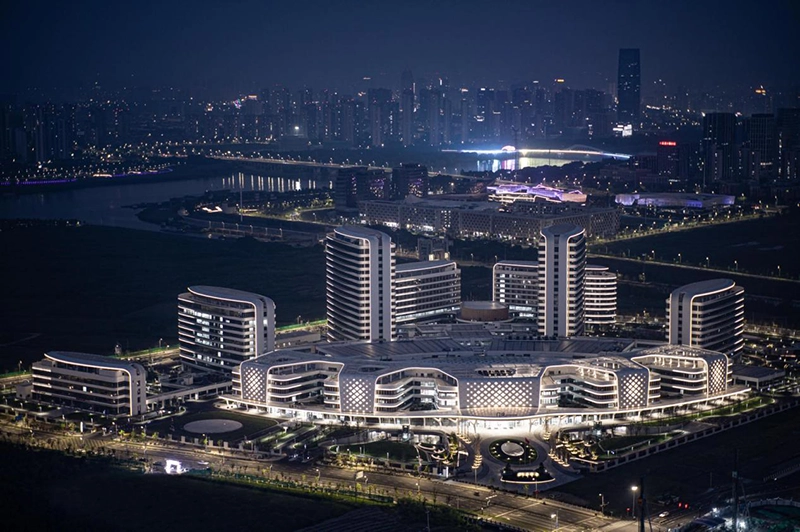
At Sir Run Run Shaw Hospital’s Shaoxing campus, I led the interior design of an eight-story building with exhibition, teaching, simulation training, research, and office functions. Through overall spatial and floor planning, I coordinated these diverse needs into a cohesive design. The hospital project received a 2025 MUSE Design Awards Platinum Award.
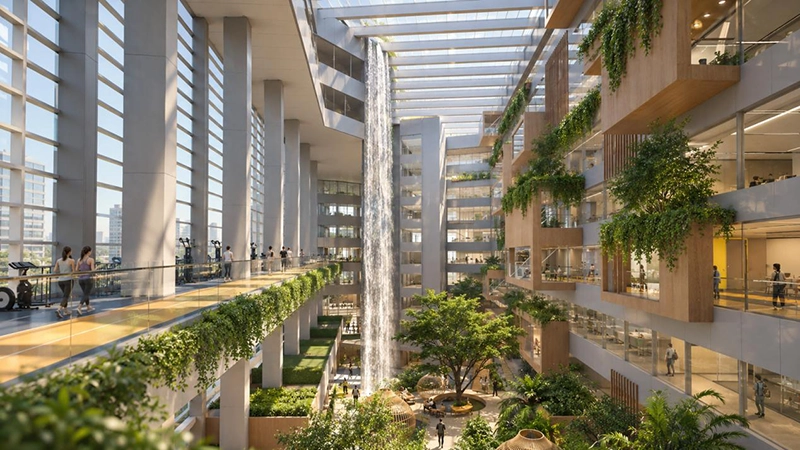
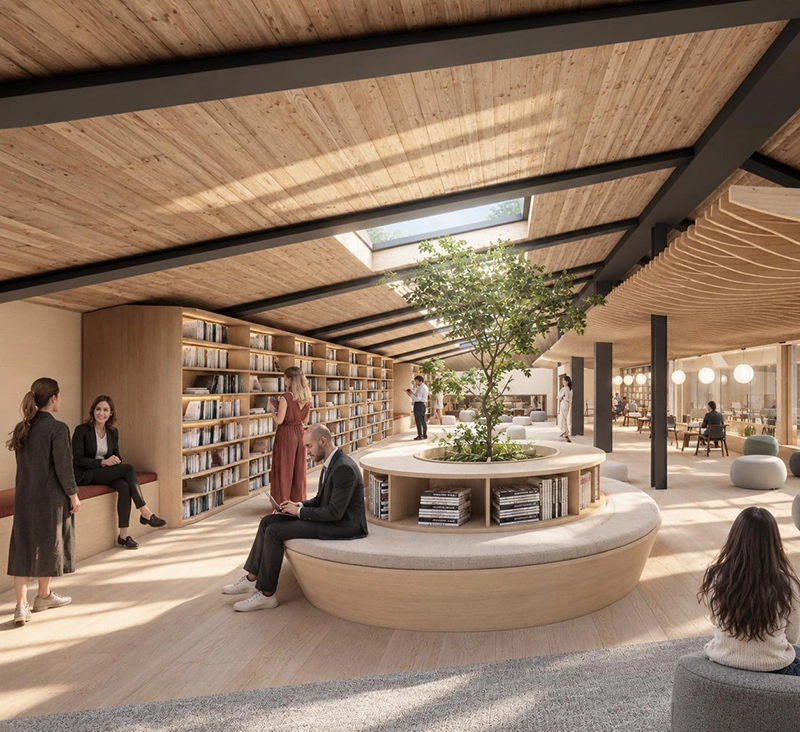
At Glodon’s Digital Building Product Center, I contributed to the interior design scheme for the entire building. Centered on ecology, health, and knowledge-sharing, the design emphasized natural light, greenery, and flexible spaces that support well-being in a demanding work environment. The project received LEED Gold and WELL Platinum certifications, as well as the 2023 RICS China Award for Construction Project of the Year, bringing recognition from internationally established green building and construction industry organizations.
At the AMG Experience Center, I worked directly with German clients on a project associated with the globally recognized Mercedes-Benz brand. I focused on communicating brand identity through vehicle displays and interactive experiences.
These projects taught me that there is no single design approach for every environment. Good design starts with understanding people and connecting their needs with each space’s purpose and character.
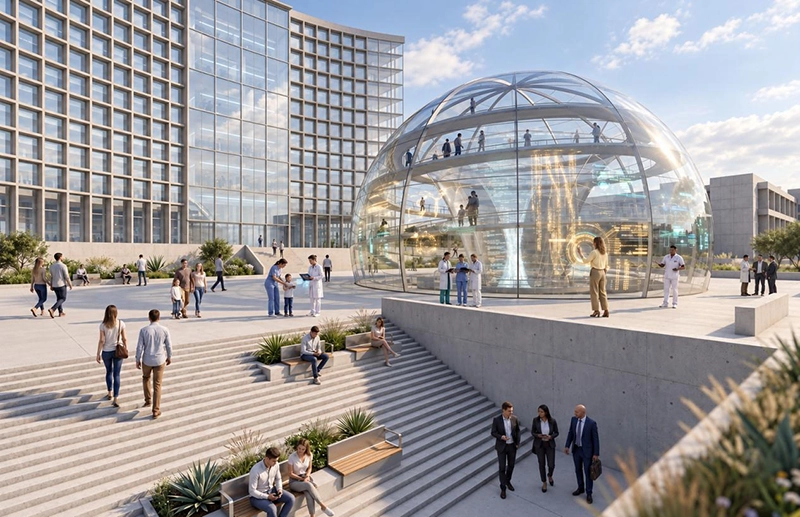
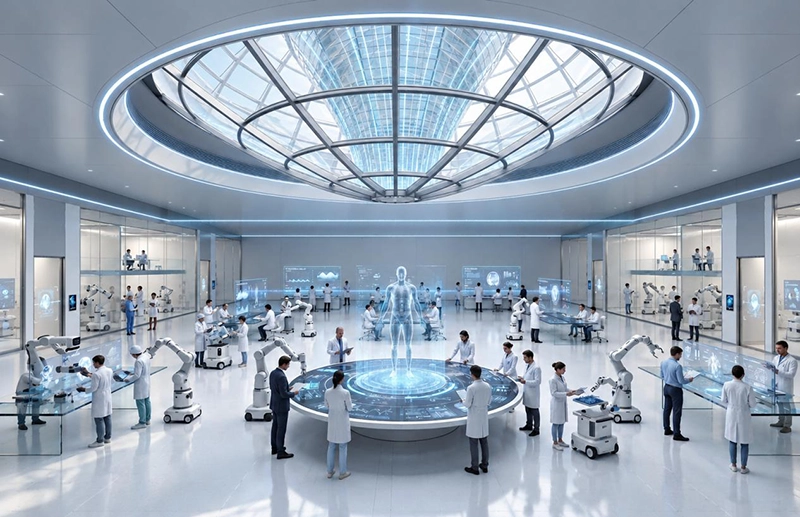
Your healthcare-related work, including OpenCare, explores how design can make medical environments more accessible and understandable. What do you think hospitals and healthcare spaces most urgently need to change? – I believe healthcare spaces urgently need to become more transparent and people-centered. Through extensive research for my independent project, OpenCare, I became interested in a future where advances in AI and digital health make healthcare accessible everywhere, yet people may still struggle to understand or trust these technologies.
My central idea is to use architectural planning and spatial organization to make otherwise invisible medical systems more visible and understandable. Rather than treating a hospital as a place where patients simply receive treatment, I envision it as an environment where people can learn about medical technologies, better understand their care, and participate more actively in decisions. At the same time, transparency must respect personal privacy and give patients control over their own data.
OpenCare received a Silver Award in the MUSE Design Awards. For me, the future of healthcare design is not just about integrating more technology, but about using space to build understanding, trust, and human connection.
You’ve also presented Pleat Lounge at NYCxDESIGN and Within White at Dutch Design Week. How does designing an experimental object differ from developing an interior that people will use every day? – Experimental objects allow me to focus more on material, form, and perception, while everyday interiors require me to consider broader aspects of human experience and changing patterns of use. My design approach combines these elements to rethink conventional ways of designing architectural and interior spaces. However, both begin with observation and experimentation.
Through my exhibitions, I have had the opportunity to communicate design ideas through physical objects and material experiences. Presenting my work in New York and at Dutch Design Week also allowed it to reach audiences across North America and Europe. I’m particularly interested in how simple materials can create unexpected visual effects through their interaction with light, transparency, and concealment. I want viewers to do more than simply look at an object; I want them to notice details, experience changes, and discover something they might otherwise overlook.
Having studied and worked in both China and the United States, what differences have you noticed in how the two design cultures approach space, functionality, and experimentation? – Having worked in China and studied in the United States, I’ve noticed that my professional experience in China taught me to prioritize functionality and practical solutions, especially in large commercial and healthcare projects.
At UT Austin, I’ve had more opportunities to experiment, question existing ideas, and develop concepts through research and discussion.
These experiences have taught me to balance creativity with practicality. I want my designs to be conceptually strong, technically sound, and responsive to people’s everyday needs.
As computational design and emerging technologies become increasingly influential, what aspects of the design process do you believe should remain intuitive, personal, or even imperfect? – Technology can help designers explore more possibilities, but it cannot fully replace human perception. Light, texture, movement, and atmosphere can create emotional responses that are difficult to predict through data alone. I use digital tools to test and develop design ideas, but I believe physical experimentation and intuition remain essential. Unexpected results and imperfections can sometimes reveal qualities that an overly controlled design process might overlook.
Looking ahead, what kind of space or experience would you love to design if you had complete creative freedom, with no restrictions on budget, location, or materials? – With complete creative freedom, I would love to design a space that brings future technology, nature, and architecture together, blurring the boundaries between them. I imagine an environment that changes with people’s movements, emotions, and needs rather than remaining fixed. Natural materials, dynamic lighting, and adaptable spatial elements would create different experiences throughout the day, while technology would blend naturally into the environment.
I hope technology will no longer feel like a collection of machines or devices, but become an invisible yet useful part of everyday life. Ultimately, I want to create a space that people can not only use, but also shape through their presence and activities. For me, the future of design is not simply about making spaces more technologically advanced, but about integrating technology and space in ways that respond to human needs and make everyday life easier.
Interview by ArchiSCENE Editor Maya Lane.
Source: https://www.archiscene.net