




The newly revamped 21E22nd apartment is located in the corner unit of a former 1911 factory building along Manhattan’s Madison Square Park. The owners, a retired couple and their dog Harriet decided to permanently move from Phoenix to New York City after finding what they described as a “diamond in the rough.” The couple tapped Phoenix-based architecture firm, Wendell Burnette Architects, to spearhead the design. For its East Coast debut, the firm incorporated Manhattan’s grid system into the apartment’s design.
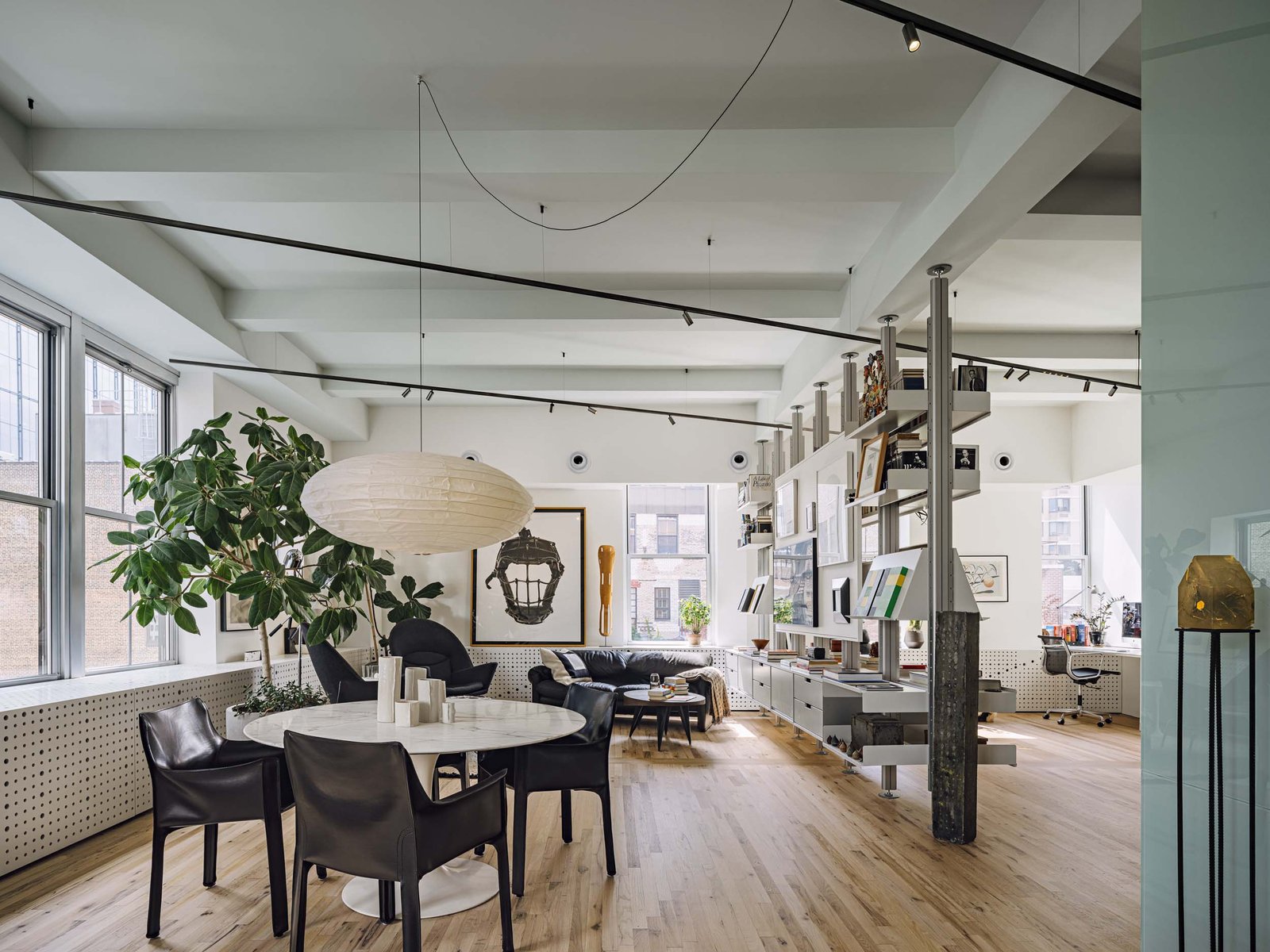
Wendell Burnette, founder of the eponymous firm, shared with AN Interior that he and his team were tasked with navigating the layout of the 1,875-square-foot unit, while also abiding to the budget, the building’s co-ops rules, and zoning laws. In response, the design team reprogrammed the former three-bedroom apartment into a one-bedroom, creating an open concept living and dining area completely filled with natural light from the north-facing windows. This open living space is the heart of the home; it’s connected to Madison Square Park as if the park is an extension of the abode.
“Our happy place,” said Burnette, “is finding the limit of something and successfully pushing against that limit.” For 21E22nd, this was “to create this generous room that’s generous enough that you have five different programs.”
Translucent film-covered glass partitions help get the job done. They’re used in the bedroom, bathroom, and guest bathroom. The non-transparent glass offers a contemporary solution of extending the natural light to the back corner of the windowless bedroom. Burnette and his team took the partitions a step further by incorporating jeweled edges on the glass, allowing refracted light to create colorful rainbows throughout the apartment. In the living room, glass encases a centrally located column.
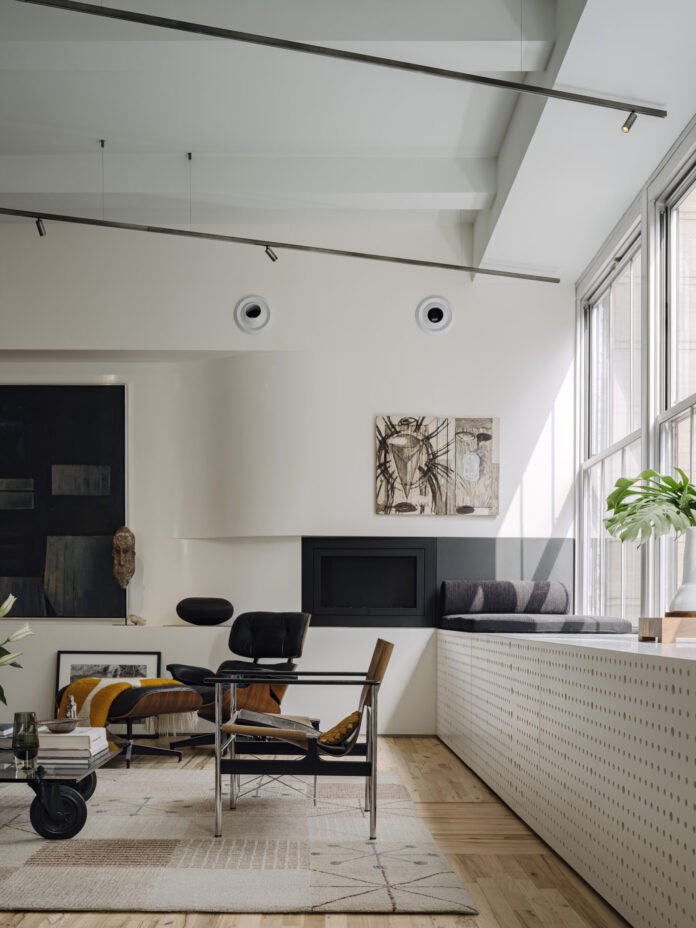
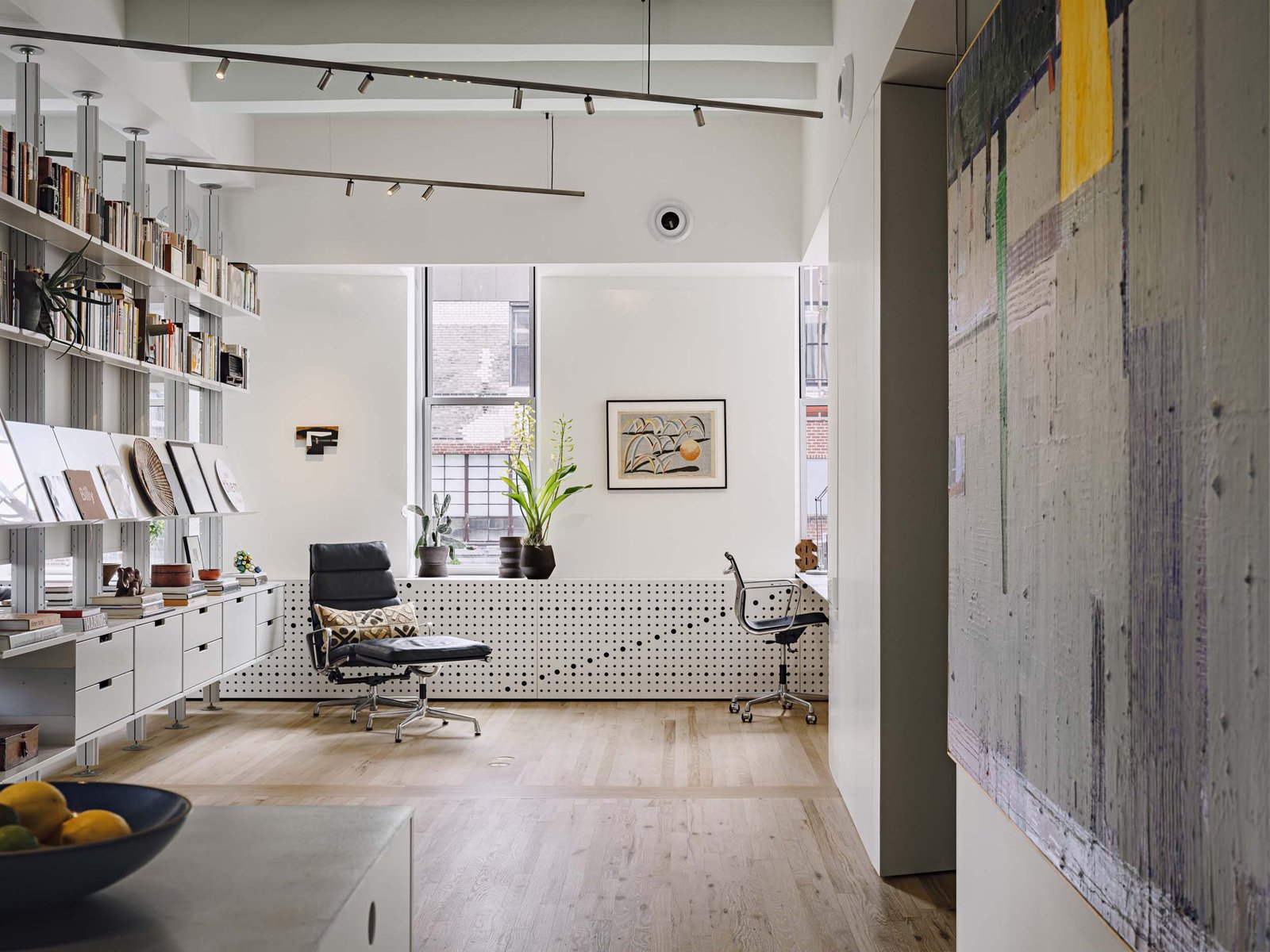
A bespoke bench that sits flush with the north-facing windows interprets the urban streetscape on an interior scale. The seating’s perforated pattern was drawn from Broadway’s diagonal layout in the city’s gridded plan and the concentration of public parks in the city. Its circular cutouts allow radiator heat to warm the apartment without fogging the windows and act as finger holes for moving the grate panels to gain access to the built-in storage.
“We’re trying to do work that is resonant with people and is making specific connections to the place,” continued Burnette. “We’re studying the history, context, light, and trying to tie what we’re doing to the specificity of this site.”
To further connect the street grid to the apartment, thin charcoal recessed can lights (less than an inch in height and width) were arranged diagonally across the original shallow cross-beam ceiling, creating a visual lattice. The lighting draws attention to Madison Square Park, while also reinforcing the diagonal interruption of Broadway.
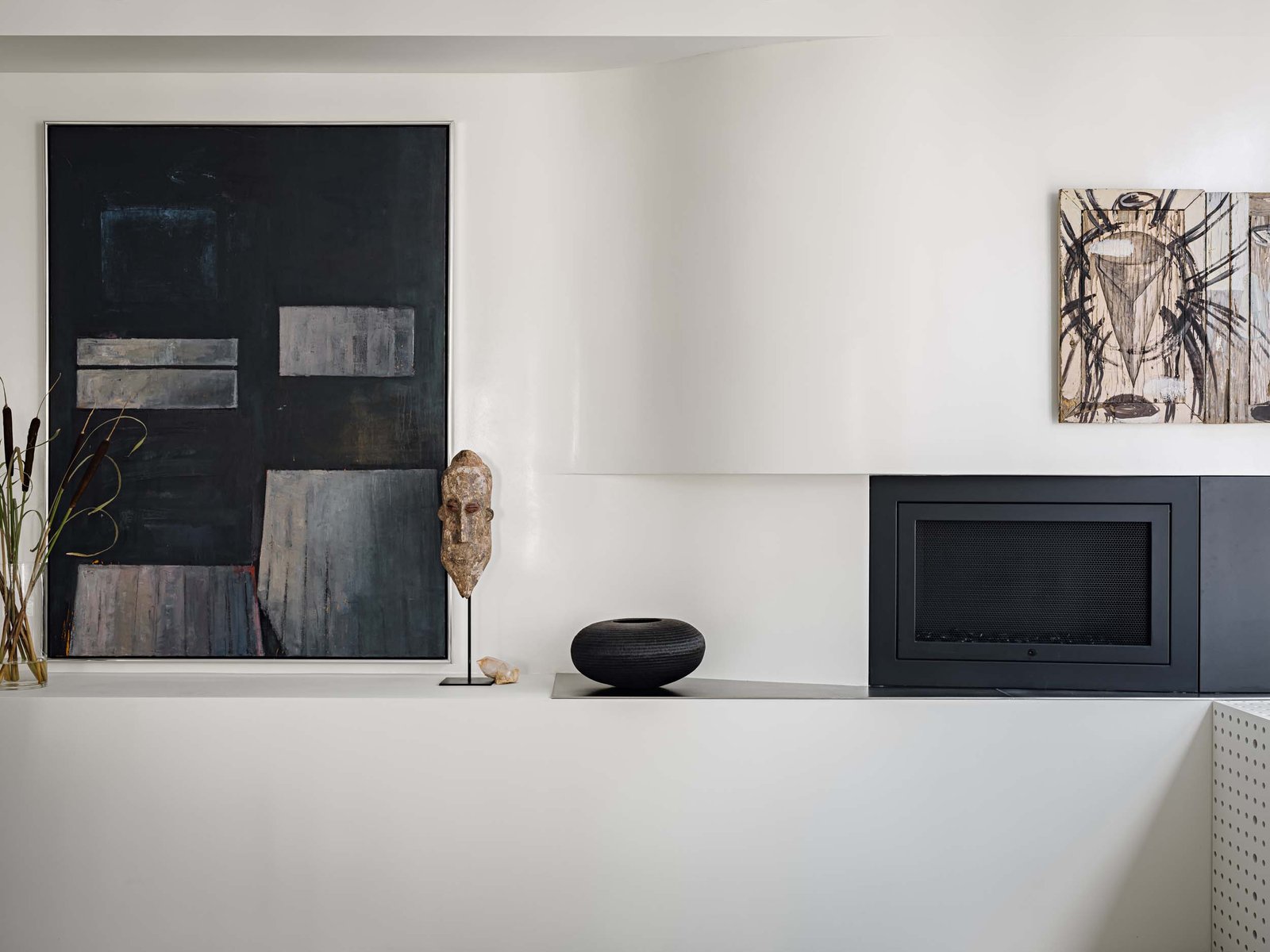
Throughout, white oak floors meet white-coated walls, creating a subtle base for the celadon-painted ceiling. This neutral palette allows the couple’s extensive art and furniture collection to be celebrated. On the walls, cable systems from Japan can accomodate different canvas sizes, so that artwork can be easily altered and rotated out.
The architects reduced demolition waste by preserving 90 percent of the original wooden floor, the kitchen appliances and window units, 66 percent of the original plaster ceiling, and the mechanical and conditioning unit systems.
Through precise and thoughtful details, the city’s orientation informs and enhances the spatial organization of the home. Even a special spot for Harriet the dog, a crate with a glass-top desk and a zig-zag base from folded plywood, affords uninterrupted views of the ever-changing “urban room.”