

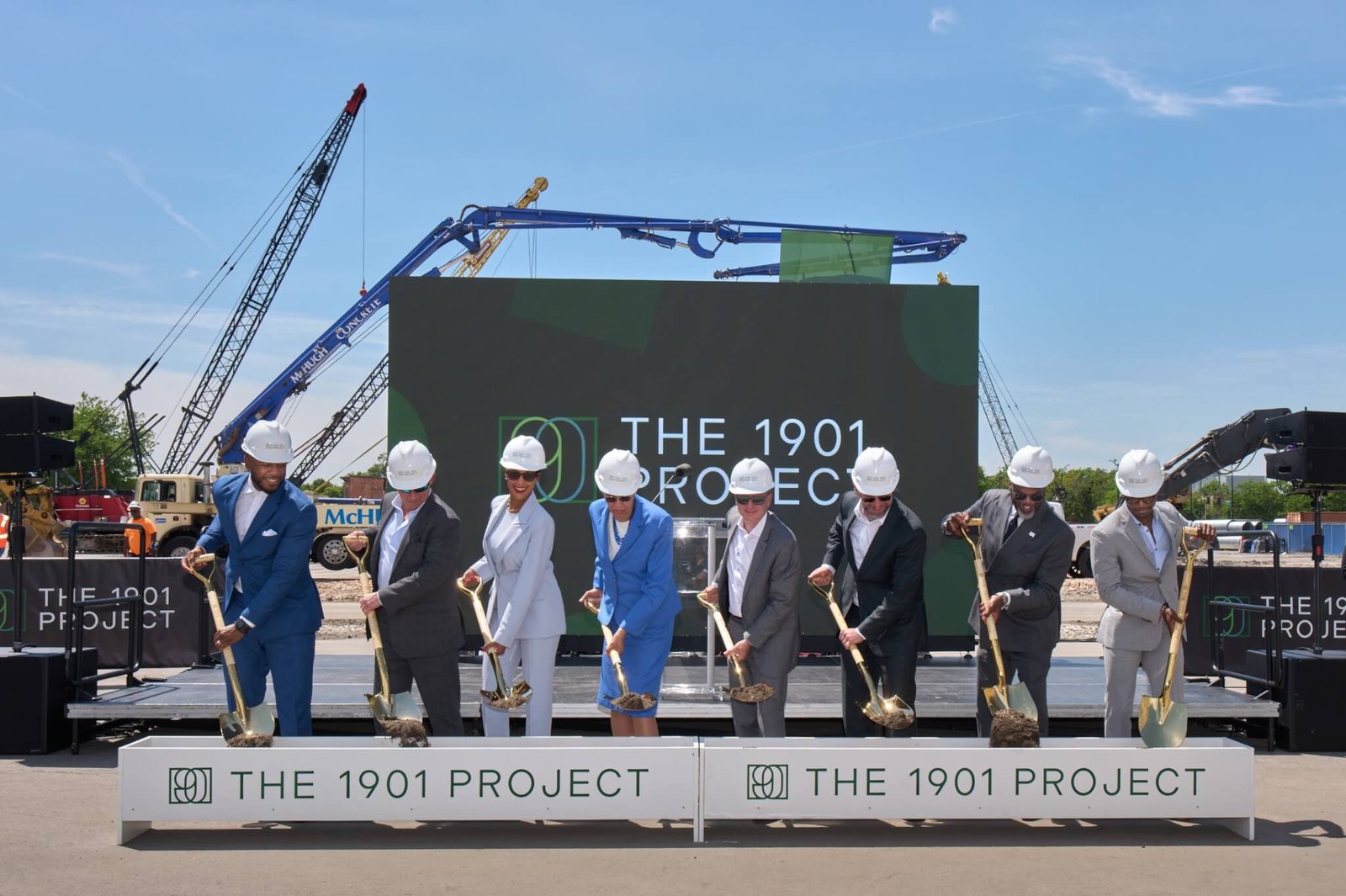
On June 3, the families who own the Chicago Bulls and the Chicago Blackhawks pushed golden shovels into a Near West Side parking lot and announced that a neighborhood was on its way. The lot is one of dozens. The United Center, the arena where both teams play, sits in the middle of 55 acres of surface parking, and over the past several years companies tied to the families quietly bought up those lots. As previously reported by AN, the plan for them is the 1901 Project, named for the arena’s address at 1901 West Madison Street: a $7 billion district of housing, hotels, retail, and parks, with Los Angeles firm RIOS as architect and New York’s Field Operations designing the landscape.
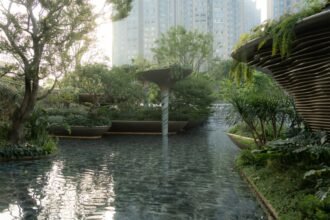
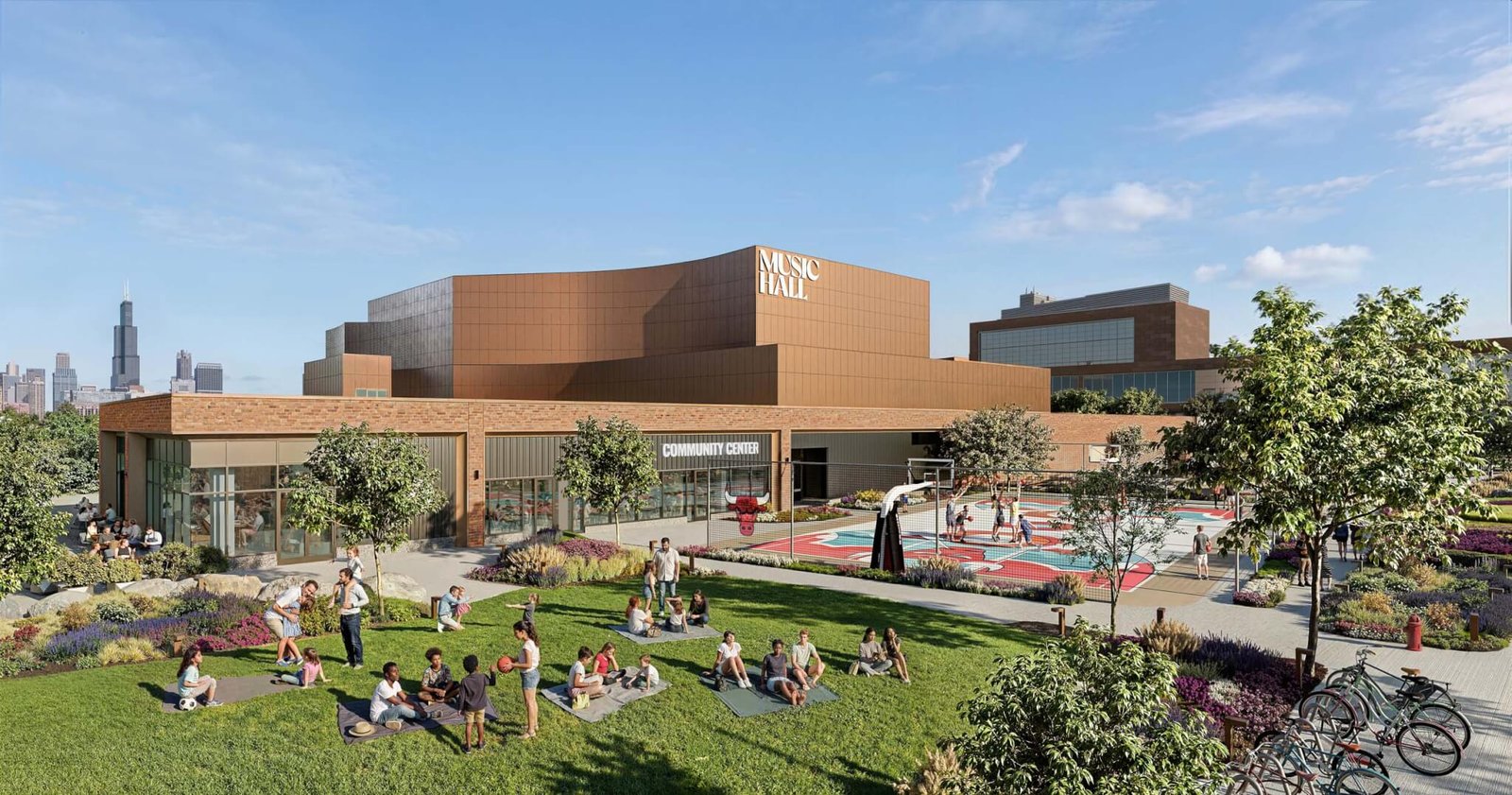
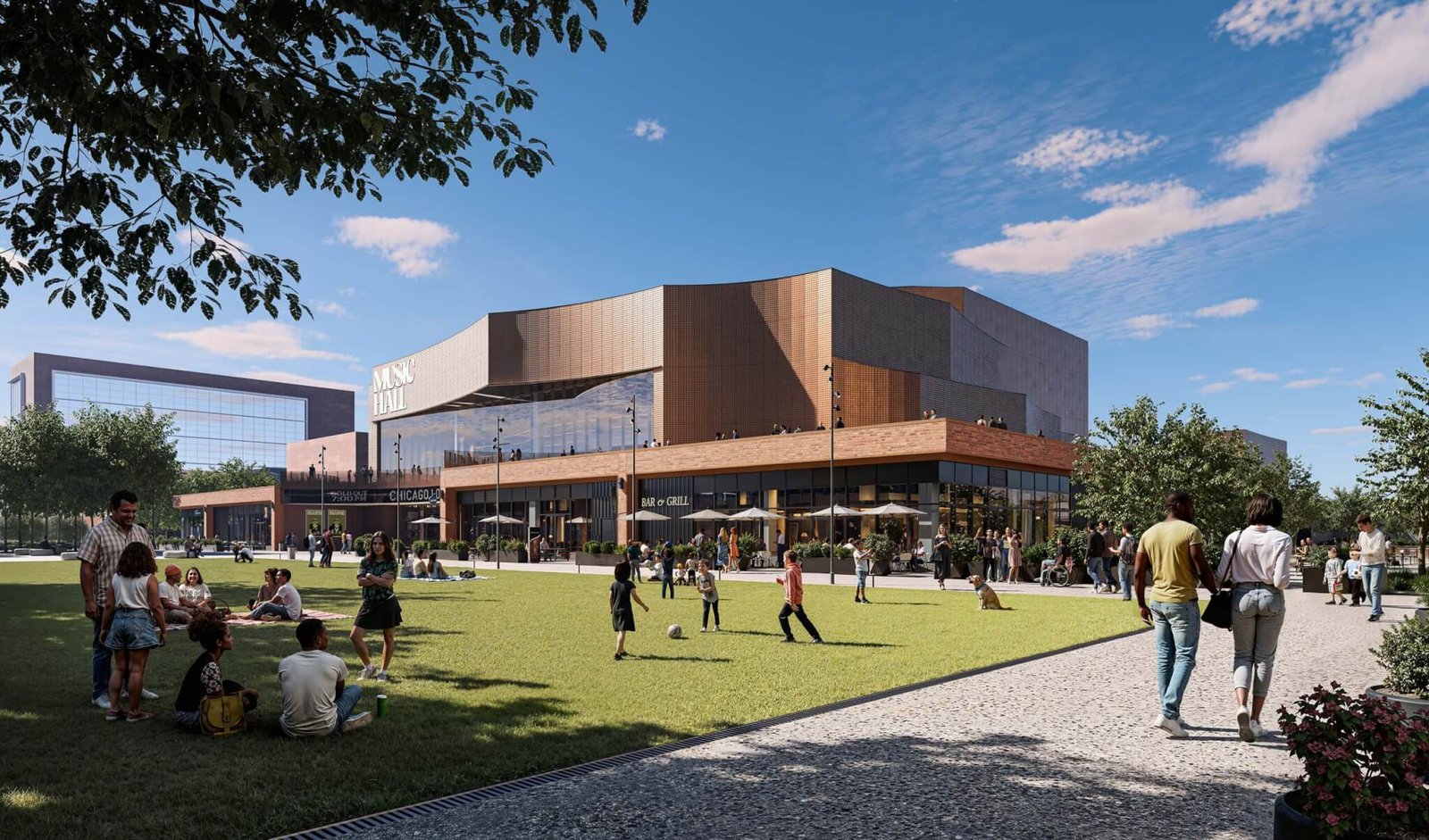
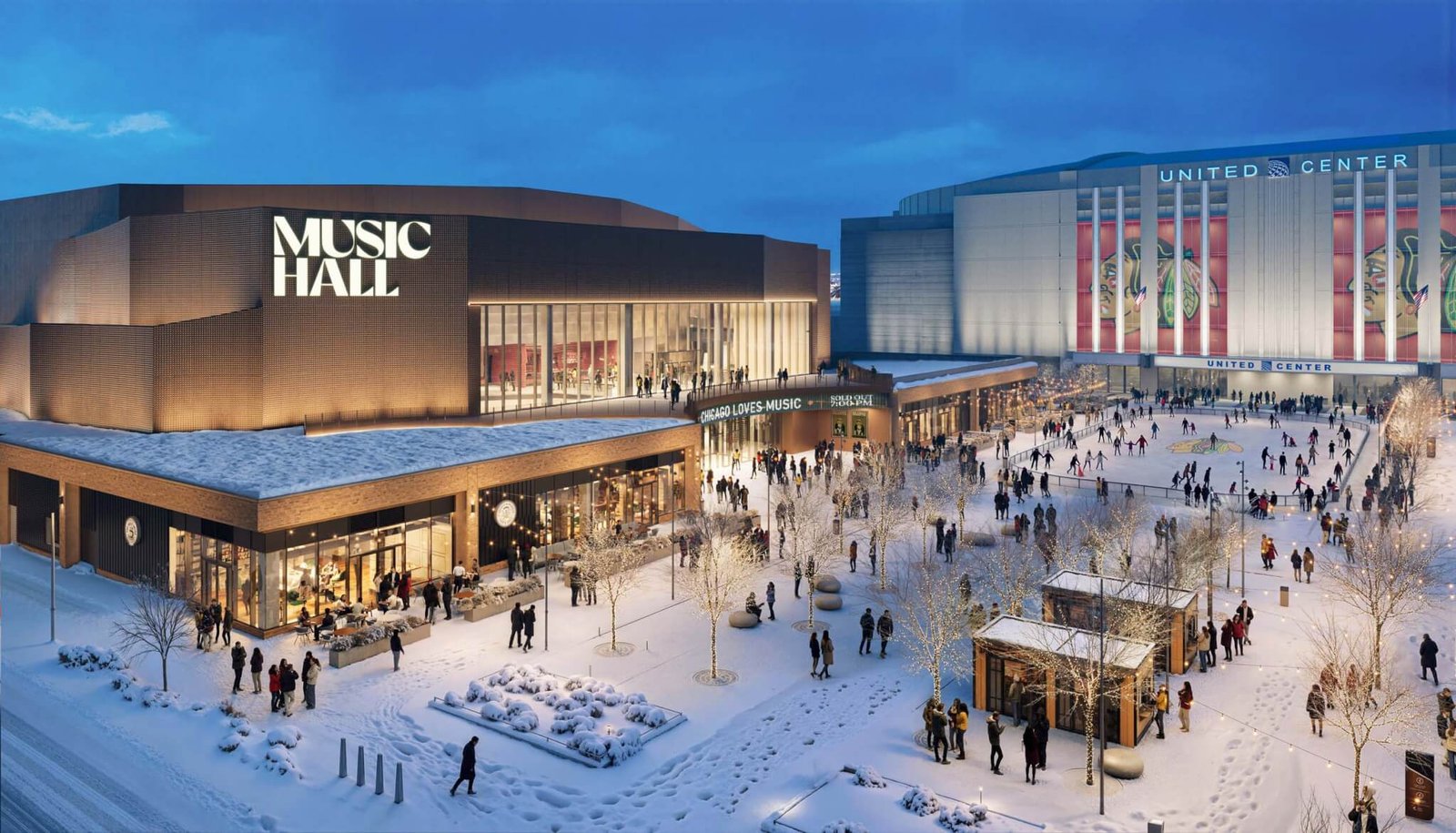
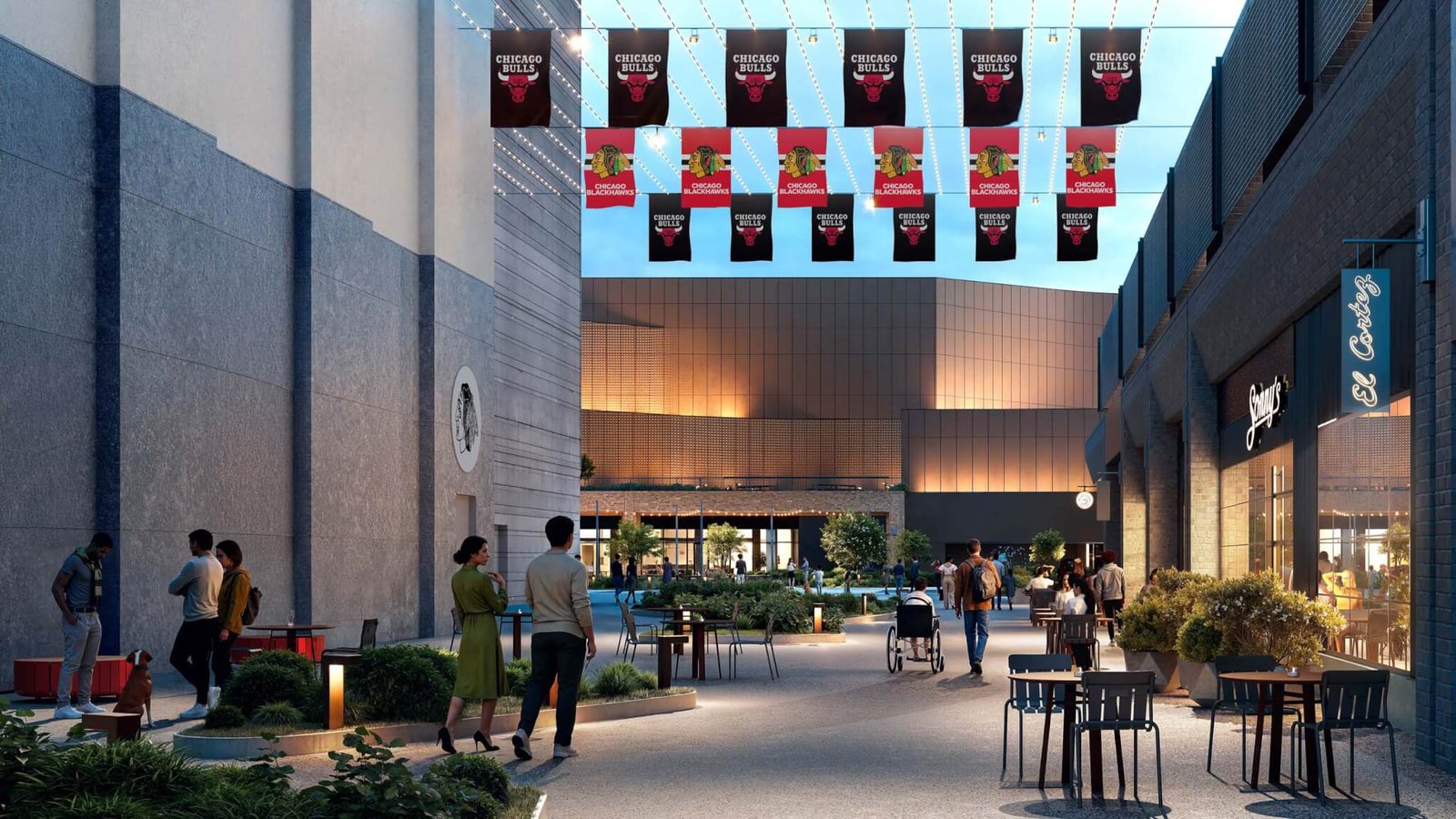
In the renderings the developers released for the groundbreaking, you see a neighborhood: a dog on a summer lawn, kids chasing a soccer ball, diners under umbrellas, an ice rink glowing in the snow under strings of light.
Also depicted is a basketball court outside the “community center” with the Bulls’ bull-head at center court. The rink has the Blackhawks’ logo emblazoned into center ice. And a pedestrian shopping street is strung end-to-end with Chicago Bulls and Chicago Blackhawks banners.
Until now, Blackhawks chairman Danny Wirtz said, a night out has been simple: guests “drive and park, enjoy the amenities inside and then head home.” The 1901 Project, he said, will bring “life to those parking lots year-round” for fans and hopefully the neighborhood too.
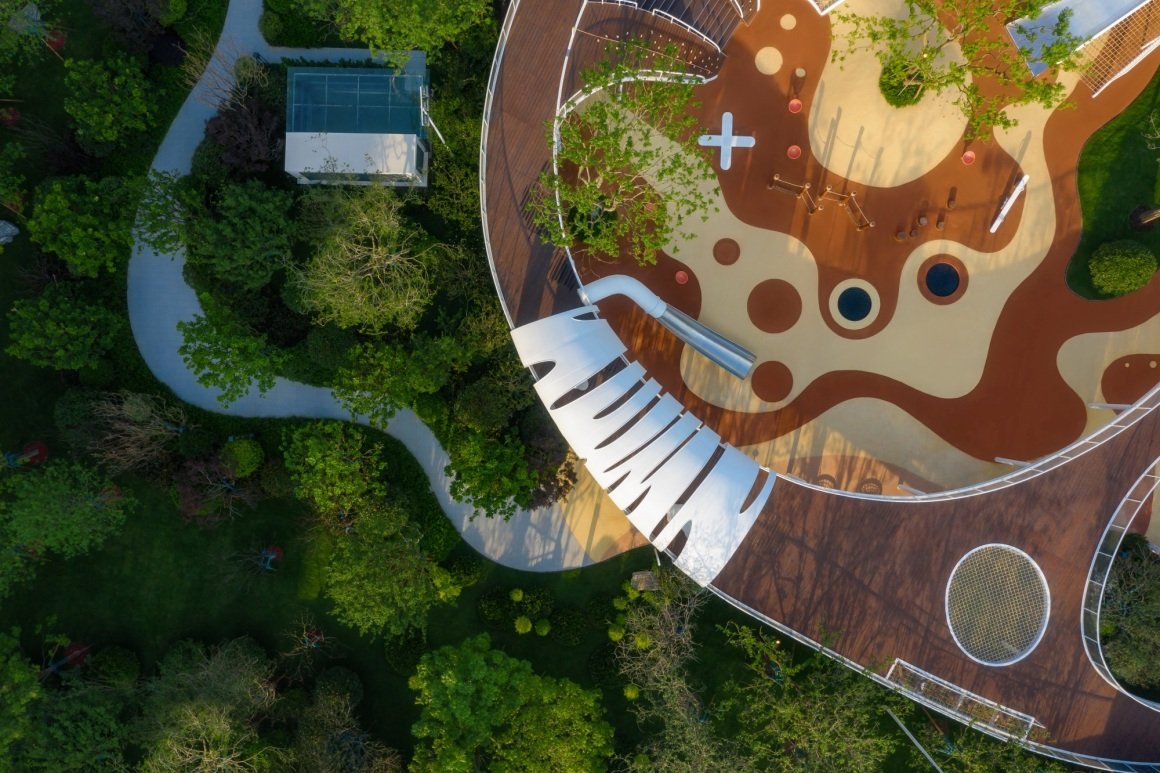
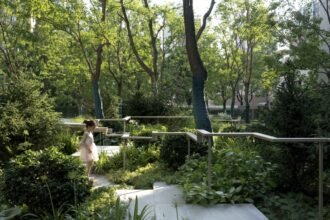
The 6,000-seat music hall is designed to look as if it’s peeling up off the sidewalk, one corner lifting into a swooping roofline sheathed in glass and gold-bronze perforated metal. The design was reworked just before the groundbreaking, swapping an earlier ribbon-striped facade for softer concave arches and a planted roof. It is also flanked by two parking garages, each one wrapped at street level in a brick storefront base and capped on top with a public park. The master plan lifts the ground up and over the buildings, ringing the arena with elevated green space.
Phase one covers roughly 12.3 acres of asphalt south and west of the stadium, along Damen Avenue and Adams Street. What comes first is the music hall, a 180-room hotel, retail and restaurant space, two parking garages, and rooftop green space—valued together at about $500 million and scheduled to finish in 2028. The full plan calls for up to 9,463 residential units, 20 percent of them affordable, but those units belong to later phases thats developers have always tied to market conditions and community feedback. At the hearing that approved the project, a downtown hospitality worker expressed concern over when the affordable units would arrive, joking probably when she’s retired.“That’s too late for me,” she said.
The 1901 Project has been pitched, again and again, as privately funded with no capital from the city. But in May, the City Council approved a Cook County Class 7(b) property tax break worth an estimated $54.7 million over 12 years, the first public subsidy approved for the project. Mayor Brandon Johnson introduced it and has defended it. United Center chief financial officer Steve Rucks told a Council Committee the developers had secured only about 20 percent of phase one’s $500 million, and that the remaining private financing was contingent on the tax break passing. The city’s Department of Planning and Development put it more plainly still, finding that phase one “would not proceed as planned without the incentive.”
None of this has slowed the project, which the City Council approved unanimously in February 2025. Mayor Johnson told the crowd that people of the West Side never stopped believing in their neighborhoods. However, at 2024 community meetings, residents described being priced “out of our own communities.” When the tax break reached committee for vote, Alderman Raymond Lopez questioned the absence of Latino representation and accused the planning department of picking winners, while Alderman Nicole Lee warned the developers not to return for the next phase without answers.
Alderman Walter “Red” Burnett, who represents the 27th Ward and chaired the plan commission when it approved the development, grew up across the street from these parking lots. His father held the same ward seat when the United Center was built three decades ago. His parents own a home on the block; Burnett, by his own account, now rents on it. “These concerns and fears about gentrification are personal,” he said voting, again and again, to build.