





The Gardens of the Popes’ Palace
There are places that contain within them much more than simple stories; they are permeated by History with a capital H, the kind that spans the centuries and is still studied and explored today. Often within these places, major events overshadow those deemed more insignificant, and majestic spaces tend to prevail in the public interest over intimate, delicate spaces. The Popes’ Palace in Avignon is a place with these characteristics, the nucleus of power of the Catholic Church and a focal point for Christianity since the 14th century. Here, political and religious events, decisions, palace intrigues, schisms, and love affairs in the grand halls and sumptuous private rooms alternated with the daily life of less important spaces, such as the kitchens, stables, and especially the gardens.
The nature of gardens is mutable, and their fragile substance does not withstand the passage of time for long. Before the restoration work, almost no visible traces remained in the spaces where the papal gardens once stood. Only after a thorough archaeological excavation and meticulous archival research were the characteristics and history of these gardens, places of delight and production, delineated. They have been reborn, lush, thanks to the work of RL&A Architectes and Tout se transforme. The restoration work focused on three areas: the Garden of Urban V, the Palace Garden (also known as the Garden of Benedict XII), and the Pope’s Garden.
The origins of these gardens date back to the first construction works of the Palace, carried out by John XXII. The Avignon popes, like the princes of Middle Ages, highly valued gardens as a fundamental element of their palace. John XII became Pope in 1316 and undertook the unification of the buildings adjacent to the Episcopal Palace. Starting from a pre-existing arrangement of vegetable gardens and gardens, in 1324 he ordered the planting of trees and lawns, the construction of an irrigation system, and the construction of a surrounding wall.
Later, Benedict XII ordered the creation of what is known as the Old Garden, as it was built at the same time as the Old Palace. A well was installed in the lower part of the site, while the upper part of the grounds contained a vegetable garden that provided produce for the papal table, including cabbage, savoy cabbage, spinach, leeks, broad beans, and numerous aromatic plants such as rosemary, borage, parsley, and marjoram.
Then came the time of Clement VI and his New Garden, created in 1344. Also surrounded by walls, it was a particularly shaded garden, suitable for rest and reflection, with a large fountain, known as the Griffin Fountain. Urban V had a new extension built to the gardens in 1365, with wells and pergolas. Throughout the 14th century, the gardens underwent numerous alterations, were improved in every aspect, and eventually became an integral part of palace life. But as already mentioned, in modern times little or nothing remained visible, apart from the traces left by the buildings.
Thanks to archaeological excavations, it was possible to identify the hydraulic network, a fundamental element of the gardens, as well as paths, planting holes, and, with archival research, numerous examples of Mediterranean plants used for medicinal and culinary purposes. The restoration project for the gardens of the Popes’ Palace is not a conservation or pure restoration project, but rather a contemporary reinterpretation based on in-depth research; a project that aims to restore not a precise reality, but rather atmospheres, uses and spaces, using peculiar and recurring elements.
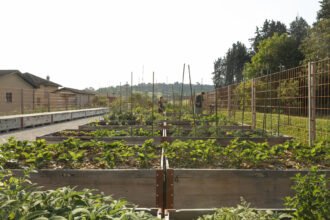
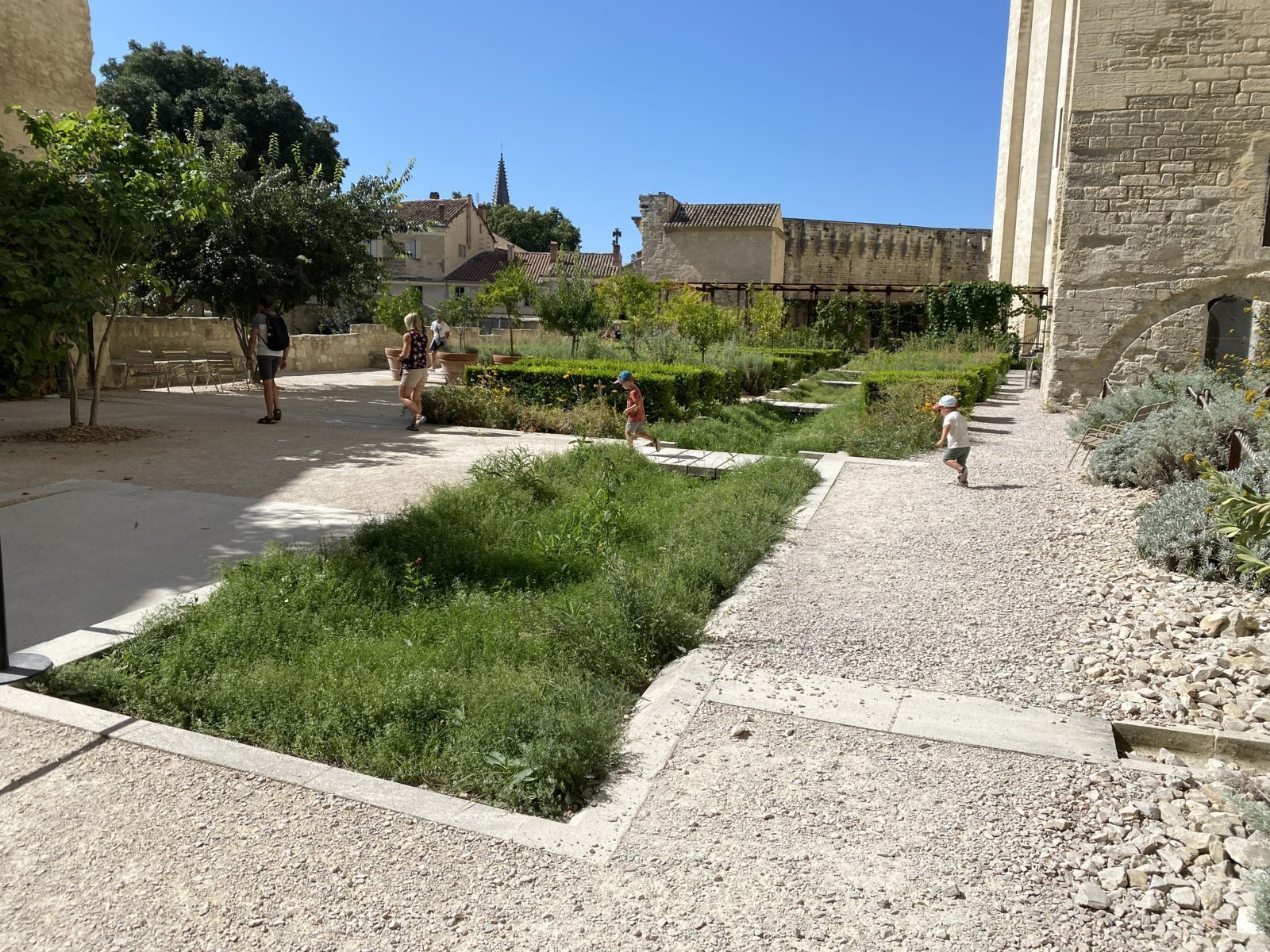
The first of the gardens to be restored was the Garden of Urban V, which had been a public space since 1927. In 2017, work was carried out to maintain the public dimension of the site, which is structured into different areas: where a fountain once stood, there is now a dry fountain; a children’s play area, and a shaded area used as a vegetable garden. This is the only garden not strictly part of the museum circuit.
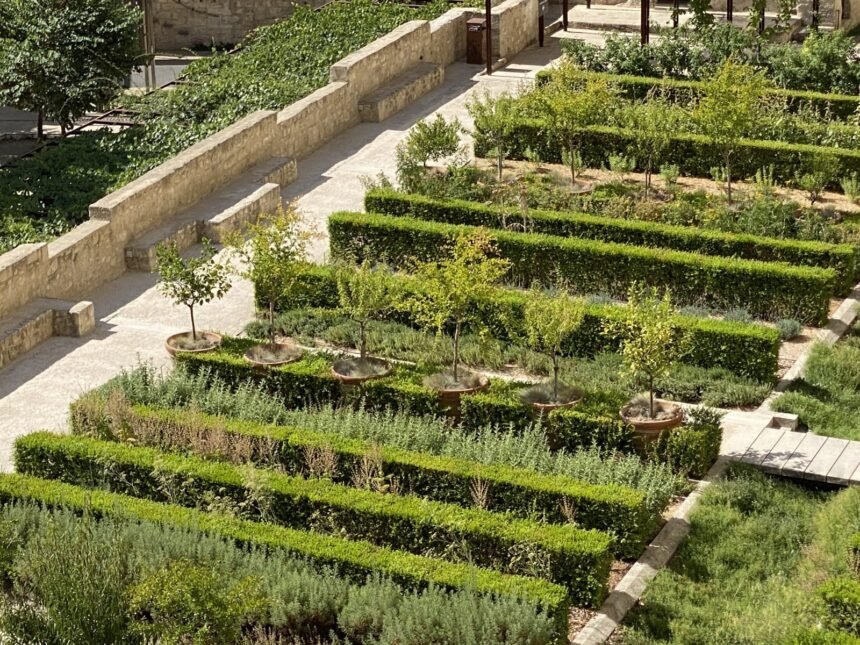
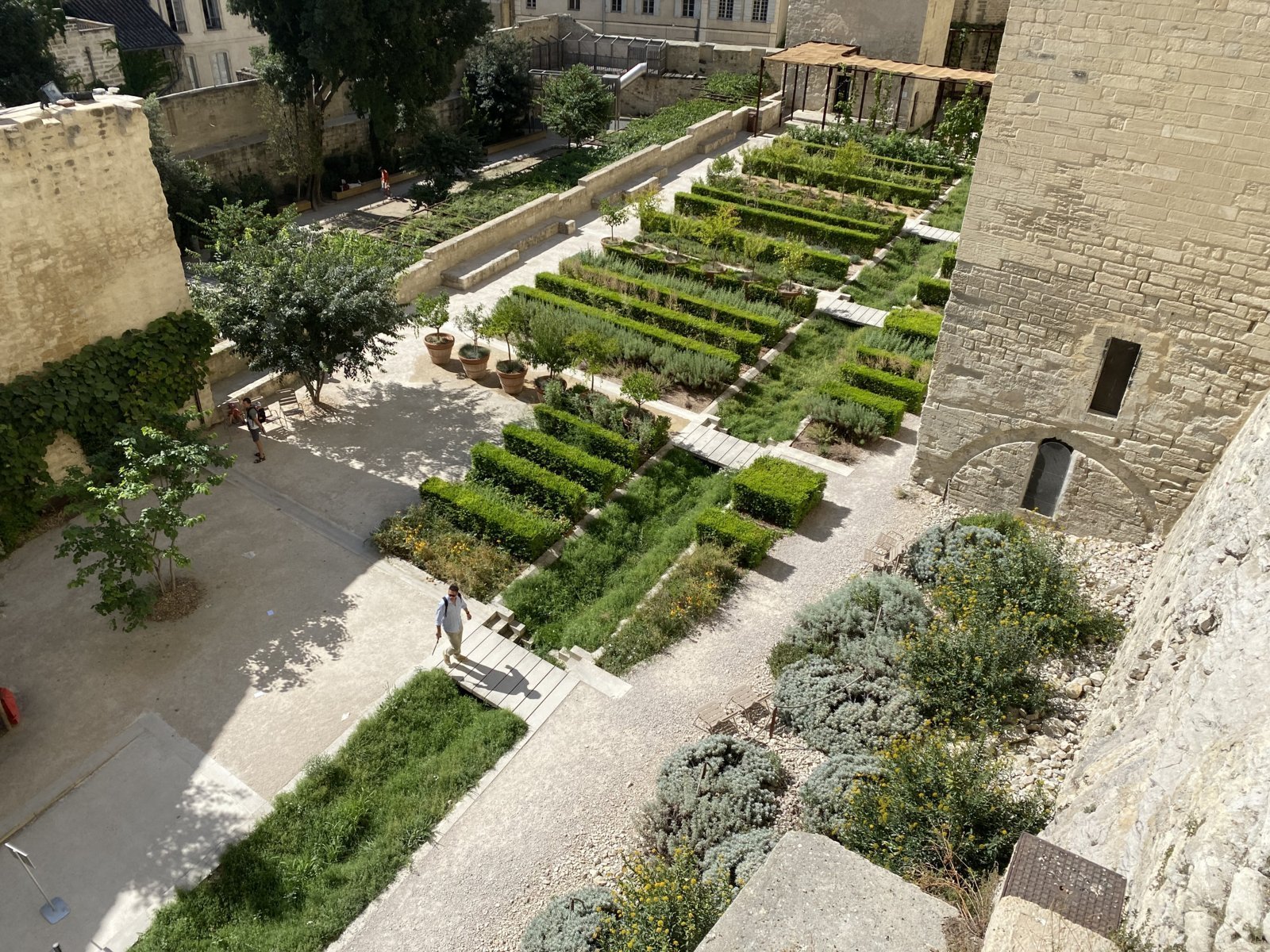
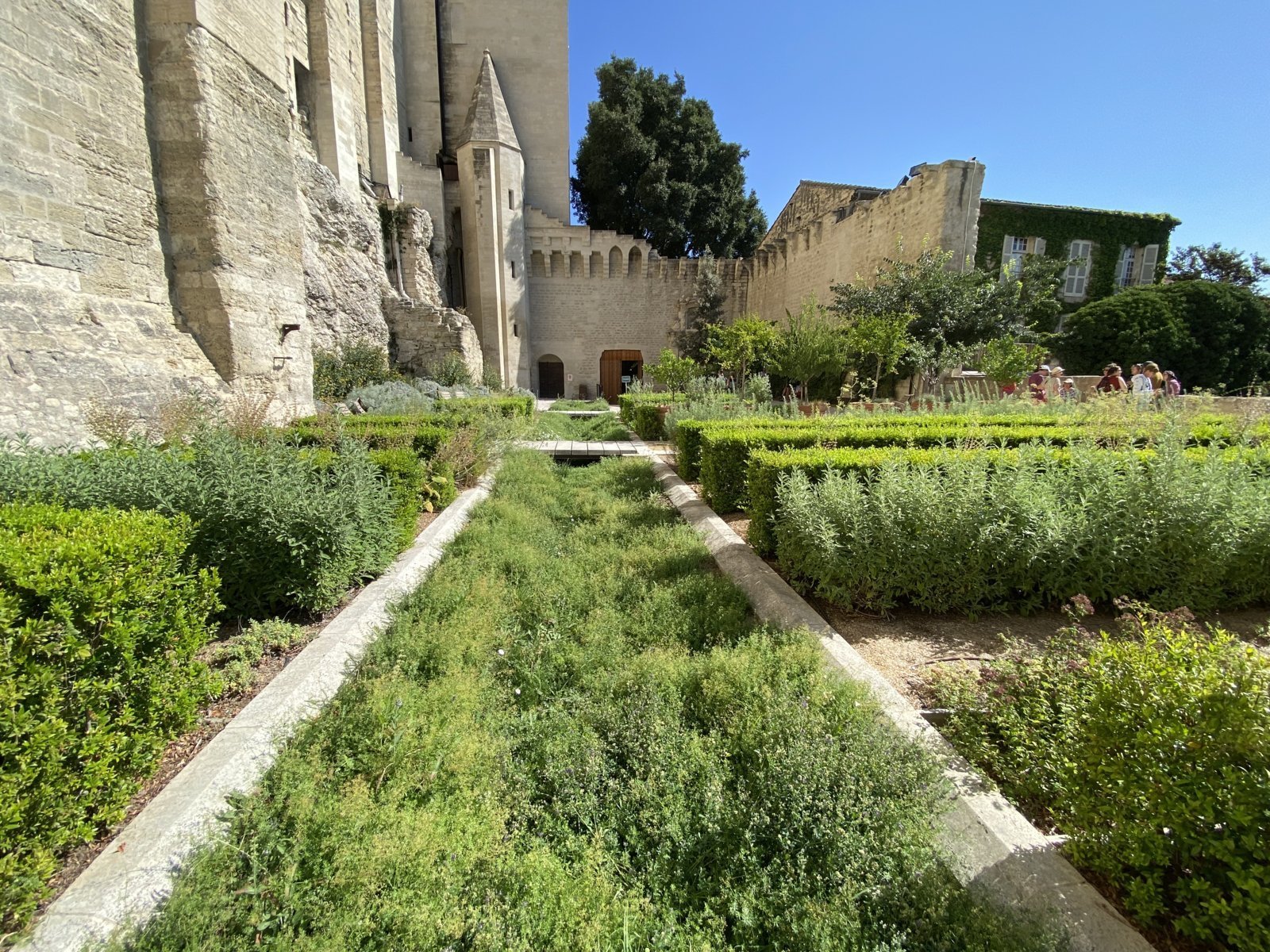
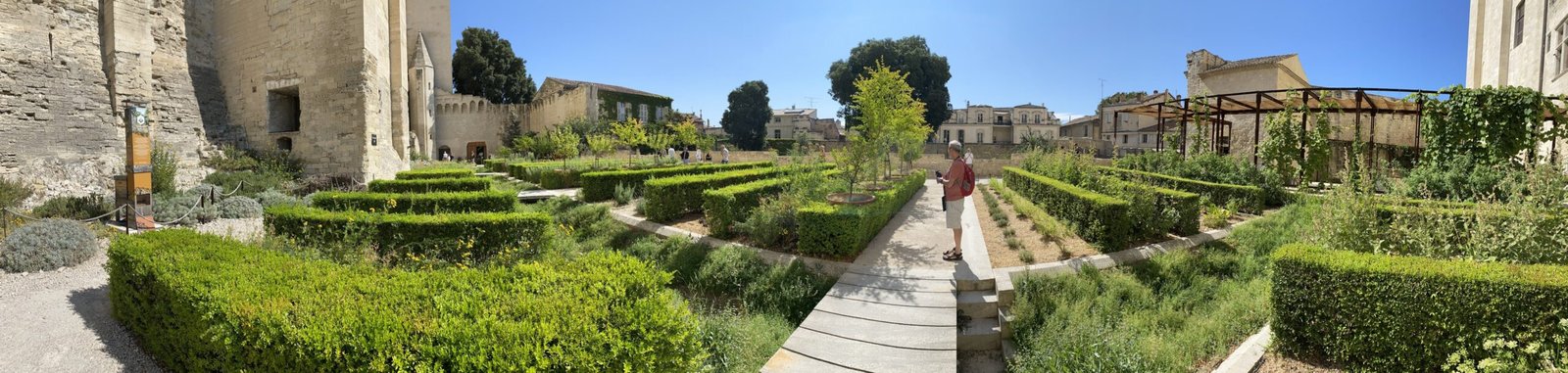
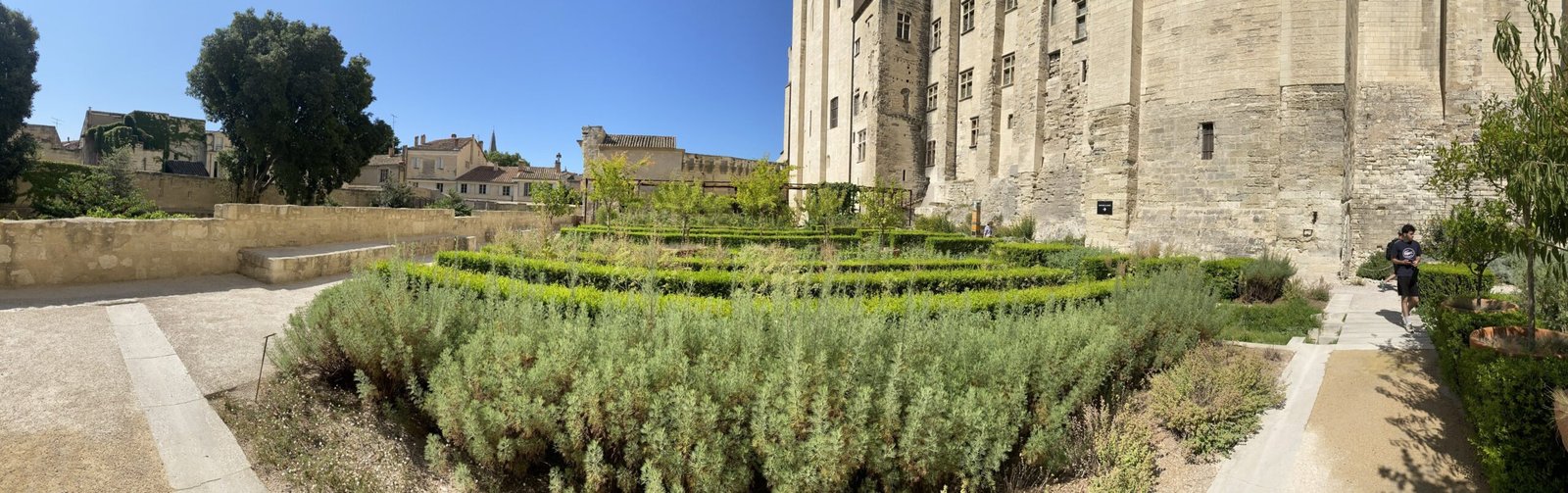
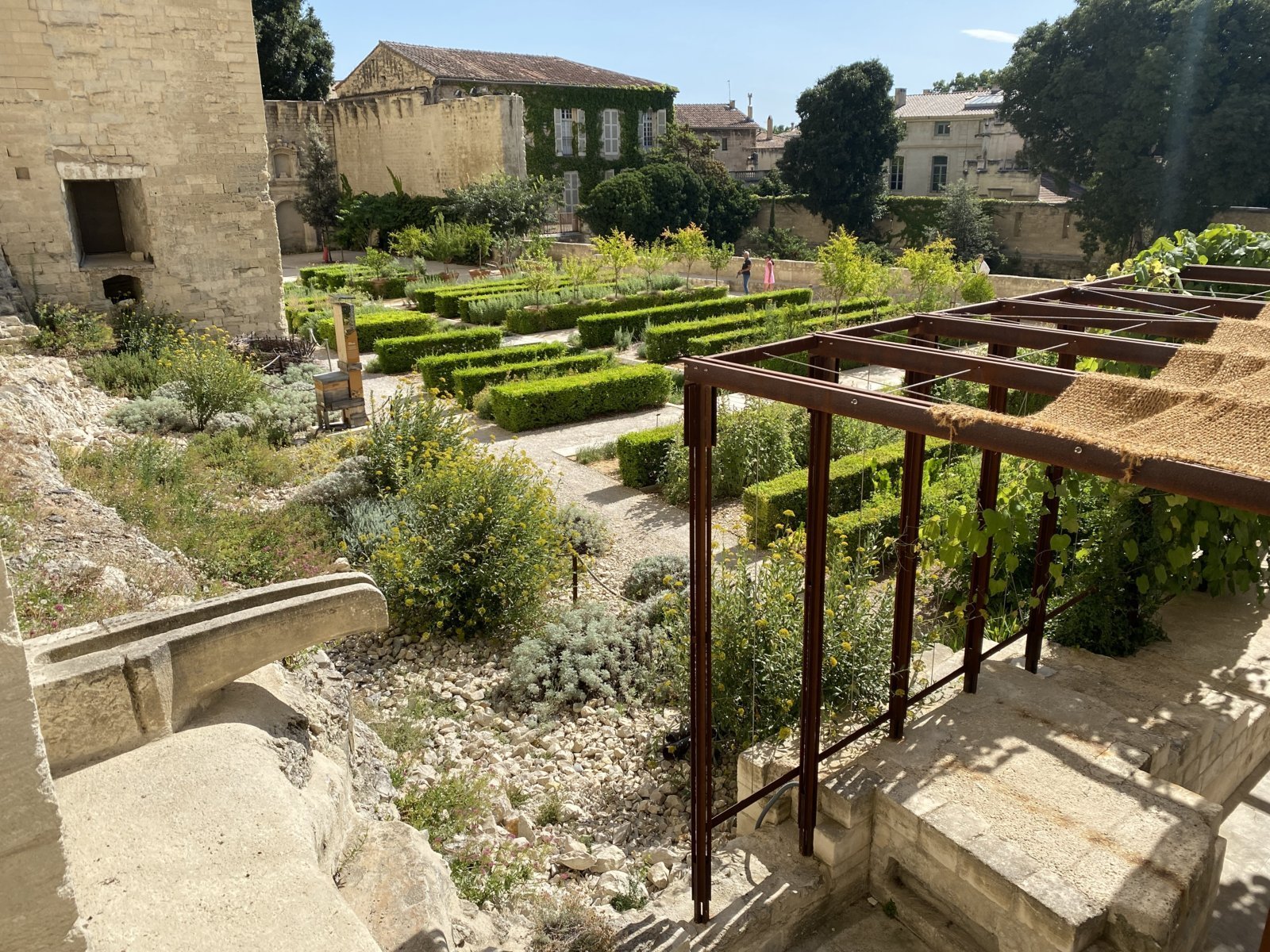
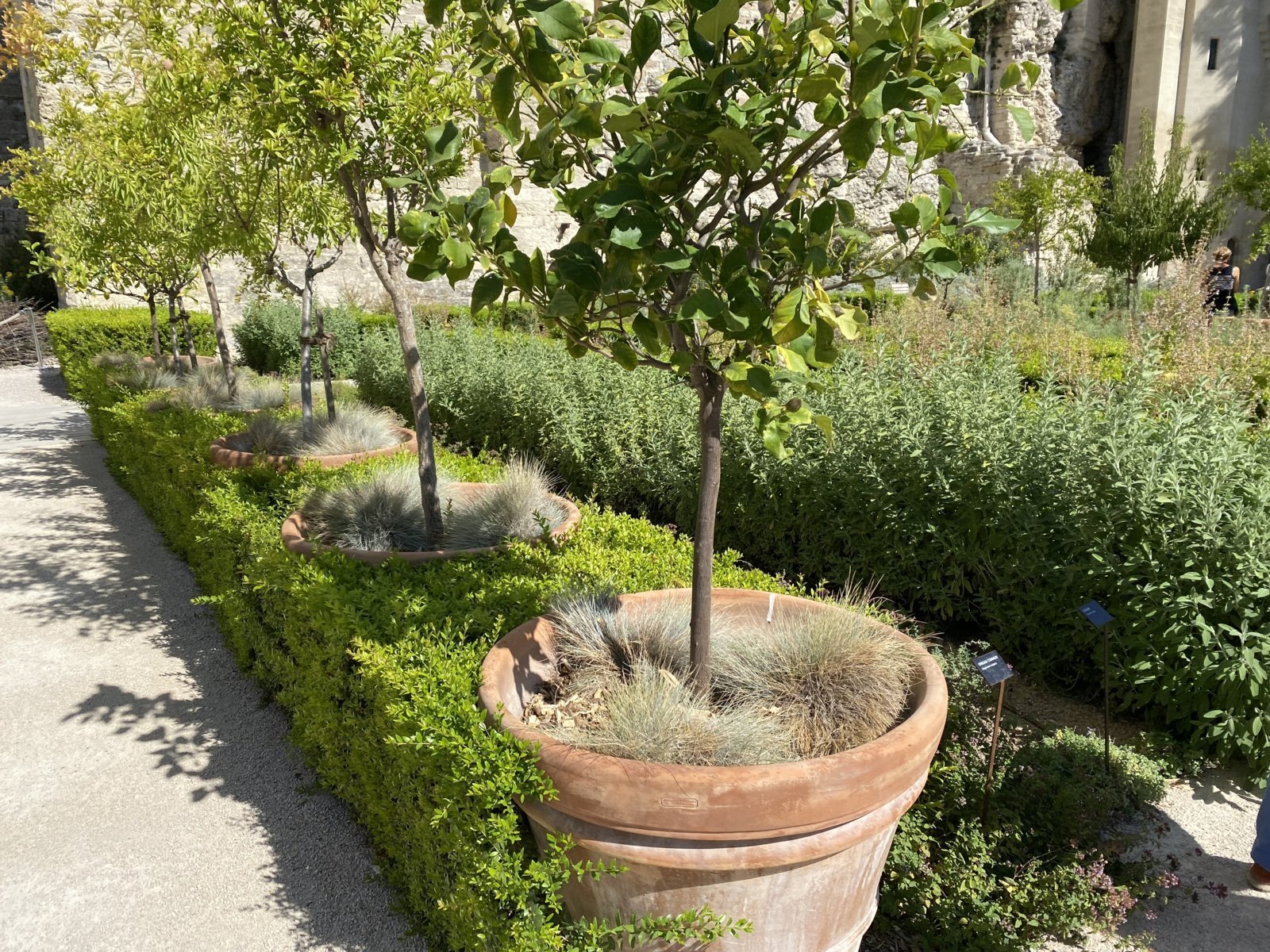
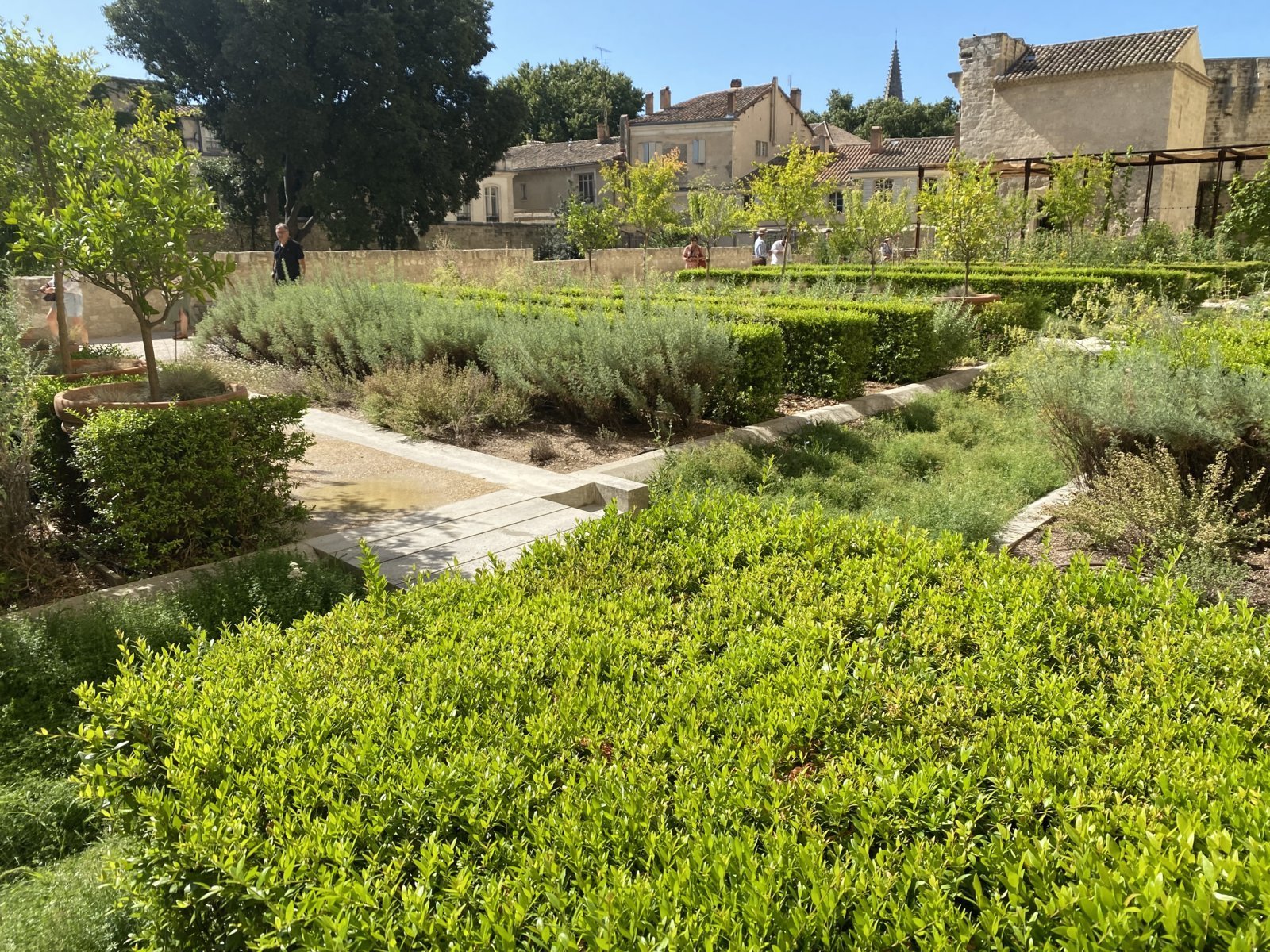
The Palace Garden is based on the discovered traces of the ancient hydraulic system, which has become a structural element of the planimetric design. Various rectangles define the space for vegetation, while transverse and perimeter paths allow visitors to easily explore the entire space. Strips of aromatic plants alternate with geometric lines of boxwood, reinforcing the structural theme and providing color shifts that sweep across the garden like brushstrokes. Among the plants present, all attested as early as the 14th century, we find lavender, horseradish, thyme, mint, echinacea, sage, verbena, rue, artichoke, etc. Imposing terracotta vases, which shelter citrus and other fruit trees, interrupt the rigid lines, emerging from the box hedges or interspersing themselves as punctuation between the strips of vegetation.
Overall, this papal garden of simples offers an idyllic place to stop and rest amidst the museum itinerary, revealing an often-hidden side of history. It leverages the strength of not seeking an impossible resemblance at all costs, but rather the authenticity of the place, a genius loci rediscovered and interpreted in the light of contemporary landscape architecture.
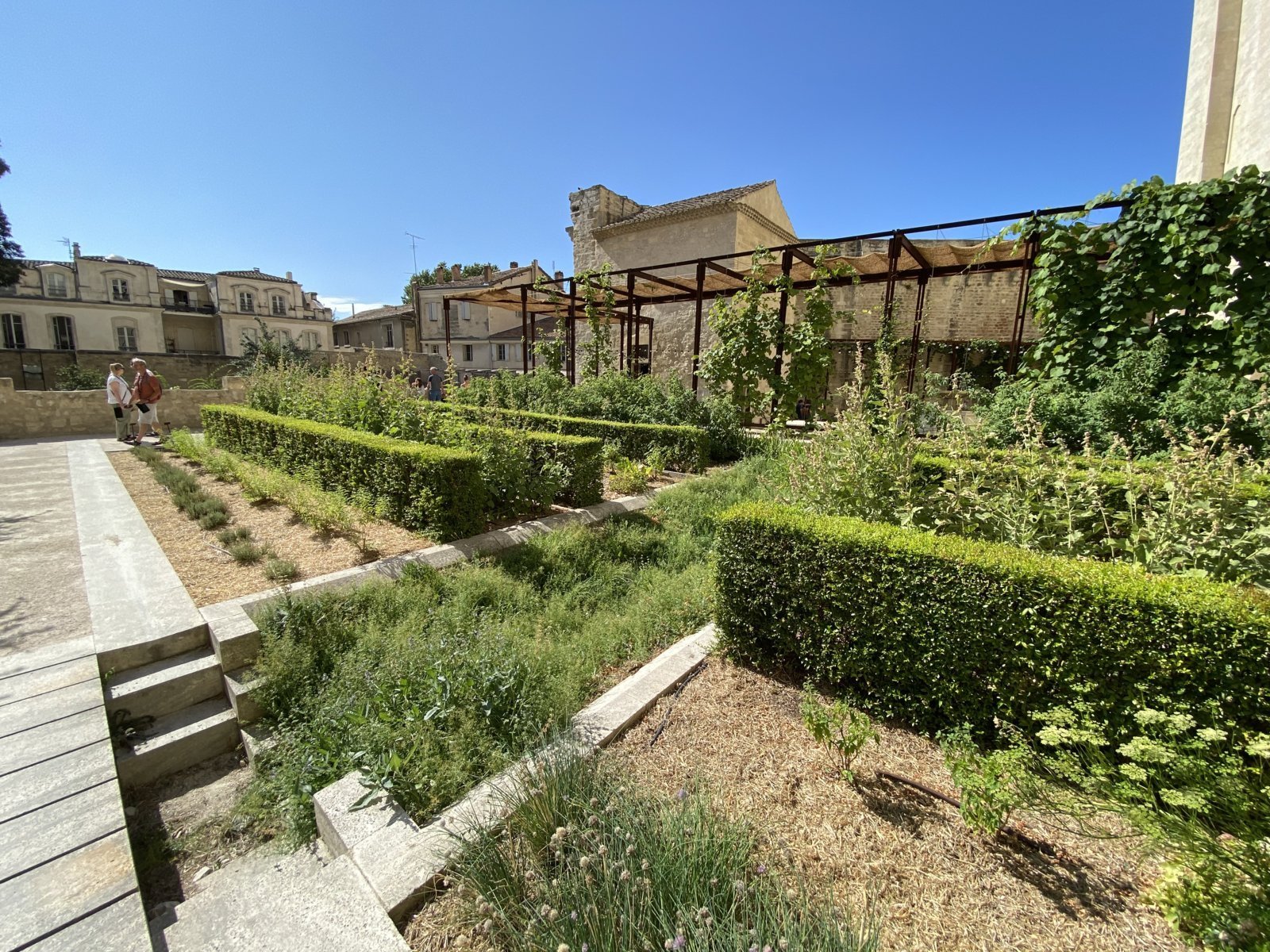
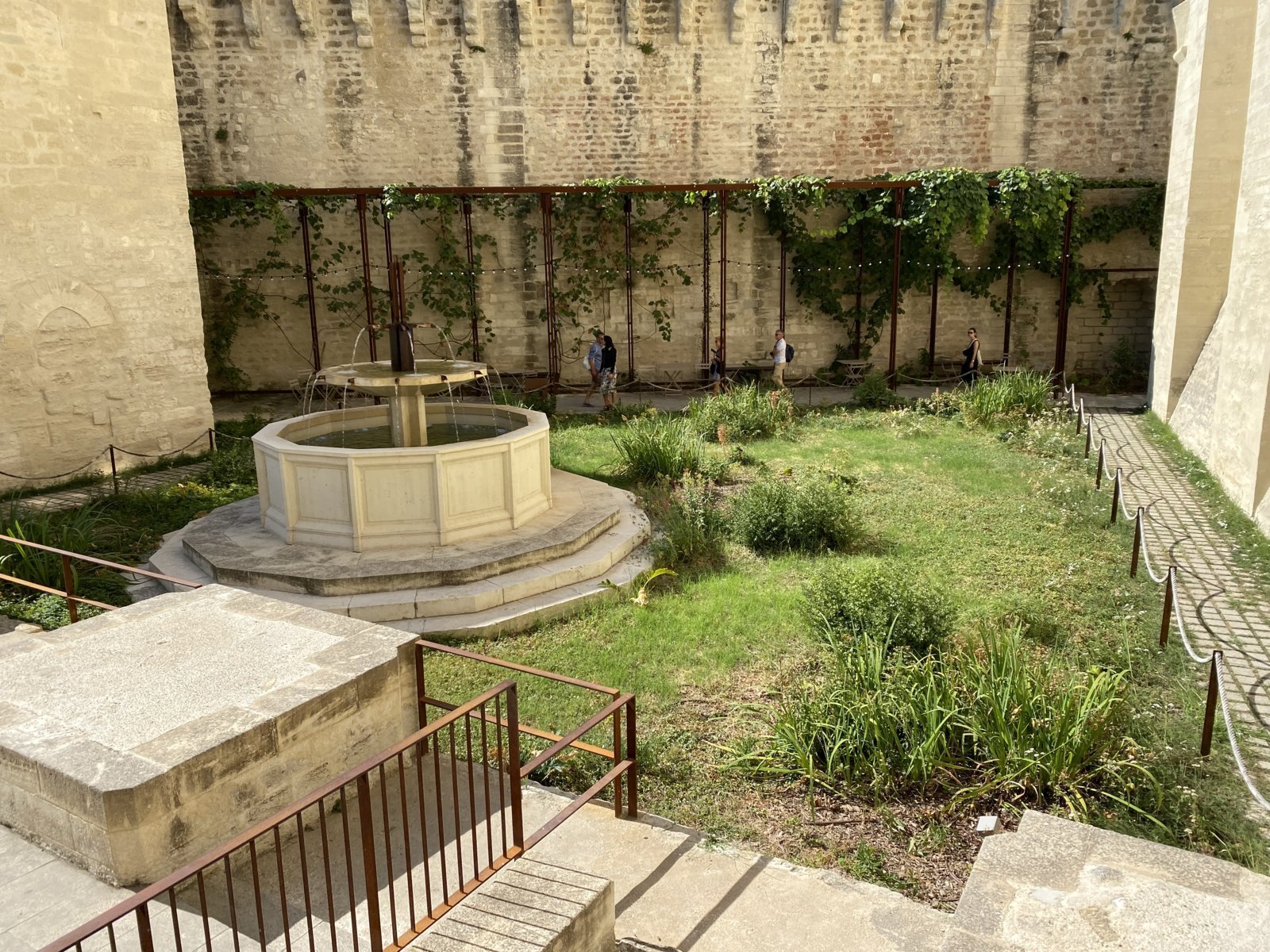
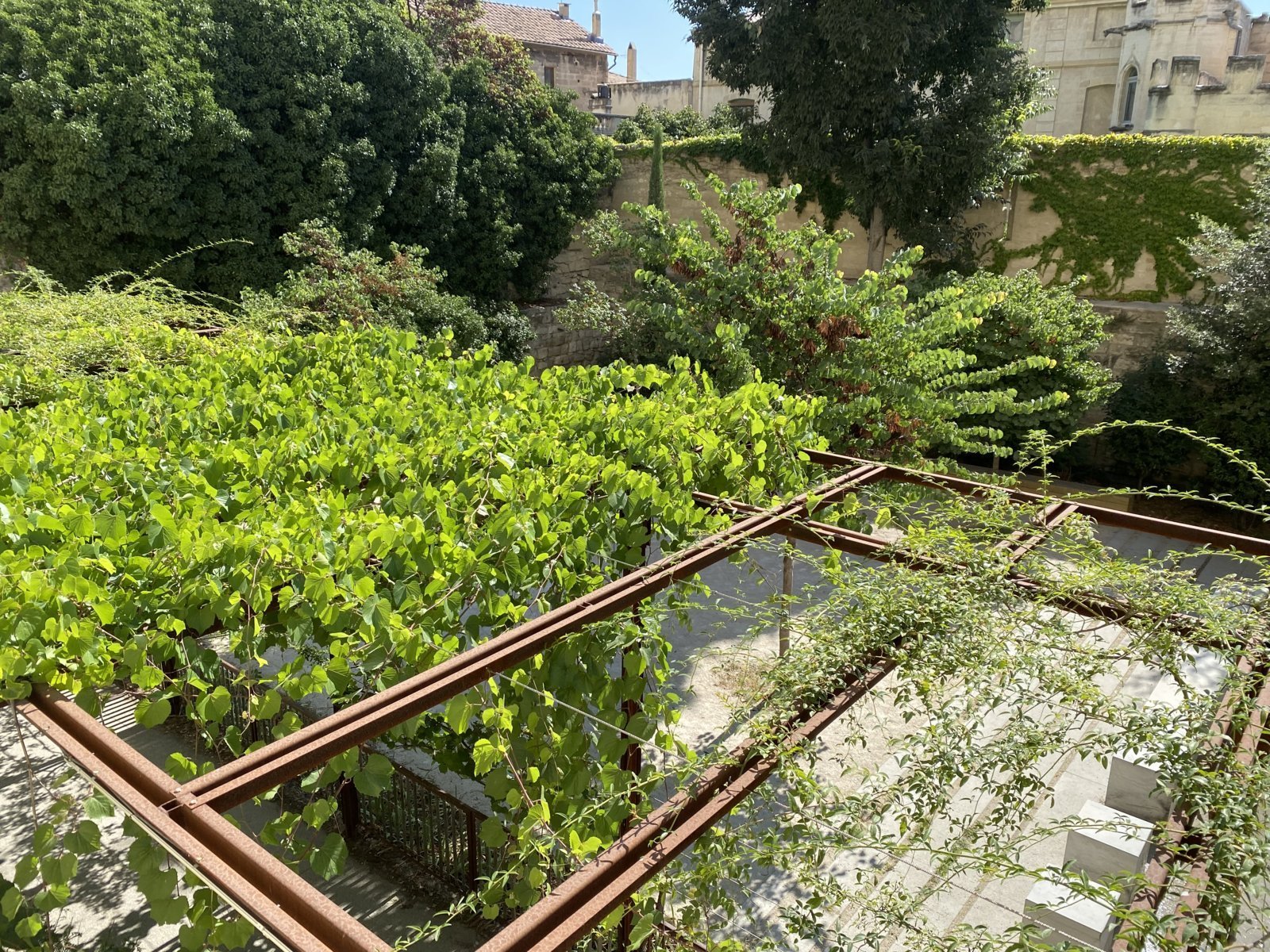
The Pope’s Garden, a smaller space directly connected to the papal apartments, has seen the Griffin Fountain rebuilt, as well as the surrounding lawn. To replace the Roma building, of which only traces remain on the ground, a monumental pergola was built, allowing climbing plants to grow. The restoration has restored the intimate character of the place, simple and delicate yet striking.
The Gardens of the Popes’ Palace in Avignon have returned to splendor after many centuries, during which their history and their relationship with the Palace remained hidden under the dust of time. Strolling through these gardens brings the visitor a little closer to the times of the Avignon Popes, generating a virtuous circle of curiosity that will lead to a deeper understanding of this fascinating historical period.

www.landscapefirst.com