

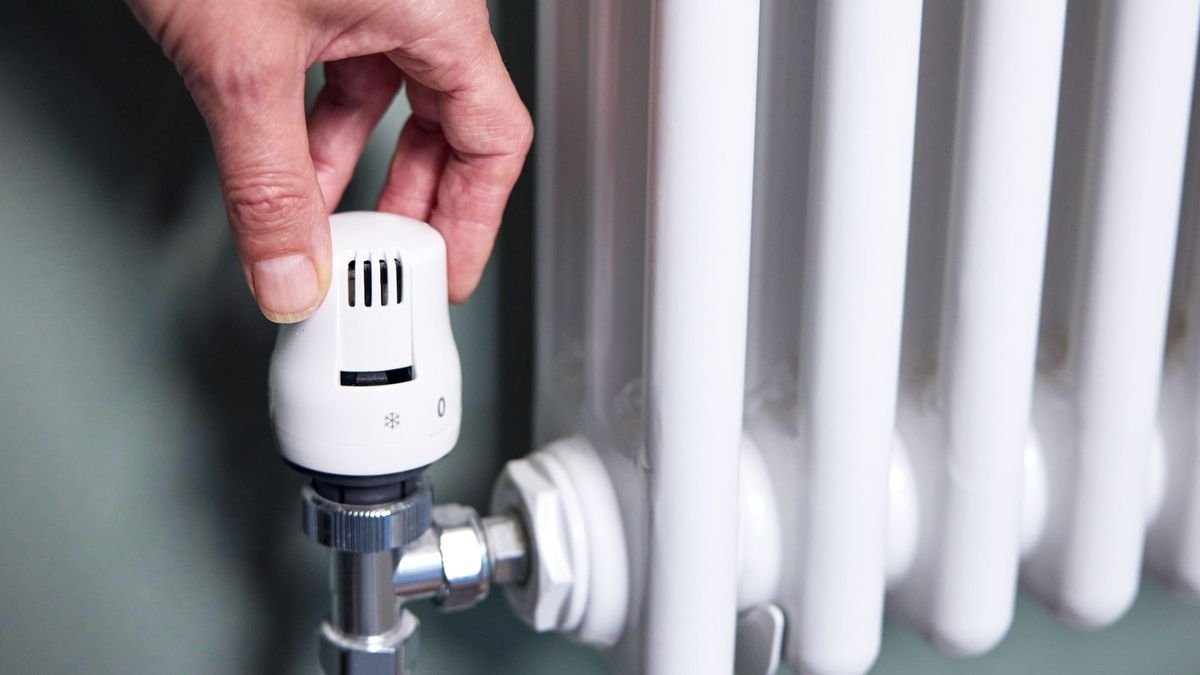

Ever wondered how does a TRV work? If you’ve got radiators you almost certainly have thermostatic radiator valves installed in your home. But what do they do? What makes them different from a standard manual radiator valve?
One of the key benefits of a Thermostatic Radiator Valve is that it is one of the cheapest ways to heat a room. Why? Because it automatically controls the flow of hot water to a radiator. This means you can choose which room needs the most heat and which needs the least, helping you save on your heating bill. Here you can find out what’s inside a TRV and how to use them effectively.
How does a TRV work? What’s inside?
A Thermostatic Radiator Valve (TRV) is designed to automatically control the flow of hot water into a radiator to help regulate the temperature in a room. Inside the TRV there is a pin with a copper or rubber taper that sits on the valve seat and moves up or down to control the water flow. If the pin is sat against the valve it won’t let any water through, the further the pin goes up the more water it lets in.
The clever part is the thermostatic part of the TRV. This is the big plastic bit on top of the valve that you turn to the desired number. Inside there is typically a metal coil that will expand and contract according to the temperature in the room. If the room is warm the coil will expand pushing the pin down so restricting the water flow. As the room gets colder the coil will contract, opening the pin to let more water through.

Are TRVs all the same?
In principle TRVs are effectively all the same – they automatically control the individual heat output of the radiator they are connected to. However, there are different designs, shapes and colours to help with the aesthetic. Typically TRVs are white, but you can purchase chrome plated and brass TRVs if you want something different.
Most Thermostatic Radiator Valves are manually operated to choose the output. But you can go one step further with a smart radiator thermostat. This replaces the standard thermostatic head to create a WiFi controlled heating system that can become part of a smart home.
What’s the advantage of a TRV over a standard radiator valve?
The key advantage of a TRV is the automatic control of the hot water flow, which in turn helps control the temperature of a room. This makes them more energy efficient, environmentally-friendly and a money saver as you aren’t typically using as much energy to heat the water.
Standard manual radiator valves do not automatically control the hot water flow. They are set at a static point i.e. half open, which allows the same flow of hot water. To adjust you will need to do it manually, which makes then less efficient.
Do I need a TRV in every room?
You can have a TRV in every room with a radiator as regulations state, but typically you don’t have a Thermostatic Radiator Valve in the room where the main thermostat controlling your boiler is located. So if you have your main thermostat in the kitchen you don’t need a TRV on the radiator in that room as the thermostat will be controlling the heat output for that room.
But in rooms where the main thermostat will have no control you should have a TRV to help keep a more even temperature. For example, if your main thermostat is in the kitchen and the temperature is warmer than normal the radiators in other rooms won’t come on, even if they are cold.

What setting should a TRV be on?
This will depend on how often the room is used, but one of the benefits of a TRV is the control that they give you on a room by room basis. In a regularly used room like a lounge or bedroom you want to set the TRV to two or three – on a 0-5 scale – and see how that works.
If you feel that the temperature is too hot or too cold, adjust as necessary. Ideally you shouldn’t need to turn up to number five. If you do the valve will constantly be open negating the benefits a TRV typically brings. Conversely, switching a TRV to zero means you are effectively switching off the radiator so it won’t warm up.
In a room that doesn’t get as much use, so doesn’t need to be as warm as other rooms, set a TRV to two to start with and and turn up or down as necessary. This means you can keep an ambient temperature in the room which will help keep mould at bay. But if it does arise you will want to know how to remove mould from walls.
What temperature is 5 on a TRV?
The numbers on a Thermostatic Radiator Valve commonly range from zero to five. These reflect the water flow through the valve. If your TRV is set to zero this means that the valve is closed and won’t let any hot water through. If the TRV is set to five then the radiator is on more often.
The approximate temperature for each number is as follows:
- 1 = 10°C
- 2 = 15°C
- 3 = 20°C
- 4 = 25°C
- 5 = 30°C
Choosing three or four should be more than enough to keep any room warm and toasty in the cold months. In the warmer months you can turn a TRV down to one or switch off altogether depending on how warm it is outside.