

Downtown Phoenix is a brief vertical moment within the city’s low-slung sprawl, which unfurls across more than 500 square miles toward the city’s valley edge. From my airplane window, it appeared as a patch of overlooked stubble on a recently shaved cheek. The man at the airport information desk unhurriedly explained how to arrive there by taxi, but made sure to warn against the light rail system, which, he explained, was the slower alternative.
This may seem an ill-advised place for RAY, an upscale and arts-focused real estate company based in New York City, to set its sights for its third development (as well as its largest yet, with 401 apartment units). Founded by Dasha Zhukova, a former fashion designer, magazine publisher, and founder of the Garage Museum, the company aims to combine urban living with art-focused live–work space in all its projects. “RAY was founded on a simple belief: that culture and design should be part of everyday life—and that real estate can do more than just create buildings,” Zhukova announced prior to the ribbon cutting. “It can shape experiences and communities.”
This came easily at RAY’s previous two sites, in Philadelphia and Harlem (designed by Leong Leong and Frida Escobedo, respectively), which benefited from high density, cultural vibrancy, and walkability and had already cultivated an extensive sociable and creative clientele. Yet even at the center of Downtown Phoenix, the blocks surrounding RAY Phoenix are sleepy (one restaurant around the corner, literally called Snooze, closes at 2:30 p.m.). This begs the question: Can the 4,500 square feet of ground floor commercial space really activate a city block that is currently surrounded by vast parking lots?
Yes, actually. At a moment when thousands of Americans are moving out of cities in search of a lower cost of living, Phoenix is on the rise. Ten years ago, its downtown was home to 8,000 residents. Since then, that number has more than tripled, prompting over a hundred businesses to open in the area last year alone. RAY Phoenix broke ground in 2024 and was rapidly completed just to keep up with the local pace of growth. Now it’s ready to host up to 600 occupants, many of whom are expected to come from the healthcare and tech industries, currently exploding in the region. If any local artists are able to make rent (prices start at $1,470 for a 386-square-foot studio and go up to $7,219 for a two-bedroom penthouse), they’ll have access to a ground-floor pop-up exhibition/event space curated by RAY and a workshop complete with brush-washing stations and art storage.
“A big part of investing here was the opportunity to build in a landscape where architecture and environment could really connect,” Nick Benjamin, the founder of the collaborating real estate development company, VELA, told me as we stood in the shade of its ground-floor awning. “There’s simply more room here—physically and conceptually—for the landscape to become an extension of the building.”
That investment brought on the talents at Johnston Marklee & Associates (JMA), the Los Angeles–based architecture firm known for its planar designs, minimalist detailing, and creative approach to dynamic housing programming. Though it’s JMA’s first multiunit residential building, following a string of rarefied single-family homes and large-scale museums, RAY Phoenix demonstrates the firm’s ability to enter into the building type with ease.
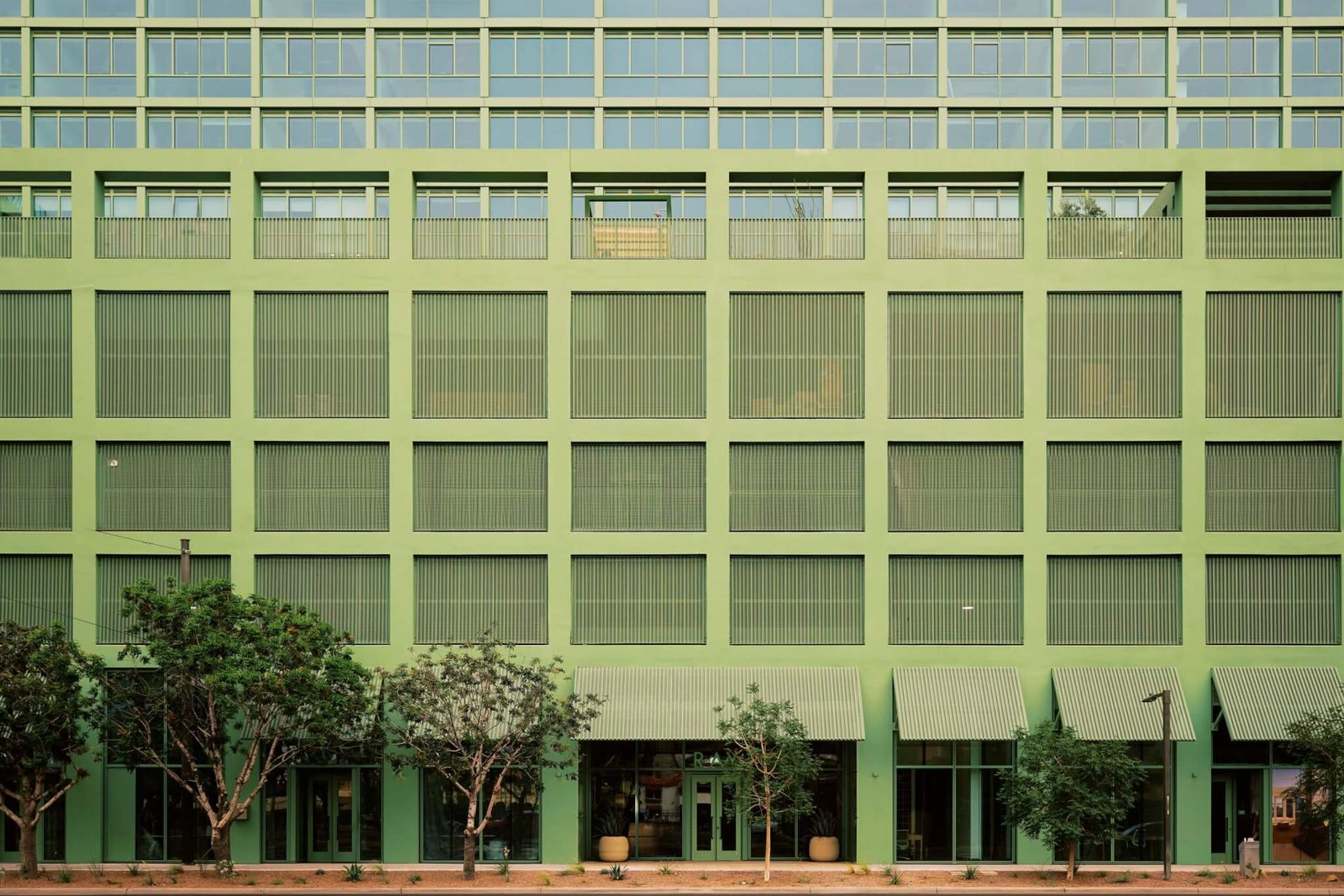
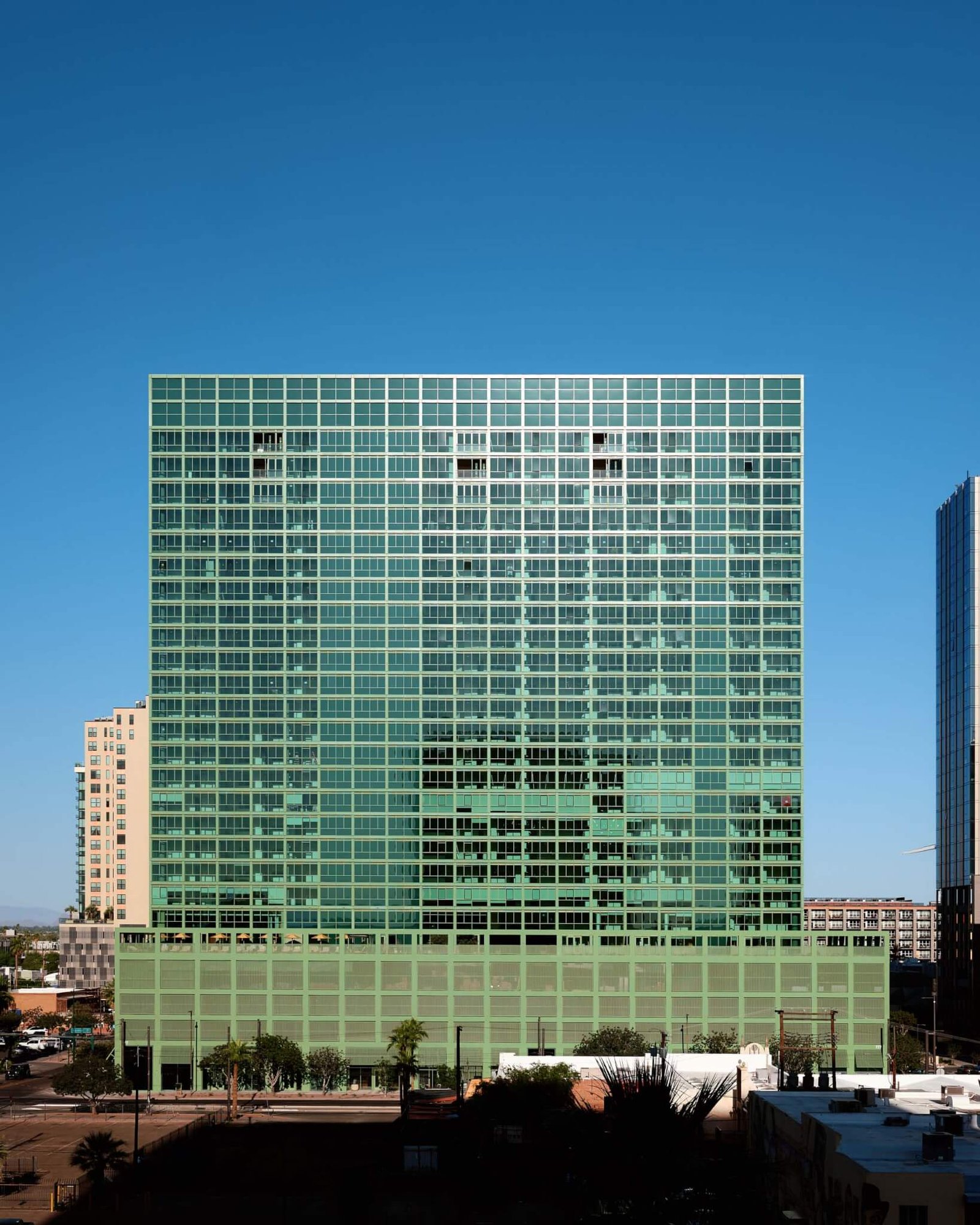
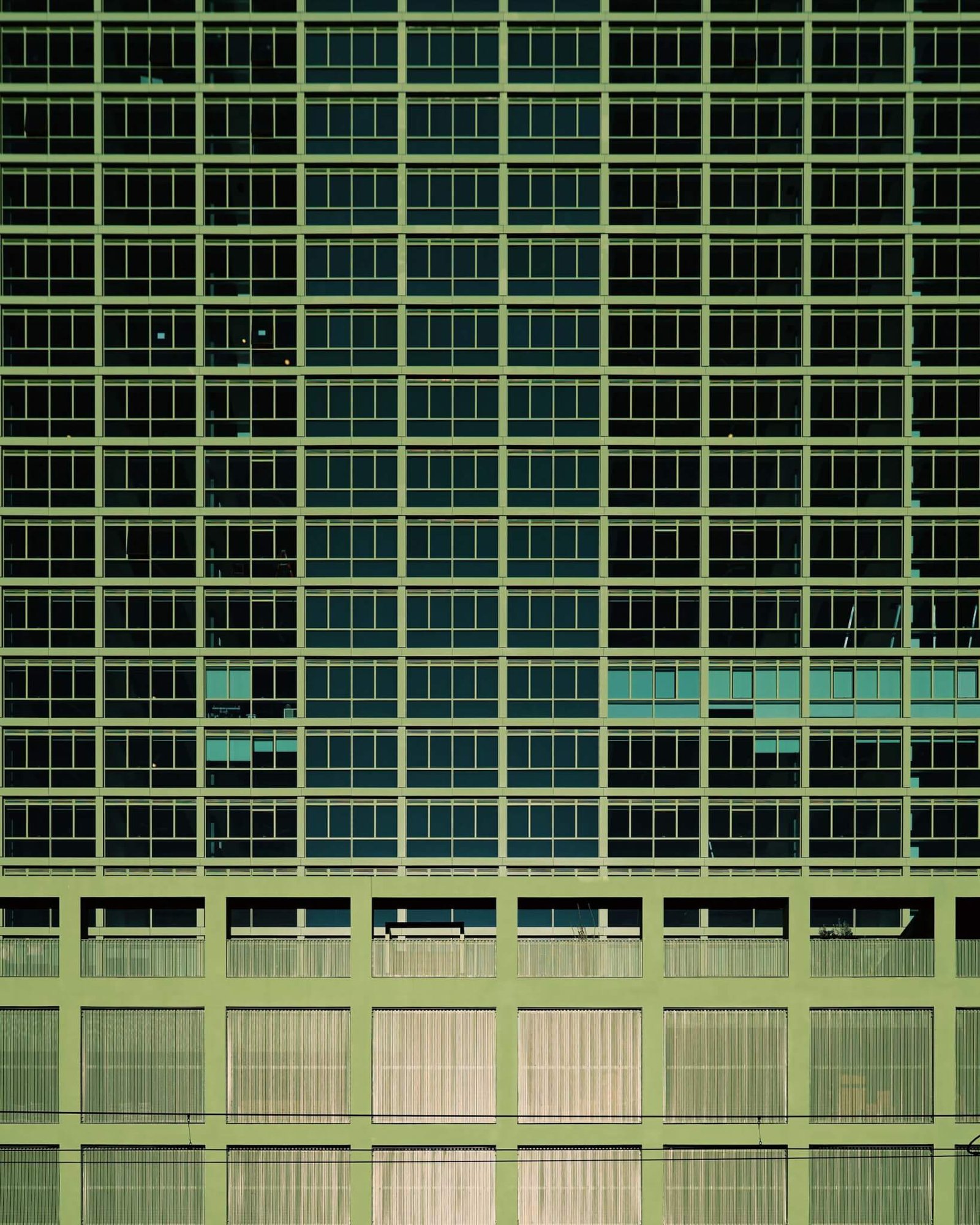
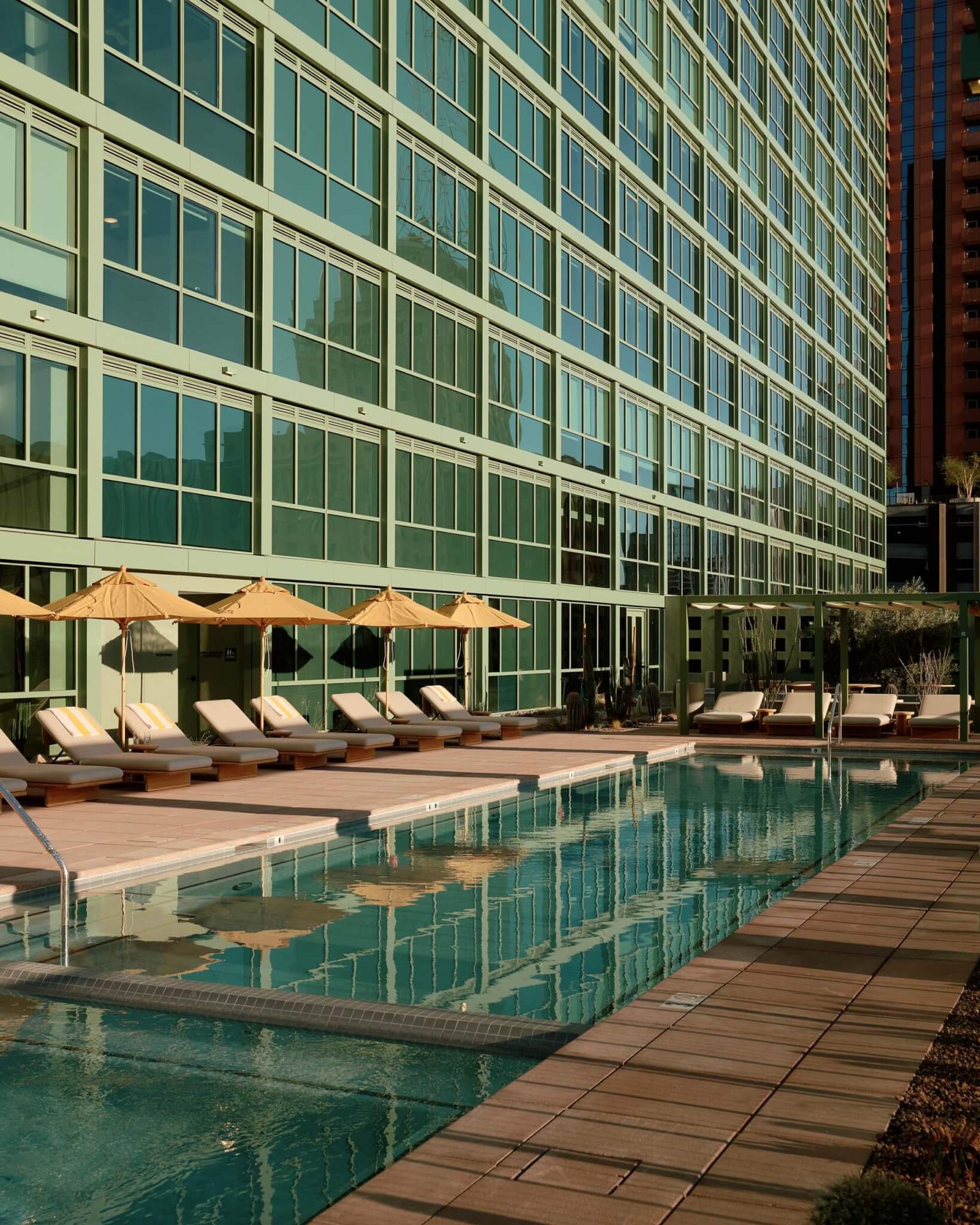
Designed in partnership with Lamar Johnson Collaborative, the facade’s grid system varies almost imperceptibly across 26 stories, maintaining structural and visual clarity to combine a 5-story parking-garage podium that relates to the low-slung profiles of surrounding buildings with a residential tower that rises more slenderly above it. The facade’s depth plays with mass to provide shadows for heat mitigation, while its iconic pea-green treatment, a nod to desert vegetation, powerfully contrasts with the sea of gray buildings that surround it.
But don’t call it “desert modernism” to those involved. “It’s a contemporary design, and it’s rooted in modernist principles, but we think of it more as a hybrid,” said Sharon Johnston, a cofounder of JMA. “The green connects to the landscape, while the geometry is very rational. That tension keeps it from being easily labeled.”
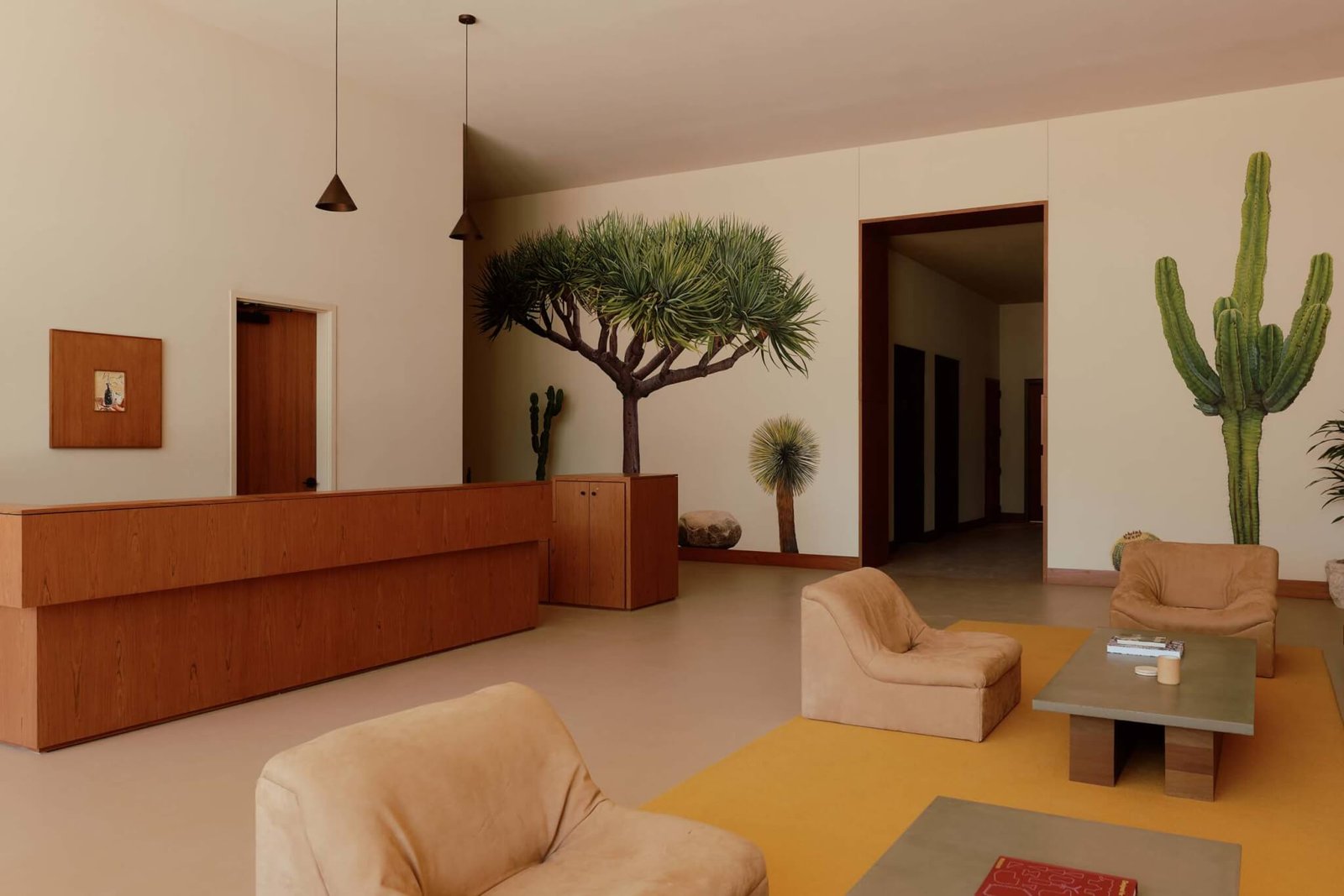
The tension between regional cliché and ingenuity is carried through to the lobby, where Los Angeles–based artist Alex Israel created a mural featuring full-scale desert rocks and flora with the help of a Hollywood scenic artist. While it seems like a local law that every building in Phoenix include imagery of desert rocks or flora, or both, Israel’s take is distinguished by an uncanny hand-painted quality that imbues the space with a cinematic quietude.
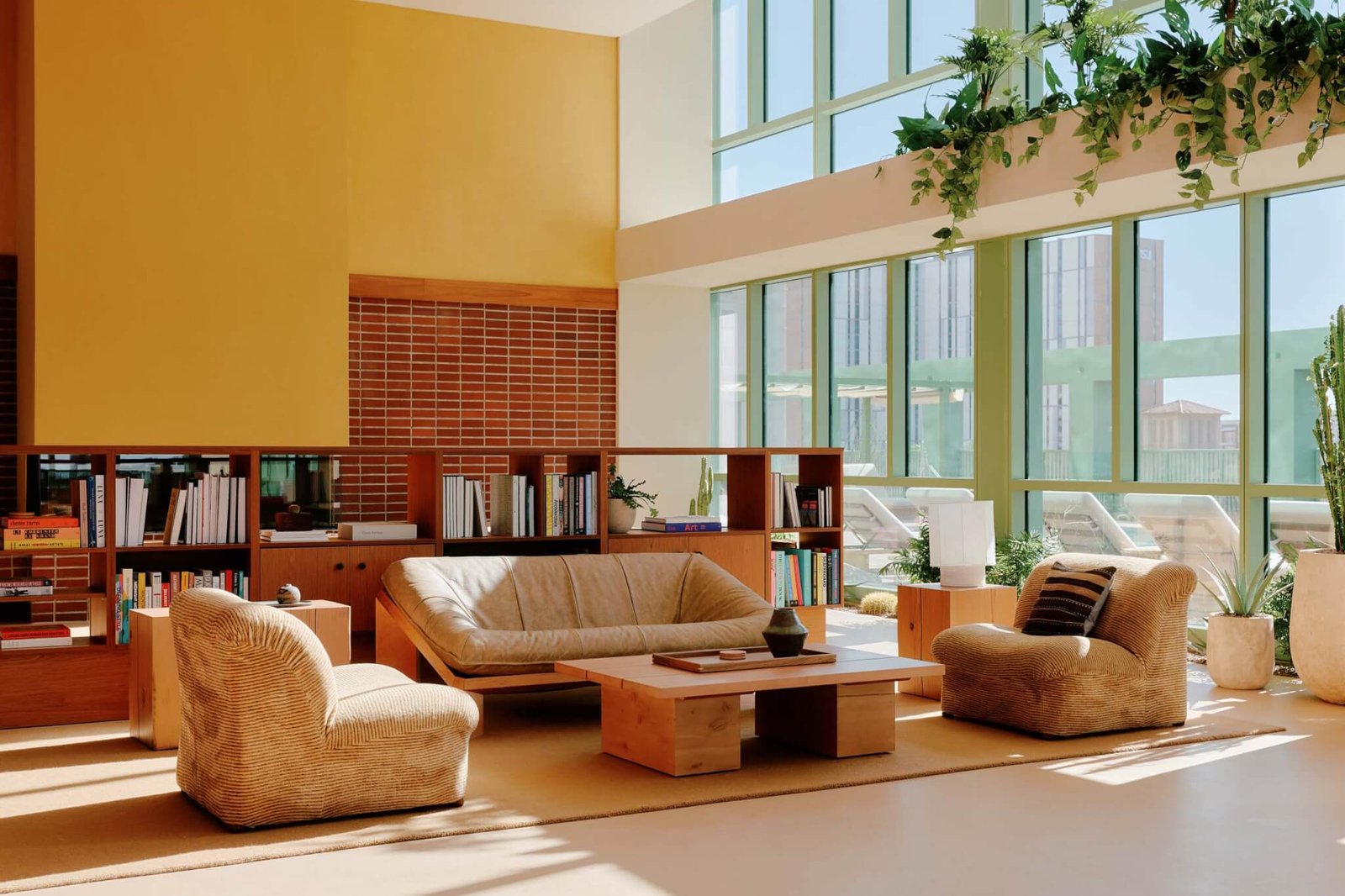
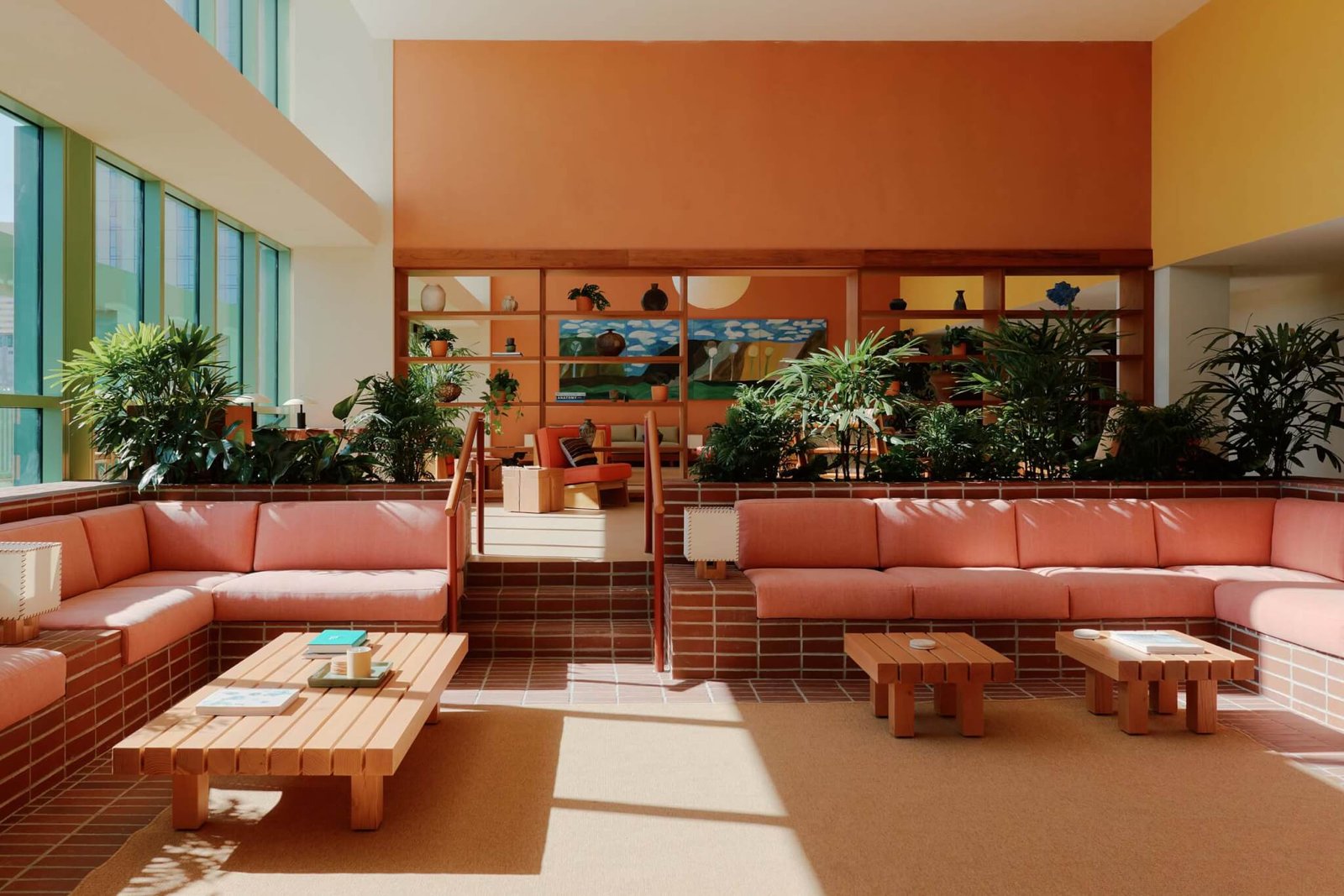
The airy proportions and earthy materials of the building interior, conceived by RAY’s in-house design team in collaboration with Parts and Labor Design, further advance the leisurely yet rational aesthetics first perfected by West Coast modernists in the mid- 20th century. The communal spaces that comprise the entirety of the 5th floor draw the green exterior inward to dialogue with dusty-pink accent walls, pyramidal chandeliers, and a variety of drought-tolerant plants native to the Sonoran Desert selected by Grace Fuller of Grace Fuller Design.
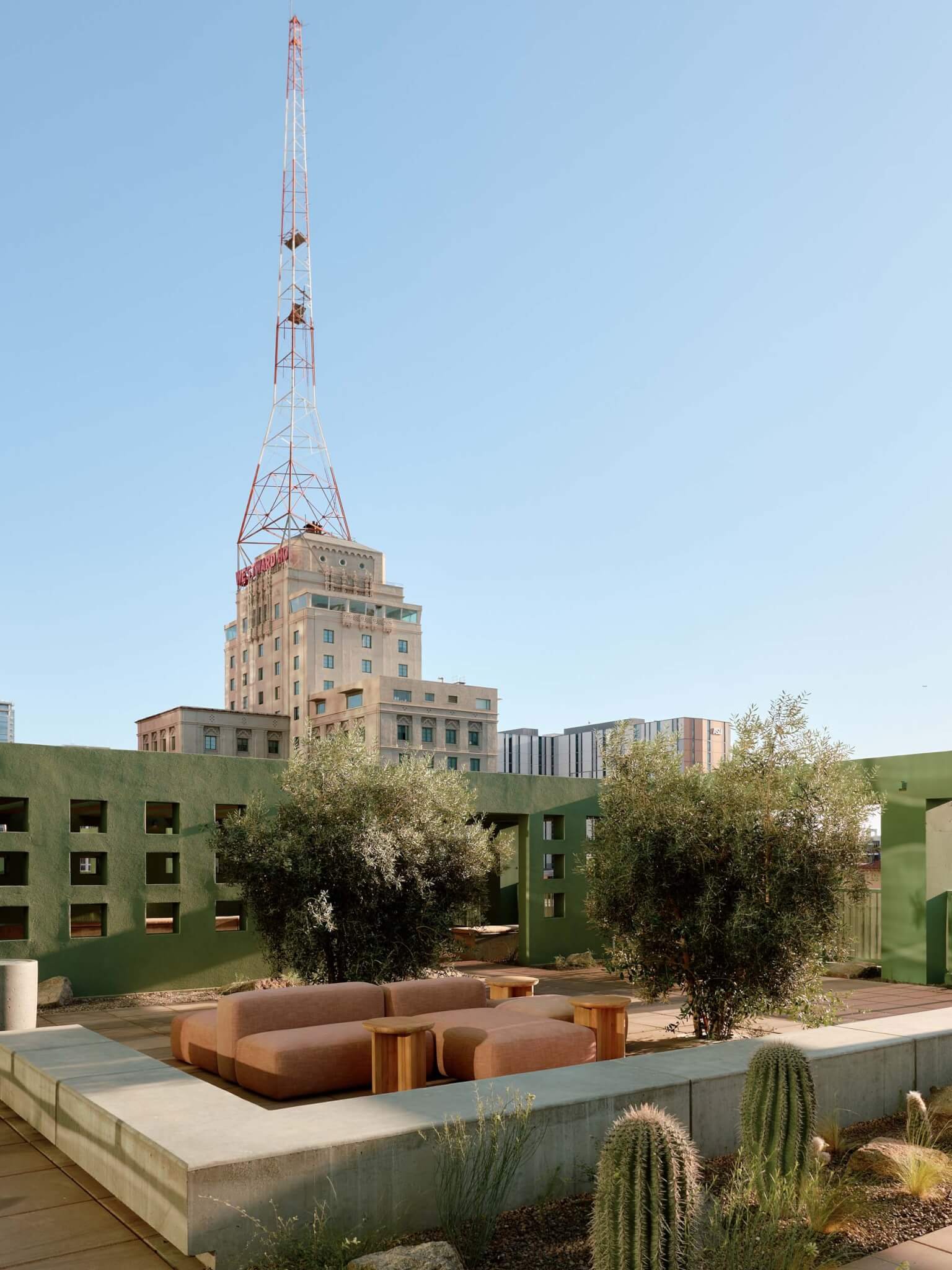
With half the residential units comprising fewer than 500 square feet, RAY anticipates that occupants will take full advantage of the shared spaces that occupy the entirety of the 5th floor—even if it is 110 degrees. These common spaces are broken up into zones of varying sociability. The primary space, the Living Room, is bereft of the pool tables, dart boards, and other amenities typically offered in large apartment buildings. Rather, it is quietly animated by freshly unwrapped art books and loads of seating options beneath a large, spherical pendant light. “Instead of game rooms and high-energy spaces,” said Nicholas Hofstede, a managing director at JMA, “we went with something calmer, more like a shared living room or salon.” Across from the Living Room is the Sunken Lounge, another allusion to midcentury modernism with its conversation pit, but thankfully without the shag carpeting. An outdoor garden, swimming pool, and cabanas are all on the western half to benefit from the morning shade of the residential tower.
It’s still quiet at the RAY Phoenix. But perhaps its soon-to-be residents will, with great effort, hold the line. As the neighborhood continues to grow, it may well become the first in the RAY series to foster an arts culture with the same sort of slow pace that has drawn people to Phoenix as a resort town for over a century.
Shane Reiner-Roth is a writer and lecturer on architecture and urbanism in Los Angeles.