

Nominally a residential development and land regeneration project, the 494-acre (200-hectare) nature reserve known as Reserva Peñitas has, in recent years, emerged as something more exciting: a hotbed of contemporary Mexican architecture. Peñitas is located two hours west of Mexico City, near the lakeside town Valle de Bravo, itself a popular getaway for the capital’s well-to-do. There, exemplary water conservation practices are often paired with bold experimentation around domestic forms. The renowned architects Fernanda Canales, Hector Barroso, and Javier Sánchez (founding partner of the studio JSa), among others, have designed innovative weekend houses in the enclave.
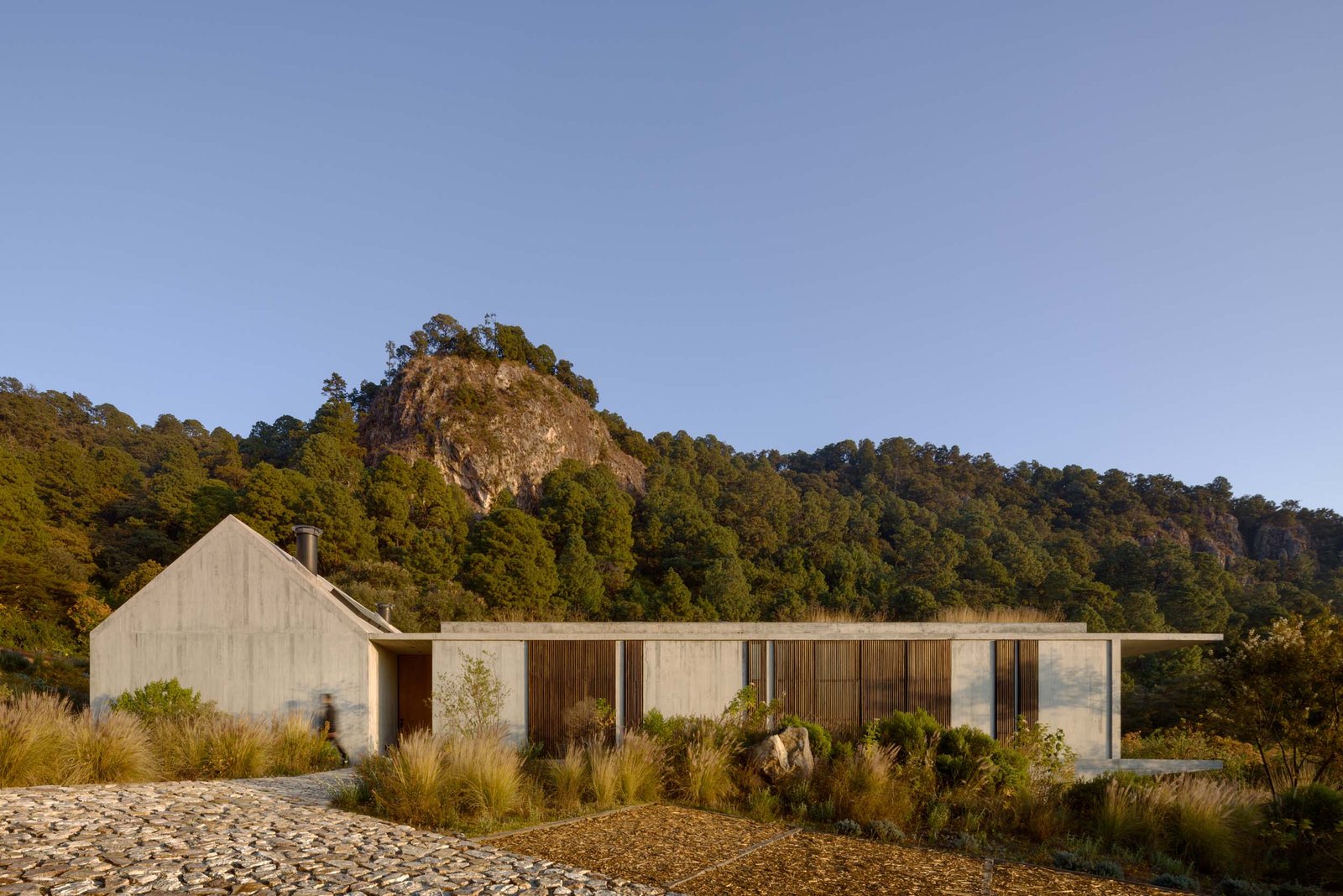
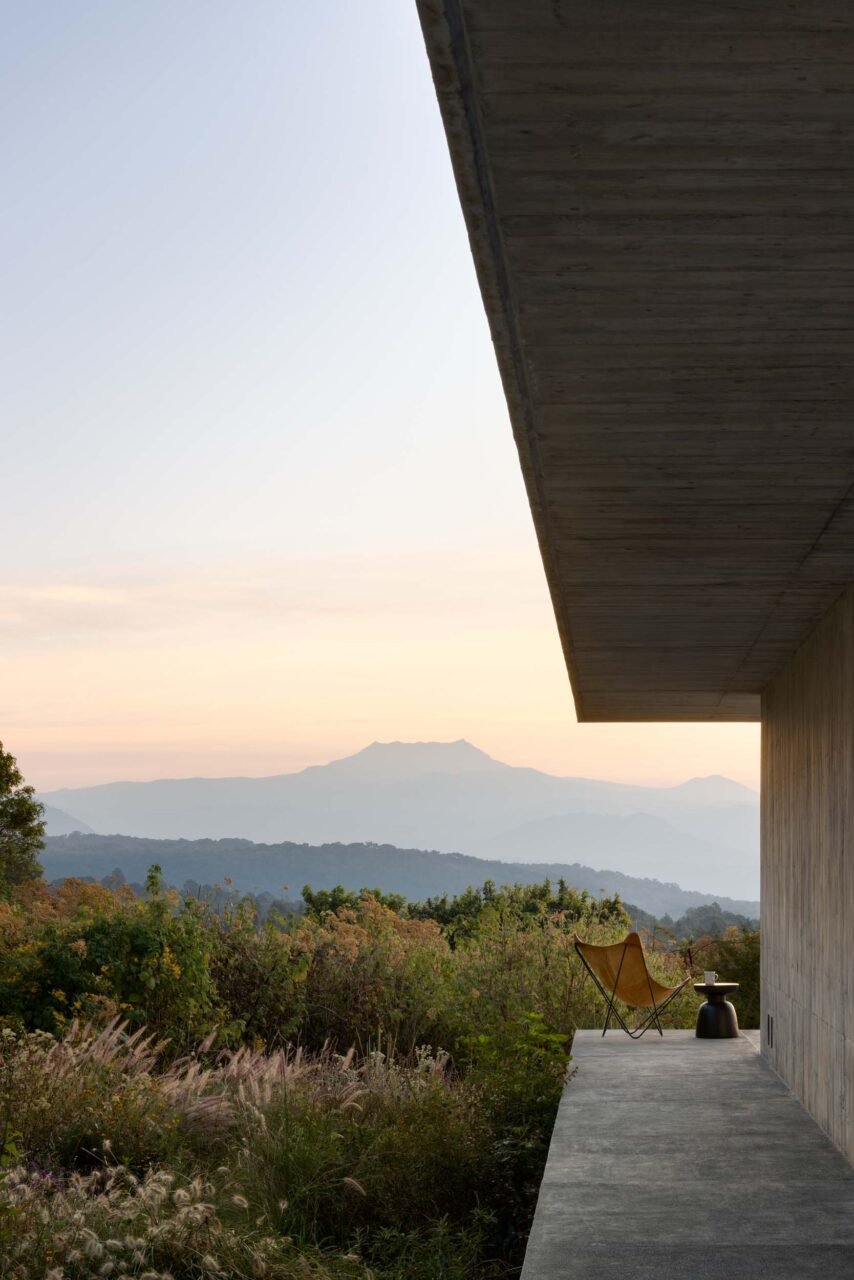
JSa’s latest addition to the area, a family retreat named Casa Marte, completed in 2024, plays with the idea of what a country home can look like. Casa Marte straddles seemingly paradoxical extremes: The design distills the dwelling down to its abstract essence (a physical manifestation of a child’s “A”-shaped drawing of a house), while also complicating it with three freestanding volumes in lieu of a single building. If that sounds gratuitously conceptual, in reality the resulting mini cluster is a sensible concession to the site, a large piece of land encompassing two distinct facets—a promontory offering long views of the valley and distant sierras and, past a ravine, a forested section. As quietly spectacular as the architecture is, Casa Marte’s forms defer fully to the awe-inducing scenery of the surrounding oak-covered boulders, serene creeks, and, most majestically, the quiescent Xinantécatl volcano—one of Mexico’s highest peaks. In a way, the house’s structures are promontories, too, their gabled silhouettes jutting out on platforms carefully inserted into the terrain to maximize the project’s panoramic value.
Casa Marte wasn’t always supposed to be split in three parts. The client, a businessman, gallerist, and architecture aficionado, approached JSa after seeing a Brutalist residence the studio designed in Peñitas in 2018. He felt that something similar might provide him, his historian wife, and their two sons with a striking refuge in nature that was secluded without being too remote. Since designing that blocky house, however, JSa had evolved toward a more environmentally sensitive, less concrete-heavy approach. Moreover, the respected architecture workshop thought the varying character of the plot the client had purchased called for something unorthodox, something that was both freewheeling and rigorous. The proposal for the tripartite scheme was born, quickly winning over the family.
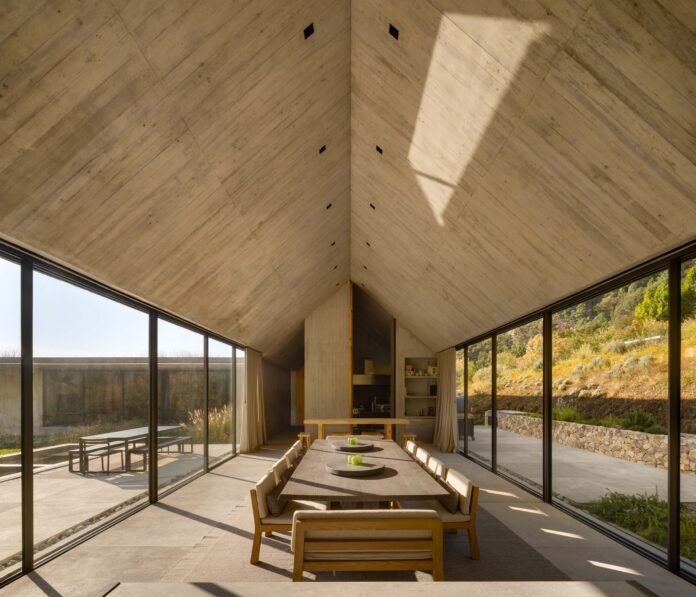
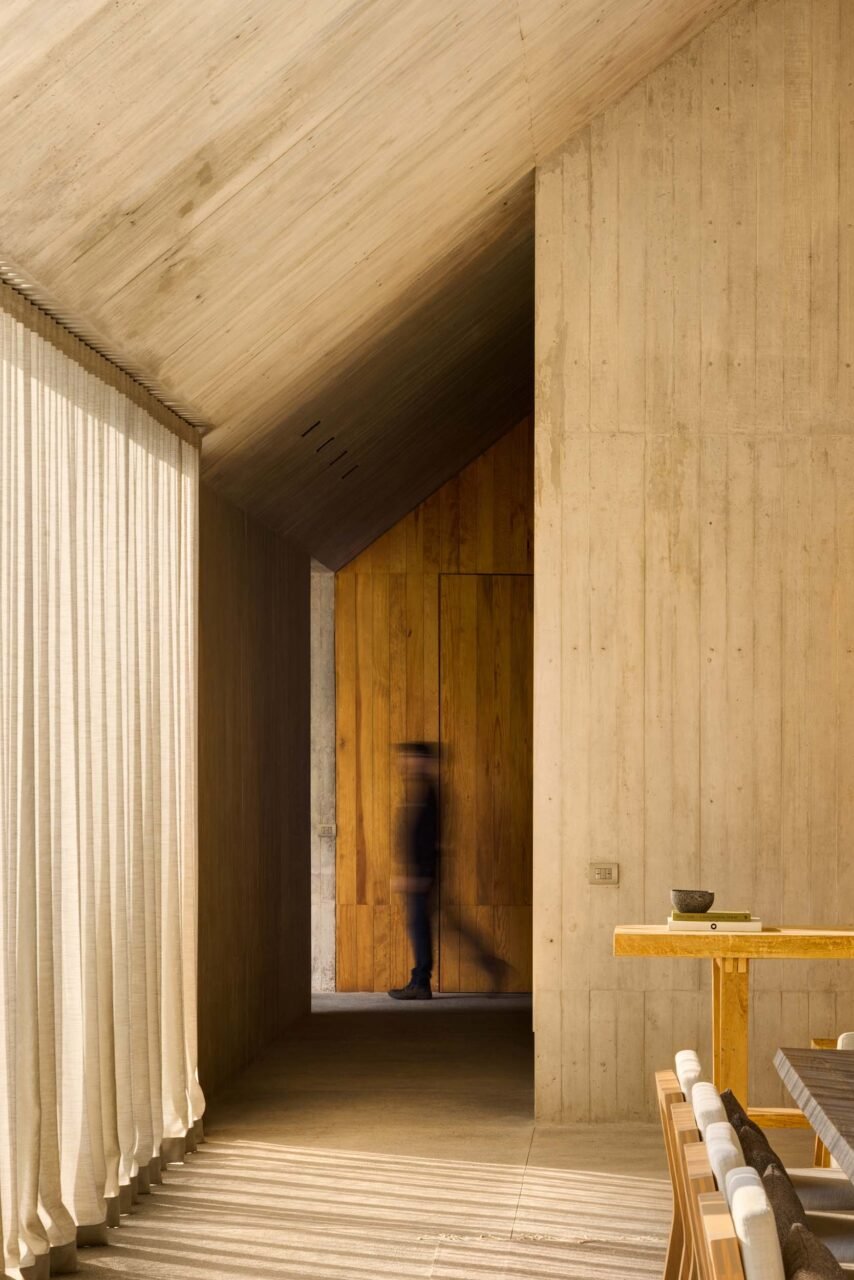
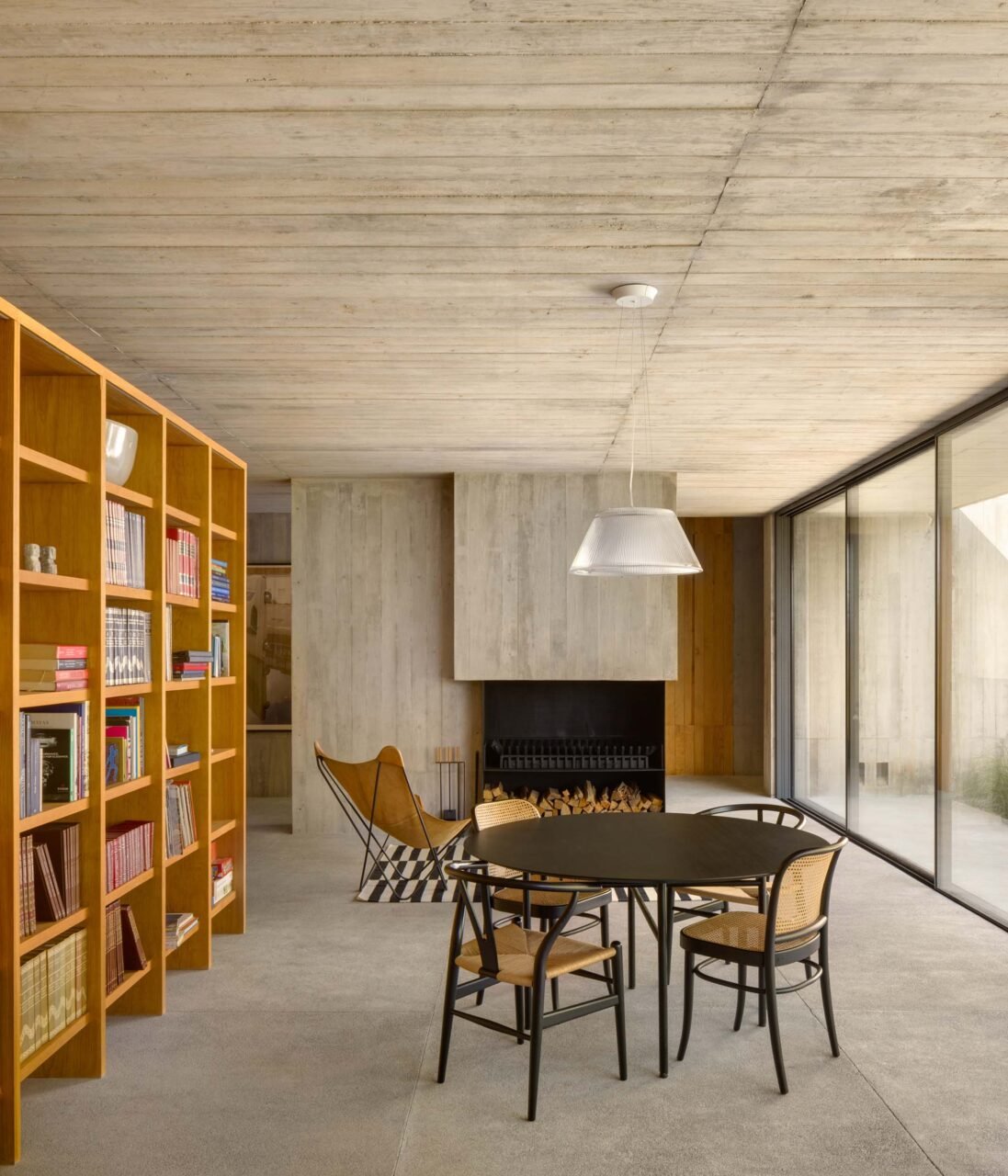
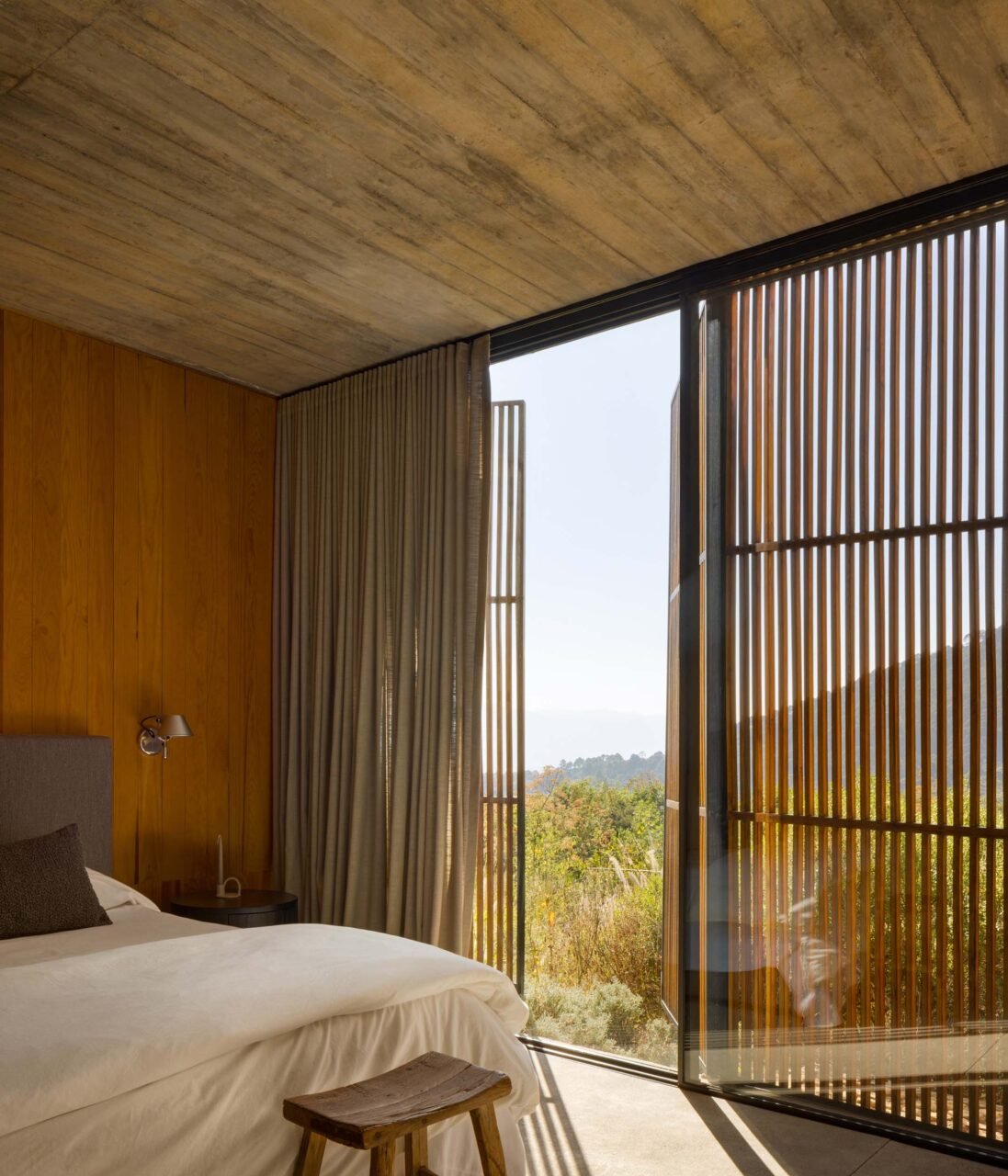
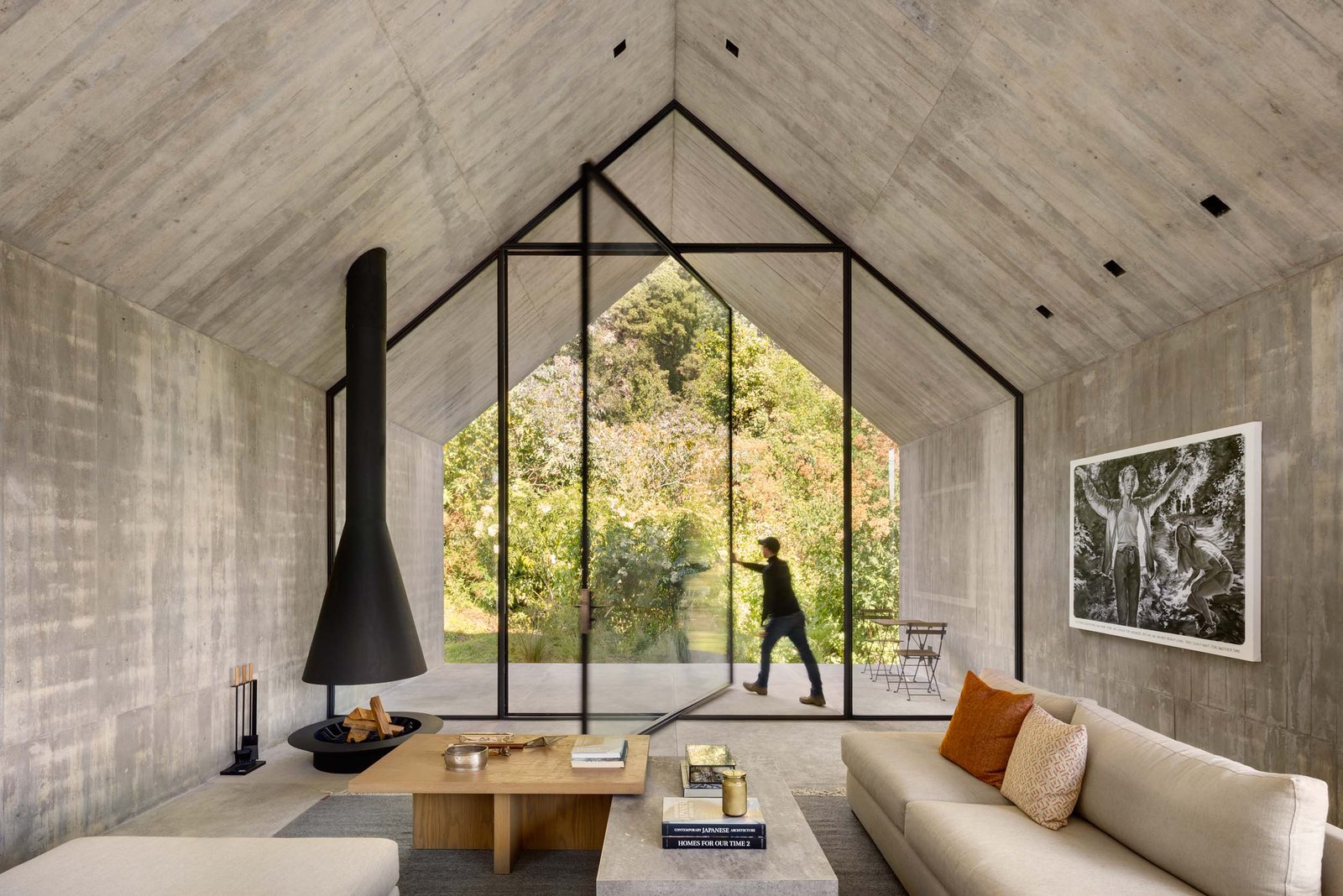
While the three structures vary in size and appearance, they share a common theme: dashingly pitched roofs, a frequent typology in a famously rainy region. The main house—which contains common areas, the parents’ rooms, a kitchen, and guest quarters—appears first, resembling a gray sculpture, simultaneously pristine and textured. “If we were going to use concrete, we had to do it in a new way, lighter and warmer than one is accustomed to,” said Sánchez. Indeed, thanks to the compelling tactility of the walls, which bear the trace of the formwork used to cast them, the family chose to leave many surfaces exposed rather than hanging up all the art they originally intended for the space. “The quality of the concrete structure is extraordinary, evincing the skilled manual labor that went into making it,” added Sánchez. Though the material is often thought of as soulless, concrete’s refined application at Casa Marte lends the home’s rooms a human, inviting feeling. To highlight the views of the landscape—including a perfectly framed Xinantécatl from the primary bedroom at the end of a cantilevered wing—interiors throughout the house are kept sober. And yet, superior local craft is evident in details such as a huge, pivoting floor-to-ceiling sheet of steel-framed glass that opens the living room to the greenery outside and, on the opposite side of the ample dining and living room—which spans almost 40 feet, column free—a tall pinewood blade inspired by traditional stable doors.
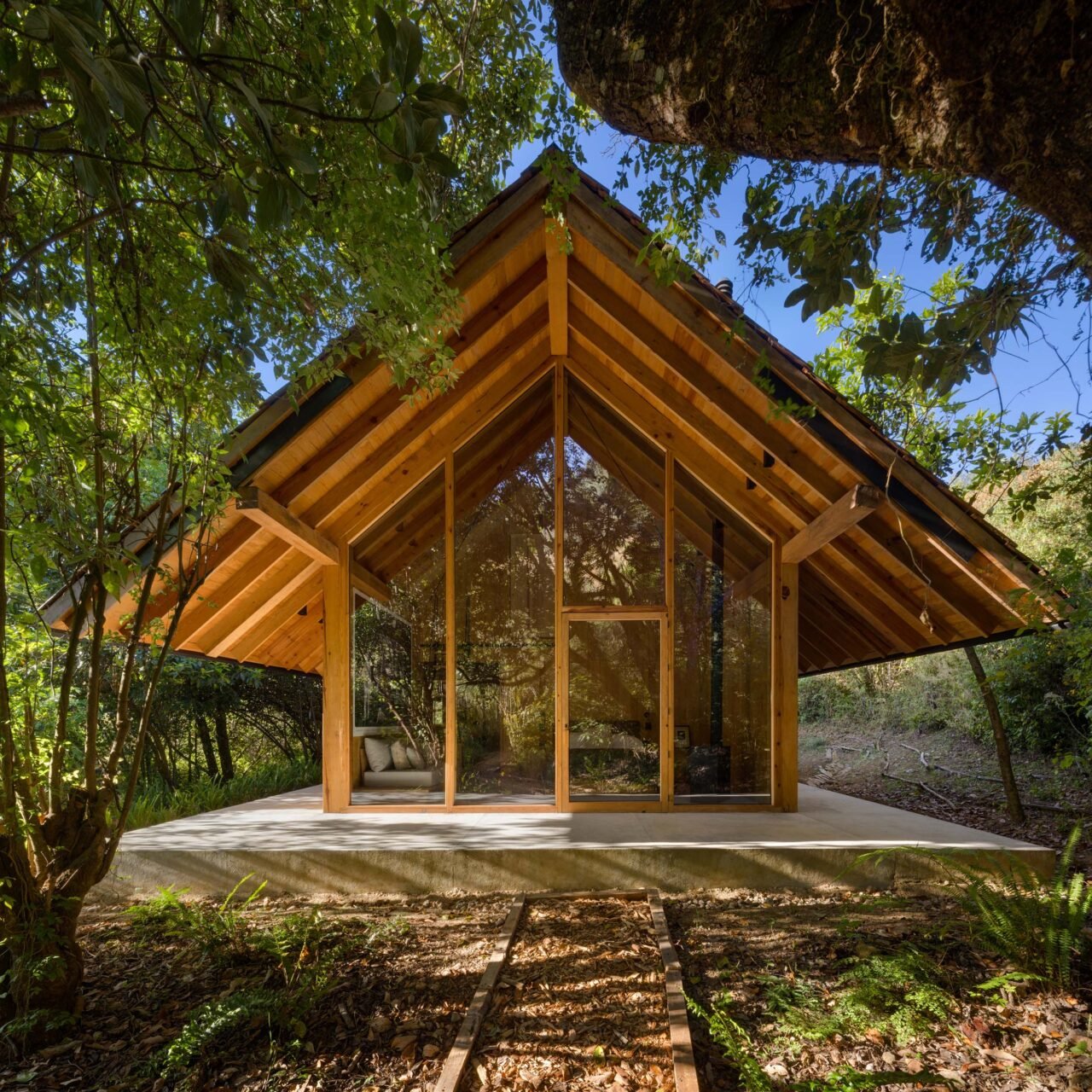
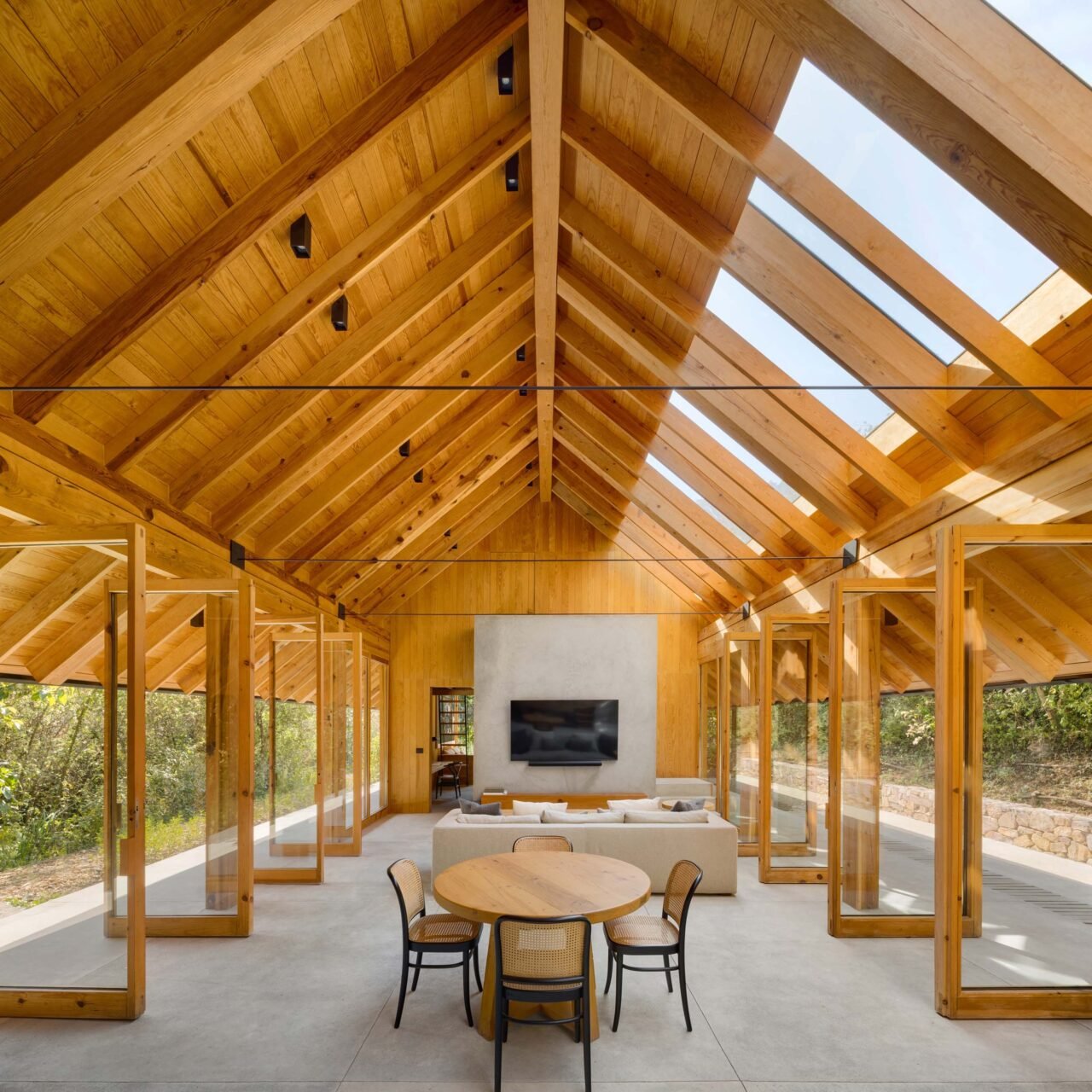
To reach the house’s second act, one walks out into the open, where an enchanting bark pathway connects the bluff where the concrete structure is perched on the parcel’s wooded section. After one traverses a small bridge, a second structure comes into view. It reprises Casa Marte’s defining “Haus” shape—the idea of shelter distilled to an elemental archetype—but translates it into timber. If, with its weightless solidity, the main volume strived to elevate concrete workmanship, the big pine module aims to recover material techniques nowadays more associated with Scandinavia than with Mexico’s heartland, where they, in fact, once thrived too. Nodding to trojes, an old timber building tradition from the nearby state of Michoacán, this space—the domain of the sons, both in their mid-20s—recalls a bright, cozy lodge. The design is characterized by a prominent overhang, a wraparound deck, and twin mezzanines perfect for when friends sleep over. “What you see is the actual wood structure, which is rare in Mexico, where vernacular construction methods have been lost over time,” said Sánchez.
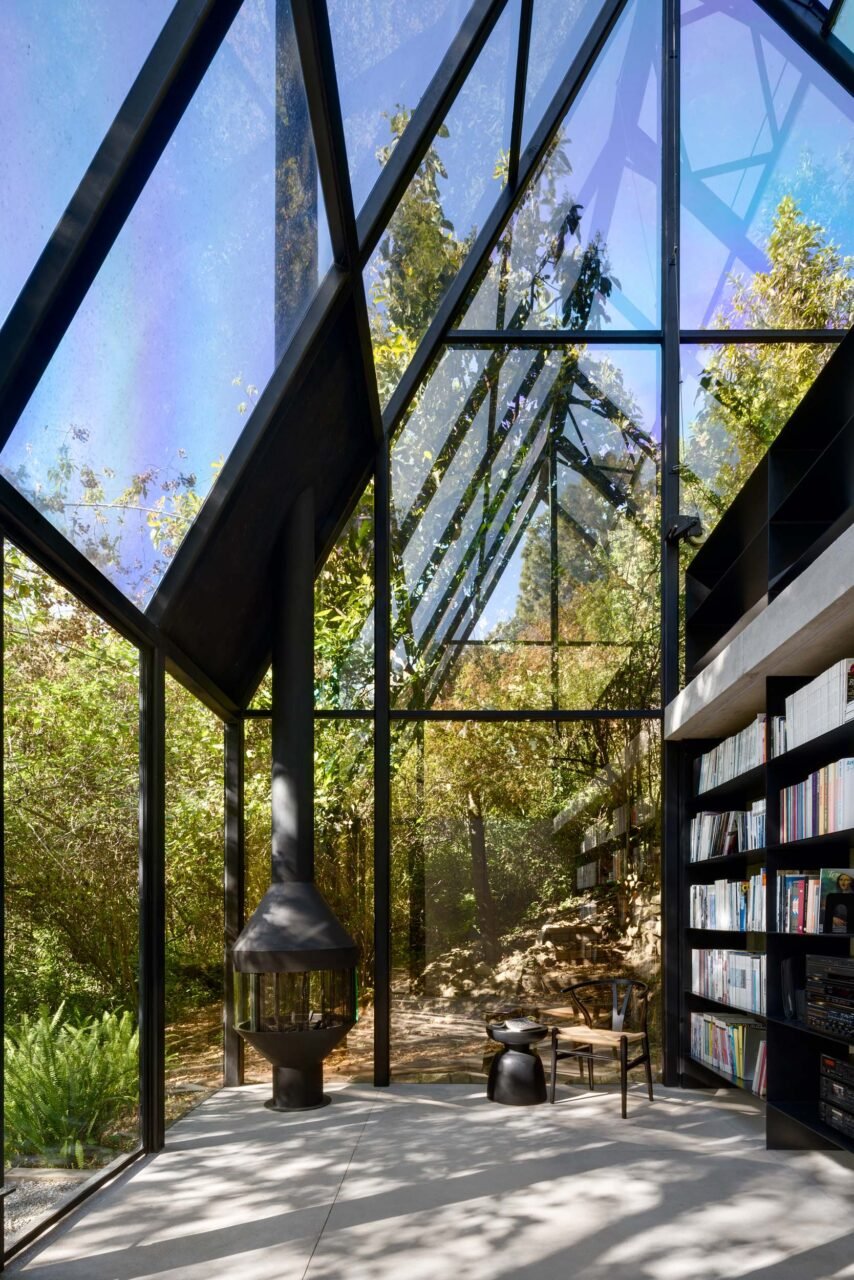
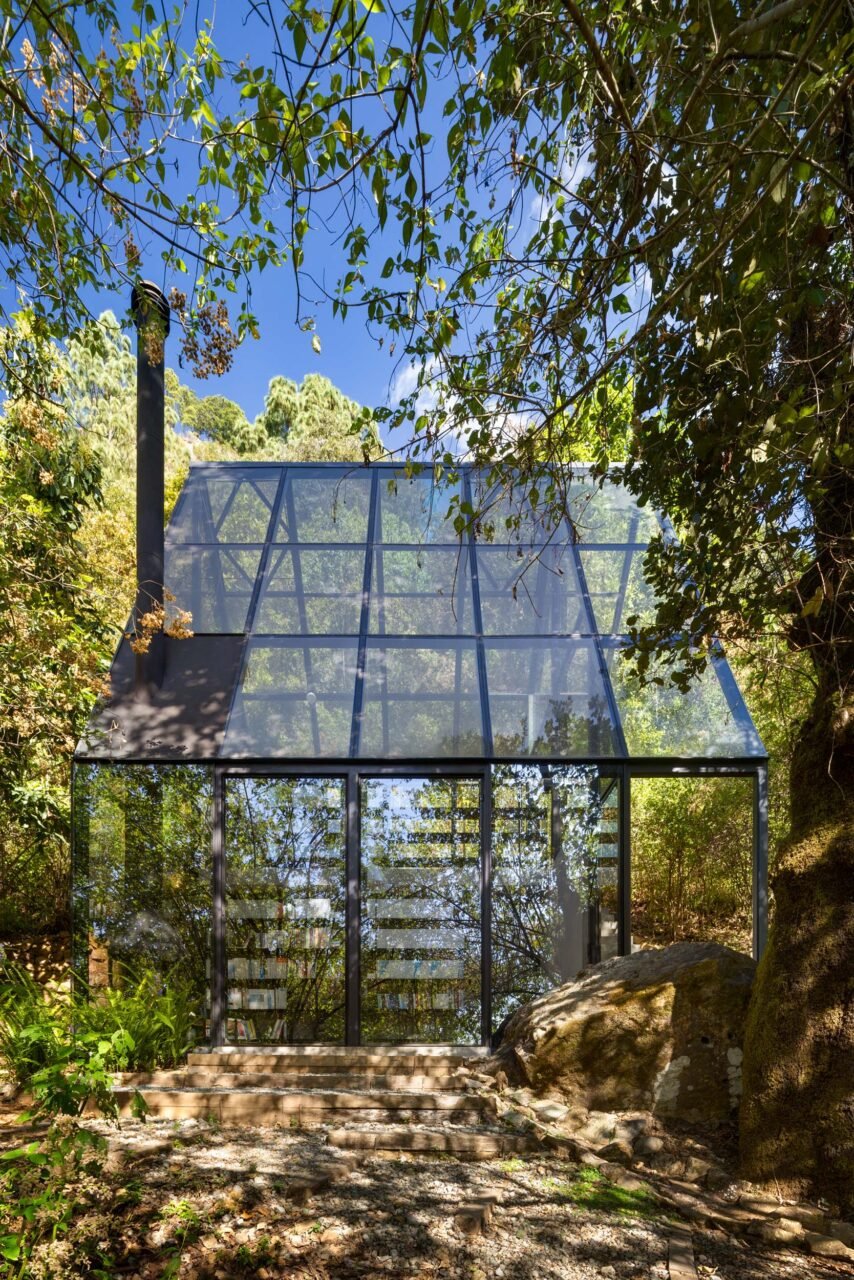
Further into the forest, the third building is a minimalist two-level studio made entirely of glass and slender steel profiles. Conceived for concentrated work, light exercise, or to enjoy music, the small pavilion contained little more than a library during a recent visit. But its versatile function struck me as incidental, as the structure seemed molded above all by the natural life around it, into which its transparent outlines almost disappear. The effect underscores what sets Casa Marte apart: a constant dialogue between architecture and environment. Regardless of where one is on the property, Peñitas’s sylvan ambience and massive rocks are always present. Not just because its harmonious components are a quick walk apart; in person, the rambling weekend sanctuary is experienced as continuous rather than fragmented. Above all, the delicately divided home feels remarkably attuned to the dynamics of a close-knit family that wants to give each other space—to play, rest, and enjoy the gasp-worthy setting.