

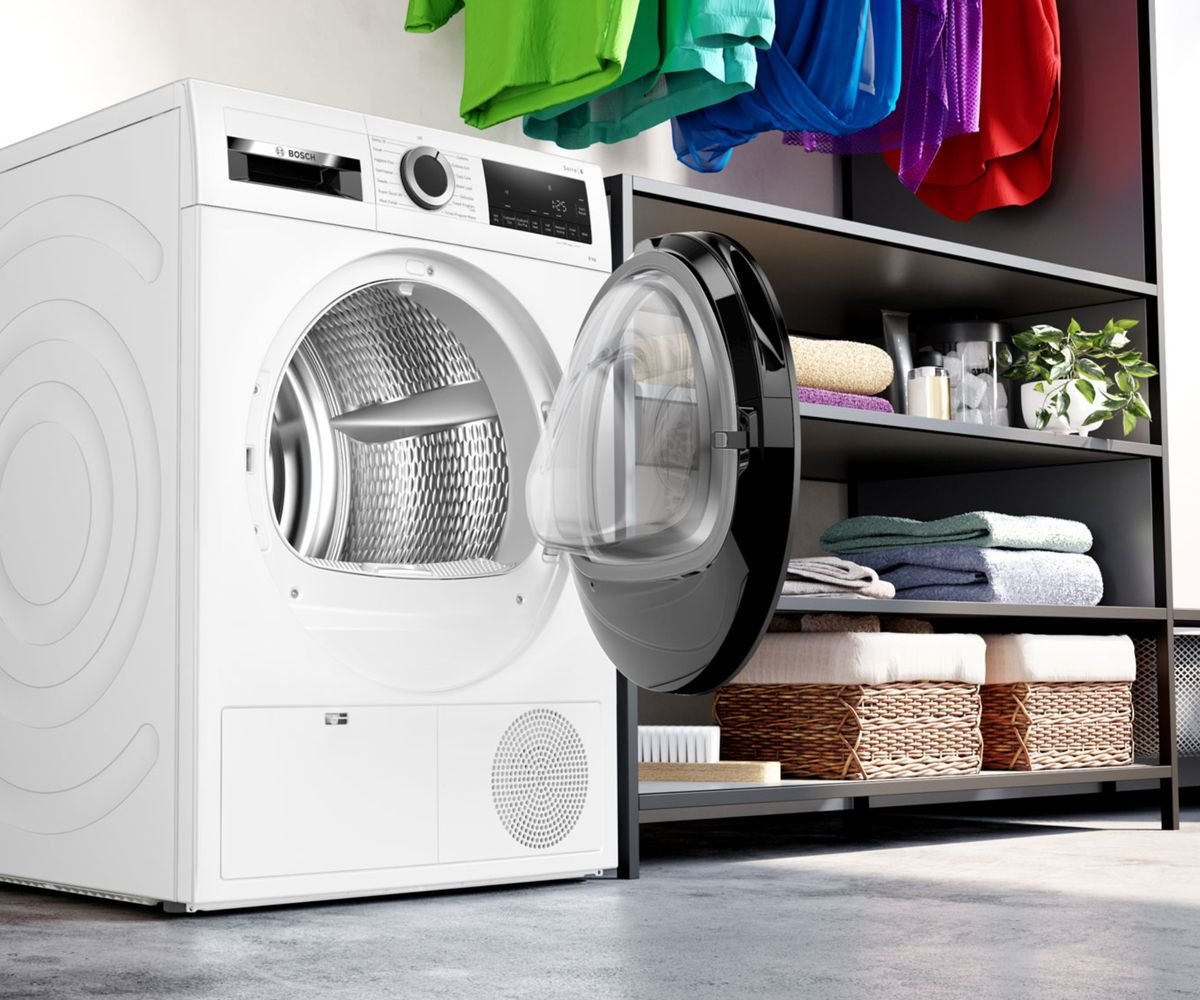

If you’re currently kitting out your utility room with new appliances, you may be weighing up the benefits of a tumble dryer. Do you need one and if so, which is best?
While vented tumble dryers were once the only option, requiring external venting via a hole in an external wall or an extraction pipe temporarily extended outside through a window or door, condenser and heat pump driers changed this with the inclusion of a removable water tank that could easily be emptied in the sink and popped back in the machine.
As neither require plumbing, making them equal in terms of ease of use, the decision of heat pump vs condenser dryer primarily comes down to two factors – convenience and cost.
Heat pump vs condenser dryer — which is best?
While knowing what is a condenser dryer and what is a heat pump tumble dryer is a great starting point for your research, “the choice between convenience and cost comes down to what you want from your tumble dryer,” says Gwilym Snook, category buyer at AO.
With one option drying clothes quicker and the other saving you money, busier households may decide to accept a small increase in running costs for the convenience of having clothes ready to wear more quickly. Whereas others may decide they are happy to wait a bit longer if it means saving cash.
However, what exactly are the differences and does cost outweigh convenience?

Gwil has worked as part of the AO family for the past four years with a specialised focus in the heated laundry category. He is the company’s in-house expert with a wealth of experience and knowledge across a wide variety of household appliances.
How each dryer works
1. Heat pump dryers
“Heat pump tumble dryers work by using a heat exchanger to recycle hot air produced during the drying process,” explains Gwilym Snook.
Unlike more conventional vented and condenser tumble dryers which generate and push heat into the drum in order to dry the clothes, heat pump dryers take a recyling approach.
Vivien Fodor, laundry category manager at Indesit expands:
“The technology in heat pump tumble dryers takes heat directly from the machines spinning cycle and recirculates through the drum to dry clothes.
“As the hot air passes through the clothes, it absorbs moisture, which is then condensed into water. The condensed water is collected and drained away, while the dry, warm air is reheated and circulated back into the drum, continuing the drying process. This cycle of heating, drying, and condensing is repeated until the clothes are dry.”
Vivien started work at indesit in 2018, gaining a wide variety of experience in both manufacturing and marketing. In her current role of category manager, she is able to share expert knowledge on washing machines and tumble dryers.
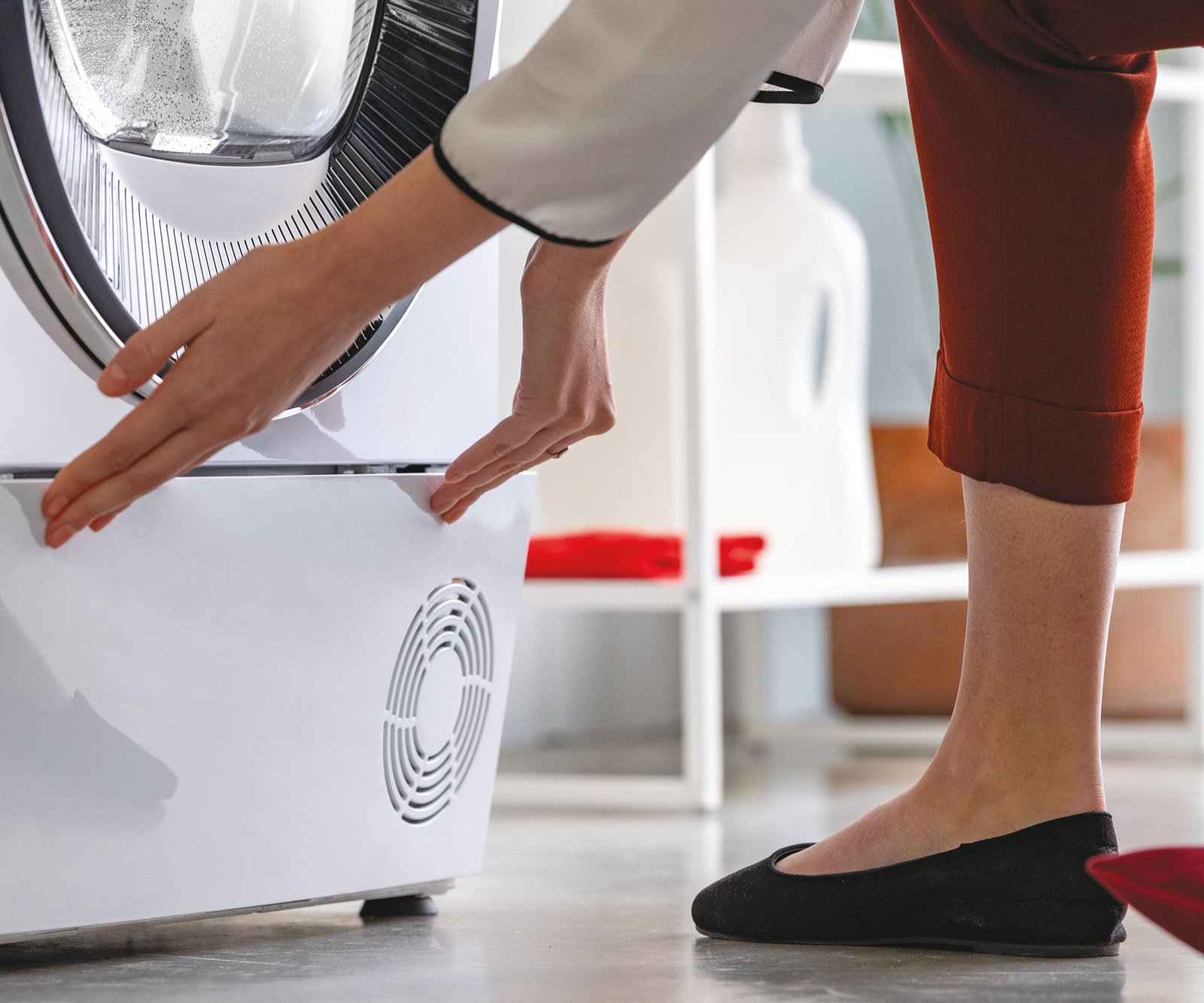
Check out these heat pump tumble dryers

Miele Freestanding Heat Pump Tumble Dryer
This Miele heat pump tumble dryer comes with a 9kg drum with smart connectivity, sensor drying, mid-drying load options, and steam cleaning.
It also has a HygieneDry system, which helps get rid of bacteria for those who suffer with allergies.

Samsung Series 5 Plus 9kg Heat Pump Tumble Dryer
This Samsung heat pump dryer comes with 8kg and 9kg options. It has a OptimalDry™ functionality so the dryer doesn’t over dry your fabrics and damage them, as well as smart controls, a delay timer and an AirWash programme to freshen up your clothing.
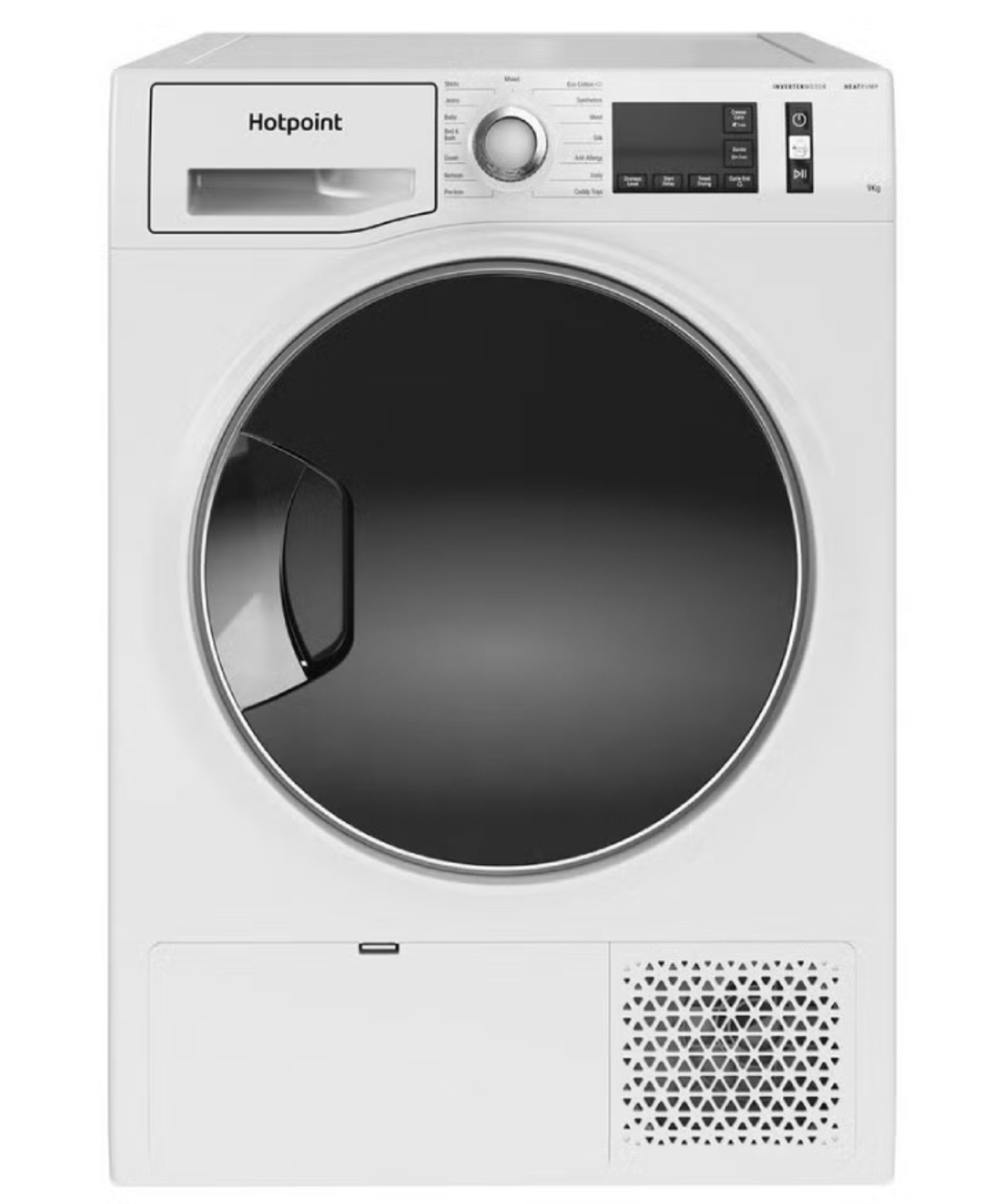
Hotpoint ActiveCare 9kg Heat Pump Tumble Dryer
On the budget end of the scale is this heat pump tumble dryer by HotPoint. It has a 9kg drum capacity with a Pre-Iron cycle option as well as its ActiveCare technology to reduce creases in your clothing. There’s also an Anti-Allergy option.
2. Condenser dryers
As with heat pump dryers, condenser dryers collect water extracted from the drying process into a tank that needs emptying. They don’t need to be plumbed in, just plugged in and they’re ready to go.
However, the method of drying is slightly different says Vivien Fodor.
“Condenser dryers work by heating the air inside the drum. This hot air absorbs moisture from wet clothes. Then, the moist air passes through a heat exchanger, where it cools down, causing the moisture to condense into water.
“The water is collected in a container or drained away,” she explains. “Meanwhile, the dry, warm air is reheated and circulated back into the drum to continue drying the clothes. This process repeats until the clothes are dry.”
According to Beko, it’s also important to remember that a condenser dryer needs a flow of cool air, so it’s best installed in a space that’s not too cramped so that the warm air can escape. If you are only looking at small utility room ideas, it may be that you don’t have the extra space required.
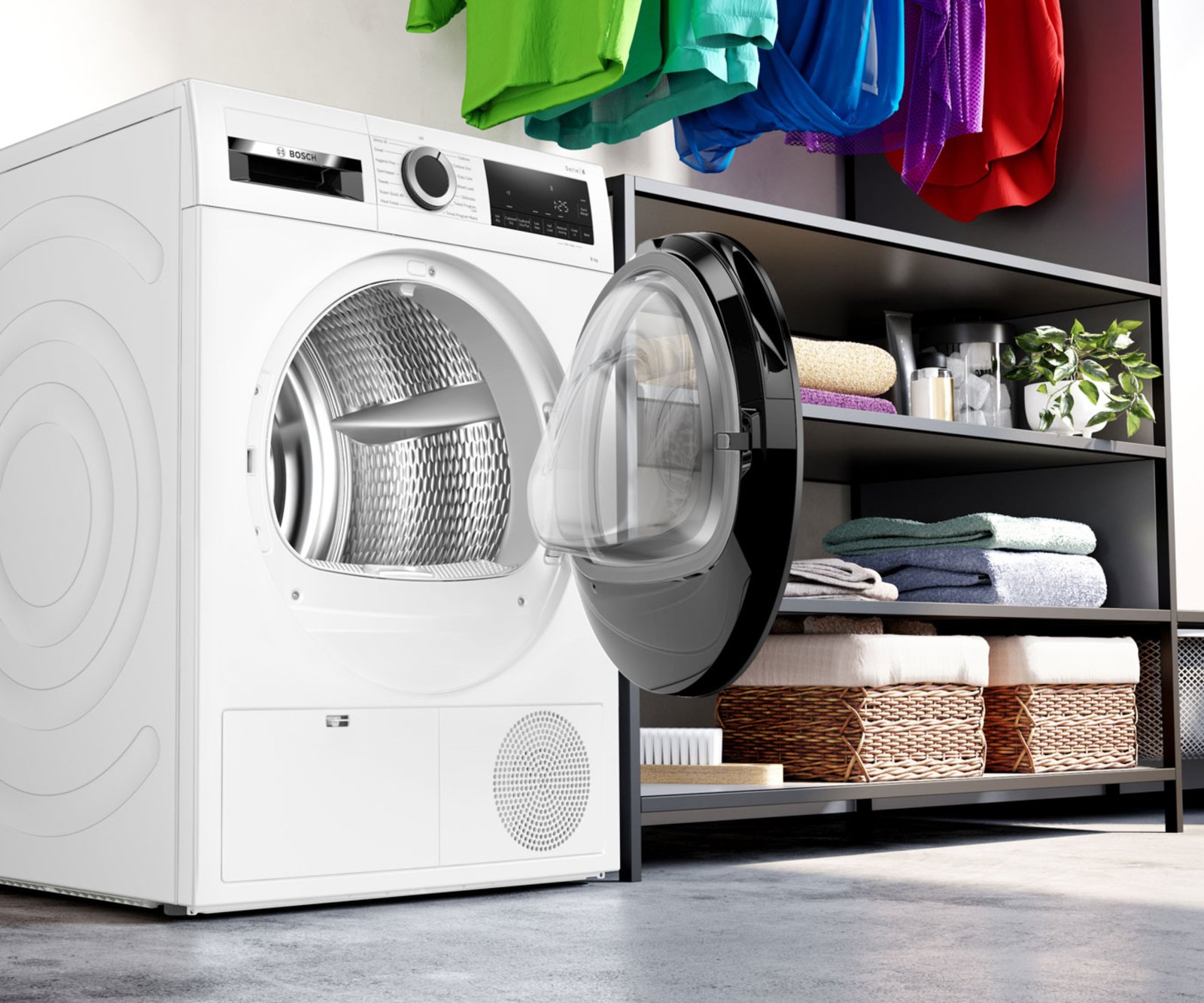
Condenser tumble dryer options for your home
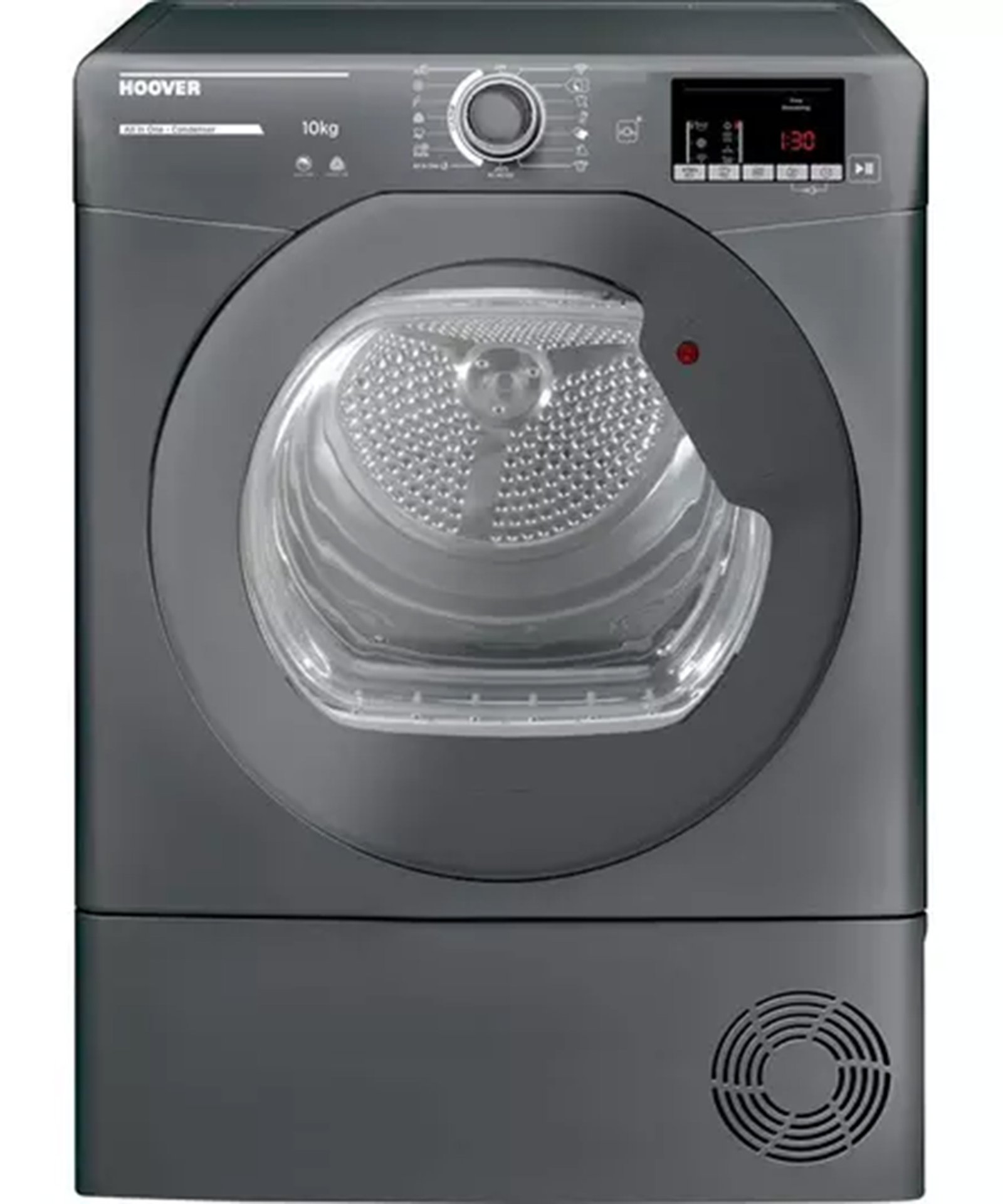
Hoover HLEC10DCER 10kg Condenser Tumble Dryer
With the largest capacity of all the condenser tumble dryers here, this Hoover model has a drum capacity of 10kg, has sensor drying and can be controlled via an app which also allows you to download new cycles and get a wash customised to your clothes.
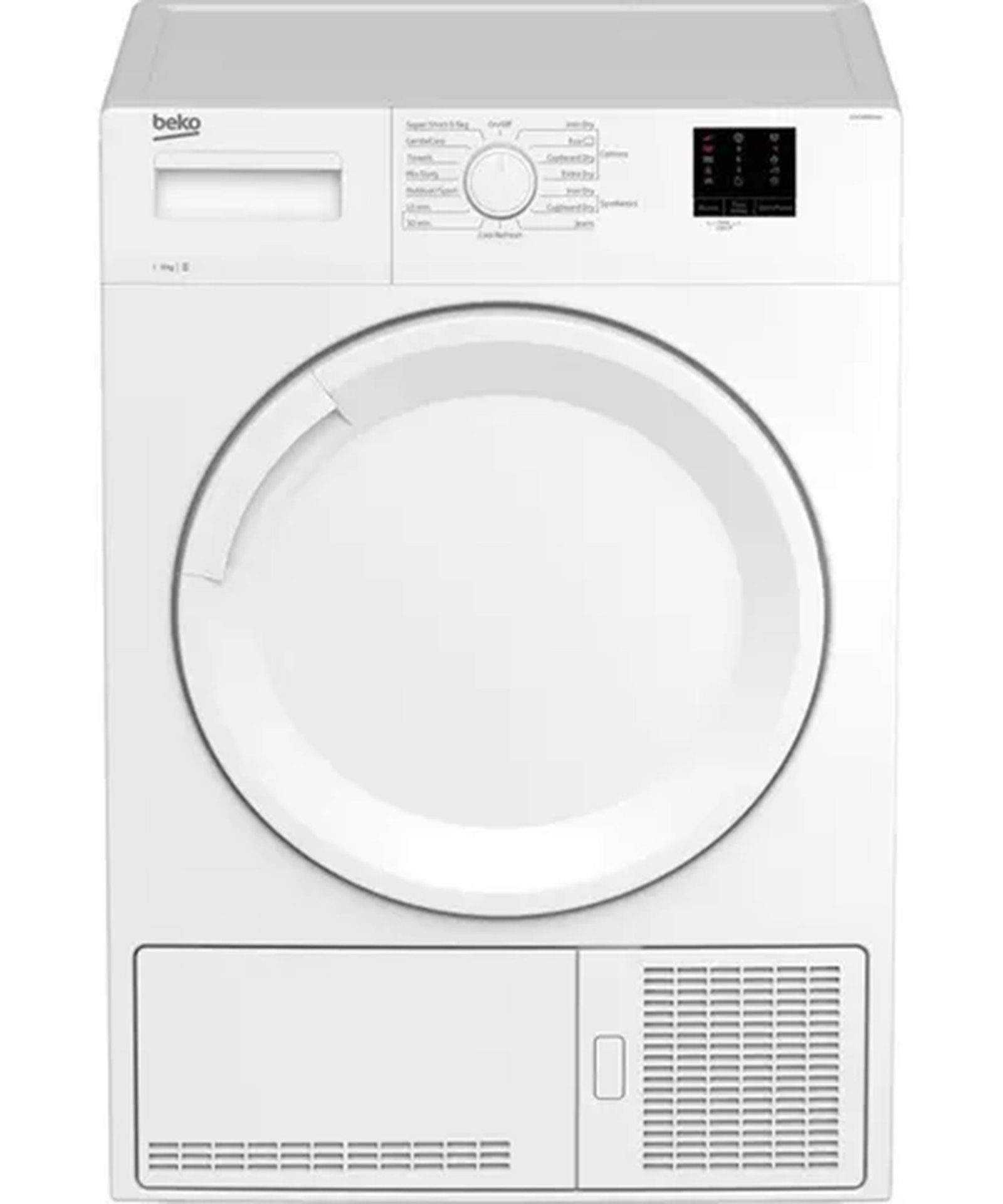
BEKO DTKCE80021W 8 kg Condenser Tumble Dryer
This cost-effective tumble dryer from Beko is B Rated and features automatic sensor programs that stop the cycle as soon clothes are dry. It takes an 8kg load easily and also allows you to link the drain hose to a drainpipe meaning you won’t have to empty the tank.

HOOVER H-Dry 300 HLE C9DG NFC 9 kg Condenser Dryer
With a roomy 9kg drum, handy sensor drying to save time and energy and an anti-allergy program to remove bacteria and allergens, this offering from Hoover can be controlled from an app on your phone, which also shows how much energy you are using.
Difference in noise
Due to the nature of the technology used in heat pump dryers, they can also be quieter than condenser dryers say the experts at AO. Vented dryers in particular tend to be noisier as they are constantly generating hot air and then expelling it via a fan.
If noise is a deciding factor, look for laundry appliances featuring the Quiet Mark symbol which have all been tested and approved by the organisation.
Drying temperatures
There is a considerable difference in the temperature used in each type of dryer which results in a variance in drying times and this may influence your buying choice.
“Condenser dryers tend to dry clothes more quickly because they operate at higher temperatures compared to heat pump dryers,” says Vivien Fodor “Higher temperatures facilitate faster moisture evaporation from the clothes, resulting in quicker drying times.”
A condenser dryer will generally operate at around 70-75°C, whereas a heat pump dryer reaches a maximum temperature of 50 °C.
Drying times
“Condenser dryers often dry clothes faster than heat pumps,” says Vivien, “making them more suitable for households with heavier drying needs.”
However, you may also find that the lower drying temperature offered by heat pump dryers has some longer term benefits for your wardrobe.
“Heat pump tumble dryers are gentler on clothes due to their lower operating temperatures,” says Gwilym Snook. So while quicker drying times may be handy right now, you could find yourself replacing your clothes more frequently in the long run.

How long is the difference in drying time?
Despite the claims that condenser dryers are much quicker, the reality is, the time difference may not be as much as you think.
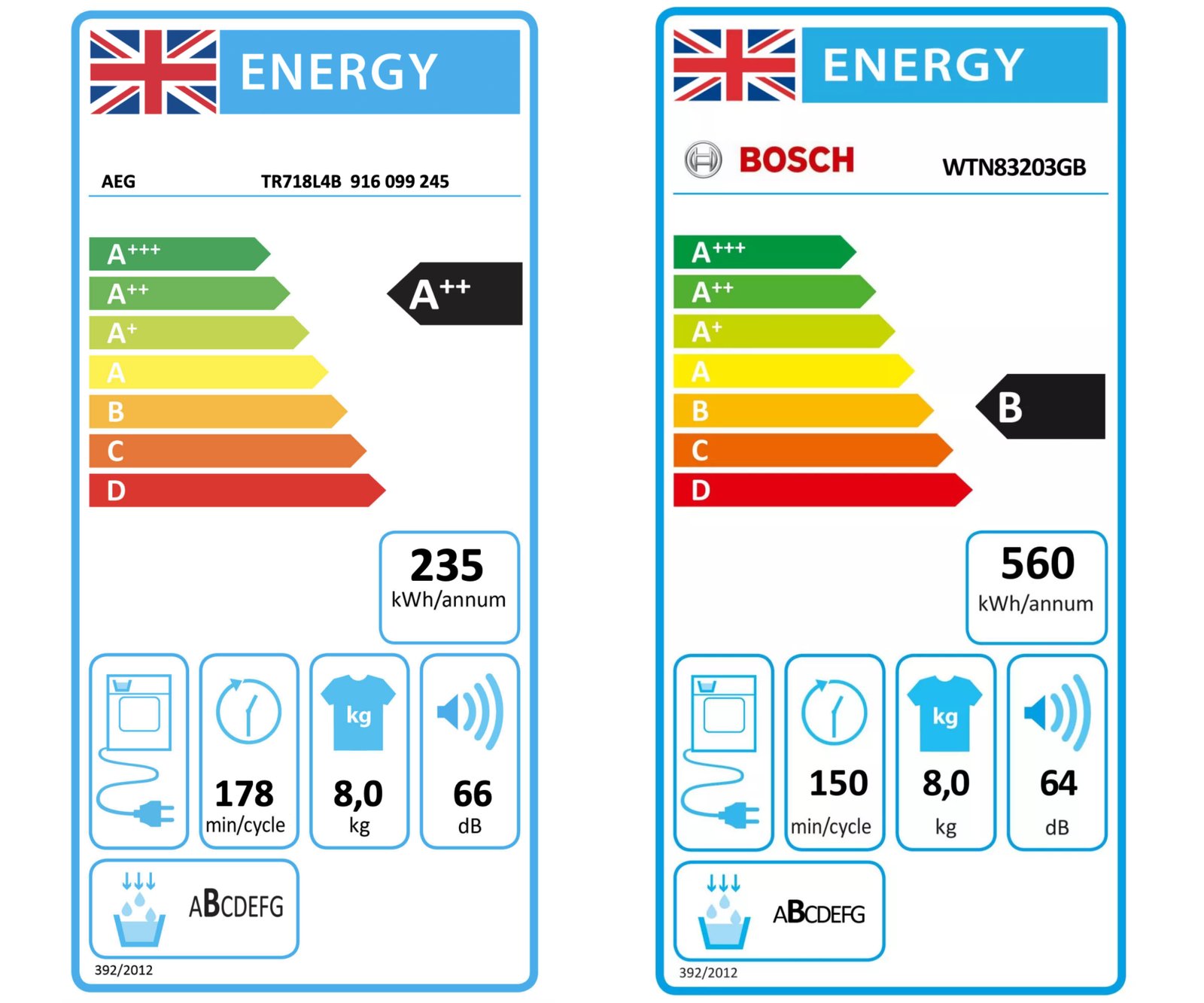
The most accurate way of checking is to look at the energy rating label for a dryer which will show you how long a drying cycle will take and how much energy it’s expected to use.
Most retailers will provide this on the website. As an example, this 7000 Sensidry Heat Pump 8kg Tumble Dryer from AEG at Appliances Direct, which is on offer at the moment for £449, has a 178 minute cycle, whereas this Bosch Series 4 8kg drier for £479 at John Lewis has a 150 minute cycle.
A 28 minute difference may seem a lot until you realise that the estimated kWh use per annum is substantially different. The AEG 7000 Sensidry is estimated to use 235kWh per annum compared to 560kWh for the Bosch Series 4.
Costs to buy and run
As the data shows, “heat pump tumble dryers are typically more expensive to buy upfront,” says Gwilym Snook, “but this price is balanced off by cheaper energy bills, better technology and the fact they are kinder to your clothes when compared to condenser dryers.”
As an example of the difference in purchase costs, this Hoover 9kg heat pump dryer from John Lewis currently retails at £429, whereas this Hoover 9kg condenser tumble dryer from John Lewis cost £379, giving you a saving of £50.
But, how much energy would you save each year if you purchased the slightly more expensive heat pump dryer?
According to the Save Money Cut Carbon website, based on current energy prices and drying a full 9kg load twice a week, “a condenser tumble dryer uses 5.2kWh for a full load, which works out to be £1.77 per cycle and £209.78 per year. A heat pump tumble dryer uses 2.16kWh for a full load, which works out to be just 73p per cycle and £88.06 per year.”
Using these figures, in just one year you’d not only get back the extra £50 you spent, but also save an additional £71.72 in energy costs.
“As there is no heating element involved in running heat pump dryers, they allow households to save a huge amount of energy per cycle,” says Vivien Fodor.
“According to Youreko,” she adds, “having an Indesit Heat Pump Tumble Dryer in your utility room could save you up to over £4K in lifetime energy savings.”

Even though “condenser tumble dryers are currently more popular, mainly due to the lower price, and they have been on the market longer so people are more aware of them,” says Vivien, “sales of heat pump dryers are growing rapidly as people are more aware of their energy efficiency and look to save more on their bills each year.”
When you weigh up the marginal extra time for drying clothes compared to the annual running costs, the extra expense appears to be more than worth it in the long run.
Plus, if you are looking at utility room vs laundry room ideas, it’s worth bearing in mind that as both of these models require no plumbing, they also save money in terms of build and renovation costs. Just remember to ensure you have allowed sufficient home ventilation and checked does a utility room need an extractor fan.