
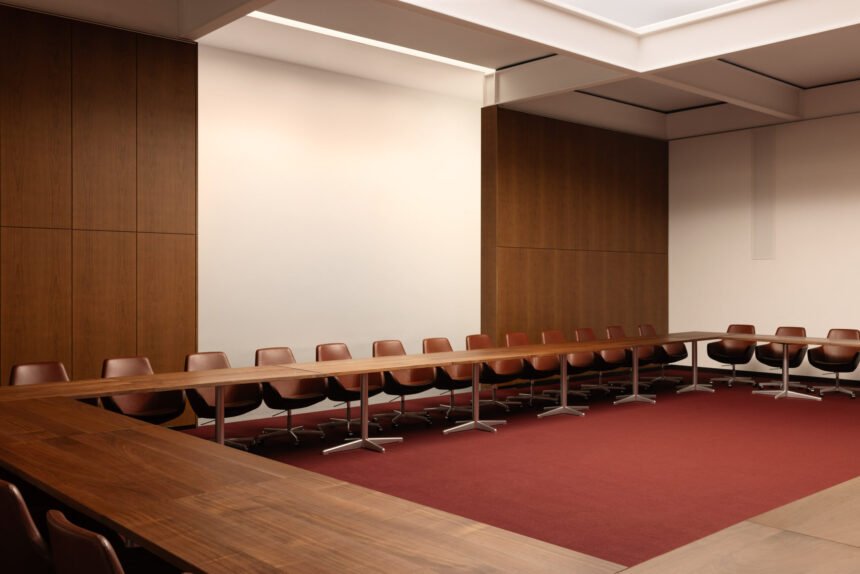

Across nearly seven decades, the eminent Museum of Modern Art (MoMA) has undergone a series of seismic expansions, pushing the now-sprawling institution into all possible hollows of its Midtown Manhattan through-block parcel. Amid this ceaseless growth, some of its original components have been left to wither under the inevitable forces of bureaucratic decay. But this is New York City, and with space in such short supply, it’s rarely overlooked for long. Within the East Wing, designed by Philip Johnson in 1964, the important Founders Room fell victim to a raft of layer-cake alterations. What was initially conceived as an intimate, salon-style sanctuary for the museum’s who’s-who board to deliberate acquisitions and other high-stakes affairs had deteriorated into a clinical interior encased in antiseptic beige fabric.
The boutique Brooklyn practice Worrell Yeung, celebrated for its “concise, poetically pragmatic” approach to architecture, was called in to bring the august space back to its former glory. It was a chance for principals Max Worrell and Jejon Yeung to leave their soft-touch mark on an institution that, historically, positioned its architecture as an extension of its progressive spirit. “We thought about how the original design was much closer to a domestic drawing room, a decentralized and nonhierarchical space that supported a variety of more private, back-of-house but still essential functions,” said principal Max Worrell. “From this, we leaned into the idea of creating a contemporary salon: a room that could be flexible and useful for the museum while projecting a certain gravitas as the primary room in which crucial decisions are made.”
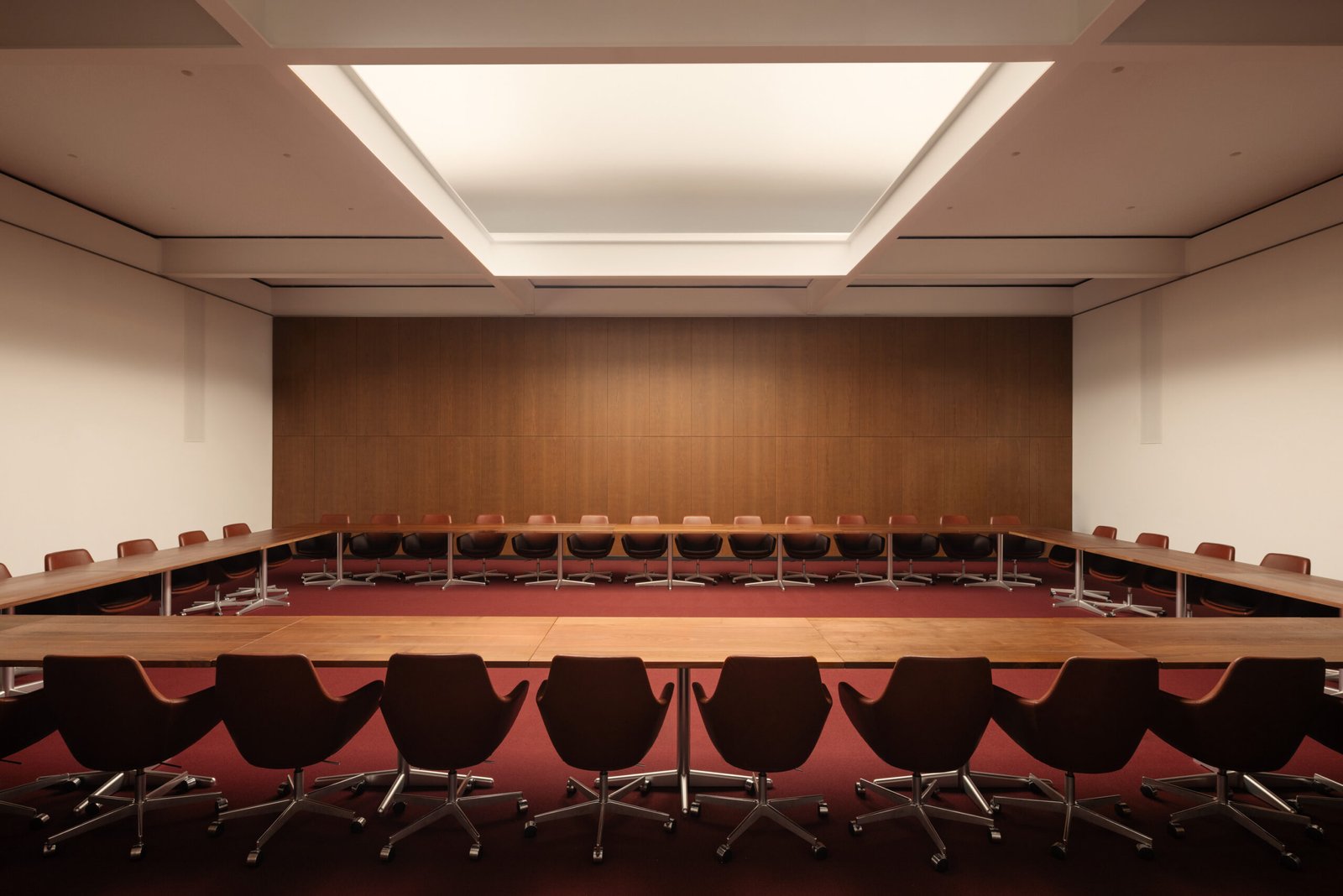
The sensitively refinished result reformulates the corporate boardroom as an atmospheric lounge. Materiality acts as the narrative anchor. “We embrace this richness, seeking to emphasize tactility and warmth through a limited and highly tailored palette,” said principal Jejon Yeung. “We believe this strategy—integrating fewer elements doing more—aligns with not just the museum’s architectural history but also its heritage as a bellwether of modernism.”
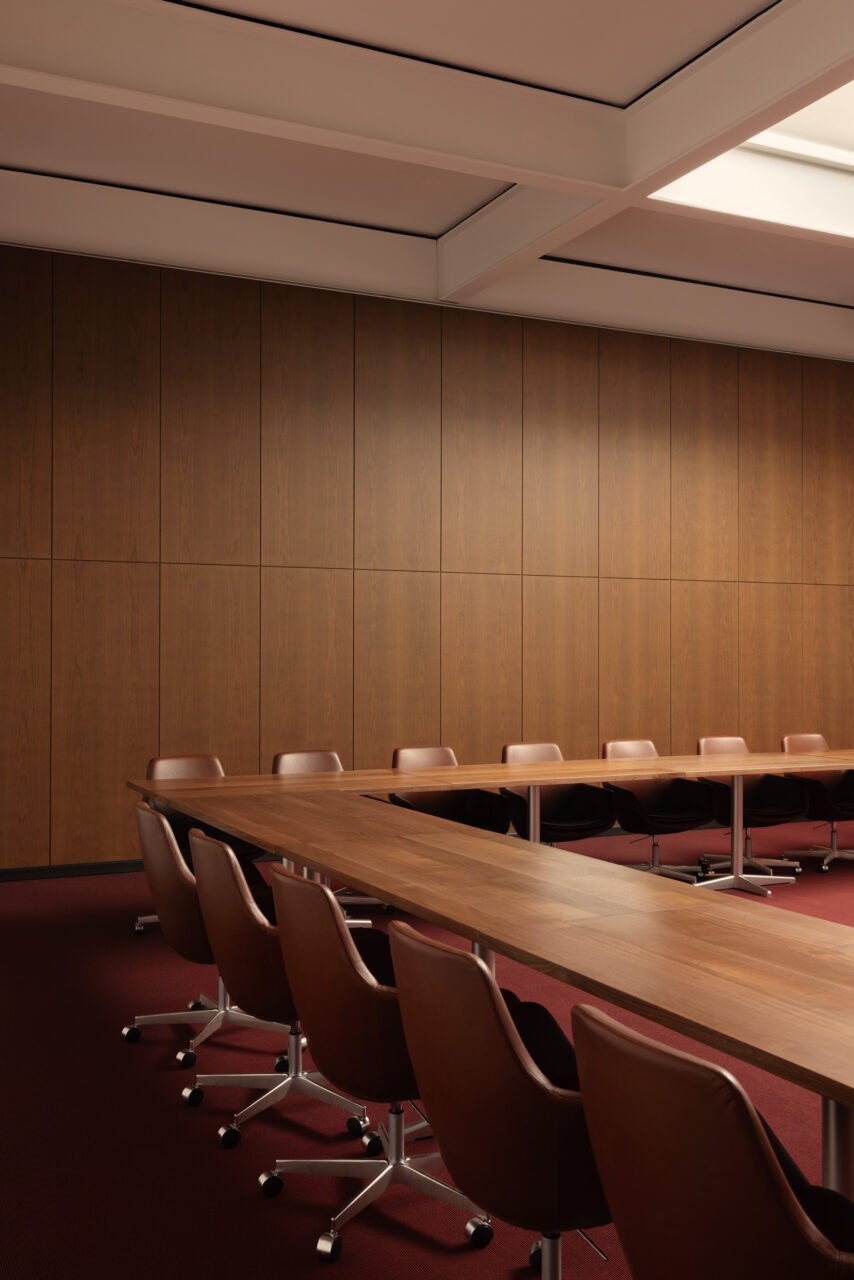
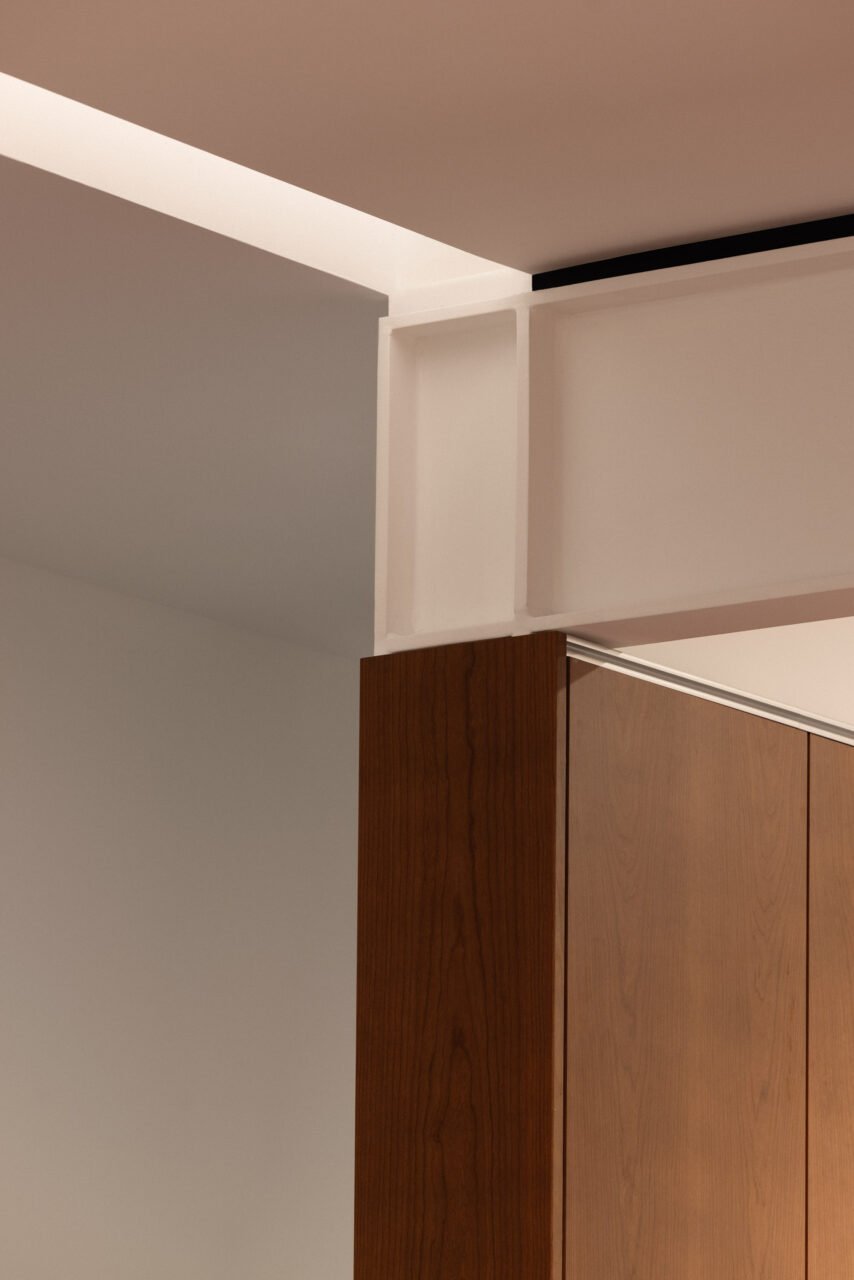
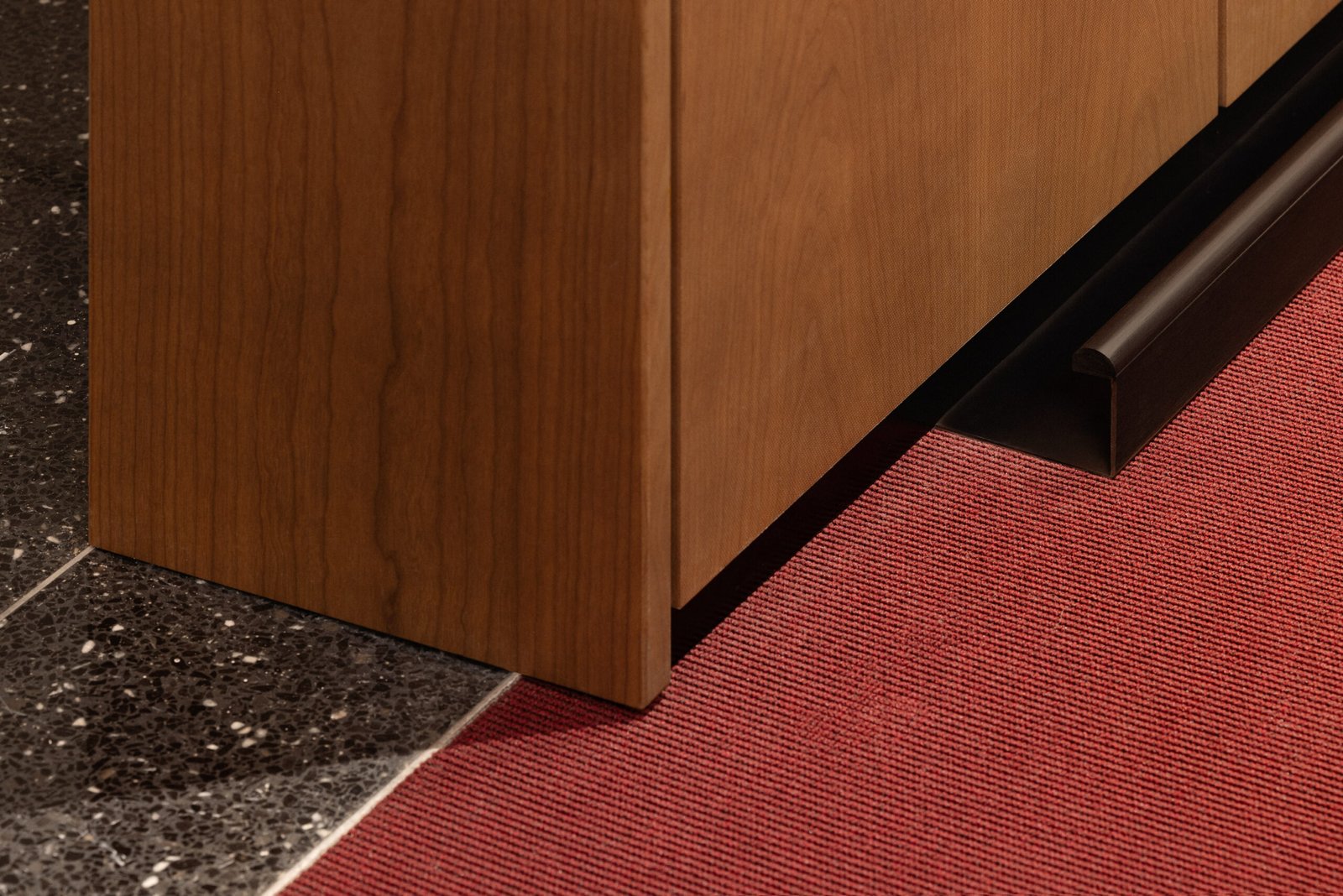
Cherrywood veneer paneling introduces a rhythmic, tactile quality. Behind this enveloping layer lies concealed acoustics: Microperforated wood and sound-absorptive drywall mitigate the harsh reverberations of potentially boisterous discourse and multimedia slideshow presentations. Deprived of access to natural daylight, the claustrophobic volume required a fresh lighting scheme. A recessed central ceiling coffer conceals indirect illumination that projects a diffused wash.
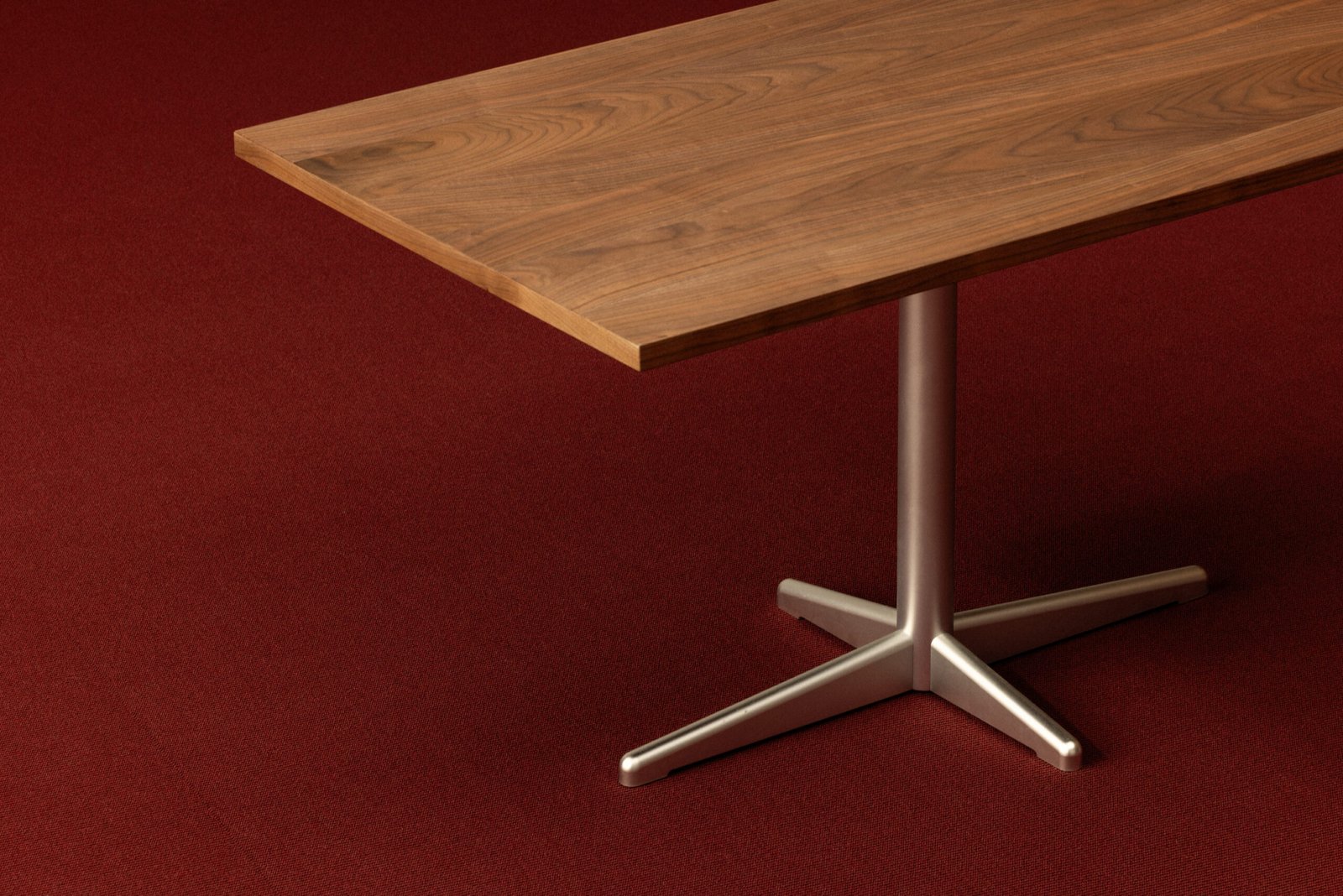
The spatial choreography culminates in bespoke furnishings designed in collaboration with Fort Standard. Modular walnut tabletops resting on sculpted, tapered aluminum bases offer structural lightness while enabling quick reconfiguration. Surrounding the tables, Arne Jacobsen’s iconic 1959 Little Giraffe chairs—upholstered in supple chestnut leather—amplify the oxblood-toned broadloom carpet below.