
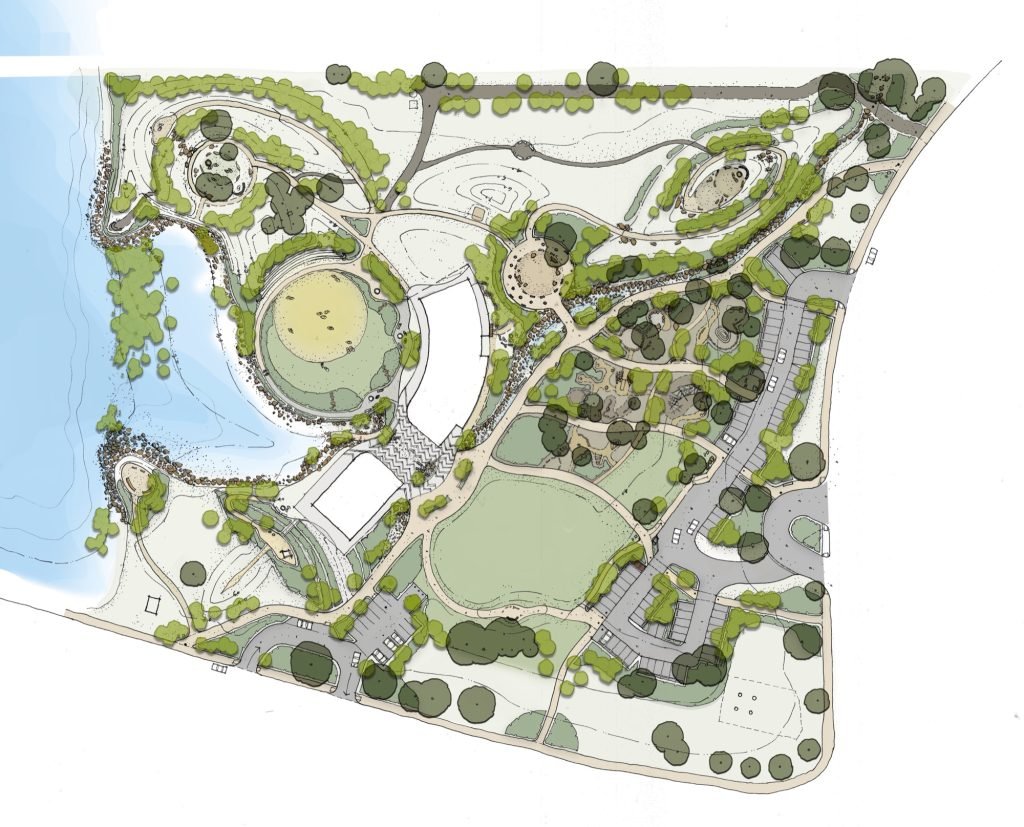

Yitpi Yartapuultiku is a living cultural centre on Kaurna Country next to Port River. From a First Nations Peoples’ perspective, Country is a holistic living entity with land, water, sky, plants, animals & people held in reciprocal relationships.
The project begins from this understanding. It transforms a brownfield site into a place for Aboriginal & non-Aboriginal people to gather, learn, practice, share and care for Country. A cultural place where landscape, architecture, culture & Country are threaded together and where Country is the primary designer.
The project’s foundations were established by the City of Pt Adelaide Enfield & Kaurna Elders, who set cultural principles that guided the project’s engagement and design. These became cultural performance indicators directing cultural safety, immersion, practice and connection to Country. When WAX Design & Ashley Halliday Architects joined the project, the first design act was to pause.
Central to Yitpi Yartapuultiku is the understanding that cultural design begins with a willingness to unlearn. The design team released assumptions, disciplinary hierarchy and the expectation that authority rests with the architect or landscape architect.
This concept of unlearning shifted consultation away from the extraction of ideas and toward reciprocity. Listening, yarning & sharing became the methodology.
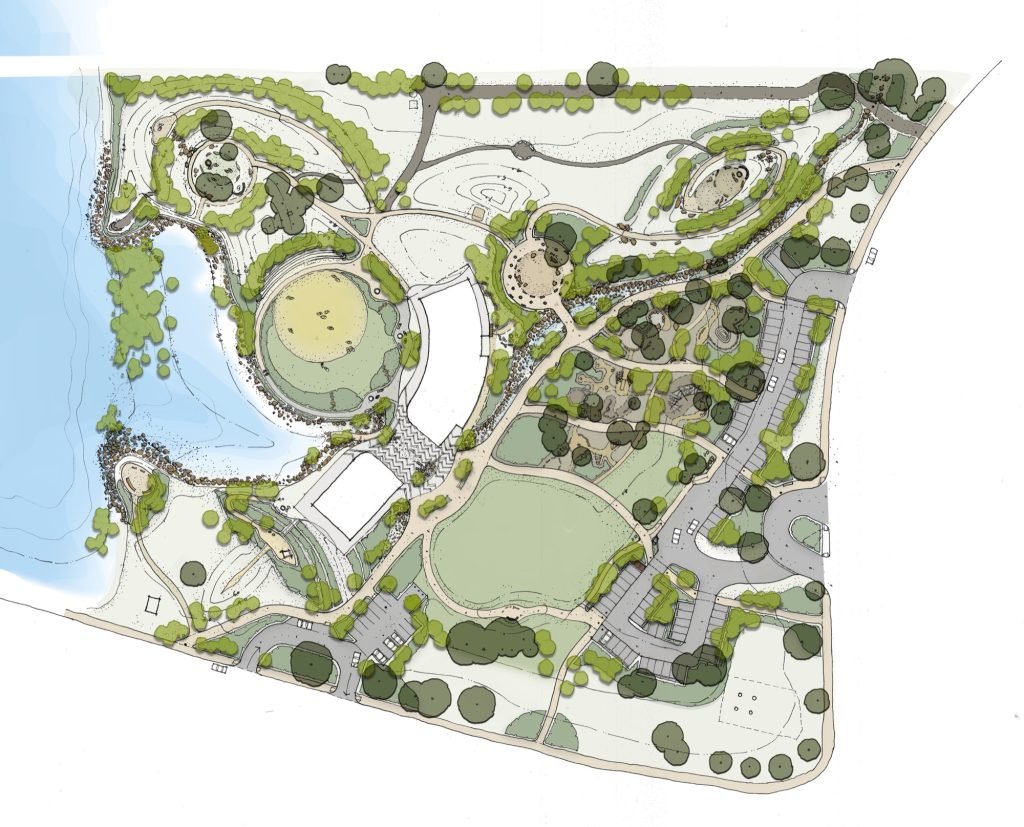
Sparked by Elders telling stories of ancestors shaping the land, an innovative consultation process used a site model filled with kinetic sand to enable Elders to work directly with landform. They shaped topographies, discussed cultural practices and developed spatial relationships through touch, yarning & making. Sand models were 3D-scanned and translated into terrain, thresholds and buildings. The result is not a symbolic overlay but a site plan generated through cultural mapping and collective interpretation.
The landscape is curated through a cultural gradient. Open space, access and recreation present a public entrance. Moving towards the river, a creekline and the building create a threshold where cultural programming, connection to Country and cultural safety intensify. This makes Yitpi Yartapuultiku welcoming, culturally specific, public & protected.
At the centre of this gradient is the joining space. Cultural direction required that the building should not separate, but join. Counterintuitively, the designers split the building to connect. By pulling the architecture apart, the landscape flows through the building. The joining space makes the architecture porous to Country. A liminal space between arrival and immersion and between sky and ground, a place of welcome, gathering and cultural encounter. The result is a single integrated landscape and architectural expression. It gives way to landscape, so that cultural practice, ecological repair and community use can move through. The landscape supports cultural practice with an event space acting as a bridge for ceremony and performance. The women’s area is nurturing and connected to water. The men’s area is elevated with prospect across the site. The Elders’ area is a place of reflection, leadership and cultural care. Cultural safety is not treated as exclusion, but as the careful choreography of relationships.
The environmental outcomes are significant. Contaminated soil was encapsulated in the landscapes cultural design. 15000m3 of constructed soil capped the site. Healing Country meant not displacing harm elsewhere, but taking responsibility for the site’s history.
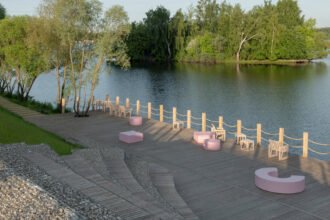
The living shore is a clear expression of cultural obligation and climate adaptation. Emerging from the simple act of an Elder scooping up kinetic sand, the removal of the river embankment reconnects water and land. It replaces an edge with regenerative landscape design. The new shore enhances biodiversity, responds to sea-level rise & re-establishes key cultural relationships.
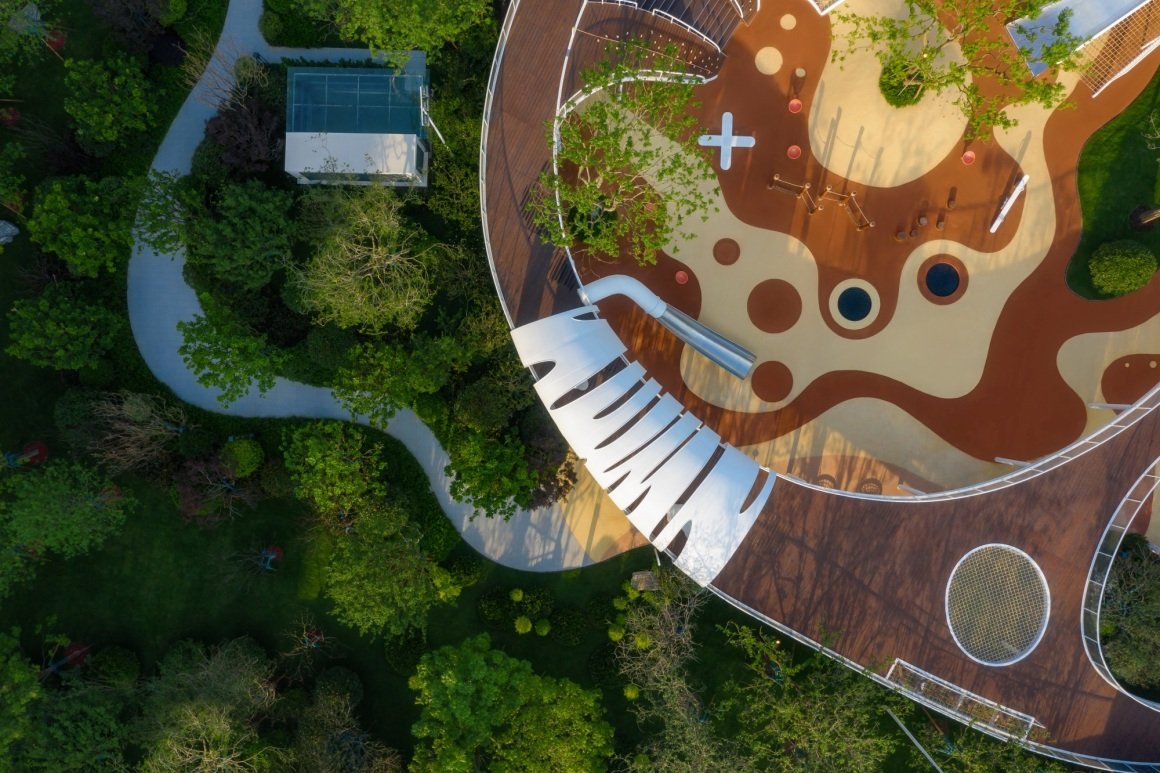
Seven ecological zones, from coast and river to plains, woodlands, grasslands and hills were established. Endemic plants are returned in a species-rich assemblage with experiments to recover samphire and mangroves along the living shoreline. Planting reconstructs relationships between habitat, seasonal knowledge, human use & cultural learning. A playground also creates space for cultural learning with children encountering fauna, flora, and Country through touch, curiosity, and shared discovery.
Existing trees were retained, 22000m2 of native tree and shrub seeding revegetated the site and 11000 new trees and plants were installed, demonstrating that when First Peoples’ knowledge is given authority, sustainability exceeds compliance.
Yitpi Yartapuultiku is an exemplar of re-Indigenisation in an urban context. It returns authority to knowledge holders, reconstructs relationships between land, water, vegetation, story and practice and recognises biodiversity, climate resilience & cultural wellbeing as interdependent expressions of care and cultural continuity.
-34.85128179217341, 138.50203955330443