
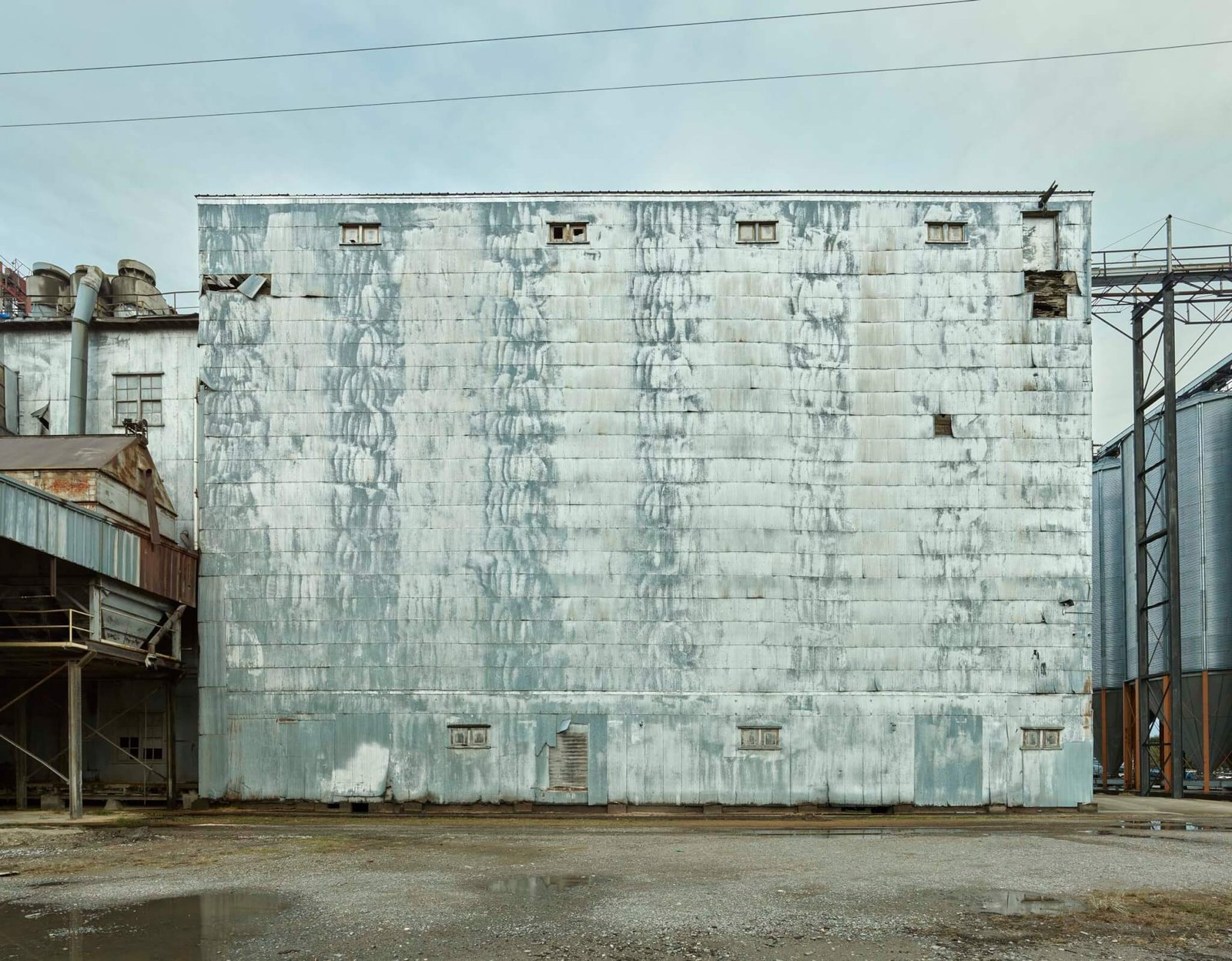

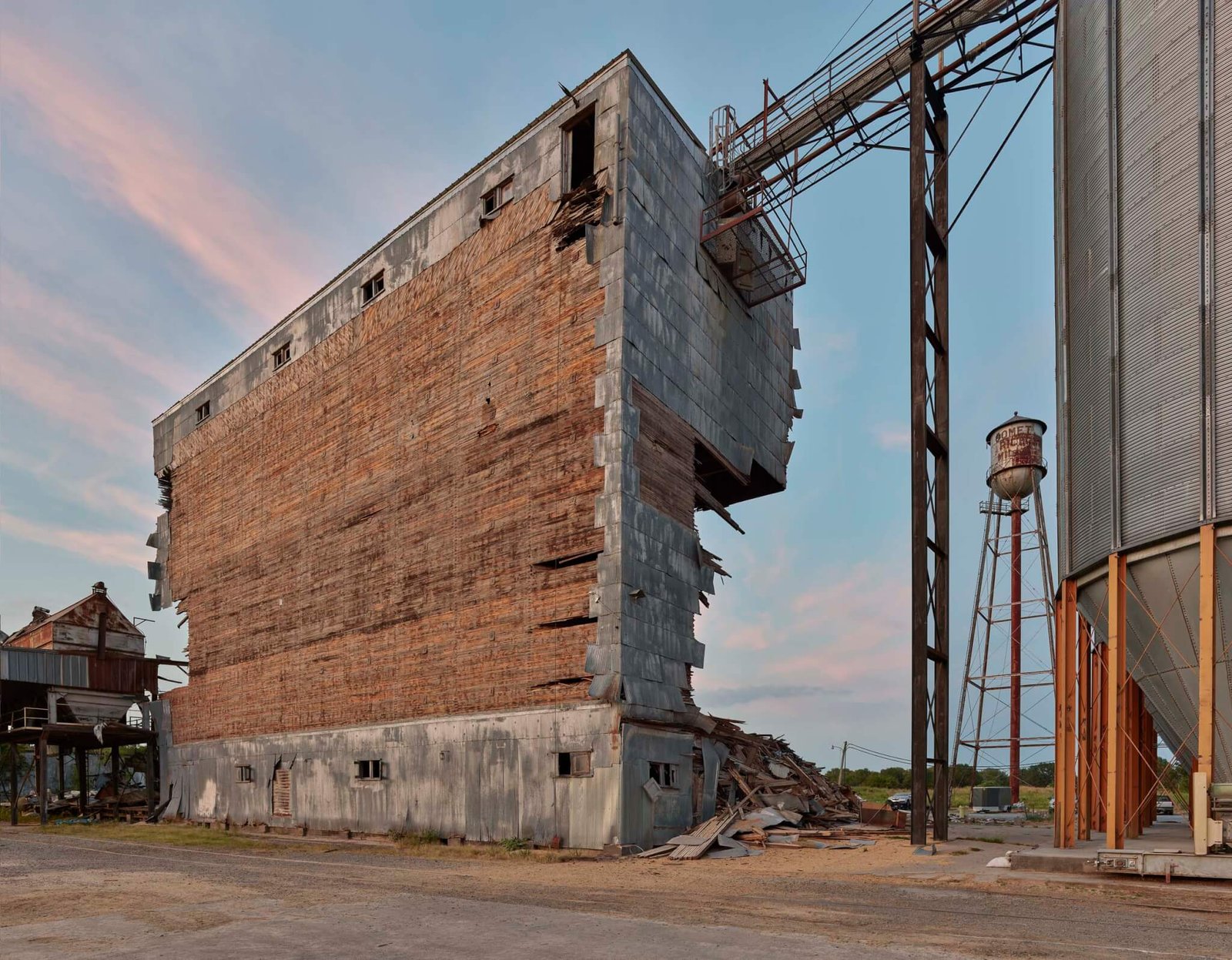
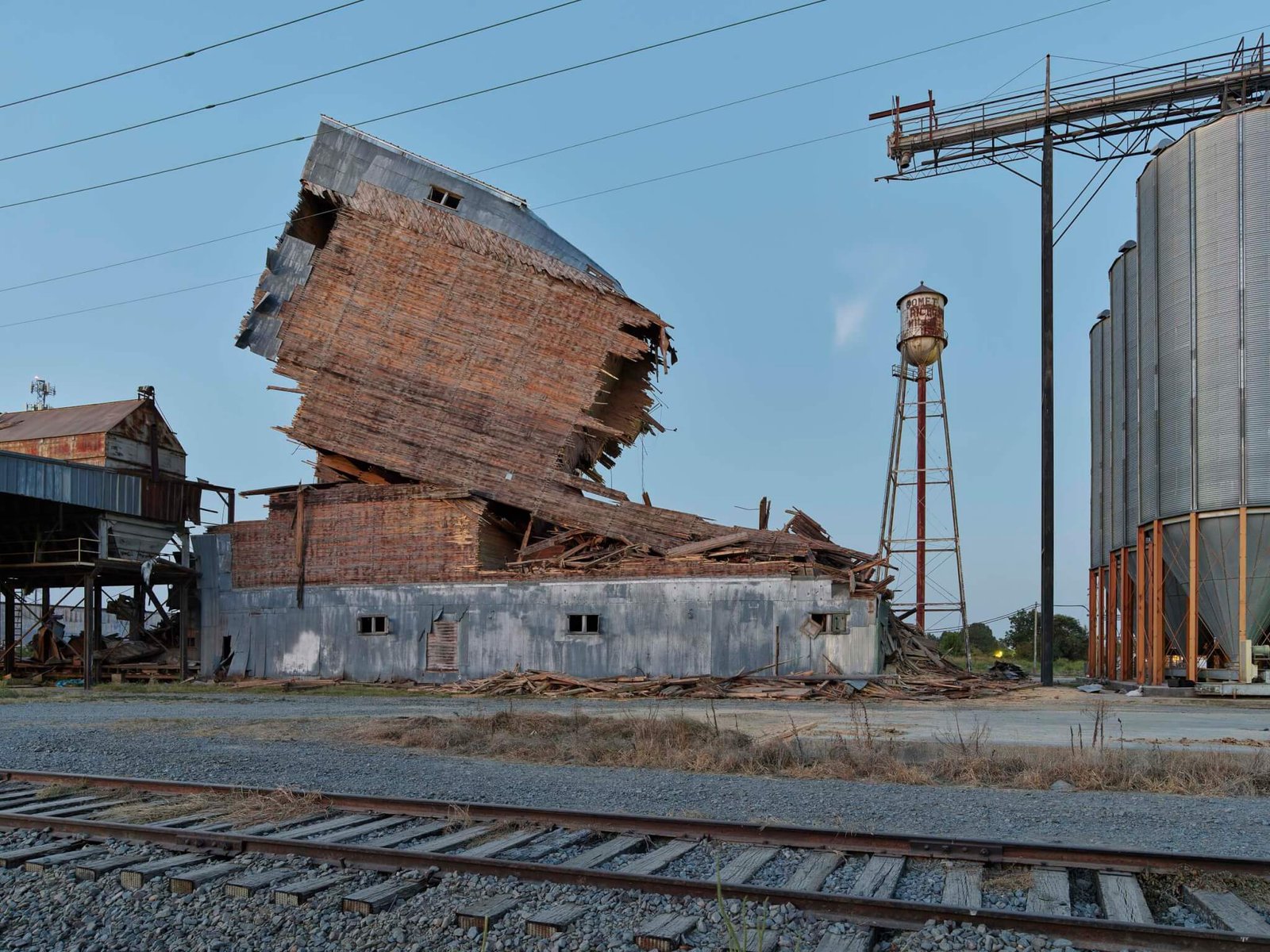
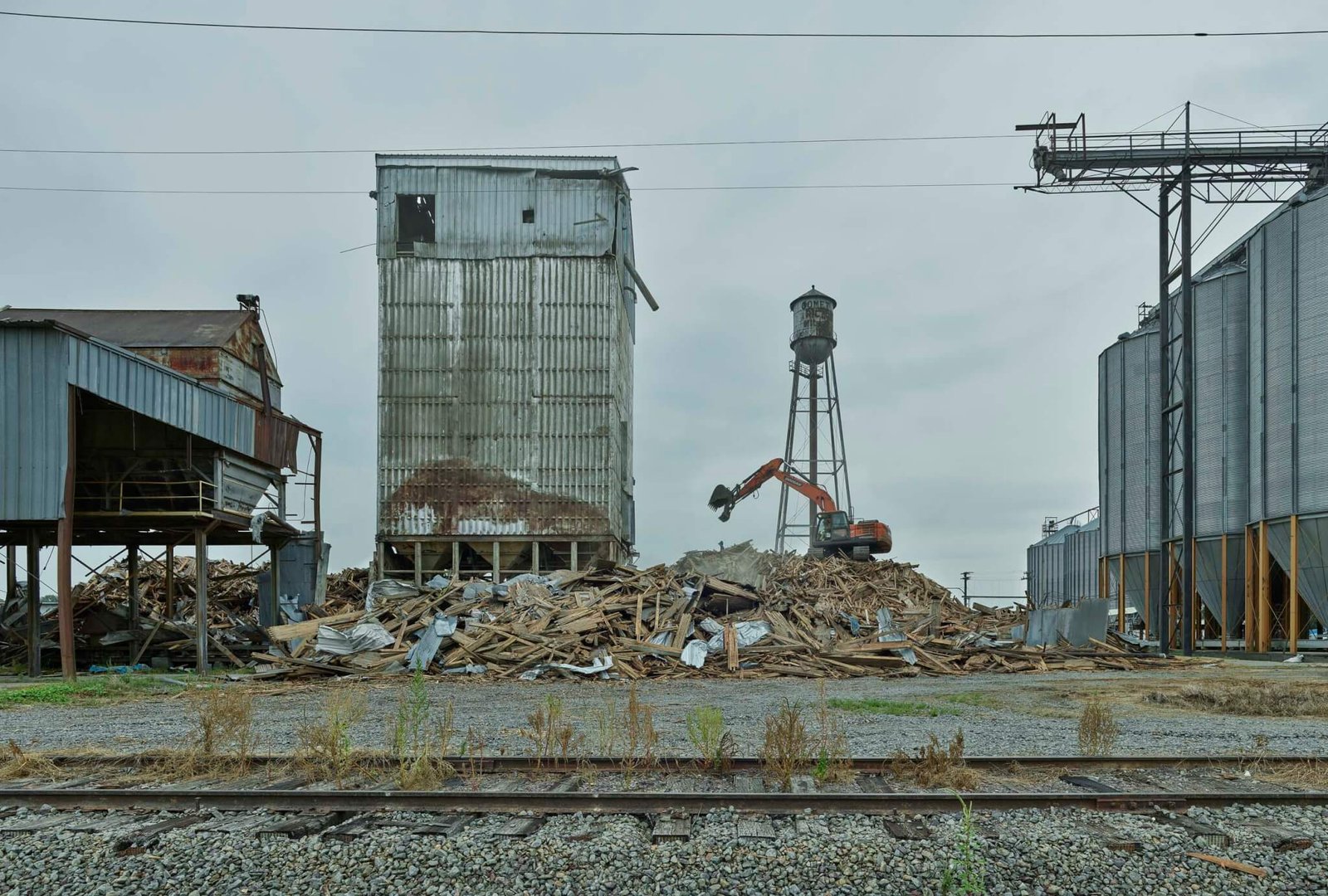
Stuttgart, Arkansas, about a 45-minute drive from where I live in Little Rock, is known as the “Rice and Duck Capital of the World.” The Comet Rice Mill became one of my favorite structures to photograph. I refer to it as the most interesting high-rise in the state.
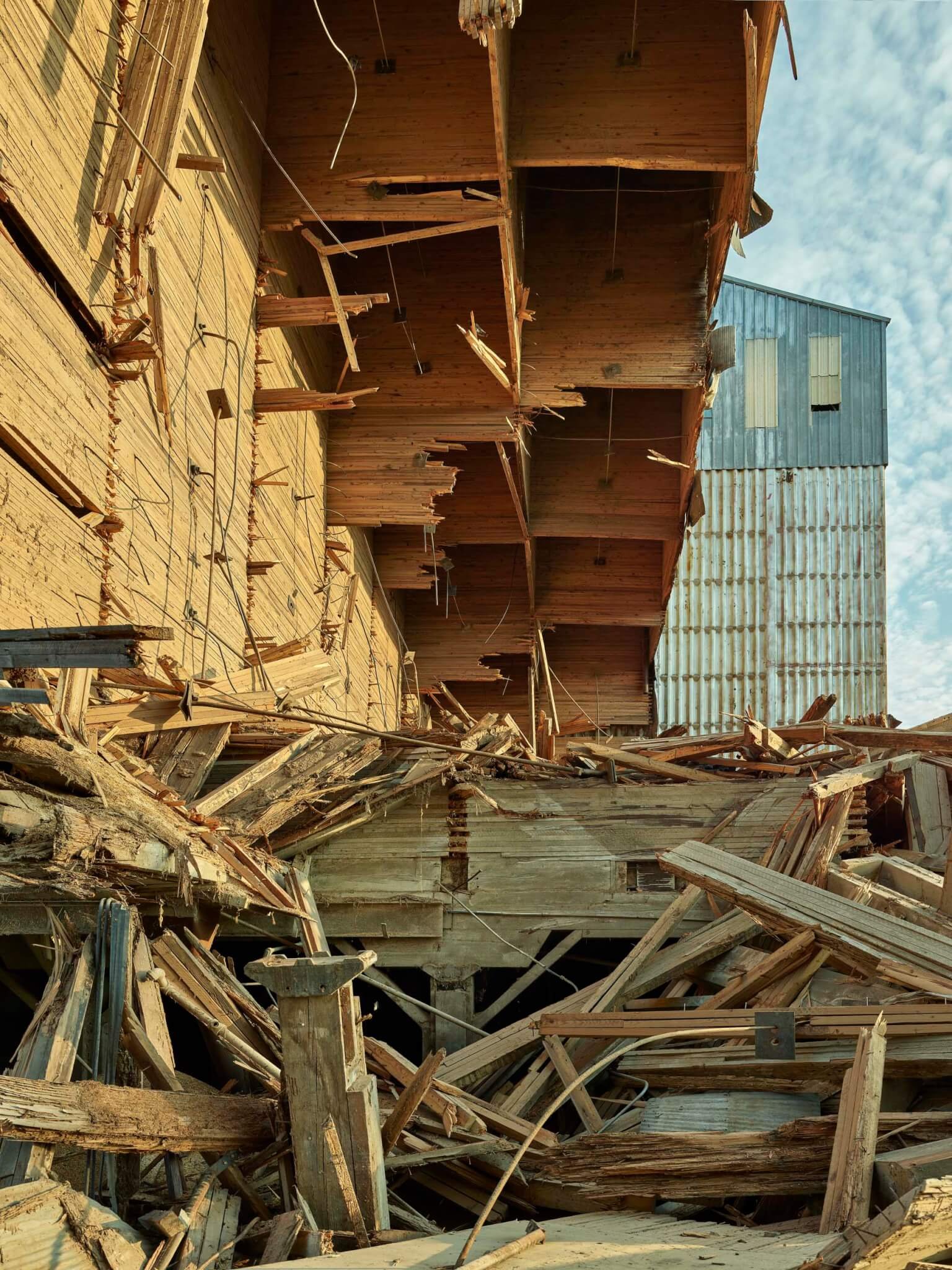
Nearby was a rice storage building containing 31 bins that was over 100 years old. It was the only one like it left in the state. The facade facing the railroad tracks looked like a huge painting by Cy Twombly or Sol LeWitt. Last year, I learned the mill was coming down. I approached the mill owner with the idea to remove and save the galvanized steel panels. With the panels off, the wood bins were exposed and became a new temporary installation. Once the demolition began, I was on site documenting the process daily.
I had the cladding panels removed in a systematic way and placed in storage so I could consider installing them in their entirety at another site or as sections in a gallery alongside photographs. I have been watching and photographing the site for the past 15 years. The early mill is mostly gone now. My career in photographing contemporary architecture intersected with the final days of the mill. As told to Jack Murphy
Timothy Hursley has been photographing contemporary architecture for five decades, with books on Rural Studio and Nevada’s brothels, published by Princeton Architectural Press. His other series document Andy Warhol’s last studio, polygamist communities in the American West, and Southern funeral homes.