

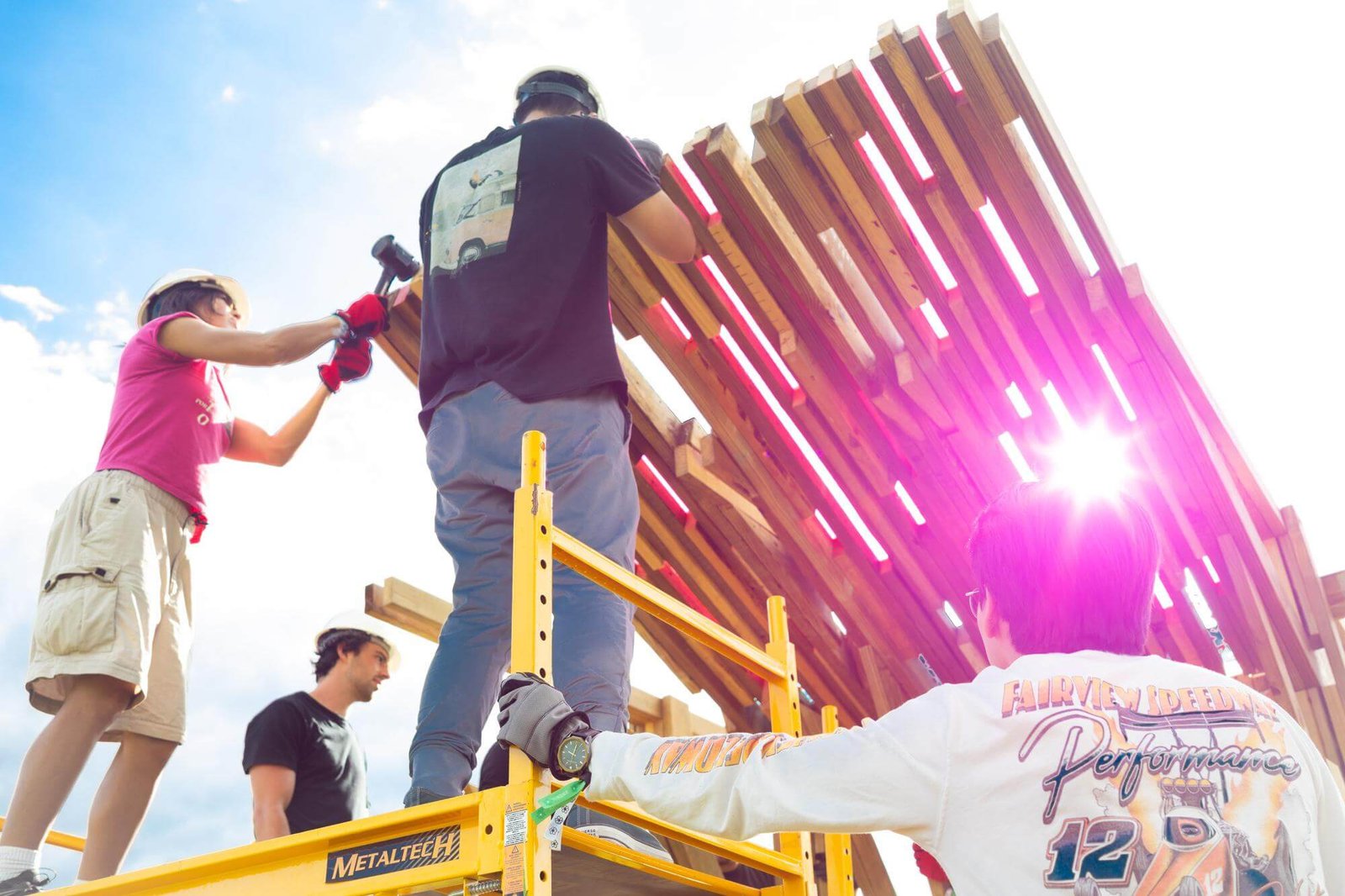
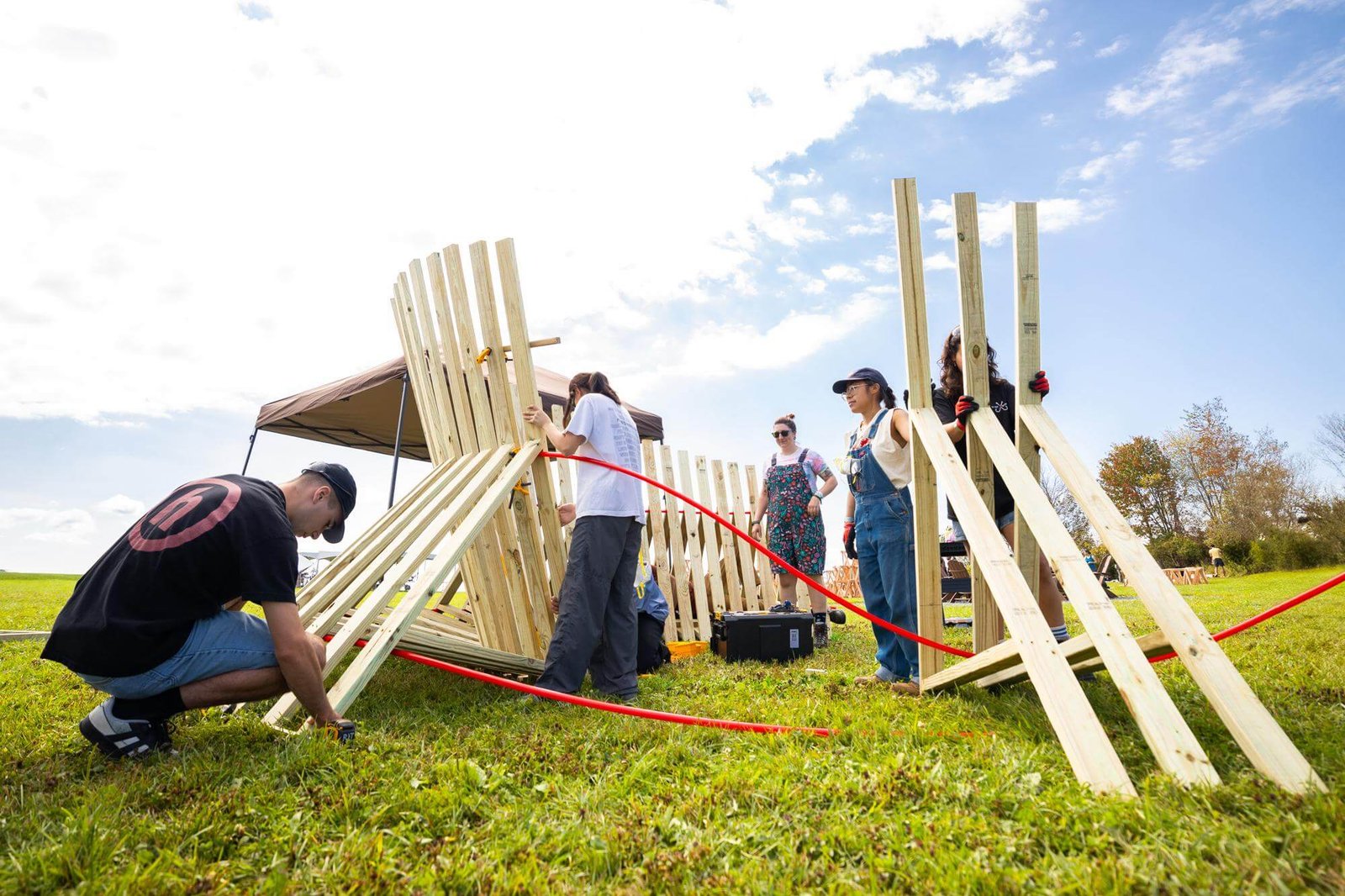
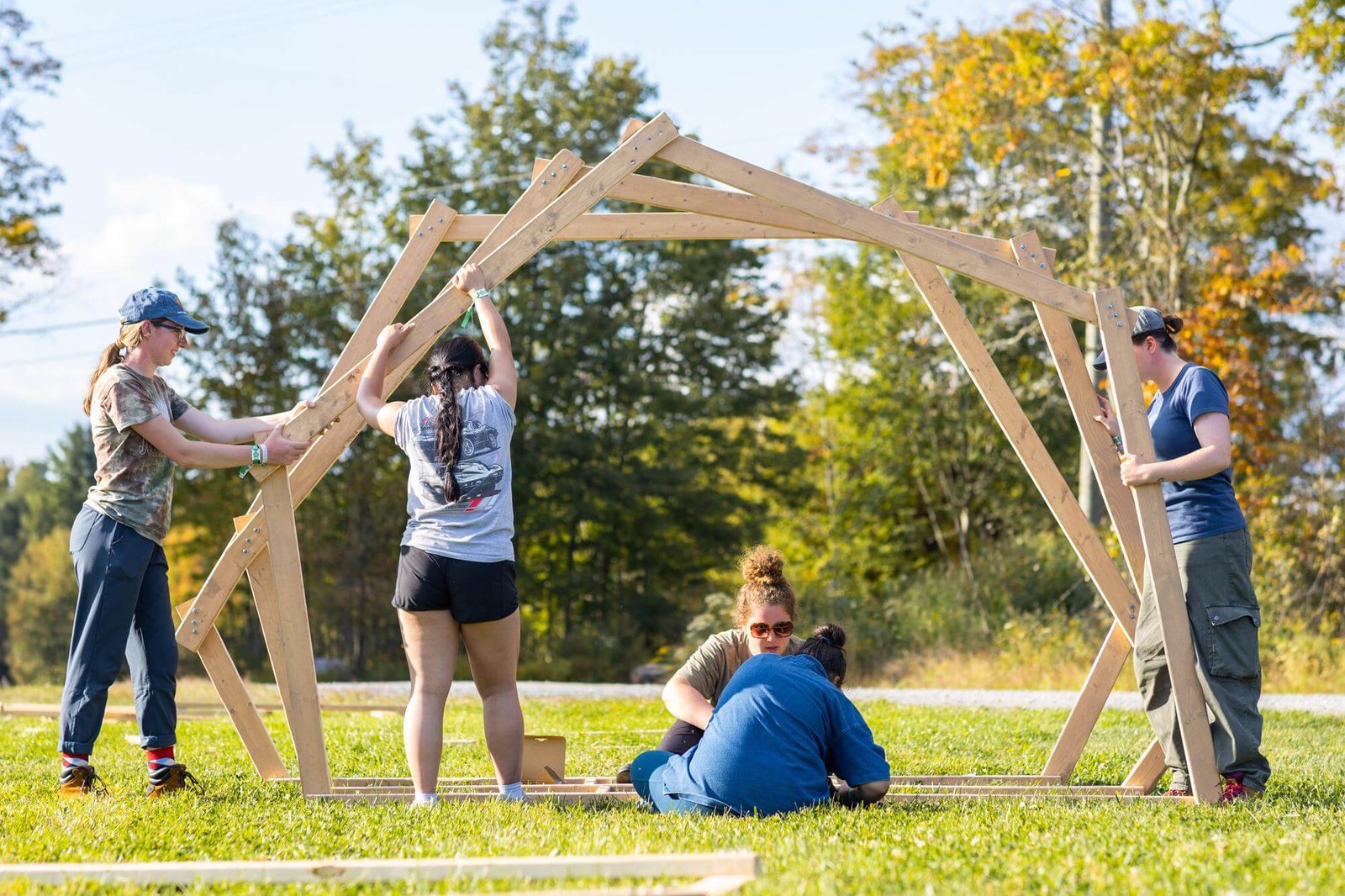
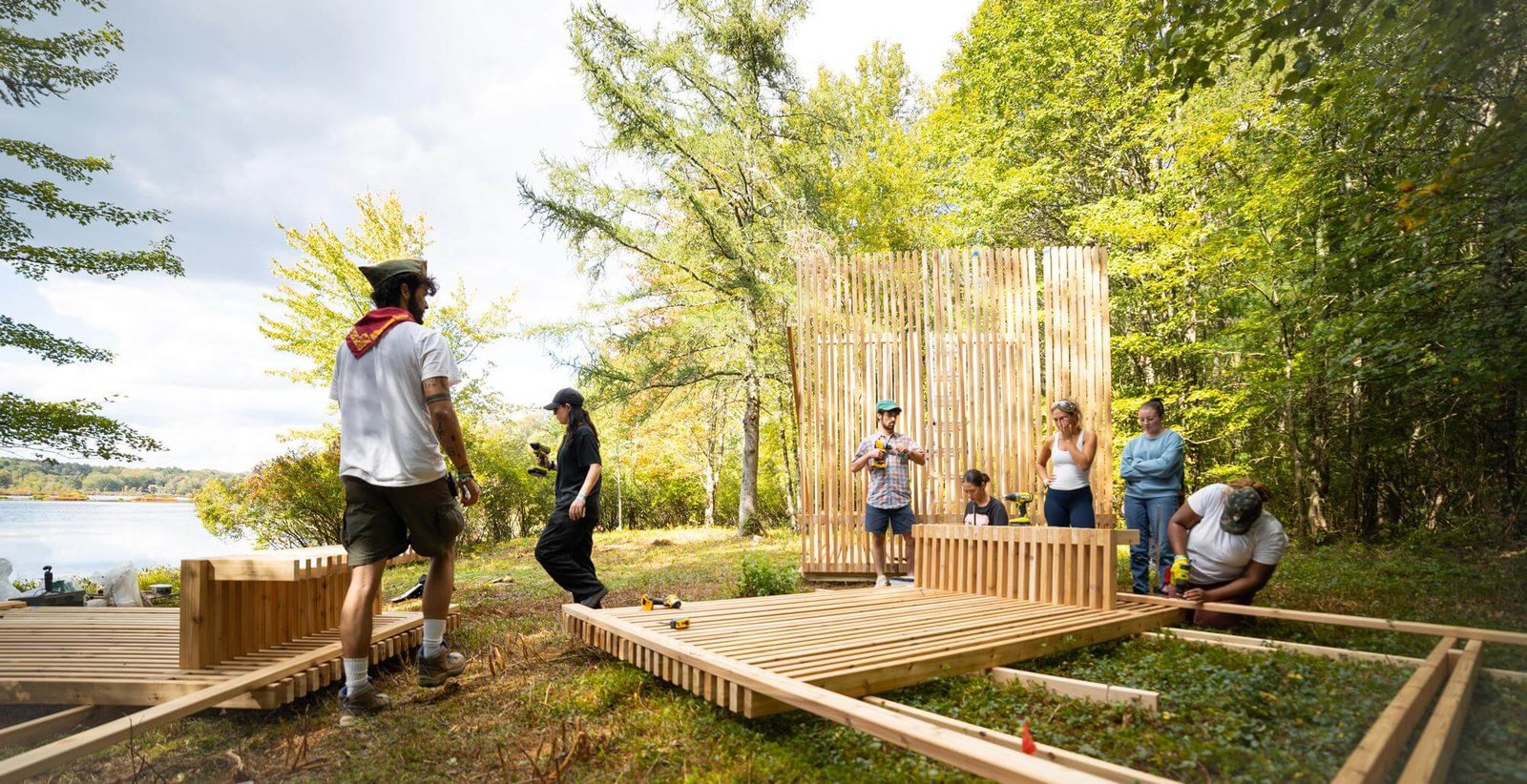
Is it possible to wield technology for the collective good? The 2025 Bethel Woods Art and Architecture Festival, dubbed Build Fest 2: Peace Rises, asked this question in its open call for timber pavilion design teams. More than 150 students and faculty from ten schools across the country recently shared their answers across four days of experimental making on the historic grounds of the 1969 Woodstock festival.
The building festival, now in its fourth iteration, took place September 10–14 in Bethel, New York. Adding to past installations scattered across the grounds of the Bethel Woods Center for the Arts, this year’s projects explored the potentials and pitfalls of digital and robot-assisted construction.
Curator Neal Lucas Hitch described the festival as an attempt to see how emerging technologies might be “embraced convivially.” Over several months, Hitch and his team supported faculty as they guided their students through design, planning, fabrication, and installation, often drawing on their own university fabrication labs. I attended the festival and spoke with teams about their perspectives on collaborative making, labor, and academic access to technology.
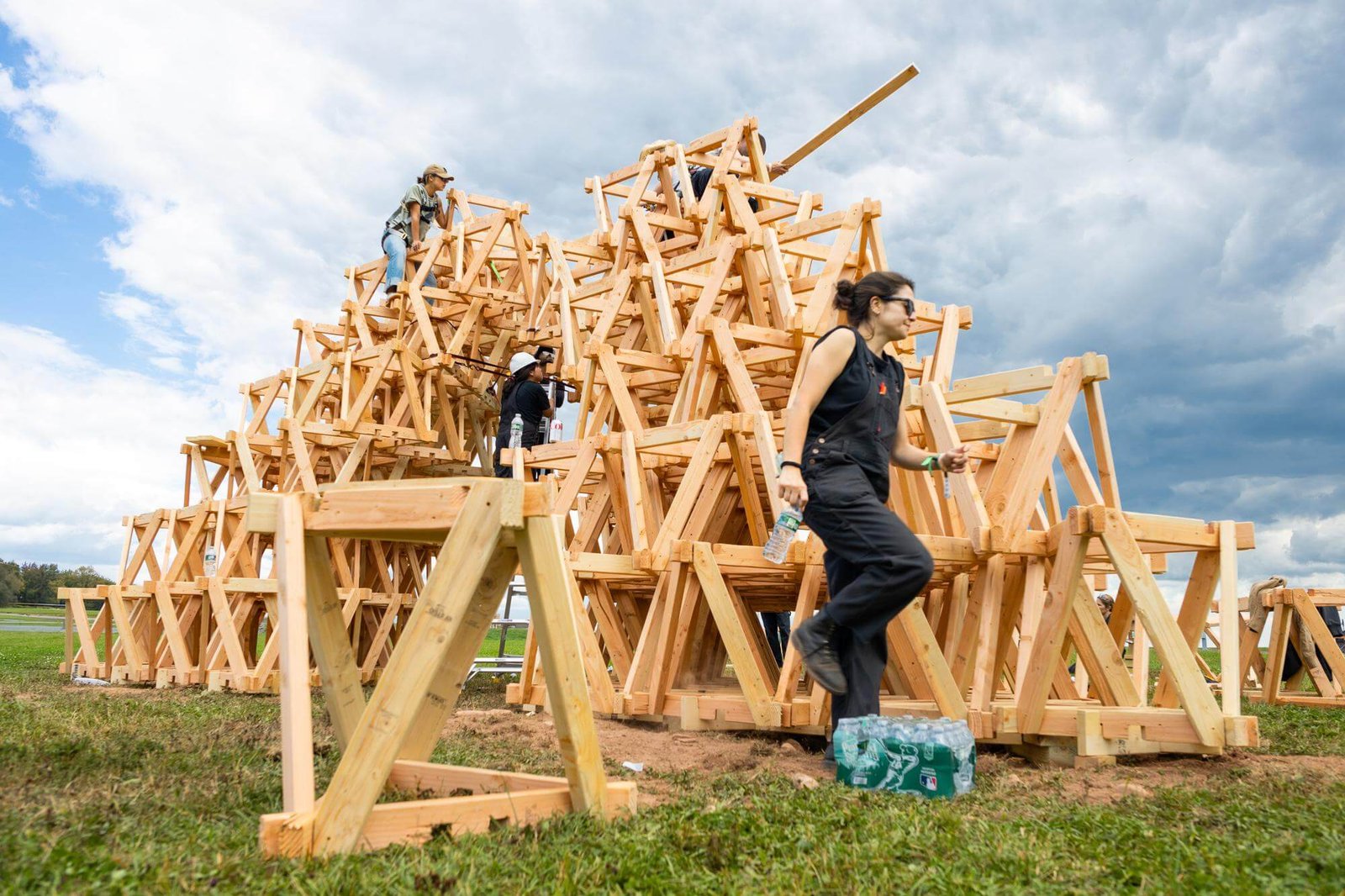
Some embraced robotic fabrication to expand prefabrication possibilities. Cornell University’s Polylith team, led by Lawson Spencer and Ekin Erar, used pre-cut wood joinery with robotic arms for their polyhedral modular assemblage. Spenser, through his elective Rethinking Timber Joinery, asked, “are there benefits to using a robotic arm to do joinery, and if so, what can you make?” Robots handled the difficult mitered cuts, and students quickly assembled the flat-pack modules onsite in what they called “construction labor as a collective act.”
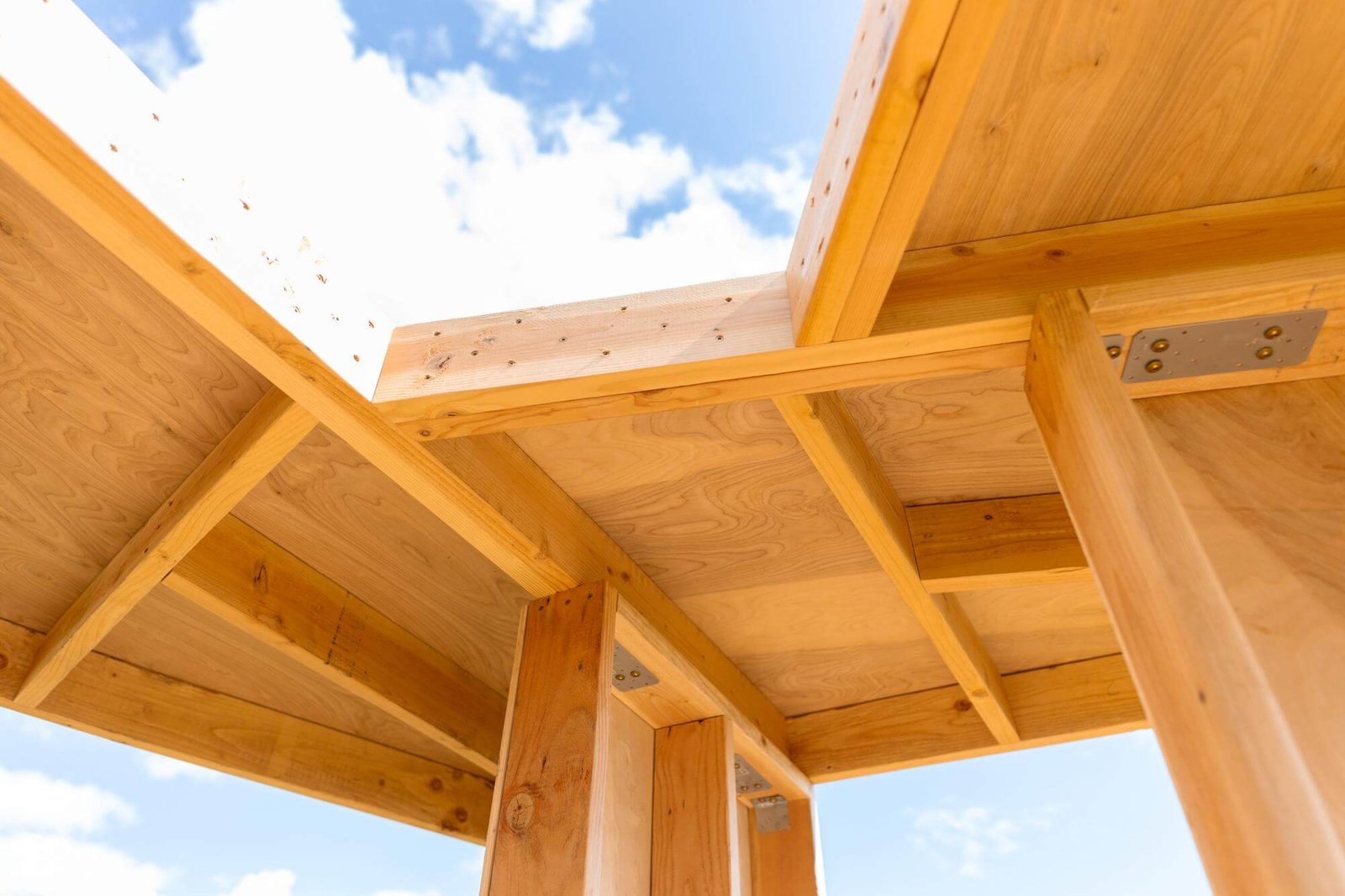
Arash Adel of Princeton University’s Adel Research Group (ARG) said that the team was “hyper-conscious towards labor and the role of humans” in their construction. Before the festival, they fabricated template wooden panels with robotic-arm precision, then reproduced them by hand onsite to test against machine-made versions. Adel noted his lab’s interest in removing the “3Ds—dull, dirty and dangerous” from construction.
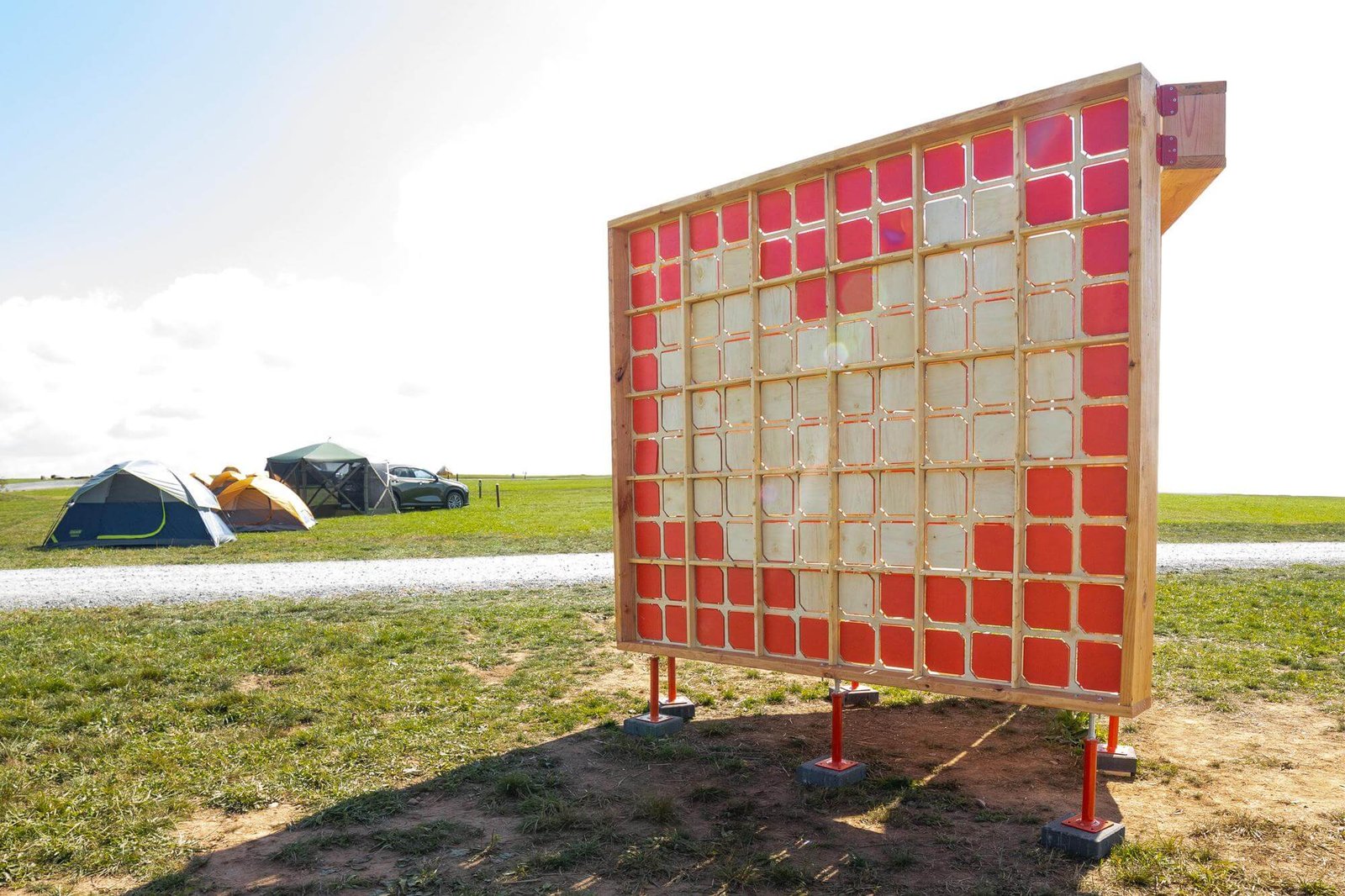
Other teams interpreted digital togetherness more playfully. Representing Kean University, Stephanie Sang Delgado and Galo Canizares of office ca, together with Fabio Castellanos created an “interactive billboard” of more than 350 painted wooden pixels. Part “oversized fidget spinner,” part communal assembly, the work’s pixelated tectonics were designed with the intent to engage Kean’s student community with a low-intensity, highly social experience. Canizares described it as “bringing people into a digital conversation but through low-fi processes.” Sang Delgado emphasized how introducing design-build to Kean’s young design school, Michael Graves College, demonstrated the value of small, student-centered projects on modest budgets.
Chris Humphrey and Andrew Colopy of Rice University used the festival to test both student interest in design-build and their university’s new fabrication facilities. Over fifty students volunteered to attend, though only eight seniors were selected. Their “armature for waste,” built from offcuts and plastic by-products with angled joinery referencing agrarian architecture, was mostly processed by hand. “Oftentimes there are equally as efficient traditional ways of working,” Humphrey remarked.
At Rochester Institute of Technology (RIT), art and design faculty Joe Allgeier, Fabiano Sarra, and Kelly Wilton treated technology as just another tool. Wilton said the project “rejects the push for technology by prioritizing the time and space we have here.” Students designed collectively over three quick meetings, then adapted onsite. “We were the robots!” Sarra joked after the rapid installation. Marywood University faculty Kim Hagan and Michelle Pannone led students in building portal twisted frames from stud walls, “rotating and reconfiguring these familiar elements, transforming spatial perceptions.”
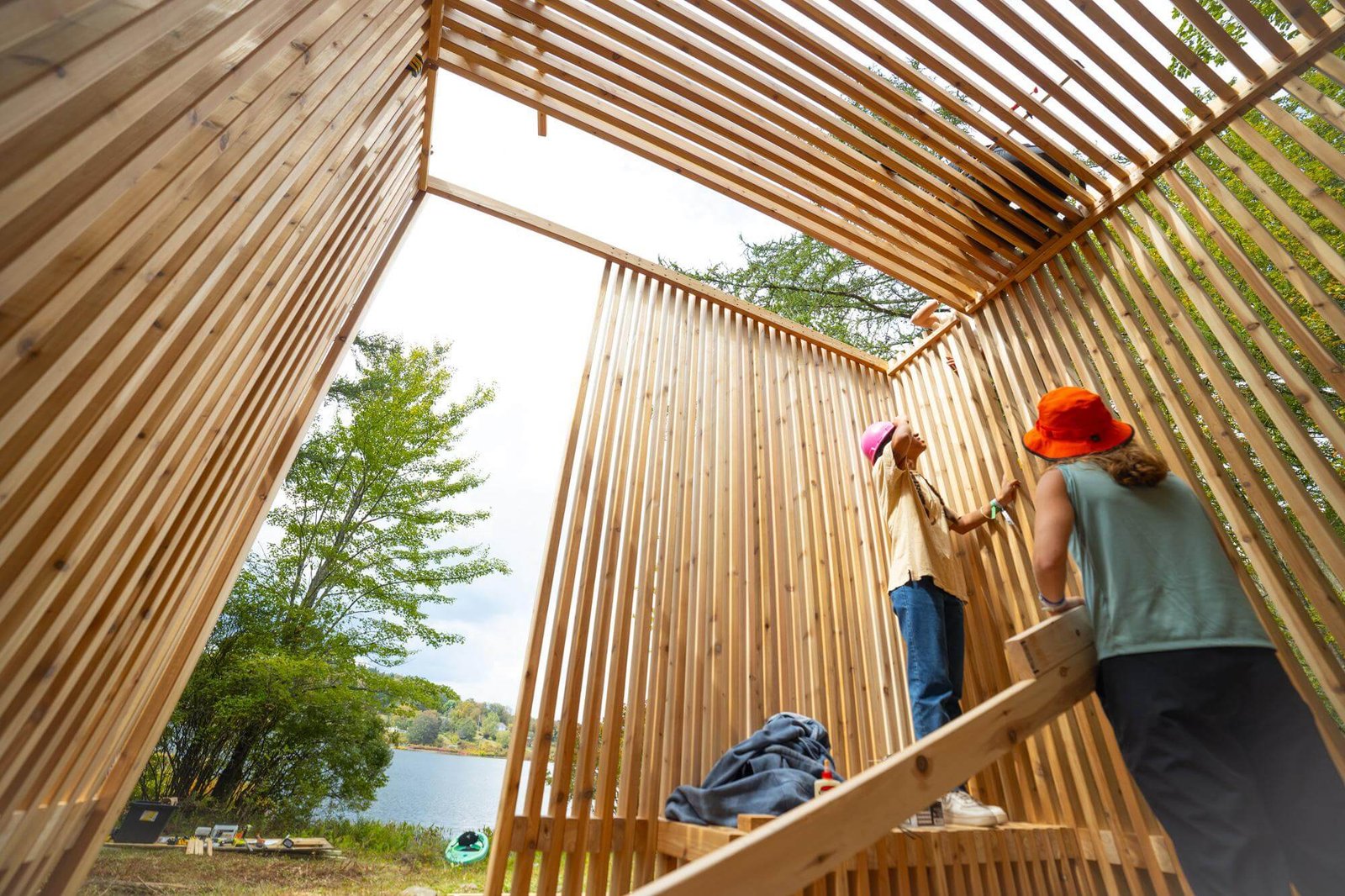
RIT’s Amanda Reis and the University of Manitoba’s Eduardo Aquino (AREA) reflected on “how much currency high technology has in academia,” where projects often “value the form over the experience of the space, the body, light, materiality, etcetera.” Their cedar pavilion, built from uncut lumber in prefabricated panels, offered a meditative focus on site responsiveness and construction as a communal act. As the only project embedded in a design studio course, students will carry their reflections back to the classroom.
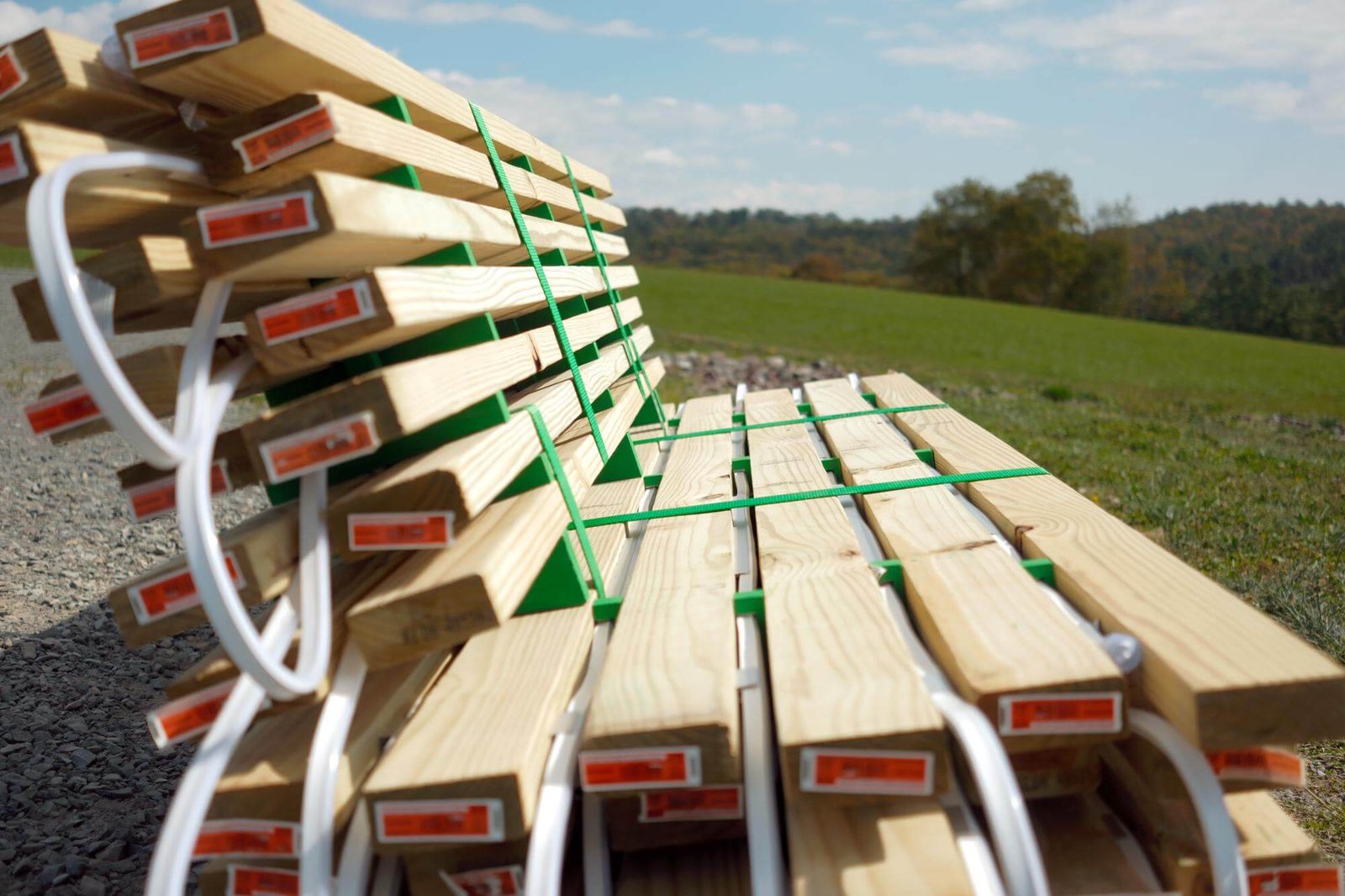
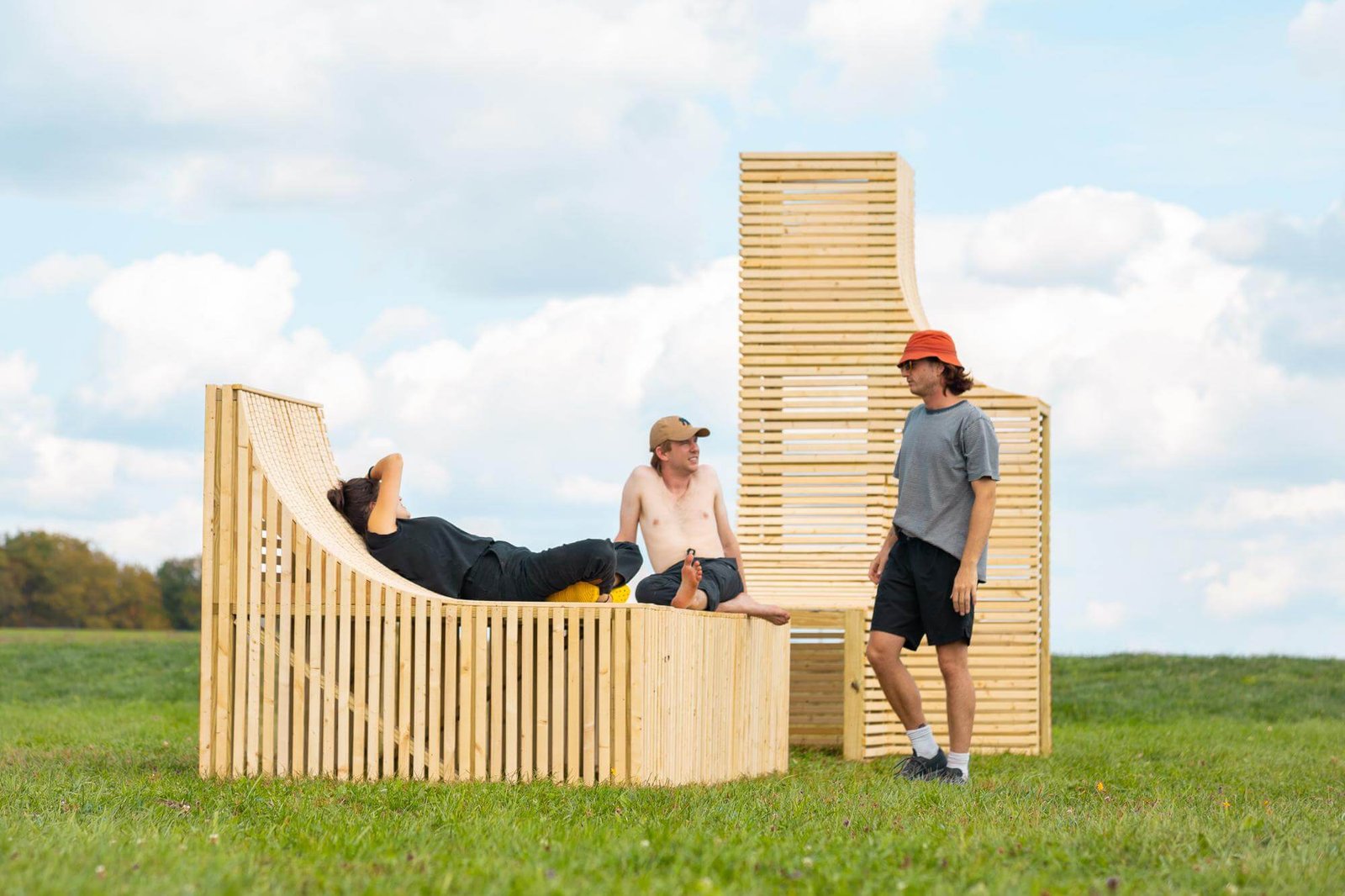
Several “Peace Pop-ups” also joined the conversation. Benjamin Vanmuysen of Rensselaer Polytechnic Institute (RPI) stacked 2x4s into a bench overlooking the hills, with price tags and ratchet straps left intentionally exposed. While he called it “lazy detailing,” the layering was meticulously considered. A UCLA team mentored by Kutan Ayata built two hearth-inspired mnemonic structures reflecting on the recent Los Angeles fires. With no prefabrication possible due to their geographic distance, Amber Grovet, Alexandra Ferreira, Brandt Rentel, Cameron Kursel, Hunter Blackwell, and Nathan Logan fabricated entirely on site, adapting resourcefully under time constraints.
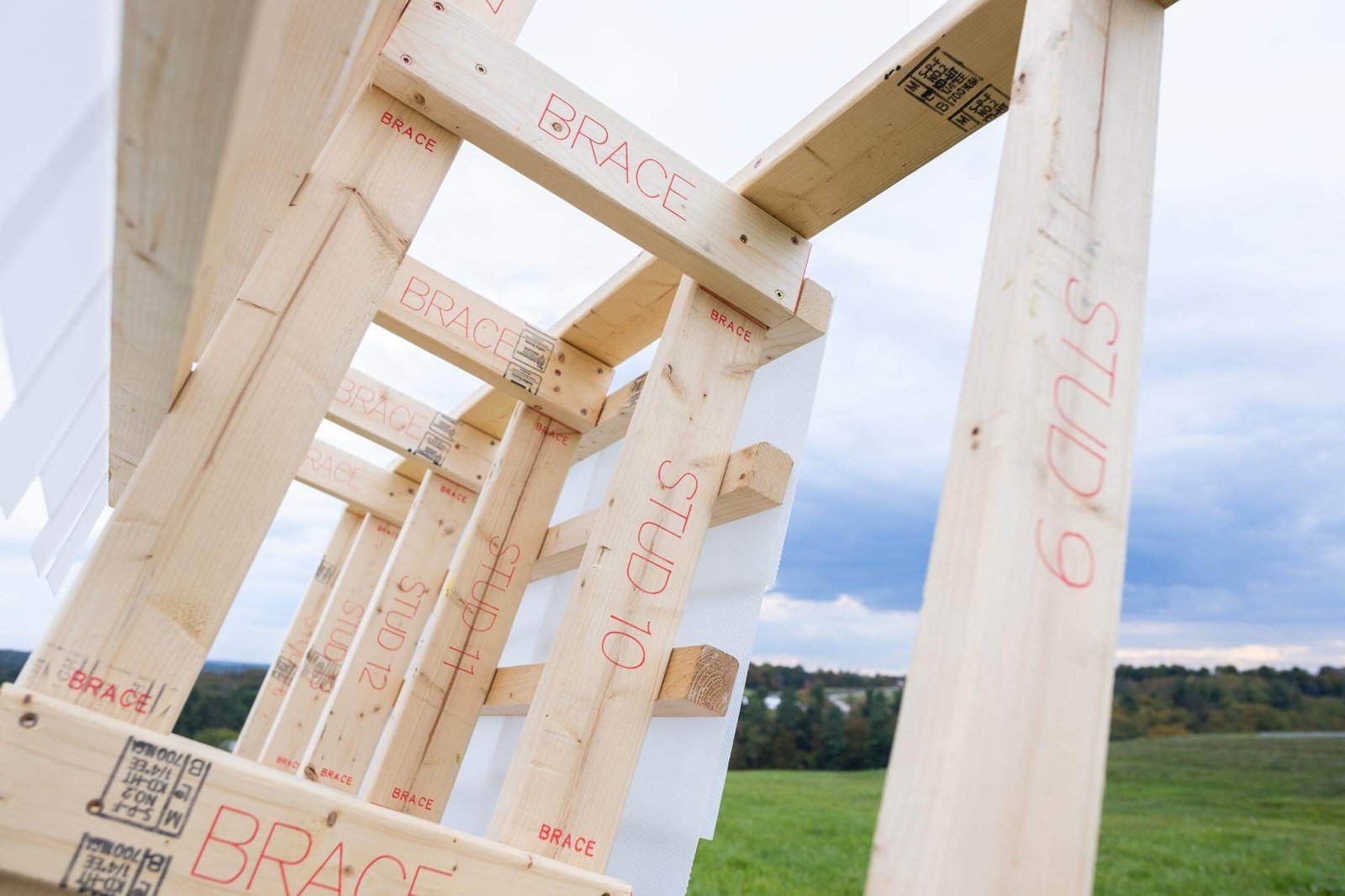
When construction takes place on site, the robots tend to stay at home. However Auburn University’s Cait McCarthy and Jordan Young of office office tested how digital technology could become portable. Using a custom CNC machine, they inscribed cut lines, drill points, and alignment marks directly onto lumber. “Making construction and assembly information visible,” they explained, could make fabrication more accessible to non-experts. Their prototype, assembled with the help of Carnegie Mellon students, came together in just a few hours.
As with many pedagogical design-build experiments, BuildFest supports young faculty while giving students formative experiences outside of the classroom. Despite the inevitable glossy photographs of finished installations, the spirit of the camp wholeheartedly embraced process over product. At the event collective knowledge emerged through trial and error, shared meals, and group labor. Maybe it was all the music, tie-dye, and peace signs, but I left the festival with the sense that building together—robots or not—is itself inherently a convivial act.
The installations opened to the public on September 14, and will be on display over the course of the year. Further information on the projects and visiting opportunities can be found on the Bethel Woods Center for the Arts website.
Danny Wills is an assistant teaching professor at the University of Colorado Denver and director of the design lab Space Saloon.