




Barack Obama campaigned on a singular ideal: “Hope.” There were ads with the slogan, posters by Shepherd Fairey—hope, in the aughts, was everywhere. But at some point, there was a fracture; we find ourselves instead in a time of “fake news” and AI dupes, doctors treating long-eradicated diseases, and online fights over when gasoline was cheaper and who was responsible for it. This has long detached us from the too-sentimental notion, shuffling it into a memory hole. The Obama terms, too, have gone the way of hope. We might remember Chicago’s election celebrations or his love of basketball and cigarettes (relatable); there were tender photographs of him playing with children in the White House (darling) and news about Middle East drone strikes (alarming); there were speeches, DACA fights, and deportations. From this hopeful movement there are now only fragments. I remember the time like I remember my 20s, when my right hip didn’t hurt every day and the future, mired in recession and endless war, felt terrifying and unknown—but back then I believed that, as time churned ahead, I wouldn’t be left behind. This is what I believe Obama meant by his motto.
Tod Williams Billie Tsien Architects (TWBTA) were hired by the Obama Foundation to go to battle with this memory hole machine. Having won a competition back in 2016 to design the Barack Obama Presidential Center—a version of what we might normally consider a “presidential library”—they’ve spent the last decade chiseling out a shape that would speak to Barack and Michelle’s tenure in the Oval Office. And $850 million (and many revisions) later, the campus is now complete and ready to accept the one million anticipated visitors from around the world.
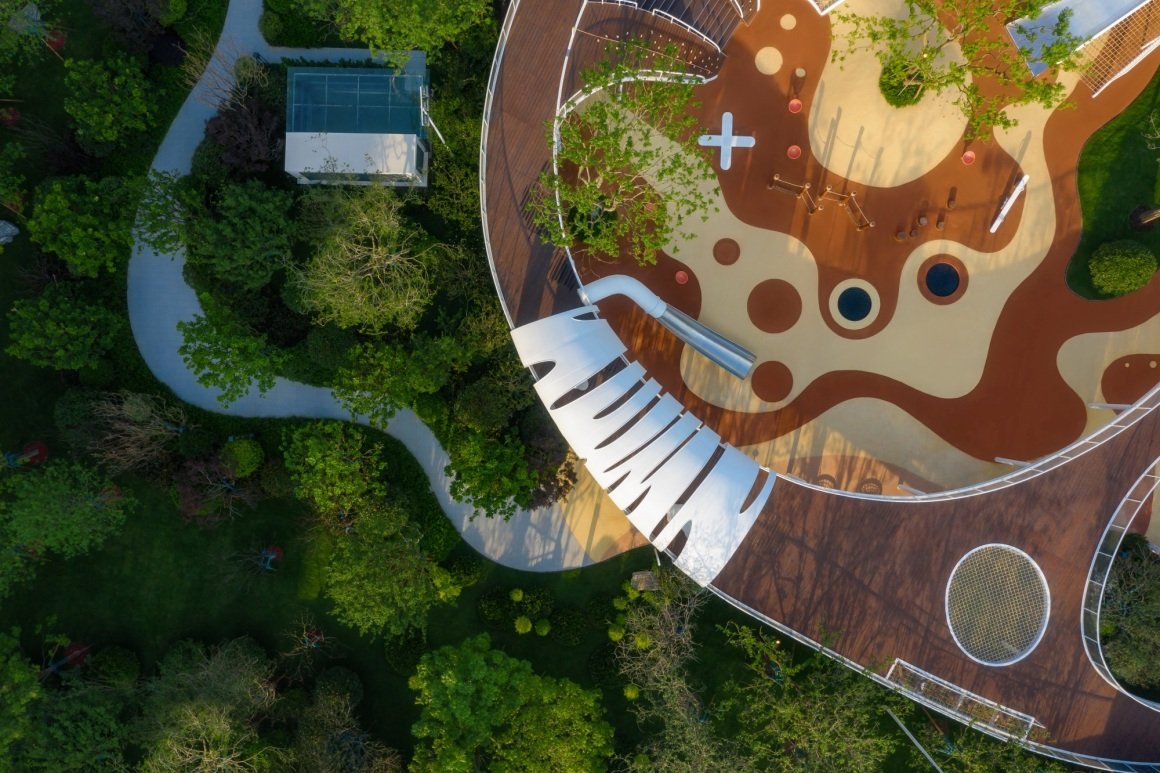
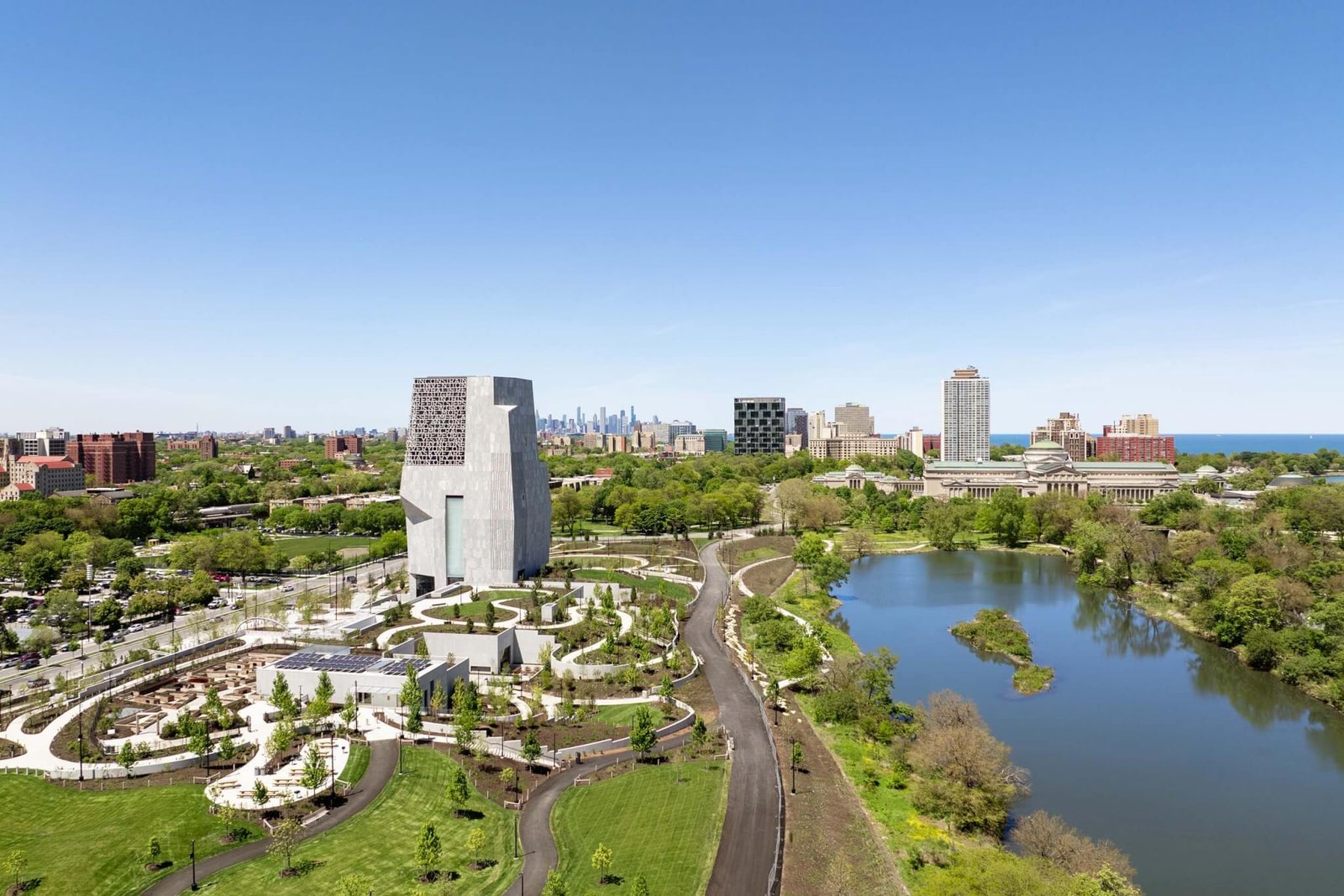
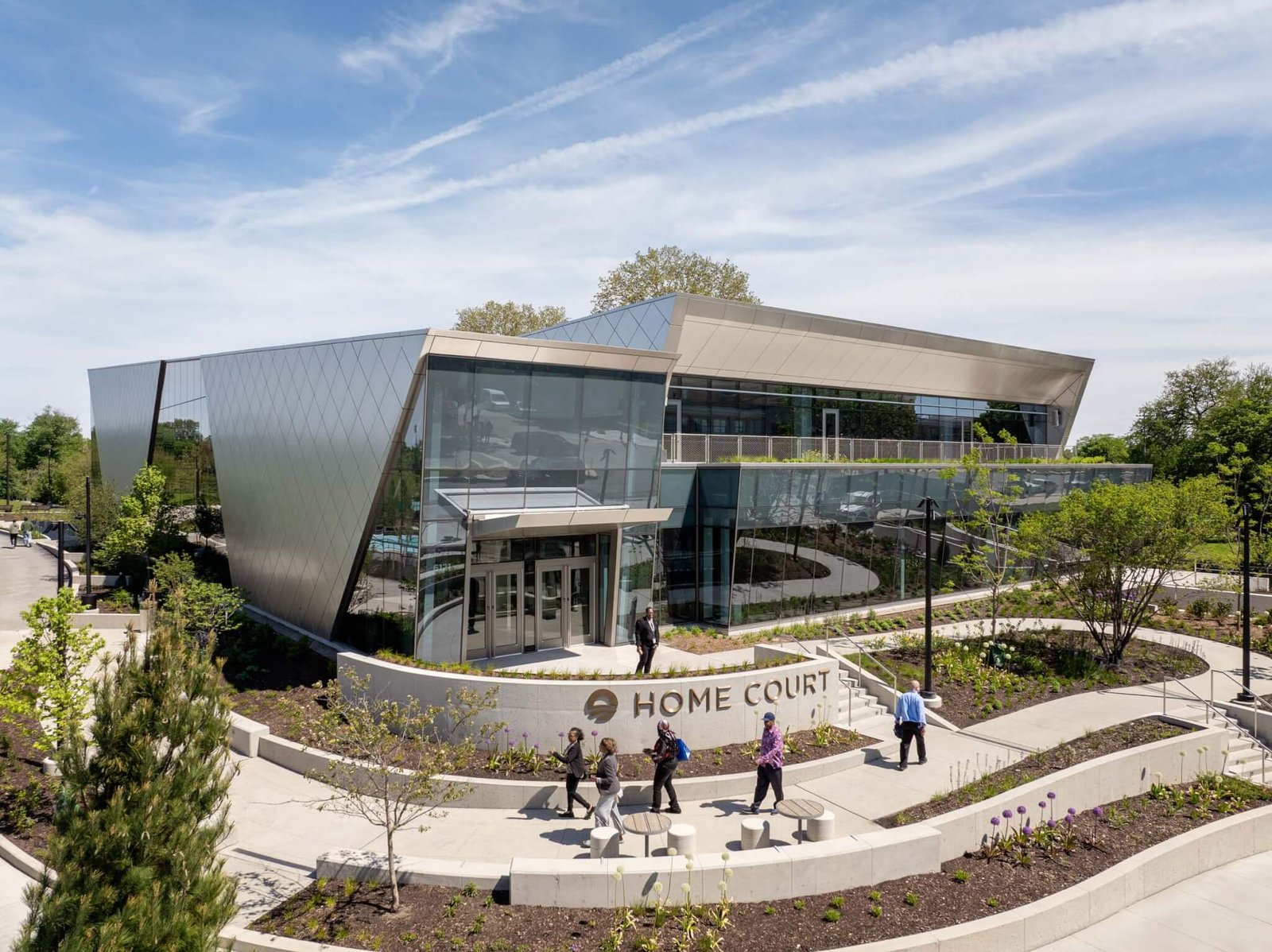
Situated in Chicago’s South Side Jackson Park, the campus includes a Chicago Public Library branch, a sports complex designed by Moody Nolan Architects, a playground and green space by Michael Van Valkenburg Architects, a cafe lounge called The Forum, and, of course, a towering museum. Its final architectural form, rendered in blinding granite, is an attempt at putting a particular bracket around the Obama years, compelling his presidency—and the era of hope—out from the ahistoric haze and squarely back into the American consciousness. To accomplish that, TWBTA has built a monument to an era of American optimism. It’s successful in the way that fattening a goose yields a tastier liver. Here, there are moments of quiet reflection, joy, and generosity—all enveloped by a hulking grandiosity that rebrands “hope” into something more like Hope™.
The enter itself is sandwiched between the University of Chicago’s sprawling campus and Lake Michigan, creating an extension of the storied Museum Campus. Visitors are welcomed by the John Lewis Plaza, a grand courtyard rendered in the center’s gray and white granite. The word blinding is worth repeating: There are benches but not a lick of shade is to be found; gazing north from the public library entrance is an exercise in squint-and-sweat. Thankfully, The Forum provides respite from such harshness with a generous indoor seating area and cafe. Here, we start to pick up on the center’s material palette, which includes rich wood details complementing the gray granite that continues further inside. The Forum also includes a flexible performance space and, as representatives from the center continued to remind us, “great Wi-Fi.”
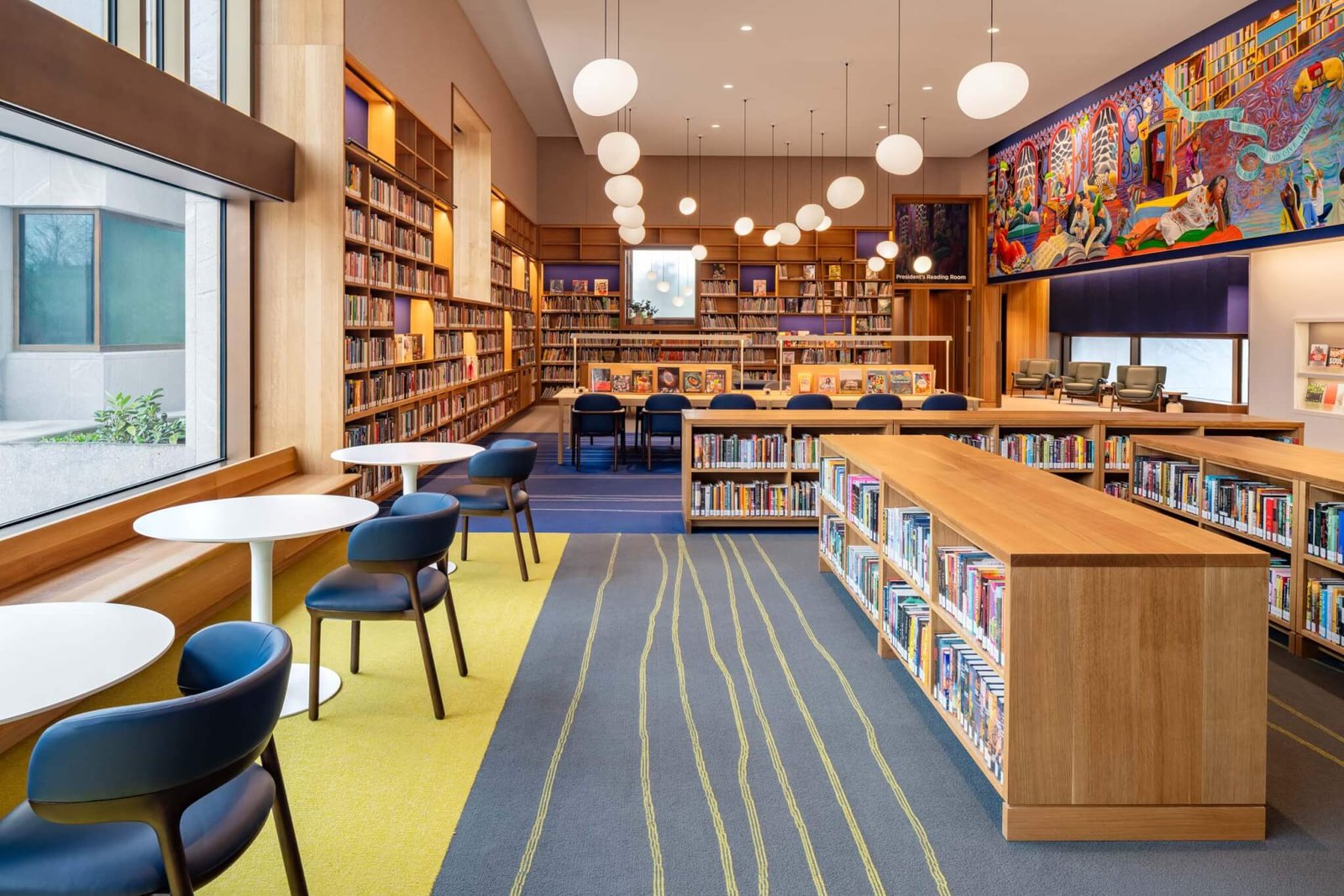
Across a breezeway, the public library branch appears squat from the exterior, but entering took my breath away. Visitors are immediately greeted by an expansive mural that runs parallel to the double-height space; you’re compelled to look up to study its details. Artist Aliza Nisenbaum’s Reading Circles/Weaving Dreams/Seeding Futures renders images of reading, as well as a few famous authors, into a colorful, dreamy tableau. Through the stacks, tucked into the library’s east side is the Presidential Reading Room, where visitors can peruse a book collection curated by the Obamas or listen to their handpicked vinyl on a record player. The library is cozy but sleek, providing intimate spaces for reading and expansive areas for community programming.
Public access is a championed component of the campus—the plaza, forum, and library are free public buildings, as are the museum’s first and second floor mezzanine; visitors will have to pay $30 to enter the museum’s exhibition floors. But the tower itself is, actually, easy to ignore when there’s so much else to enjoy (though impossible to overlook from afar, where the looming granite monolith looks like something out of Ancient Aliens).
Tsien and Williams spoke about the dozens of iterations they worked through before landing on the tower’s craggy shape; they shared a reference image of four hands coming together, as if to shield someone’s cigarette as it’s being lit in the Chicago winds. The final building, made from a special quartzy granite, is doing too much and yet nothing at all. It holds a collection of artifacts from Obama’s time as candidate and president. The exhibitions include interactive displays, objects, and videos, with design from Ralph Appelbaum Associates and Chicago-based Civic Projects Architecture. I was overwhelmed by Power of Words, a massive, 88-foot tall video and audio “canvas”; it knocked my senses out before I could wind my way through the Obama years through rose-colored glasses. Buttons and handmade campaign signs abound. I appreciated the Democracy 101 exhibit, in which interactive activities teach basic civics, but it seems cruel to put it behind a paywall, considering the urgency of such education today. In our current political climate, Hope™ is a multimedia installation in a granite tomb.
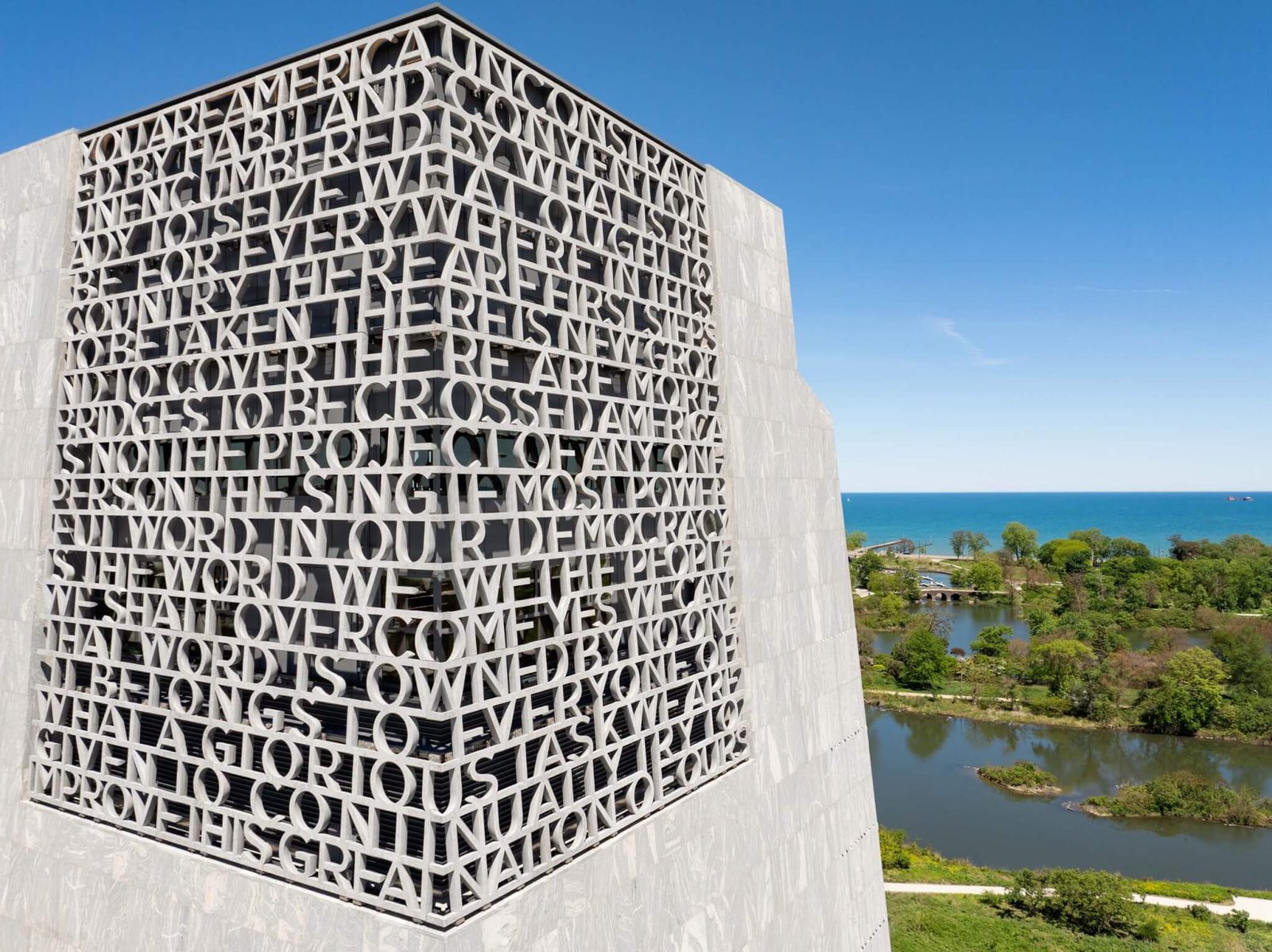
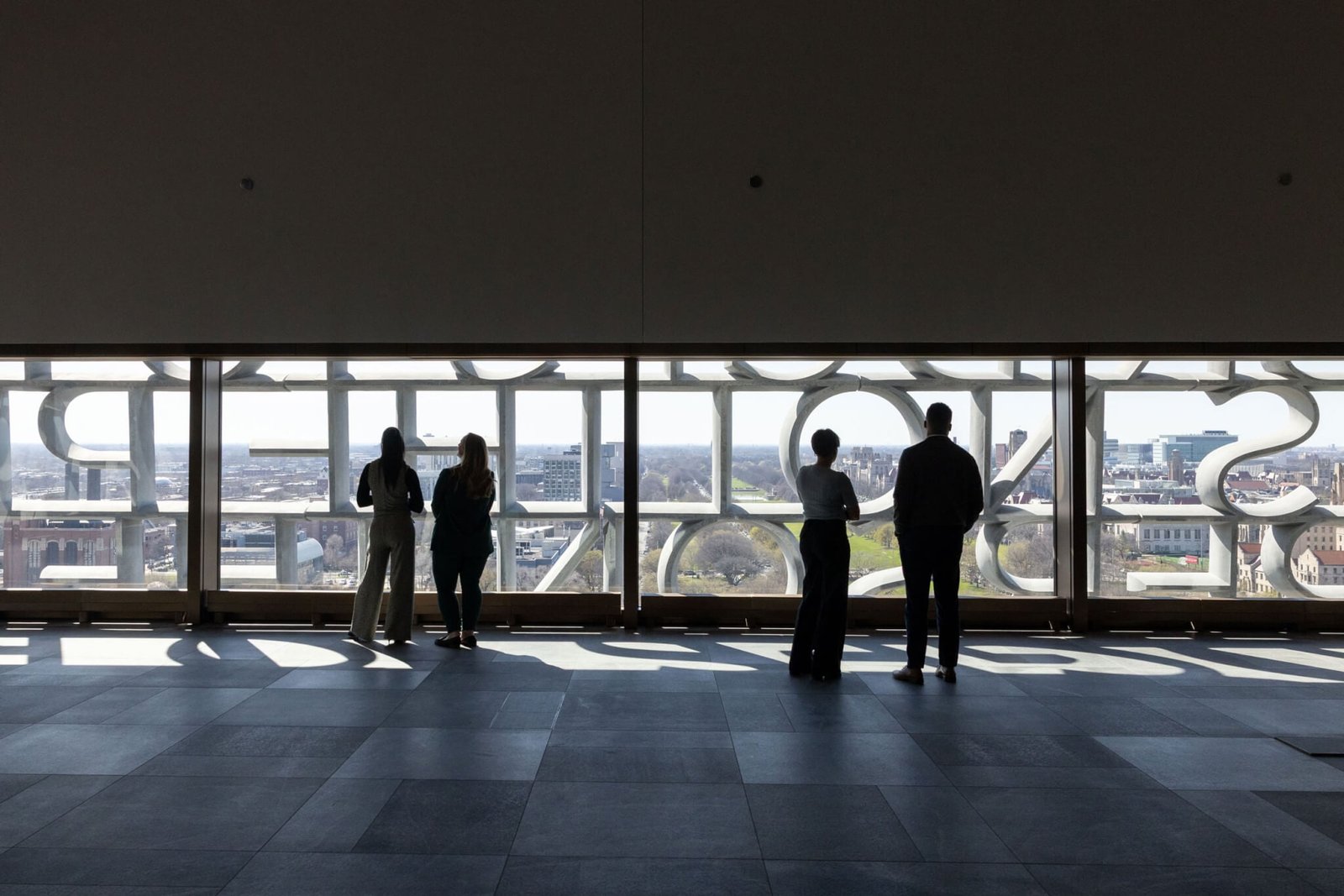
The eighth-floor sky deck brings you back to the present day. From up high, you can see the two Chicagos—to the north is downtown, where rich amenities and glass towers dominate the skyline. At the building’s southwest corner, you peer through the building’s monumental “screen,” which includes text from Obama’s speech at the 50th anniversary of Selma to see the South Side. The text, composed of five-foot-tall letters rendered in cast concrete, begins, “You are America. Unconstrained by habit and convention. Unencumbered by what is, ready to seize what ought to be.” Behind the screen aren’t fancy homes or glassy buildings but everyday people working to build full lives, fighting against the strong tides of segregation’s legacy. It’s easy to be unencumbered when you’re this far up, nested in the tree of optimism.
It feels good in some artificial way to return to the Obama stomp-clamp era; you can almost hear Barack’s tenor narrating your way through the campus. But herein lies the strange, almost haunted feeling of disconnect that looms over these buildings: The idealism communicated through the campus (its exhibitions and its public buildings) only exists in the context of the current climate, one that is characterized by a national gutting of the commons. You can take a selfie at a replica of the Resolute Desk knowing that there aren’t any Home Depot decals spray-painted gold for your backdrop; you relish the public campus’s amenities, in part because the local government lacks the resources to provide nice public bathrooms and Wi-Fi elsewhere in Chicago.
In Chicago, open civic spaces usually come at a cost, and “public safety” comes with increased surveillance and policing of people of color, especially teenagers. Sun-Times critic Lee Bey states that the Obama Center’s campus is “second only to Millennium Park” in its greatness. I disagree. Unlike Millennium Park, the campus’s public play spaces and parkland won’t have a giant security gate surrounding them. On my visit I felt nervous being so close to the University of Chicago and its private police force, but you know what? Fuck it. I dragged some of my fellow critics to the playground, where we tried out the steep slides and climbed through the colorful play structures, which are shaped like bird nests and swamp bugs. I nestled up inside a dragonfly eyeball, taking a moment to try to remember the Obama years more concretely. My mind drifted not to the speeches or rallies, the recession, or “how great it all was.” Instead, I ended up doing what Mister Rogers told us to do: I thought of the people who believed in me through the Obama years’ tumult, who kept me upright when the world seemed to try to flatten us all. This is what the center gets right; it reminds us that publicness isn’t just safety or politics. Hope™ is cheap. What isn’t is the belief that we are in this together. Is that, maybe, what it means to hope in this time of fracture?
Anjulie Rao is a Chicago-based journalist and critic covering the built environment. She is a lecturer at the School of the Art Institute of Chicago and the founder and editor of the publication Weathered.