

The Green Wall
Reframing urban infrastructure through landscape architecture
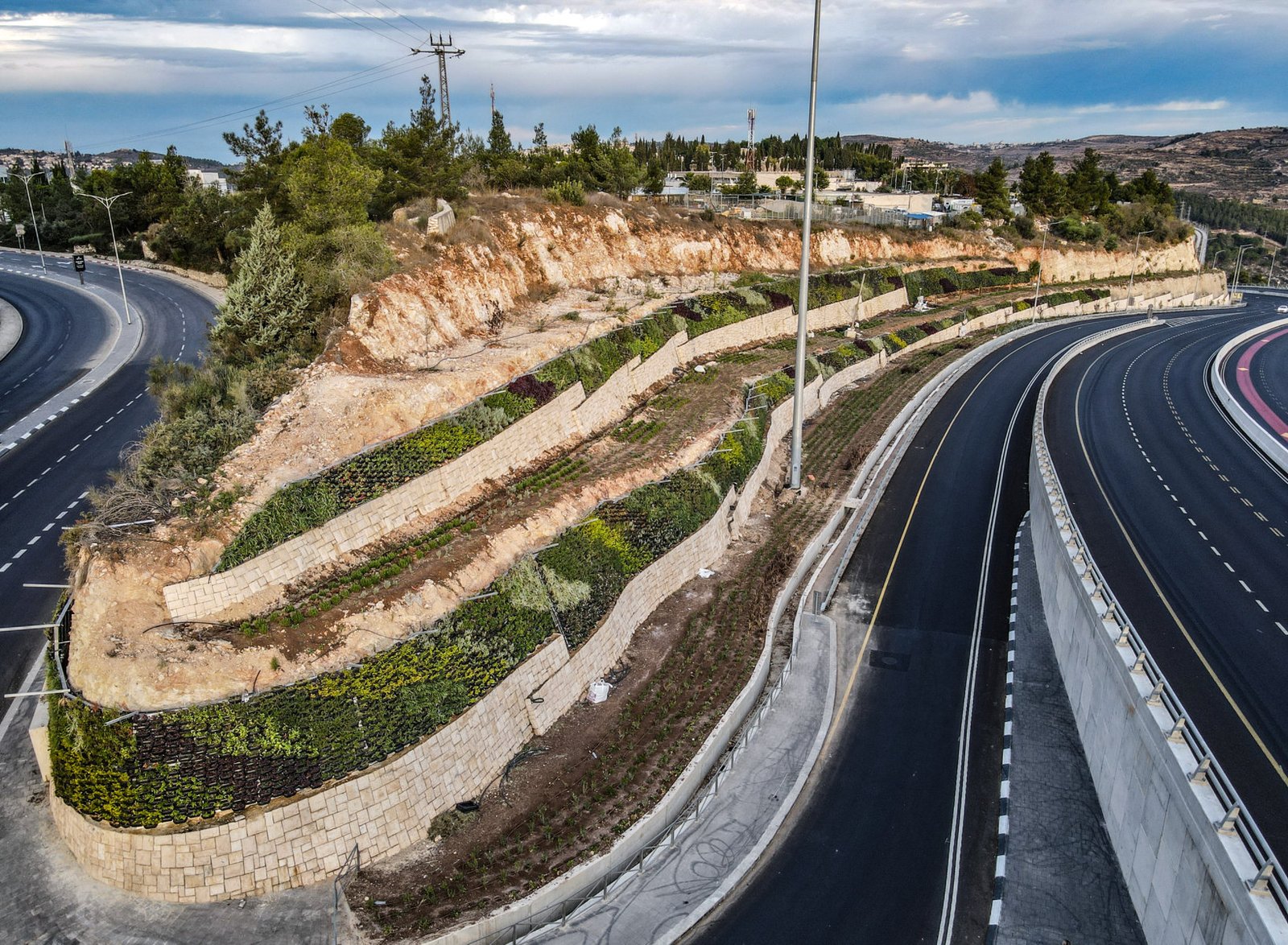
At the main entrance to Jerusalem, where large-scale transportation infrastructure intersects with steep topography, historical depth, and intense urban movement, a landscape intervention reshapes the experience of ascending to the city. The Green Wall is one of the largest vertical landscape projects of its kind worldwide, and a defining component of Jerusalem’s broader transportation and urban renewal plan.
Rather than treating infrastructure as a purely technical necessity, the project positions landscape architecture as an active agent – capable of mediating between mobility, ecology, and identity, while transforming a highly infrastructural edge into a meaningful urban threshold.
landscape Architects” class=”wp-image-256235″>
landscape as infrastructure
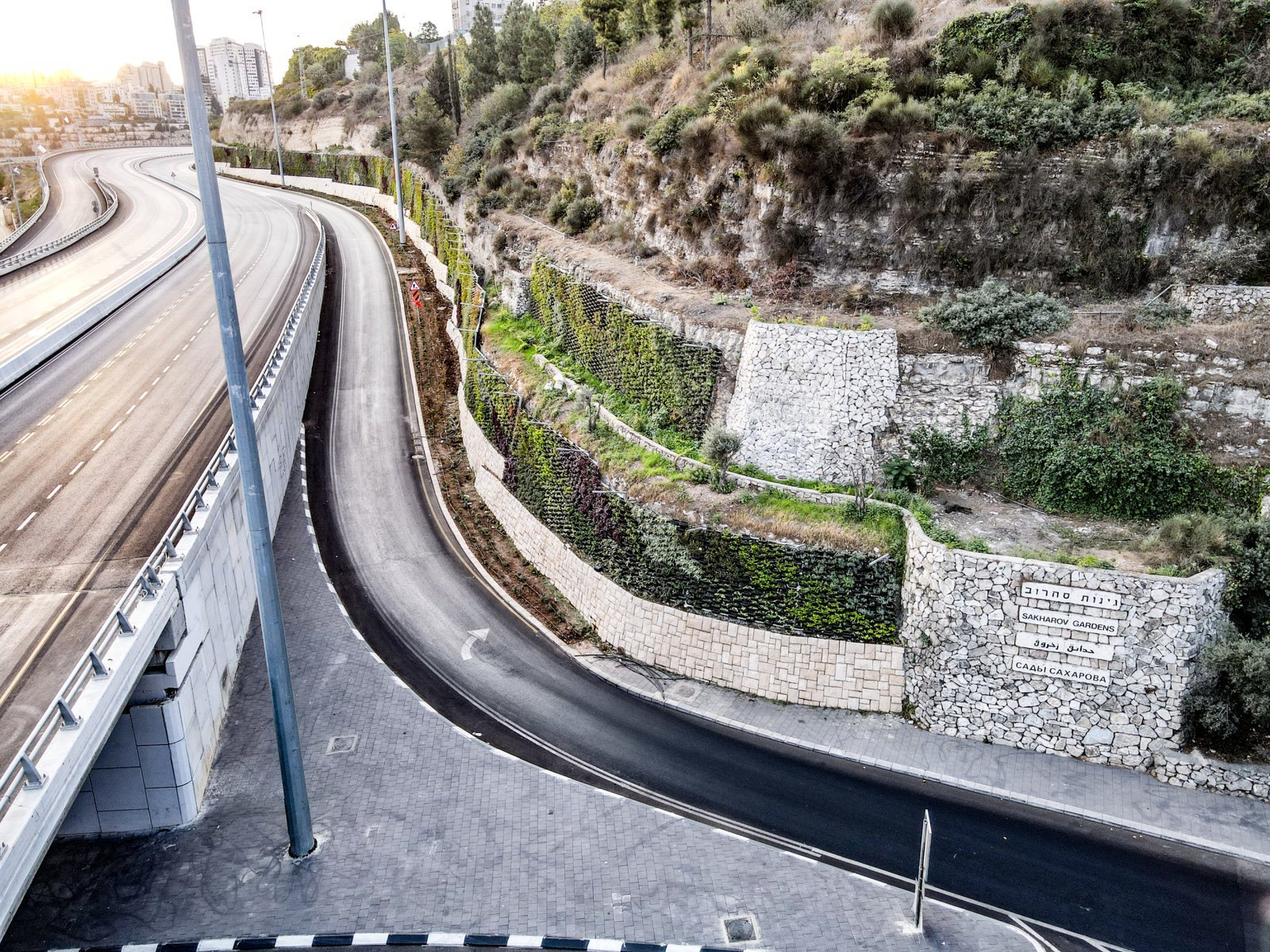
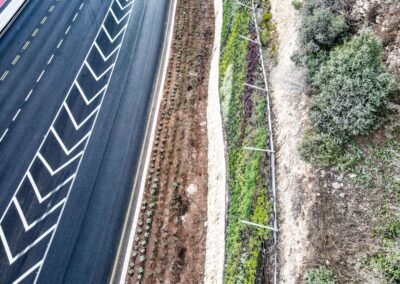
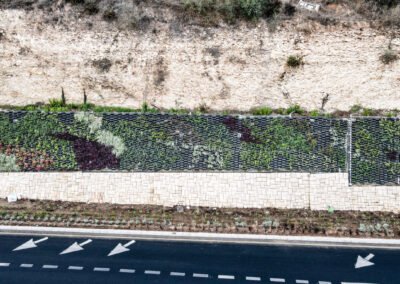
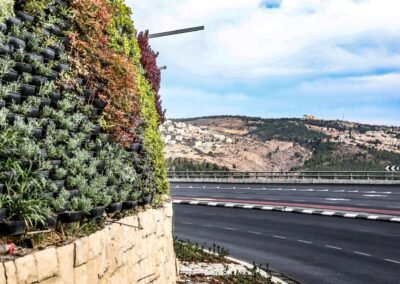
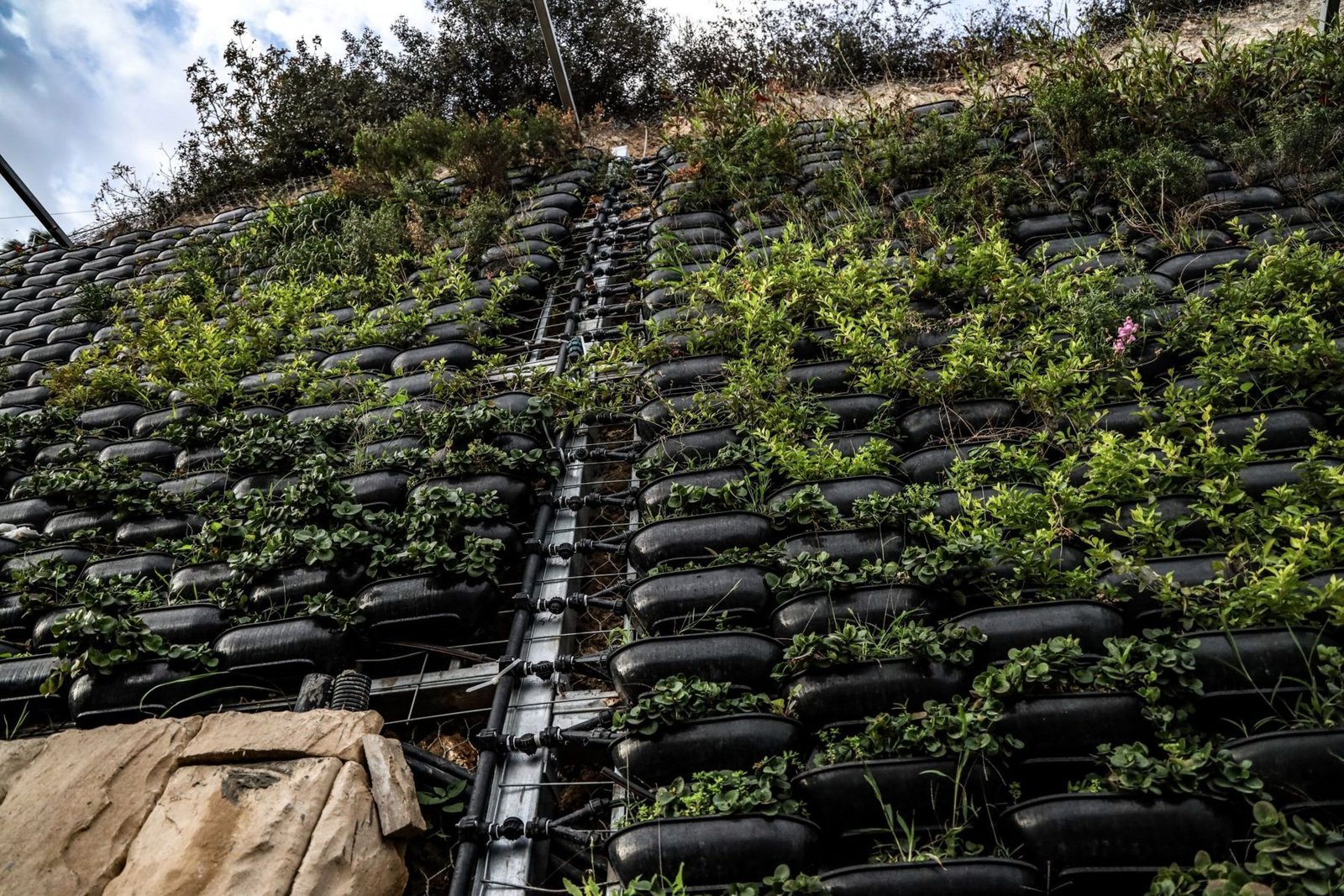
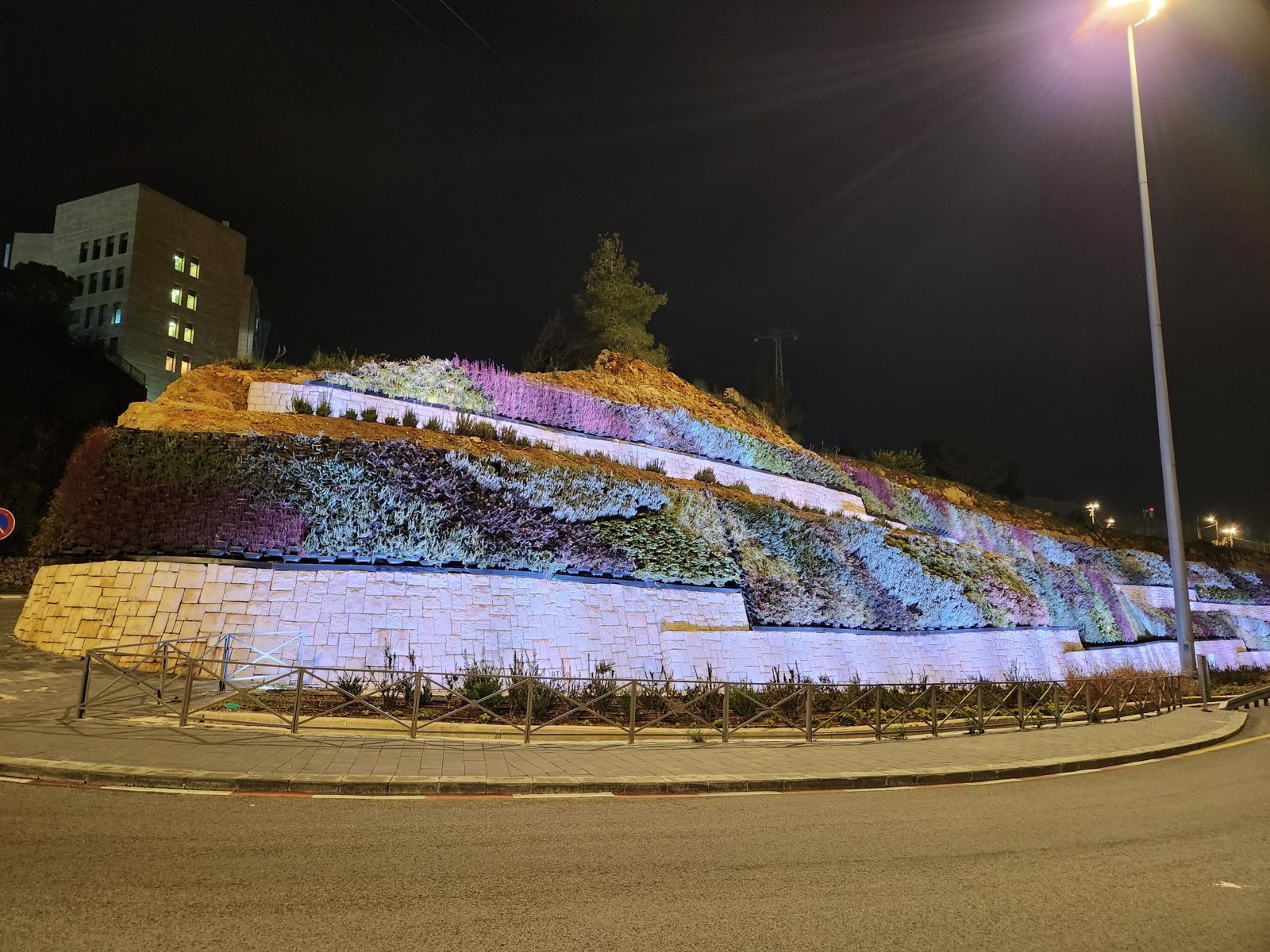
The Green Wall extends approximately 800 meters along the main access road to the city, its face covering an area of roughly 3,000 square meters. Conceived as a continuous vertical landscape, it accompanies visitors as they enter Jerusalem, replacing exposed retaining walls and hard engineering surfaces with a living, evolving system of vegetation.
The decision to develop a vertical garden was driven by site constraints and opportunities: limited horizontal space, complex slopes, harsh microclimatic conditions, and constant exposure from fast-moving traffic. In response, the project adopts a vertical typology that operates simultaneously as landscape, ecological infrastructure, and visual landmark.
landscape Architects” class=”wp-image-256240″>
A layered botanical composition
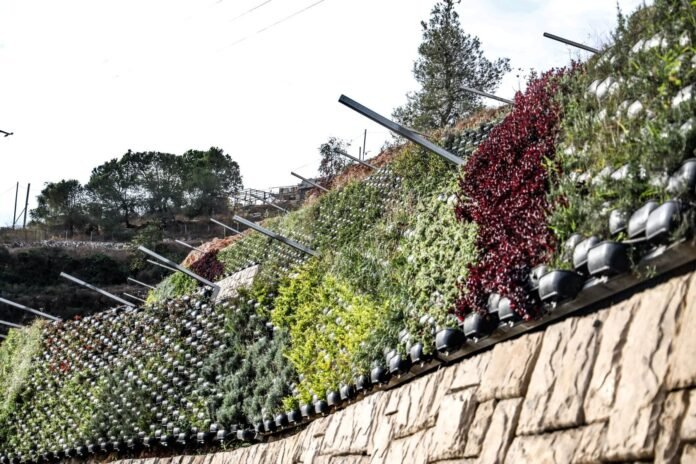
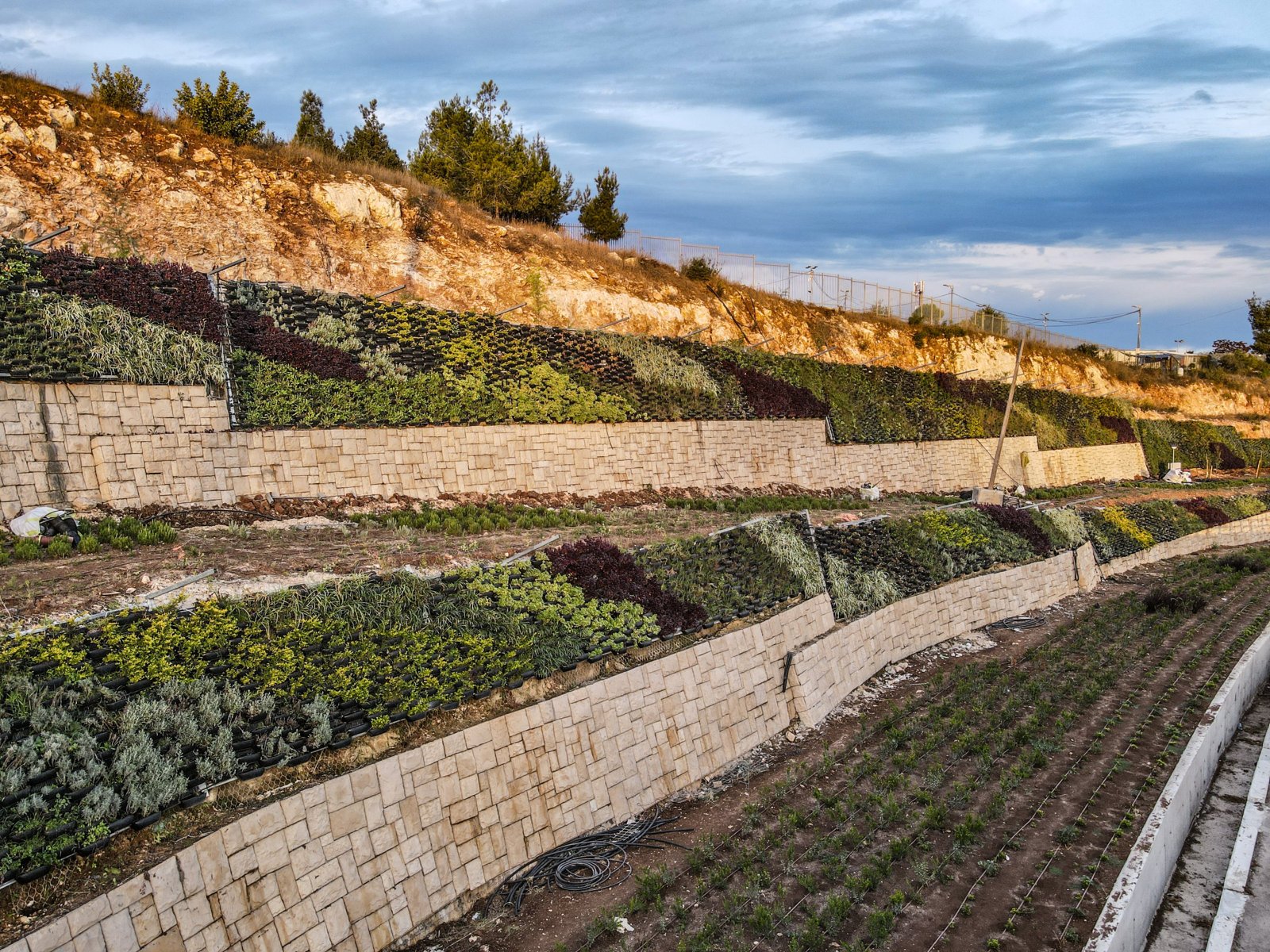
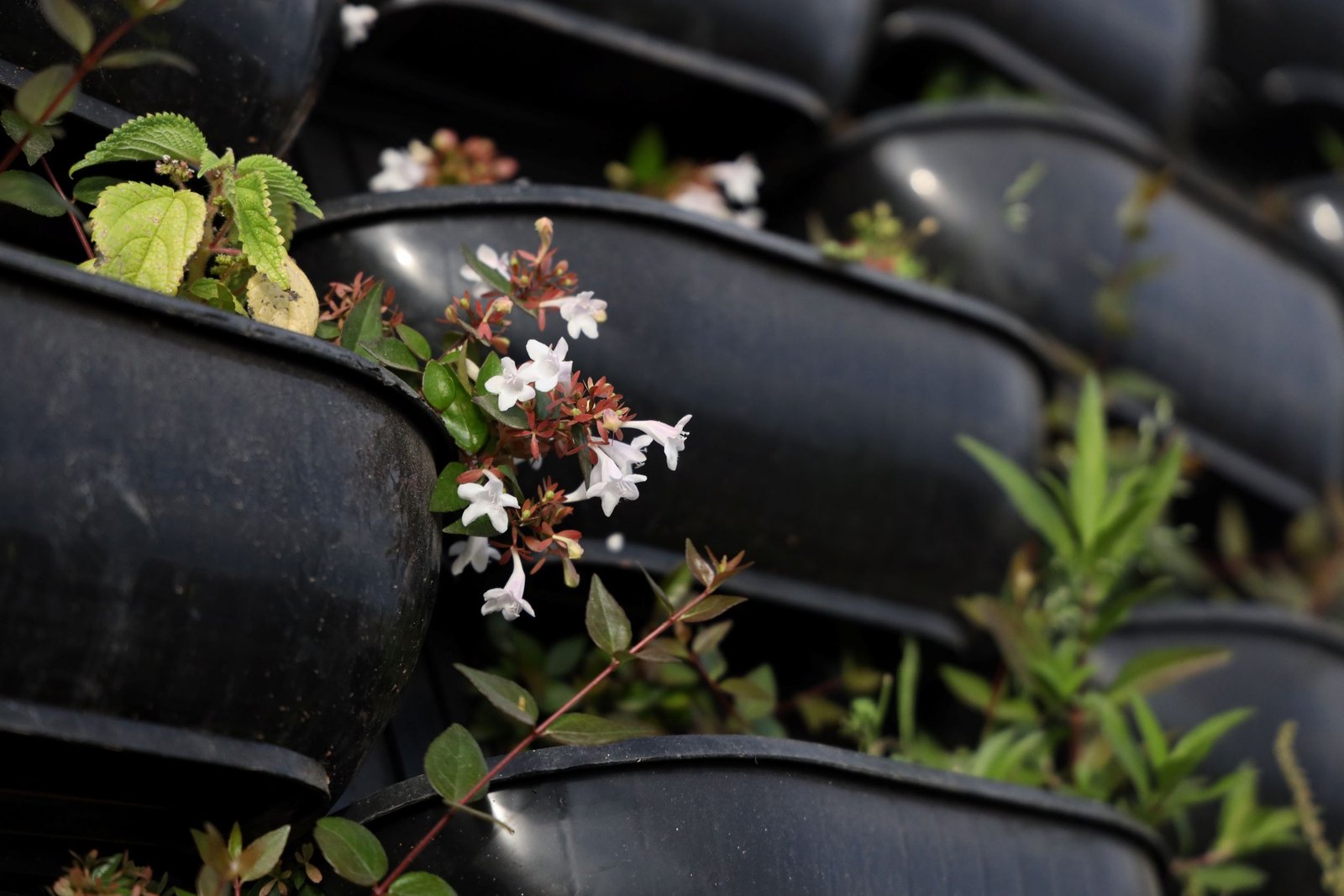
The planting design draws inspiration from Jerusalem’s layered character – its geology, architecture, and cultural stratification. Eighteen species of perennial plants were selected to form a dense, textured botanical composition that evolves over time. Approximately 200,000 plants were installed, creating a nuanced palette of foliage, flowering, color variation, and seasonal change.
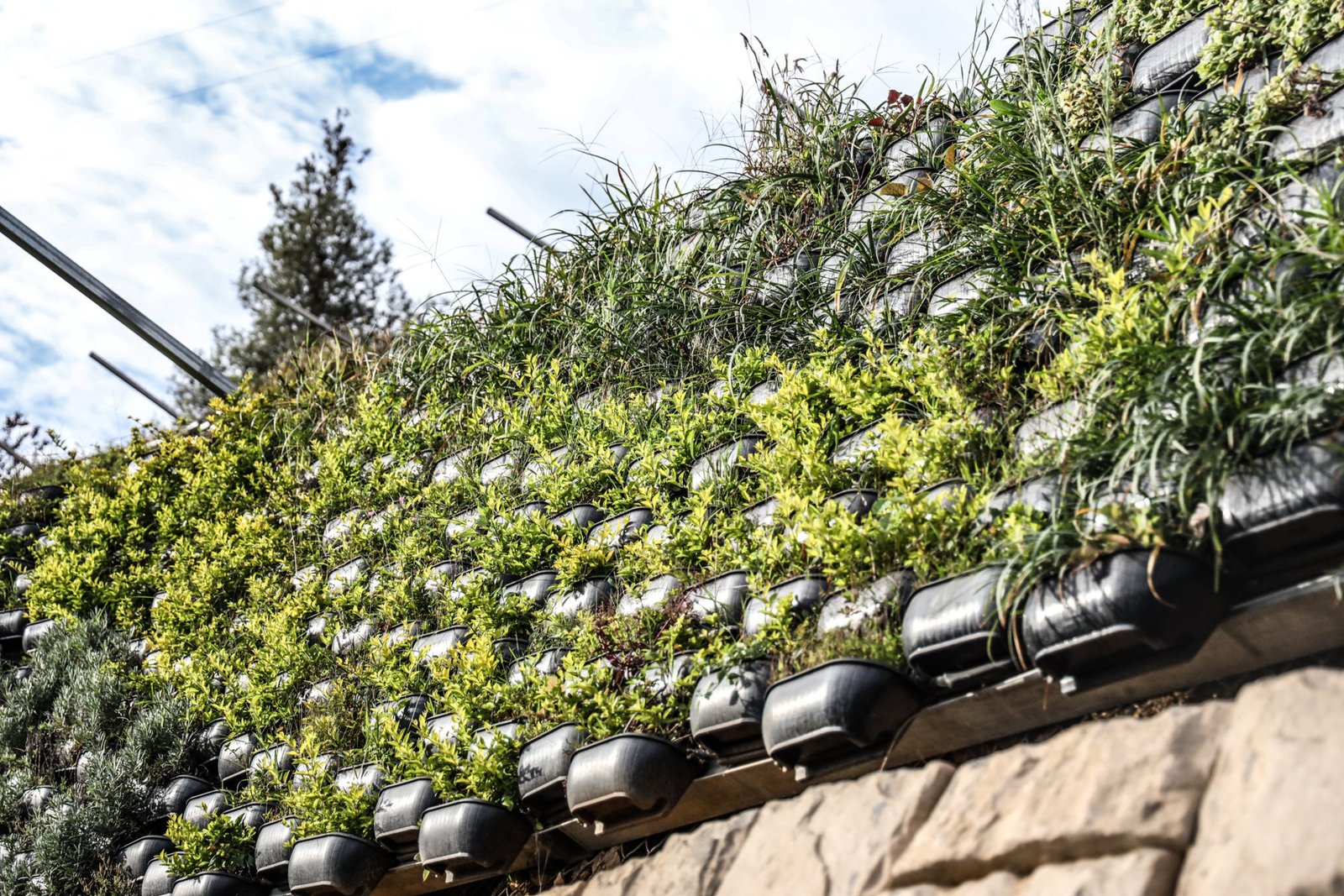
The species mix includes Mediterranean and climate-adapted plants such as lavender, rosemary, juniper, Chinese pepper, Duranta erecta, Pistacia lentiscus, geranium, Liriope, Viburnum tinus, and additional resilient perennials. Each species was chosen for its durability under vertical growing conditions, its response to sun and shade gradients, and its contribution to year-round visual richness.
landscape Architects” class=”wp-image-256239″>
Rather than a uniform green surface, the wall functions as a living mosaic – its appearance shifting with light, season, and viewing angle, encouraging repeated perception rather than a singular visual moment.
Precision through simplicity
Underlying the expressive planting is a highly efficient technological system. The vegetation is planted in a modular planter framework, where each plant is supplied by an individual drip emitter delivering precise irrigation. Excess water is collected and drained through a vertical system into a lower channel, ensuring controlled water use and long-term performance.
This low-tech, high-precision approach enables the use of robust perennial species while significantly reducing maintenance and water consumption – demonstrating how environmental responsibility can be embedded within large-scale urban infrastructure.
landscape Architects” class=”wp-image-256245″>
Ecological continuity and site rehabilitation
Beyond the wall itself, the project extends into the surrounding landscape through the rehabilitation of existing woodland areas. Native trees and Mediterranean vegetation were introduced to reinforce ecological continuity and visually anchor the vertical system within Jerusalem’s mountainous terrain.
The result is a dialogue between designed landscape and natural environment – between engineered infrastructure and ecological processes – positioning the project not as an isolated object, but as part of a broader environmental system.
landscape Architects” class=”wp-image-256243″>
A new urban threshold
More than a green façade, the Green Wall functions as a civic gesture. It reframes the entrance to Jerusalem as a space of transition – slowing the movement from highway to city, and offering a moment of visual relief, orientation, and identity.
landscape Architects” class=”wp-image-256242″>
Redefining the role of landscape architecture
The Green Wall demonstrates the capacity of landscape architecture to operate at an infrastructural scale, engaging with transportation systems, environmental performance, and urban experience simultaneously. It challenges conventional distinctions between engineering and landscape, proposing a model in which living systems become integral to the city’s physical framework.
For Izy Blank, as designers, the Green Wall represents a broader design ethos – one that understands landscape as a spatial language, an ecological system, and a cultural medium, capable of shaping not only how cities function, but how they are perceived and remembered.
landscape Architects” class=”wp-image-256241″>
www.landscapefirst.com