
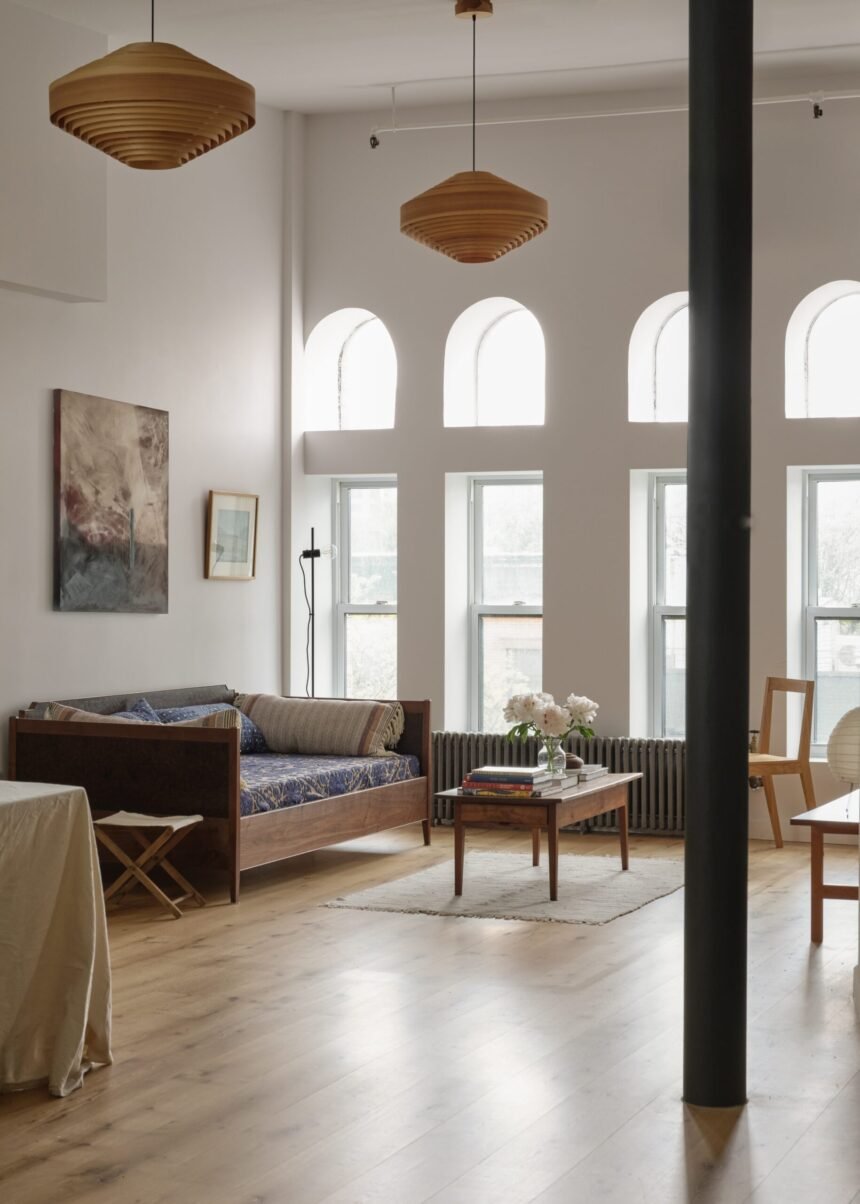

The home of the chocolate laxative, Ex-Lax, was formerly housed in a Romanesque revival–style factory on New York’s Atlantic Avenue. Some of the style remains today despite the building being converted to a co-op in the late 1970s. A new renovation by TBo, one of firms in The Architect’s Newspaper’s Twenty to Watch list, updates a loft to adapt to modern living while highlighting the building’s history.
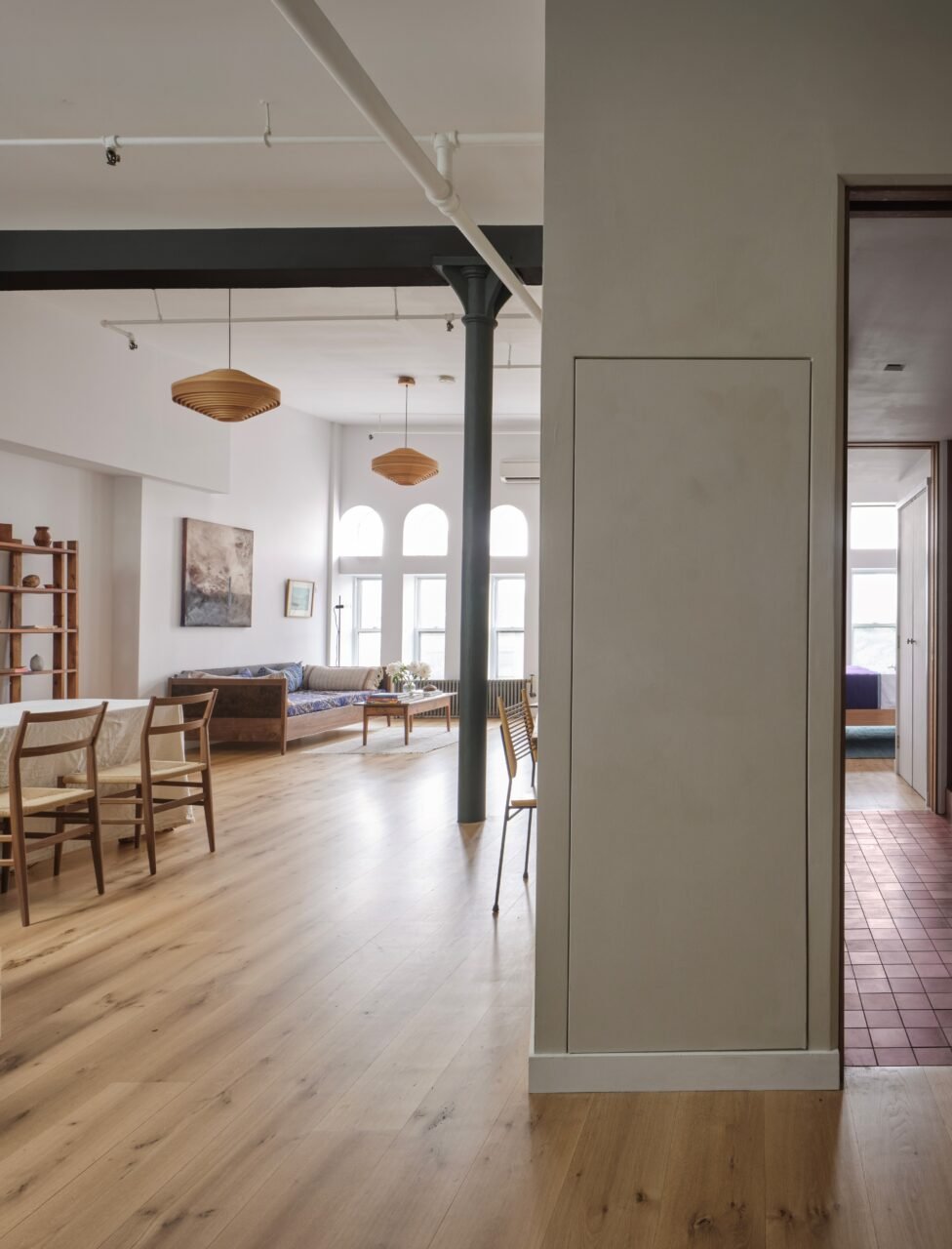
At 900 square feet, the one-bedroom apartment was previously fragmented into a series of rooms. TBo reconfigured the arrangement by removing non-structural partitions. The new, open layout allows daylight from the pre-existing arched windows to penetrate deeper into the space.
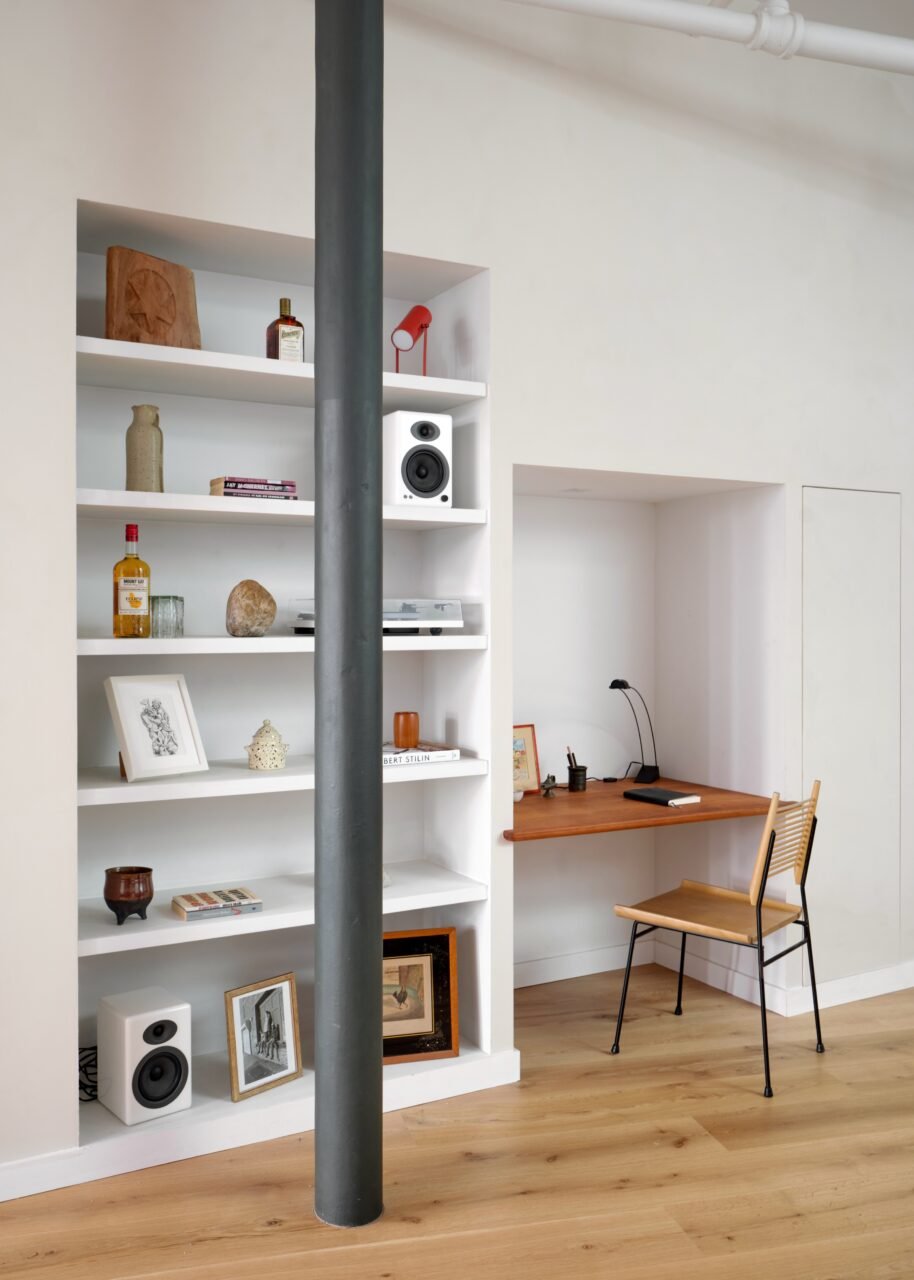
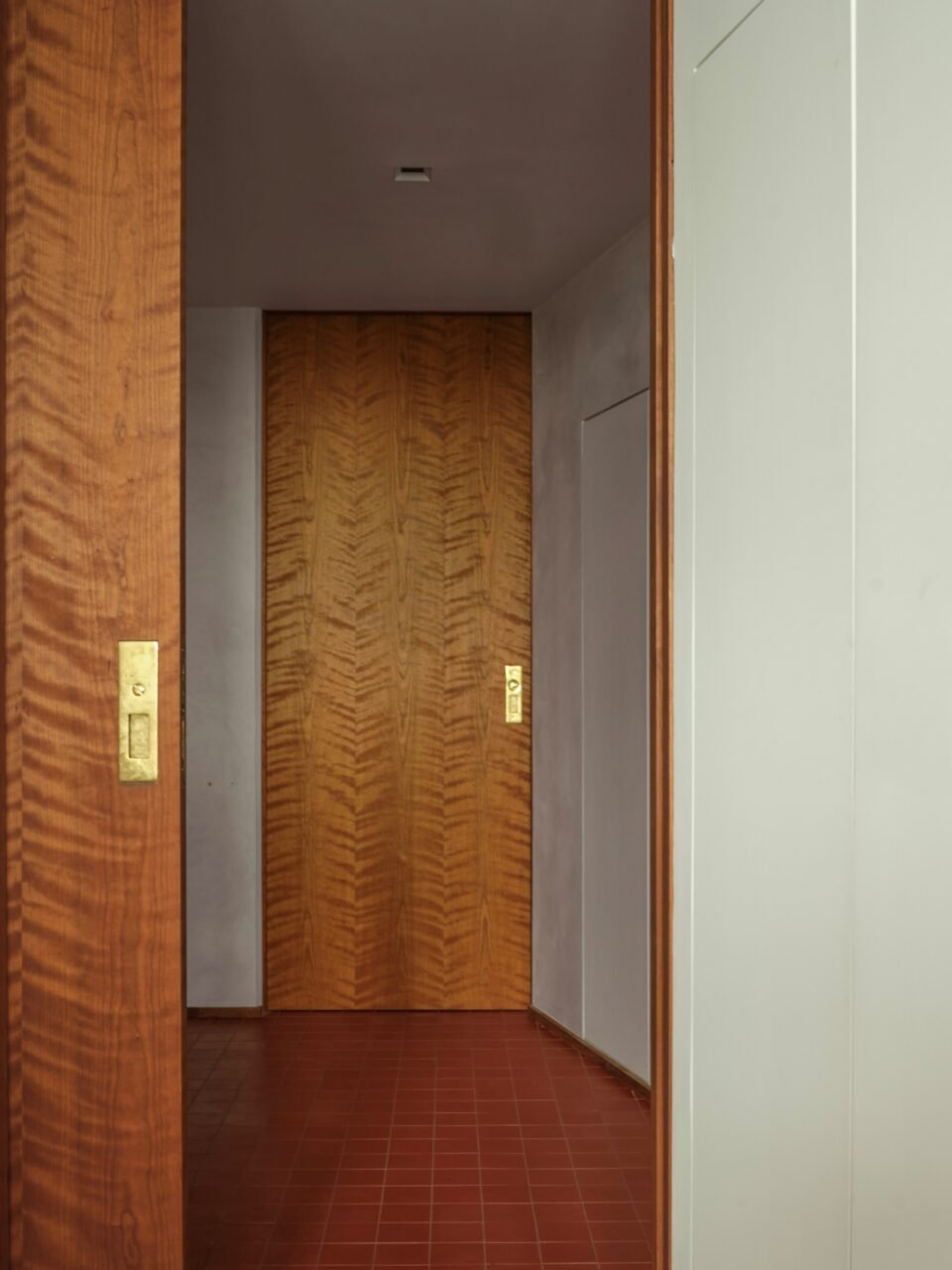
A new service core establishes circulation around the center of the loft, freeing up the perimeters. The core houses utilities and storage, integrating open shelving and a built-in desk. It’s constructed with cherry wood accents, used throughout the apartment to bring material richness and warmth to the industrial elements.
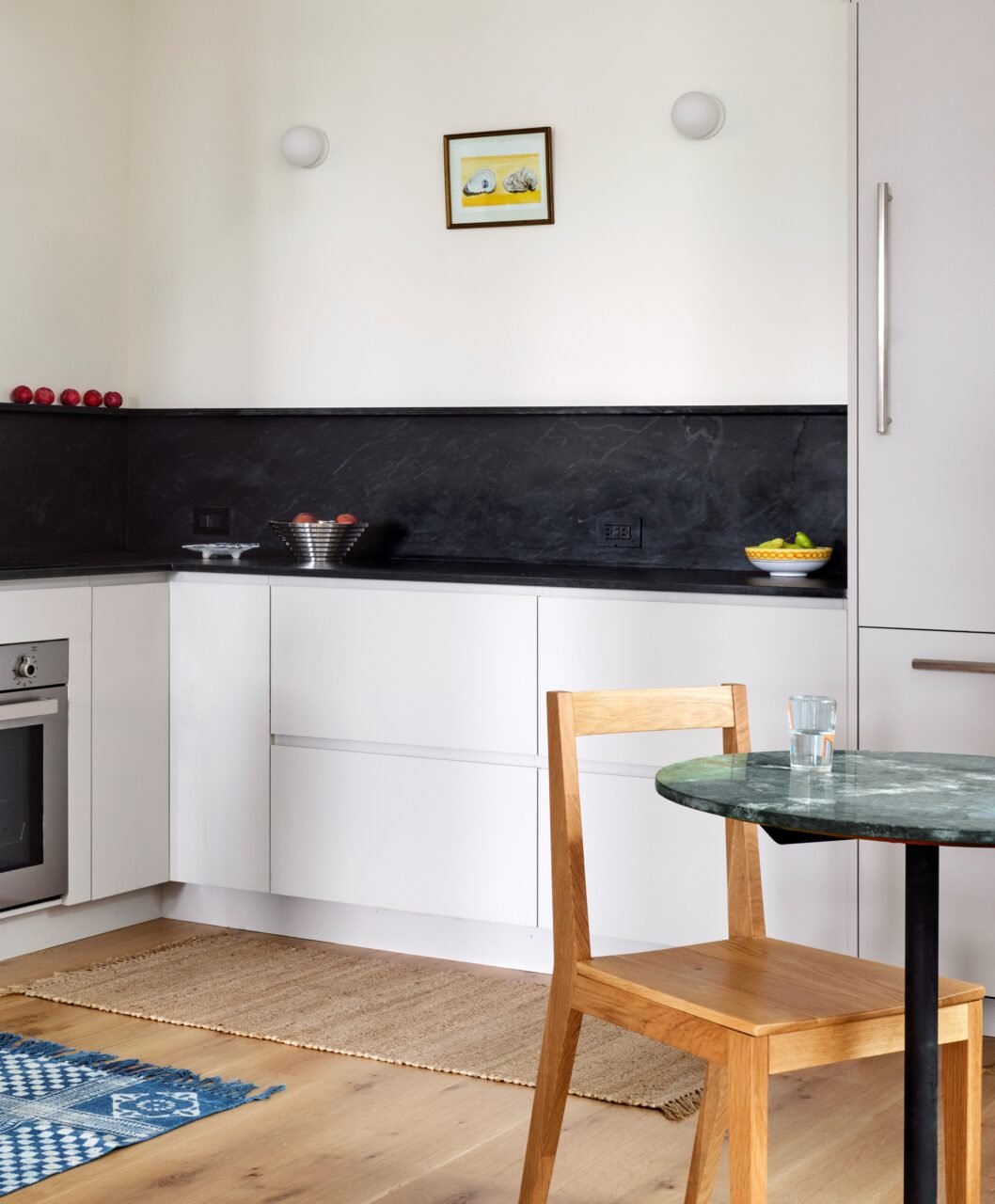
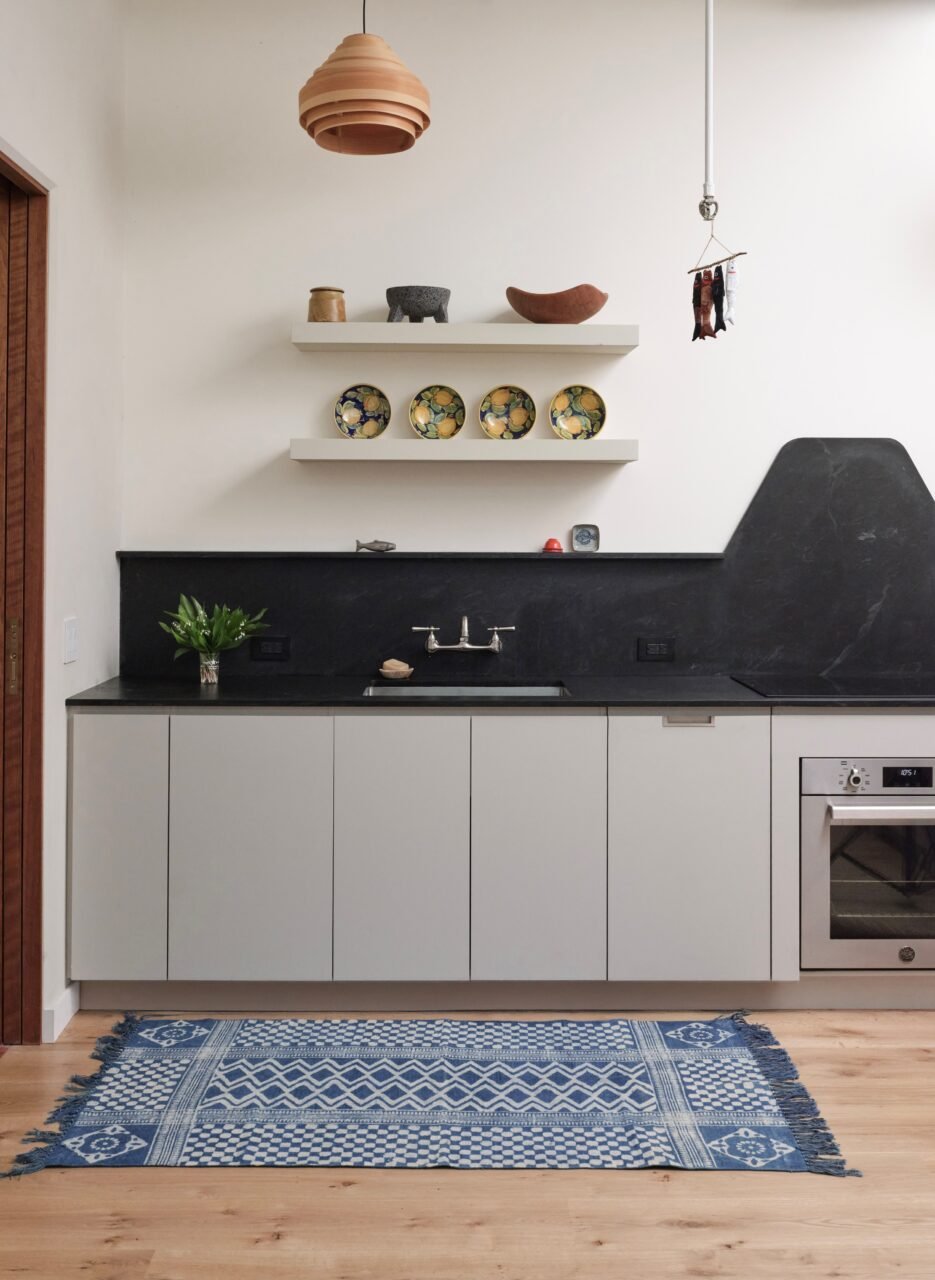
TBo exposes the original steel columns and beams, foregrounded against white walls and continuous white oak flooring. New materials spotlight or refer back to the pre-existing elements. In the kitchen, for instance, black Pietra Cardosa stone forms the countertops and backsplash, where it forms a sculptural peak over the stove. The dark accent against the neutral cabinetry matches the columns, as does the stainless steel fixtures.
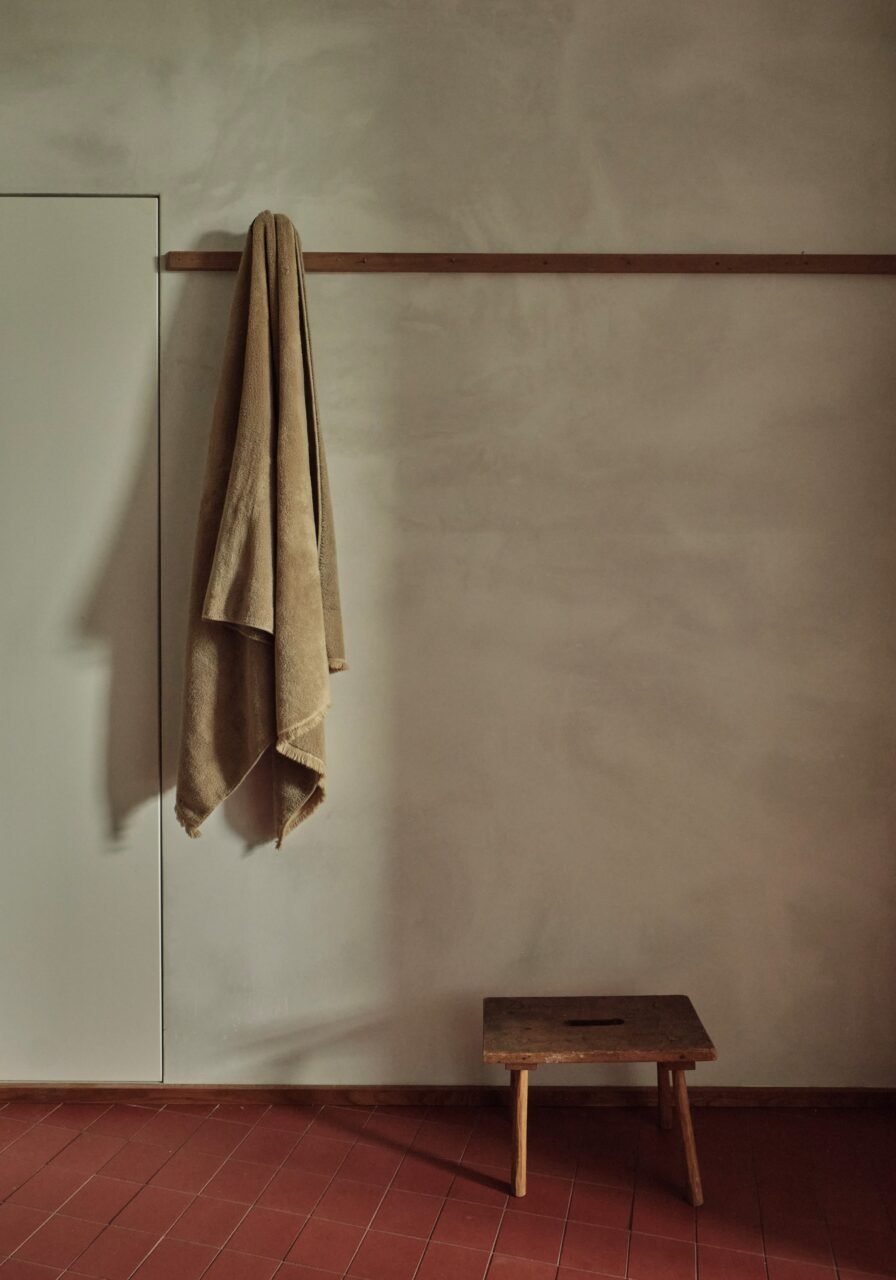
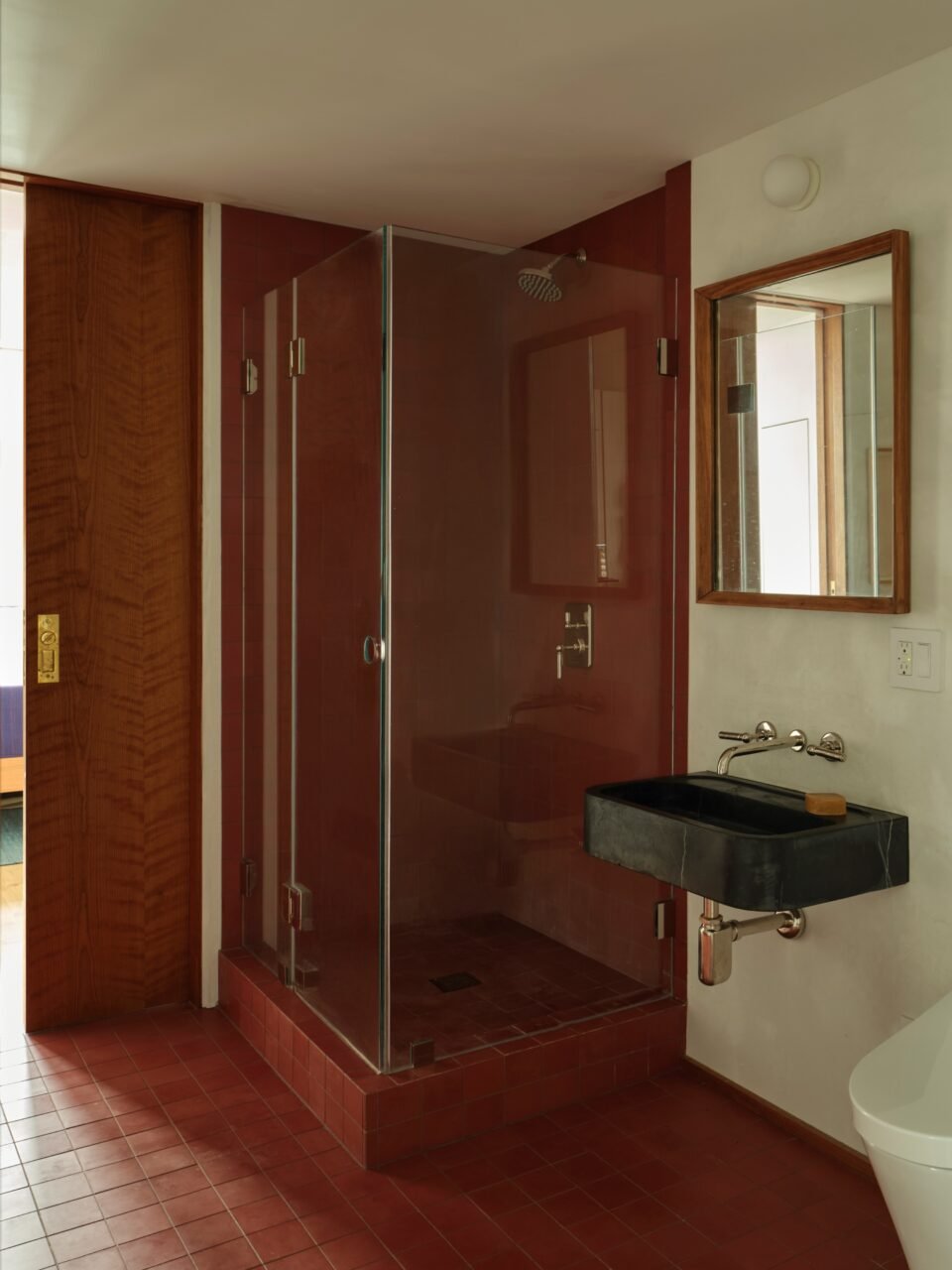
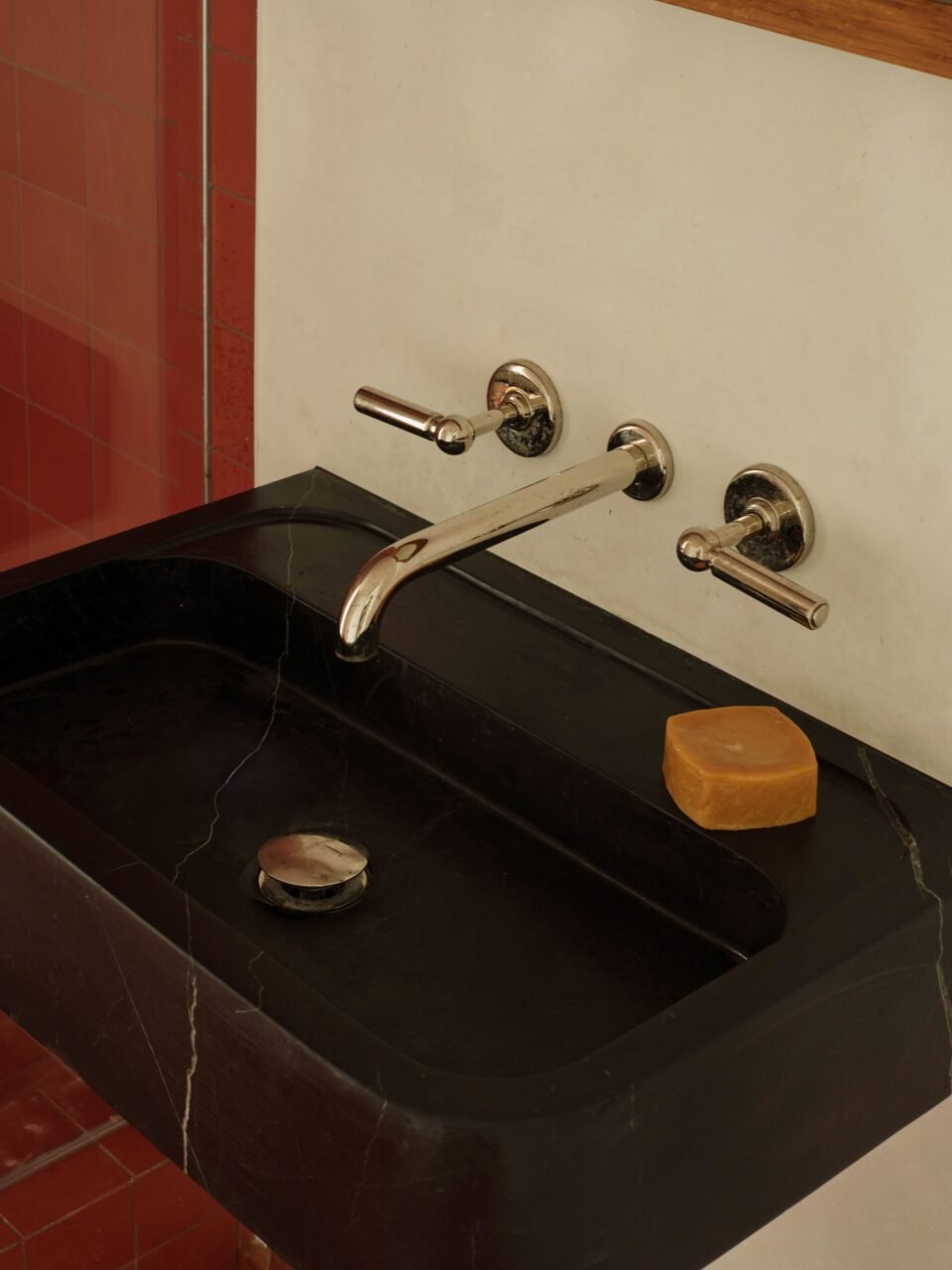
The bathroom acts as a tonal departure. Tiled in red cement, the bathroom offers an intimate, moody niche, finished with cherry accents and textured finishes. Black stone is used to construct the sink, a subtle nod to the kitchen and columns.
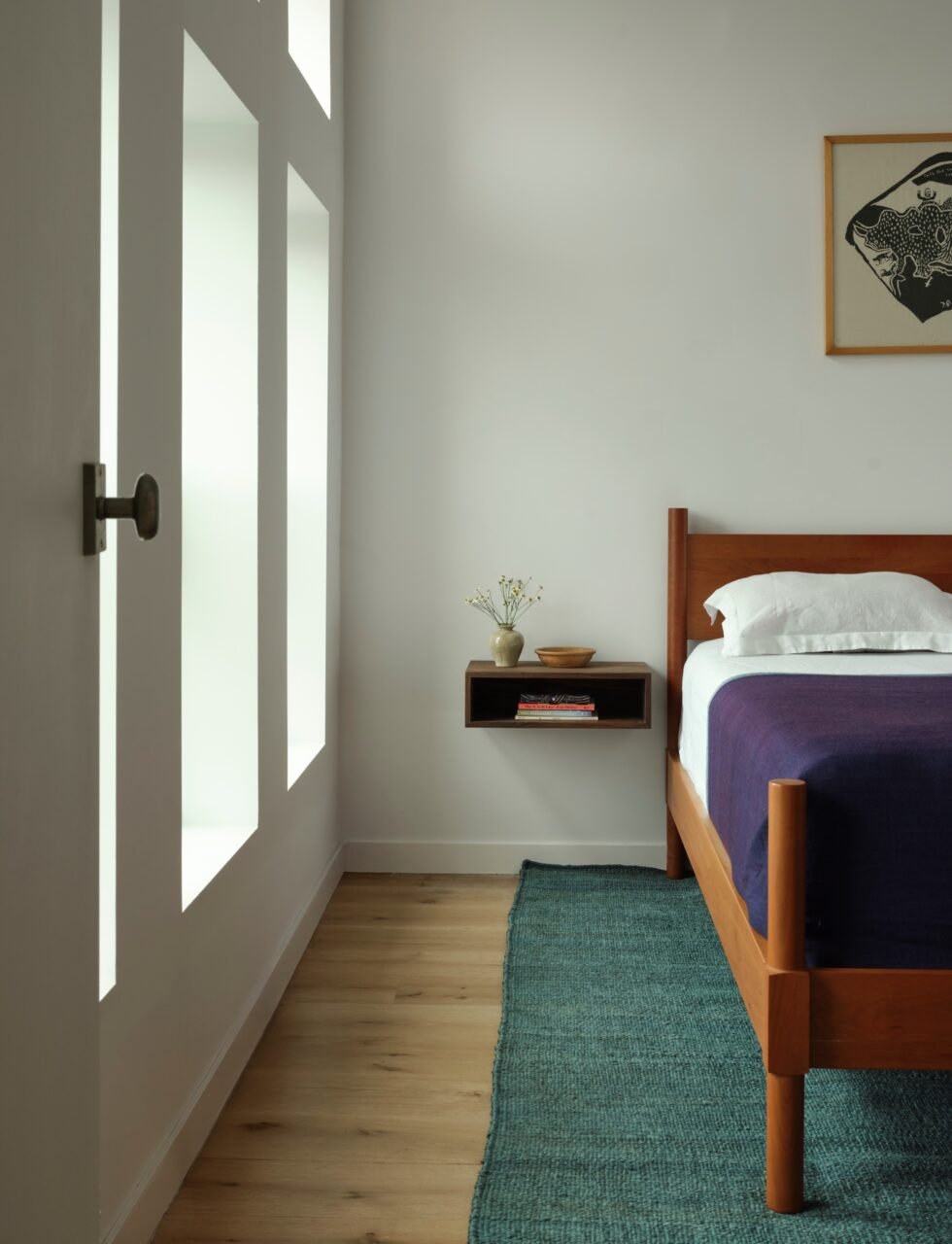
In the bedroom, a restrained hand lets the building’s generous windows define the space. A low-lying wooden bedframe and large paper lantern create a sense of calm. Dark teals and deep purple textiles weave in color without detracting from the serenity.
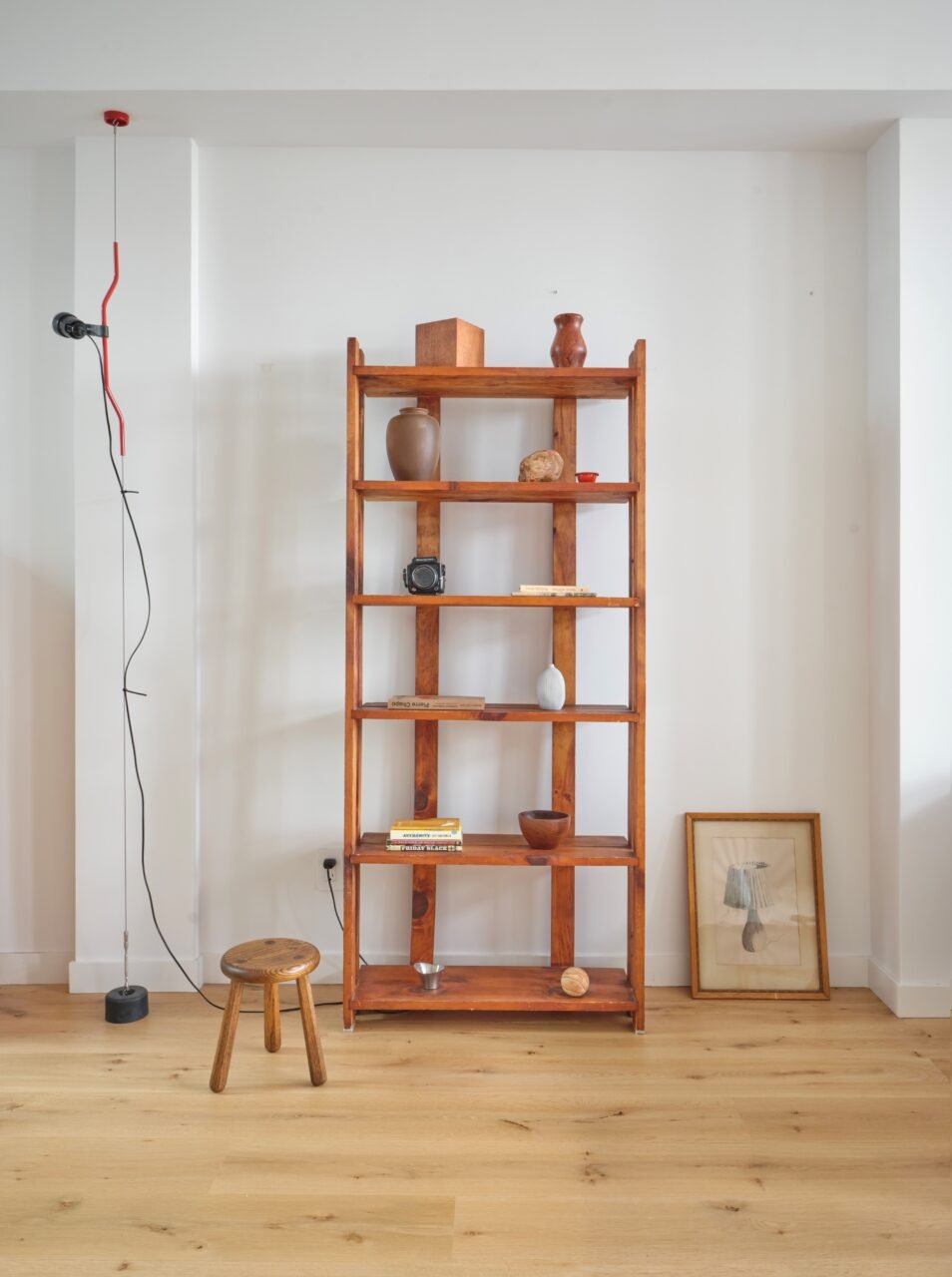
Furnished with vintage pieces and more natural materials, the Boerum Hill Loft balances openness with a sense of privacy. The interventions emphasize the building’s character while cohering it to a warm, modern interior.