

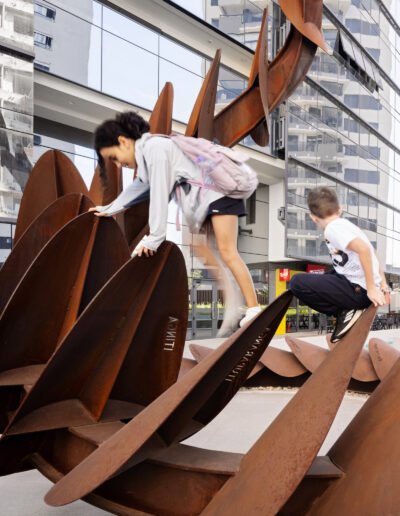
Sculpture Encounters
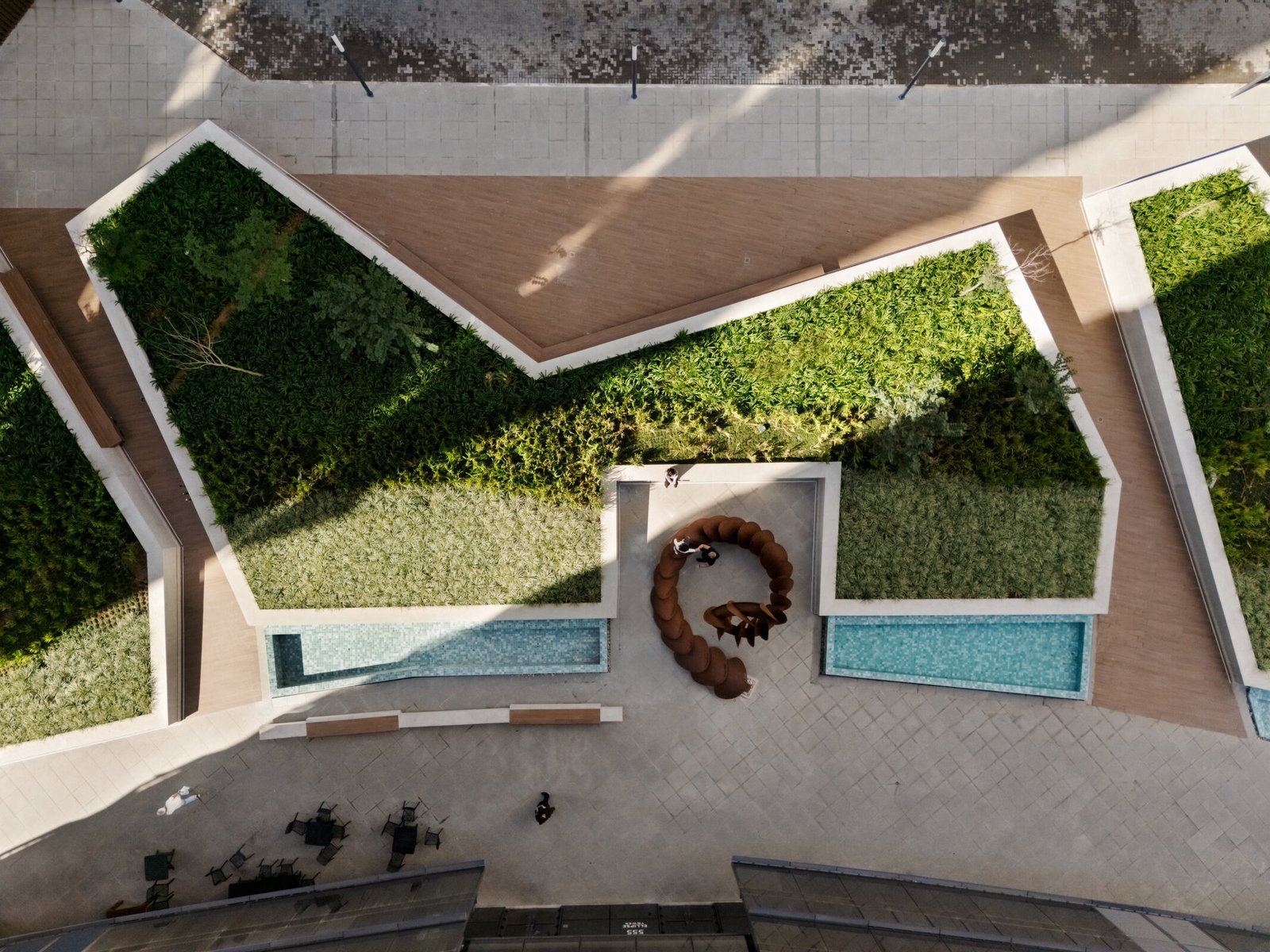
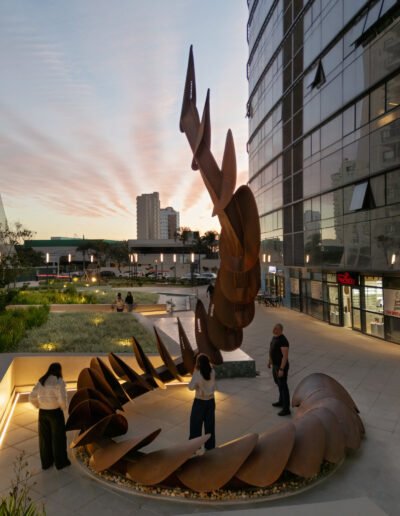
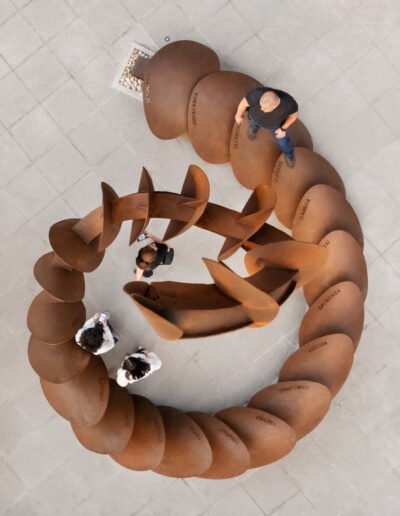
Sculpture Encounters is the new public artwork created by Estudio Guto Requena, a tribute to Guto’s hometown of Sorocaba (“torn land” in the native Tupi-Guarani language). Its spiraling circular form symbolizes the meeting, the exchange, and the crossroads of the peoples who passed through that region. Sorocaba is Indigenous land: it was traveled by the Tupi of the Tietê, the Tupiniquim and Guaianá of Piratininga, the Carijó of the Curitiba plains, and the Guarani of the Paranapanema.
The work is an invitation to remember how important it is to break away from a Eurocentric narrative, the one that confines the history of Indigenous peoples to the period before the arrival of the colonizer. Understanding this presence is essential to grasp how the colonization of Sorocaba, and of Brazil, was profoundly shaped by Indigenous culture, which continues to influence Brazilian culture to this day.
It is no coincidence that the Sorocaba region was part of the Peabiru Path, a network of pre-Columbian Indigenous trails that crossed South America, linking the Atlantic coast to the Andean world. Stretching some three thousand kilometers across the territories of present-day Peru, Bolivia, Paraguay, and Brazil, the path enabled communication, trade, and the exchange of knowledge among Indigenous peoples long before the arrival of Europeans. Its very name holds this memory: in Tupi, “pe” means path and “abiru,” trodden grass, the mark of the feet that, over generations, wove this land of encounters.
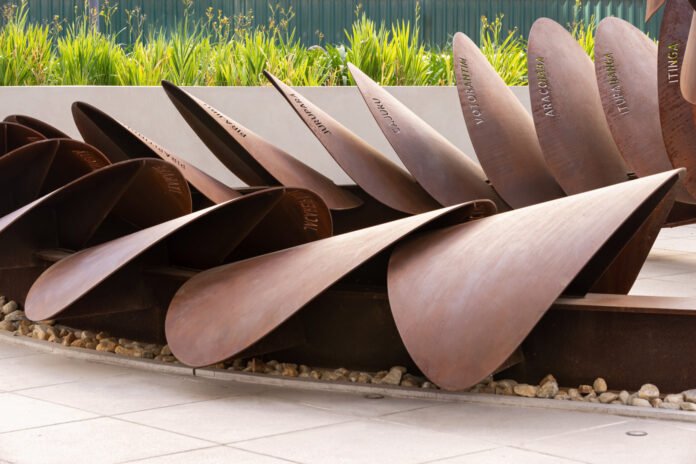
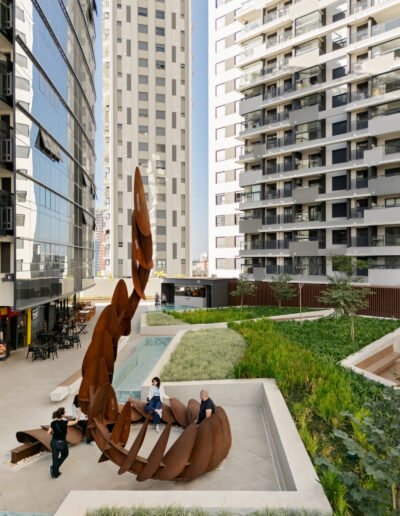
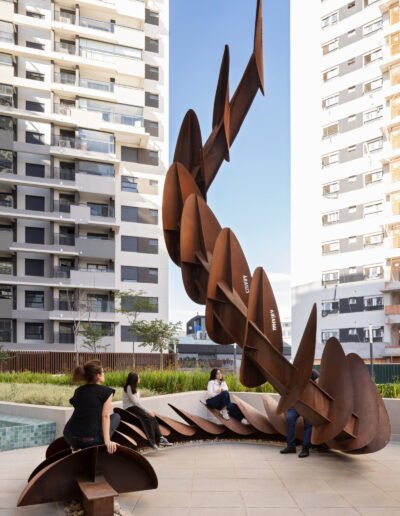
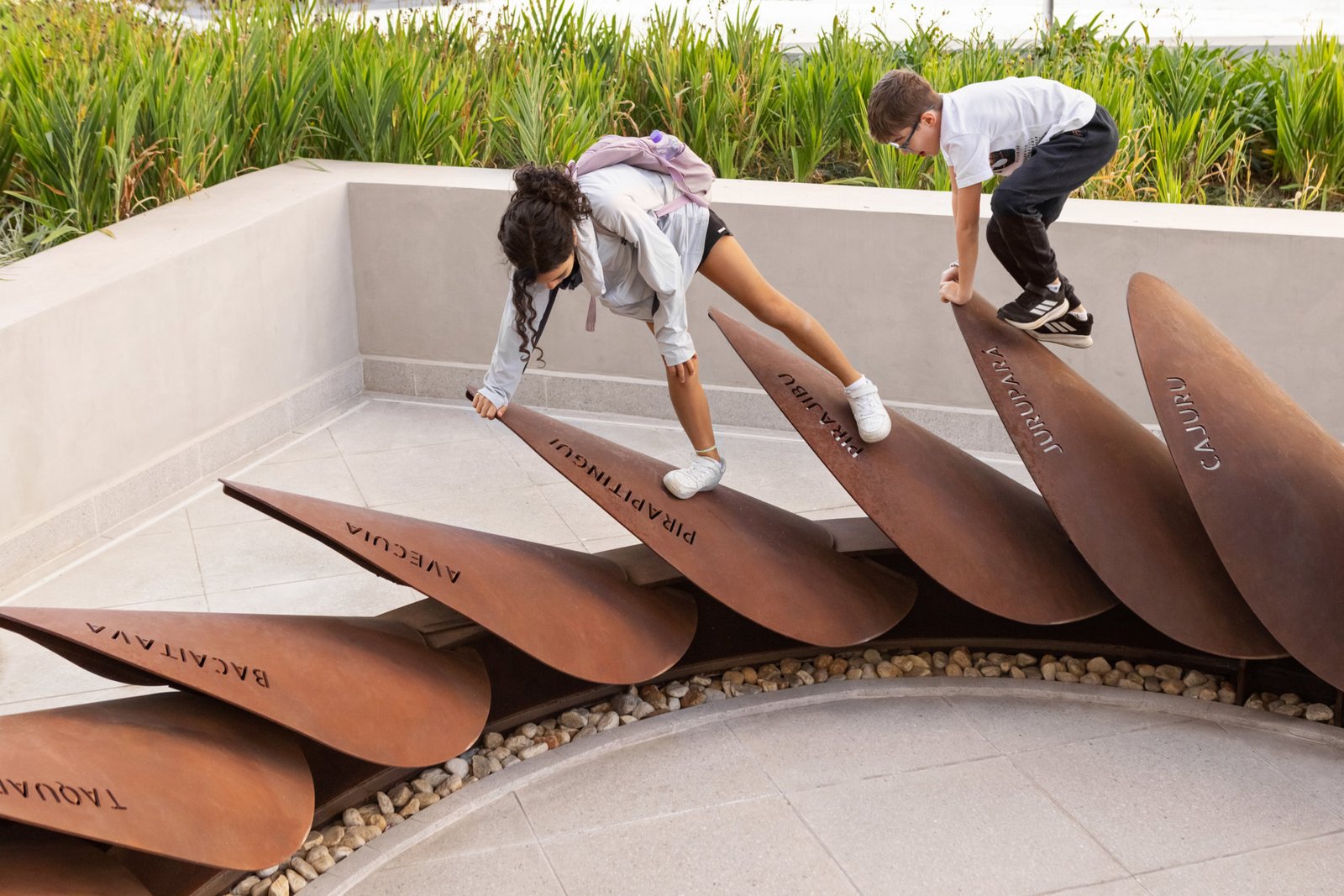
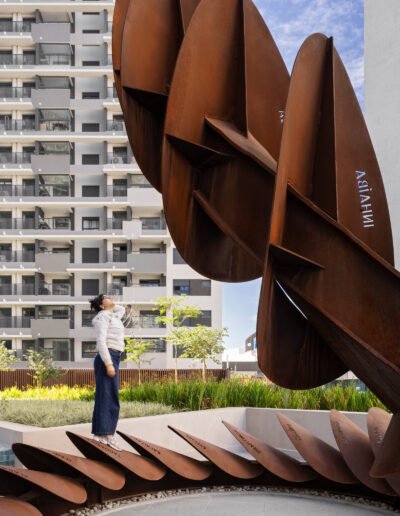
Made of corten steel, each petal of the sculpture bears a laser-cut word, revealing names of places in the region that originate in Indigenous languages, such as Boituva, Tietê, Cuiabá, and Itararé. This “ciranda” of words, a circle dance, helps foster an affective bond between local residents and the installation. A visual and symbolic landmark, the work is contemplative yet also functional: a hybrid between urban furniture and artwork.
Sculpture Encounters is an outgrowth of nearly twenty years of research by Estudio Guto Requena and its profound interest in creating opportunities for affection within collective spaces. It joins a series of other urban installations created by the studio and is a fundamental part of Guto’s current doctoral research at the University of Lisbon, where he investigates the potential of fostering urban empathy through design and new technologies.
www.landscapefirst.com