






Resurrection
From demise to rebirth
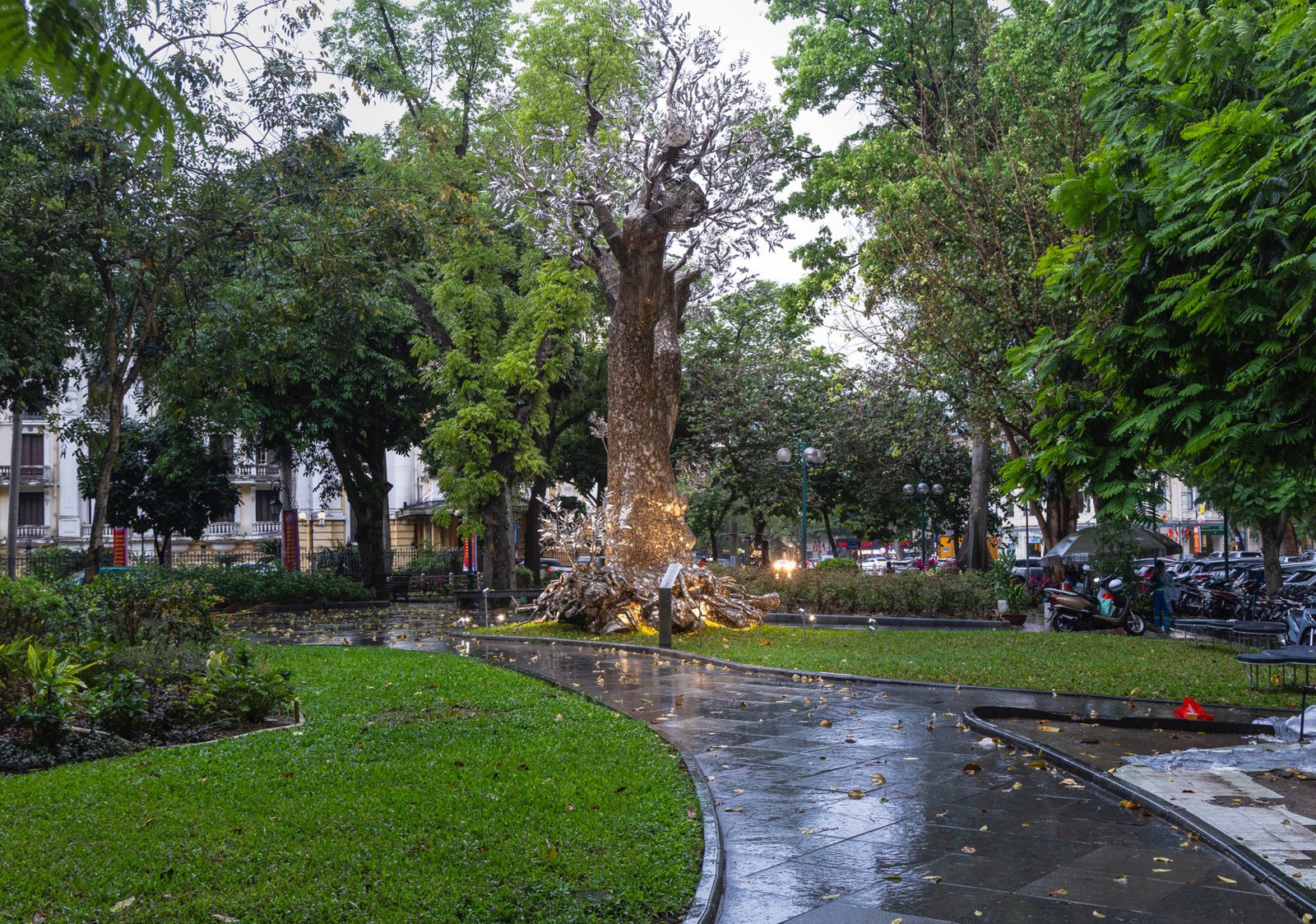
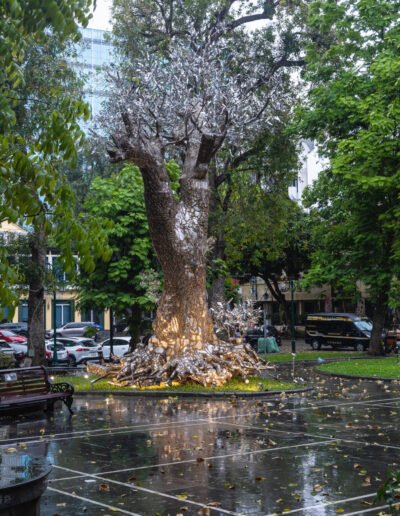
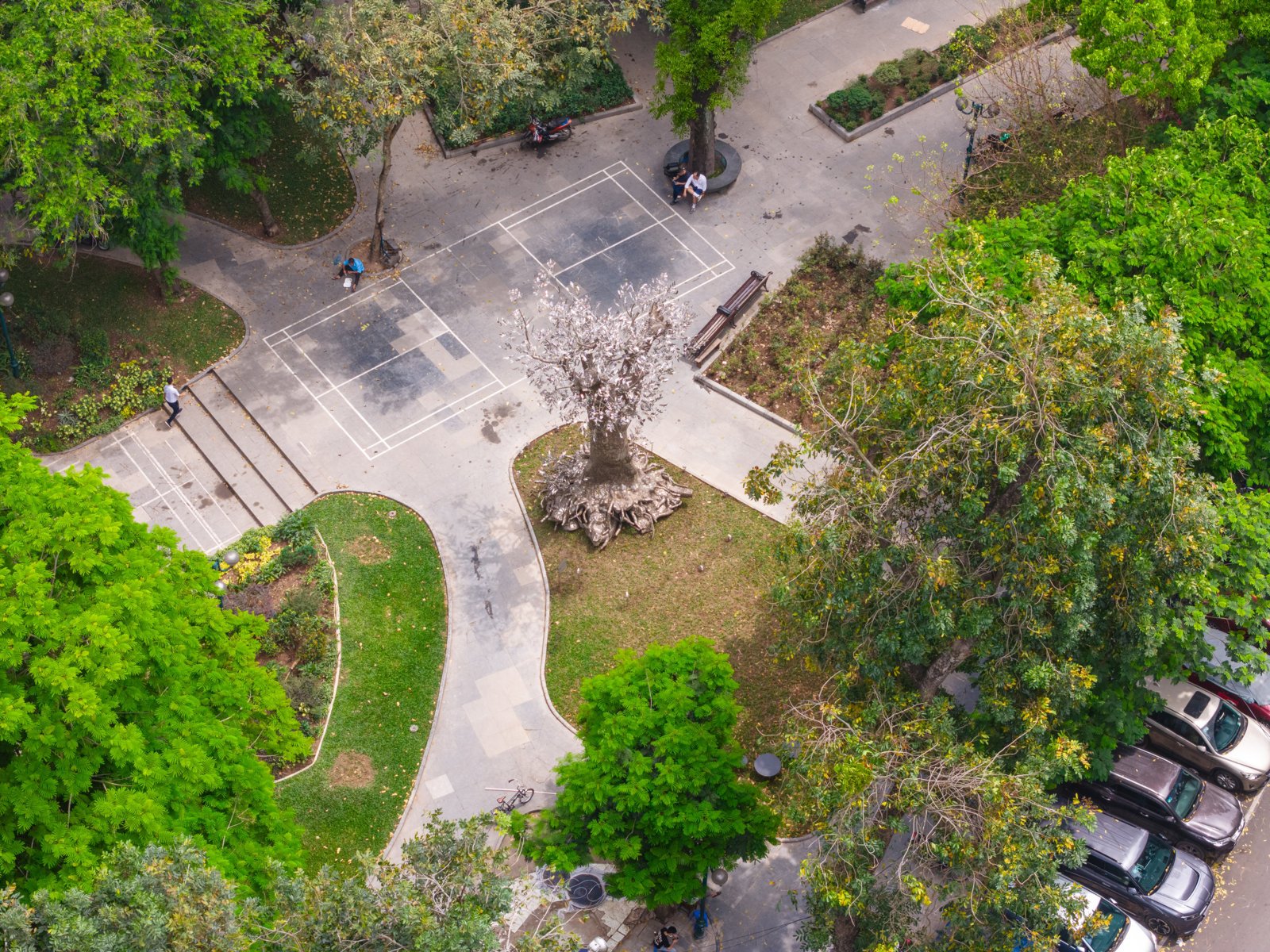
Typhoon Yagi hit Hanoi on September 7, 2024, knocking down and breaking more than 25,000 trees in the inner-city area. Among them was a 70-year-old nacre tree (Khaya senegalensis), standing 20 m tall, located in Cổ Tân square, Hoàn Kiếm district. This nacre tree belongs to a group of trees brought from Africa to Vietnam by the French during the colonial period, within the framework of a pilot project to renovate the urban landscape (this process began at the end of the 19th century). Realizing that the presence of this type of tree holds a certain historical significance to the development of the capital urban landscape, artist Tia-Thủy Nguyễn transformed the life of the fallen tree – giving it a new ability, a new shape, a new existence. In her eyes, the tree no longer living does not mean that its life cycle has ended, the energy in it is not lost, nor can its life end.
Both a frame and a shape
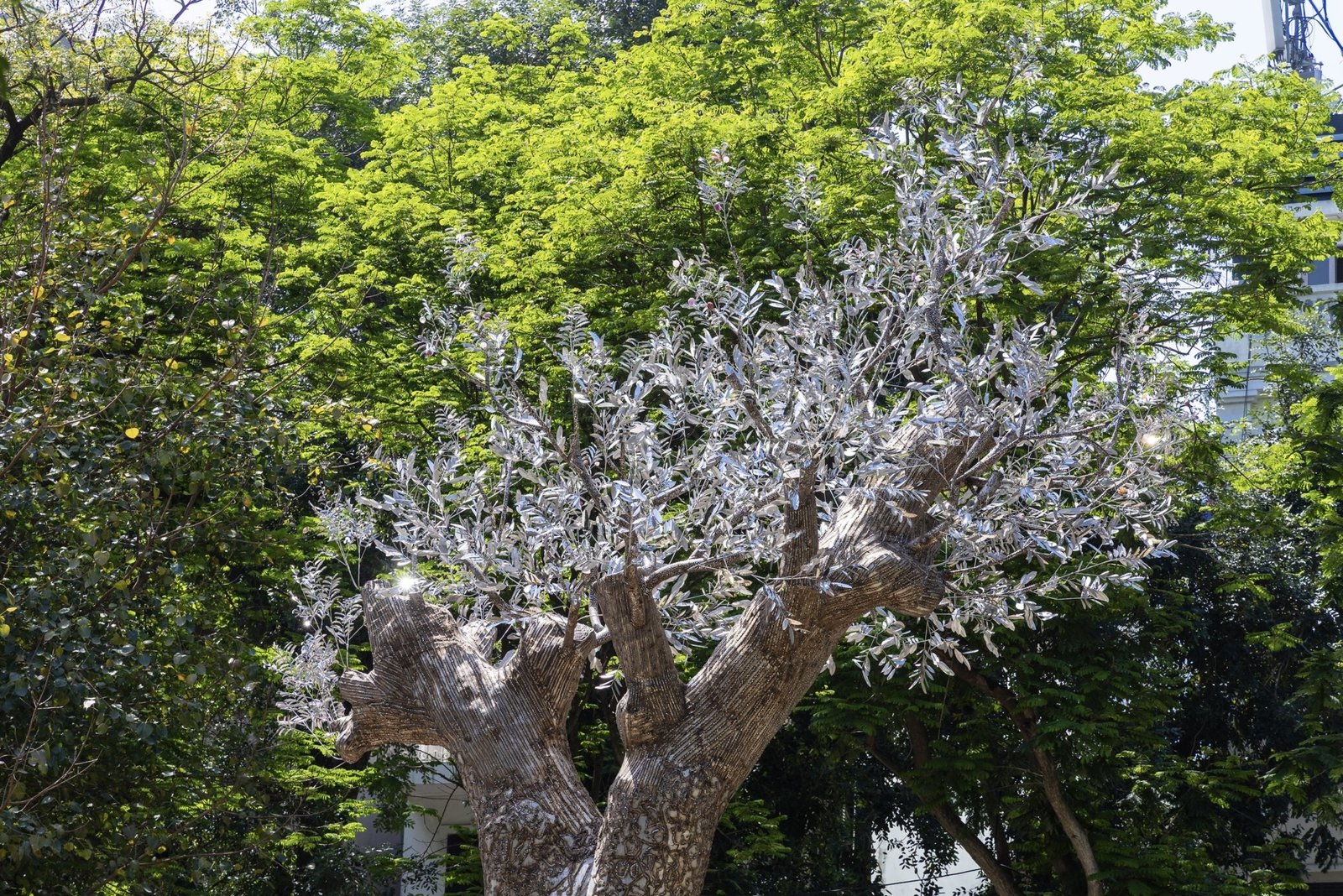
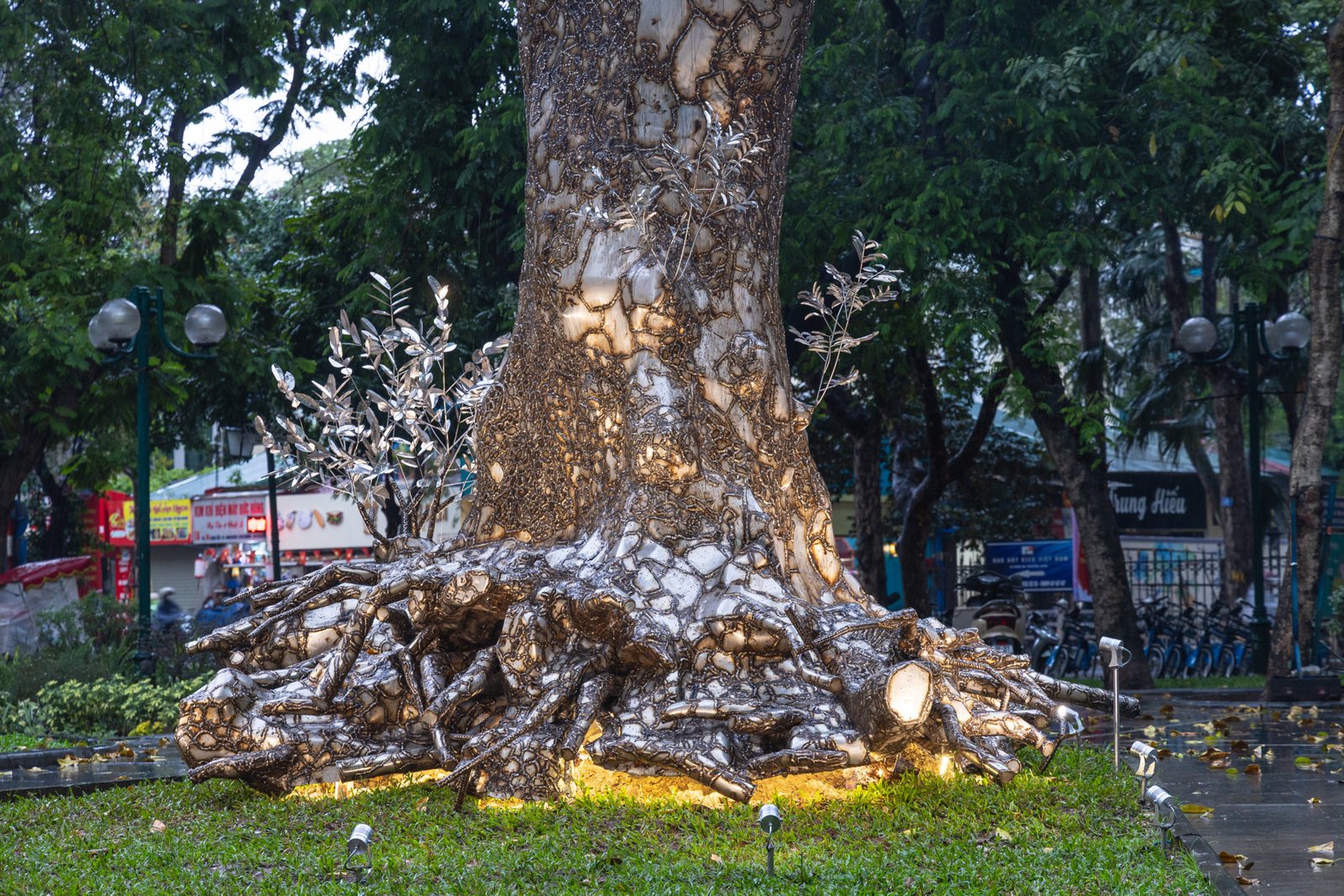
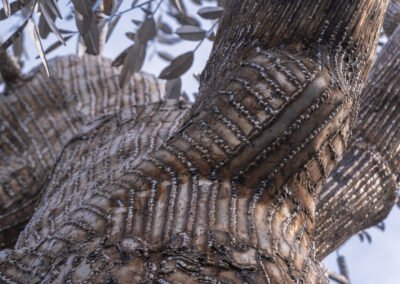
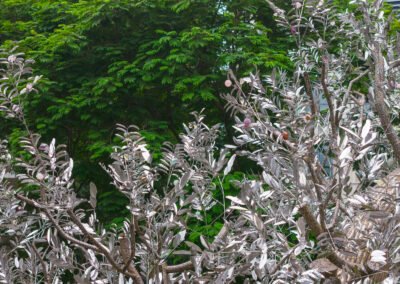
Tia-Thủy Nguyễn created her work based on the shape of the tree itself, mounting multiple steel sheets atop its “flesh” to create a second skin. After lots of research and experience from the process of creating her previous work, Flower of Life (2023), Tia and her colleagues have perfected the technique as well as the aesthetics to create the work Resurrection. Spanning more than 6,000 hours, the work was a meticulous and arduous journey. First, 5 mm thick stainless-steel plates were hand-hammered, following the natural curve of the tree trunk; then they have been mounted firmly, forming a variation of smooth surface and rough knots resembling the bark. Once completed, these plates have become an iridescent shell that reflects when light shines on it. This outer metal layer turns into the frame of the work while becoming the core of its new life.
The branches are shaped to simulate the natural curves and lush foliage like real tree branches. Thousands of shimmering steel “leaves” and colorful quartz “flowers” shine in the sunlight. The entire process took more than 6,000 hours, using more than six tons of metal. With meticulous calculations, Tia-Thủy Nguyễn and her collaborators demonstrate their efforts to erase the desolation of death. She hopes to “capture” the different phenomena that occur around the work, linking destruction and reconstruction, disintegration and harmony, death and rebirth.
Light – the playful partner
Resurrection, after being dressed in a new outfit, it is rearranged at the same place where it once lived a green life. The tree still stands, but it does not just silently cast its shadow but becomes more alive, responding to each drop of sunlight touching its newly dressed body. The life and energy of Resurrection lie not only in itself, but also in its contact with the surrounding world. Light, in an unintentional moment, is “trapped” in Tia-Thủy Nguyễn’s game – each steel leaf, each quartz flower reflects and sparks every time a ray of sunlight falls on it. The game is like a continuous loop, day after day, but the viewer can never see two completely identical scenes. With her mischievousness and ingenious creativity, Tia-Thủy Nguyễn has created a performance of nature. And this “show” will never end, because it is powered by the cyclical energy of the universe.
Tia-Thủy Nguyễn has harmonized the grandeur and freedom of a large-scale installation with the individuality of each viewing experience of the audience. The work becomes a connecting thread, not only between the audience and the natural light, but also between them and each memory present within. A timely ray of sunlight will make the heart of the artwork light up. A stream of memories sent to the tree will also be responded to by the tree. The energy of that tree does not disappear, just like its life does not end, the energy of the universe and Mother Nature transform it into a work of art.
The uniqueness of the work is not in its overwhelming size but in the details that create vitality for the object. Resurrectio evokes curiosity about the form and origin of a work of art, while also suggesting different approaches to the same installation. With Resurrection the dead tree is the beginning of a new chapter, a form of relief from the burden of existence and perhaps most importantly, the revelation of beauty in the midst of the storm.
www.landscapefirst.com