
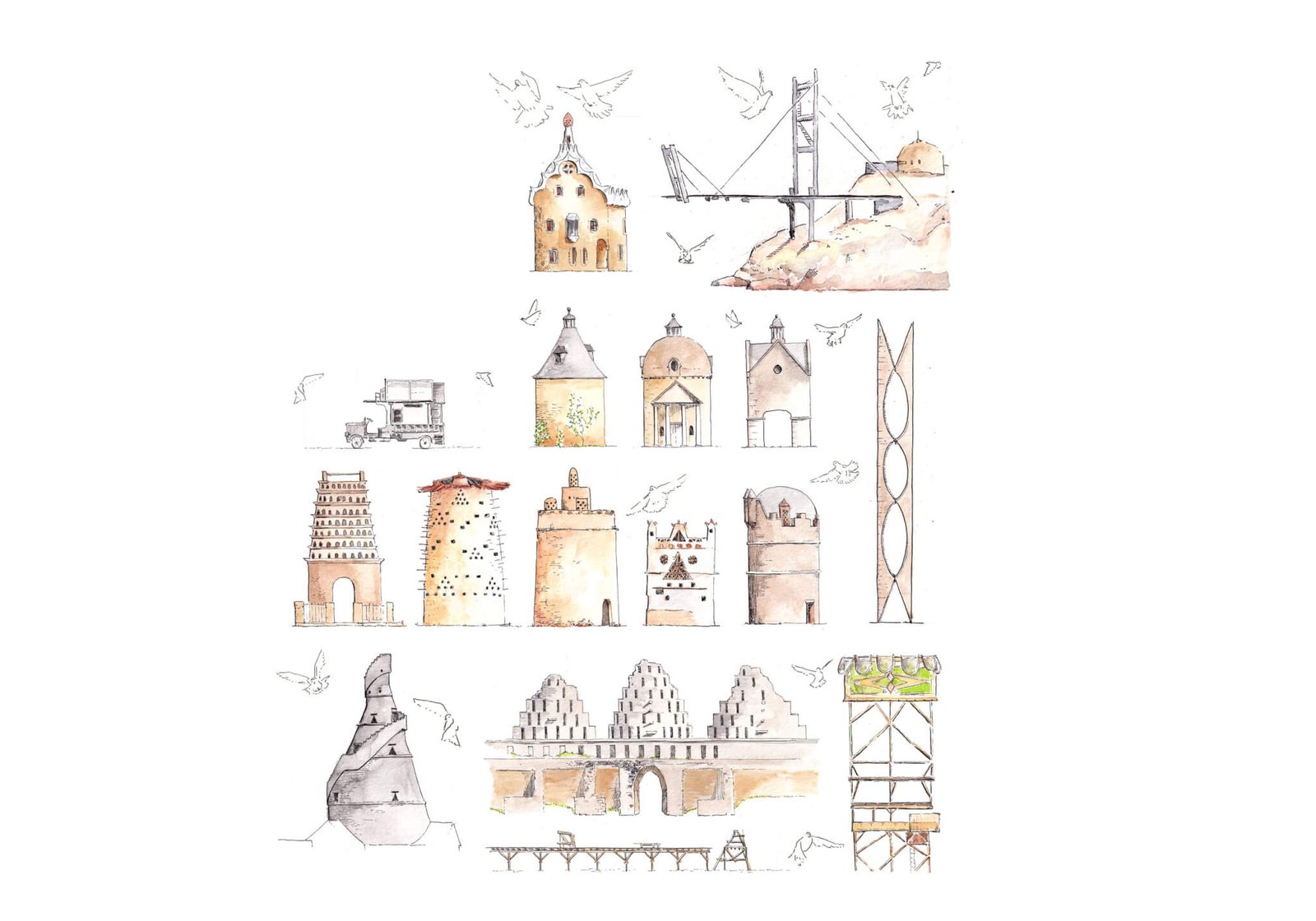

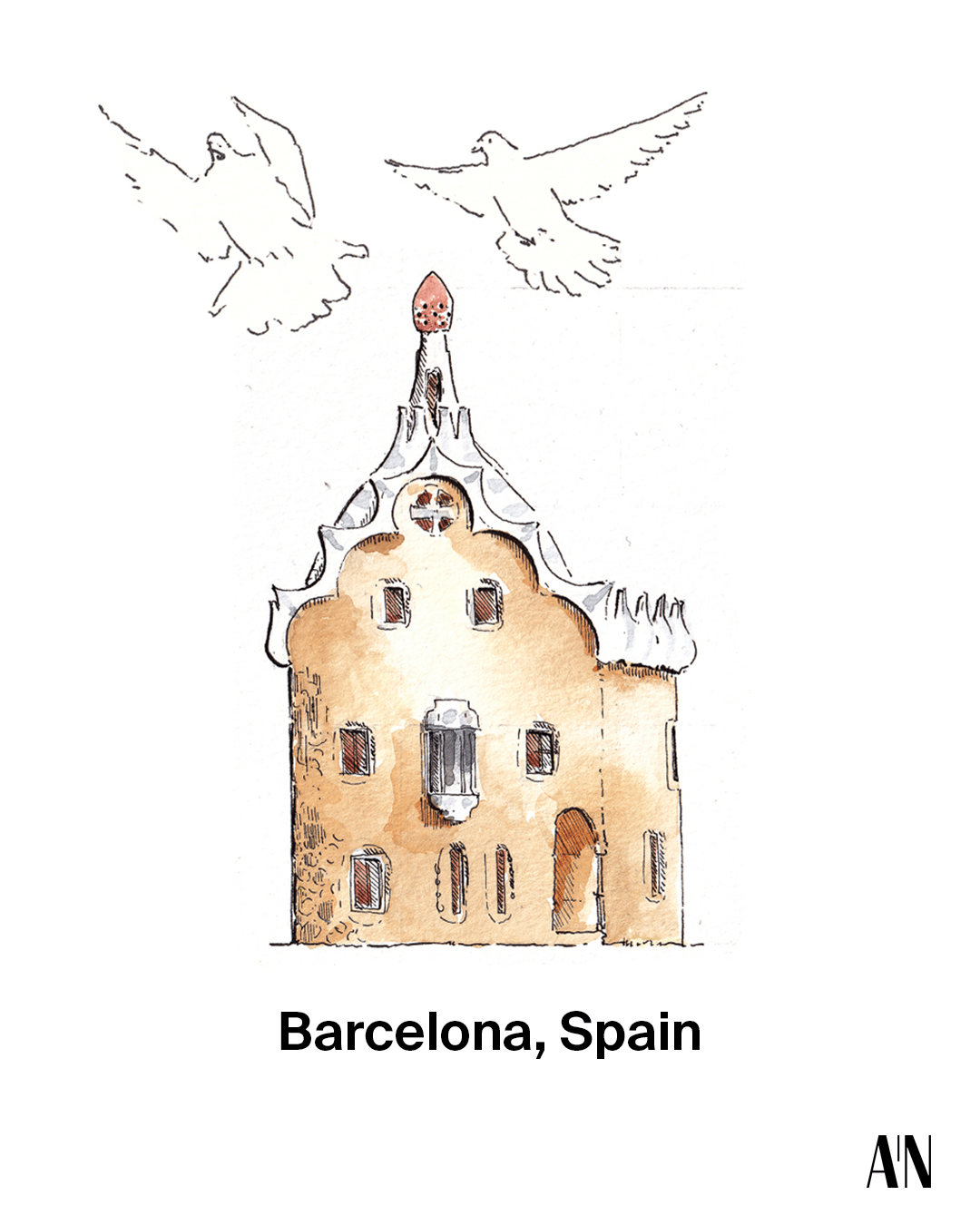
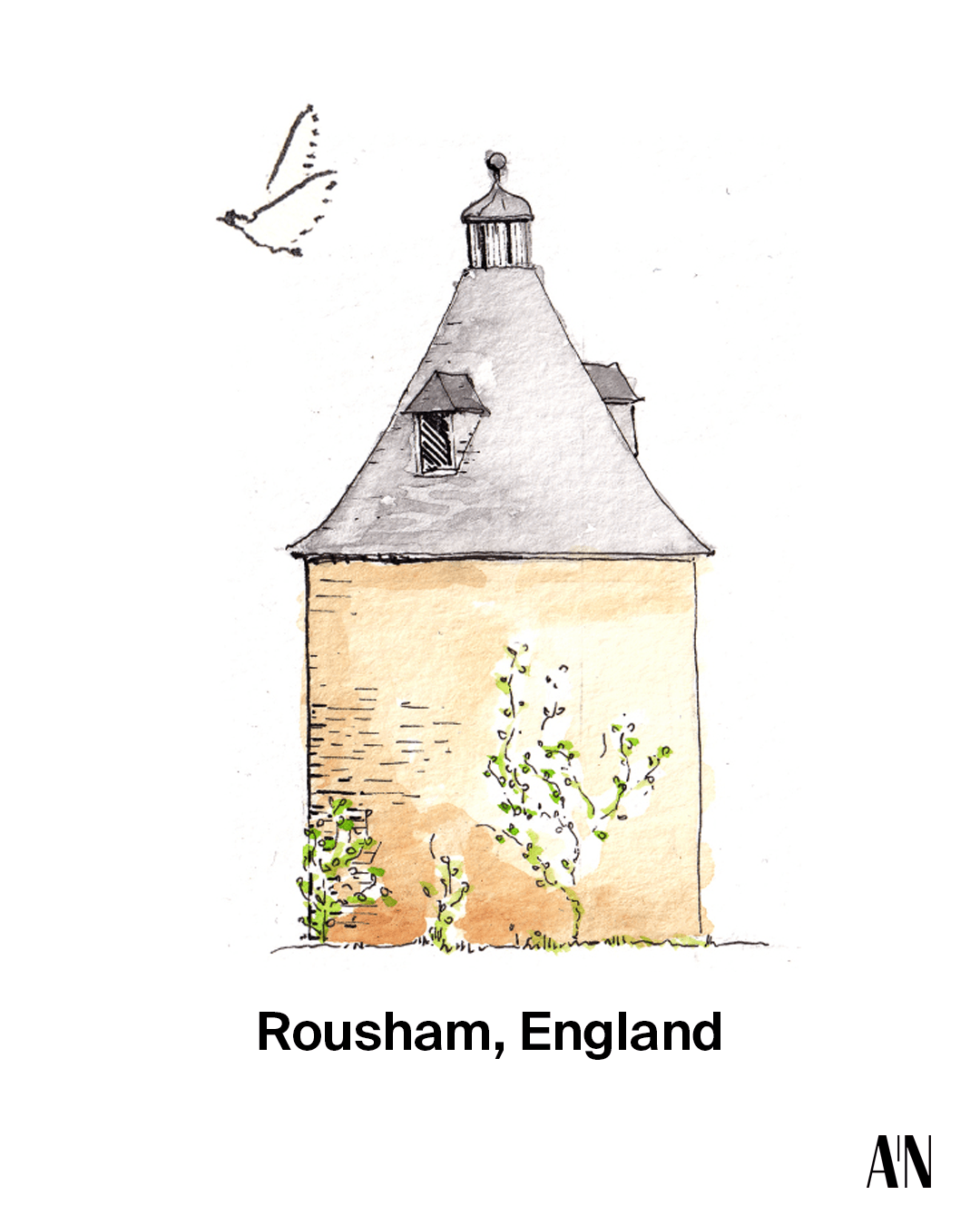
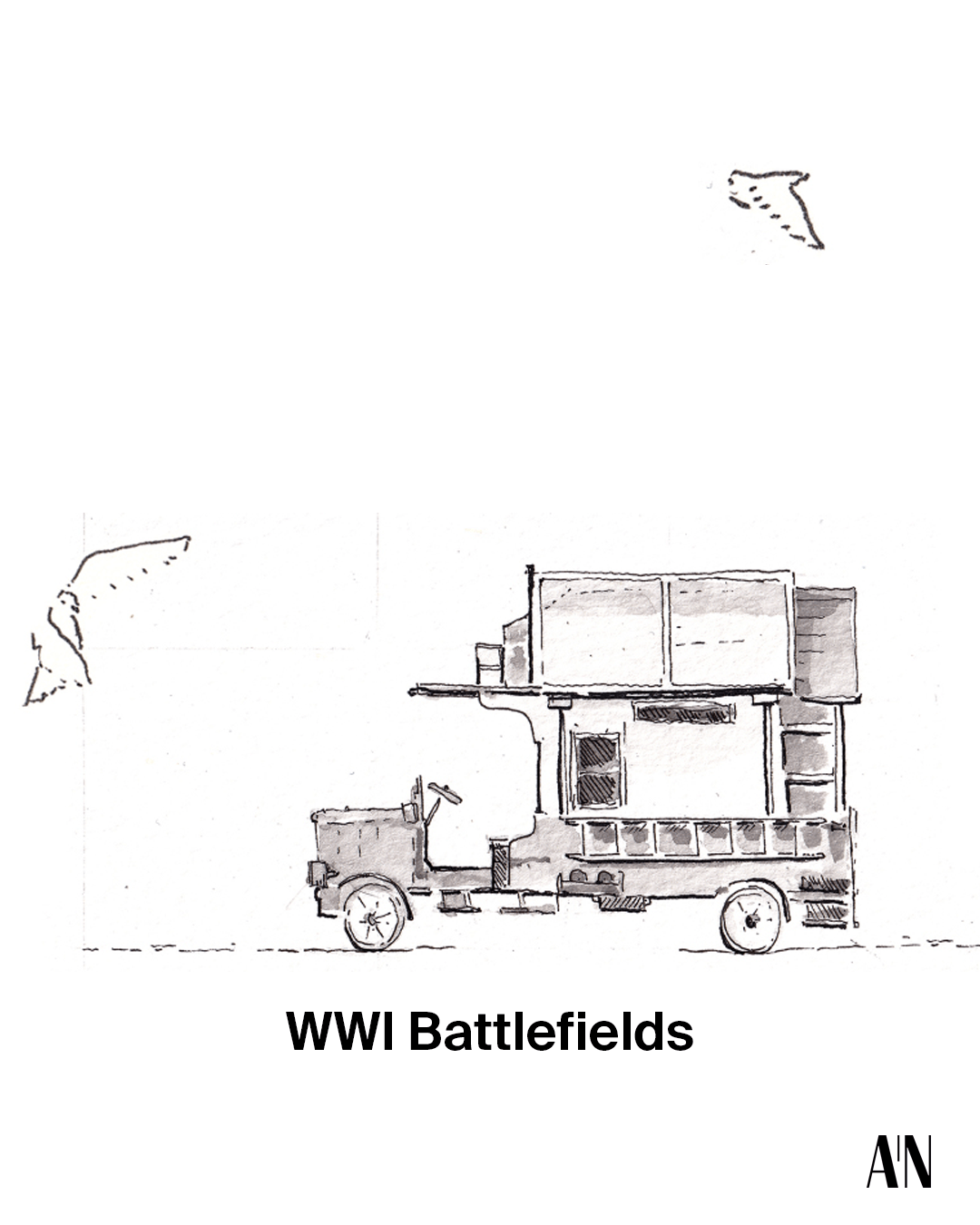
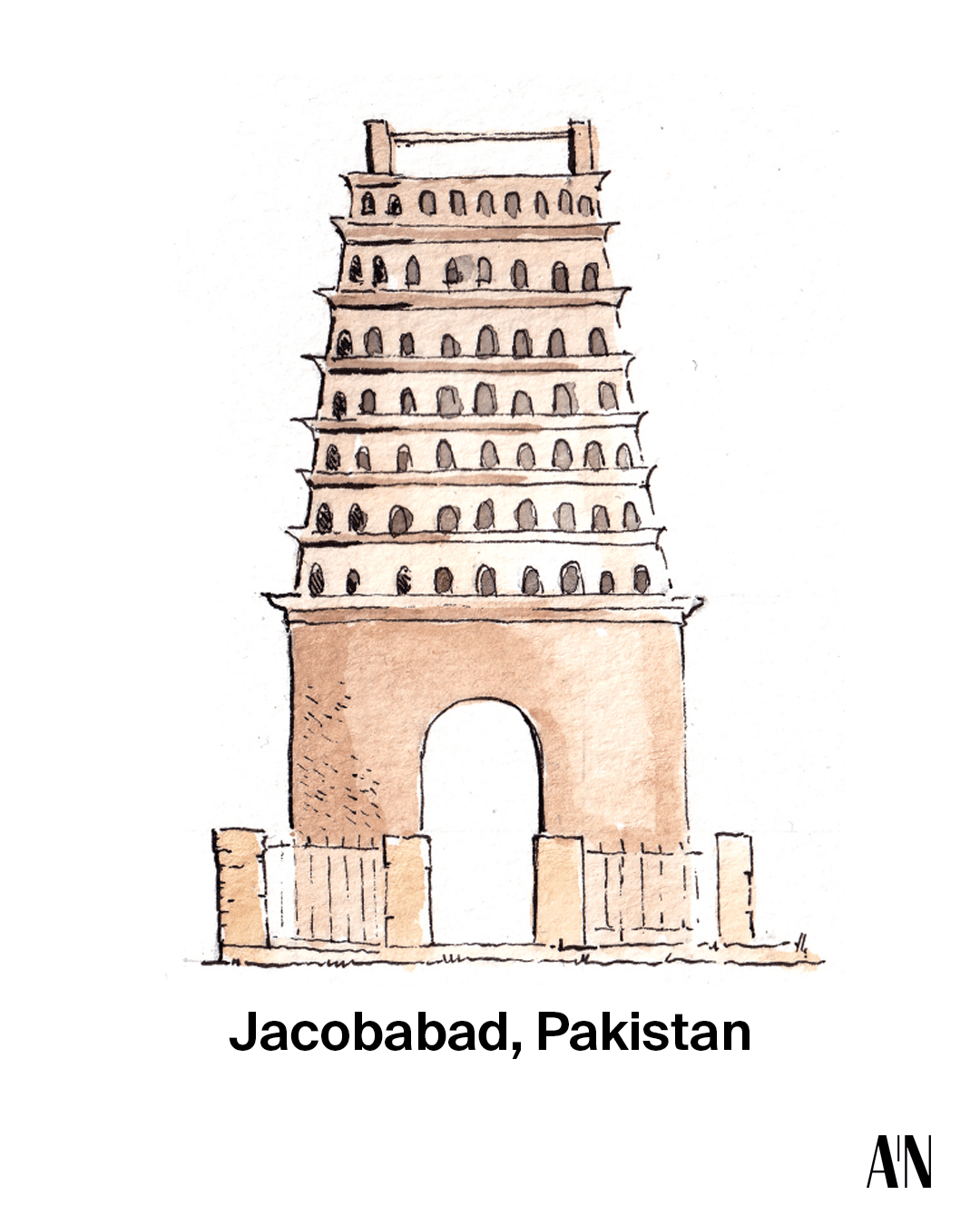
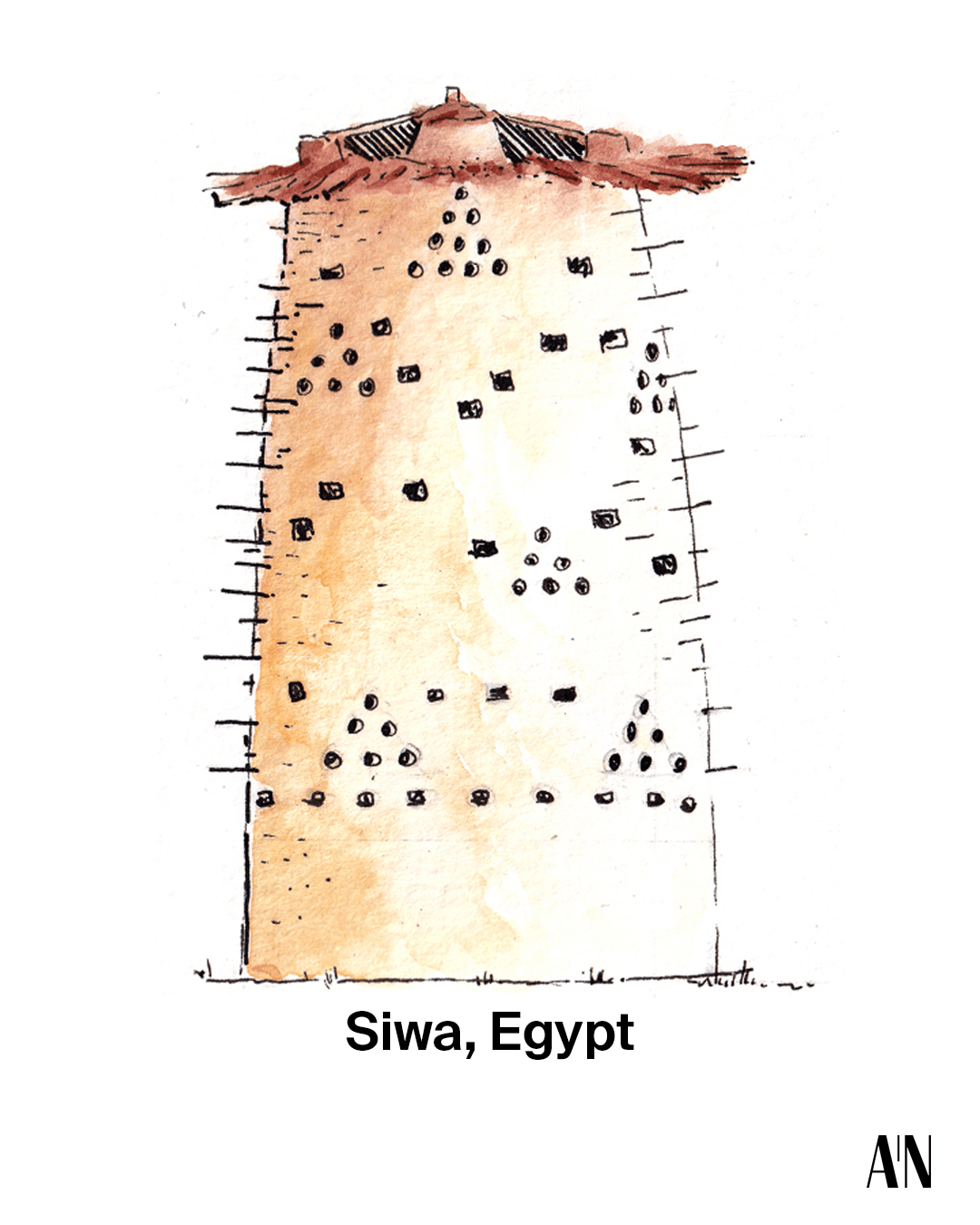
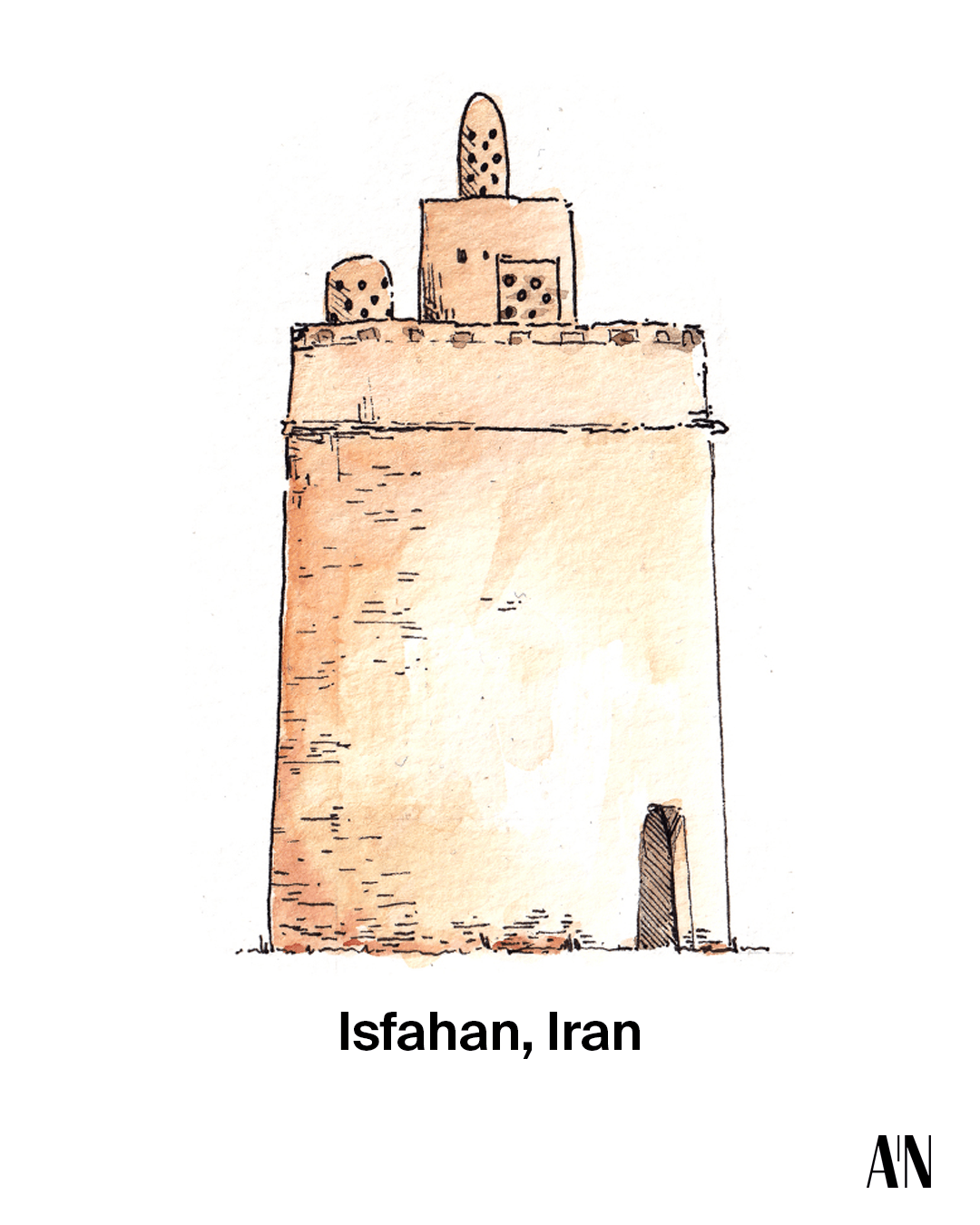
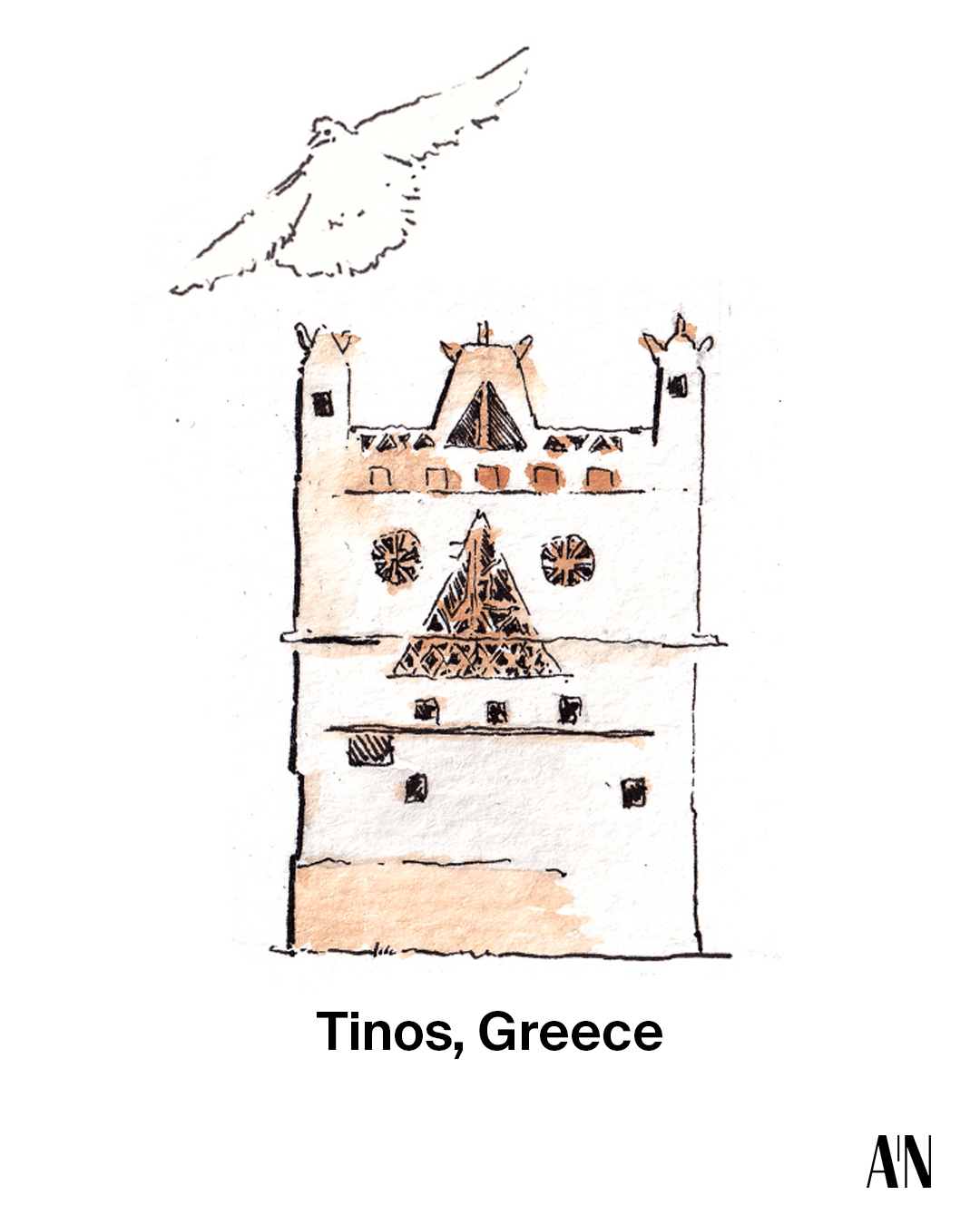
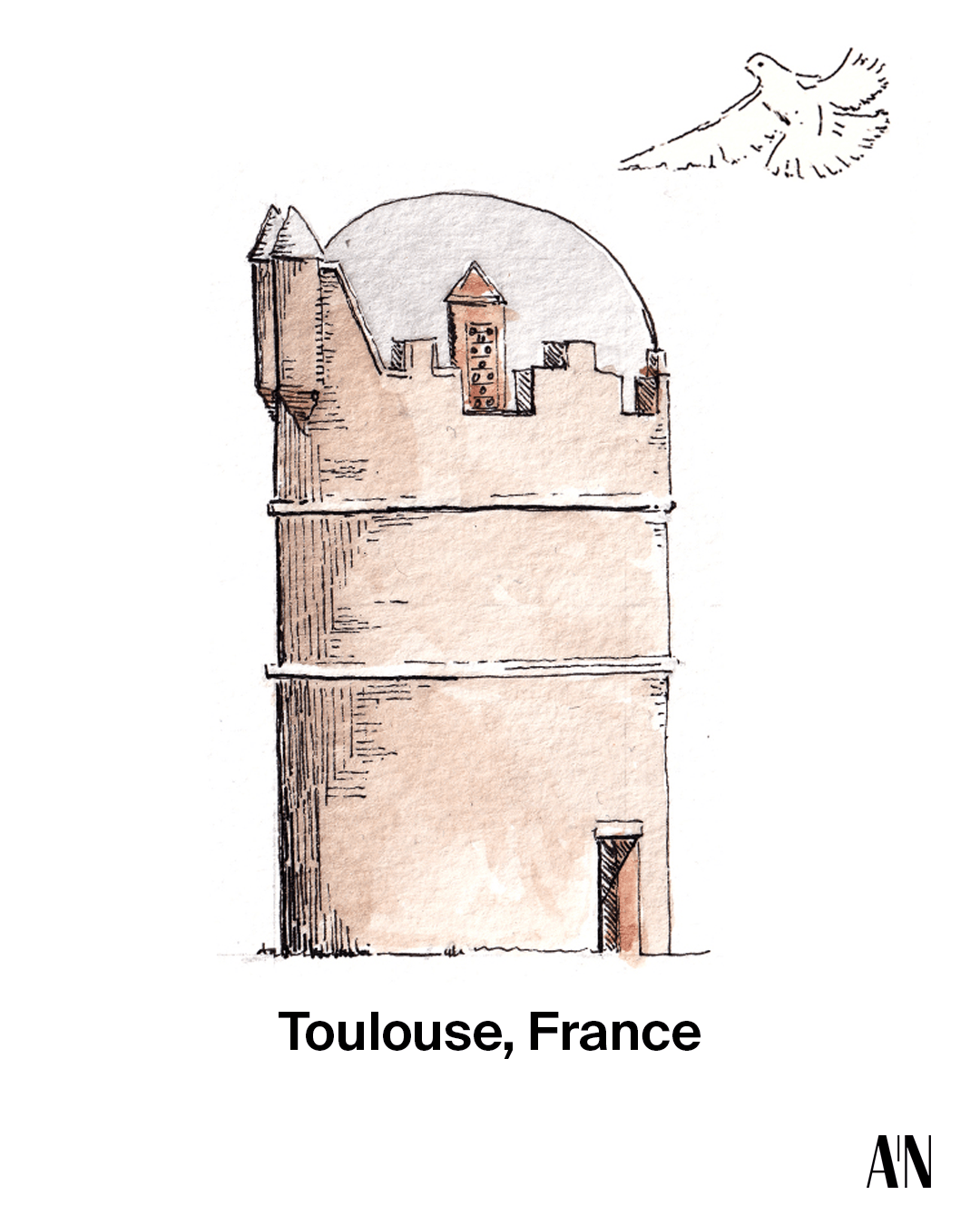
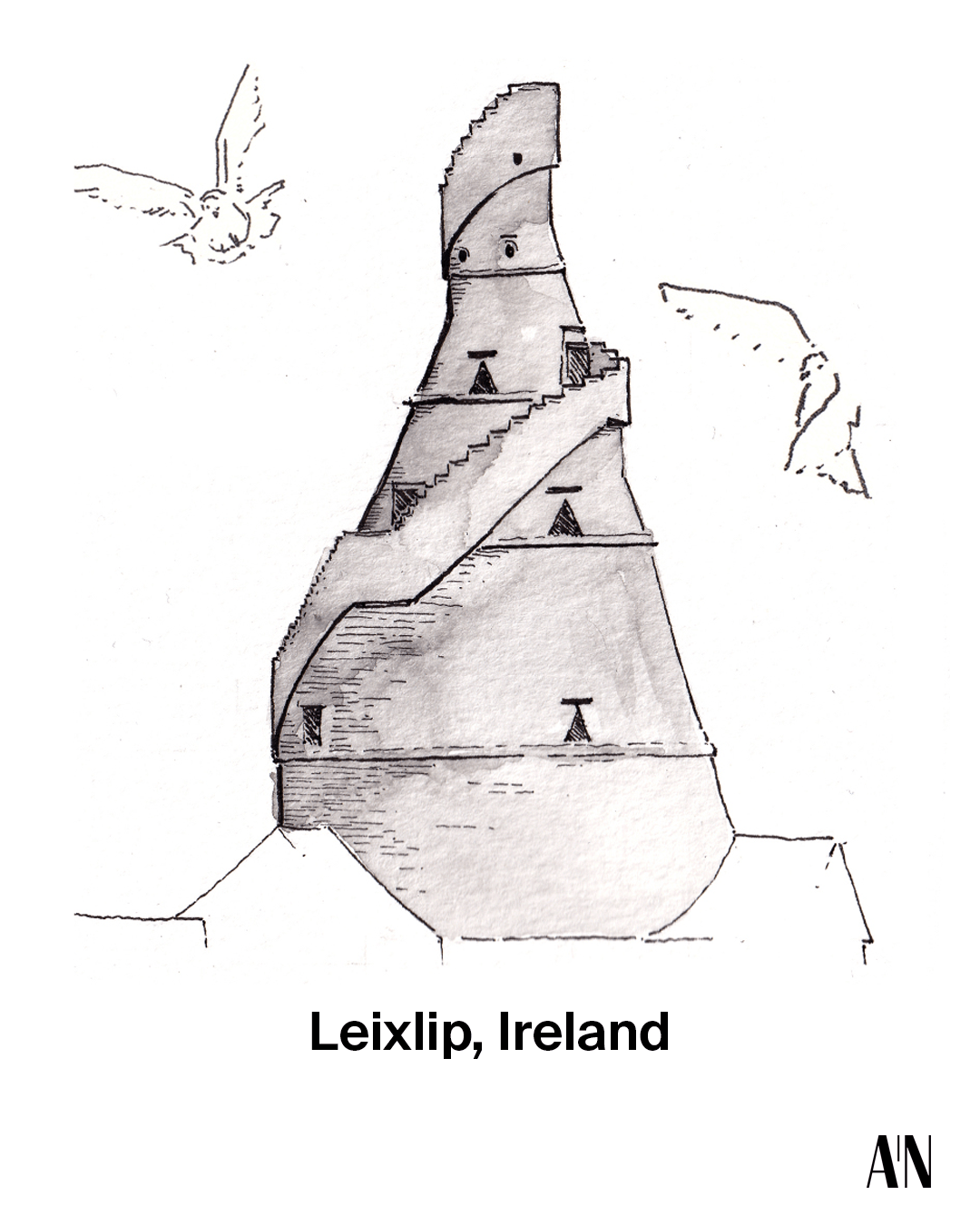
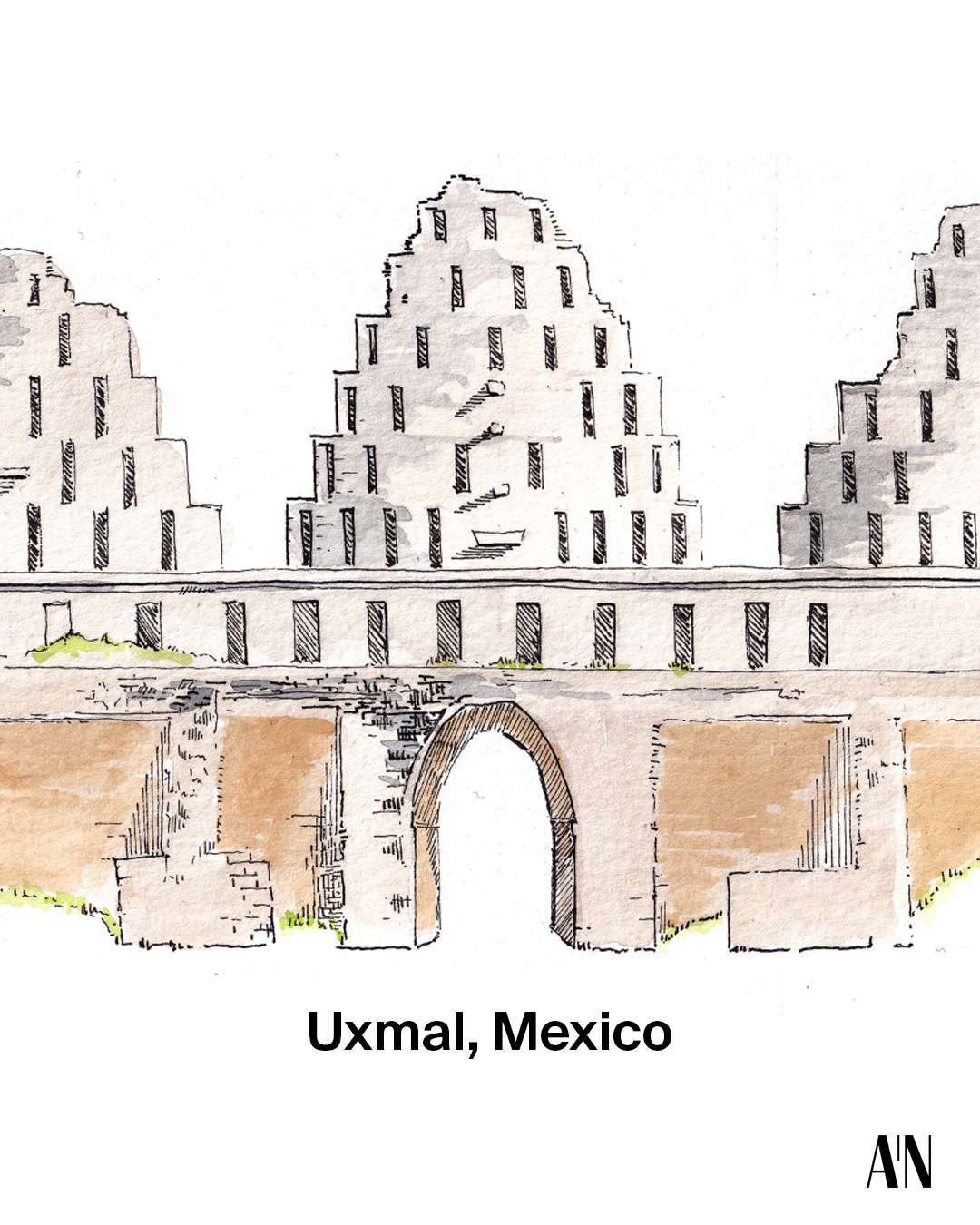
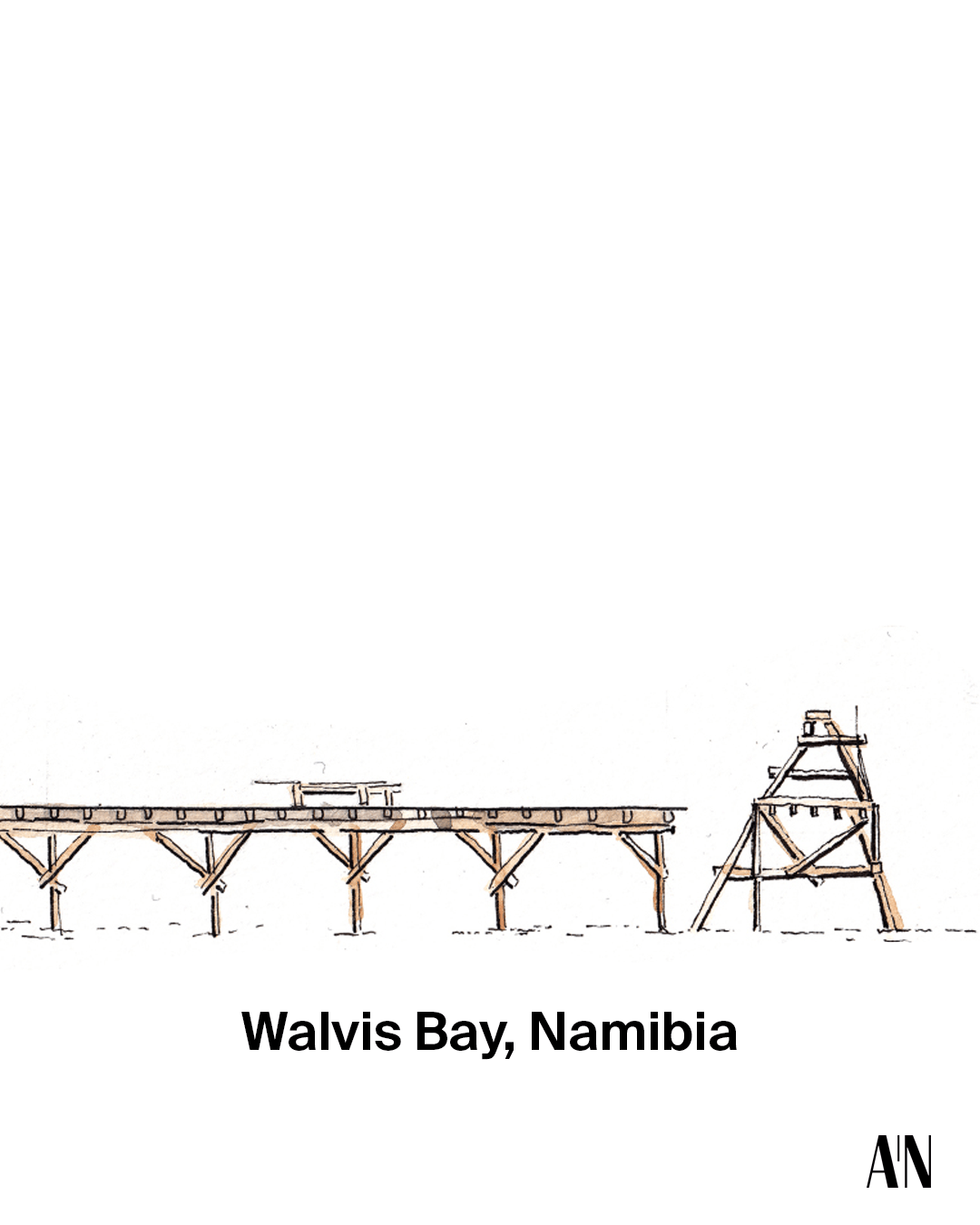
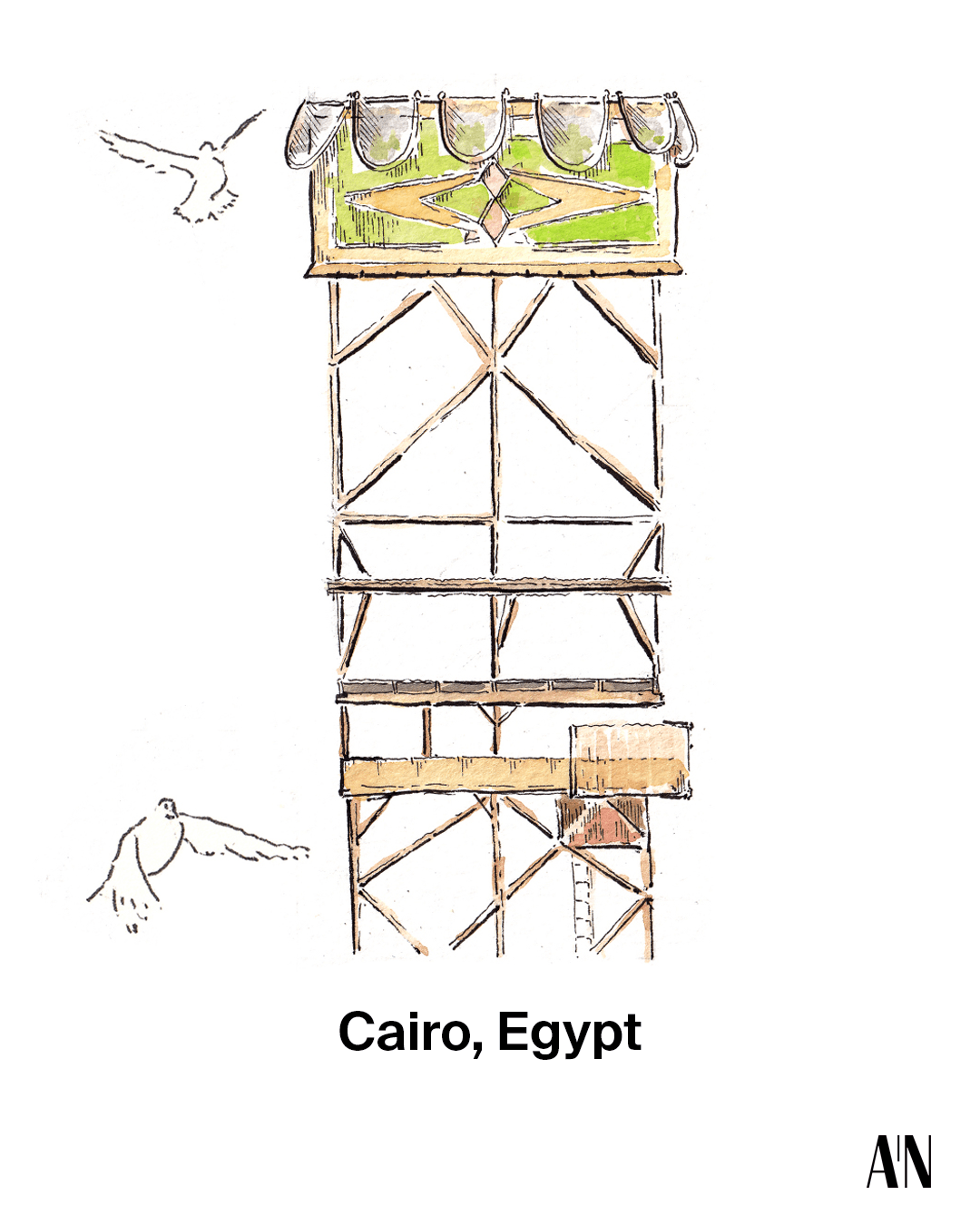
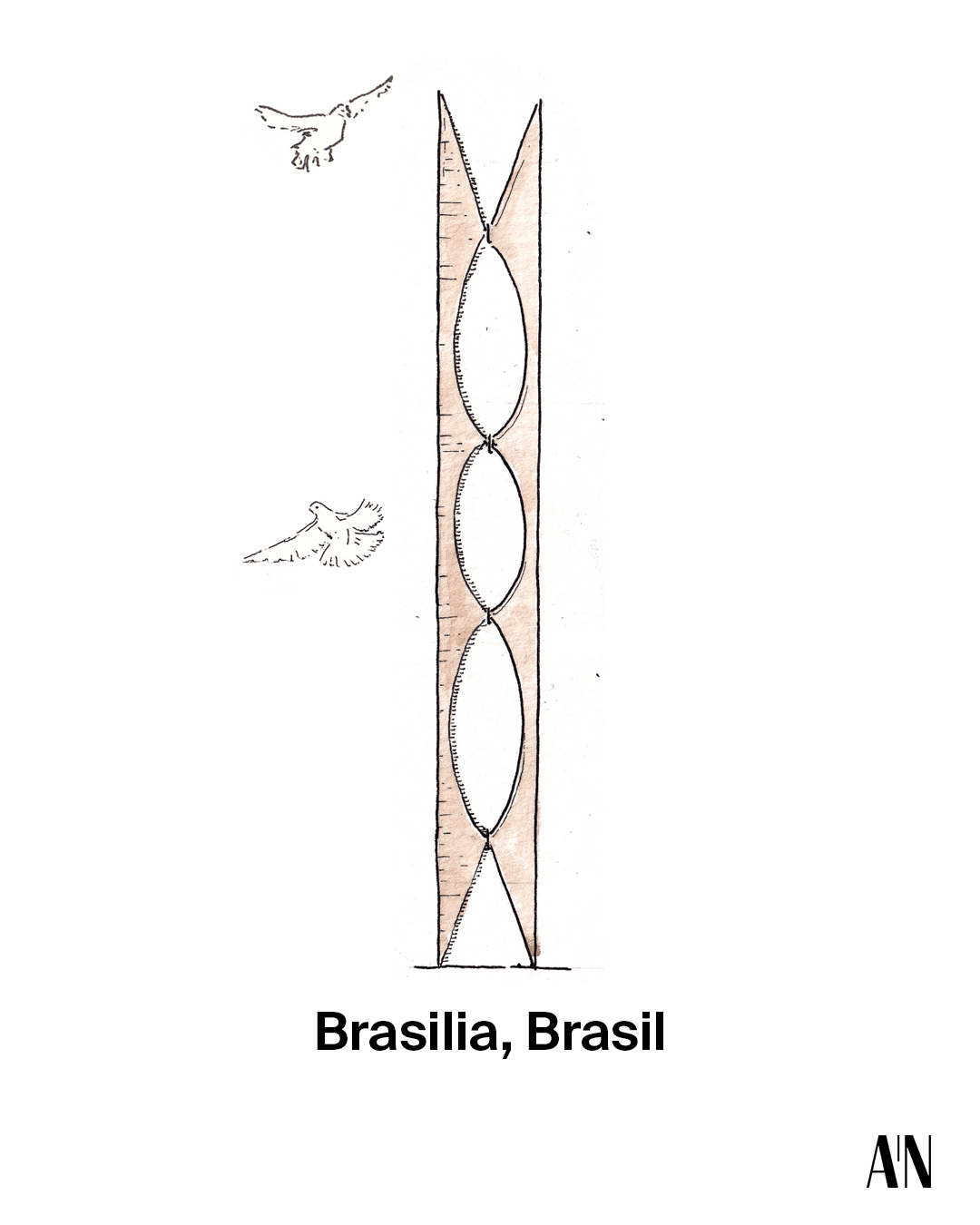
Across the English and French countrysides, vernacular farm coops once kept pigeons for meat and guano, while more elaborate Palladian follies—and occasional modernist experiments—pushed the dovecote into aesthetic and spiritual realms beyond subsistence. From Persian towers to Greek peristeriones, Ottoman rooftop lofts to Mayan ceremonial complexes, dovecotes register the changing uses and meanings of pigeons for humans. These mini architectures index shifting regimes of use and ownership: In the Middle East, they were embedded in everyday agrarian practices, while in parts of Europe, the right to keep pigeons was reserved for landowners, making these structures instruments of extraction.
Today, pigeons are both reviled and fetishized—urban nuisances to some, speculative commodities to others, including in elite racing circuits. The evolving economic relationship between humans and pigeons remains legible in their habitats and in the architectural forms that continue to structure their coexistence.
Lane Rick and Henry Chan are architects in New York City. They are working on a pop-up book about pigeons.