


本文由 MVRDV 授权mooool发表,欢迎转发,禁止以mooool编辑版本转载。
Thanks MVRDV for authorizing the publication of the project on mooool. Text description provided by MVRDV.
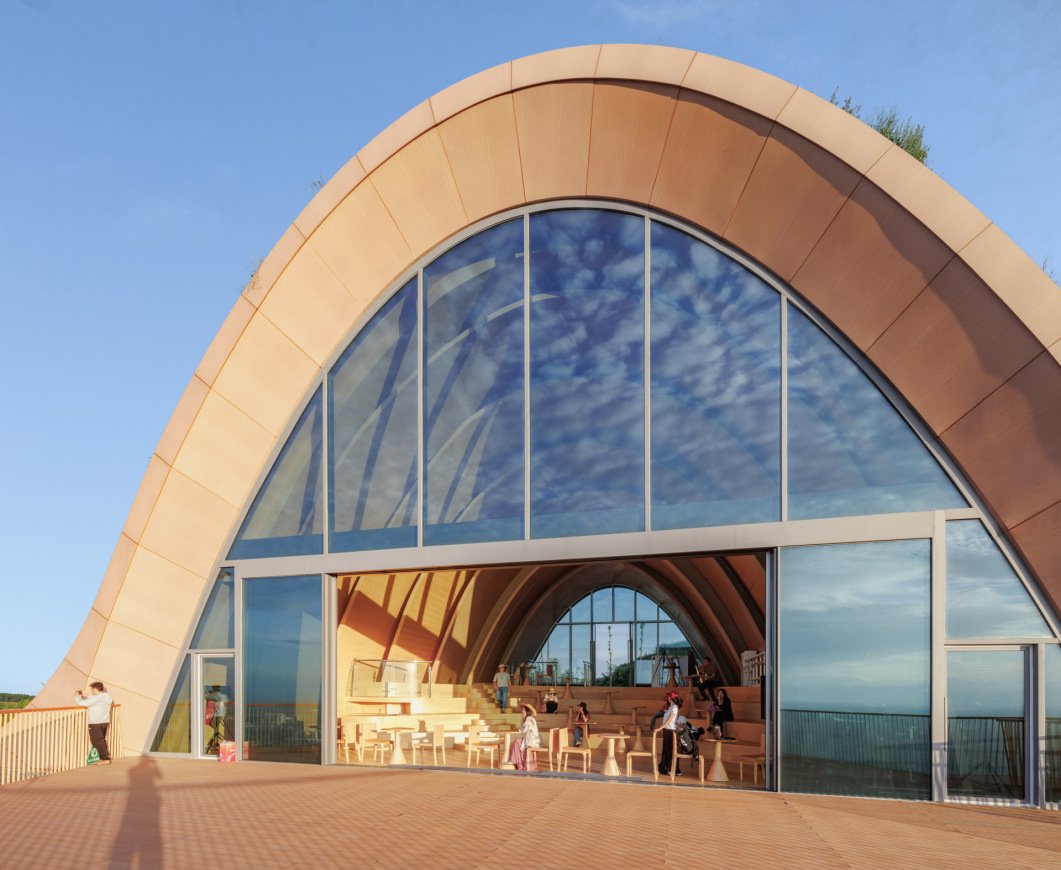
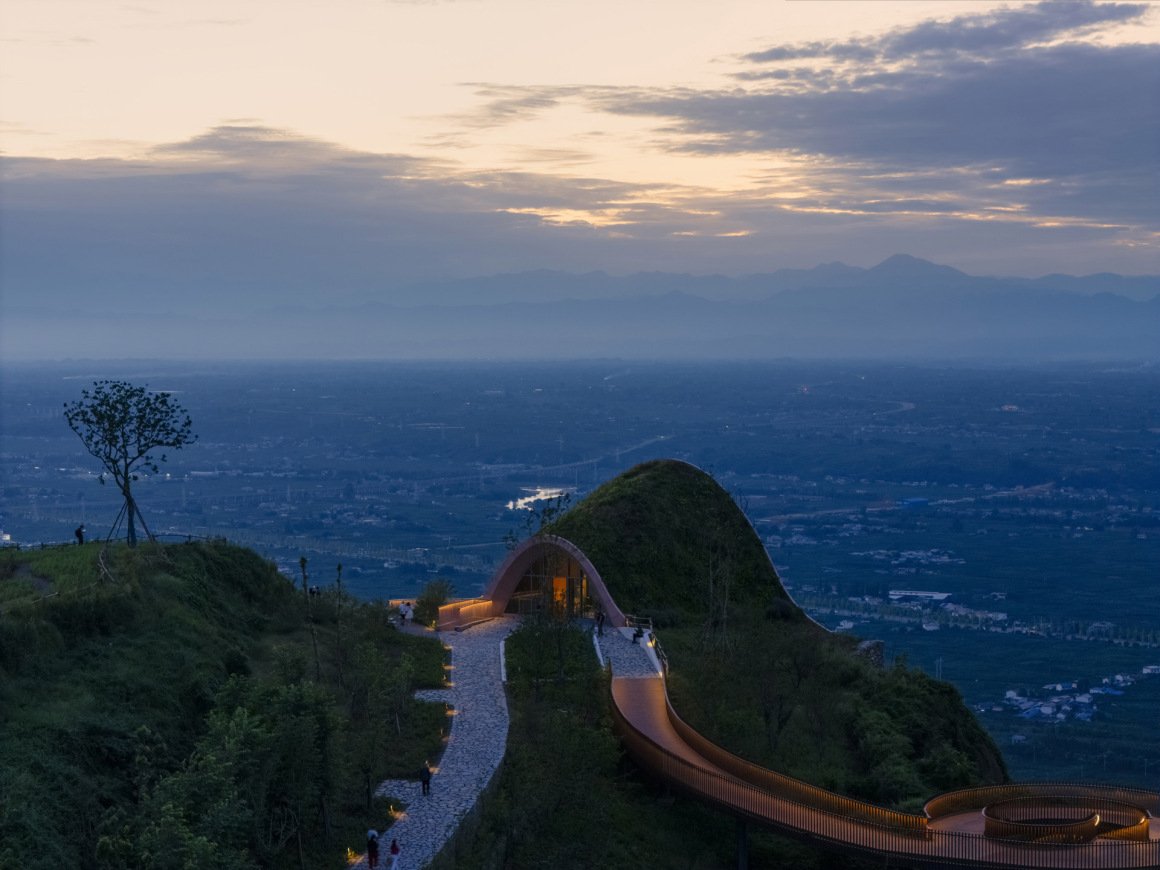
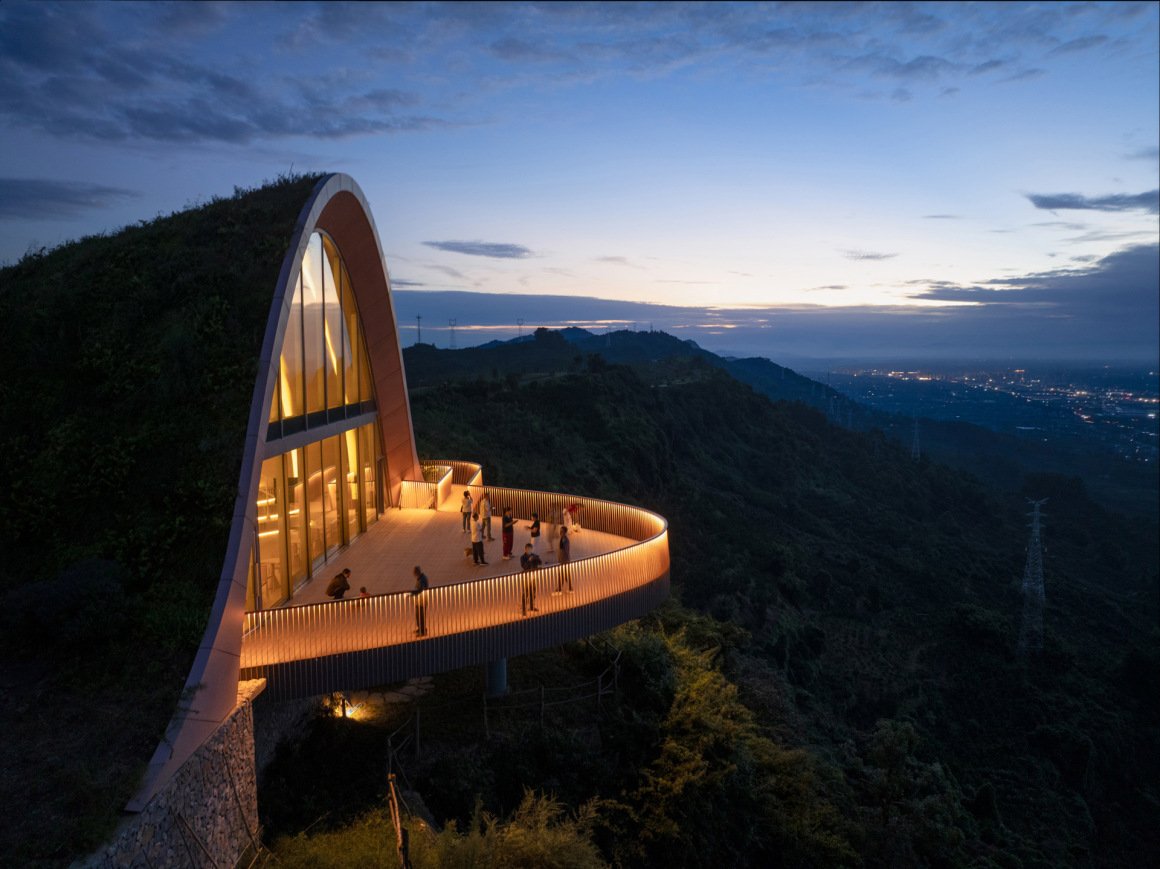
MVRDV:MVRDV已完成浦江观景台的建设。该观景台位于成都南部山丘之间,由一座拱形覆土木结构亭阁组成,既是游客的休闲目的地,也是举办活动的场所,充分利用了中国中部壮丽的自然风光。观景台的设计旨在与自然环境融为一体,同时从下方平原望去又如同灯塔般醒目。覆土木拱结构呈伸缩式,吸引游客来到宽敞的观景窗和延伸至山坡之上的阳台。
MVRDV:Perched among the hills of Chengdu, Pujiang Platform is an arched, earth-covered timber pavilion that serves as both a visitor destination and an event space to take advantage of the spectacular natural beauty of central China. Designed to blend into nature while also standing out as a beacon when seen from the plains below, the structure of earth-covered timber arches takes a telescopic shape, drawing visitors to the expansive viewing window and balcony that projects out over the slope.
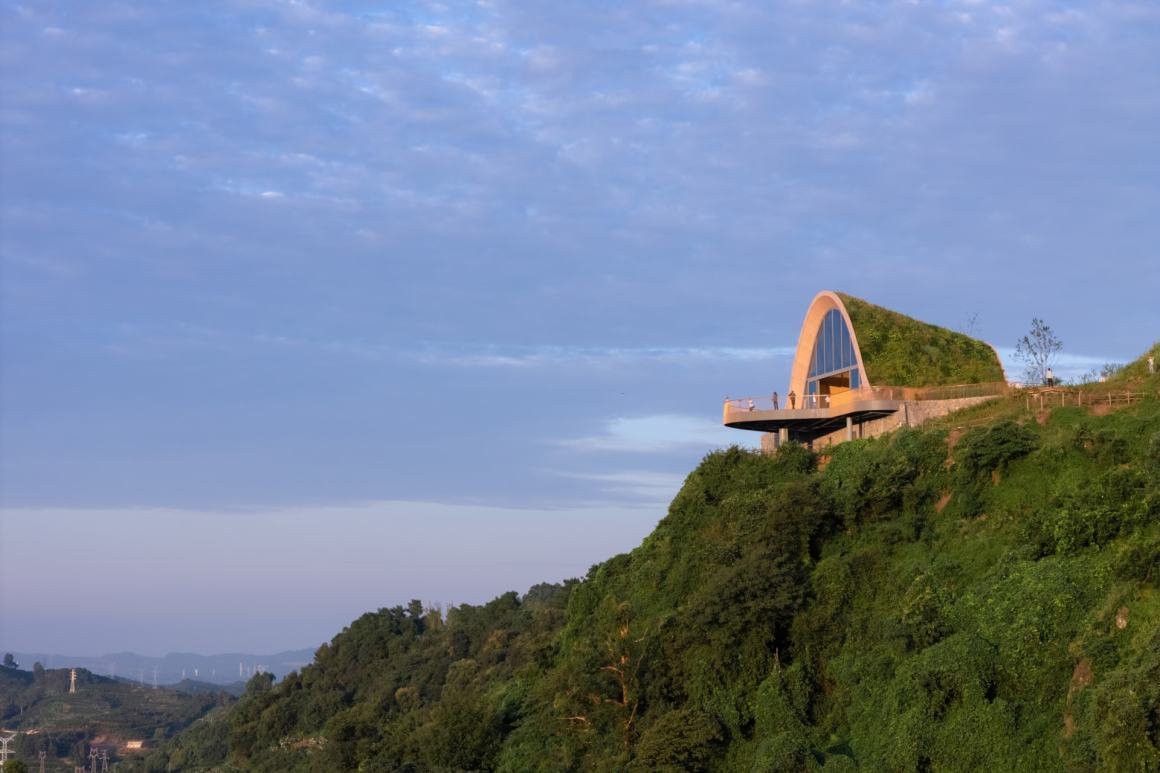
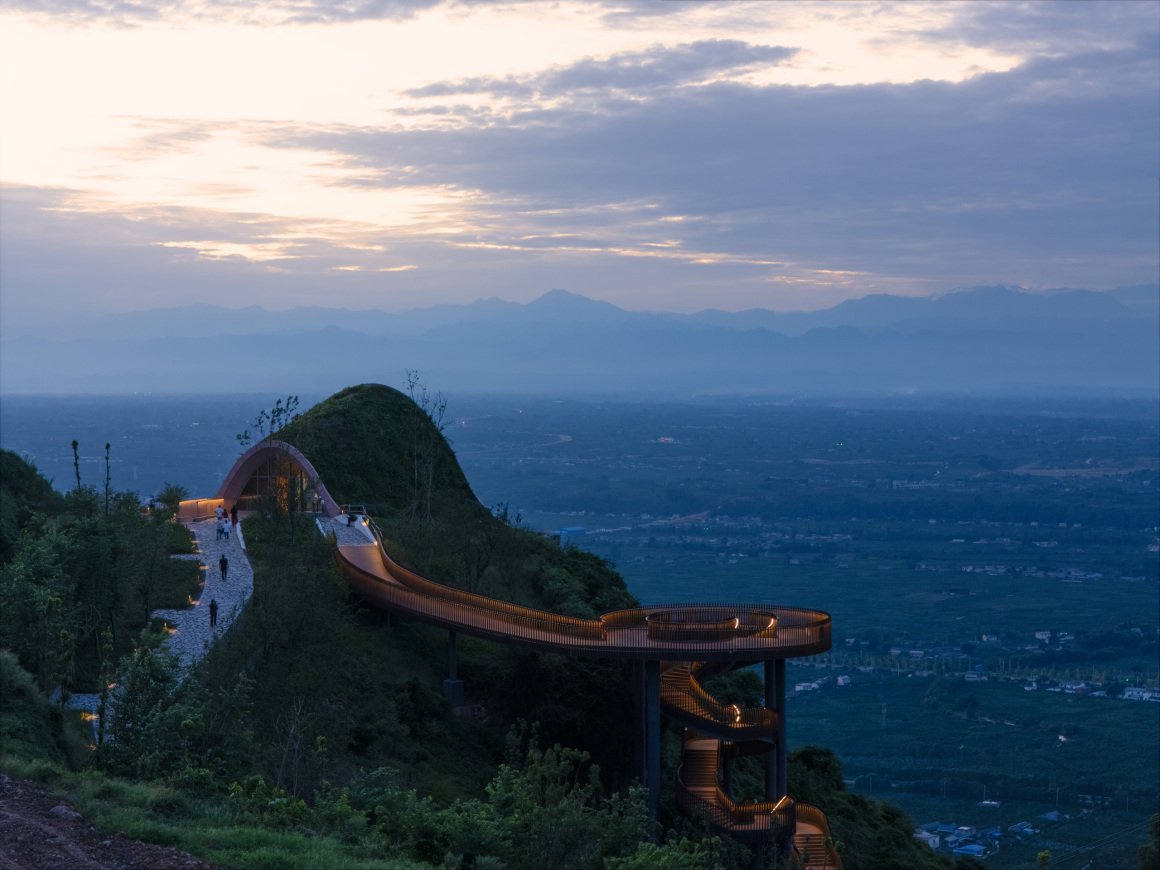
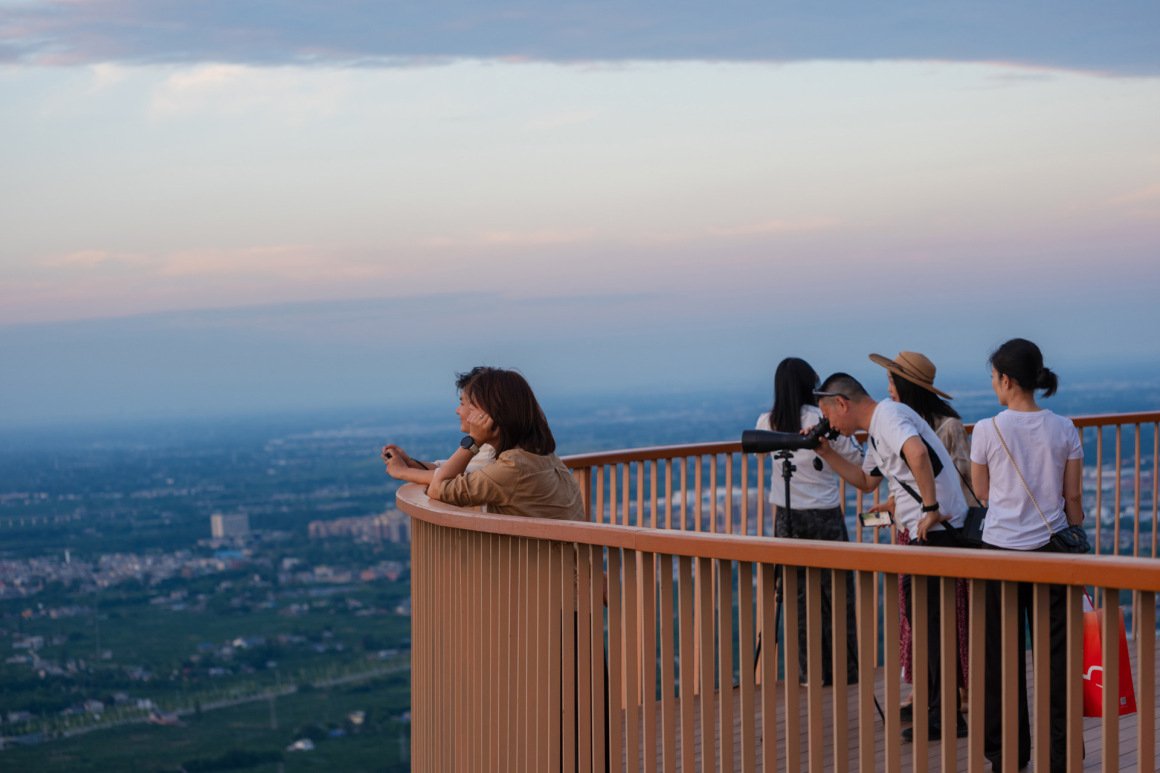
成都西南部的浦江新城正在蓬勃发展,旨在为居民提供高品质、可持续的生活方式。在浦江东侧的山丘上,一个原有的观景台视野开阔,可以俯瞰正在建设中的新城以及远处的邛崃山脉。浦江县规划资源局委托MVRDV对该观景台进行升级改造,使其成为一个吸引游客的旅游胜地,同时也是一个能够举办从婚礼到政府会议等各种活动的多功能场所。
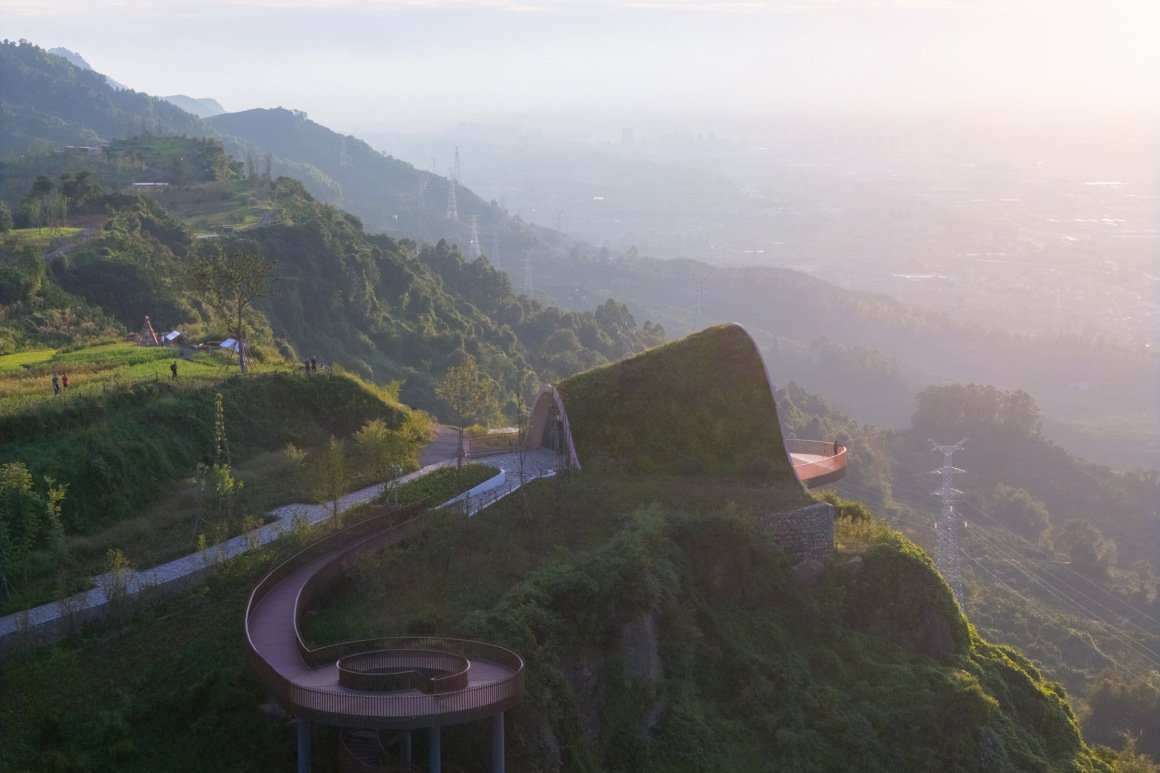
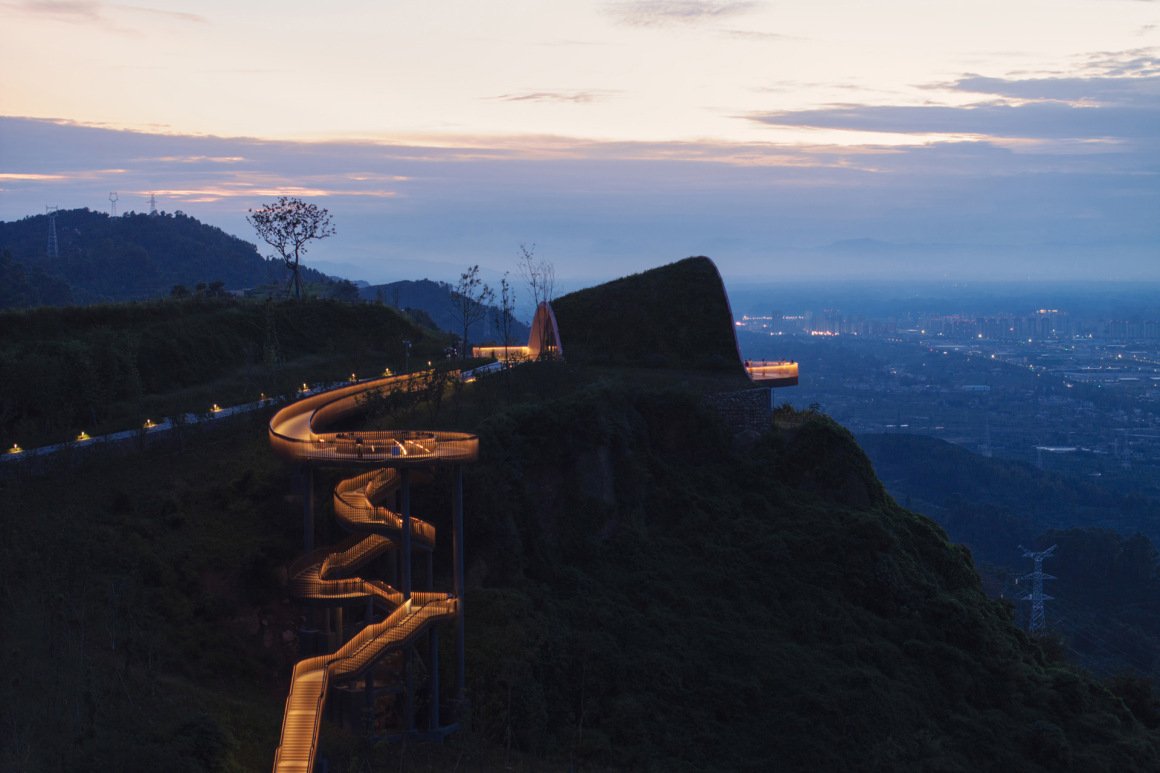
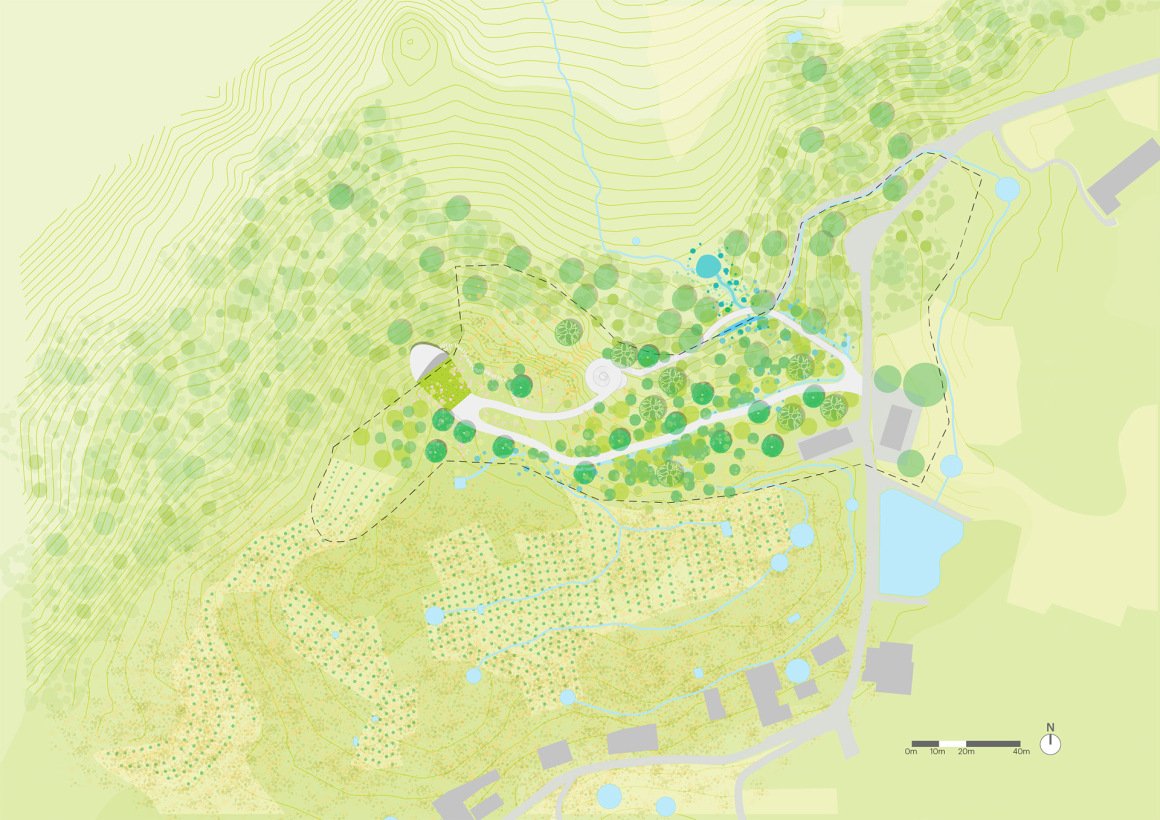
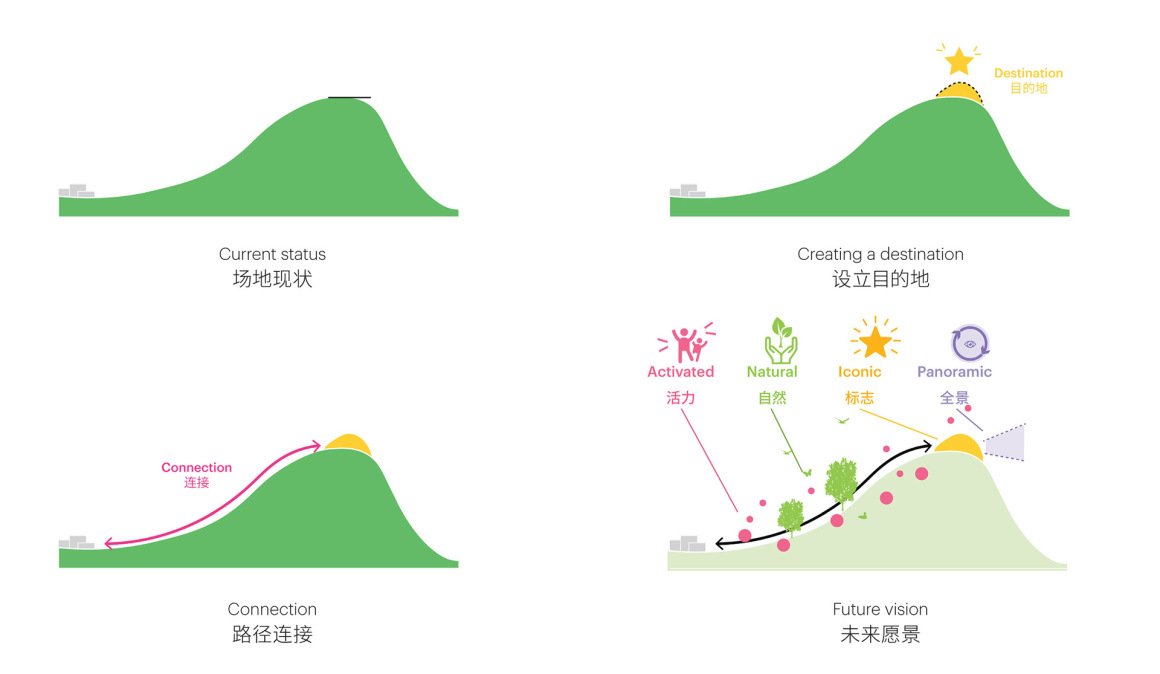
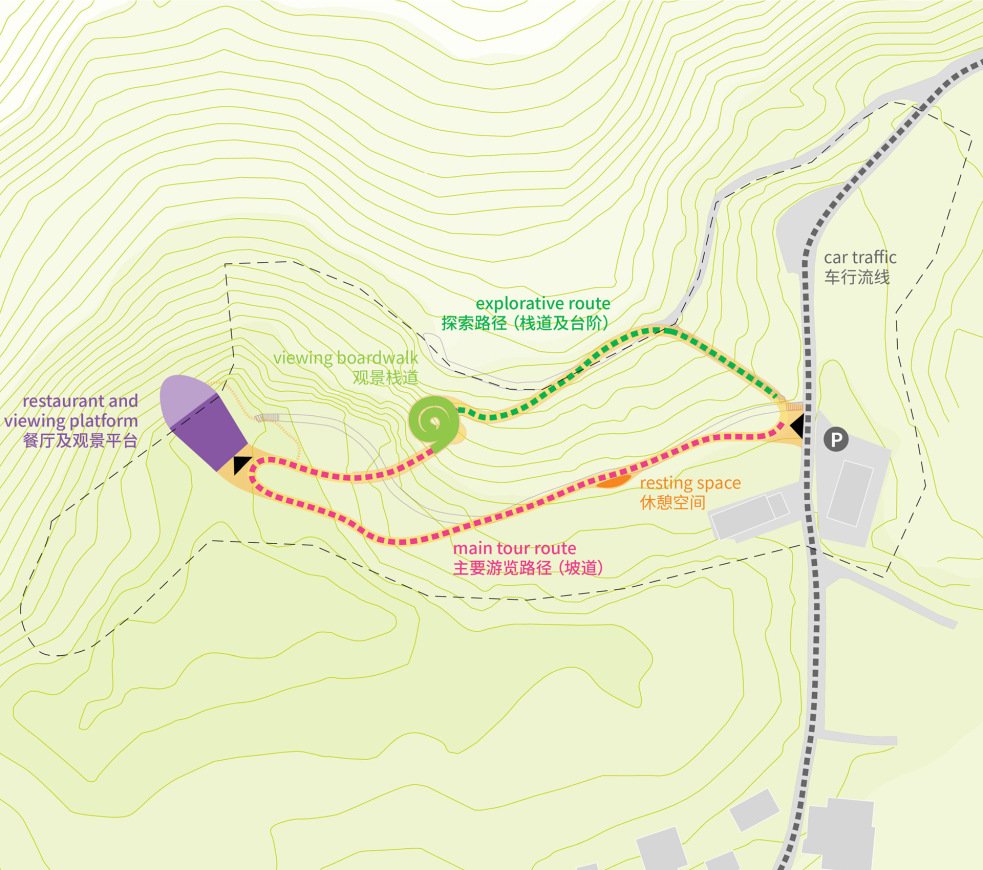
MVRDV的设计灵感源于对原有观景台建造过程中山坡被夷平的发现。通过建造一座拱形凉亭,并以土堤覆盖使其与周围景观融为一体,该设计巧妙地呼应了原有山坡的形态。此外,设计还优化了路径网络,增加了通往观景台的多条路线,其中包括在蜿蜒的楼梯结构中增设一个辅助观景台。凉亭本身采用木结构建造,旨在鼓励中国建筑行业更多地采用木材;尽管木材在减少碳排放方面具有诸多优势,但中国的法规和整个行业仍然对大规模使用木材持谨慎态度。
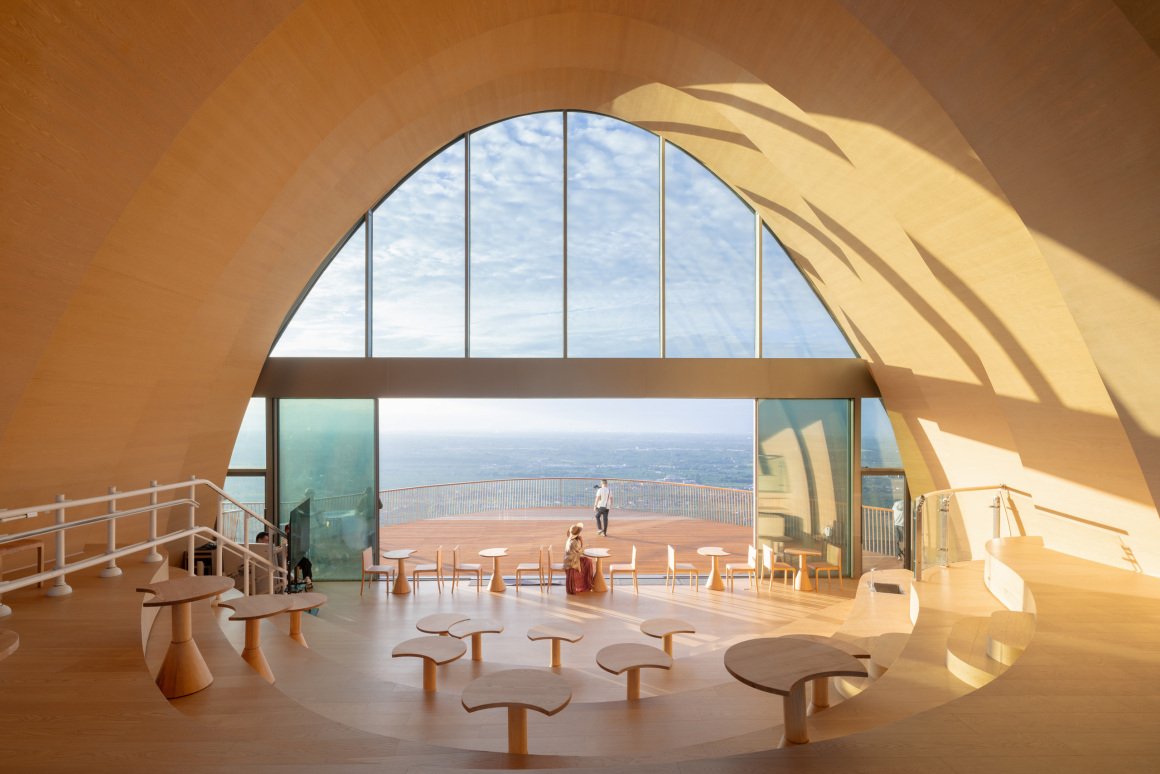
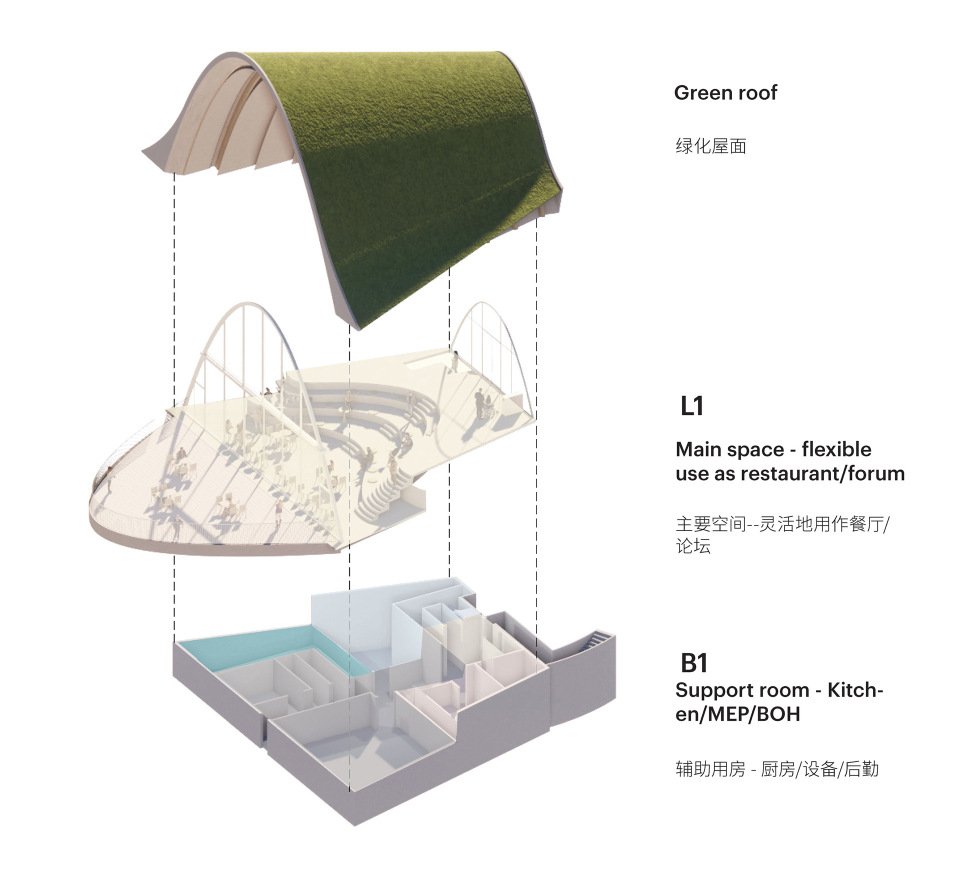
展馆入口位于建筑东南侧土坡上,是一扇嵌入土坡的小型玻璃幕墙。展馆内部,屋顶向上倾斜,地面向下倾斜,与山坡的坡度相呼应。这种倾斜形成了一个阶梯式平台,非常适合举办演讲,或者人们也可以坐在那里,透过另一端10米高的玻璃幕墙欣赏周围的景色。这面幕墙上设有两扇超大的推拉门,可以将室内空间与室外的观景阳台连通,最大限度地加强了室内外的联系,并在需要时将阳台作为室内空间的延伸。
The new town of Pujiang is currently under development to the southwest of Chengdu, with the intention of providing its residents a high-quality, sustainable lifestyle. In the hills to the east of Pujiang, a simple existing viewpoint offered commanding views over the growing town and the panorama of the Qionglai Mountain range behind it. MVRDV was commissioned by Pujiang County Planning and Resources Bureau to upgrade this viewpoint, turning it into a desirable destination for tourists, as well as an event space capable of hosting everything from weddings to government meetings.
MVRDV’s design started from the revelation that the hill was flattened during the construction of the pre-existing viewing platform. By creating an arched pavilion covered with an earth berm that blends into the landscape, the design creates an echo of the hill that existed before. The design also improves the path network to add multiple routes to the viewpoint, including by adding a secondary viewing platform incorporated into a twisting staircase structure. The pavilion itself is made using a timber structure, serving as a demonstration to encourage greater adoption of wood in the Chinese construction industry; despite the benefits of wood in reducing the carbon emissions, Chinese regulations and industry at large remain hesitant to adopt the material at scale.
The pavilion is entered via a small glass façade set into the earth berm on the building’s south-east side. Inside, the roof slopes upwards as the floor slopes downward, conforming to the slope of the hill. This slope forms a tribune that is ideal for presentations, or simply for sitting to take in the landscape through the 10-metre-tall glass façade at the other end. This façade incorporates a pair of oversized sliding doors that open the interior to the viewing balcony outside, maximising the connection between inside and out and allowing the balcony to serve as an extension of the indoor space when required.
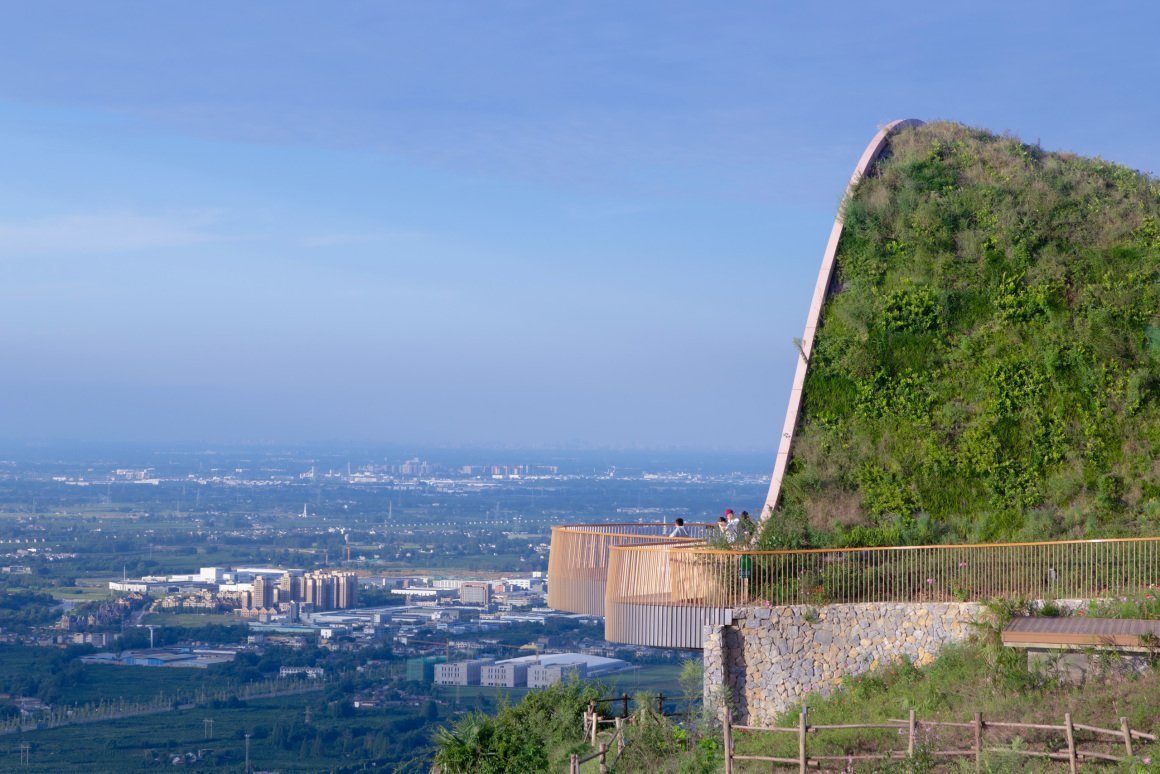
“这片区域的丘陵景色确实壮丽,因此我们面临的挑战之一是如何充分利用这些美景,同时尽可能减少对景观的影响,”MVRDV创始合伙人雅各布·范·里斯 (Jacob van Rijs) 表示。“通过建造一座山形展馆并覆盖绿色屋顶,我们不仅最大限度地减少了自身的影响,还重现了原有的山丘。这种保护和尊重自然的理念是设计的精髓,并在建造过程中得以延续,我们使用木材等生物基材料,这些材料更加可持续,从而减少了对自然环境(例如这片区域)的影响。”
该项目的景观设计旨在提升场地原有的自然景观。所选植物体现了场地现有的生物多样性——包括展馆屋顶上方土坡上10厘米深的土壤,足以容纳多种草类、花卉和小灌木。同时,现有的水道被用于收集雨水和灌溉。
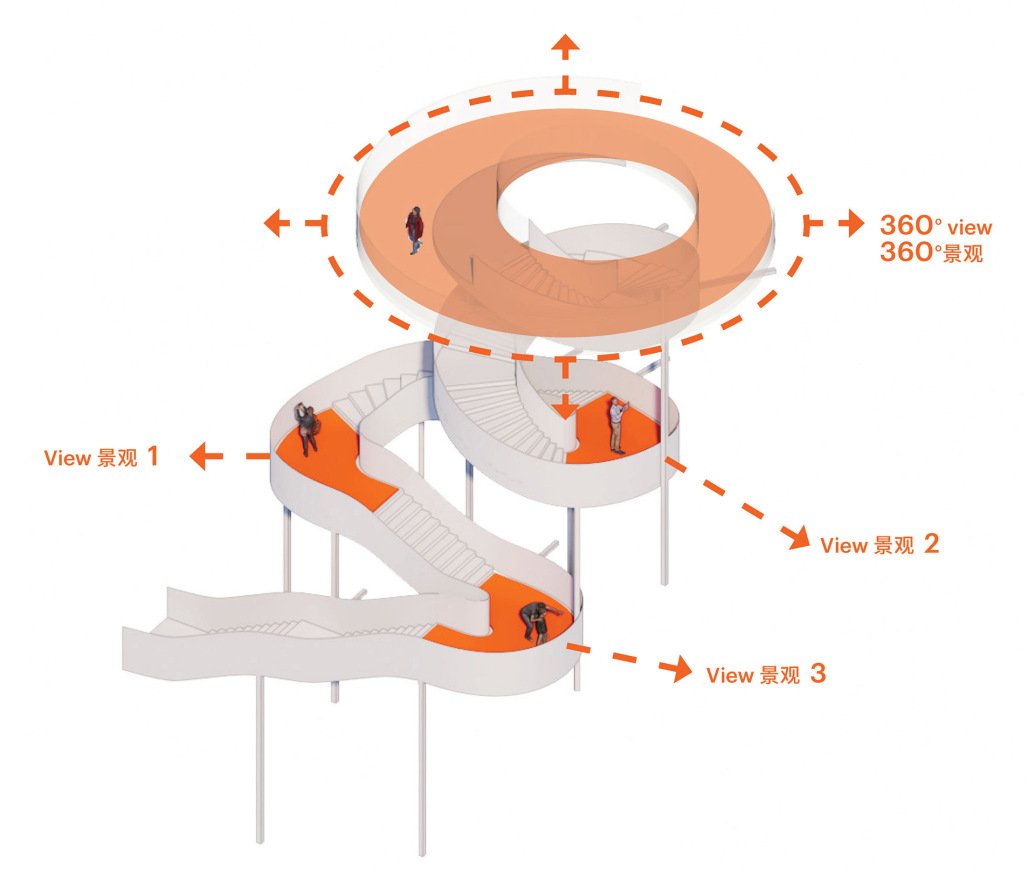
该设计充分利用了场地原有的路径,并增设了一座楼梯将它们连接成一个环形。楼梯上方是圆形的辅助观景平台,可360度全方位欣赏远处群山和近处自然风光。
“The hills of this region are truly a spectacular sight, so one of the challenges we faced was to make the most of those views while reducing the impact on the landscape”, says MVRDV founding partner Jacob van Rijs. “By adding a hill-shaped pavilion with a green roof we not only minimise our own impact, but we recreated the hill that was there before. This act of preserving and respecting nature is the essence of the design, which is continued in the construction approach, using bio-based materials such as wood that are more sustainable and thus have less impact on natural environments such as this one.”
The landscape design of the project aims to enhance what already exists at the site. The plants used reflect the site’s current biodiversity – including on the earth berm over the pavilion’s roof which, with a soil depth of 10 centimetres, is capable of hosting a wide variety of grasses, flowers, and small bushes. Meanwhile, existing waterways are used for rainwater collection and irrigation.
The design incorporates the pathways that already existed on the site, adding a staircase to connect them into a loop. Atop the staircase is the circular secondary viewing platform, offering 360-degree views of both the distant mountains as well as the nearby natural environment.
除了有助于降低隐含碳排放的木结构外,该项目的设计还融合了多种策略来减少运营排放。土堤及其绿植提供了大量的隔热和热容量,从而降低了温度变化的影响;天花板采用分层结构,便于自然通风降温。朝北的大窗户、屋檐以及周围的树木遮挡了较小的入口墙,最大限度地减少了太阳辐射。此外,展馆的部分能源需求由地源热泵提供。
这些可持续发展特色确保了浦江平台体现了山脚下新兴可持续城镇的特色。当地居民和游客到访时,都能看到可持续建筑与自然环境完美融合的典范;到了夜晚,从平台窗户透出的灯光使其成为山间的一座灯塔,从山下的平原清晰可见。
In addition to the project’s wood structure, which helps to keep its embodied carbon emissions low, the design incorporates a variety of strategies to reduce operational emissions. The earth berm and its greenery provide a significant amount of insulation and thermal mass, reducing the effect of temperature changes, while the ceiling is layered in a way that allows natural ventilation to cool the space. Solar gain is kept to a minimum, thanks to the north-facing orientation of the large window, and the roof overhang and surrounding trees that protect the smaller entrance wall from direct sunlight. Meanwhile, a portion of the pavilion’s energy requirements are provided by a geothermal heat pump.
These sustainable features ensure the Pujiang Platform reflects the identity of the emerging sustainable town at the foot of the hill. Upon visiting, local residents and tourists alike see a demonstration of sustainable architecture that seamlessly integrates into its natural surroundings, and at night, the light shining from its window turns it into a beacon in the hills, clearly visible from the plains below.




Location:Pujiang, China Mainland
Status:Realised
Year:2022–2025
Surface:414 m²
Client:Pujiang County Planning and Resources Bureau
Programmes:Pavilion, Auditorium
Themes:Leisure, Public, Sustainability
Certifications:China Green Building Label: 2 Stars
“ 设计灵感源于对原有观景台建造过程中山坡被夷平的发现。通过建造一座拱形凉亭,并以土堤覆盖使其与周围景观融为一体,设计巧妙地呼应了原有山坡的形态。”
审稿编辑: junjun
更多 Read more about: MVRDV
Nguồn: mooool