
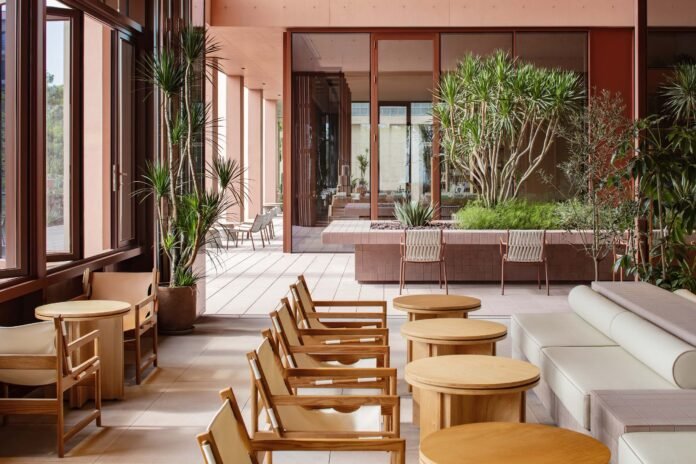

Throughout Guangzhou and other parts of China, arcade houses locate commercial businesses on street level while residences sit atop. This typology, called Qi Lou, creates protected space for pedestrian traffic and urban life. Beijing Laboratory for Urban Environment (B.L.U.E) Architecture Studio used this vernacular for Author’s Room Hotel, a new property for naive IMAGINIST in Aranya Jiulong Lake.
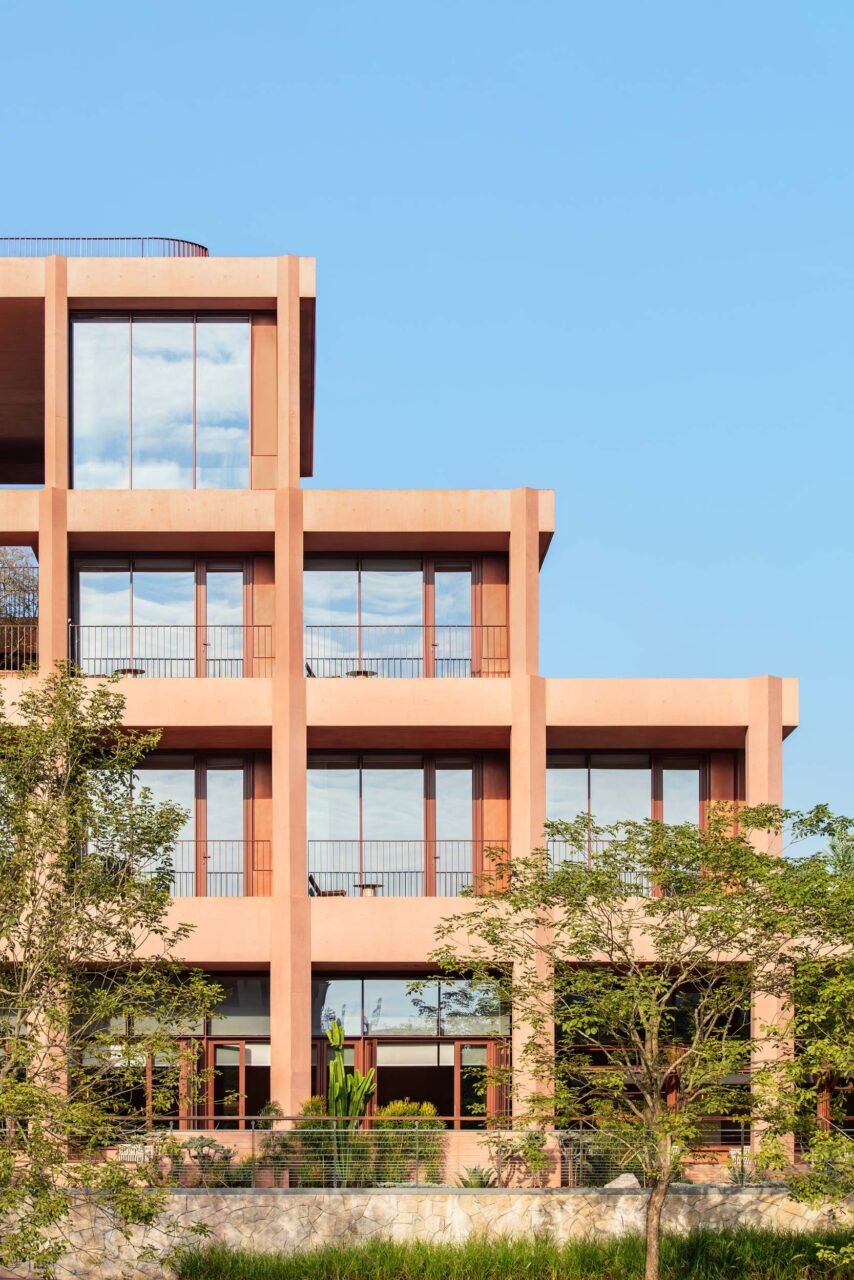
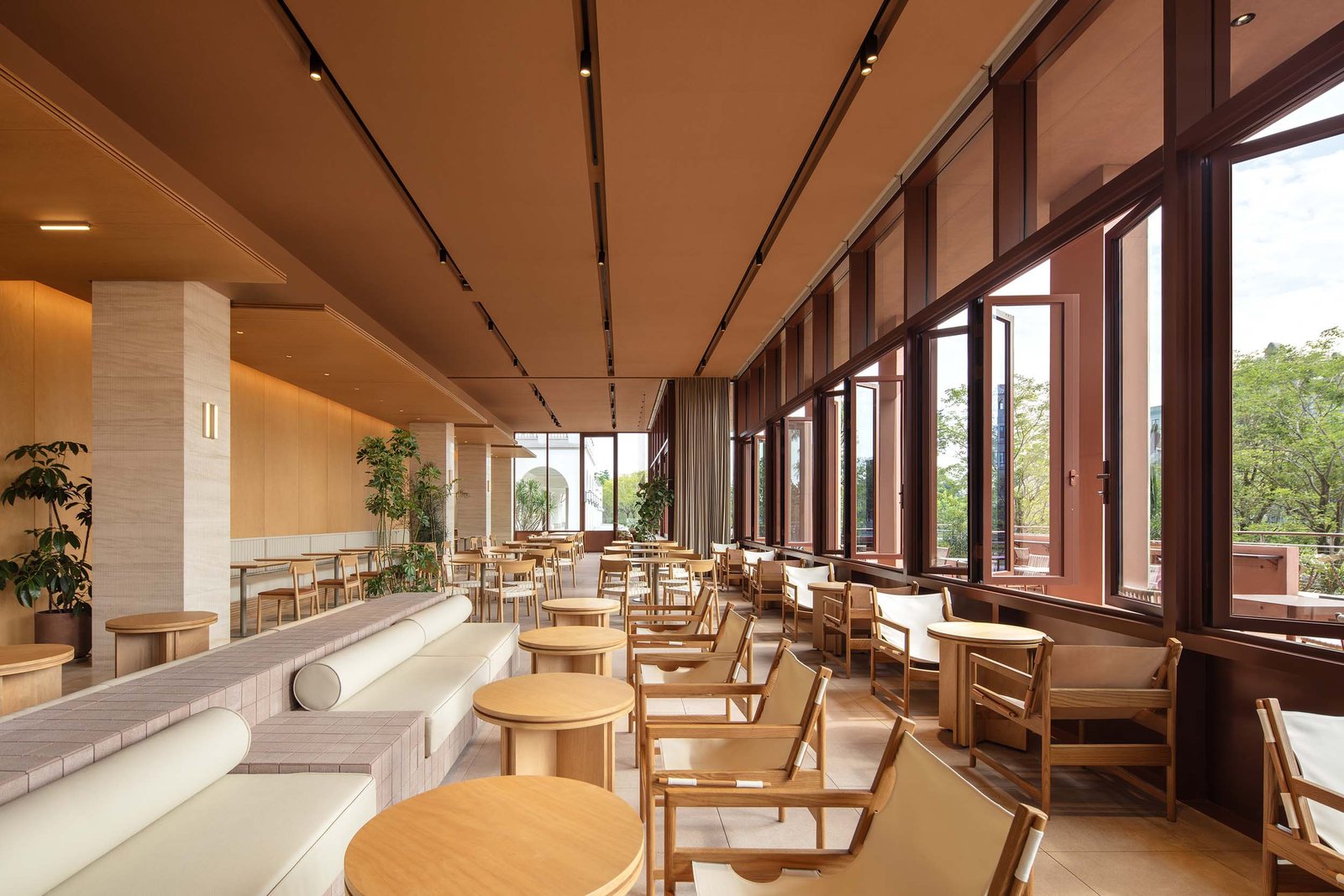
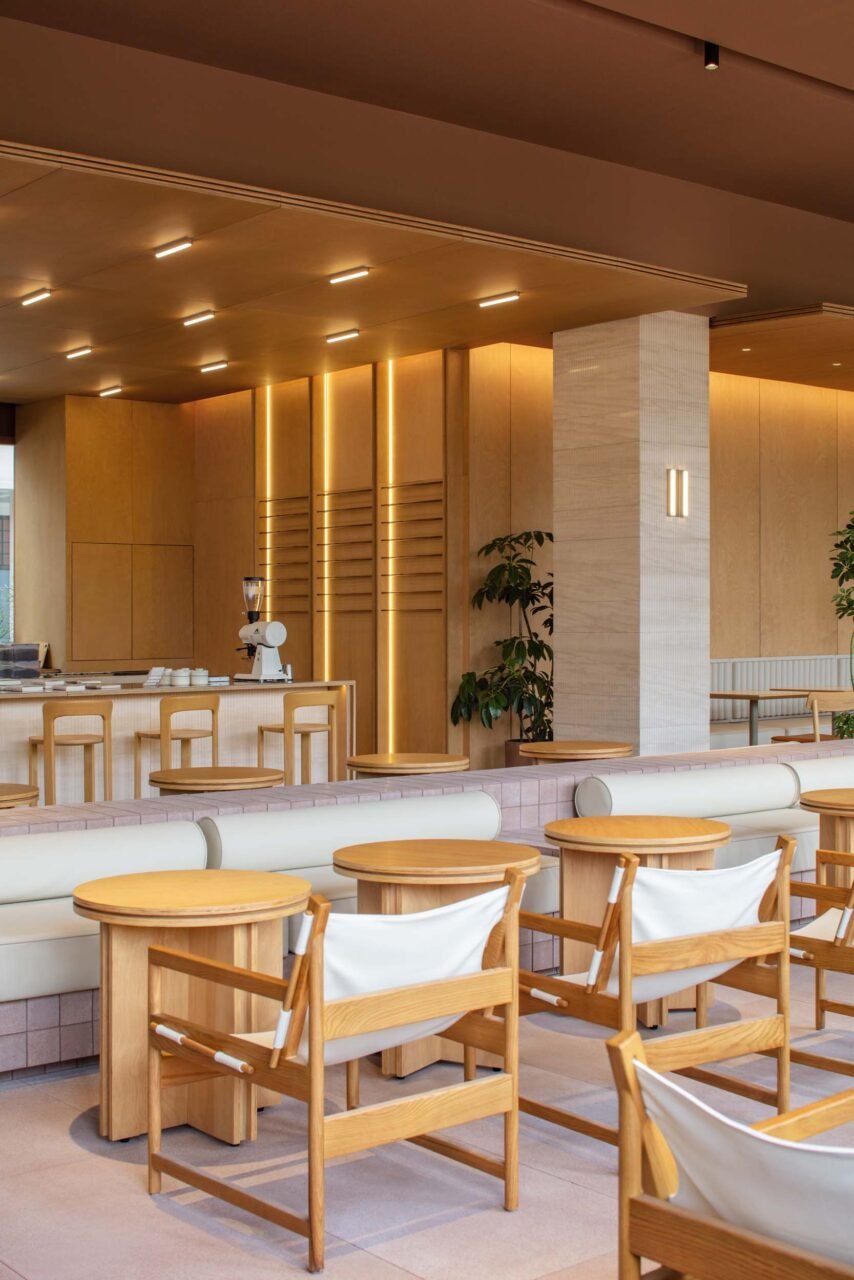
Author’s Room Hotel is an hour’s drive from downtown Guangzhou and located along the eastern side of the serene Jiulong Lake reservoir. Mountains sandwich the property in from its other side. Spanning four floors, the building’s stepped formation arises from the surrounding mountains. Like the Qi Lou, the 24,918-square-foot hotel locates public spaces—a cafe, bookstore, and dining room—on the first floor. The 18 hotel rooms that occupy the upper levels create a subtle separation from the public ground floor to the more private upper floors.
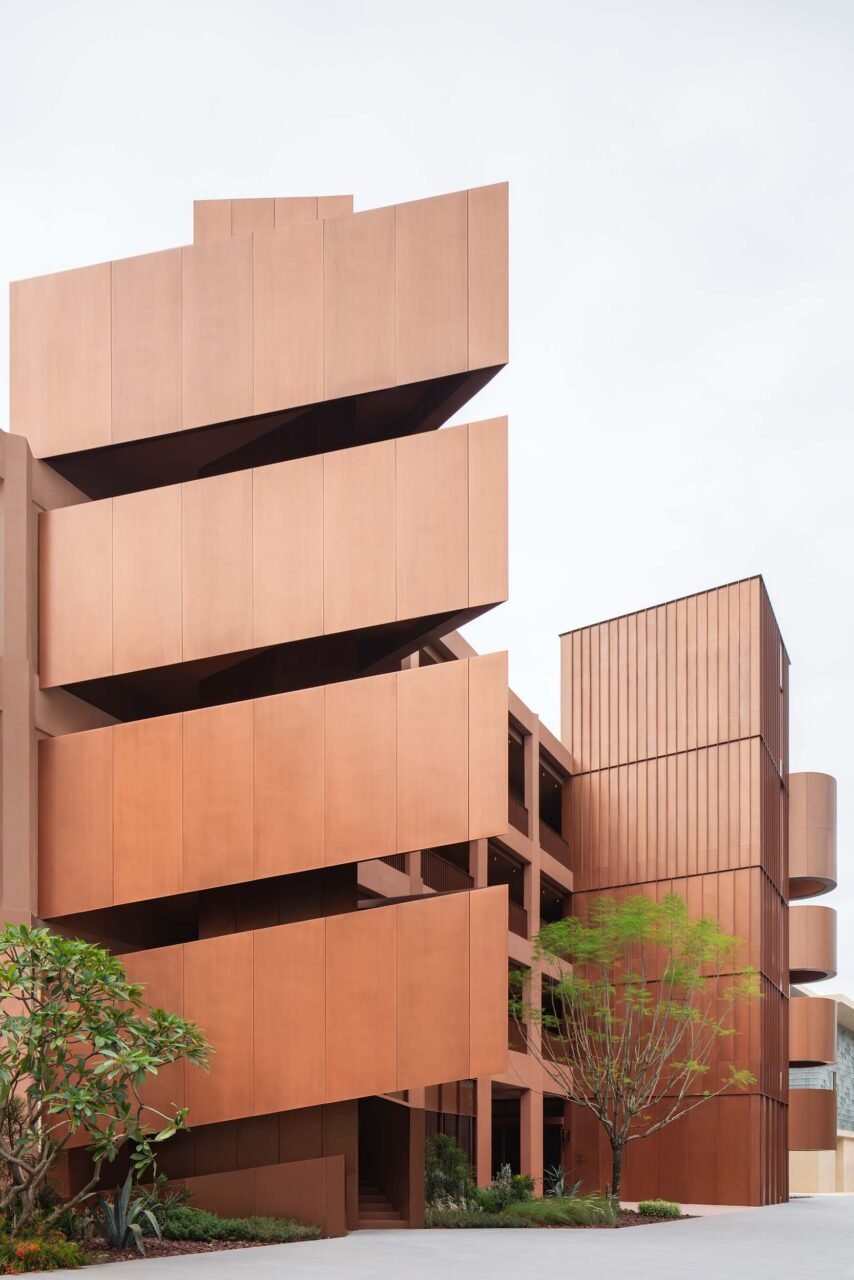
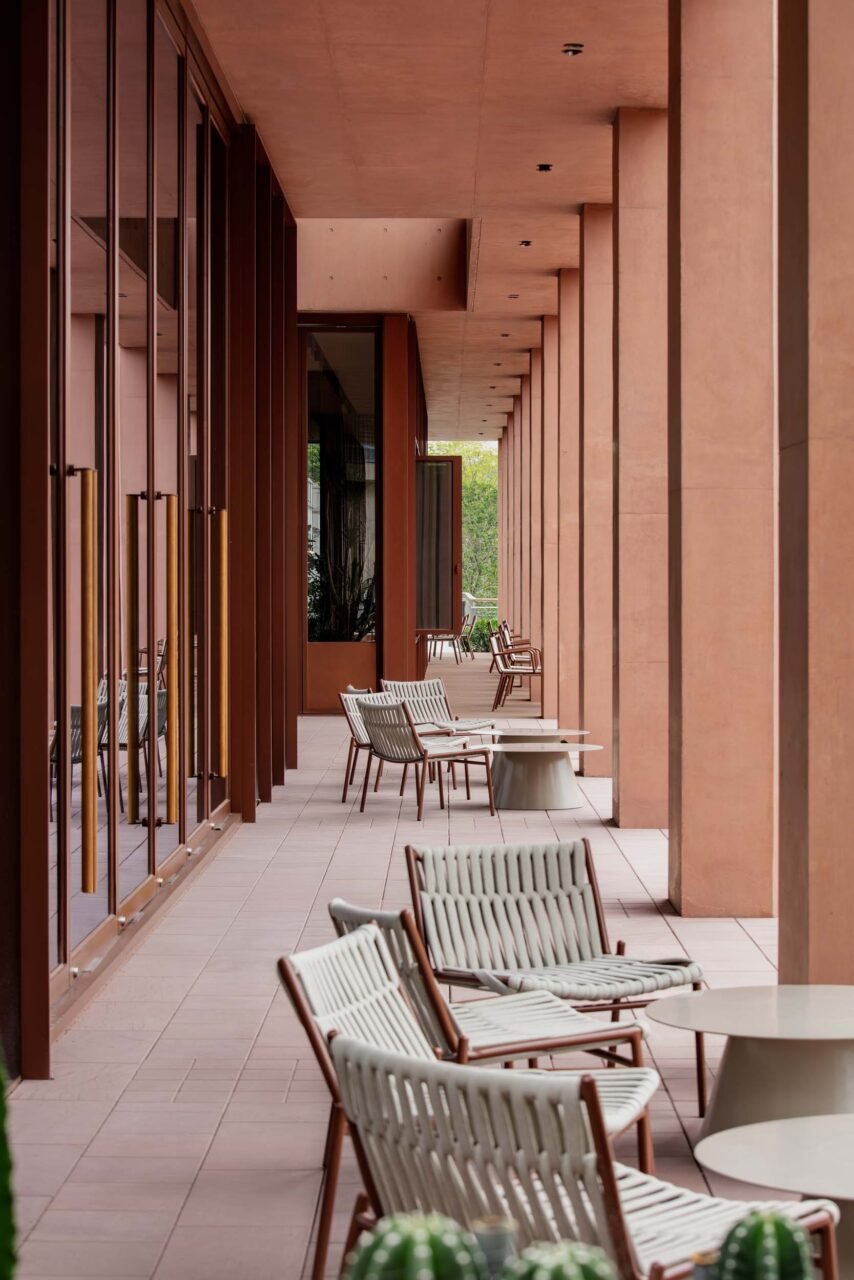
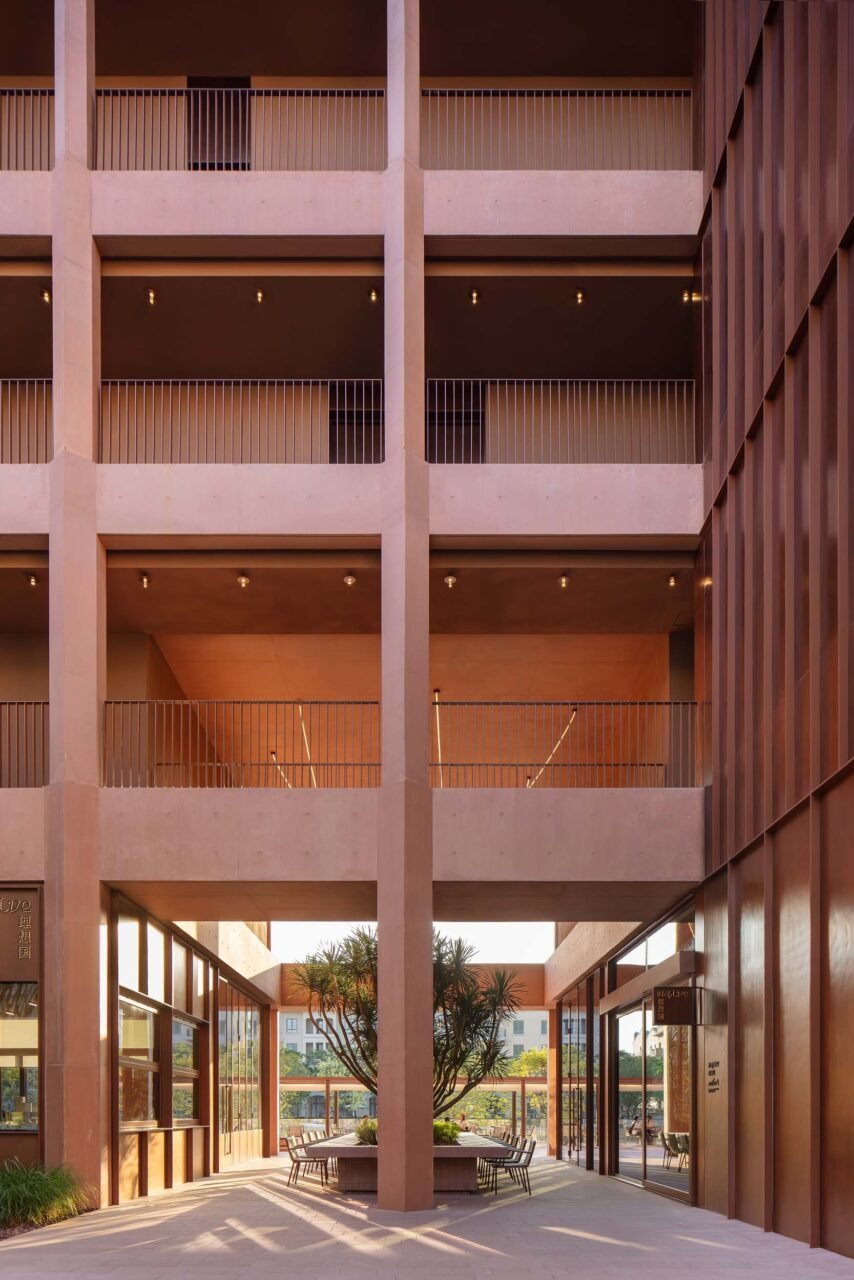
Red fair-faced concrete colonnades clad the facade in a linear grid. The color was chosen for its allusions to brick and clay, bringing a natural side to the concrete. Massing is further softened by polygonal columns which alleviates the boundary between indoors and out and allows nature to drift inside. The structure establishes two double-height, semi-outdoor courtyards and a continuous pedestrian zone. Contrast to the fair-faced concrete and the symmetrical language of the grid, B.L.U.E encased the external escape stairs with patterned red copper panels.
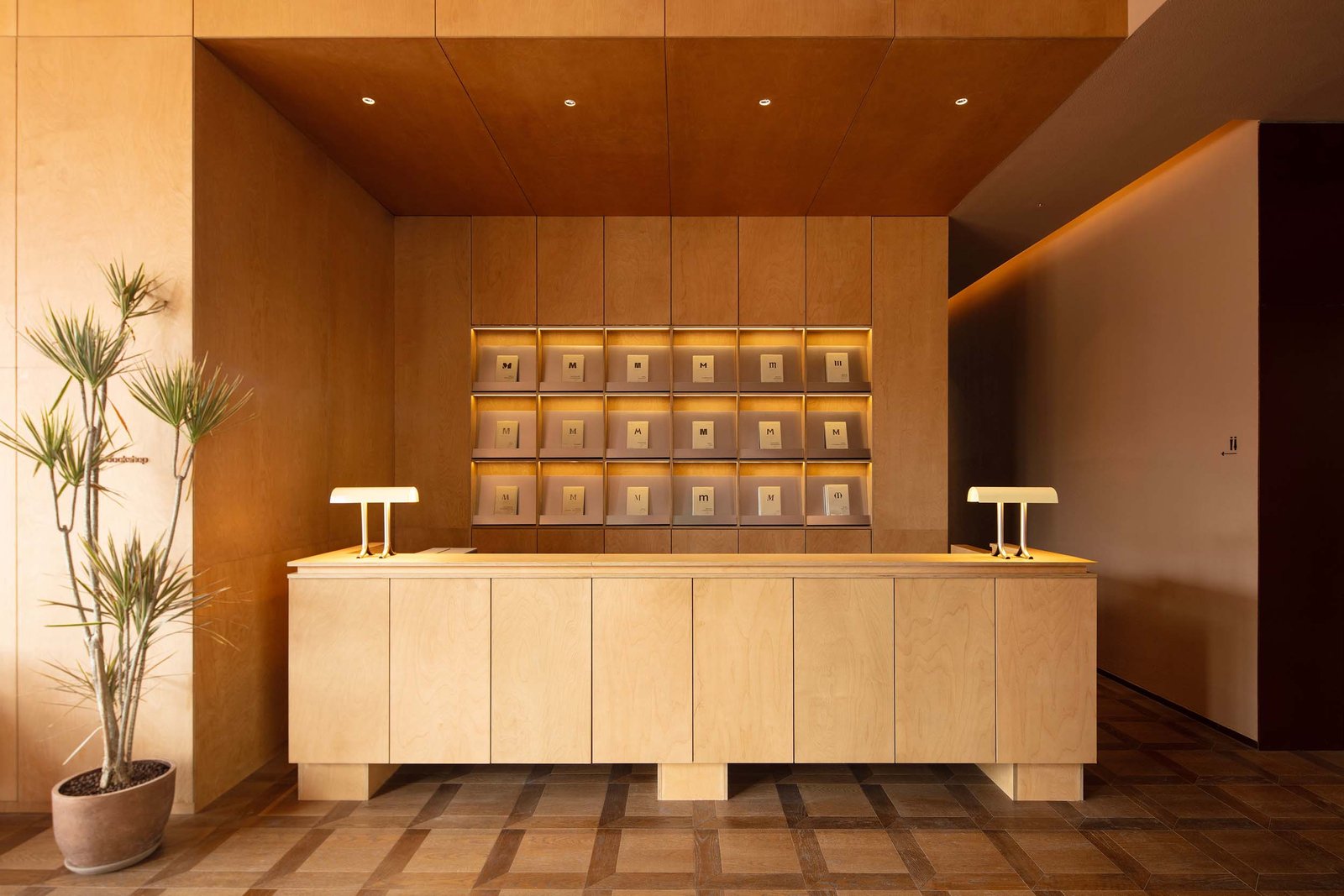
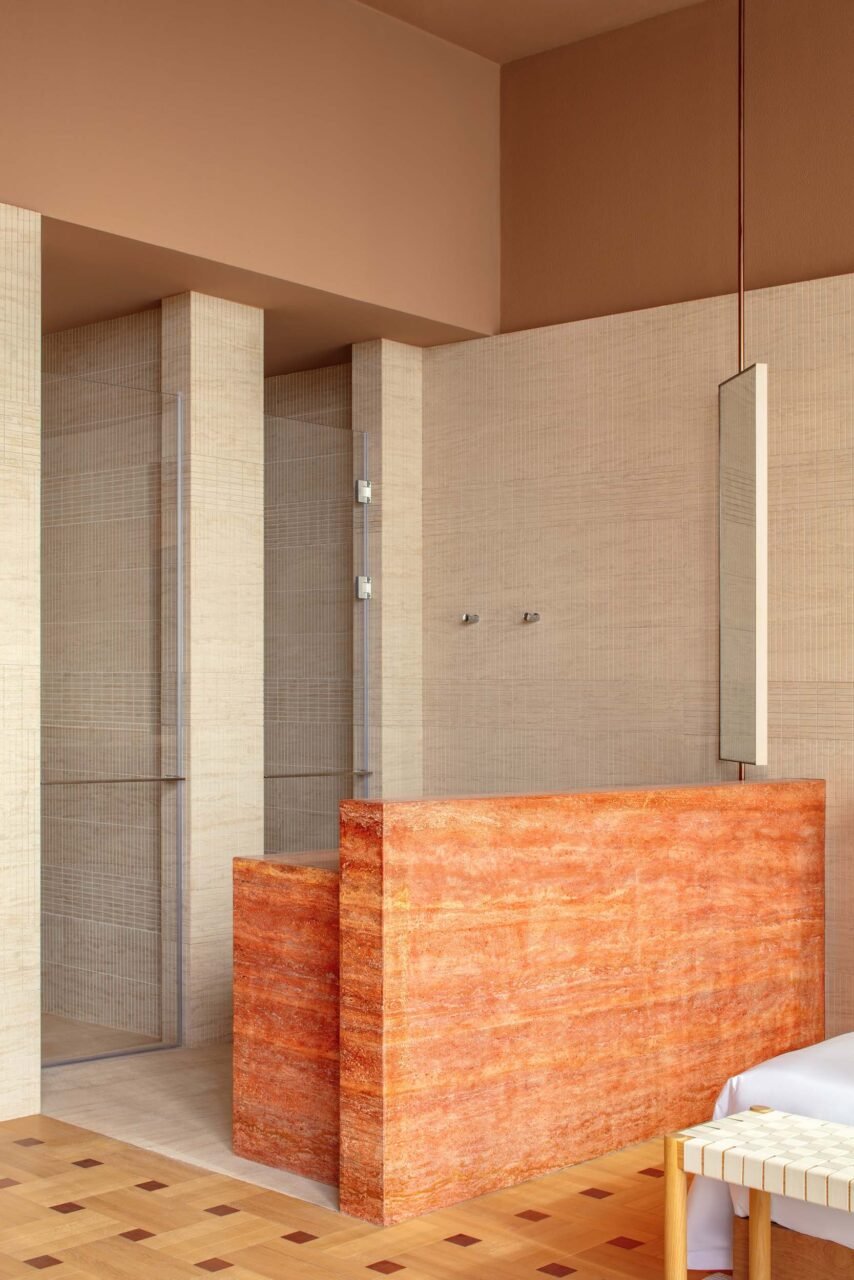
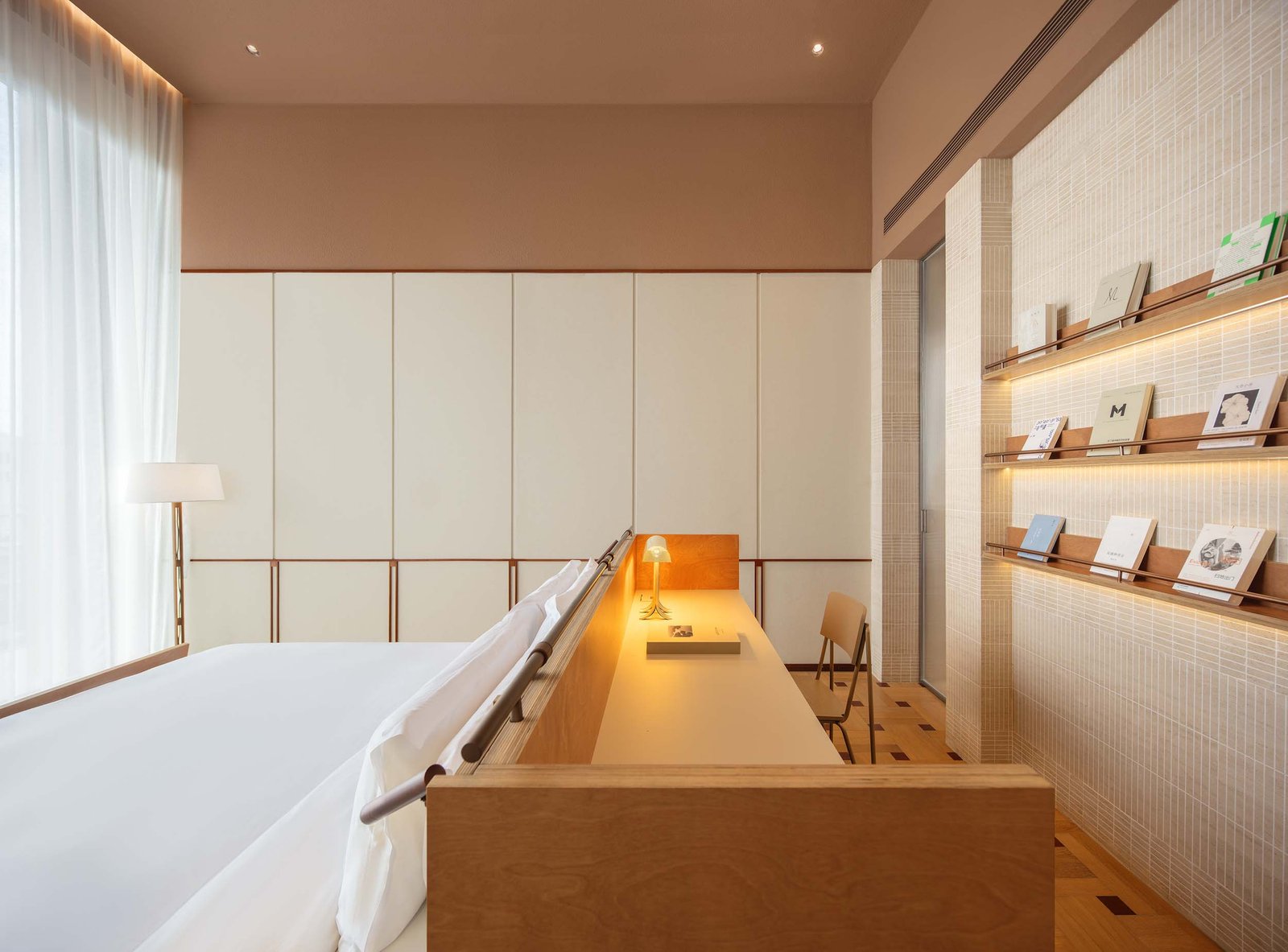
The warm material language of the facade continues to the interiors through the use of wood-grain stone, concrete brick, red plywood, and red travertine. Natural materials and local culture tie the design to its picturesque surroundings and neighborhood. In addition to the Qi Lou influence, B.L.U.E also reinterpreted traditional floor ornamentation found in Guangzhou. The design team used terrazzo, patterned timber flooring, and mosaic stone tiles to do so with a modern twist. These subtle patterns further enhance the calming interiors through the continued, but subtle shift of warm materials.
Just as the courtyards and colonnades create room for the massing to breathe, the guestrooms prioritize a restful, nature-facing design. The rooms are finished in neutrals: beige, pinky terra-cotta, and a muted saturated red. Wood headboards and cream-tiled walls paint a place of respite. The facade also ensures each room has its own private outdoor terrace.
Author’s Room Hotel balances the traditional and contemporary, nature and urban building. B.L.U.E weave the two together for a hotel that aligns aesthetically and conceptually within its site.