

EARTHWORKS
A Raw Earth Provençal Village,
Luberon Regional Nature Park 2025,
France
THEME : Raw Earth Villas in Biobased Material
LOCATION : Luberon Regional Nature Park, France 2024
STATUS : Schematic Design
PROVENÇAL EARTHWORKS
A Raw Earth Provençal Village, Luberon Regional Nature Park, France
The “Earthworks” are organizing their own revolution by reinventing traditional architectural forms and practices, rigid modernist urban planning and the commercial limits of the productivist housing system, to create unique inhabited works, inspired by Land Art, which awaken the consciousness of our relationship with the earth and questions the accepted limits of the art of building.
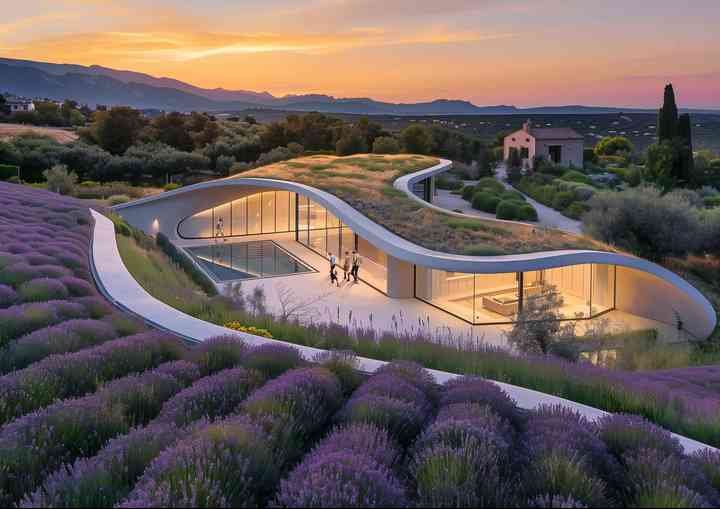
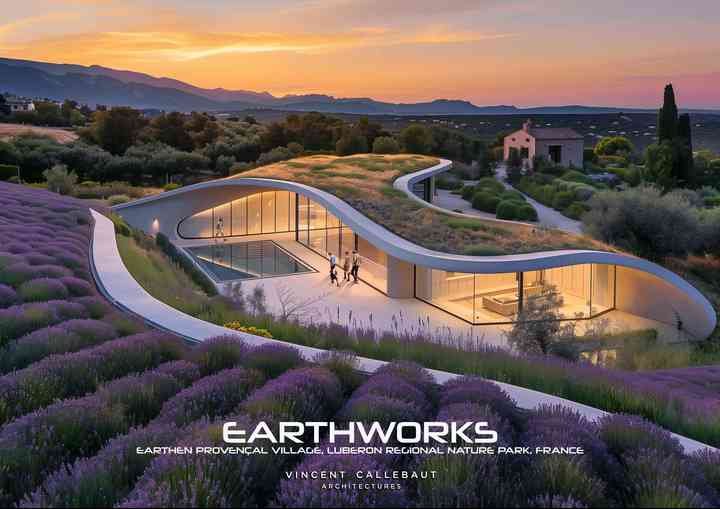
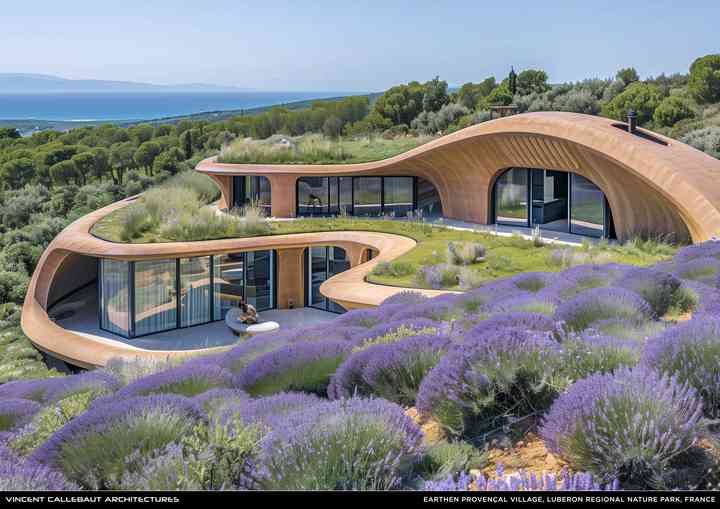
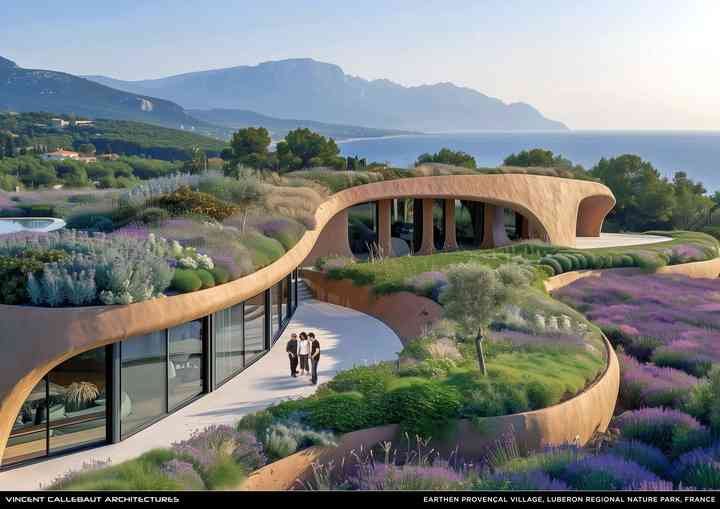
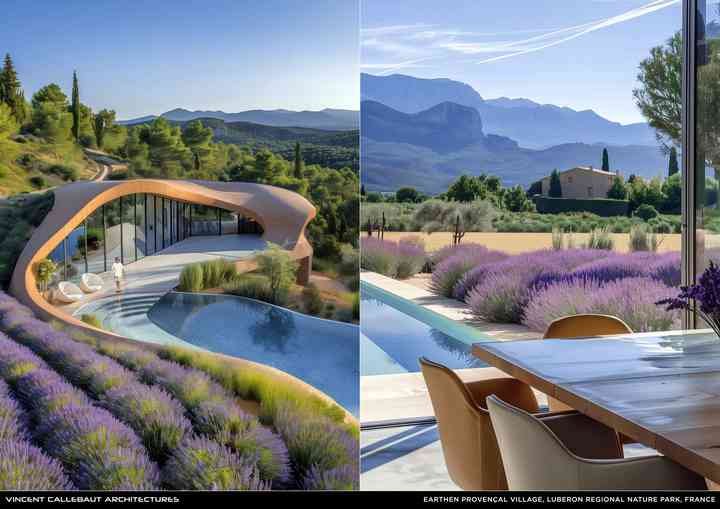
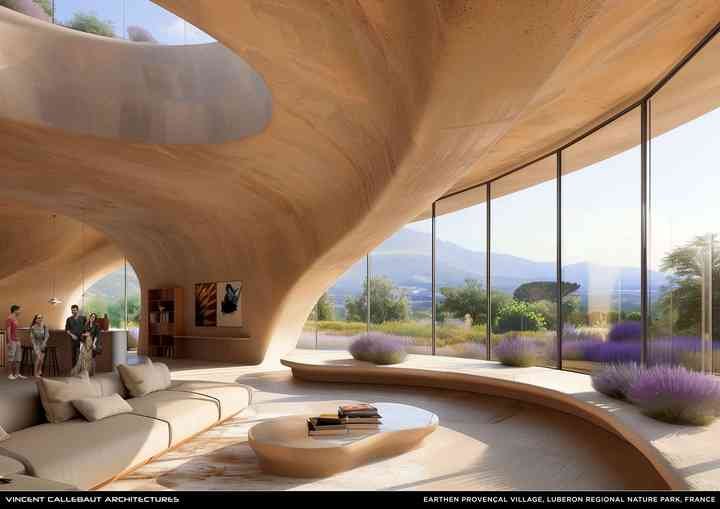
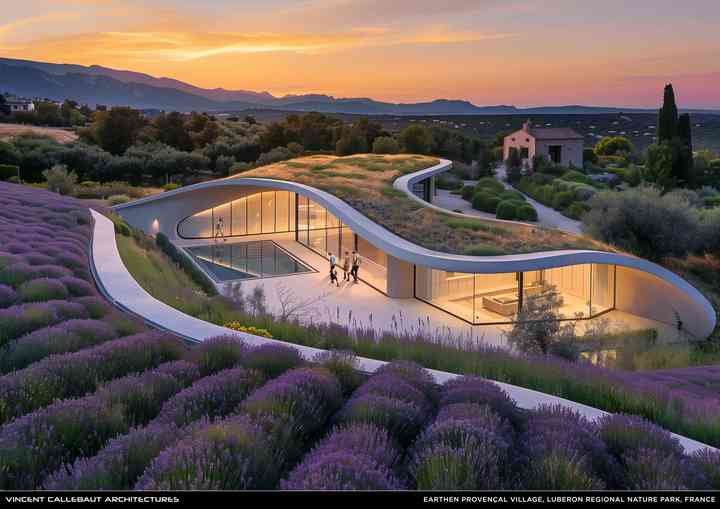
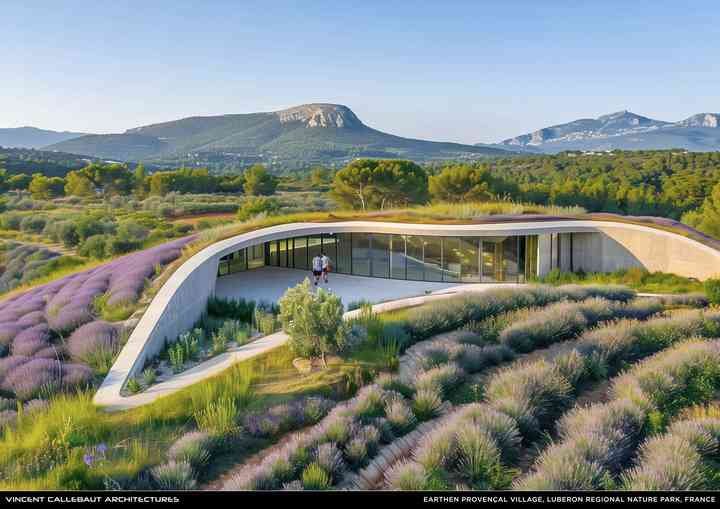
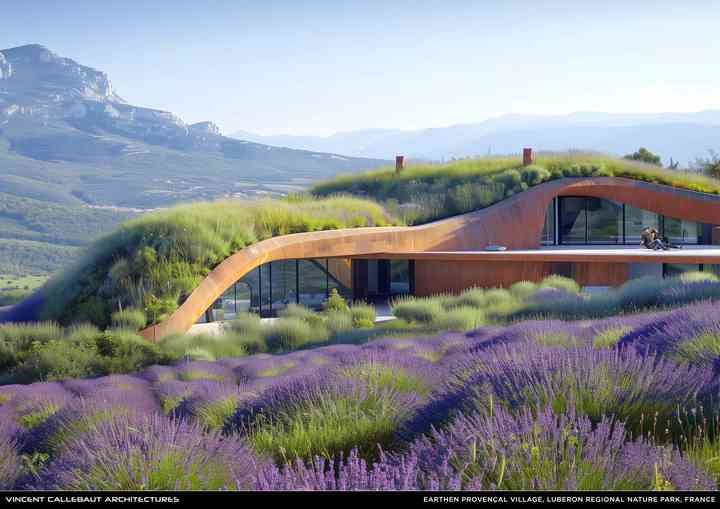
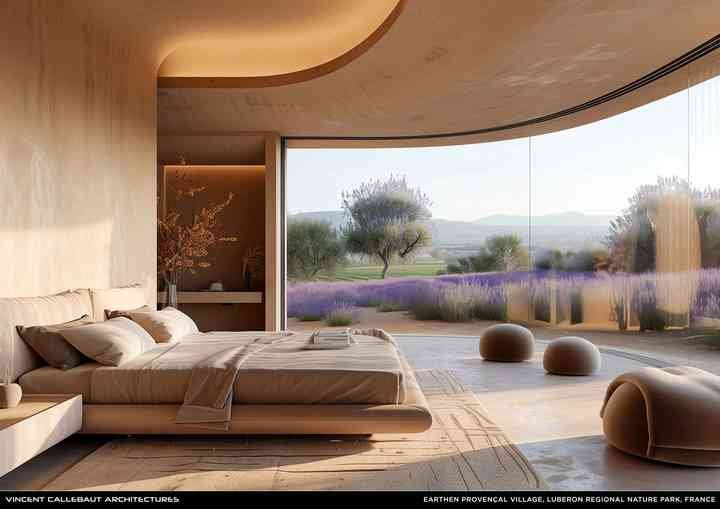
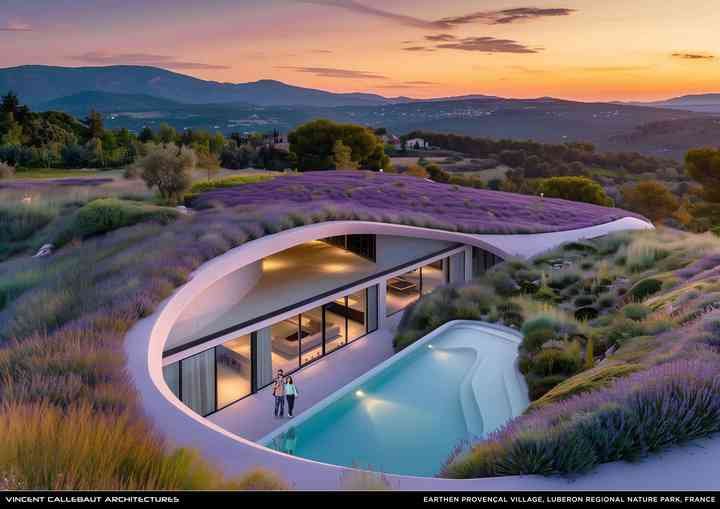
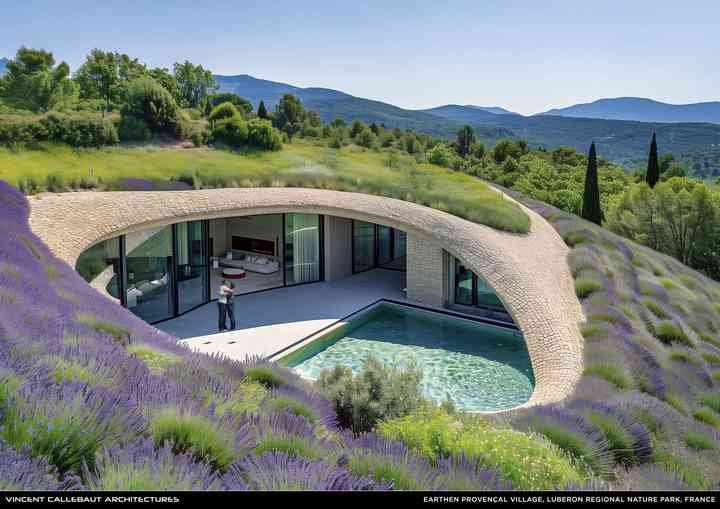
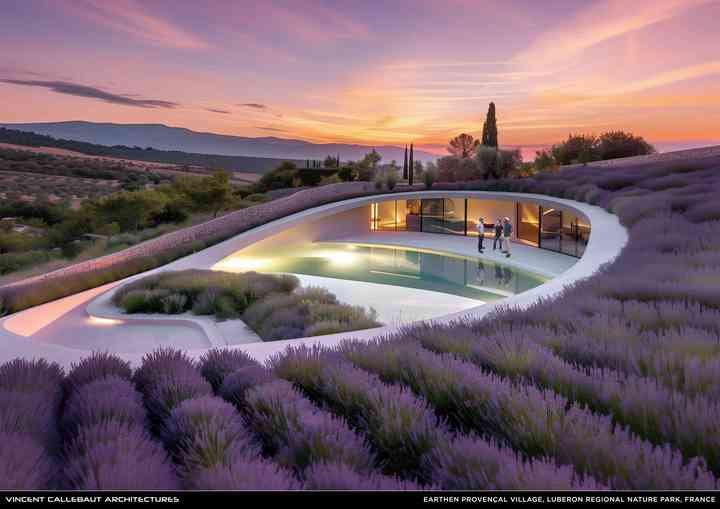
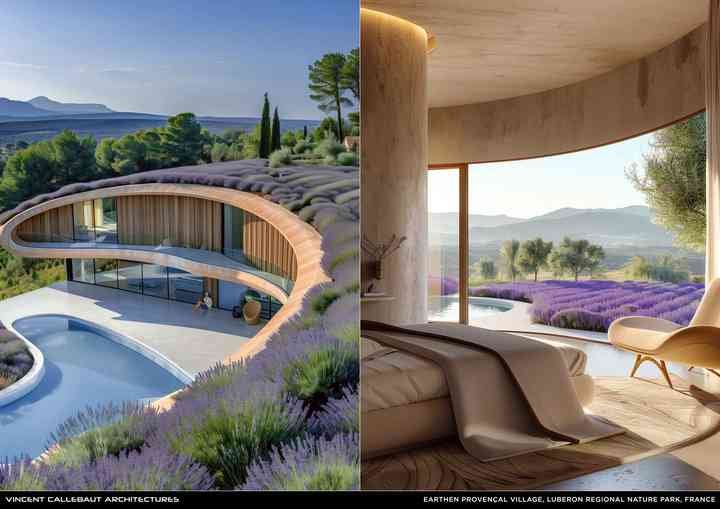
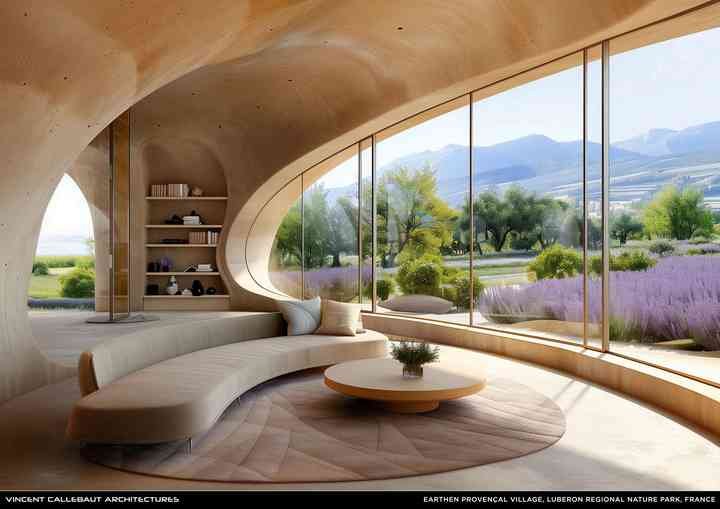
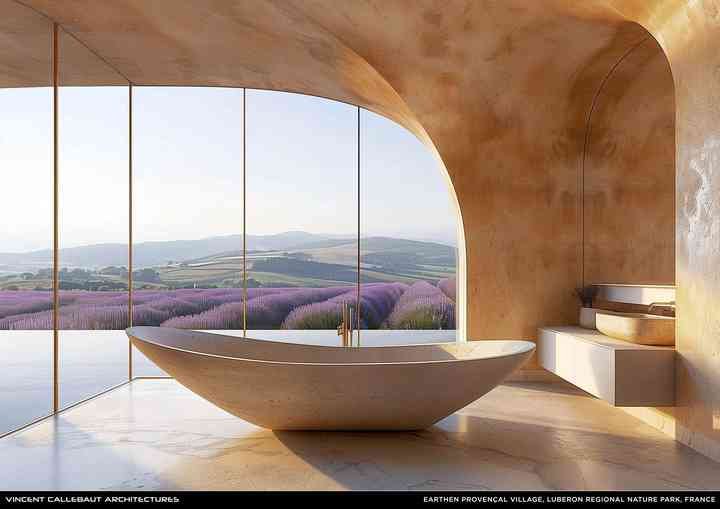
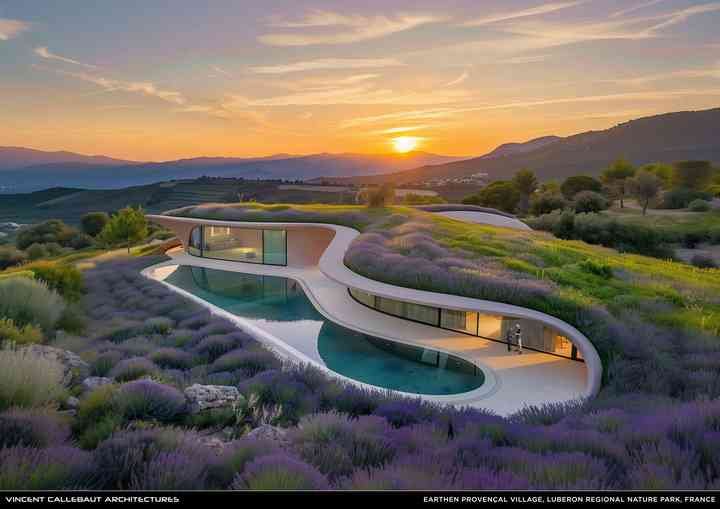
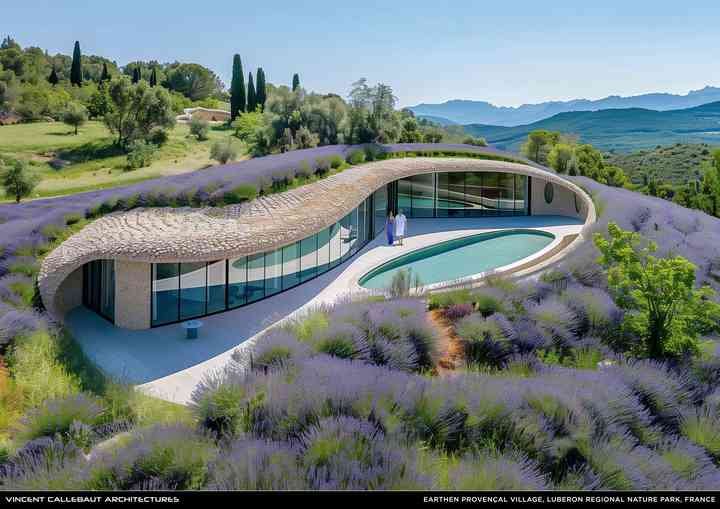
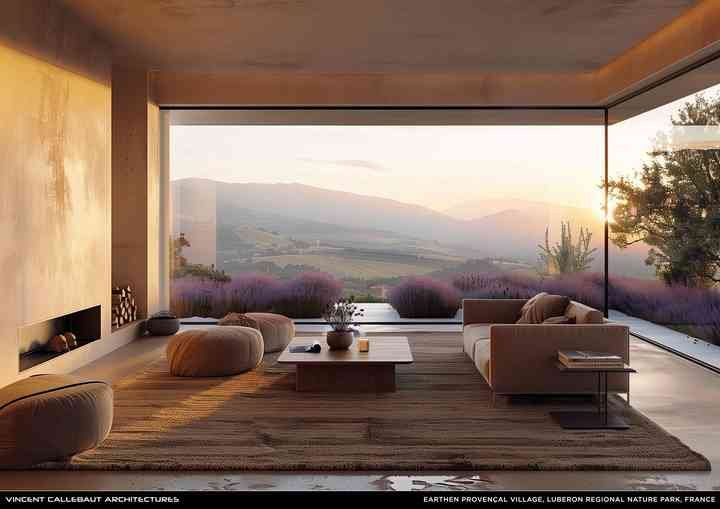
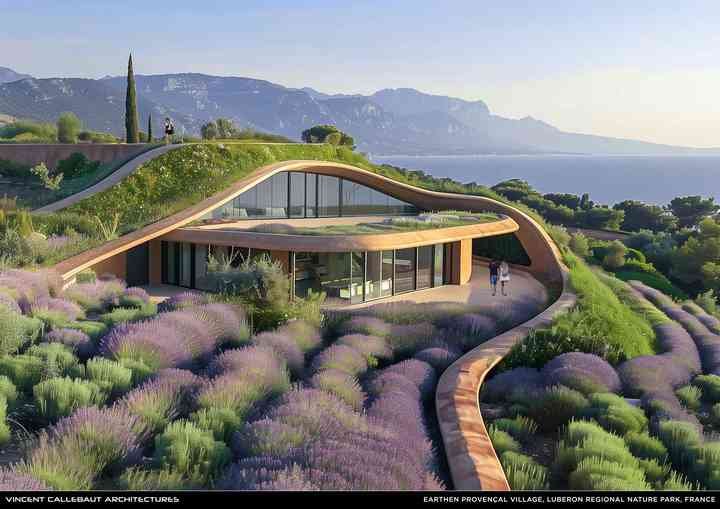
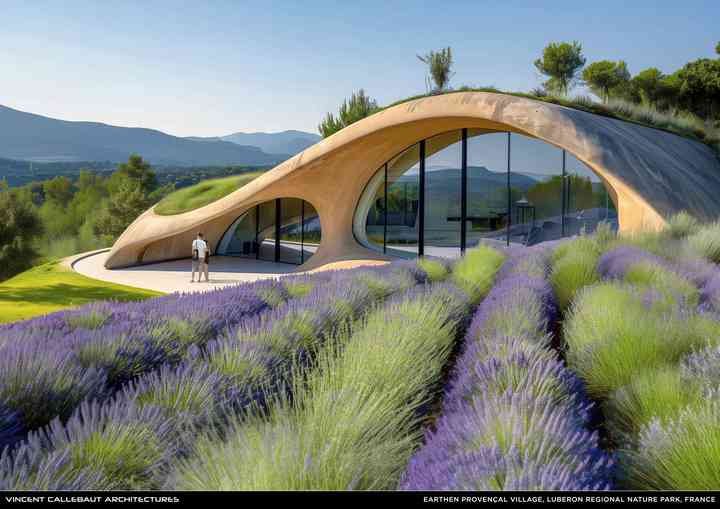
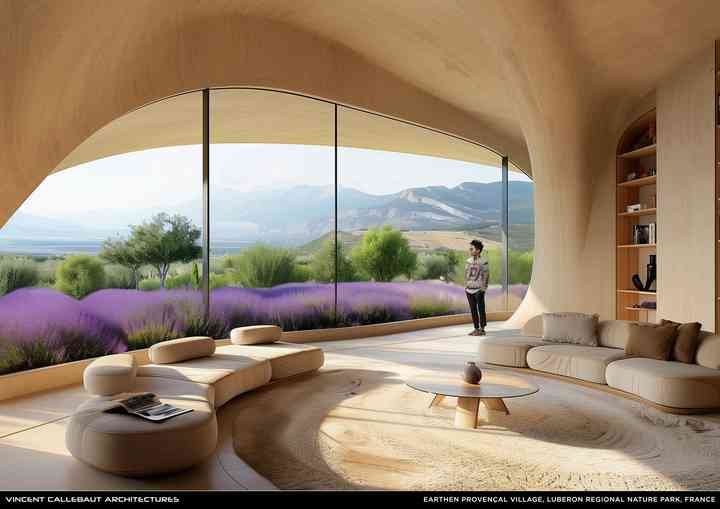
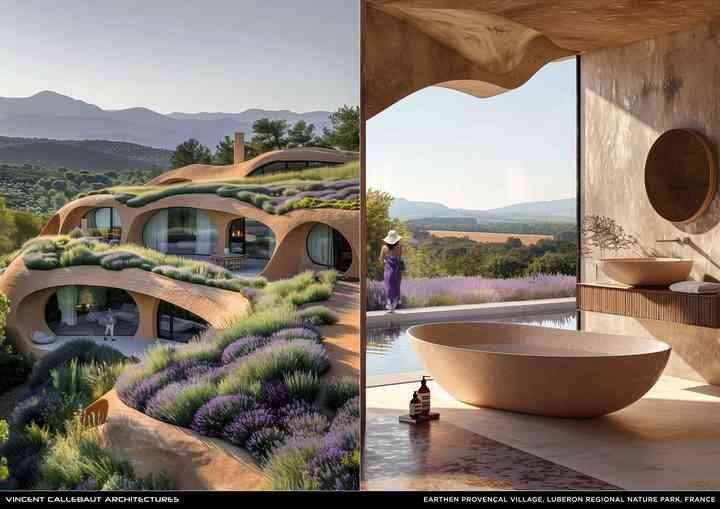
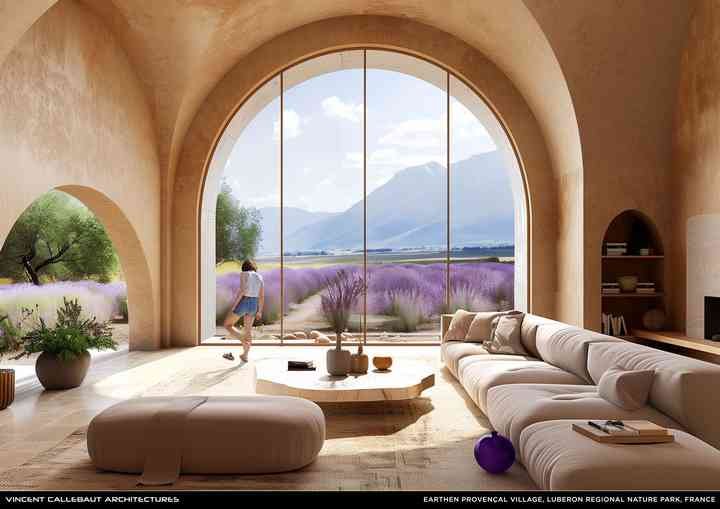
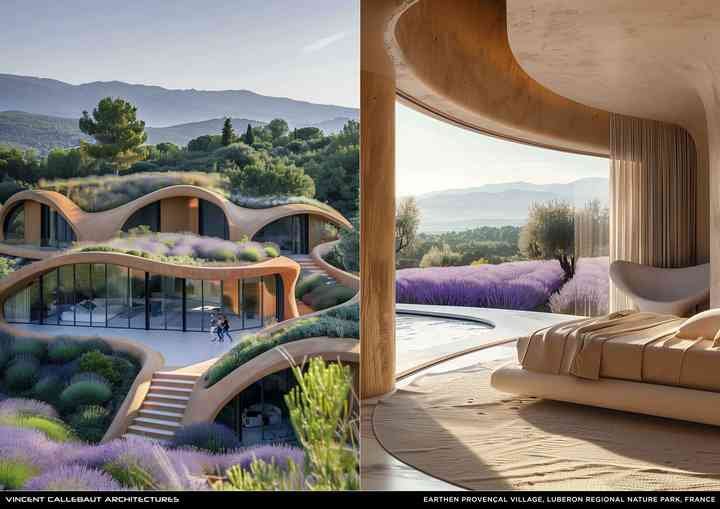
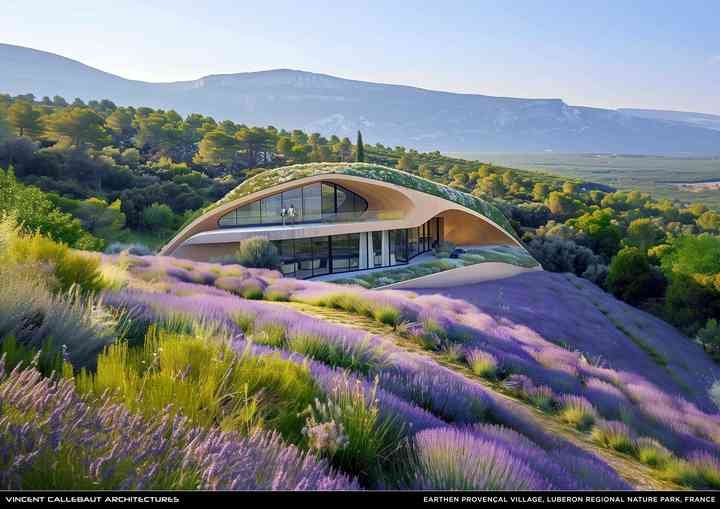
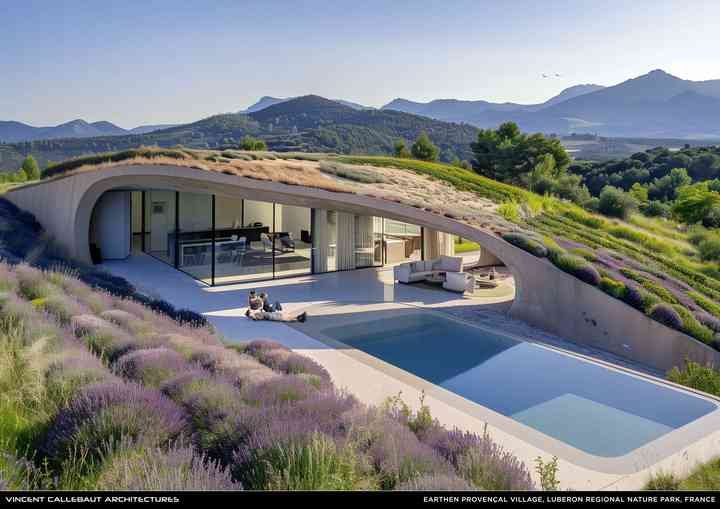
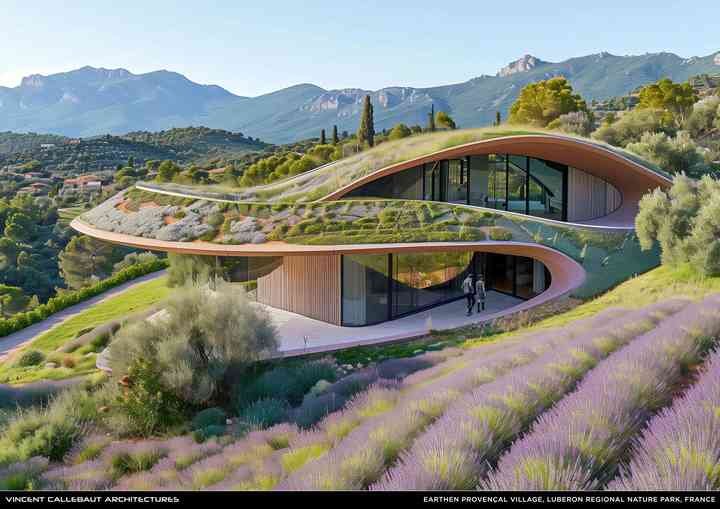
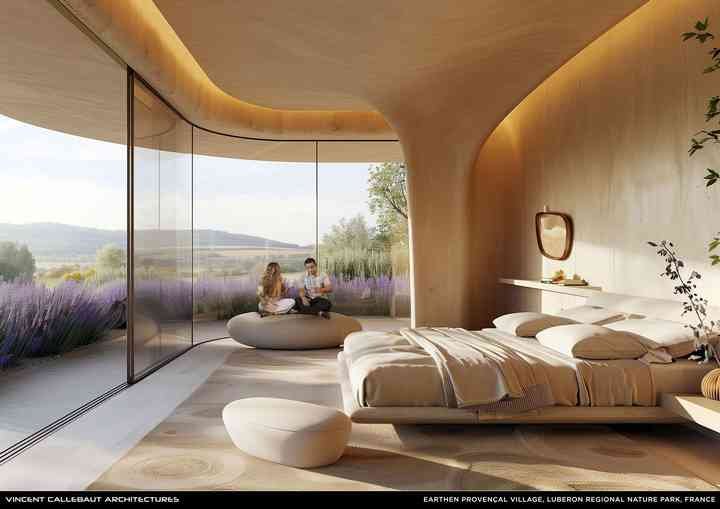
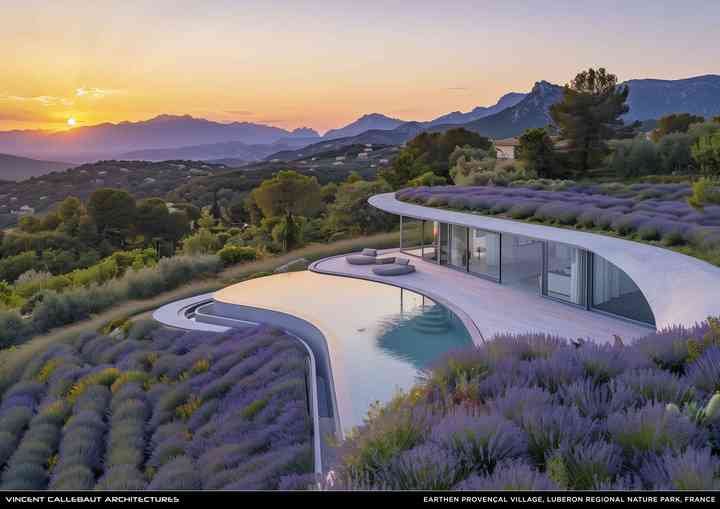
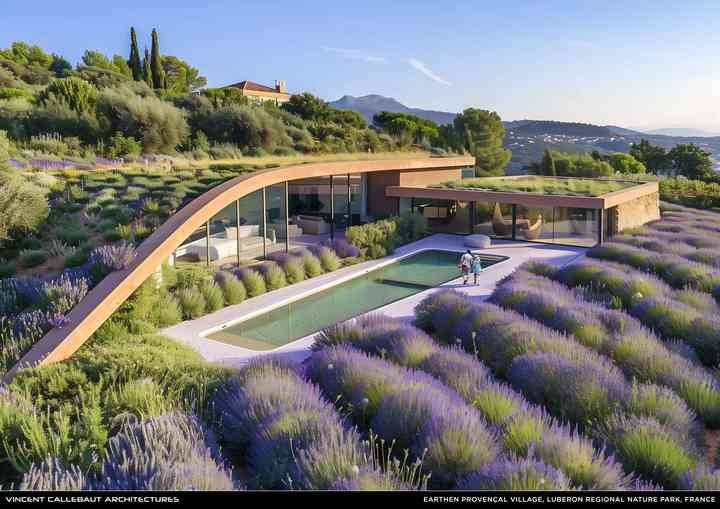
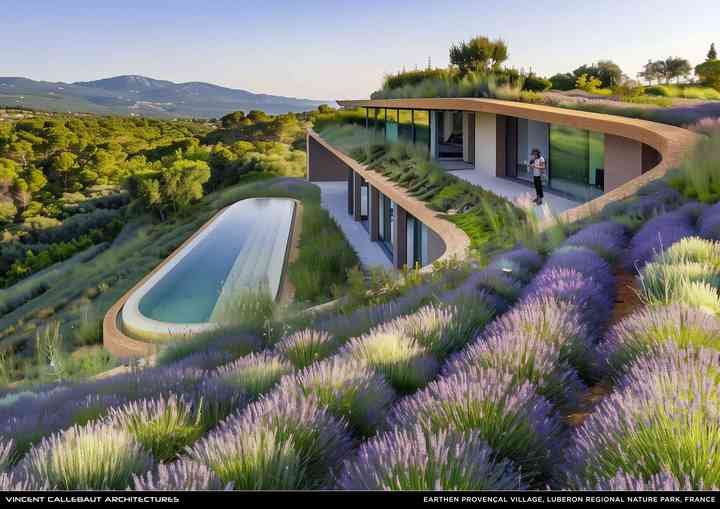
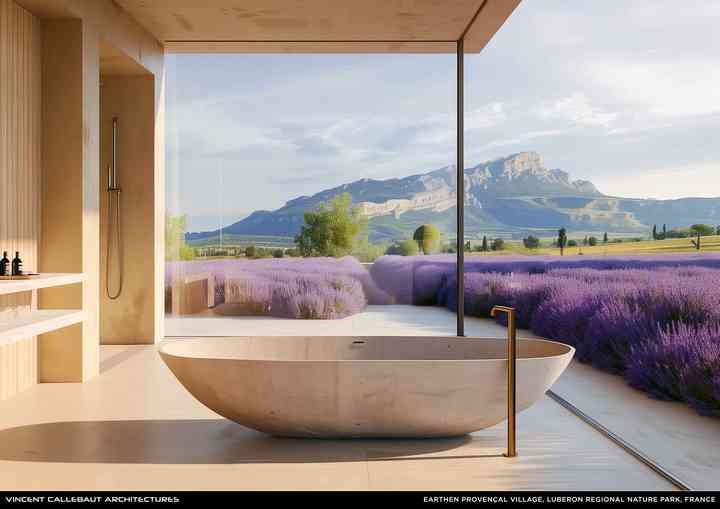
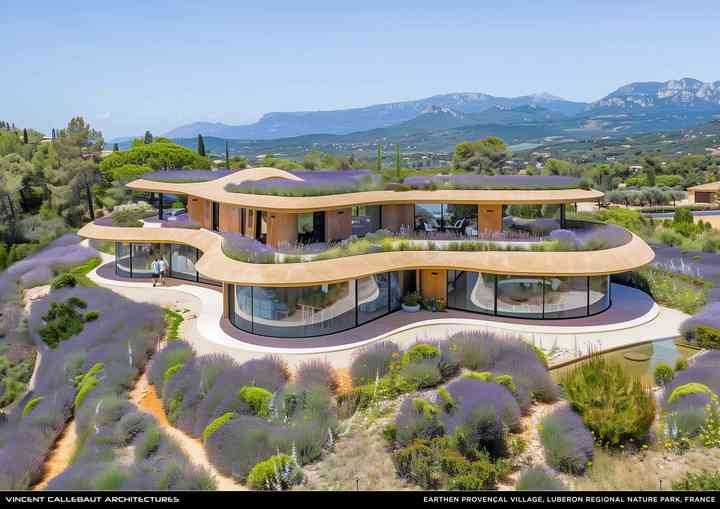
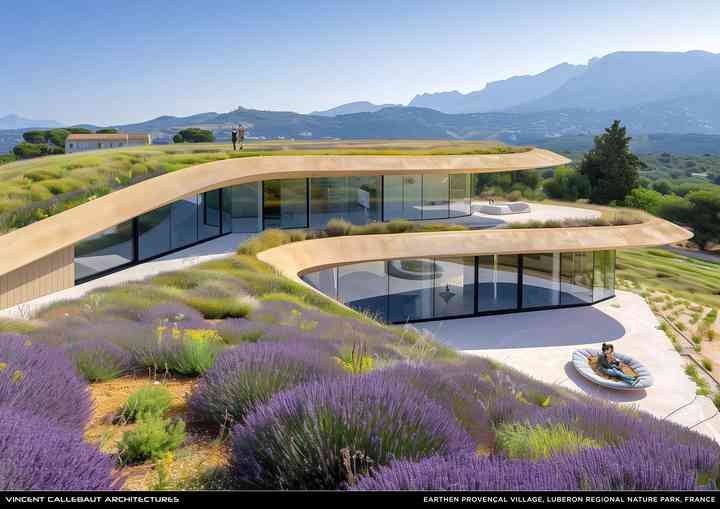
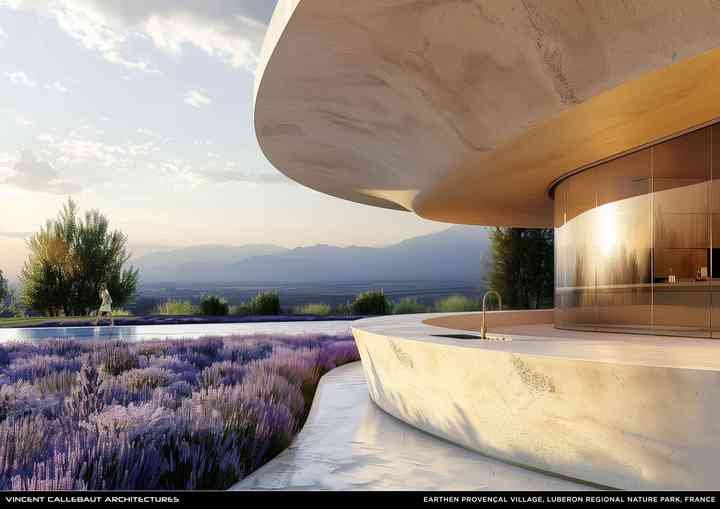
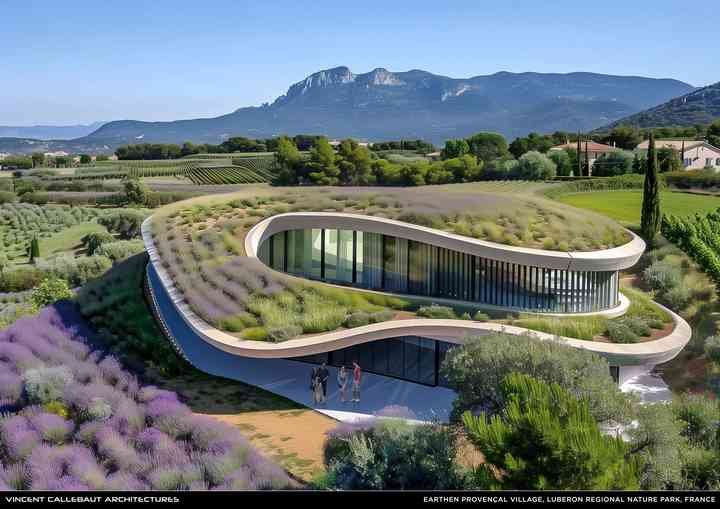
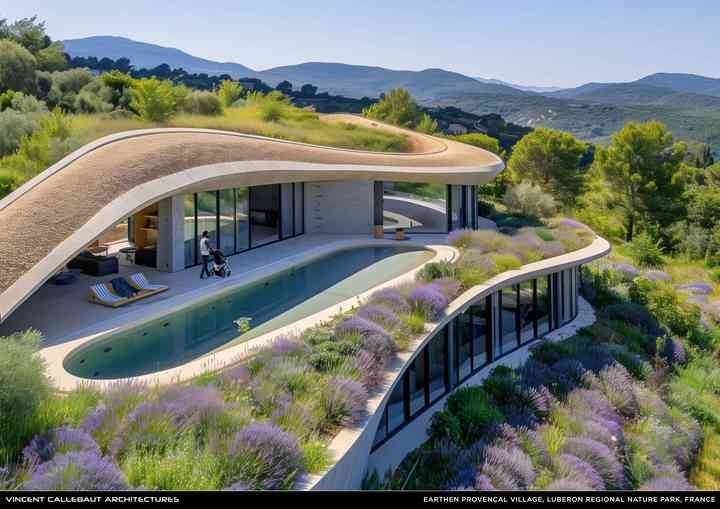
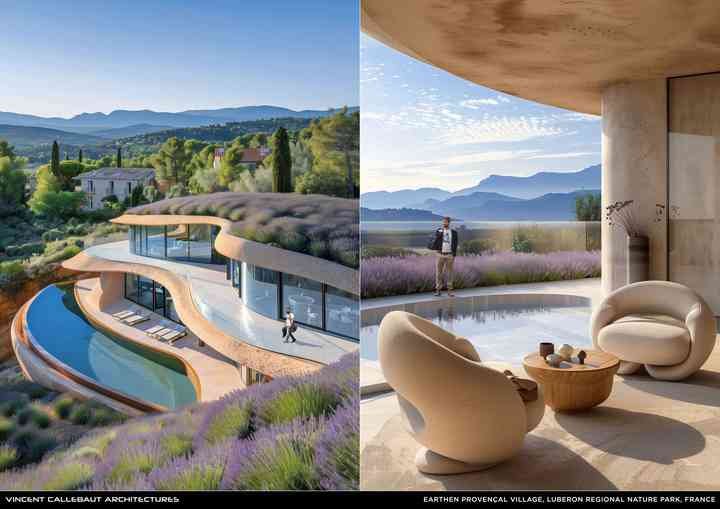
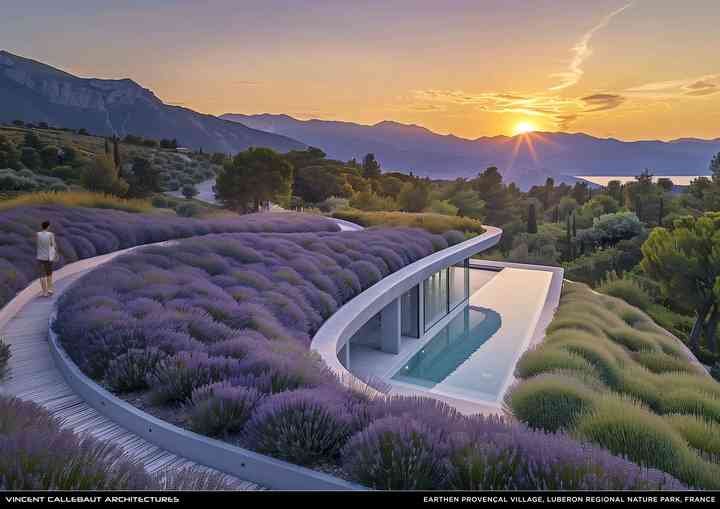
At the heart of the Luberon Regional Natural Park, a village of contemporary houses made of earth, straw and clay is stealthily integrated under the ocher soils and paths of Roussillon in Provence-Alpes-Côte d’Azur, displaying their variations of natural colors of gold and blood under the azure blue of the sky.
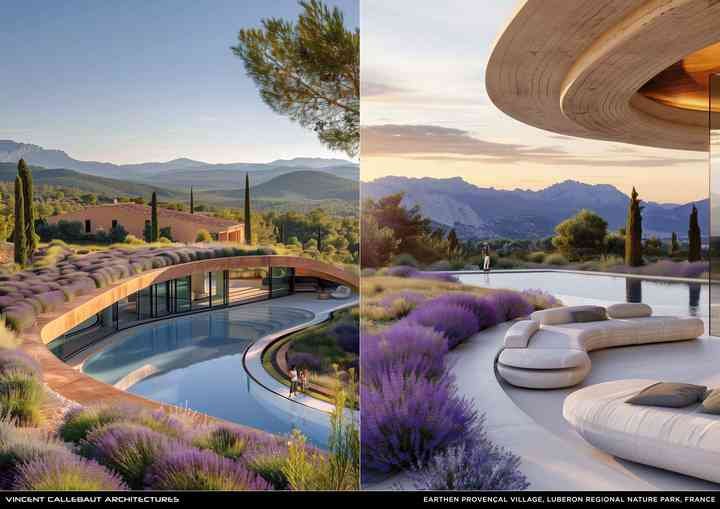
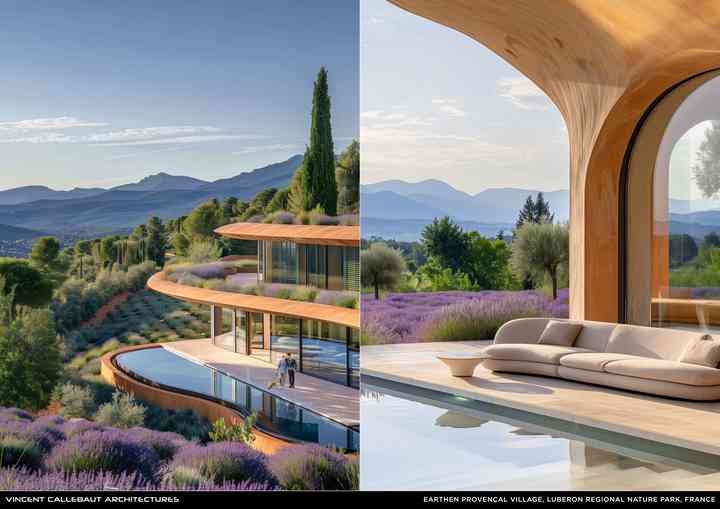
These Mediterranean constructions in raw earth, the oldest material in the world but also the most eco-responsible, literally blend into the great Provençal landscape to better disappear under the lavender fields, bordered by cypresses and umbrella pines. Stealthy, they campaign for a low-tech, resource-efficient vernacular architecture.
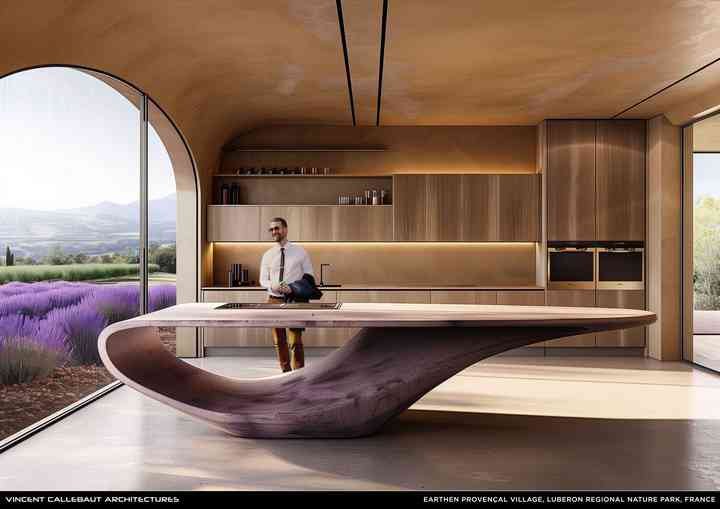
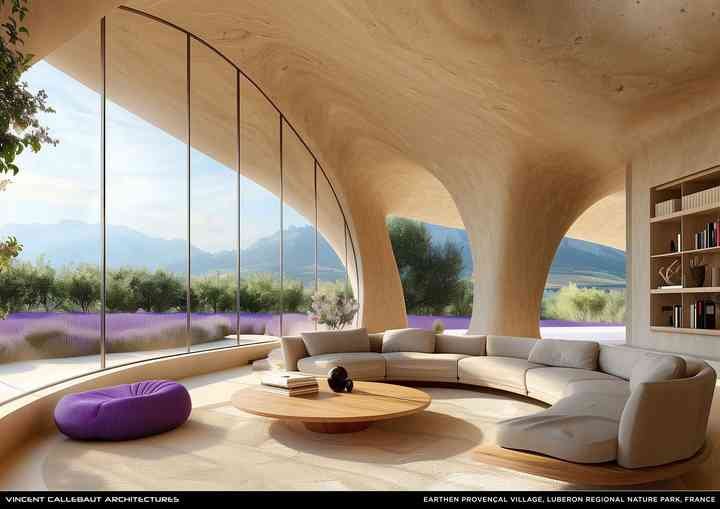
Used for millennia, raw earth has significant advantages. It is an inexpensive material, available locally everywhere, ideal for eco-construction logic. Dense, porous and with good thermal inertia when lined with biobased insulation made from wood fiber, reeds or straw, it contributes to excellent regulation of humidity in the building and to the smoothing of interior temperatures, particularly in the event of a heatwave to optimize summer comfort.
Made from natural materials, including rock, gravel, sand, silt, clay and water, sometimes combined with breathable and waterproof lime coatings, Earthworks play with light and space, perception and the passage of time. They trace a striking intersection between the temporal and the eternal, often recalling monumental ancient works such as Stonehenge, the pyramids, Native American mounds, the Nazca lines in Peru, and of course closer the Sentier des Ocres. But they also draw inspiration from minimal and conceptual art, such as Italian Arte Povera, which exalts raw and humble materials, and from the social sculpture of German avant-garde artist Joseph Beuys.
Land Art is one of the major movements that defined post-war American art. Taking the land as topography and territory, and the earth as an artistic medium, Land Art can today be considered not only as an artistic work but also as an architectural performance on site.
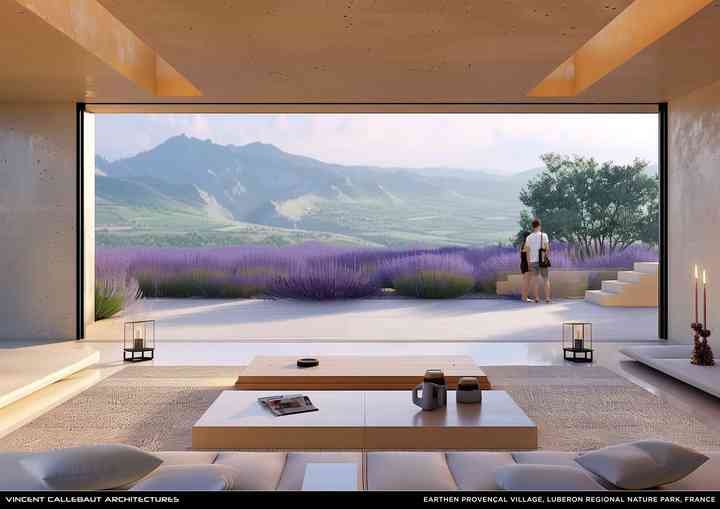
Provençal Earthworks want to express a feeling of liberation and freedom and inspire new generations of artists and architects to think about the landscape in a different way. Like the 20th century earthworks of Smithson, Heizer, De Maria, James Turrell, Earthworks houses are inseparable from the territory on which they were created. They are set in places where they live and breathe and often deal with big philosophical questions: time and memory, space and the negation of space, exploration and travel and the human impulse to leave its footprint.
The notion of the sublime is an integral part of the Provençal Earthworks project. It brings us into a state of respect and awareness of our connection with something greater than ourselves that goes beyond us. It invites its inhabitants to make their own journey into the landscape of Provence through a total immersion of the senses at the heart of an intimate experience.
Vincent Callebaut Architectures
www.vincent.callebaut.org
EARTHWORKS PROVENÇAUX
Un Village Provençal en Terre Crue, Parc Naturel Régional du Luberon, France
Les “Earthworks” organisent leur propre révolution en réinventant les formes et pratiques architecturales traditionnelles, l’urbanisme moderniste rigide et les limites commerciales du système productiviste de logements, pour créer des œuvres habitées uniques, inspirées du Land Art, qui éveillent la conscience de notre relation avec la terre et remet en question les limites acceptées de l’art de construire.
Au cœur du Parc Naturel Régional du Luberon, un village de maisons contemporaines en terre, paille et argile s’intègre ainsi furtivement sous les sols et les sentiers d’ocres du Roussillon en Provence-Alpes-Côte d’Azur, étalant leurs variations de couleurs naturelles d’or et de sang sous l’azur bleu du ciel.
Ces constructions méditerranéennes en terre crue, le matériau le plus ancien du monde mais aussi le plus écoresponsable, se fondent littéralement dans le grand paysage provençal pour mieux disparaître sous les champs de lavande, bordés de cyprès et de pins parasols. Furtives, elles militent pour une architecture vernaculaire low-tech, économe en ressources.
Employée depuis des millénaires, la terre crue présente des avantages non négligeables. C’est un matériau peu onéreux, disponible partout localement, idéal pour une logique d’écoconstruction. Dense, poreuse et dotée d’une bonne inertie thermique quand elle est doublée d’un isolant biosourcé en fibre de bois, de roseaux ou de paille, elle contribue à une excellente régulation de l’humidité dans le bâtiment et au lissage des températures intérieures, notamment en cas de canicule pour optimiser le confort d’été.
Fabriqués à partir de matériaux naturels, notamment de roche, de graviers, de sables, de limons, d’argile et d’eau, parfois combinés à des enduits à la chaux respirants et étanches, les Earthworks jouent avec la lumière et l’espace, la perception et le passage du temps. Ils tracent une intersection saisissante entre le temporel et l’éternel, rappelant souvent d’anciens ouvrages monumentaux tels que Stonehenge, les pyramides, les monticules amérindiens, les lignes de Nazca au Pérou, et bien sûr plus proche le Sentier des Ocres. Mais ils s’inspirent également de l’art minimal et conceptuel, comme l’Arte Povera italien, qui exalte les matériaux bruts et humbles, et de la sculpture sociale de l’artiste d’avant-garde allemand Joseph Beuys.
Le Land Art est l’un des mouvements majeurs qui a défini l’art américain d’après-guerre. Prenant la terre comme topographie et territoire, et la terre comme support artistique, le Land Art peut aujourd’hui être considéré non seulement comme une œuvre artistique mais aussi comme une performance architecturale sur site.
Les Earthworks provençaux en terre veulent exprimer un sentiment de libération et de liberté et inspirer les nouvelles générations d’artistes et d’architectes à penser le paysage d’une manière différente. A l’image des œuvres en terre du XXème siècle de Smithson, Heizer, De Maria, James Turrell, les maisons Earthworks sont indissociables du territoire sur lequel elles ont été créées. Elles se situent dans des endroits où elles vivent et respirent et traitent souvent de grandes questions philosophiques : le temps et la mémoire, l’espace et la négation de l’espace, l’exploration et le voyage et l’impulsion humaine de laisser sa marque.
La notion de sublime fait partie intégrante du projet Earthworks. Il nous amène dans un état de respect et de conscience de notre lien avec quelque chose de plus grand que nous-mêmes qui nous dépasse. Il invite ses habitants à faire leur propre voyage dans le paysage de Provence à travers une immersion totale des sens au cœur d’une expérience intime.
Vincent Callebaut Architectures
www.vincent.callebaut.org
Source: Vincent Callebaut Architectures