

What was once hot Arizona desert has become an oasis for an entire community.
Paul and Melinda Gunther approached Jack DeBartolo III, principal of Phoenix-based firm DeBartolo Architects, with the idea for an after-school and community center in nearby Chandler. The couple had previously worked with the firm on the renovation of a church where Paul had been the pastor. Building a community center was a longtime dream for the Gunthers, who through their foundation, Live Love, purchased the 5,000-square-foot abandoned property a few miles from downtown Chandler.
They had the property, some funding, and a dream. But that didn’t mean it was easy. “It was literally looking impossible,” DeBartolo said.
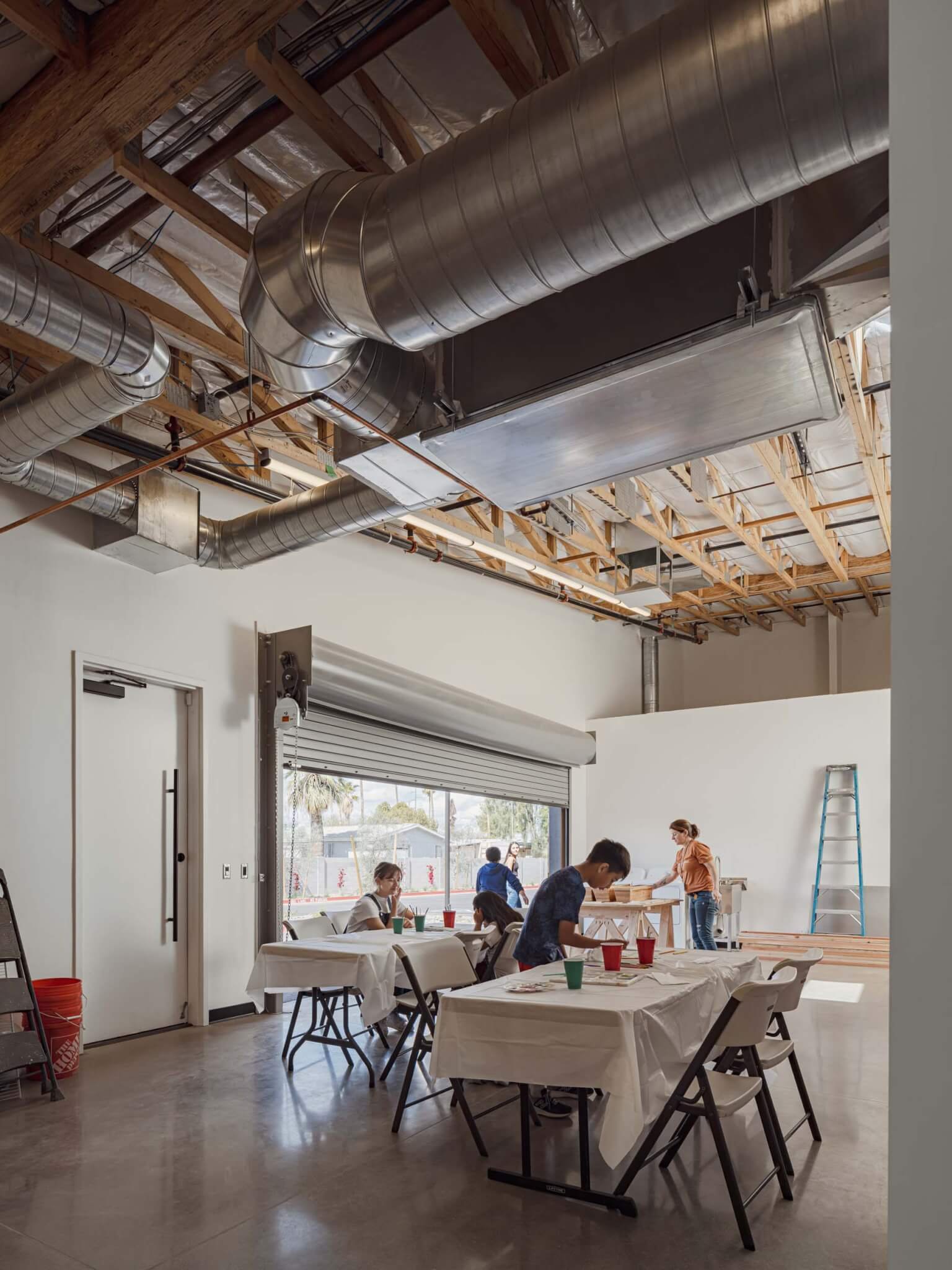
Over two years, Paul fundraised for the project, which meant stopping, restarting, and losing contractors. In spite of these delays, the community center opened in 2024 as planned, with a gathering space focused on giving vulnerable young people a place to hang out, play, and learn new skills. The ultimate scheme tucks a meeting room between a garage and a full commercial kitchen, where kids can learn to repair cars and run kitchens.
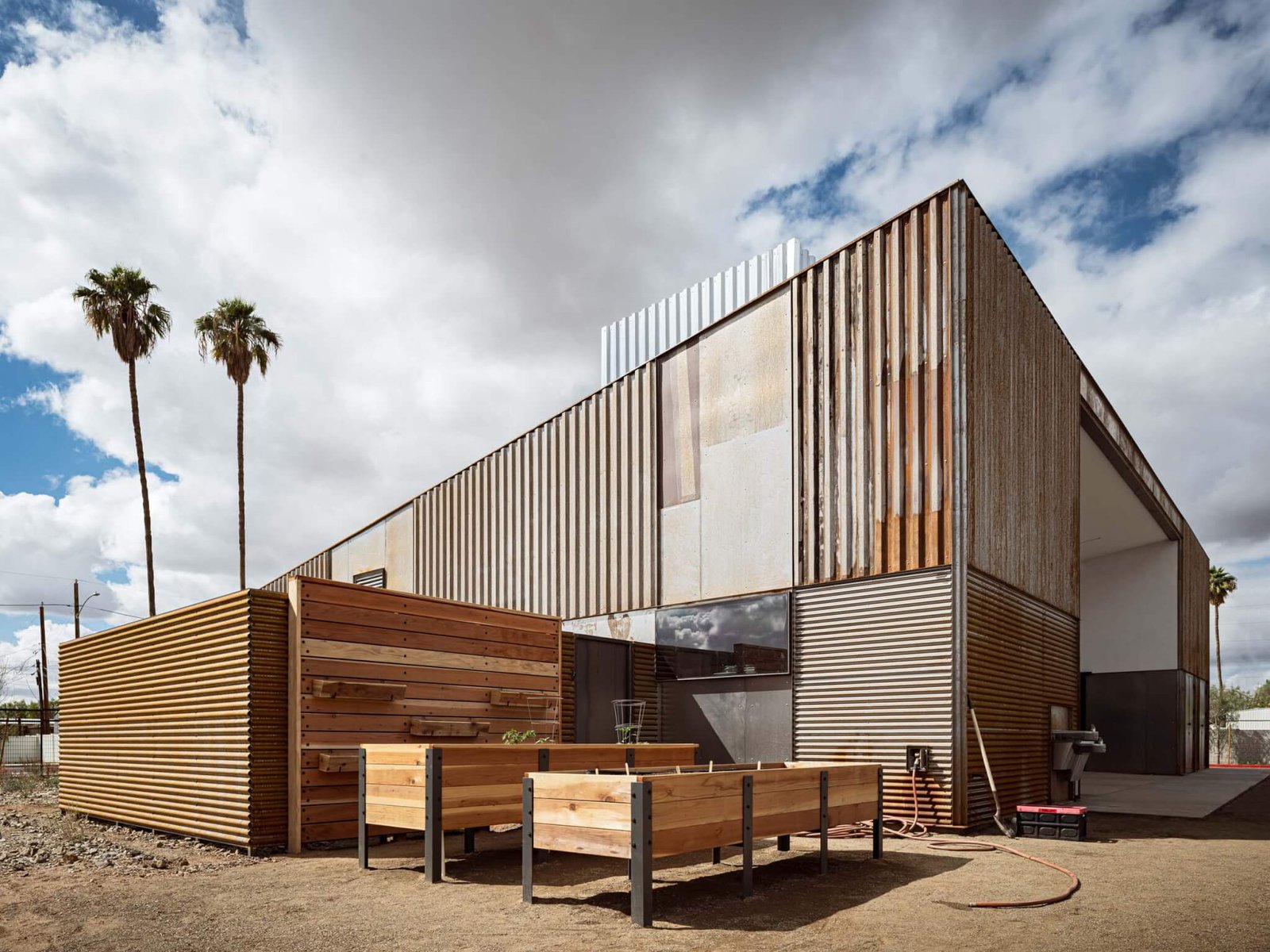
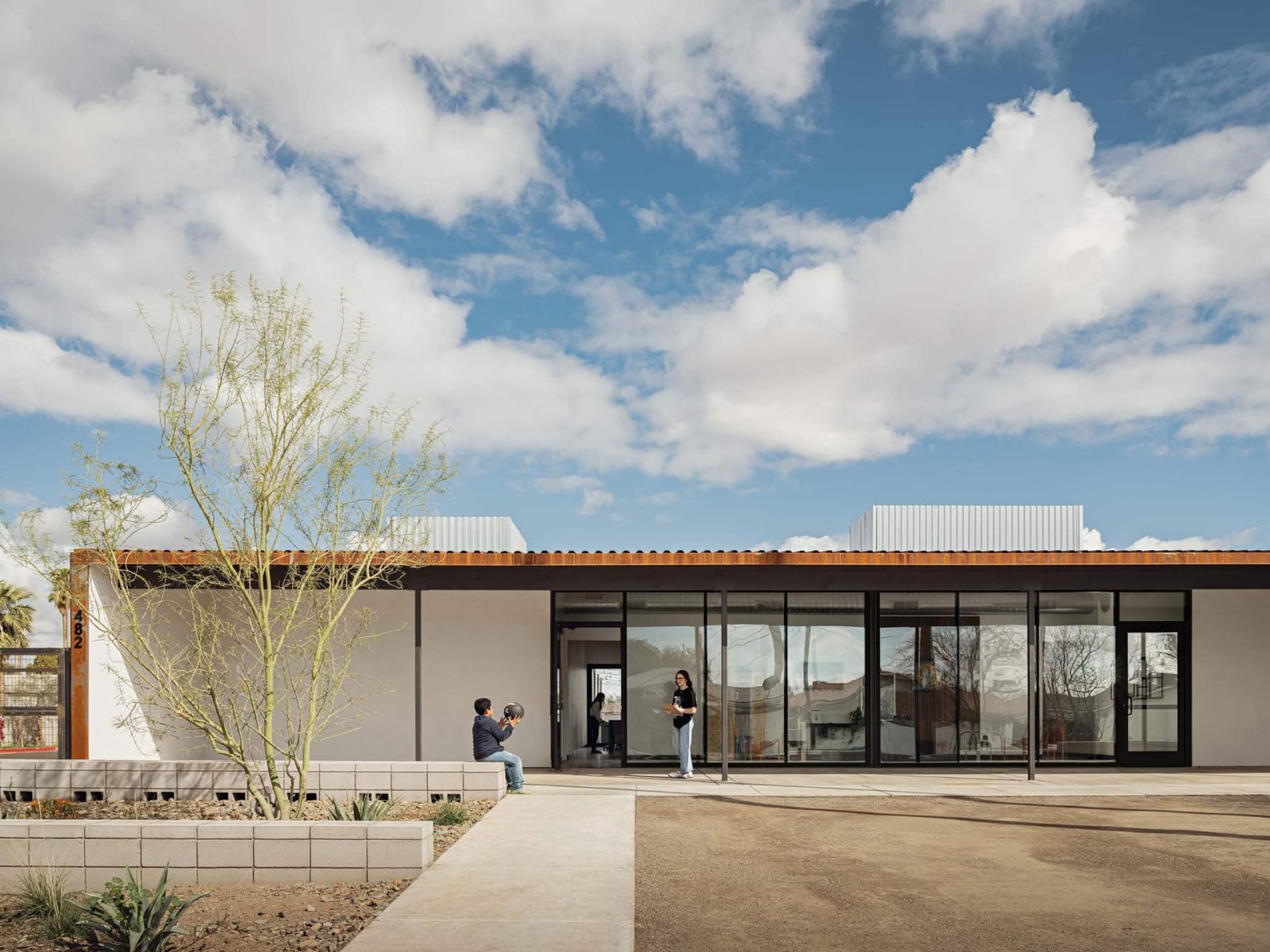
The clients wanted something that was inviting but also blended in with the surrounding homes. DeBartolo and his colleague Mike Roth envisioned a building that would be adaptable to the harsh, dry climate and maximize the dramatic, shifting light the site received from all directions. The building rises to the north for the sole purpose of attracting light.
“If we gather northern light into the building and it’s open on the south, we need north and south light in Arizona. Northern light is ‘big sky’ and indirect,” he said. “It’s wonderful, because it gives us the greatest amount of light but the least amount of direct sun.”
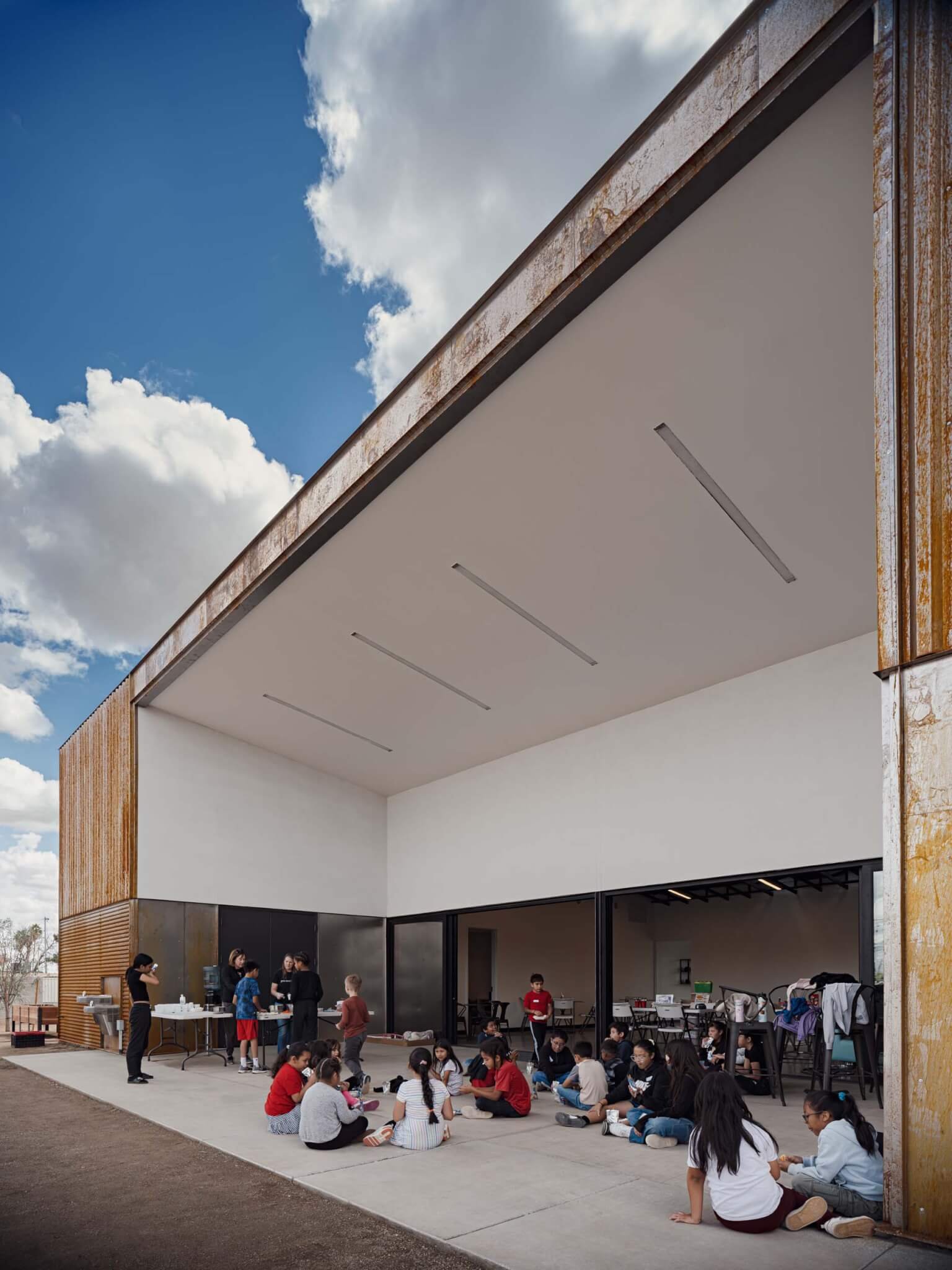
The roofs snorkel down, extending beyond the glass exterior, to cover and protect the glass from the extreme heat and reflection. The sliding northern window connects the large minimalist central meeting room to the outside, doubling the 200-person capacity indoor space and creating opportunities for large community events.
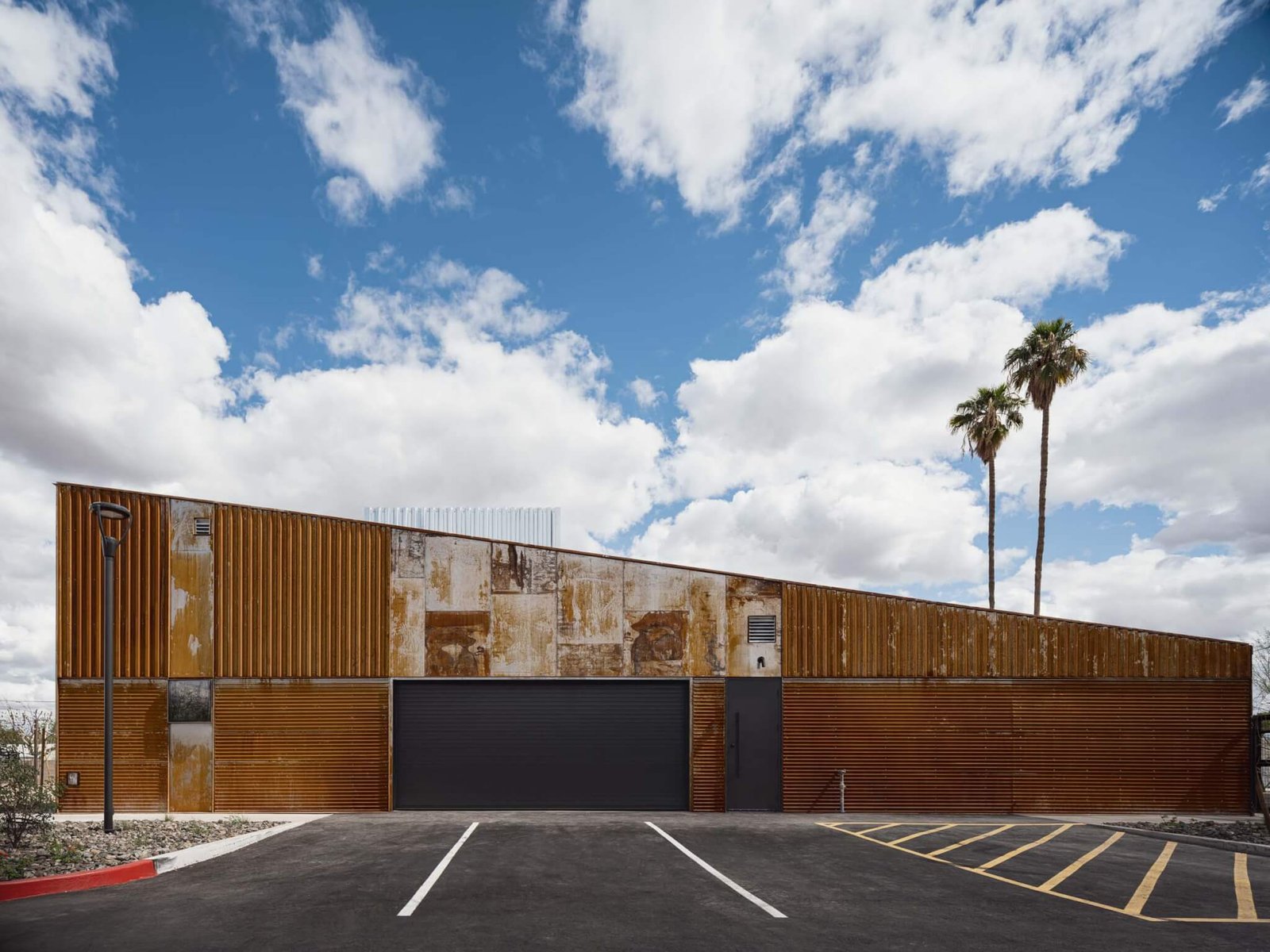
The building’s facade is wrapped in three types of weathered, leftover flat sheet metal collected from metal yards and distributors and arranged in a patchwork pattern. It creates an industrial, but not abrasive, look. Rusted and weathered material is common in dry, hot Southern Arizona and one he describes as beautiful.
“Skinning the building in this steel just weathered the building so beautifully and quickly. By using these repurposed skins, we were able to bring a lot more actual character and life out of the building than we would’ve had we gotten a bunch of new material and painted it,” DeBartolo said.
Beyond the building’s striking design (it won AIA Arizona’s 2025 Distinguished Architecture Award | Honor), DeBartolo emphasized, the project’s greatest contribution is to its community. “It’s this very grassroots local ministry kind of capability, where they can literally use this building to kind of bless and enrich that community,” he said. “This was kind of their lifetime project to do something really big.”
James Russell is a freelance writer in Fort Worth, Texas, who writes about art, the built environment, and politics for multiple outlets, including Arts and Culture Texas, Texas Architect, and Landscape Architecture Magazine.