

A writer in Brooklyn, New York, came to CO Adaptive with a unique brief: renovate his 1924 art deco apartment, but by strategically reuse as much as possible (he has a degree in Architectural Conservation). Though the design-build practice doesn’t work on many apartments, the focus on material reuse certainly aligns with the firm’s portfolio of passive houses, low-carbon, and energy-efficient buildings. Through a process that carefully deconstructed the home, cataloging and reworking what was already there, CO Adaptive refreshed the apartment while reusing 70 percent of its materials.
The approach follows an archaeological process of iterative design and deconstruction that balances both a pre-mediated vision of what the new design will look like while also leaving space for discoveries found during disassembly.
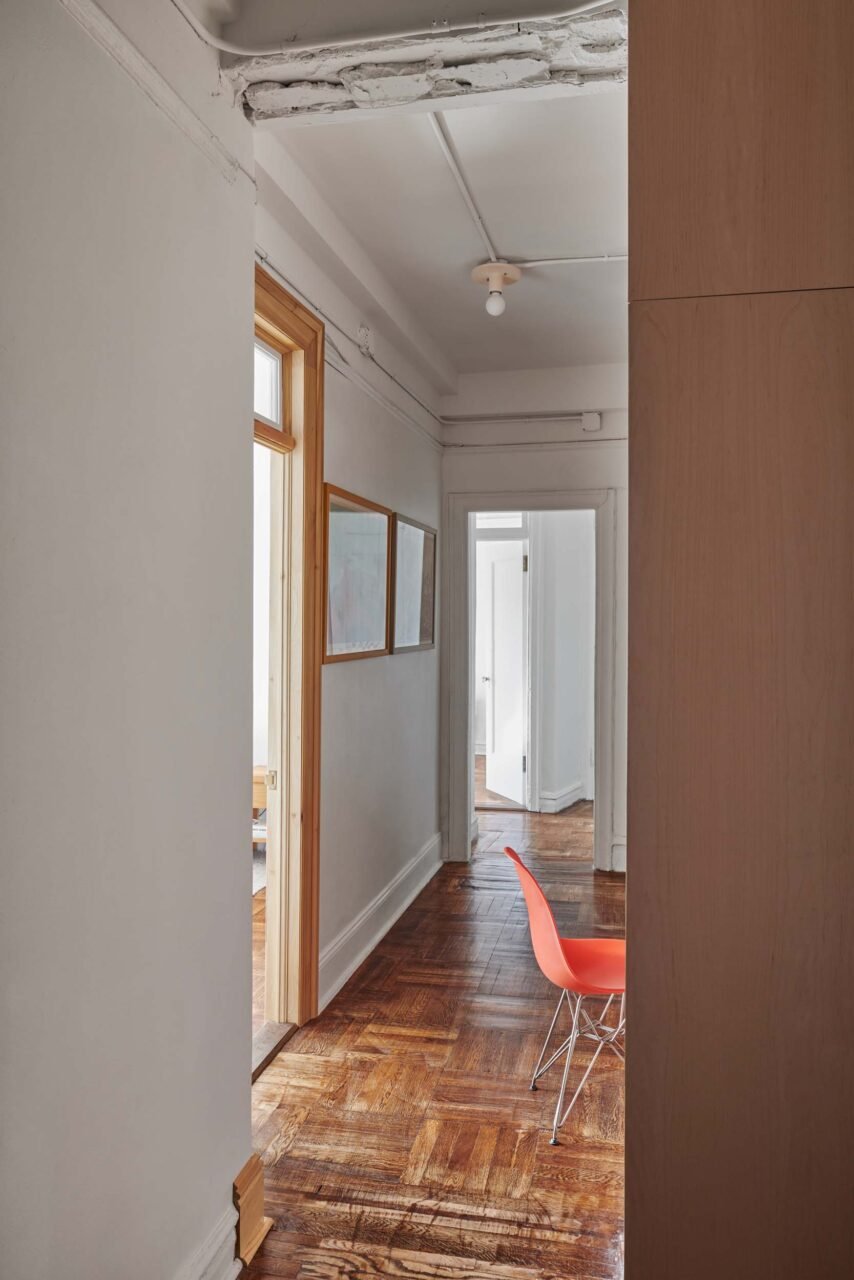
“All of the bedrooms and the way that the apartment works functionally is really great, but the client really wanted to have a more light-filled public space of kitchen and living room,” said Ruth Mandl, cofounder and principal of CO Adaptive. The biggest move was to open up the two spaces, removing the existing walls and connecting the two building shaftways at the center of the unit.
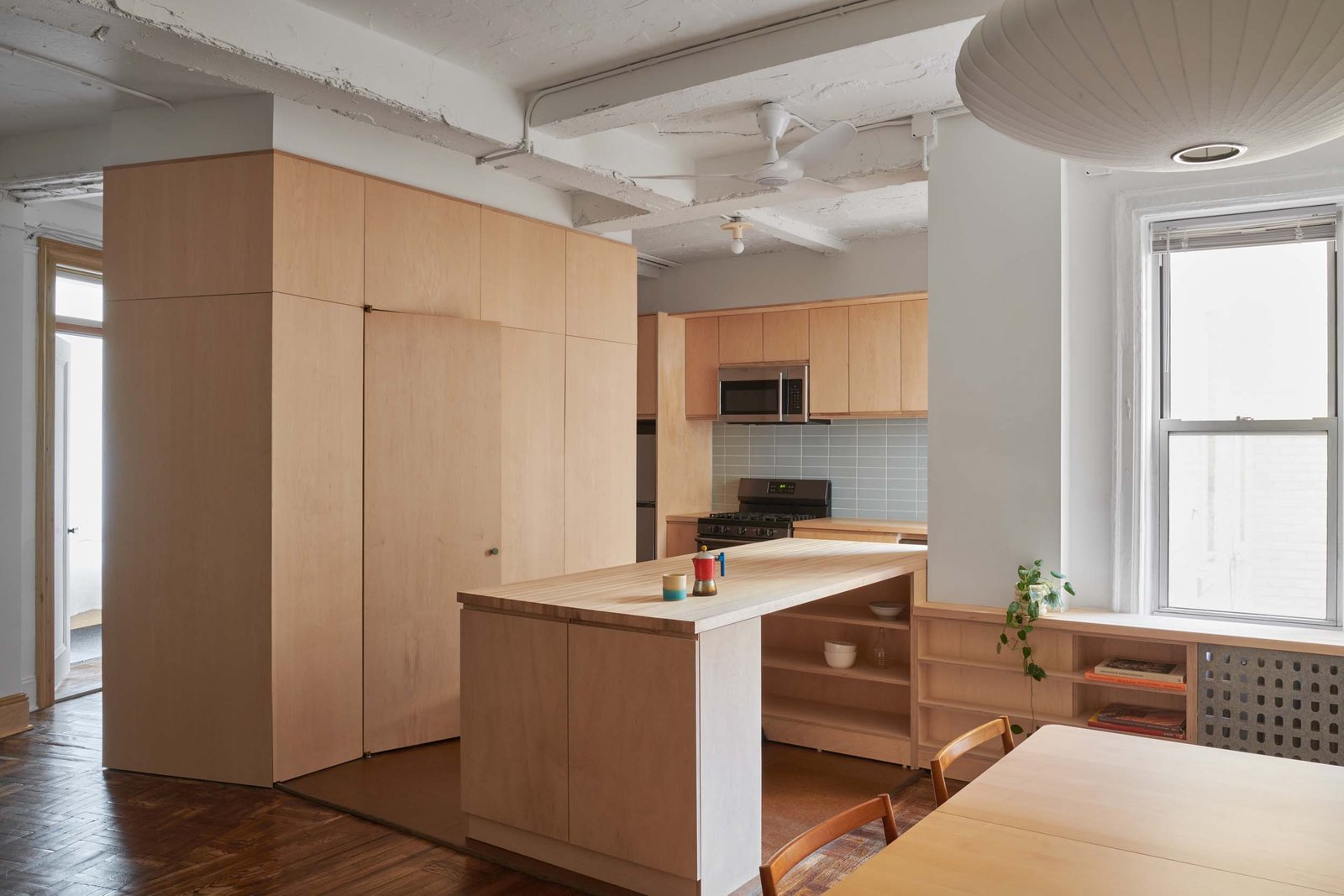
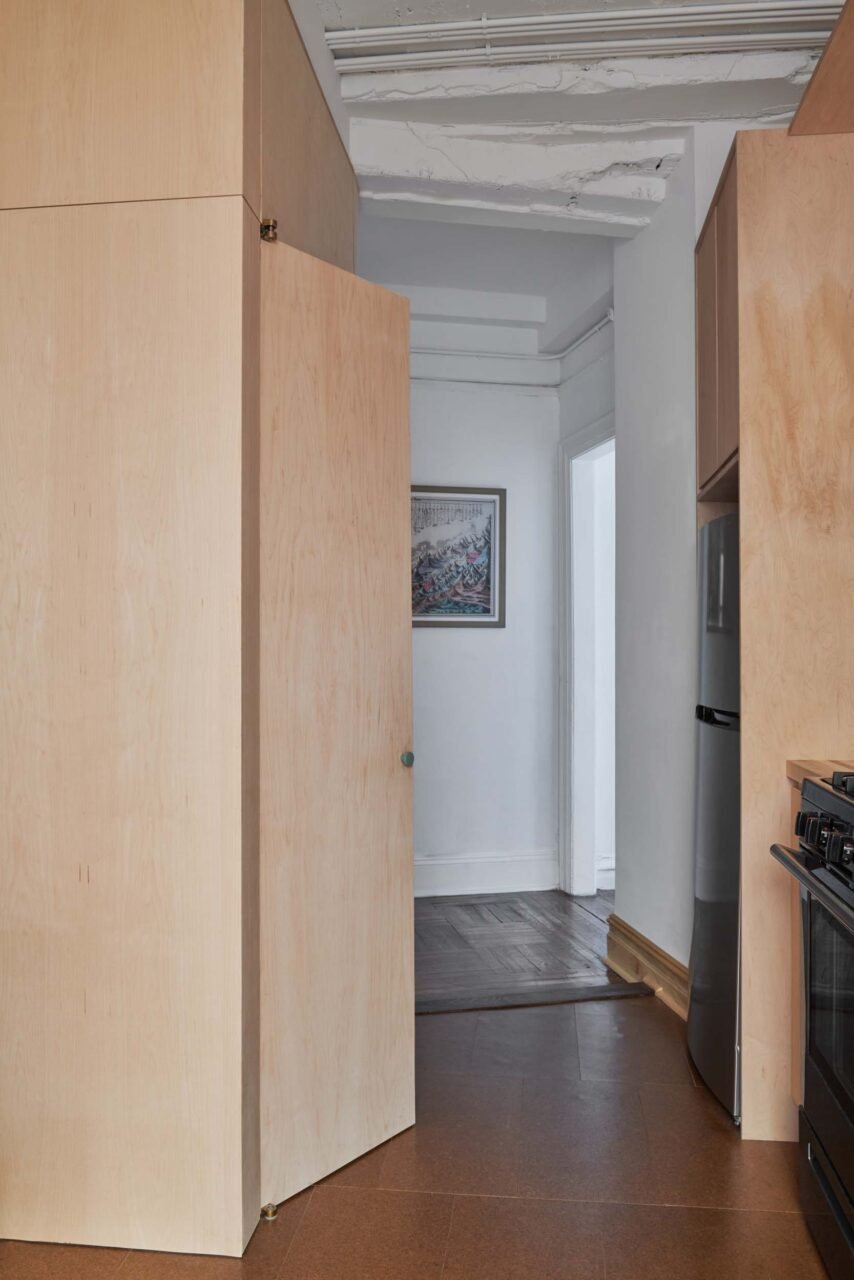
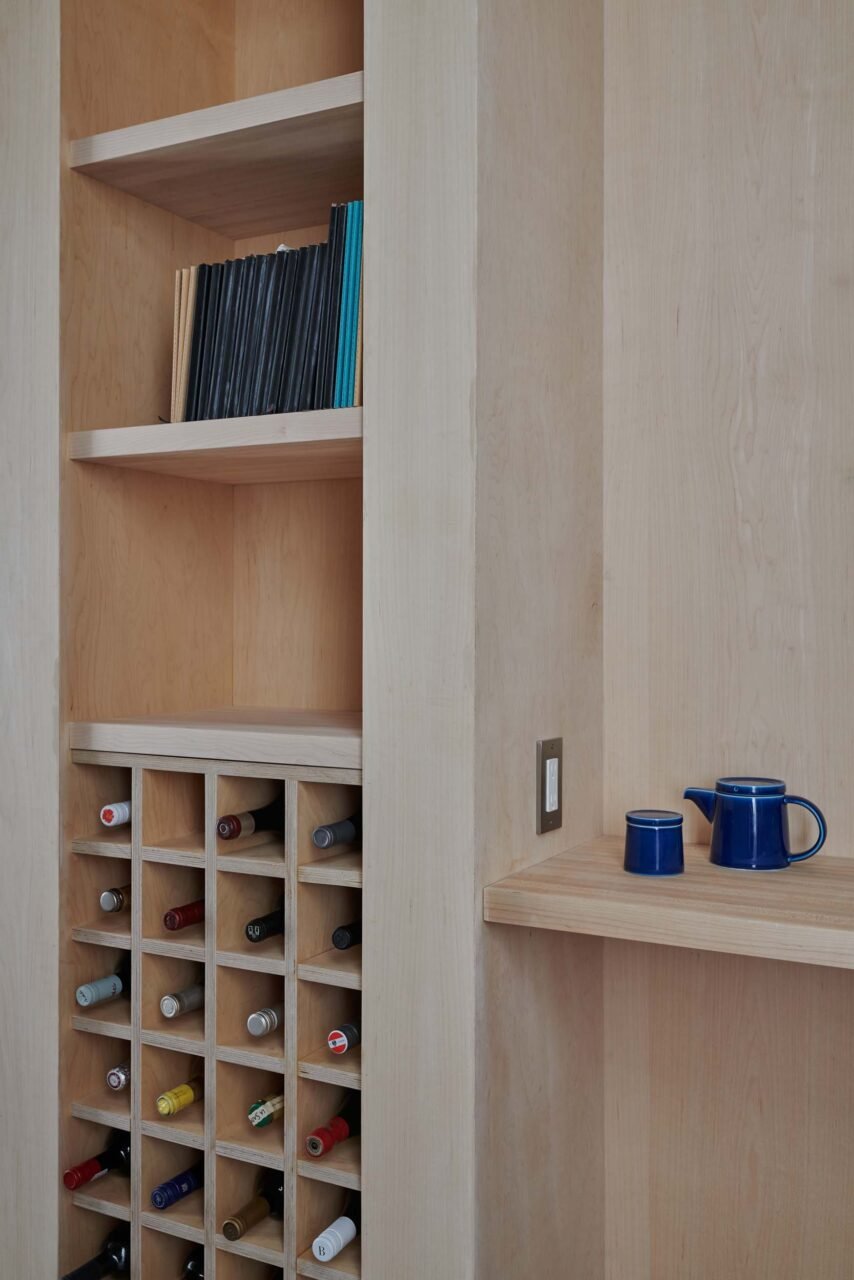
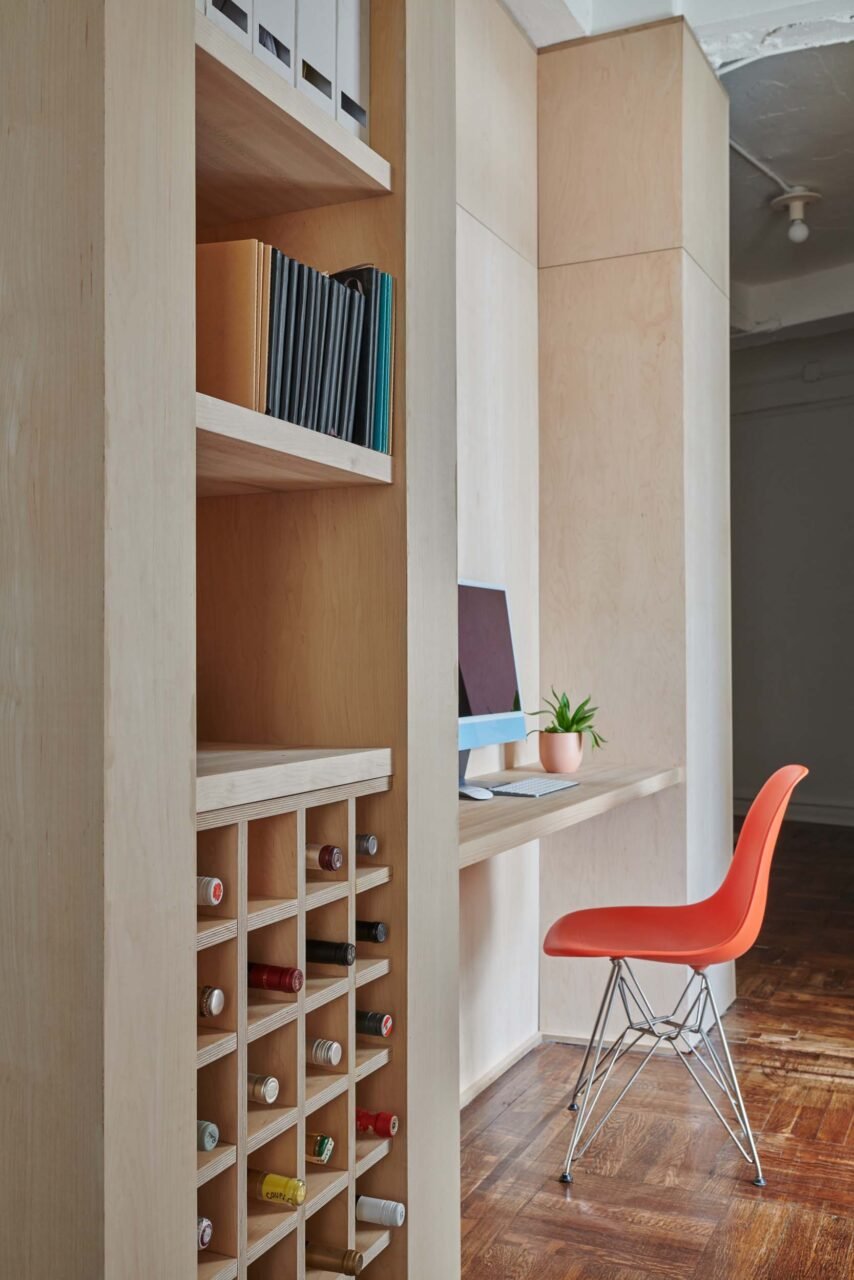
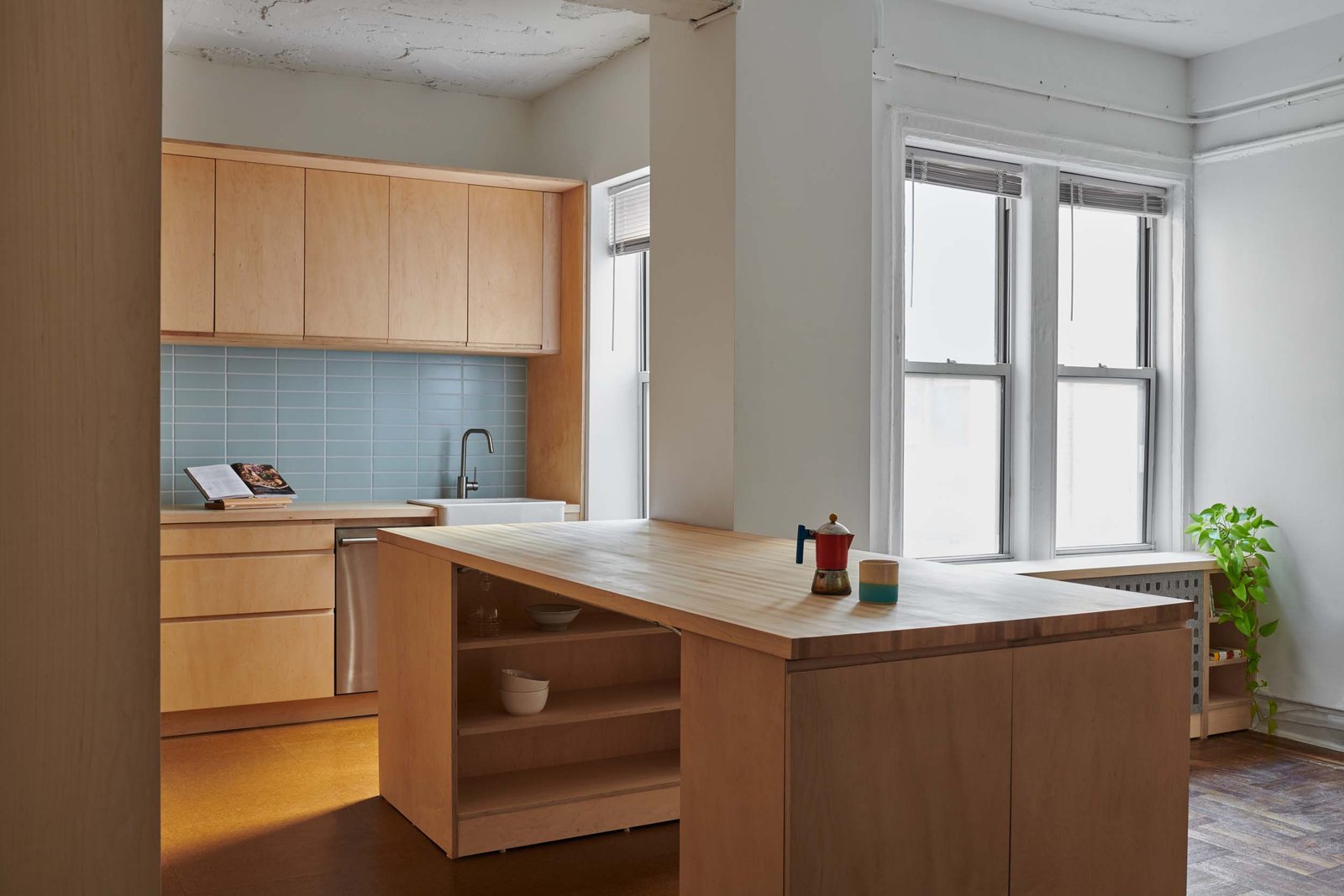
That space is now occupied by a new millwork piece, designed and built by CO Adaptive, that establishes pockets of use around it. On one end, it integrates wine storage and built-in desk. On the other end, facing the kitchen, it creates more pantry storage.
In addition to preserving the kitchen appliances, the pre-existing cabinets in the kitchen were reused—but with a new look. “We took apart this existing kitchen,” continued Mandl. “We measured out all the cabinets, and we re-laid them out in the version of the kitchen that we had designed. There were only a couple pieces that were missing, and then Julie, in our shop, made all of the fronts for the cabinet boxes and the more custom island.”
The island extends from the kitchen to the living room, emphasizing the new connection. A new cork flooring sits beneath it, marking the transition from one room to another. Above, the previously hung ceiling was removed, uncovering an additional 18 inches of height. It unearthed the textured, concrete decking, left exposed to highlight the layers of ownership and time within the residence.
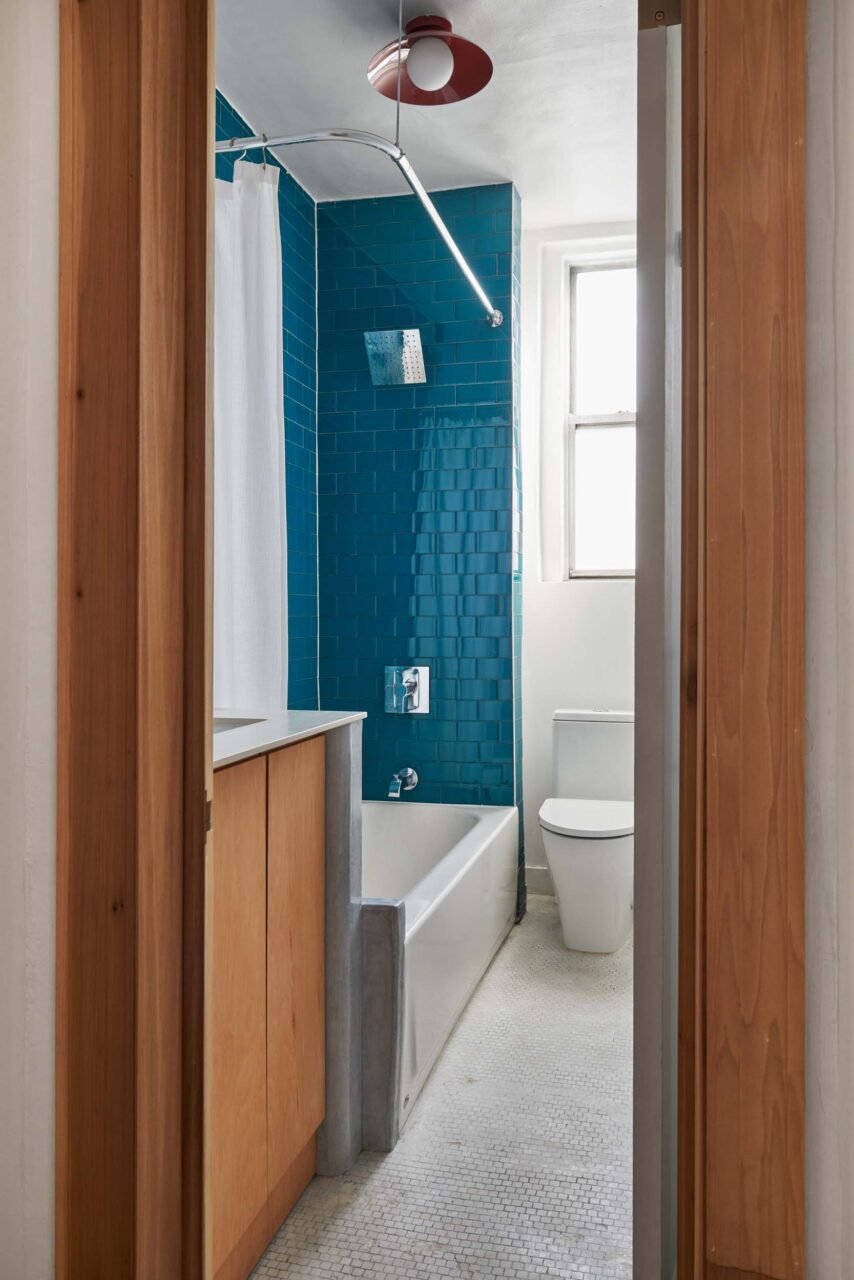
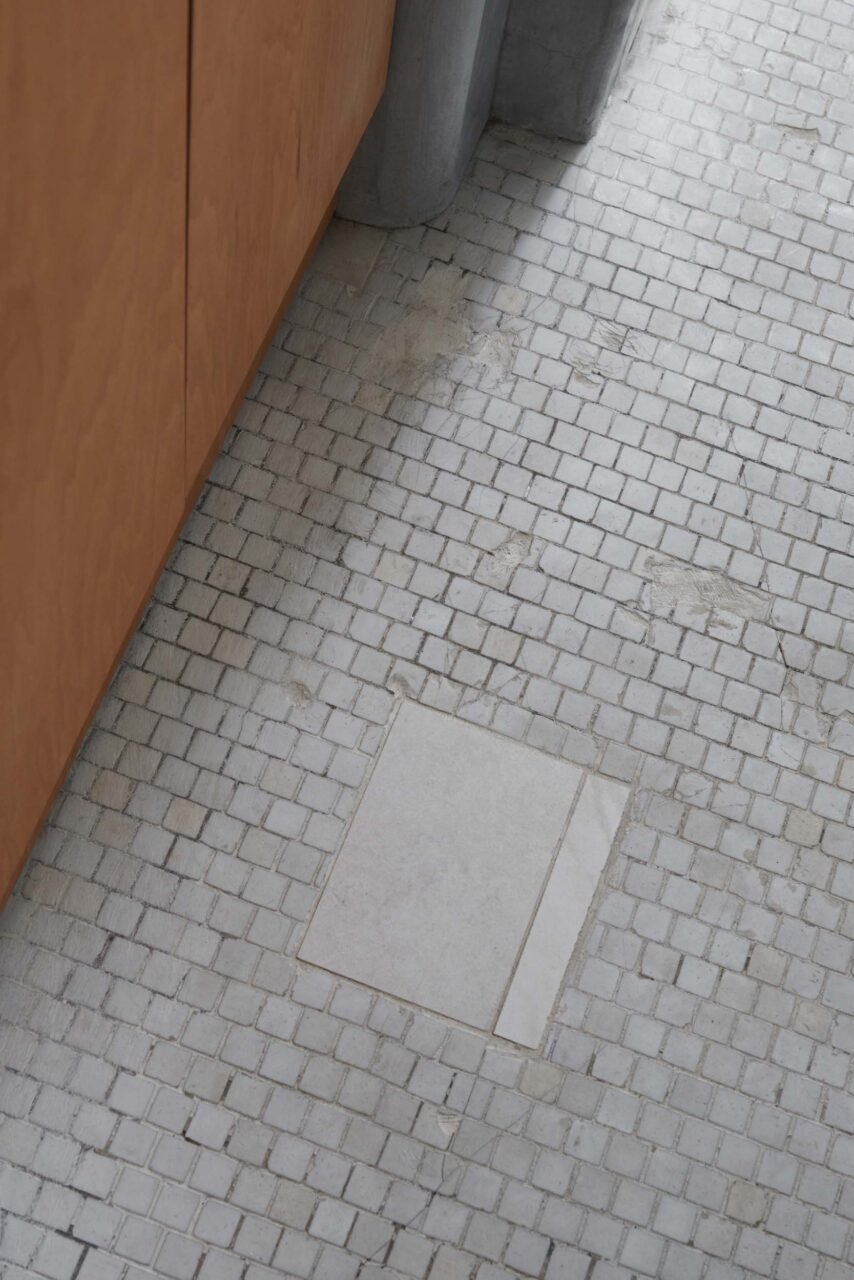
Another welcome surprise found in the archeological dig: an original 1920s white tile mosaic in the bathroom floor. CO Adaptive preserved the mosaic, patching up the small gaps with samples from its sample library. The team also uncovered a bright turquoise wall that they maintained and celebrated with a new lighting fixture, a matte floor, and a contrasting new vanity with a tadelakt surround to make the color feel purposeful and aligned.
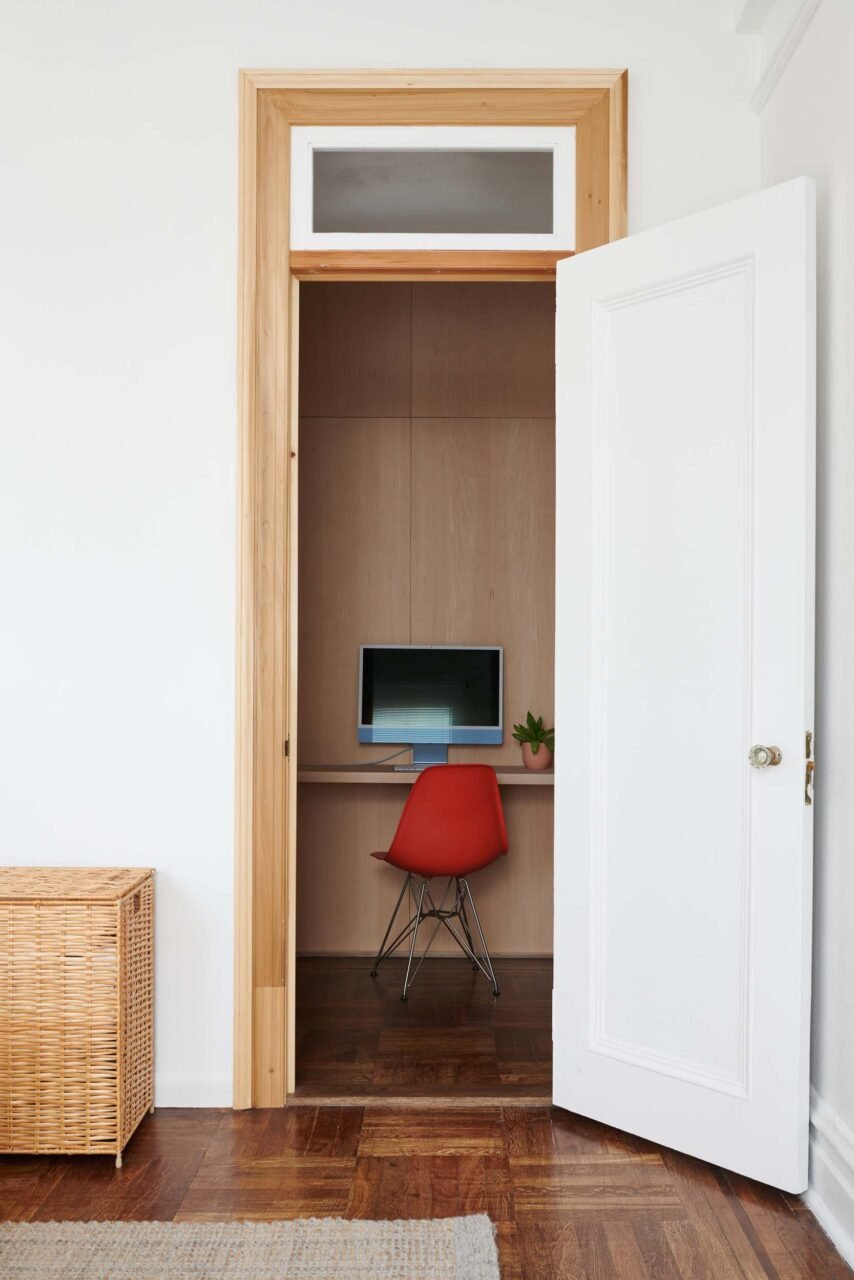
Throughout the 1,200-square-foot apartment, the team also introduced new glass transoms atop doors to help bring light further into the unit. When doing so, all existing trims were carefully removed and documented for later re-installation. When new parts were added, the team left the trims in its natural state, treated only with a wood oil, to leave the sutures of old and new elements visible. Patches of baseboards form a tapestry of what was there and what was corrected.
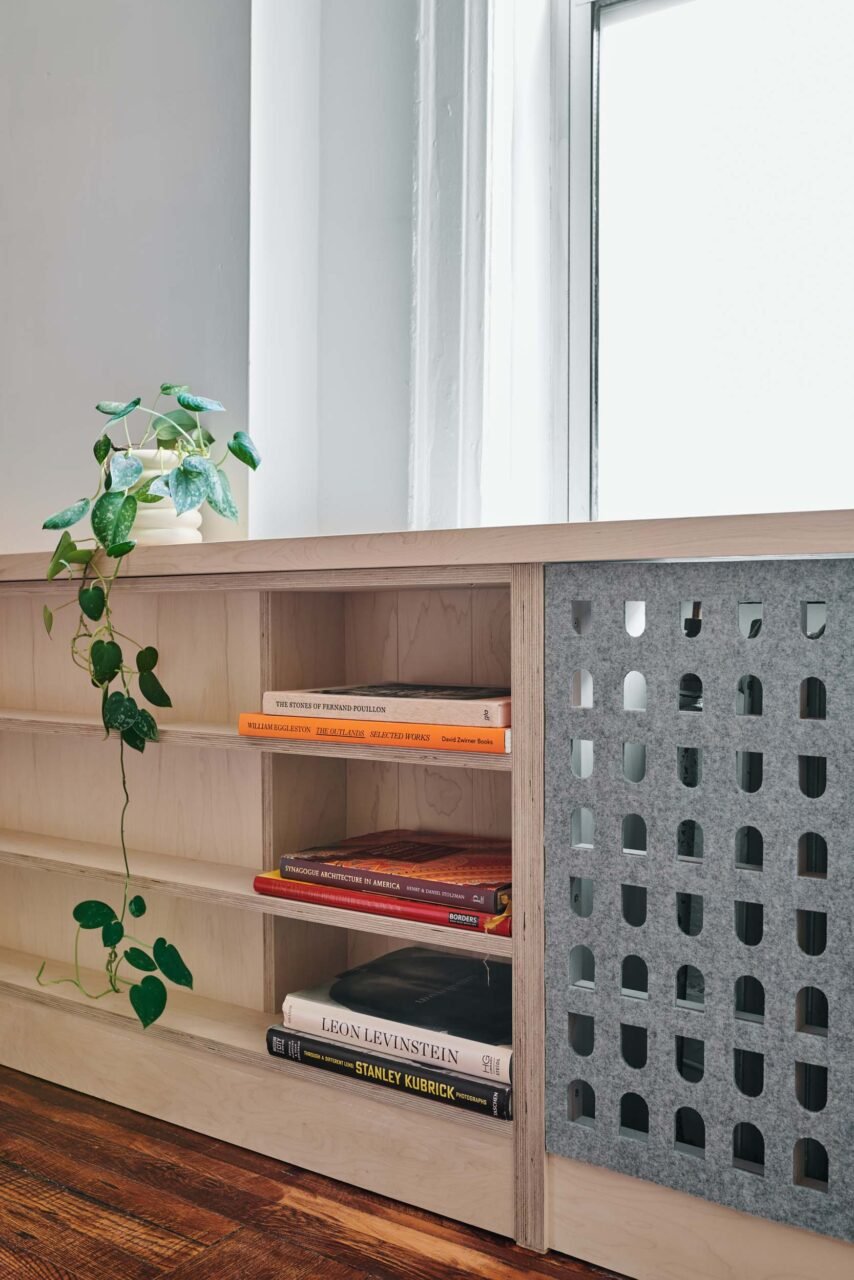
The last thoughtful touch clads the radiators, where new perforated, felt covers unite the spaces, ensuring adequate heat can reach the apartment without fear of being burned. “All of the materials that remained was 70 percent, which is great because it looks totally different than it did,” said Mandl. The Archeological Art Deco apartment is a study in doing just enough to make the needed impact on the space.