

Viollet-le-Duc Drawing Worlds
Bard Graduate Center
Through May 24
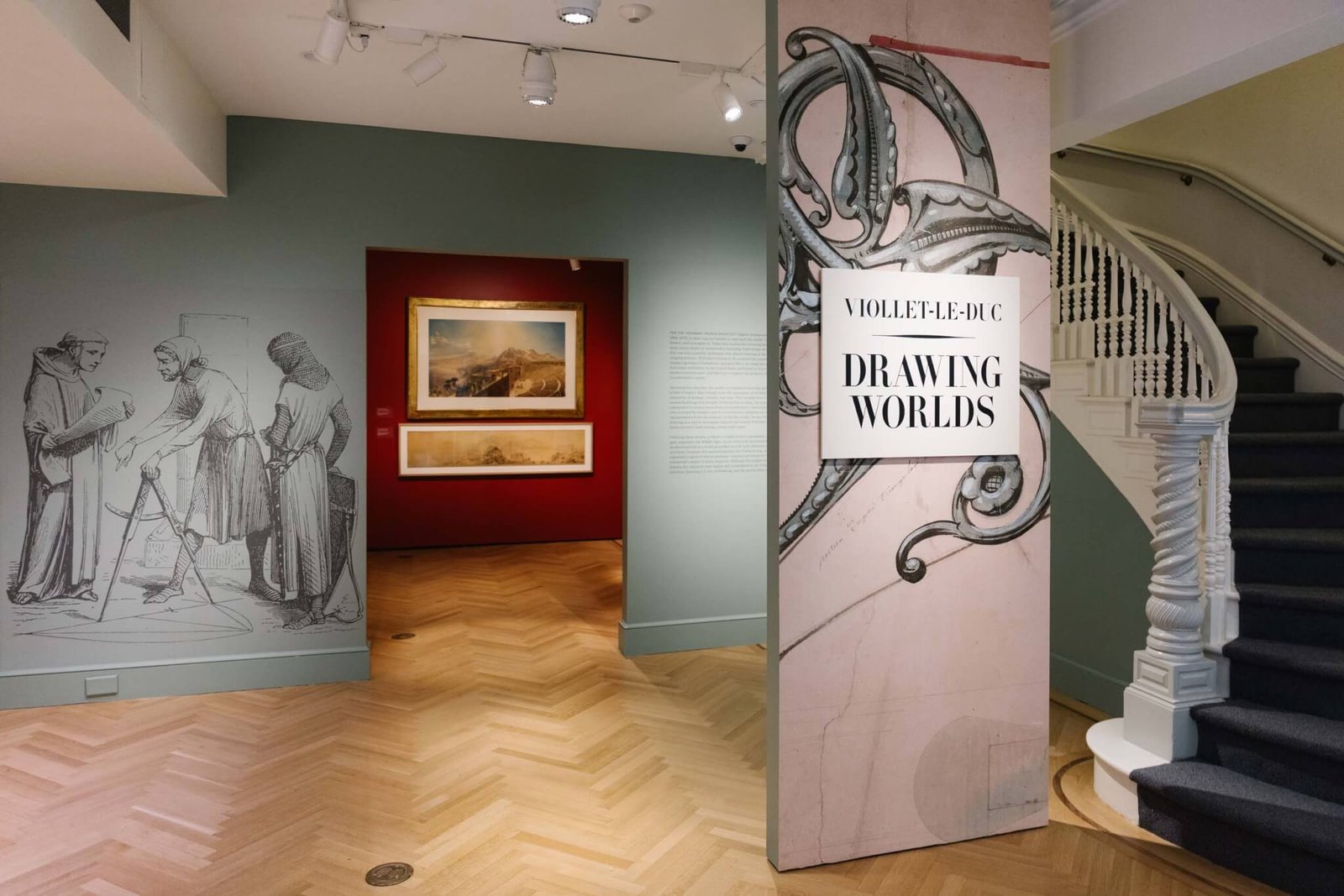
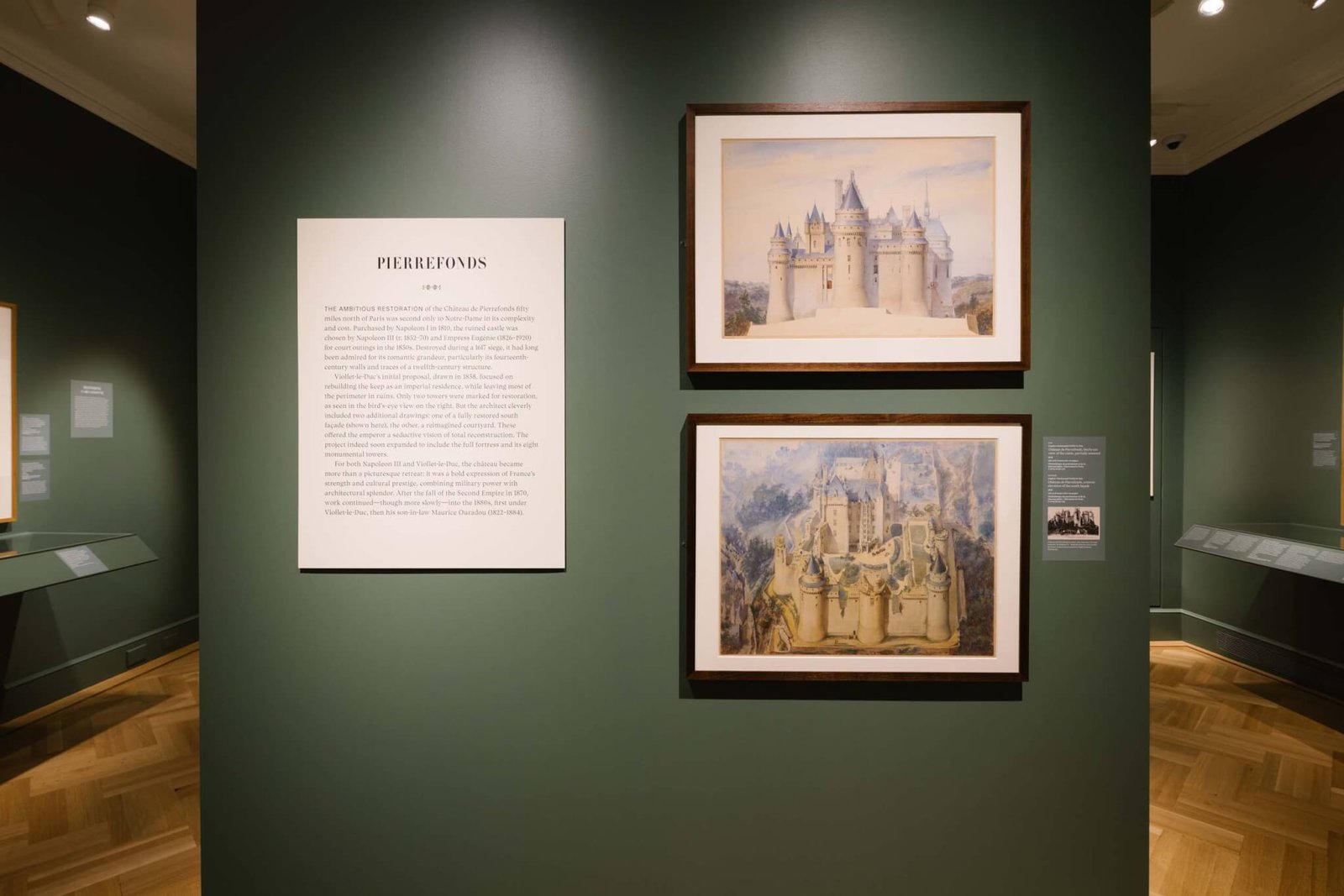
Today marks the seventh anniversary of the devastating 2019 Notre-Dame fire, and with it public attention for the cathedral’s original 19th-century savior, Eugène-Emmanuel Viollet-le-Duc, has resurfaced. What an appropriate time, it would seem, to consider a new alternative line of inquiry in the discourse on Viollet-le-Duc’s architectural influence: his drawing practice. This is the tenet of an updated reading supported by a trove of nearly 200 archival drawings and other artwork on view in Viollet-le-Duc Drawing Worlds, at the Bard Graduate Center’s 86th Street townhouse through May 24.
Drawing Worlds is the first-ever American retrospective to focus on Viollet-le-Duc. The show’s curators Martin Bressani and 2025 Vincent Scully Prize winner Barry Bergdoll take a new position that promotes Viollet-le-Duc not as the typical proto-modernist influencer today’s academic consensus labels him, but rather as a recondite practitioner whose profound method of thought brought forth the act of drawing at the heights of France’s Romantic glory.
Throughout the thematic four-part show, the didactic approach of his rediscovered drawing practice serves to foreground its importance in shaping what Bergdoll says is a unifying theory of architecture. A nonconformist with a rebellious streak qua the established precepts of the dominant École des Beaux Arts mode, Viollet-le-Duc possessed a remarkable capacity to derive ideas from unconventional sources in service of his creative output. Such traits are evidenced by the pioneering use of exploded perspective and the enduring influence of his corresponding 10-volume tome Dictionnaire raisonné de l’architecture française on the structural virtues of Gothic architecture, both of which stand out as intellectual highlights of the exhibition.
“His whole life project is to see the interconnection between things, as well as to search for underlying fundamental principles that, he thinks, would govern all of form,” Bergdoll told AN. “He was not looking at the way other architects were drawing.”
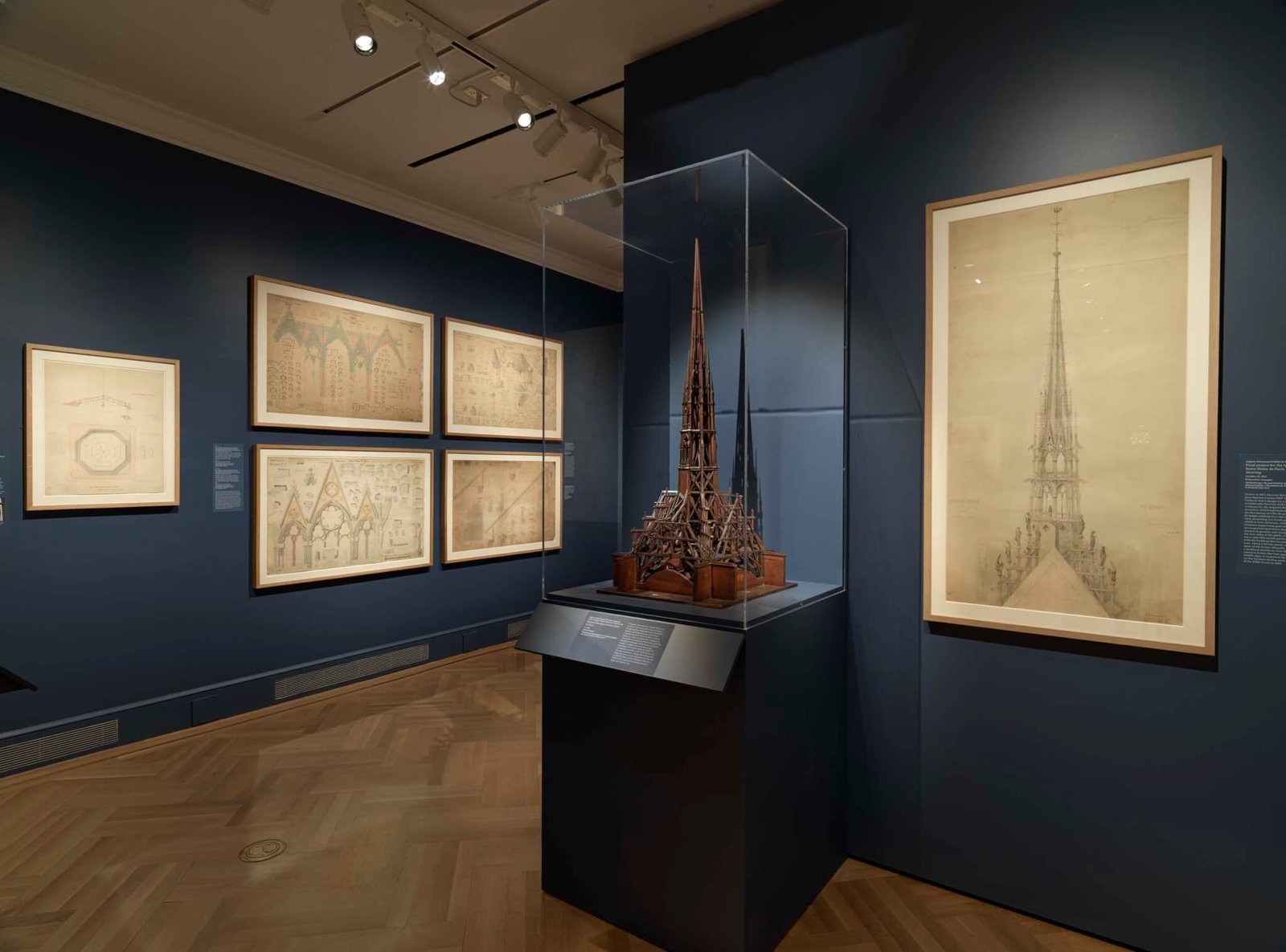
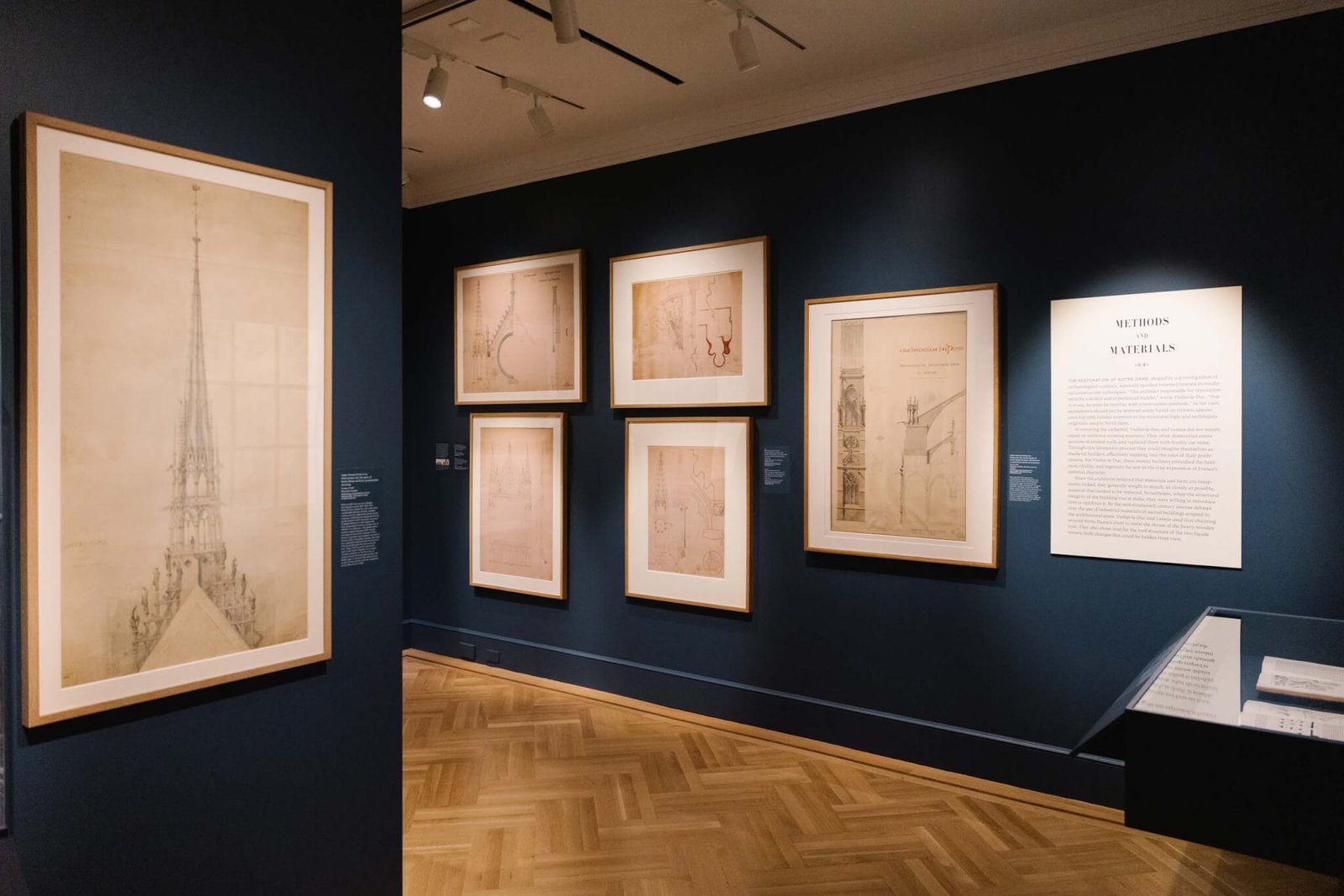
The exhibition aims to present viewers with a nuanced understanding of the architect’s historical contribution that goes beyond the standard academic view of his designs as early forerunners to modernism. Bard’s treatment does so with a pedant’s charm, coupling the evidence with physical artifacts—chief among them a circa1862 working desk and the carpenter’s model of Notre-Dame’s oak and iron spire—to advance the notion of Viollet-le-Duc as world builder.
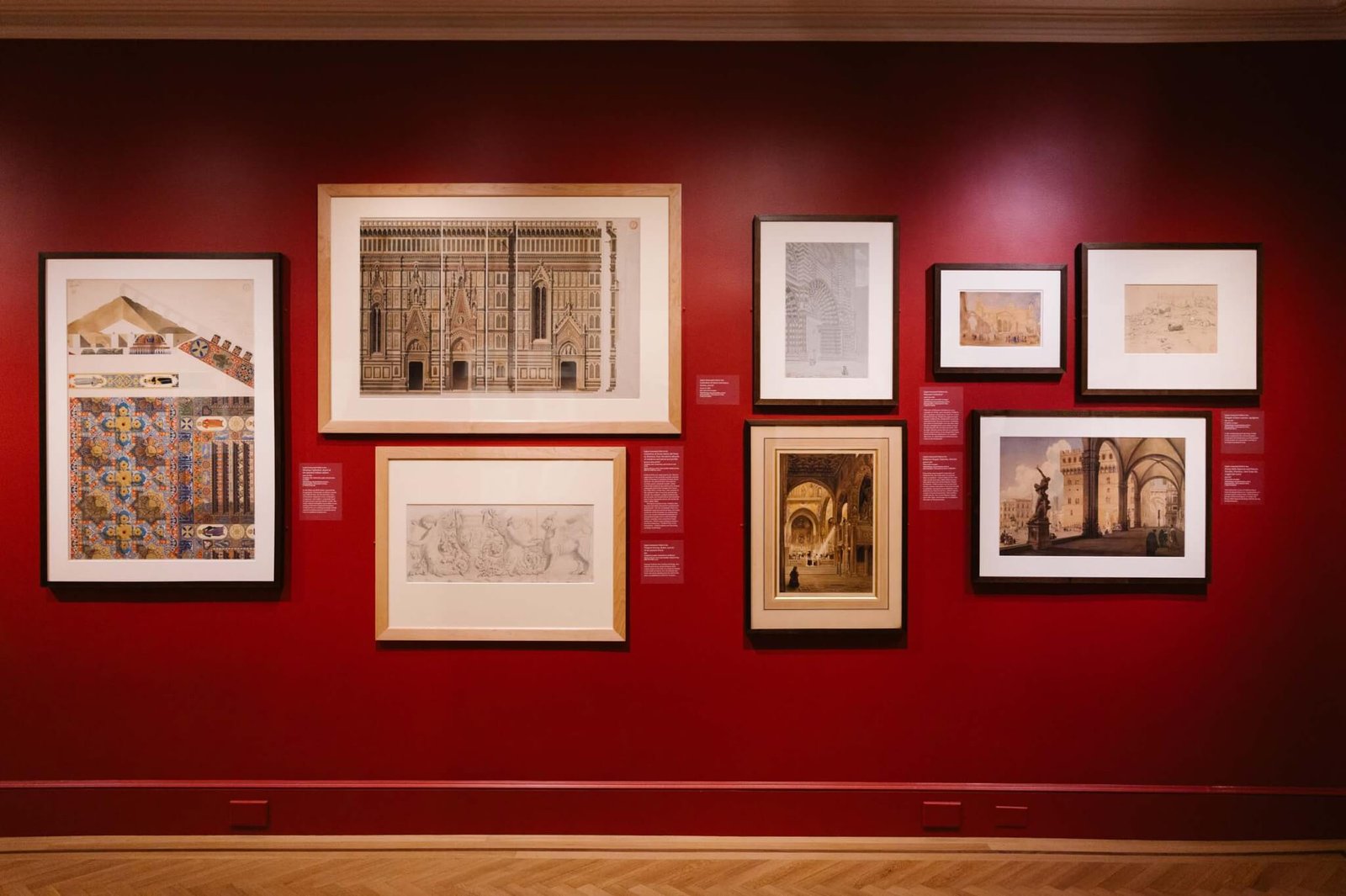
One of the related salients emerging from the retrospective is the remarkably high quality of physical documents elaborating the beginnings of the Romanticist arguments that Viollet-le-Duc would later expand in his canonical Entretiens sur l’architecture from 1863. Bergdoll and Bressani were both granted unprecedented access to the Paris-based Médiathèque du patrimoine et de la photographie’s archive, which holds roughly 20,000 Viollet-le-Duc works, to supplement their chronological rendition. Their efforts match that of the French government’s, which relied heavily on original construction documents to guide its whirlwind restoration.
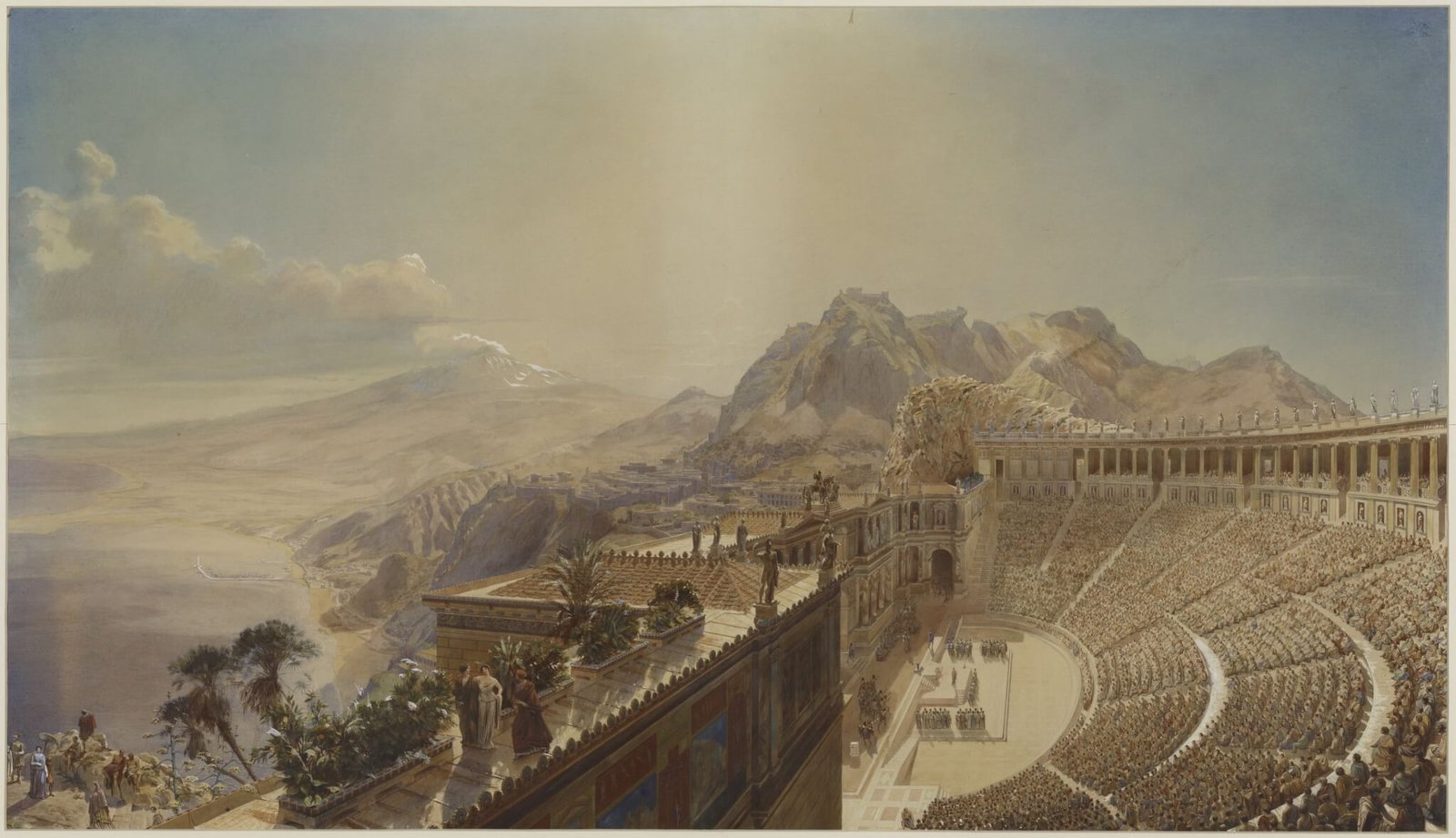
The exhibition begins in the first-floor gallery with his embrace of history painting and antiquity on an early Grand Tour through France and northern Italy. The Bard treatment sets aside his proposal to restore the ancient Greek Theatre of Taormina as the singular expression linking those two countervailing 19th-century beliefs with the Classical ideal. It also stages Viollet-le-Duc’s 1840 painting of the theater as evidence of his mastery of placemaking concepts and equal skill at “painterly” observation.
After pausing to examine the clinical precision of his work on Carcassonne, the fortress city that was to become a lasting lieu de mémoire of Napoleon III’s nationalist ambitions, the journey culminates with Viollet-le-Duc anti-Communard escape into the Swiss Alps. There, the geological studies he undertook to explain structure in natural terms—a pursuit closely related to his better-known incorporation of human anatomy into preservation theory—gave way to a then-popular vein of racialized phrenology. In between, his work to recover Notre-Dame’s greatness becomes the subject of heightened scrutiny on the second floor.
To that effect, Drawing Worlds offers audiences an exceptionally rare tranche of detailed illustrations from the 1843 competition entry for the landmark cathedral’s eventual two-decade restoration. Together, it serves to underscore both the benign preservation genius of Eugène Viollet-le-Duc and his subordinate relationship to the older Jean-Baptiste Lassus, whose death in 1857 paved the way for Viollet-le-Duc’s rise to prominence. Either man subscribed heavily to the notion of Notre-Dame as a symbol for France’s eternal glory. You can now see clearly in explanations of its construction methods also the precursors of Viollet-le-Duc pupil Auguste Choisy’s later advocacy for the use of axonometric drawing in Histoire de l’architecture—a way of representing buildings that wouldn’t become popular for at least another fifty years. Since that time (thanks to the doctoral thesis of Robin Middleton, which made its way into Nikolaus Pevsner’s account of modernism), Viollet-le-Duc’s reputation has undergone what Bergdoll calls a “slow rehabilitation.” The exhibition suggests that the seeds of this reassessment were embedded in the drawings all along.
Josh Niland is a Connecticut-based writer and editor with work published in Artnet, Architectural Digest, Artforum, Hyperallergic, WHITEHOT magazine, and the Boston Phoenix.