

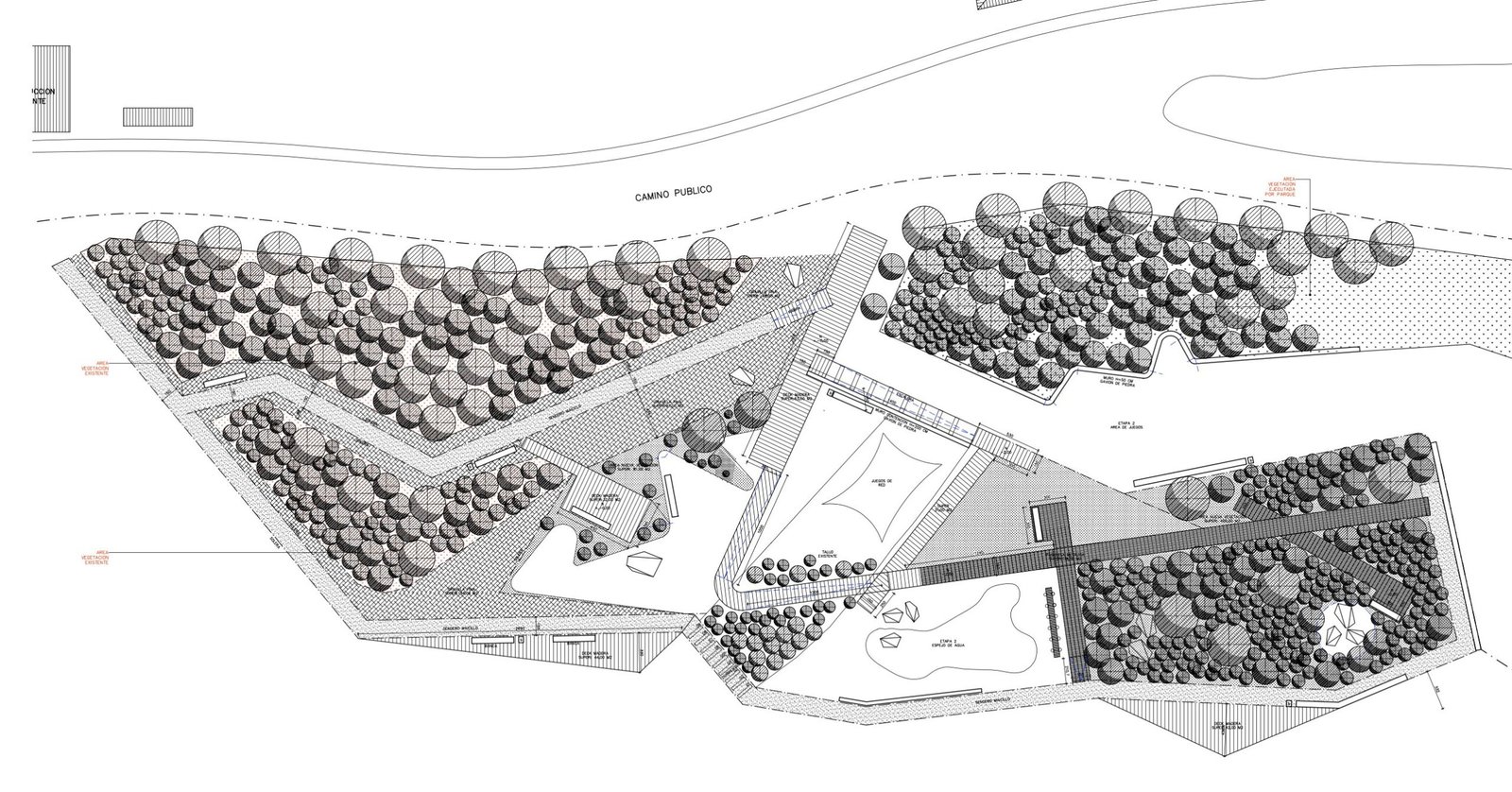
Trails in Mahuida Park
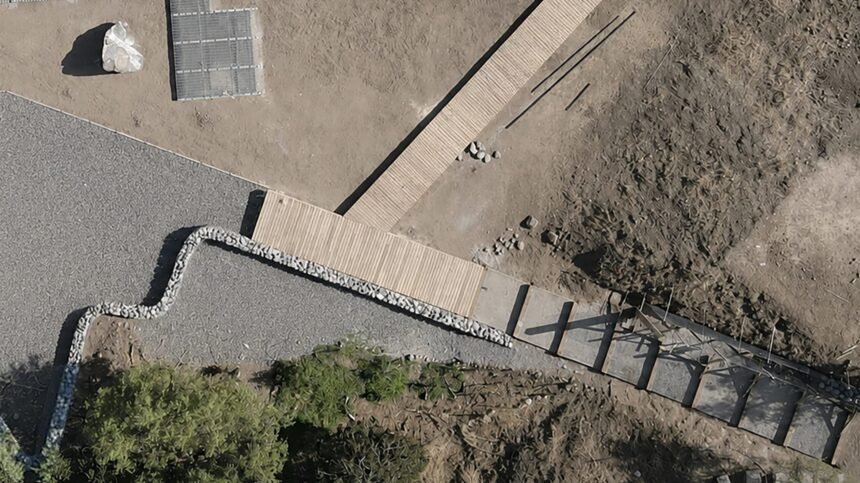
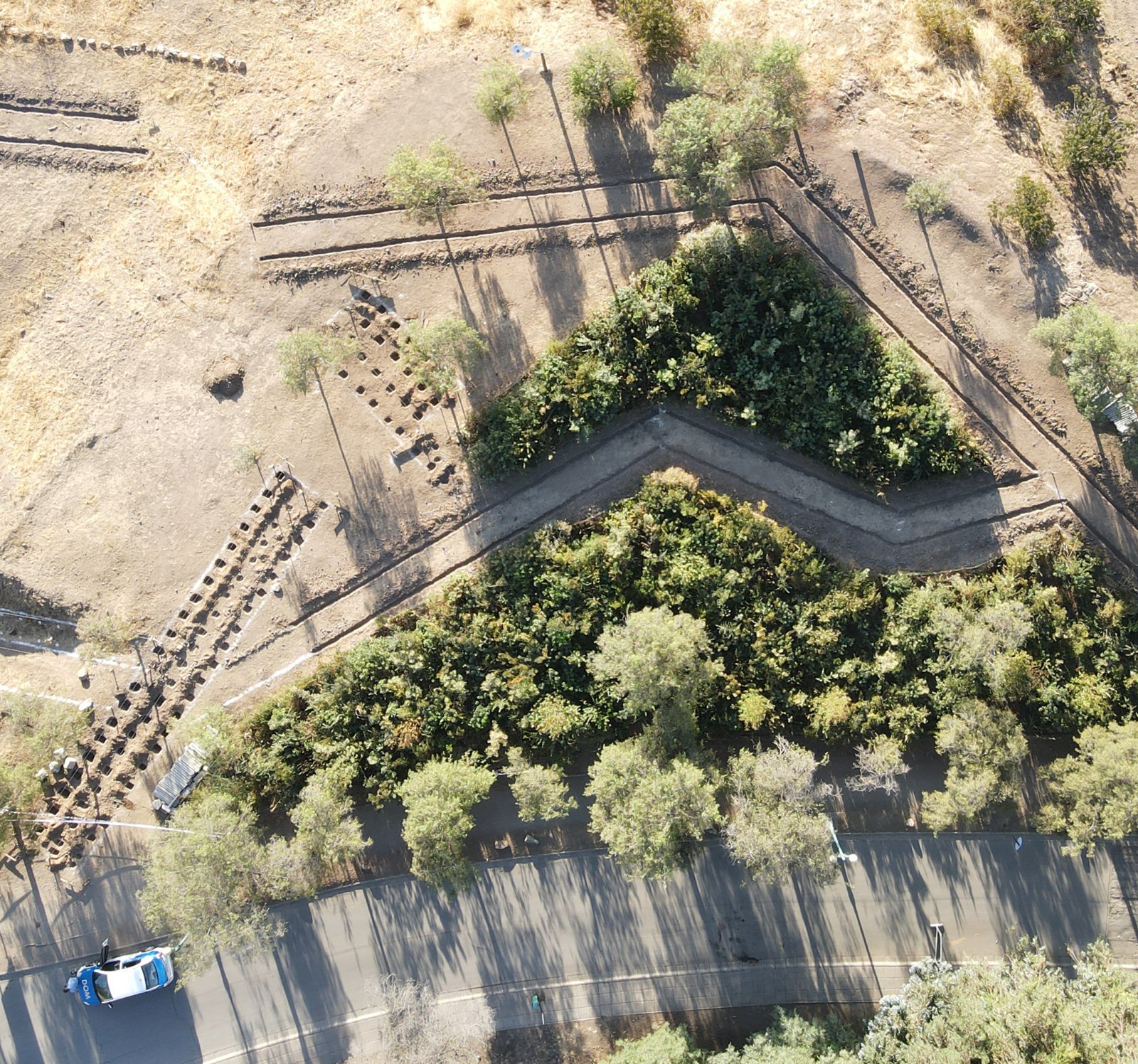
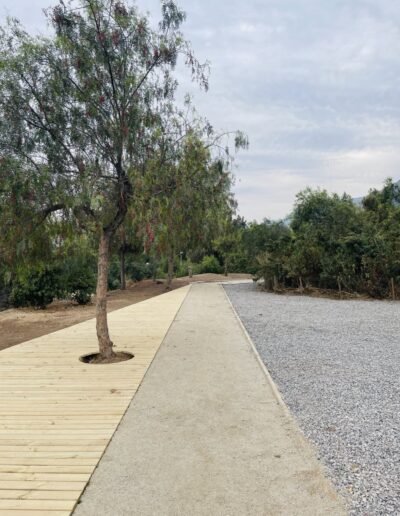
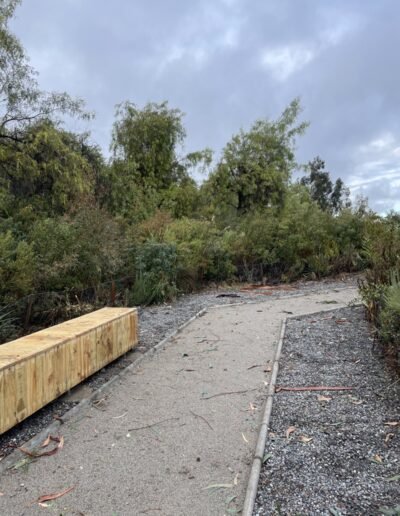
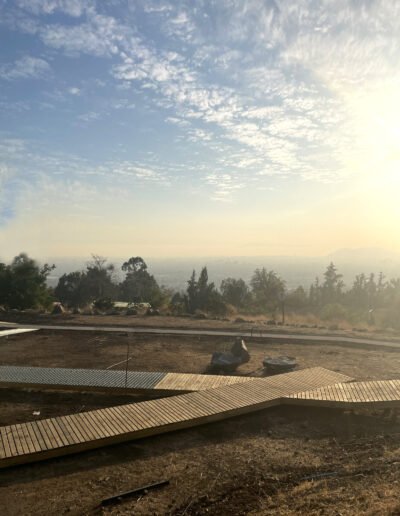
The proposal focuses on revitalizing an abandoned area of Mahuida Park by transforming it into a welcoming public space where architecture and ecological restoration work together. The intervention introduces a network of walking trails that weave through a Miyawaki forest plantation, creating a quiet and immersive experience in nature while encouraging visitors to reconnect with the landscape at a slower pace.
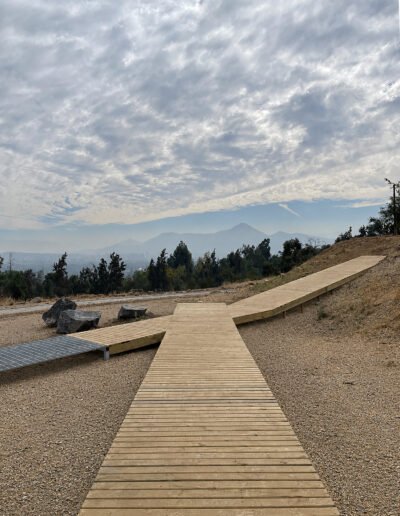
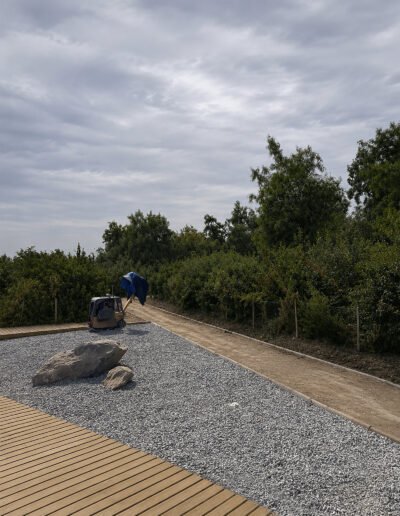
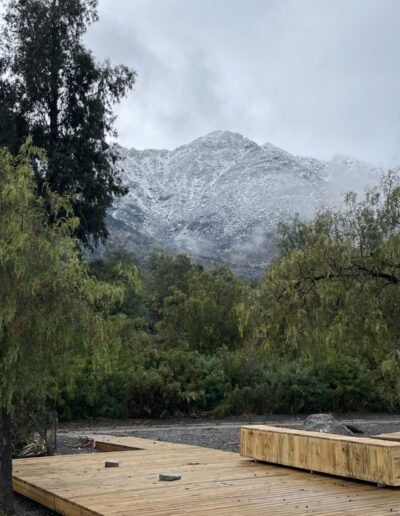
The design is intentionally simple, allowing the forest and surrounding environment to remain the main protagonists while providing a clear, respectful, and meaningful way to experience the site. The architectural elements are conceived as lightweight interventions, combining a galvanized steel structure with timber cladding to ensure durability while maintaining a warm and unobtrusive presence.
Benches, viewing platforms, and site furniture are also crafted from timber, reinforcing a cohesive material language throughout the project. The Miyawaki method is based on planting a high density of diverse native species that grow cooperatively, accelerating natural succession and enabling the forest to develop up to ten times faster than conventional plantations.
Over time, this process creates a resilient ecosystem that improves biodiversity, restores soil health, captures carbon, and requires minimal maintenance. Rather than imposing a new landscape, the project frames the forest’s continuous growth, allowing ecological regeneration itself to become the central experience for visitors.
www.landscapefirst.com