
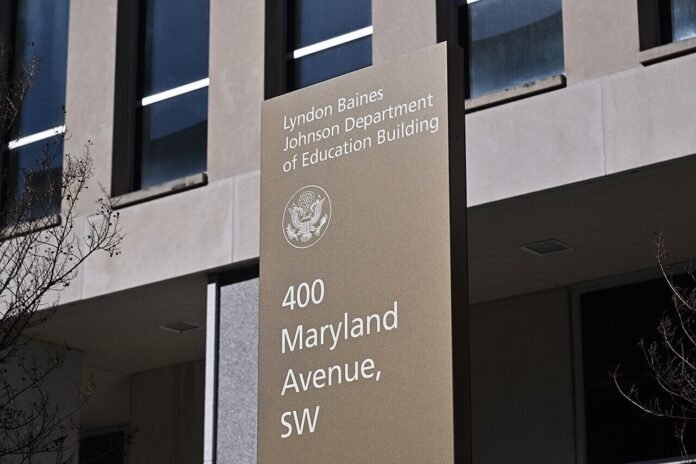

A federal judge temporarily voided the Trump administration’s definition of “professional degree,” posited by the U.S. Department of Education (DOE) as part of the One Big Beautiful Bill Act (OBBBA).
AN first reported on the proposed declassification last November. The declassification affects how much loan assistance students in professional degree programs can borrow from federal providers.
Degrees slated for declassification under OBBBA were architecture, nursing, physician assistance, physical therapy, audiology, accounting, education, social work, and others.
Per the federal judge’s ruling, architecture will remain a professional degree, for now. This means architecture students can still borrow up to the cost of school attendance from federal loan providers.
Yale School of Architecture professor emerita Peggy Deamer told AN she welcomes the ruling, but wants to see more from professional architecture organizations.
“The voiding of Trump’s administrative rule excluding architectural education from ‘professional degrees’—along with nursing and educators—is a triumph of logic over petty anti-intellectualism,” Deamer said.
“We should all be celebrating; architects should be celebrating,” Deamer continued. “But our architecture organizations had no role in the legal victory. It was nurses and educators.”
Deamer elaborated:
“Some of us believe there are advantages to deprofessionalizing architecture to which the Trump administrative ruling, for all its stupidity, brought attention. But support for deprofessionalization rests precisely on the critique of the institutions that manage our profession, and here their silence in comparison to others professions effected by the ruling is evidence of the problem: they are scared to offend and have no stomach for leadership.”
The ruling stemmed from a lawsuit filed against the DOE and its secretary by the American Association of Nurse Practitioners (AANP). The DOE finalized its definition of “professional degrees” on May 1, 2026. The AANP—and five other professional organizations—collectively filed the lawsuit against DOE and its secretary that same day, May 1.
DOE “received extensive comments from deans of architecture programs, accrediting and professional organizations, students, and practitioners urging us to include architecture, and in some instances, landscape architecture, in the list of professional degrees.”
A separate lawsuit against the DOE and its secretary by two more professional organizations was filed June 3, 2026. The two cases were later consolidated.
Judge Beryl A. Howell issued the court ruling on June 24, 2026. Nursing, architecture, education, accounting, social work, and other fields would have been de-listed as professional degrees as of July 1, if the ruling hadn’t come through. The litigation is, however, still ongoing.
Howell ordered the DOE to drop its proposed definition of “professional degree” and use the old definition set in 2007, which includes architecture.
The DOE will now have to make a new list of degrees it says qualify for the borrowing cap prescribed in the OBBBA. It is unclear at this time if architecture will be on the new list, and when the new list will be released.
The Association of Collegiate Schools of Architecture (ACSA) and AIA issued statements expressing opposition to the plan, however neither group took concerted legal action.
“ACSA is heartened by the legal decision to restore the language to the 2007 regulatory definition,” ACSA president José Gámez told AN. “It is an important step toward recognizing architecture, among other professions that entail rigorous preparation to practice, as essential to protecting the health, safety, and welfare of the public.”
“However, restoring the old language does not go far enough,” Gámez continued. “We remain concerned that those enrolled in accredited Master of Architecture and Doctor of Architecture programs will not be considered ‘professional students’ able to access the same level of loans as students in health fields.”
Gámez affirmed ACSA will “continue to work with the American Institute of Architects and the Advanced Professional Workforce Alliance to advocate for full recognition of accredited graduate architecture programs in federal student loan policies.”
AIA didn’t immediately reply to AN’s requests for comment.