

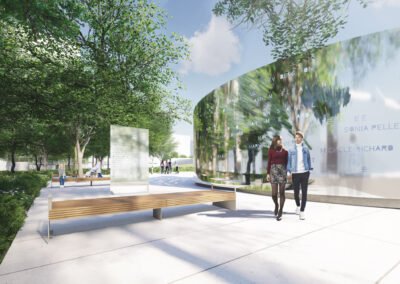
Place des Montréalaise
Where a public plaza spans an operating highway above metro infrastructure and adheres to millimetric load capacities, landscape architecture transforms the impossible into inhabitable space. Place des Montréalaises exemplifies how planting strategies, spatial orchestration, and interdisciplinary collaboration convert infrastructural restrictions into activated public territory.
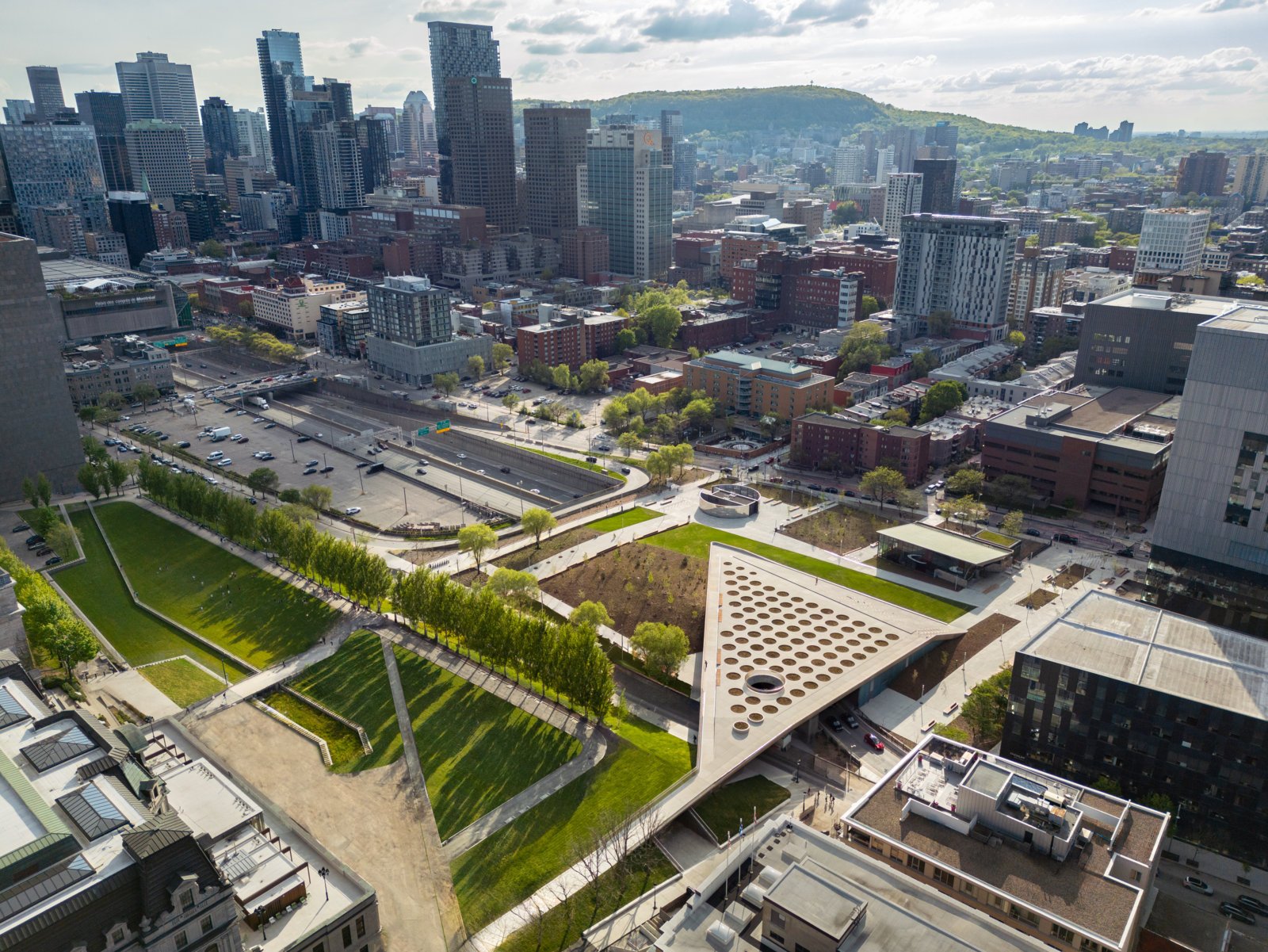
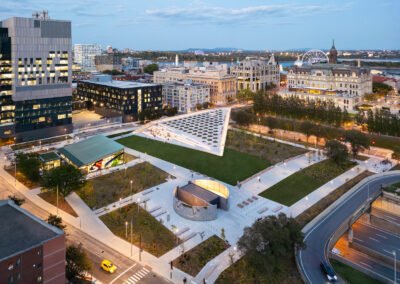
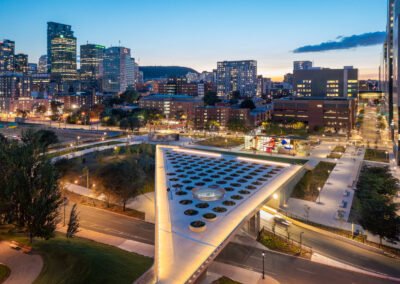
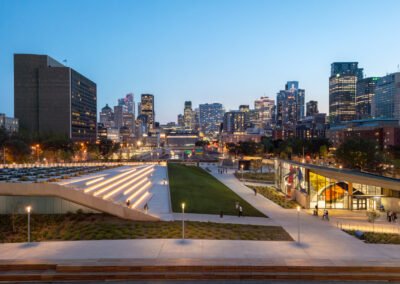
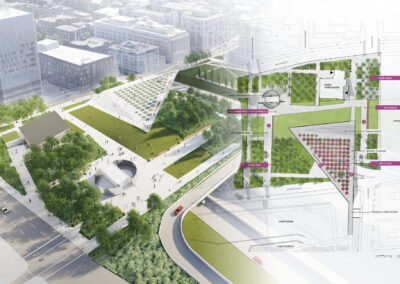
The inclined plane reclaims a highway void, creating a barrier-free pedestrian connection between heritage Old Montreal and downtown – two districts historically severed by the Ville-Marie expressway – adjacent to City Hall. The design synthesizes commemorative gestures, circulation networks, and ecological interventions into a democratic space all Montrealers can inhabit. Vegetated areas capture and filter rainwater, reducing stormwater runoff while establishing green corridors that increase urban biodiversity.
Technical performance
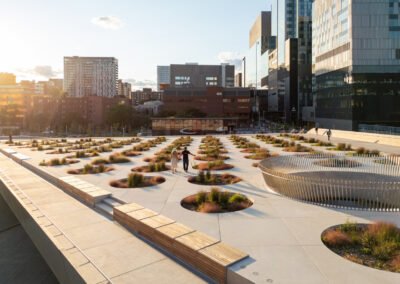
Completed in spring 2025, this commemorative plaza confronted conditions that typically prohibit significant vegetation: a suspended pre-stressed concrete platform with post-tensioning above Ville-Marie expressway, offering limited soil depth and stringent load constraints. Each of the four distinct zones; urban amphitheatre, multifunctional esplanade, linear urban axis, and urban forest, demanded tailored responses, requiring landscape architects to coordinate with structural engineers, biologists, and arborists.
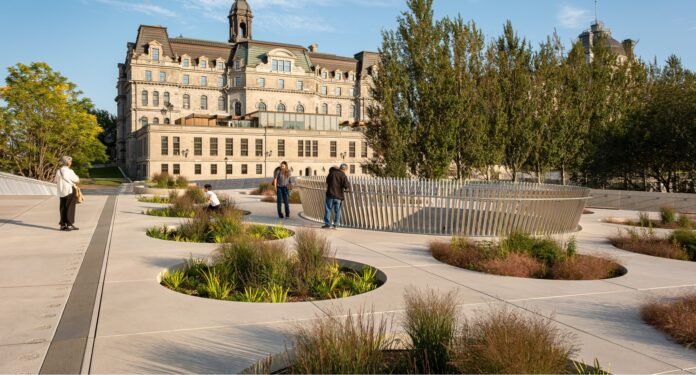
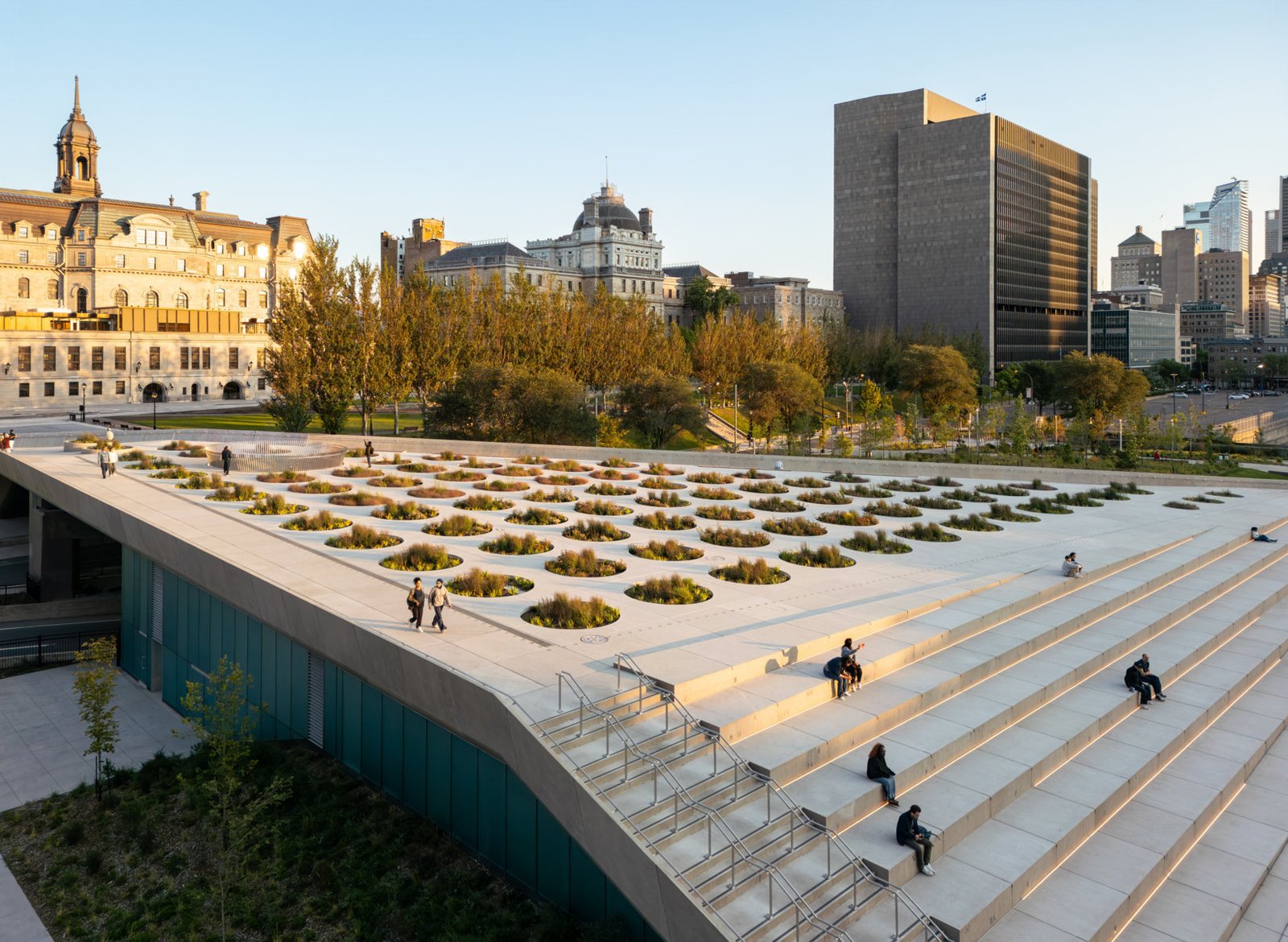
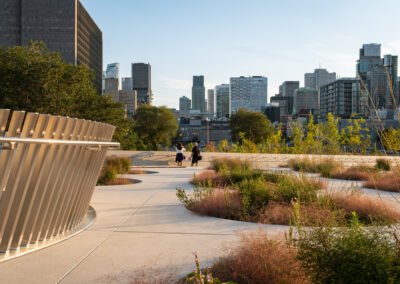
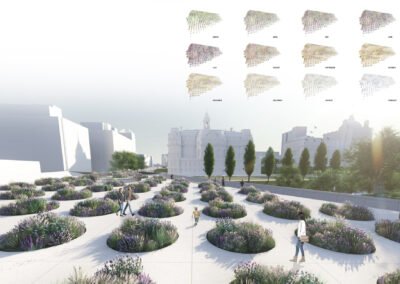
The “flowered meadow” incorporates 21 species of flowering perennials arranged within 86 perforations that function as an immense bouquet. Each species represents one celebrated Montreal woman, flowering sequentially throughout seasons. Species were identified through trial plots to reconcile commemorative intent with performance criteria: root establishment, seasonal variation, and biodiversity restoration. The urban woodland functions under tighter parameters, with species choice emphasizing adaptive characteristics and durability thresholds to sustain floods, drought, sun, shade, and wind.
Public art as embedded infrastructure
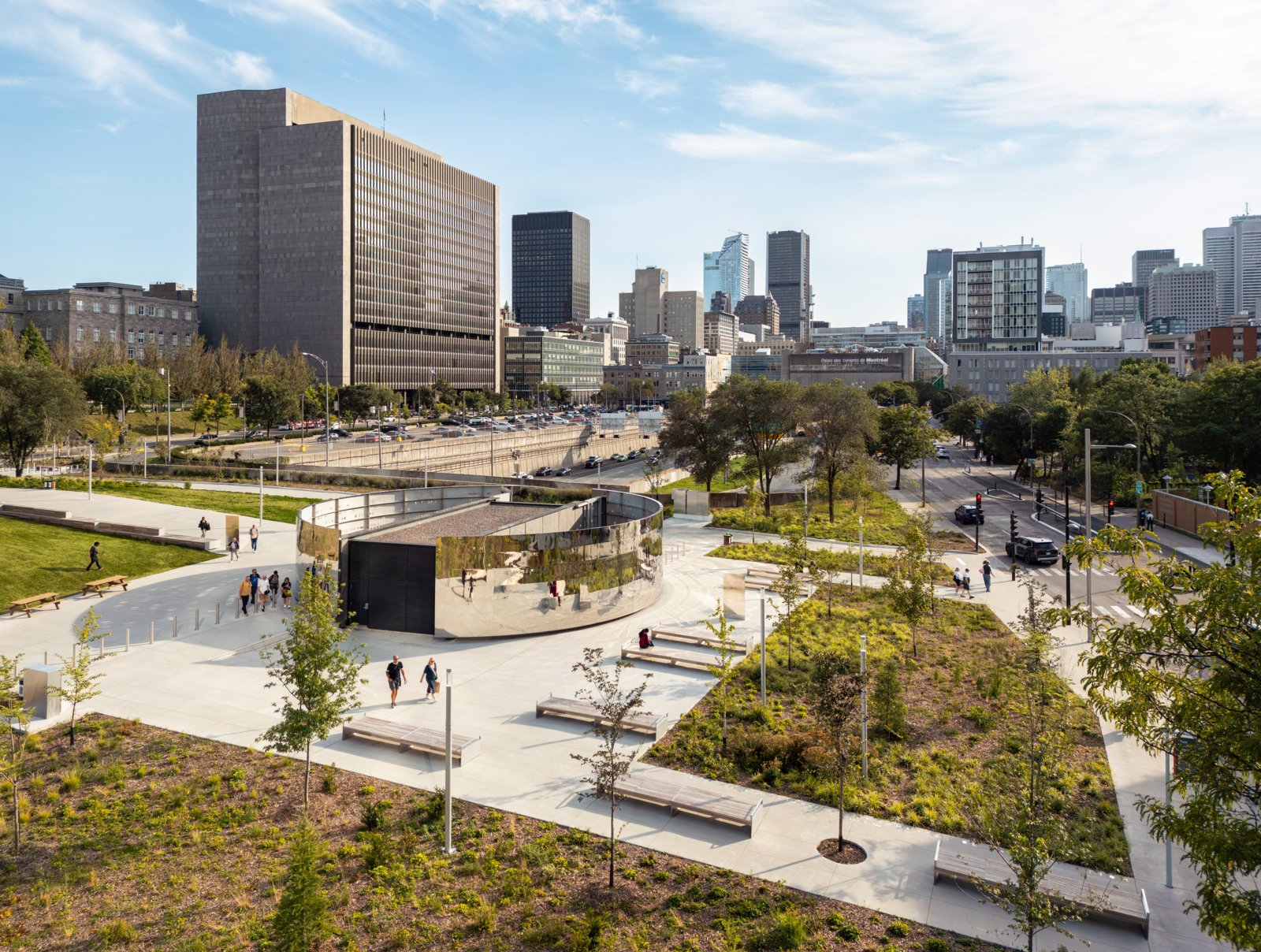
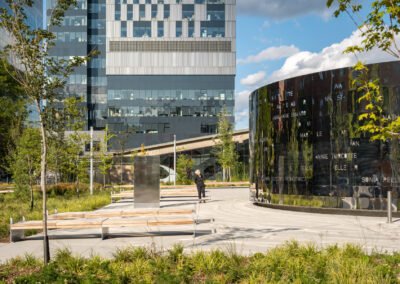
Angela Silver’s circular mirror installation operates as an inverted cloister, mirroring Montreal’s skyline while screening mechanical infrastructure. This reflective plane invites contemplation on the 21 women’s history as victims and pioneers, where present-day Montreal intersects with inscribed names. A monumental commemorative staircase creates dialogue between the flowered meadow above and the commemorative mirror below. Letterforms extracted from the women’s names break apart and migrate across step faces, weaving memory into everyday passage. Beyond static monumentality, this strategy imprints recognition directly into the built fabric.
www.landscapefirst.com