

A major park project designed by SWA’s Houston studio, Studio Red Architects, RDC, Halff, and Minor Design is now complete in Houston.
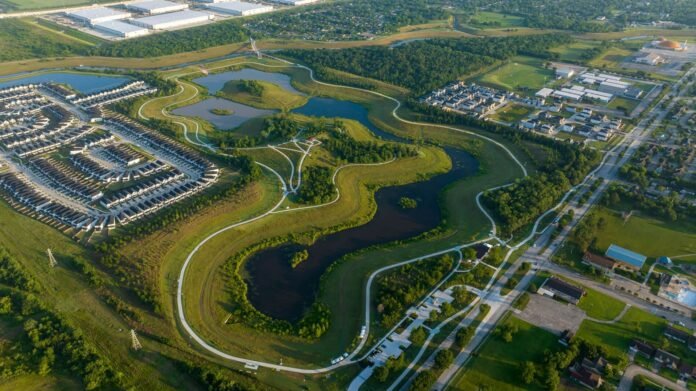
Hill at Sims is located on Sims Bayou, hence the park’s name, atop a stormwater detention basin. It is located about seven miles from downtown Houston to serve residents of Sunnyside, South Acres, and Crestmont Park.
The park combines a public utility with public space. The basin is formed by a pre-existing 60-foot mound, constructed in 2005. It offers nearly 325 million gallons of stormwater storage capacity, while the green space provides 100 acres of recreational and civic use.
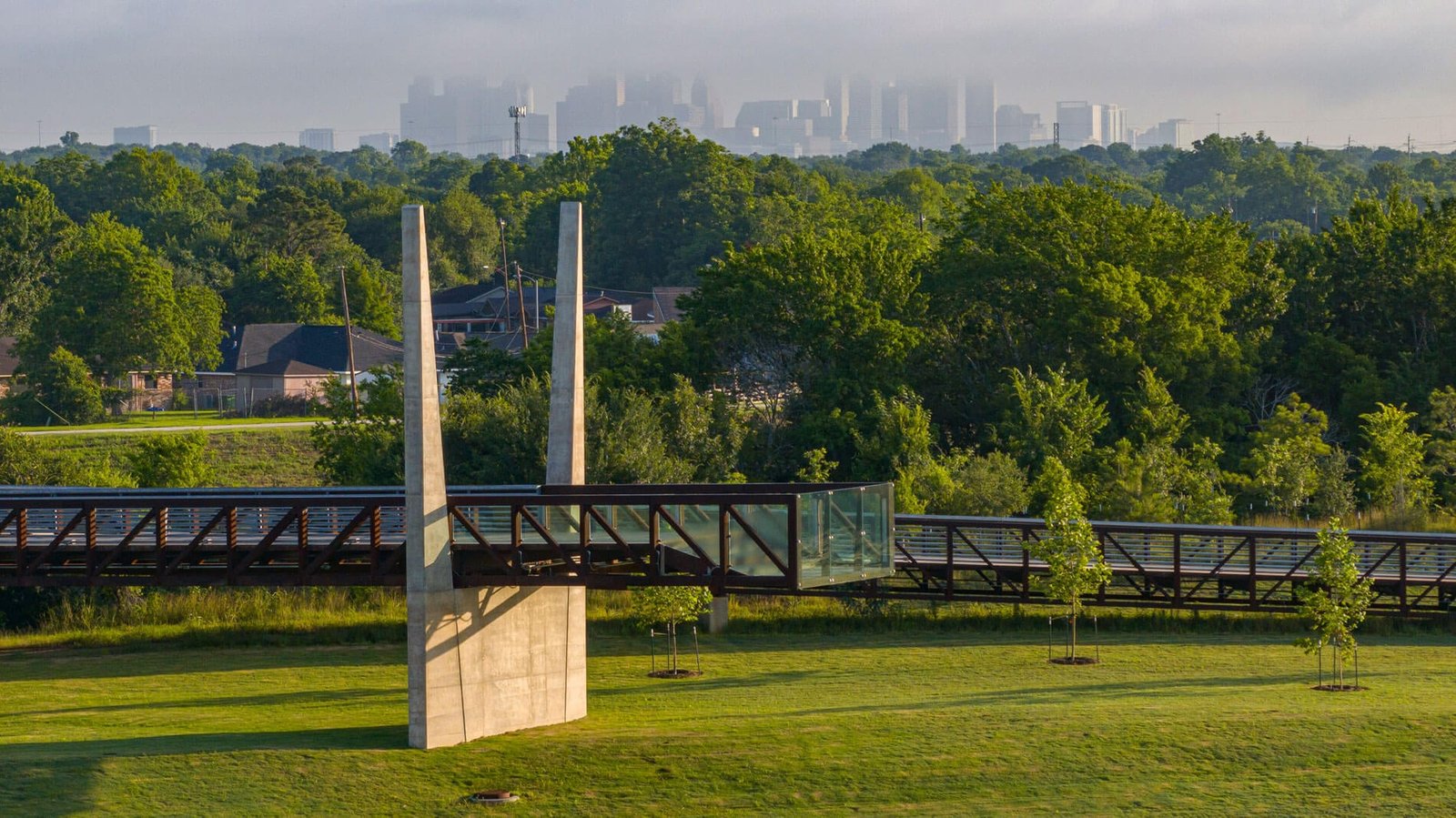
The park’s defining features are a pedestrian bridge that stretches across Sims Bayou, and ample biking and hiking trails connected to parks, schools, and health facilities.
The bridge connects Hill at Sims to the existing Sims Bayou Greenway, another project by SWA’s Houston studio.
The bridge is raised up off the ground to pass over a waterway that snakes around the perimeter of the park.
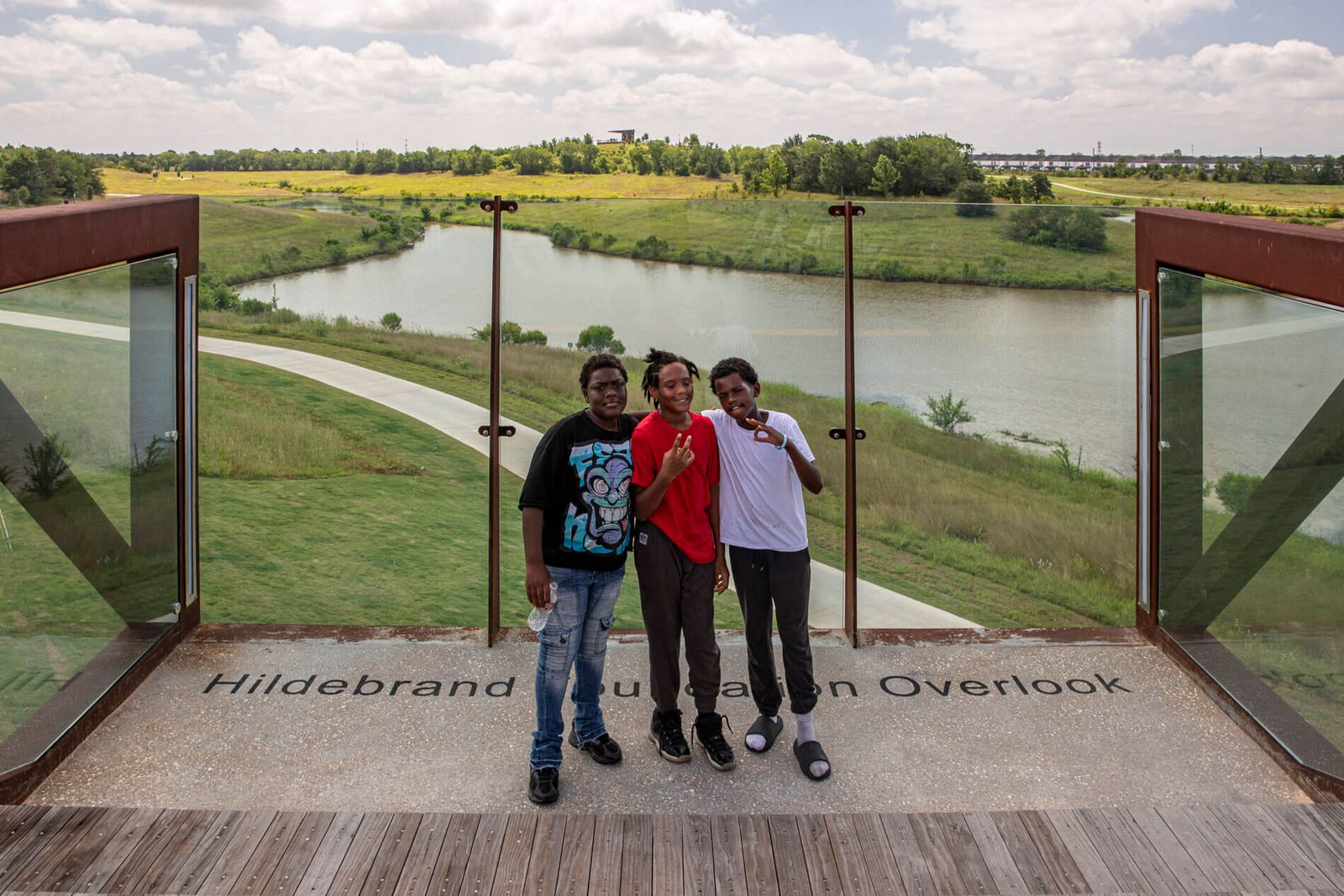
Two sets of tapered towers straddle the bridge’s walkway. Its exaggerated “L” shape culminates in an “overlook,” where a glass railing permits uninterrupted views outward.
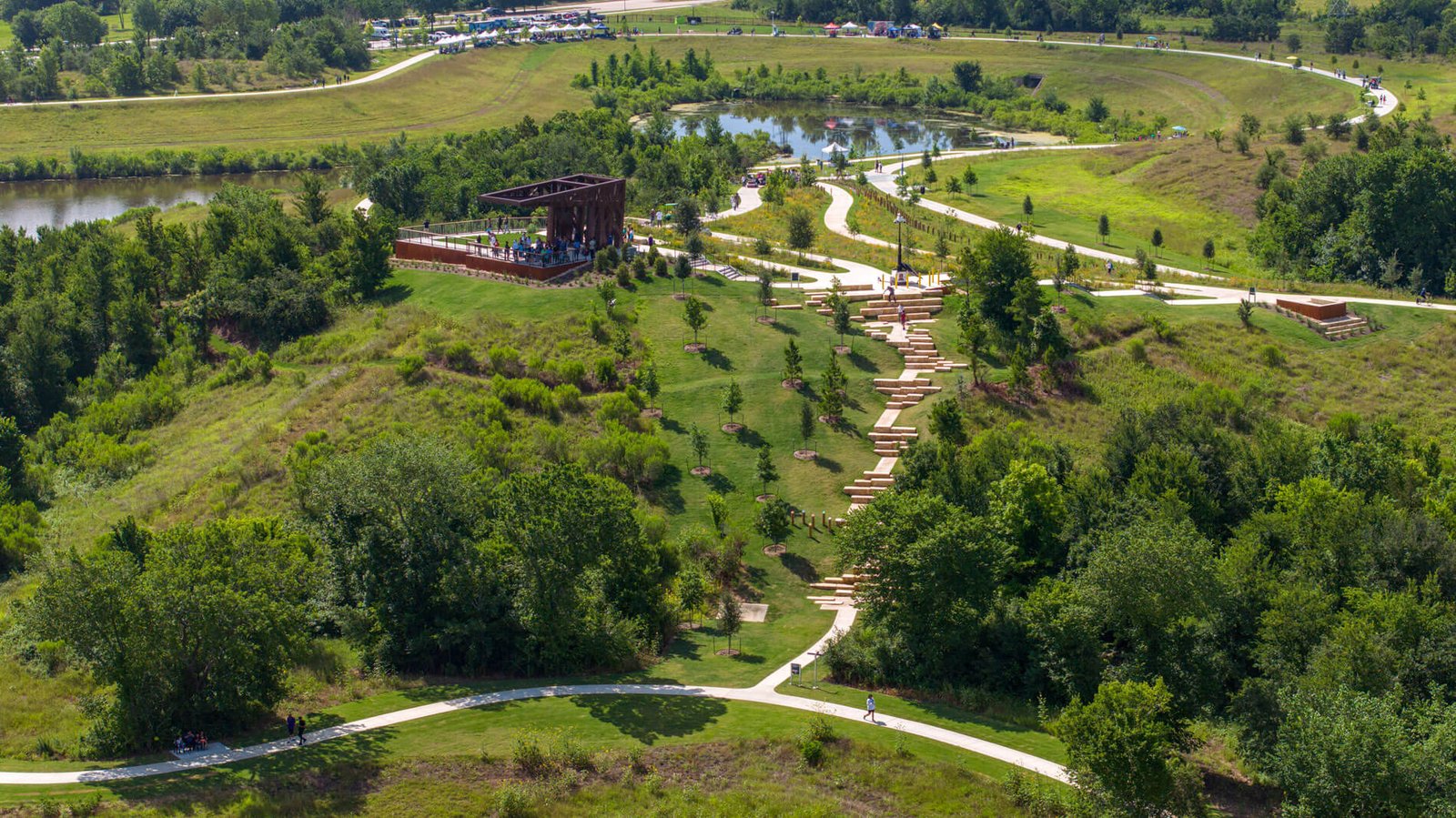
A series of switchback pathways and a “scramble” trail were carved into the mound to lead up to the pavilion designed by Studio Red Architects.
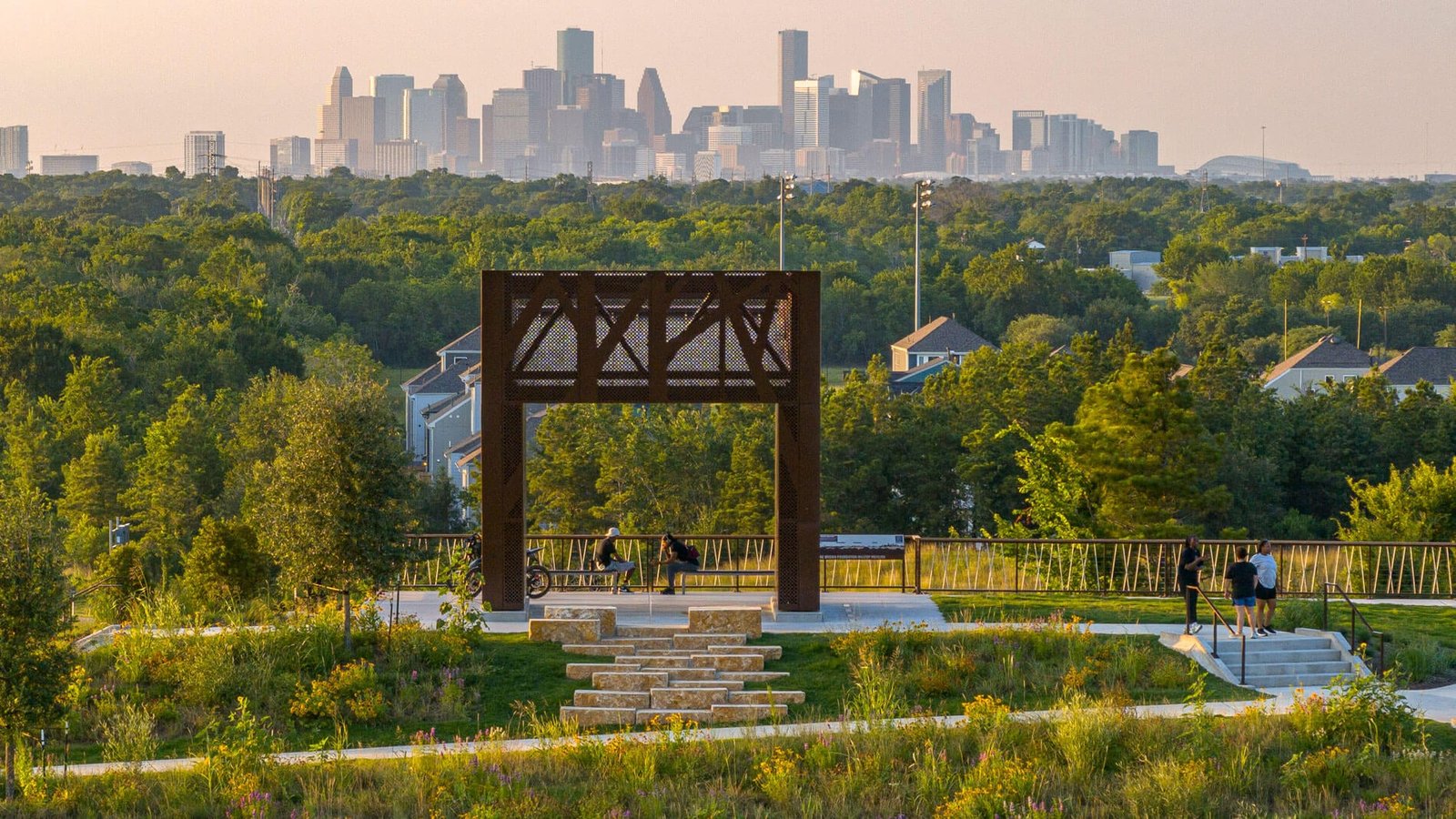
The pavilion is a rectangular archway with an angular roof that extends out over an expansive deck built around it. The deck forms a platform made of grass and pavers that parkgoers can stand on.
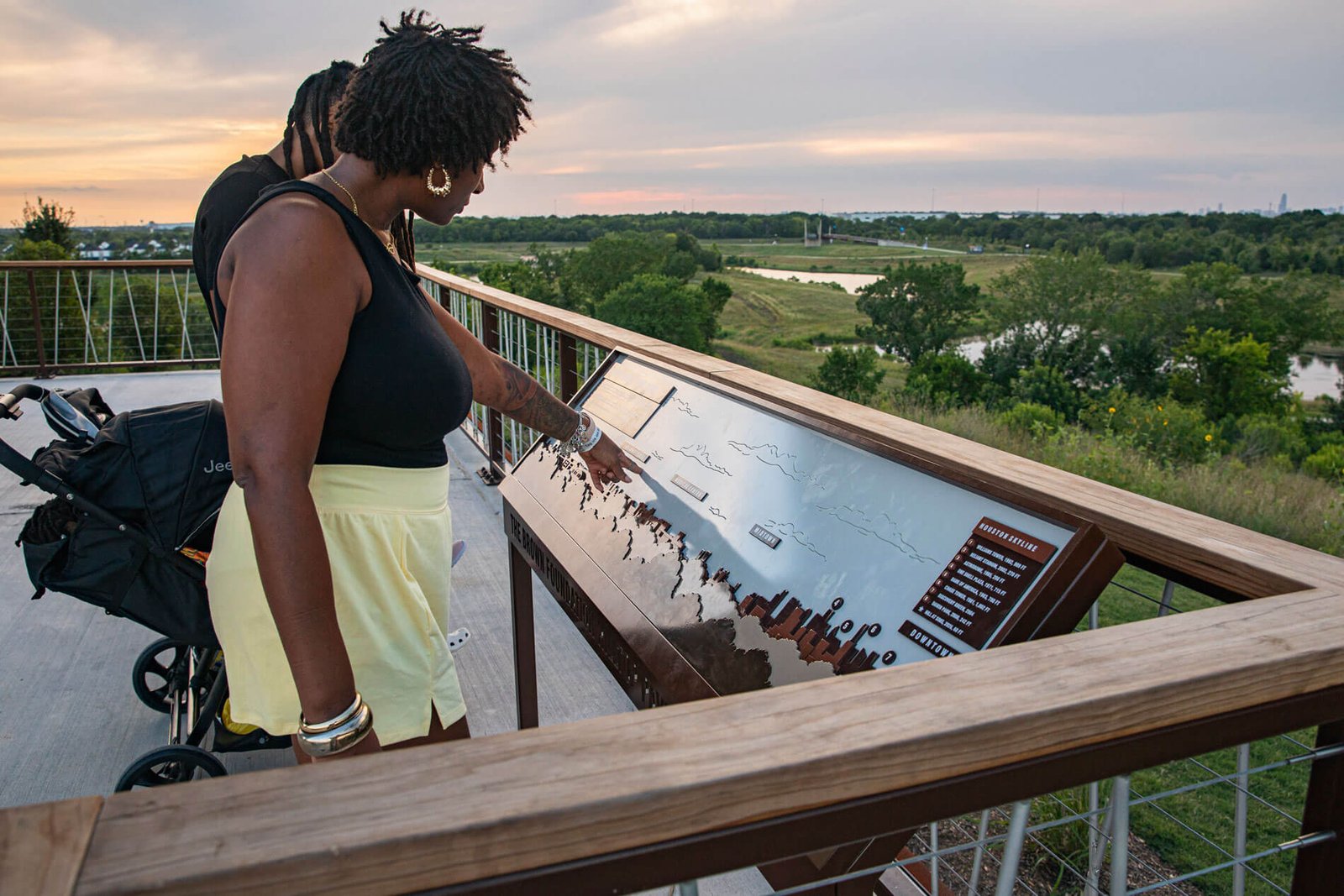
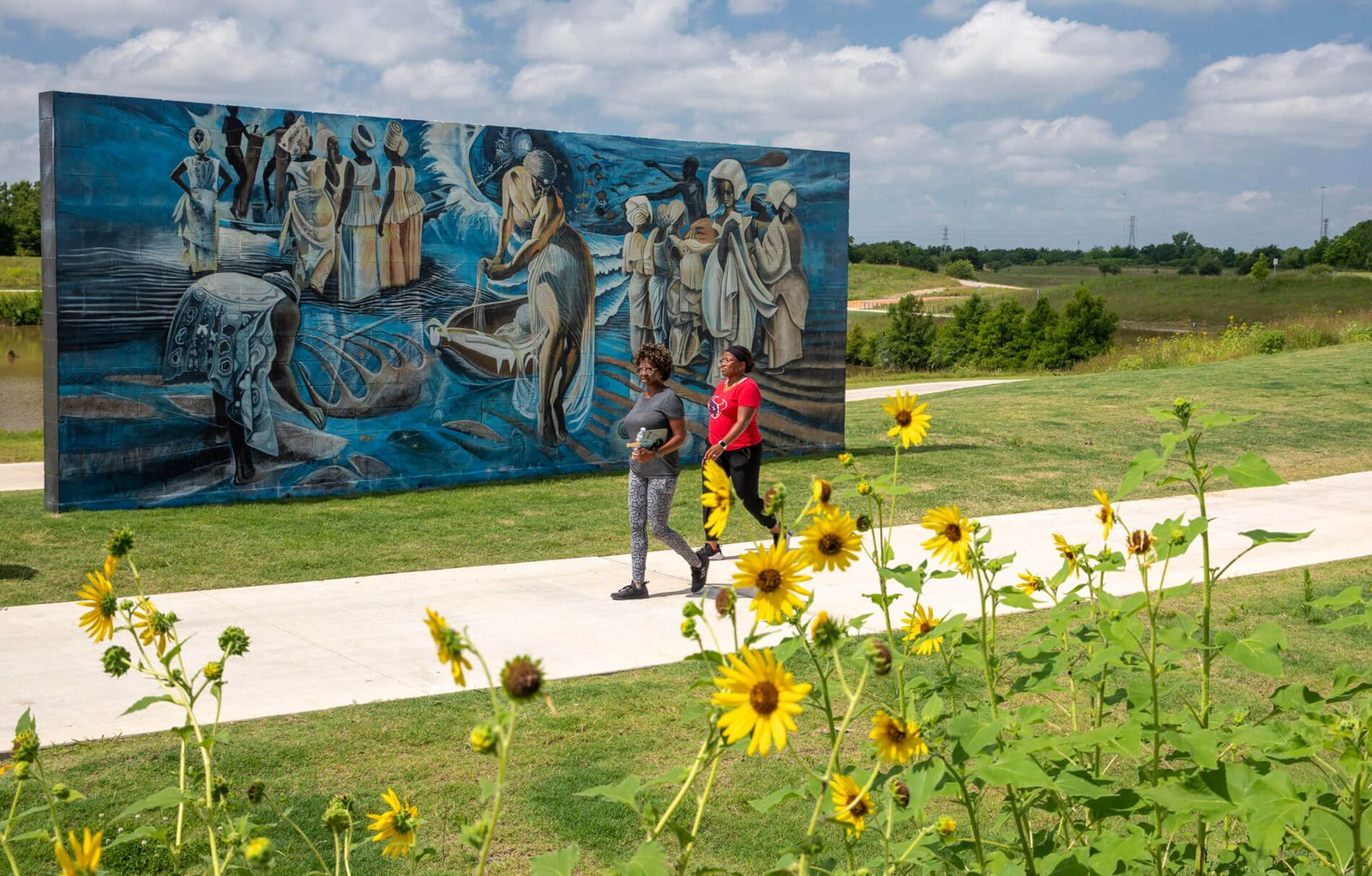
Interpretive signage on railings points out city landmarks and neighborhoods visible in the distance. Other public offerings include outdoor classrooms, large-scale murals, water access, and restored planting.
Matt Baumgarten and Michael Robinson are principals of SWA’s Houston studio. They said in a joint statement, “The Hill at Sims is a major new chapter in a story Houston has been writing about its bayous for decades.”
“When SWA first began work along the bayou system, the city was asking its residents to see water differently, as a resource rather than a risk,” Baumgarten and Robinson added. “This park makes that case powerfully, and we hope it shows cities across the country that flood infrastructure and high-quality civic green space don’t have to be separate investments.”
A public-private partnership between politicians, the Houston Parks Board, and Brown Foundation made the $30 million project happen. Harris County Commissioner Rodney Ellis, who is from Sunnyside, said Hill at Sims is about rectifying past spatial injustices.
“For too long, communities like Sunnyside—where I grew up—have gone without the parks and greenspaces they deserve,” Ellis said. “Hill at Sims changes that.”
“At a time when working families face rising costs and shrinking public resources, investments like this matter,” Ellis elaborated. “Safe, beautiful places to gather and enjoy time outdoors should not be luxuries reserved for the wealthiest neighborhoods.”
Also in Houston, work is underway to deliver Buffalo Bayou Park, a similar community-driven and resiliency project by SWA. At Buffalo Bayou Park, there are plans for pedestrian bridges, a pavilion, lawn space, and a water feature.
Additionally, Michael van Valkenburgh Associates is designing Tony Marron Park, on the southern bank of Buffalo Bayou in Houston’s Second Ward.