

There is a philosophical position that holds that matter is not inert. A stone, a strand of beads, a fistful of subsoil is not a passive thing waiting to be used but something with its own tendencies, its own slow agency.
Ancestral Ecologies, the first exhibition of Brooklyn Botanic Garden’s new Heidi Nitze Art × Environment Fellowship, takes up this premise. The fellowship, a biennial, invitation-only program, pairs an artist with an environmental thinker to make site-specific work meant to spark public engagement with questions like climate change and biodiversity. The fellowship’s first recipients, Brooklyn artist Olalekan Jeyifous and architecture practice AD—WO, designed four installations across the Garden’s north end.
We tend to save the word alive for things that breathe. “We’re really interested in this notion of nonhuman aliveness,” Jeyifous said. What the artist means is the other kind, the life of things that don’t breathe but still act on us: the soil that feeds the garden, the weather that wears it down, the minerals that were here long before the garden and will be here long after. The show draws on an understanding of nature as animate and relational, knowledge kept alive in Latinx, Afrodiasporic, and Indigenous traditions. It doesn’t argue the point so much as ask you to look closer.
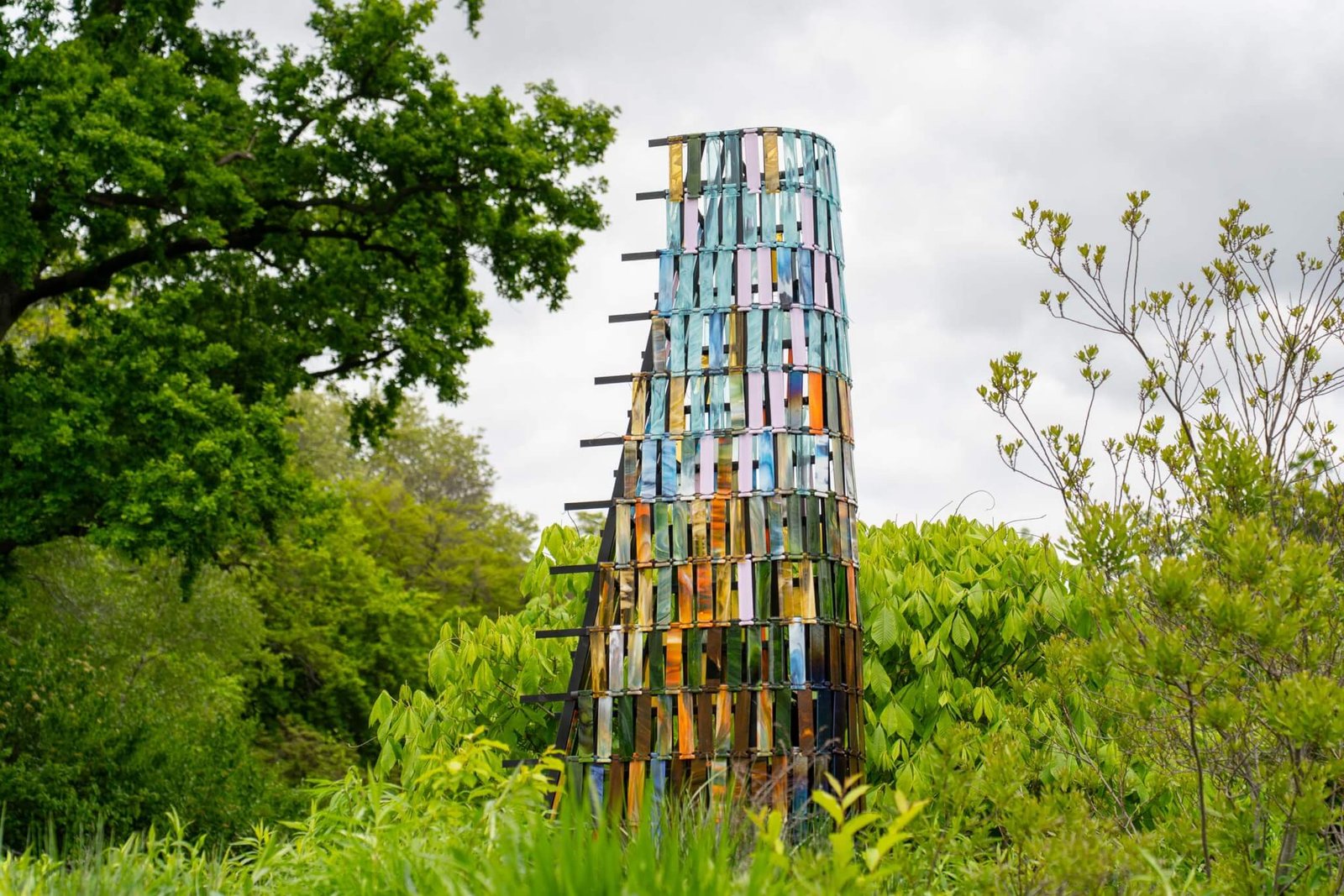
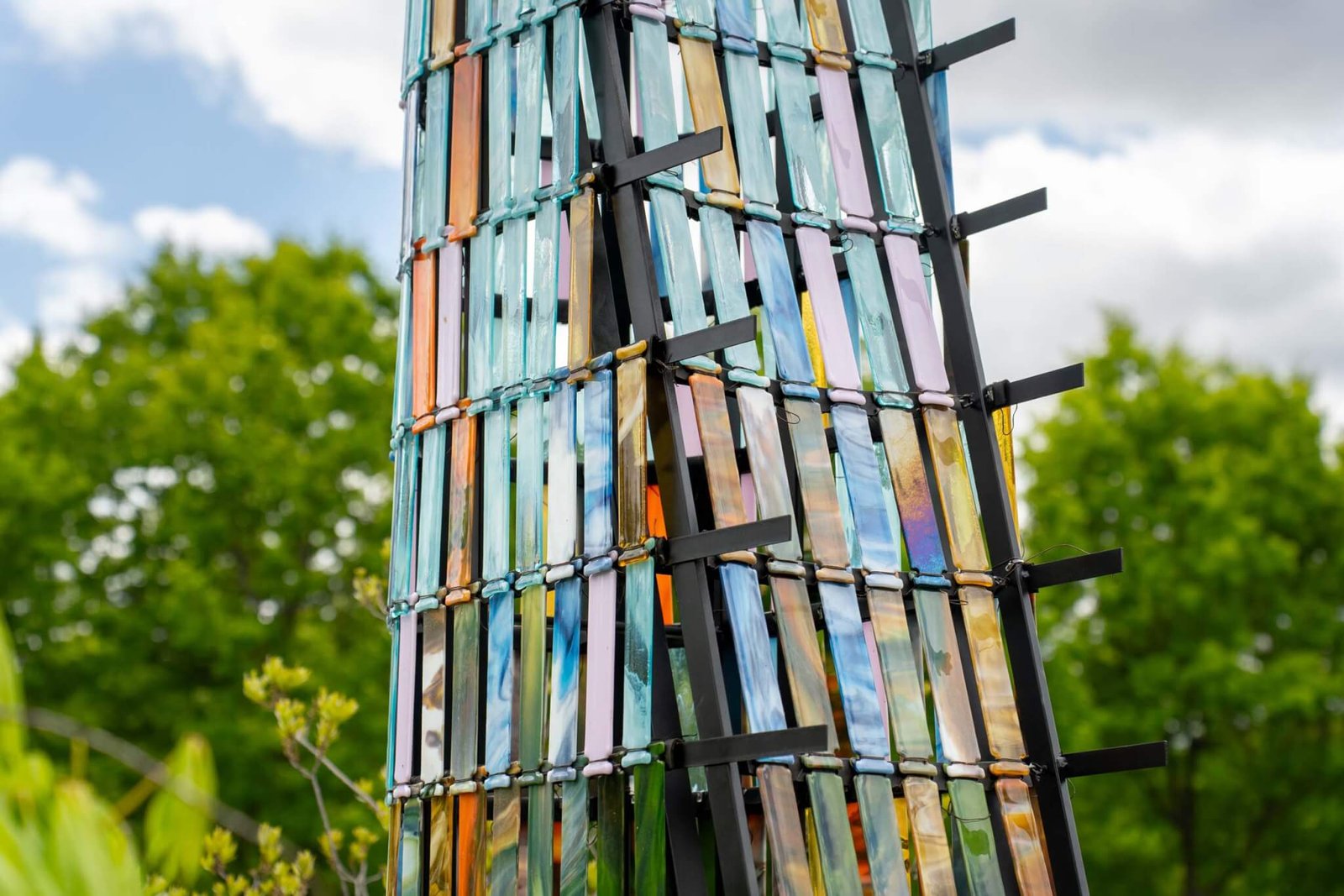
The first installation spotted is Serpentine Specter, a tapering tower rising out of the meadow. It was built from hundreds of small panels of colored glass lashed to a black frame—blues, ambers and milky pinks that go molten when the sun is behind them. Up close it is hundreds of separate pieces and stepback and it reads as one shimmering thing. That is the move the whole show asks of you: a pile of small parts, arranged just so, starts to behave like a single body.
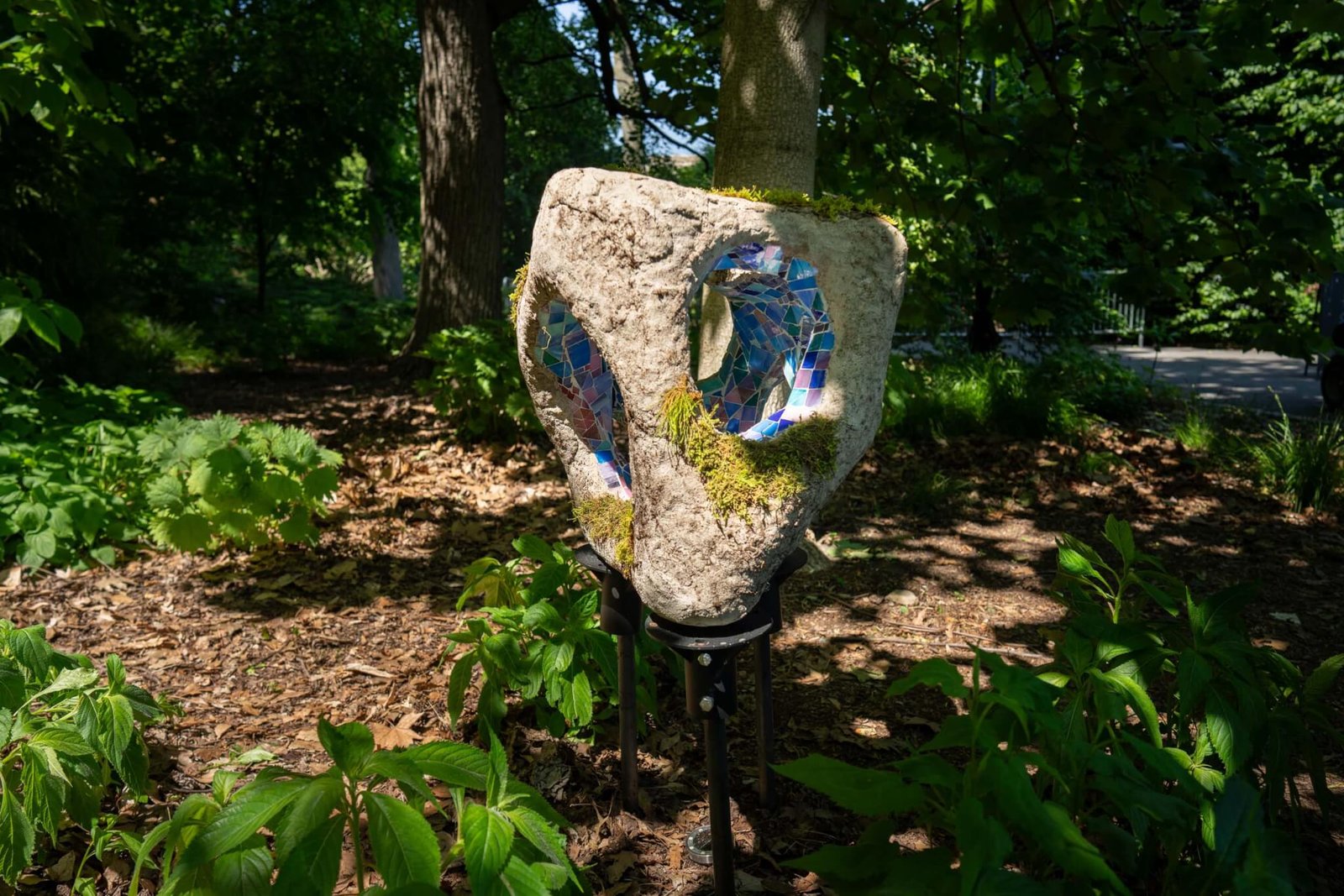
Animist Capsules consists of a cluster of concrete capsules that sit on thin legs.Moss spreads across their shoulders and their hollow centers were packed with iridescent glass that catches light like a geode split open. Animist Capsules was staged at the precise moment where rock becomes moss becomes fungi. Mineral biographies not only of the ground but of everyone who ever lived on it.
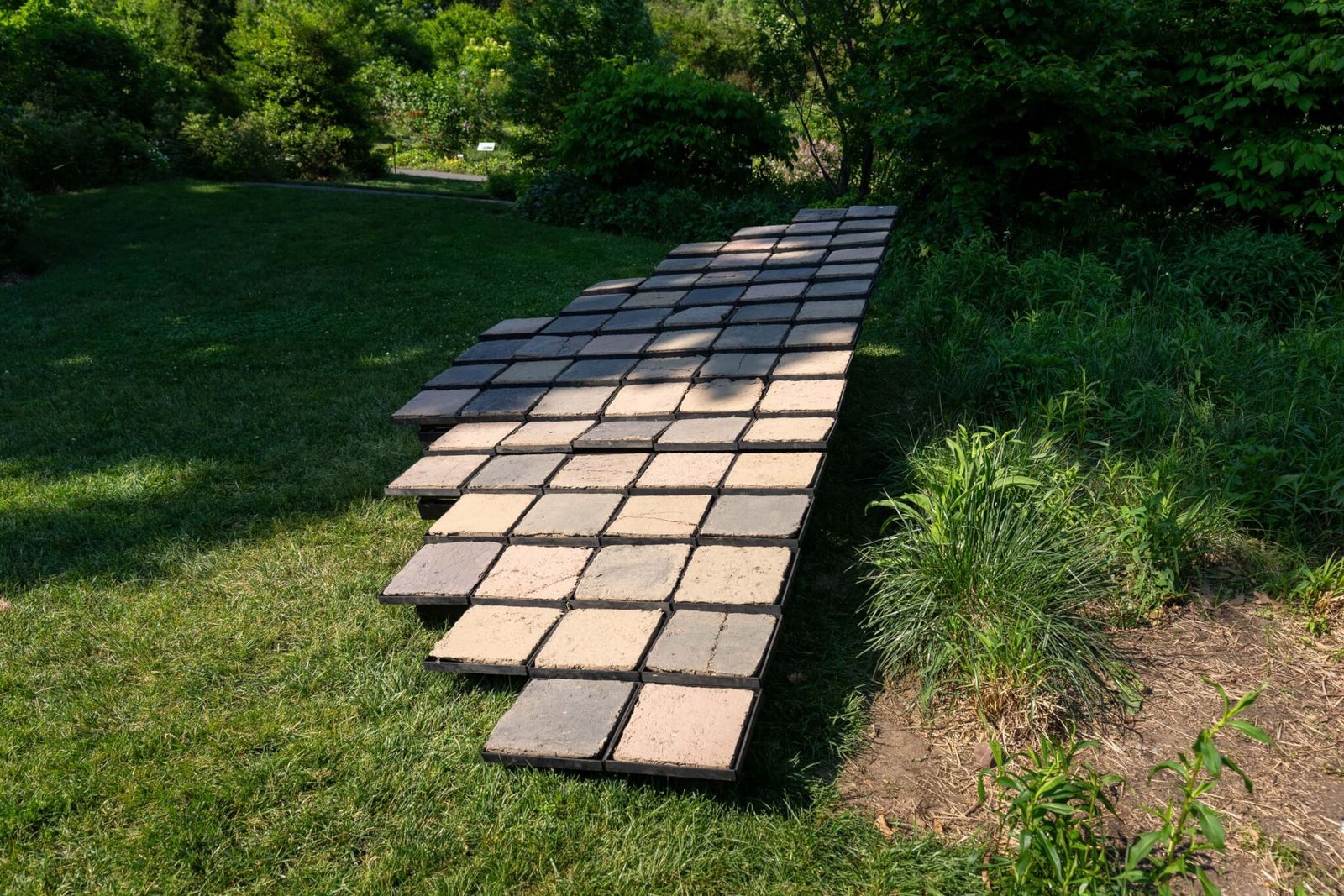
A few steps away, Earthen Tiles lies flat in the grass beside the Native Flora Garden as a run of hand-molded tiles. They are already darkening at their edges, on their slow way back into the soil. These pieces don’t illustrate the idea that matter acts. They are matter acting, on a timescale that outlasts the show.
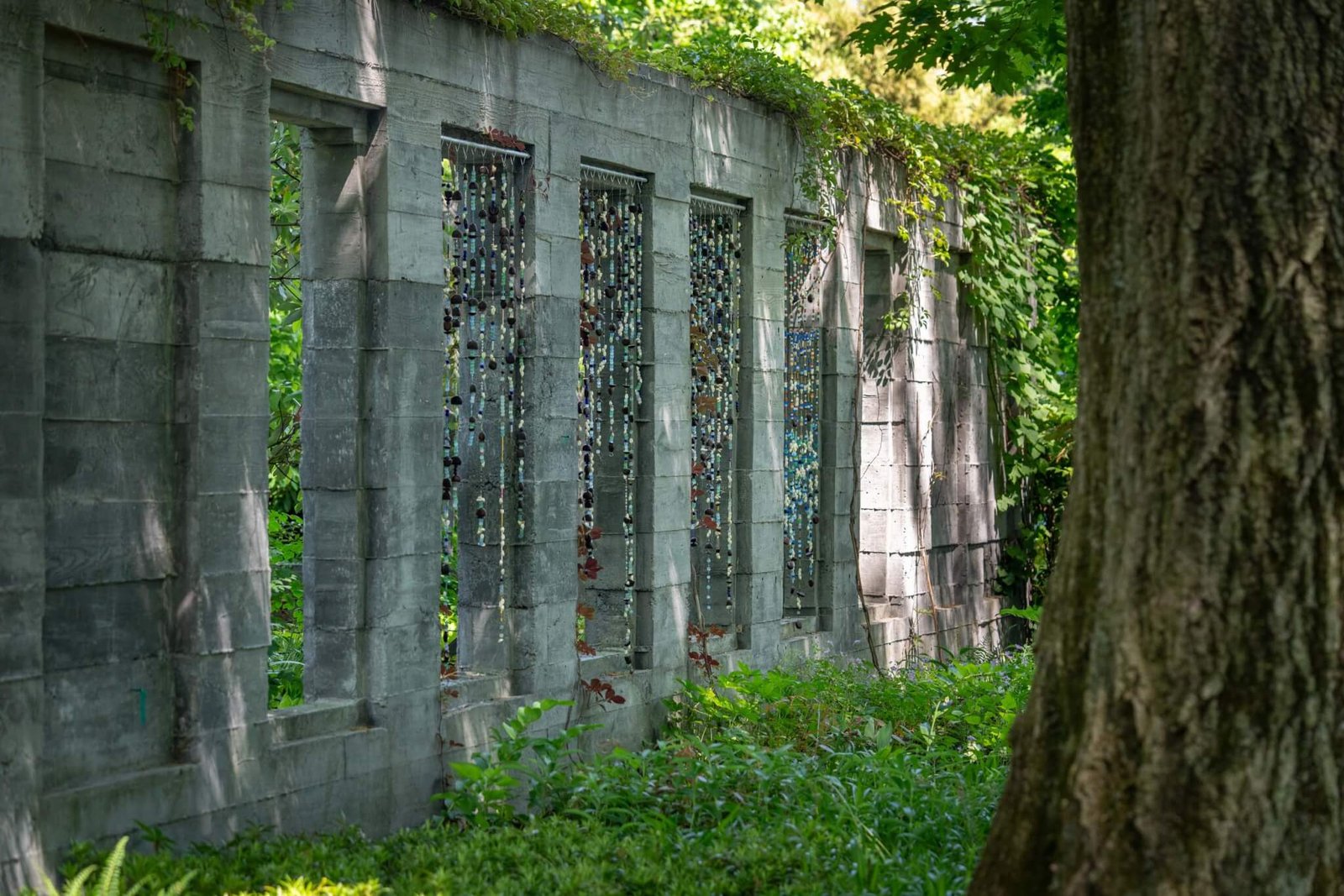
In a nearby concrete wall, Sonic Strands hangs in a row of open window-like frames: strands of cowrie shells, recycled glass beads and sea beans that sound only when the wind moves them. The objects carry real freight: Afrodiasporic, Latinx and Indigenous histories of movement. The diaspora is audible when the wind plays it. Neither exists in the encounter without the other. They define each other and are not two things but one relationship.
A rock is not a person, and the show never pretends otherwise. But a rock is not nothing, either: it resists, it endures, it shapes what grows and moves around it. AD—WO’s Emanuel Admassu described the method as calibrating where the materials pop and where they blend into the garden. Architecture usually starts with the human body and works outward; this work starts from the ground, the weather, and the wind, treated less as a backdrop to build on than a partner to build with. The world does not just sit there to be looked at—it touches back.