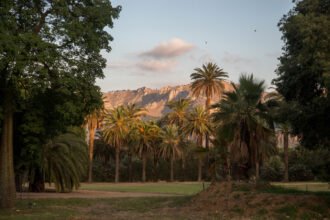


Shaare Zedek Medical Center is located on the margins of ‘Mount Herzel’, a unique and sensitive landscape setting that significantly influenced the overall planning concept. The project responds to its geographical and cultural context by integrating architecture and landscape into a cohesive healing environment.
The landscape design is founded on three central principles:
• Biophilic design, emphasizing the presence of nature as an active component of the healing process.
• Strengthening plant mass that resonates with the native vegetation of ‘Mount Herzl’—cypress, cedar, and pine trees—and their cultural and symbolic significance.
• Creation of an inclusive space that is physically, visually, and cognitively accessible to all users.
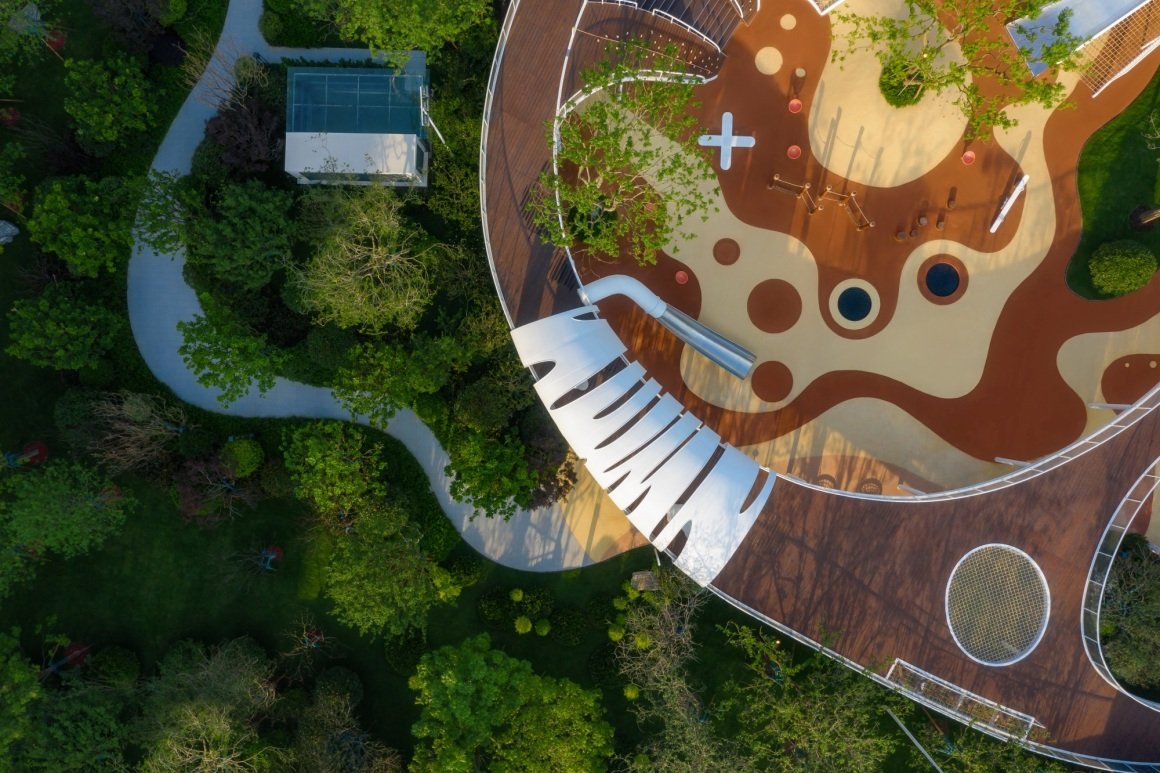
The architectural form of the building is inspired by the shape of a butterfly’s wings, symbolizing transformation, healing, and renewal. Extensive use of wood was incorporated throughout the project to soften the building’s visual and environmental footprint within the landscape and to create a warm, human-scale atmosphere.
The structure was designed according to neuroarchitecture principles, acknowledging the impact of spatial qualities—such as light, materiality, views, and proportions—on emotional well-being, stress reduction, and cognitive clarity; and according to the ‘salutogenic model’, a concept developed within the sociology of medicine by Professor Aaron Antonovsky. The term salutogenesis derives from the word salute, meaning health, in contrast to the pathogenic approach that focuses on sources of illness.
Over two decades of research, Aaron Antonovsky developed the salutogenic model, which reframed health as a continuum and emphasized factors that support well-being rather than risk factors alone.
The salutogenic orientation serves as a foundation for both research and practice in health promotion, guiding design toward strengthening health-supportive conditions instead of merely mitigating disease.
Architecture and landscape work together to support a calm, intuitive, and restorative experience.
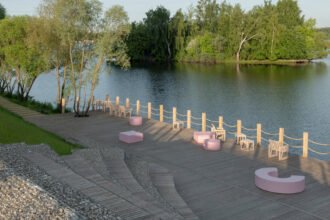
Surrounding the building are multiple exits leading to quiet sitting corners and rest areas embedded within the landscape. The entire complex is designed for convenient and inclusive access—from within the building, from the main entrance road, and from the parking areas—ensuring seamless movement and orientation for patients, visitors, and staff alike.
At the heart of the therapeutic zone – the hospital’s core – is located approximately 20 meters underground. It is enclosed by 70-centimeter-thick walls and illuminated by a skylight that provides natural daylight throughout the day. This design creates a protected, quiet, and stable environment while maintaining a strong connection to natural light.
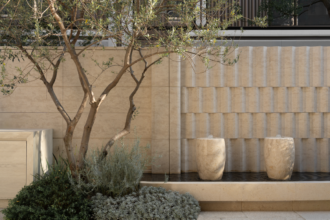
At the lowest level of the structure, a central patio of approximately 200 square meters was developed. The patio is planted with climate-adapted vegetation that thrives solely only on natural daylight, without reliance on artificial lighting. This sunken garden becomes a vital sensory focal point, reinforcing the connection between nature and healing even deep below ground level.
The oncology building stands as an example of salutogenic planning within a medical setting—or more precisely, a healing structure. Landscape architecture, in close integration with the building’s architecture, was designed according to biophilic principles, embedding nature as an essential presence throughout the project. Together, they form a holistic environment that supports physical, emotional, and cognitive well-being, completing and reinforcing the salutogenic intent of the design.
31.77470726759703, 35.18421272775029