
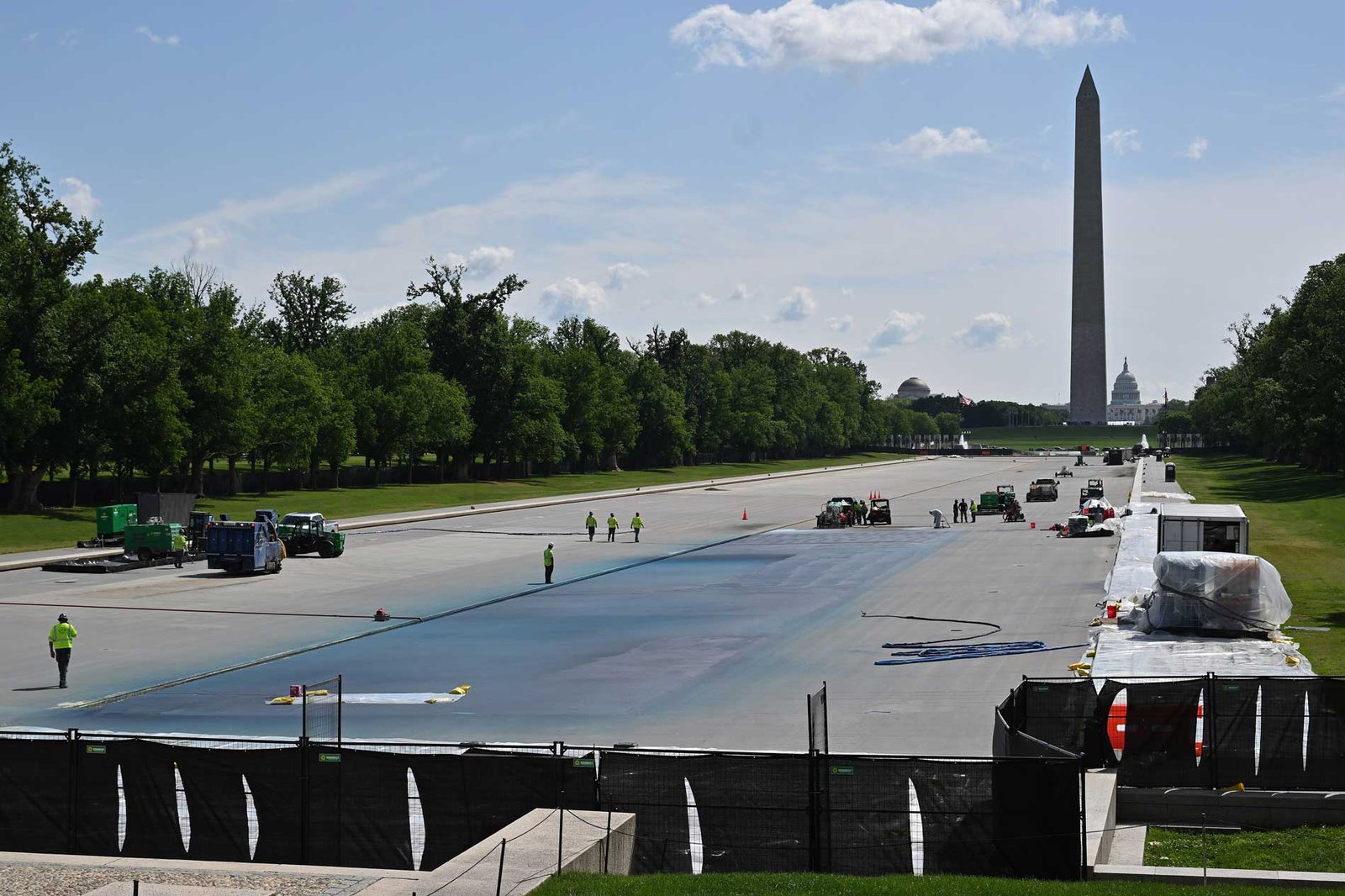

The Cultural Landscape Foundation (TCLF) filed a lawsuit today against the U.S. Department of the Interior (DOI) over the Trump administration’s plans to paint the bottom of the Lincoln Memorial Reflecting Pool blue.
The Reflecting Pool on the National Mall is managed by the National Park Service, a federal agency under the purview of the DOI. It is listed on the National Register of Historic Places, so any proposed changes to it are subject to Section 106 of the National Historic Preservation Act of 1966.
President Trump shared details about painting the Reflecting Pool’s floor blue on Truth Social in late April. Construction crews are about halfway through applying the coat. Trump’s goal is to finish the job before July 4.
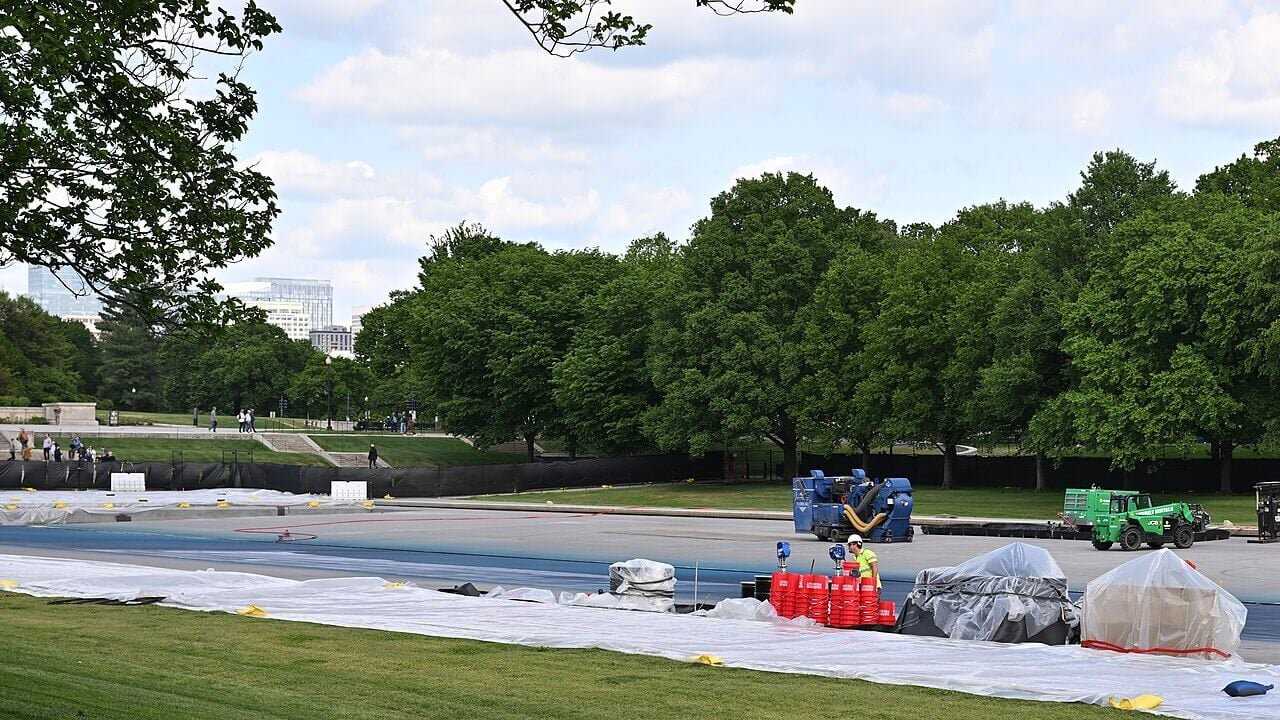
The $13.1 million (previously $6.9 million) no-bid contract was awarded to Atlantic Industrial Coatings, a company Trump has previously worked with based in New Canton, Virginia.
The Washington Litigation Group is representing TCLF. Now, TCLF is seeking a “temporary restraining order or preliminary junction to stop the work,” it said in a statement.
“The dark grey, achromatic basin was not incidental to the design. It was the design,” TCLF said in the complaint, before affirming “the dark color of the tile created the illusion of greater depth and a more profound reflection.”
Charles Birnbaum, TCLF president and CEO, noted that the “Reflecting Pool should not be viewed in isolation; it is part of the larger ensemble of designed landscapes that comprise the National Mall.”
“The design intent, to create a reflective surface that is subordinate, is fundamental to the solemn and hallowed visual and spatial connection between the Washington Monument and the Lincoln Memorial,” Birnbaum continued. “A blue-tinted basin is more appropriate to a resort or theme park.”
To date, the Trump administration has been consistently accused of Section 106 violations in regard to the White House East Wing Ballroom replacement project, the Wilbur J. Cohen Federal Building, Eisenhower Executive Office Building, the Robert C. Weaver Federal Building, and others.
Maryland Congressman Jamie Raskin has introduced legislation, backed by the AIA, to remove the White House’s exemption from Section 106.