

By prioritizing equity, economic vitality, and environmental sustainability, Downtown Cary Park was planned to reflect changing community needs and growth. Nestled in the heart of North Carolina’s Research Triangle, the park employs a comprehensive sustainable framework to protect and express the native ecologies of North Carolina’s Piedmont region and utilizes green infrastructure solutions to solve intractable issues of flooding. The park was realized after almost two decades of incremental site acquisition in the downtown core and a year-long master planning process incorporating extensive community feedback.
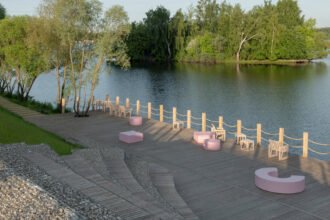
Connected to downtown hospitality, retail, and housing, the park acts as a dynamic hub for recreation and social gatherings while breathing new life into the downtown business district. At its core, the park is organized as a sequence of interconnected outdoor rooms, each offering distinct spatial and programmatic experiences. Elevated walkways, meandering paths, and carefully choreographed circulation routes guide visitors through the landscape, creating a dynamic, three-dimensional journey and responding to the site’s 30 feet of grade change. Layered topography organizes movement across multiple levels, allowing users to seamlessly transition between spaces while maintaining visual connections throughout the park.
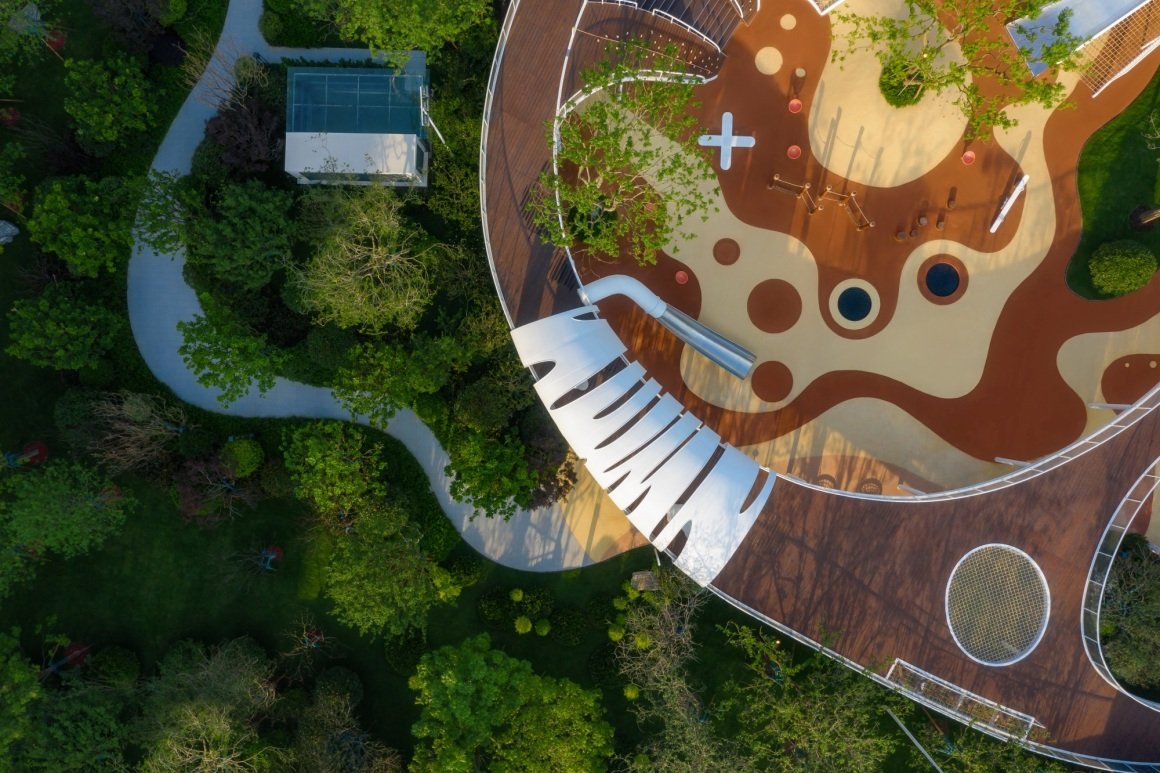
Programmatically, the park offers areas for passive and active uses. An inclusive children’s play area is located withing a grove of preserved loblolly pines. Experiential, non-prescriptive play is integrated into the surrounding landscape. Nearby, the Arena Lawn serves as a flexible, multi-use space accommodating organized programming and informal recreation. A robust calendar of core programs, monthly events, and seasonal activities encourages consistent use throughout the year. By embedding play within the site’s natural systems and topography, the design fosters a deeper connection between users and the environment.
Small pavilions are woven into the site, with curvilinear forms that gather people and define rooms. The Academy Plaza Pavilion anchors the main plaza, with seating areas, event space, and a unique market concept that provides snacks and sundries. The Bark Bar introduces a distinctive social component, combining an open-air pavilion with an adjacent off-leash dog area. Its undulating roof form creates sheltered seating while contributing to the park’s architectural identity. The Gathering House provides a more intimate, enclosed venue for community and private events, as well as opportunities for quiet reflection within a garden setting. Together, these structures not only support diverse programming but also establish a sustainable financial model for park operations.
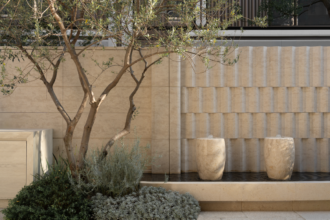
The integration of water is a defining feature of the park, both as an experiential element and as a critical component of its ecological infrastructure. As the head of an important urban watershed, the site is designed to manage stormwater while enhancing user engagement. Water is circulated through a series of streams, creating movement, sound, and visual interest. Bridges and pathways provide vantage points from which visitors can observe aquatic plantings and wildlife habitats, fostering an appreciation for the park’s ecological processes. This system is engineered to detain water to 500-year storm levels during peak conditions, significantly alleviating pressure on downstream infrastructure and protecting floodplain functions.
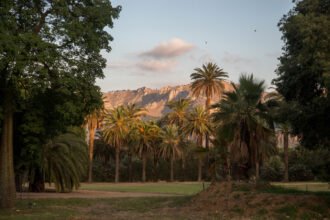
Planting design is equally integral to the park’s success. Native and regionally appropriate species are prioritized, ensuring resilience, reduced water consumption, and adaptability to site-specific microclimates. The preservation of 40 mature overstory trees anchors the landscape in its existing ecological context, while the addition of 650 new trees and over 72,000 plants from 125 distinct species significantly enhances biodiversity. This robust planting strategy has already yielded measurable results, including a 156% increase in bird species diversity since the park’s opening. These ecological gains demonstrate the park’s capacity to function as both a habitat and a high-performing urban green space.
The park incorporates recreational, ecological, fiscal, and civic functions in a compact, highly activated setting. The park serves as both a complement to existing parks and a catalyst for continued growth and revitalization. Through its thoughtful balance of performance, beauty, and inclusivity, the park stands as a model for future urban open space projects.
Credits:
Town of Cary, Client
Machado Silvetti Architects, Architect
Withers Ravenel, Civil Engineer
SGH, Structural Engineer
Cosentini, Mechanical Engineer
LAM Partners, Lighting Designer
RSM Design, Graphics and Wayfinding
Fluidity Design Consultants, Water Feature
Balfour Beatty, General Contractor
Biederman Redevelopment Ventures, Programming and Operational Planning
327 S Academy St, Cary, NC 27511