

Four years into the age of Return to Office (RTO) and six years since COVID-19 upended the rhythms of office life, the American workplace has become a stage set for corporate reassurance. Employers have realized that if they want bodies inside buildings again, they need buildings that look like someplace a person might choose to be. Offices can’t be offices anymore. They must be ecosystems, resorts, gyms, clubs, cultural venues, wellness sanctuaries, production studios, and restaurants.
The strategy appears to be working, at least for the newest towers. Manhattan businesses leased 23.2 million square feet of office space in the first nine months of 2025, the highest volume since 2006, according to real-estate services firm CBRE. The rebound has pushed New York ahead of the national curve, where office leasing still sits roughly 11 percent below pre-pandemic norms.
Yet the recovery remains uneven. Manhattan’s office vacancy rate still sits at 14 percent, according to CoStar, nearly double the 8.2 percent recorded at the end of 2019. Many of the city’s older office buildings are increasingly considered obsolete, with some slated for residential conversion.
Amenity Arms Race
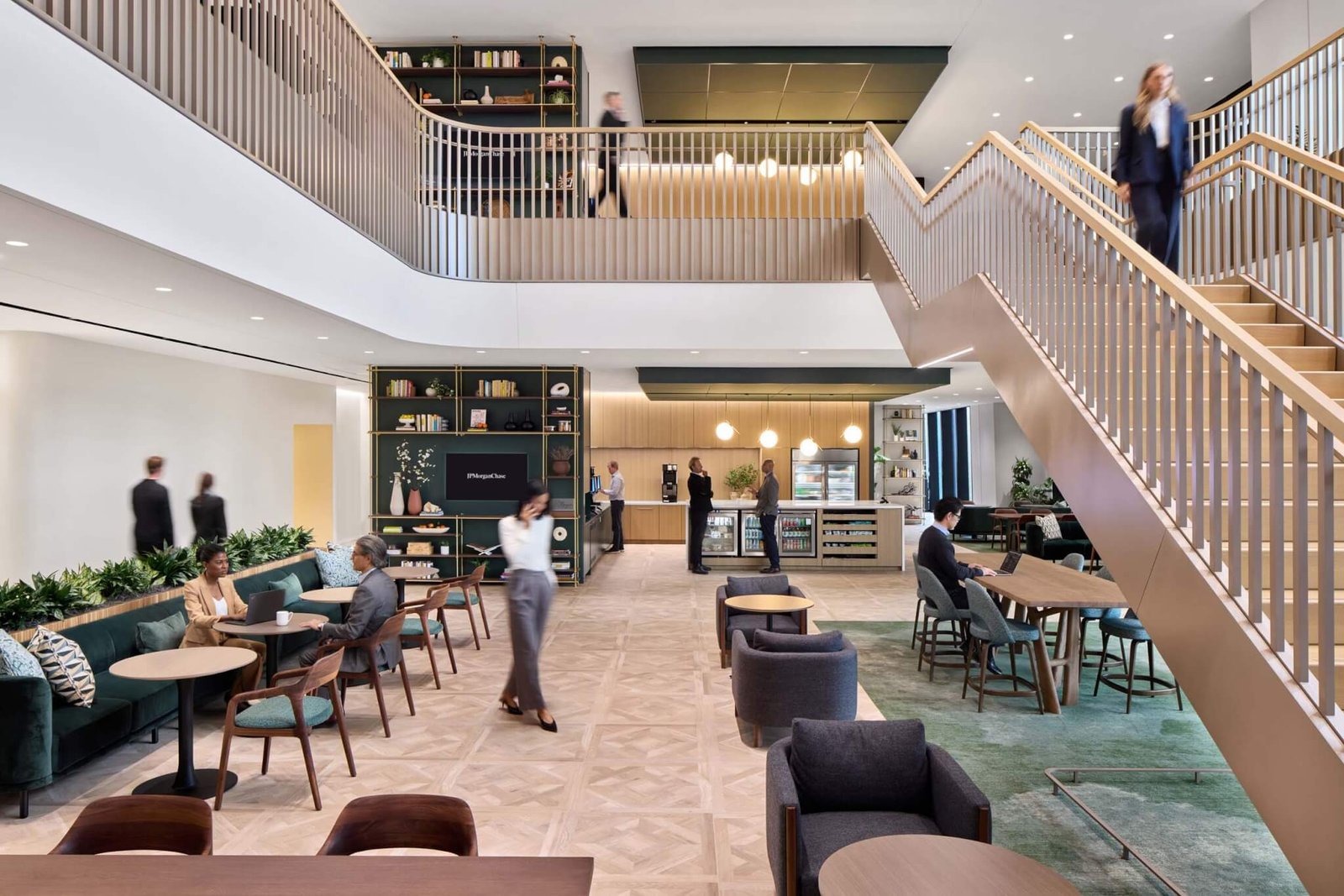
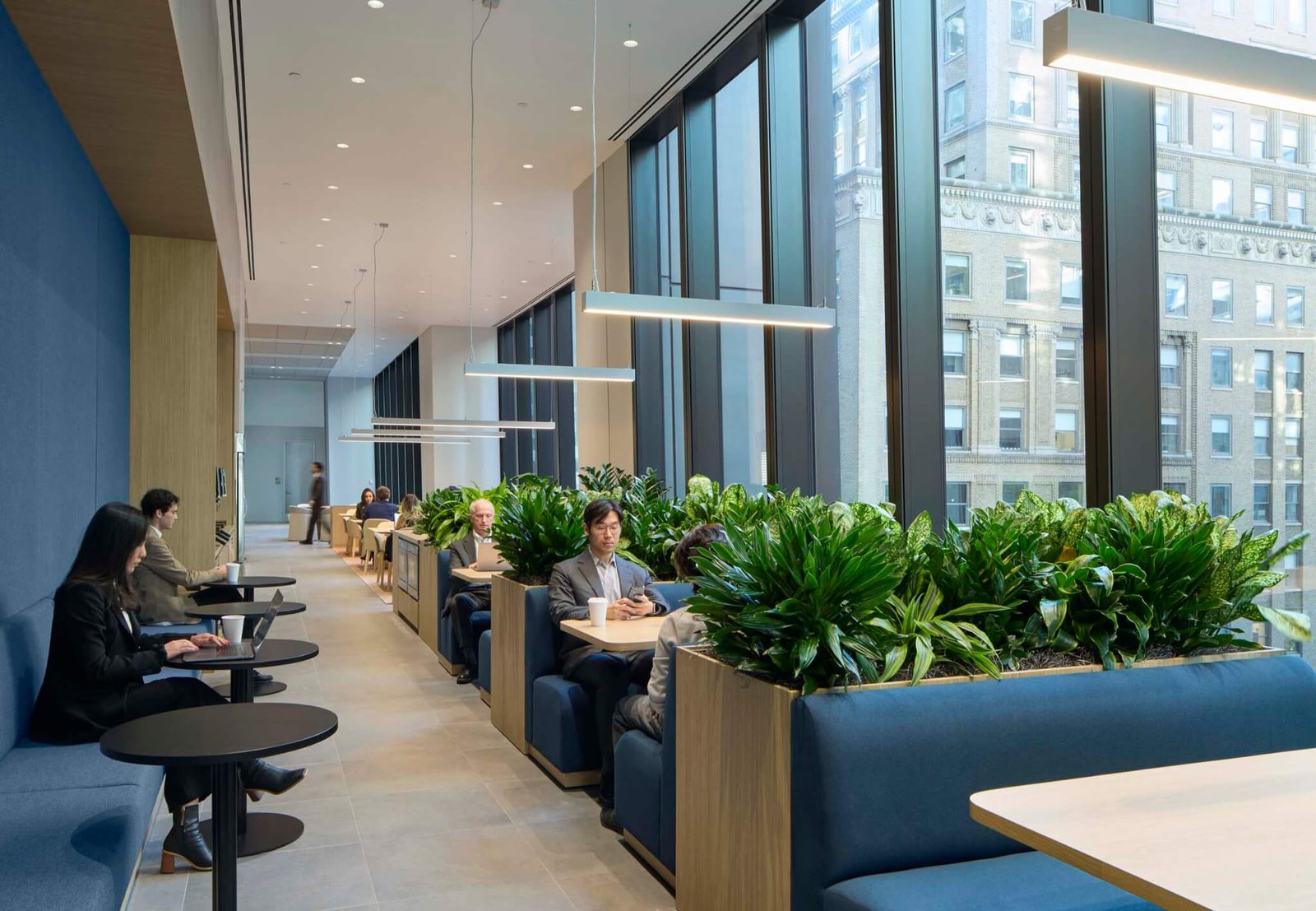
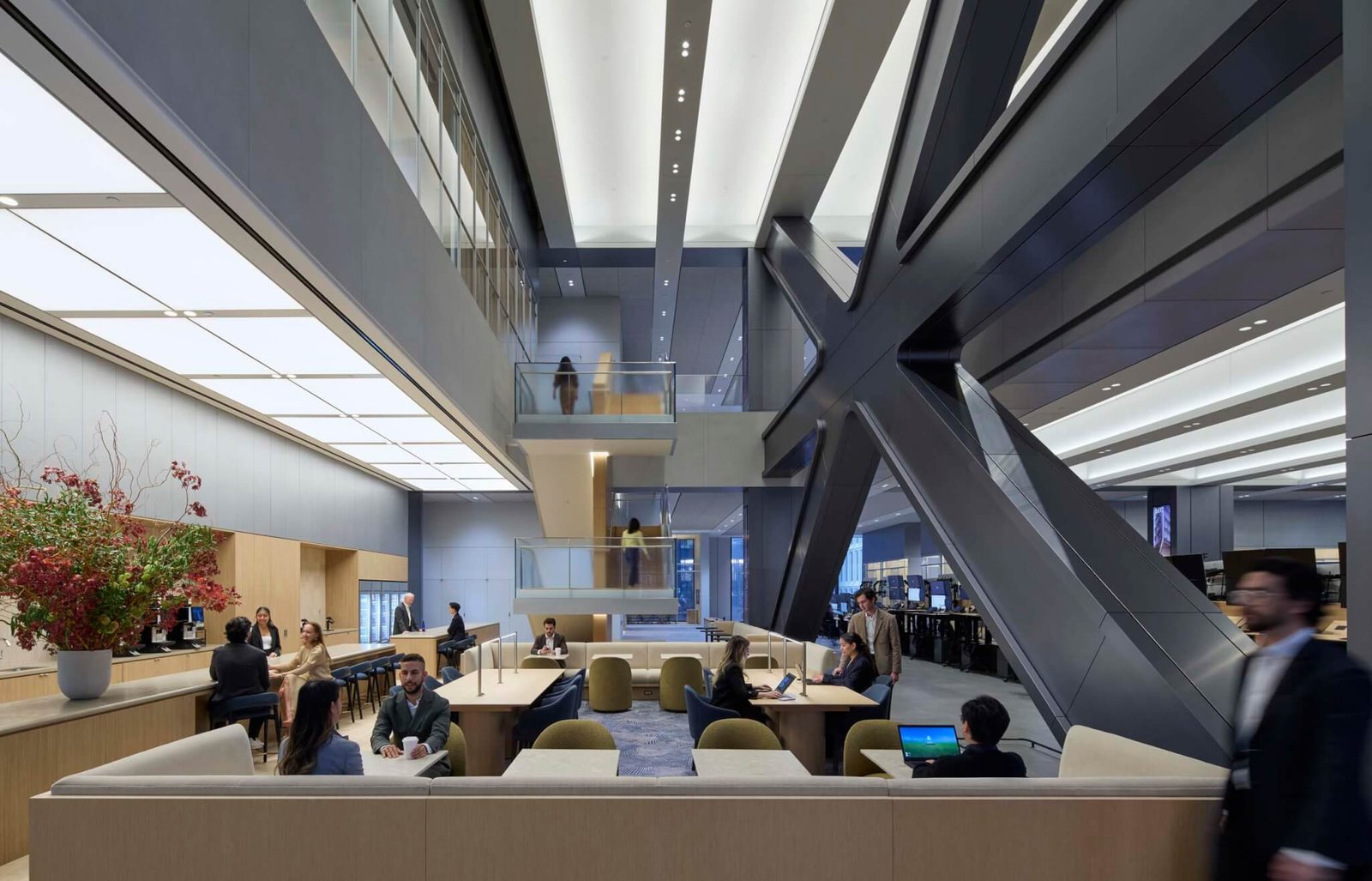
In the new Foster + Partners–designed JPMorgan Chase building at 270 Park, there are meditation studios, nap rooms, IV-drip stations, cold-plunge baths, pilates reformers, recovery pods that look like chrome eggs, and a 38,000-square-foot fitness center that boasts two swimming pools and a view that makes the Empire State Building look like a souvenir. Grab-and-go cafes were engineered to mimic boutique juice shops in Nolita. There is an in-house clinic. There are showers nicer than most spa showers. The building exudes choice, but choice isn’t really an option. From the outside, the tower rises 1,388 feet in bronze and steel, its tapered silhouette carved in the air. It’s too big, too confident, too self-assured to belong in the real world. In a time defined by contingency and hedging and “we’ll reassess in Q4,” 270 Park is a declarative sentence.
JPMorgan, like most major firms, has tightened its in-office guidelines. The badge system knows when you’re here and when you’re not. Senior managers have been reminded that leadership means visibility. And visibility, the logic goes, does not happen at home.
“I honestly haven’t had time to check out the amenities,” one employee told me. “I usually just want to get out of here as quickly as possible.”
A Brief History
Office design has always been a physical expression of economic anxiety. In the postwar years, corporations tried to optimize efficiency with endless rows of desks under fluorescent lights. The cubicle arrived in the 1960s as a humanizing reaction, a semi-private buffer meant to protect individuality, which quickly morphed into a symbol of gray corporate despair. The 2000s gave us glass-walled collaboration hubs and open-plan desking that promised transparency and delivered noise. Then came the tech-campus era of the 2010s with calorie-dense office utopias with nap pods, cereal bars, kombucha taps, slides, and a Silicon Valley ideology that insisted work was play.
The pandemic destroyed that illusion so thoroughly we still haven’t recalibrated. Suddenly, workers realized they didn’t need a slide or a juice bar to do their jobs, all they needed was a quiet room. For the first time, the office had to compete with home.
Architecture has become a quasi-behavioral tool to inspire presence, to reward attendance, to smooth the tension between autonomy and surveillance. Once again, large companies want us “oohing” and “aahing”’ over their corporate headquarters.
Designing for Behavior
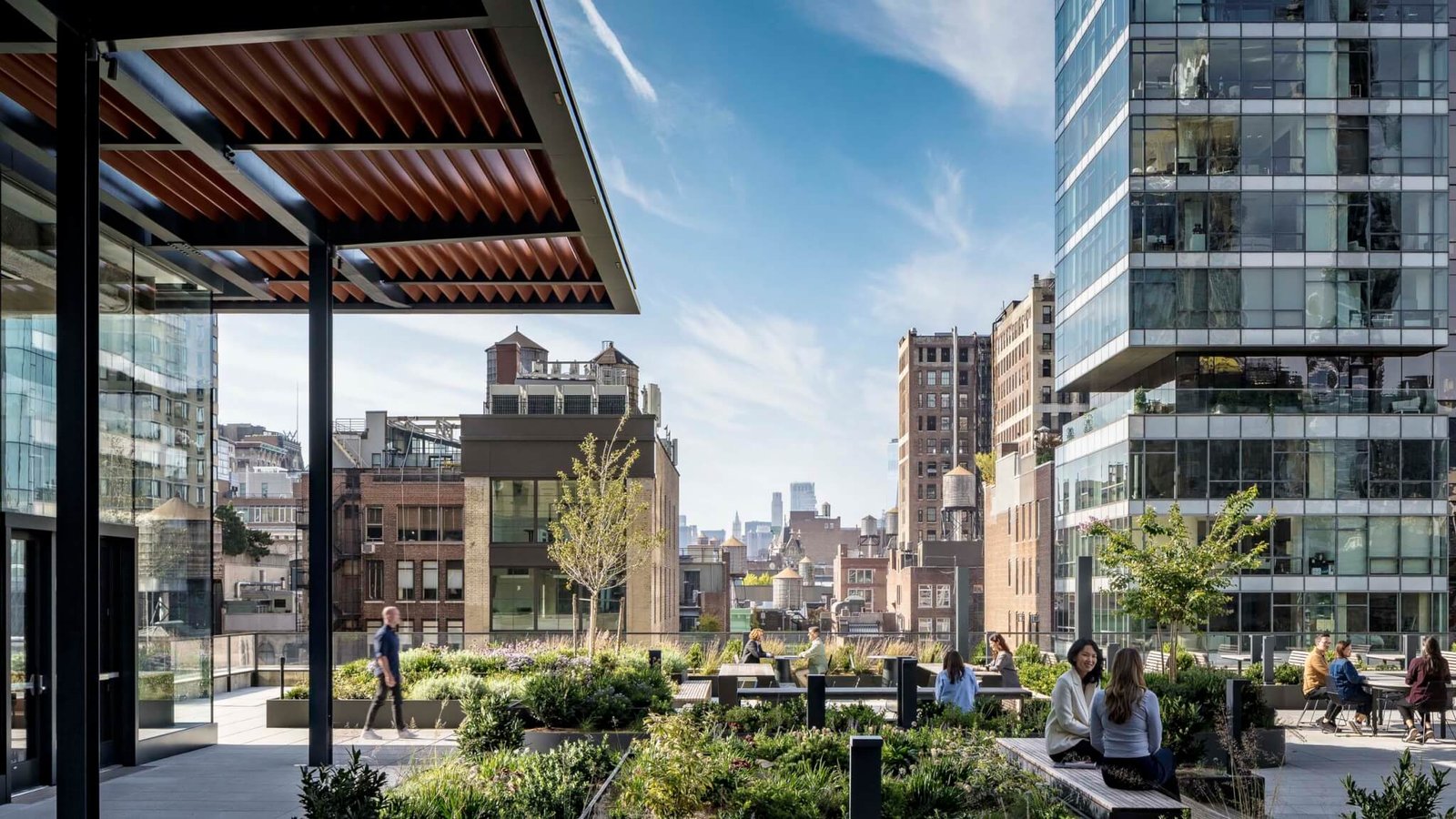
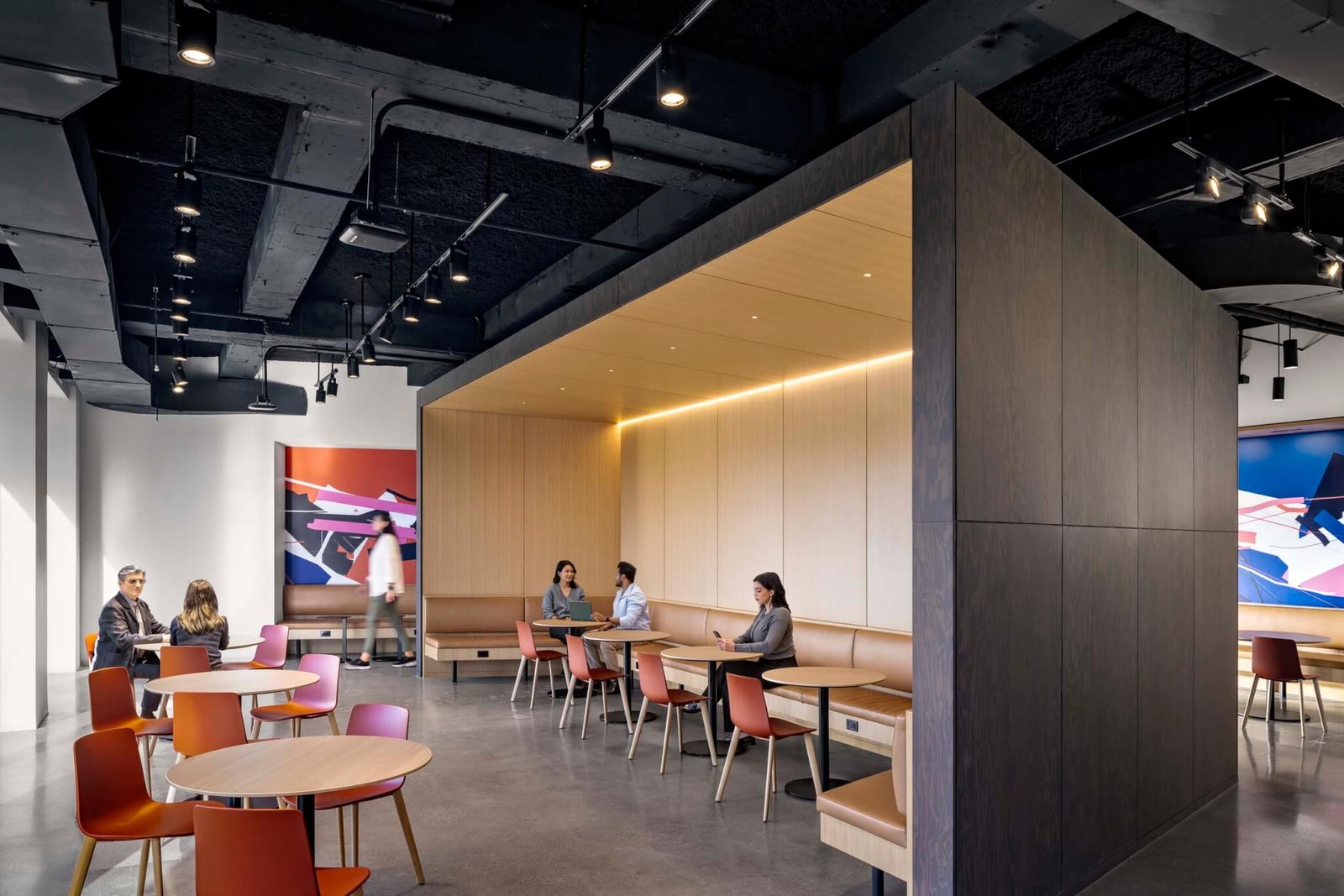
Across Manhattan, variations of this phenomenon have materialized in steel, concrete, and glass.
The escalation isn’t accidental. According to Amanda Carroll, a principal at Gensler, companies are no longer designing offices around headcount alone—they’re designing around behavior.
“The office environment becomes the terrain,” Amanda Carroll, a principal at Gensler, told AN. “The people are the force that really drives the business, and we’re trying to match the two, so that we’re marrying the best ecosystem environment to support the changing nature of work and the individuals that are propelling that work forward.”
That shift, Carroll argued, has made physical space inseparable from corporate performance itself. “Enterprise performance is now almost inseparable from project performance,” she said, “because the work settings are so impactful to the efficiency and the output of what an individual can do to drive business.”
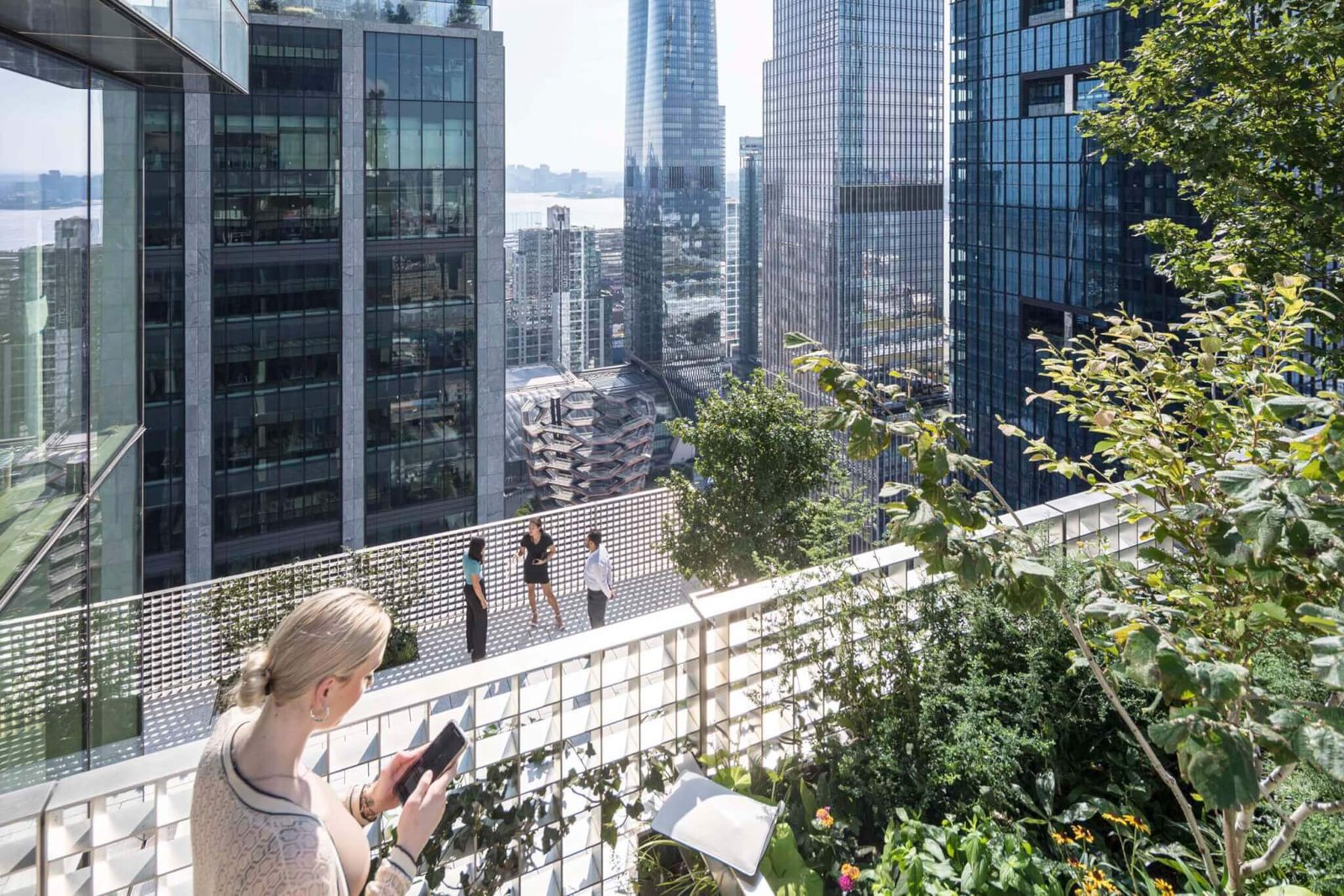
At The Spiral, Bjarke Ingels Group’s 66-story Hudson Yards tower, terraces wrap the facade in a continuous vertical landscape. Plants spill over glass balustrades, wooden benches punctuate the greenery, and the building’s signature feature doubles as both Instagram image and architectural thesis about nature, density, and workplace wellness.
That logic extends to the building’s amenity mix. French chef Gabriel Kreuther recently opened two restaurants on the ground floor: a full-service, live-fire restaurant and a casual cafe offering grab-and-go fare.
Just a few hundred feet away, construction is beginning on 70 Hudson Yards. Designed by Gensler with interiors by INC, the project takes the wellness narrative even further. Plans include therapy rooms, a hydration clinic, soft-lit meditation alcoves, a medical suite, and a podcasting studio. The contemporary office is no longer just a place to work, it is a content engine, a recovery center, and a behavioral nudge machine.
Adam Rolston, a partner at INC, described today’s workplace as a “mind, body, and soul” proposition, where sustainability, wellness, and beauty are inseparable. Natural light, non-toxic materials, and biophilic elements aren’t just environmental gestures, he argued; they’re psychological ones, shaping how people feel and behave in space.
“There’s now an expectation that your work life and your personal life come together,” he told AN. Rolston frames contemporary workplace design around what he calls “mind, body, and soul.”
The Limits of Architecture
But research suggests that architecture alone can’t manufacture collaboration or loyalty. According to the Gensler Research Institute’s Global Workplace Survey 2025, people primarily come to the office to meet, socialize, and work alongside colleagues they already know, not to access amenities. While newly renovated offices score higher on comfort and environmental quality, overall workplace effectiveness has stagnated since the pandemic, with noise, distraction, and availability of space remaining persistent problems.
In response, consultants like Under a Tree, an advisory firm that works with developers and architects on wellness-forward environments, have stepped in to fill the gap. “It’s the programming that brings the space alive,” founder Amy McDonald, told AN. “It’s not the actual space itself.”
McDonald is explicit about the distinction. “If it’s not activated, with reasons for people to come and use that space, it’s just wasted space,” she said. “It has to be ignited.”
Under a Tree’s work focuses on what McDonald calls the “software” of wellness: recovery lounges that function as social spaces, contrast-bathing circuits that can host groups, and meditation rooms that double as programming venues. “We’re not really talking about spa treatments,” she said. “We’re talking about the social components, the recovery areas, the immersive experiences.”
The goal, she explained, isn’t indulgence. “It’s community loyalty,” McDonald said. “Not company loyalty.”
However, being in the same building doesn’t automatically generate cross-pollination. In highly stimulating environments, people tend to interact more with familiar teammates, not strangers. Worse, when presence is monitored, as it increasingly is under RTO policies, employees may avoid the informal conversations that offices are supposedly designed to encourage, for fear of not looking “productive enough.”
“Organizations are so focused on getting people there that they’re not thinking about getting the right people there at the right times,” Michael Pratt, organizational psychologist and professor at Boston College, told AN. “If I’m going to go into the office, I’d give up a wellness center to be there with people I actually want to work with.”
He continued, “If I can do everything at the office—if I can work out, go to my job, have my cleaning done, get my food—and there’s no reason to leave.”