

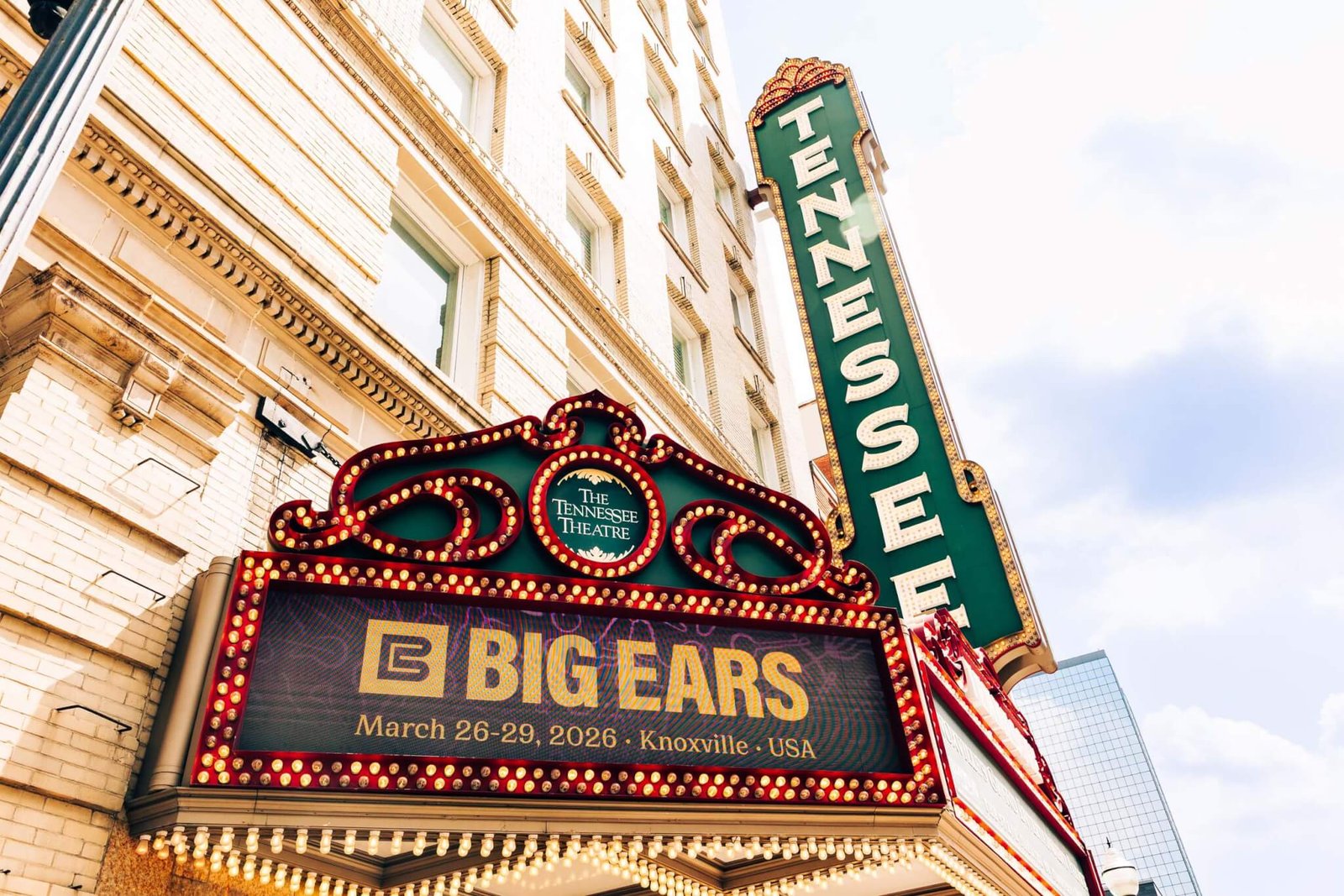


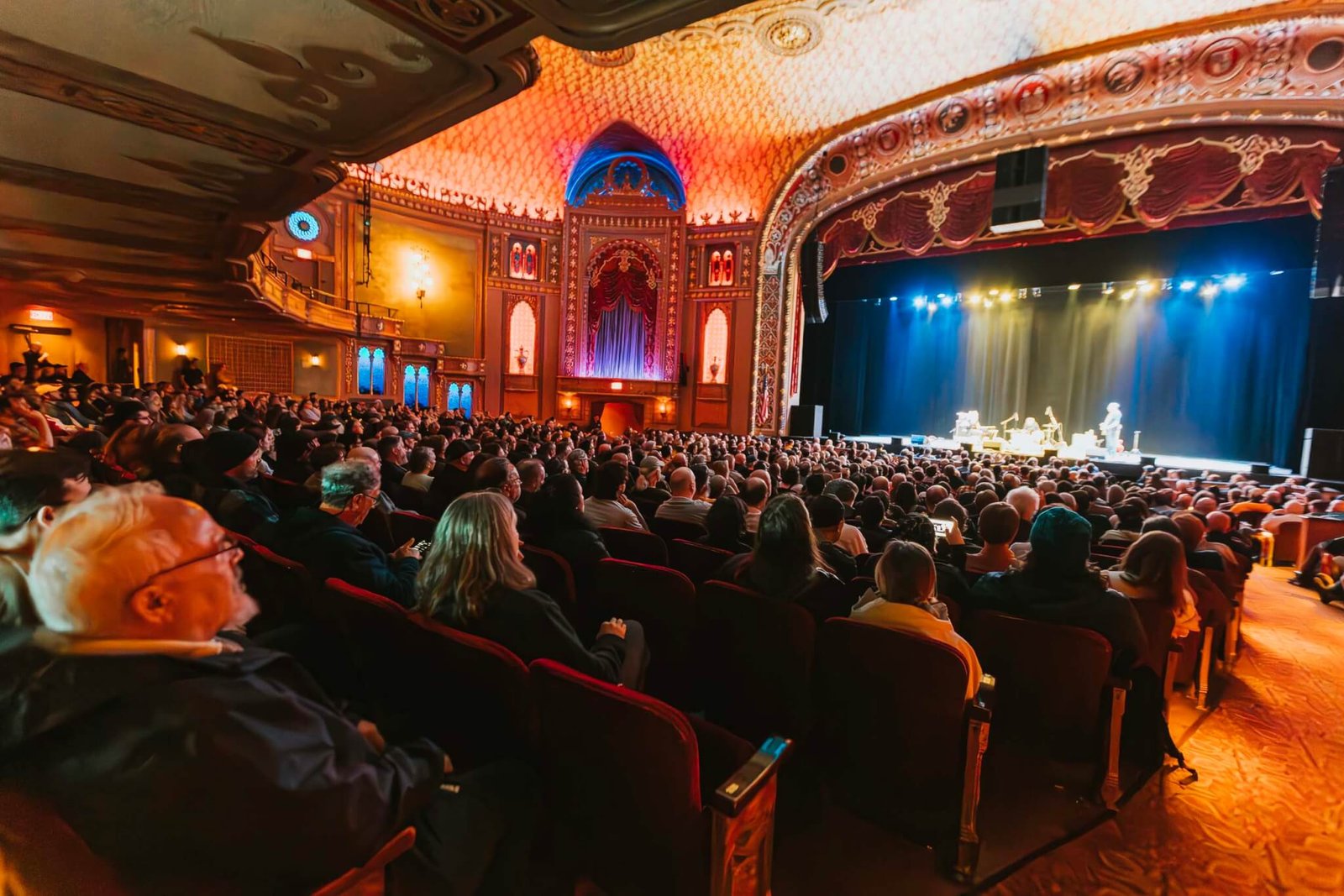

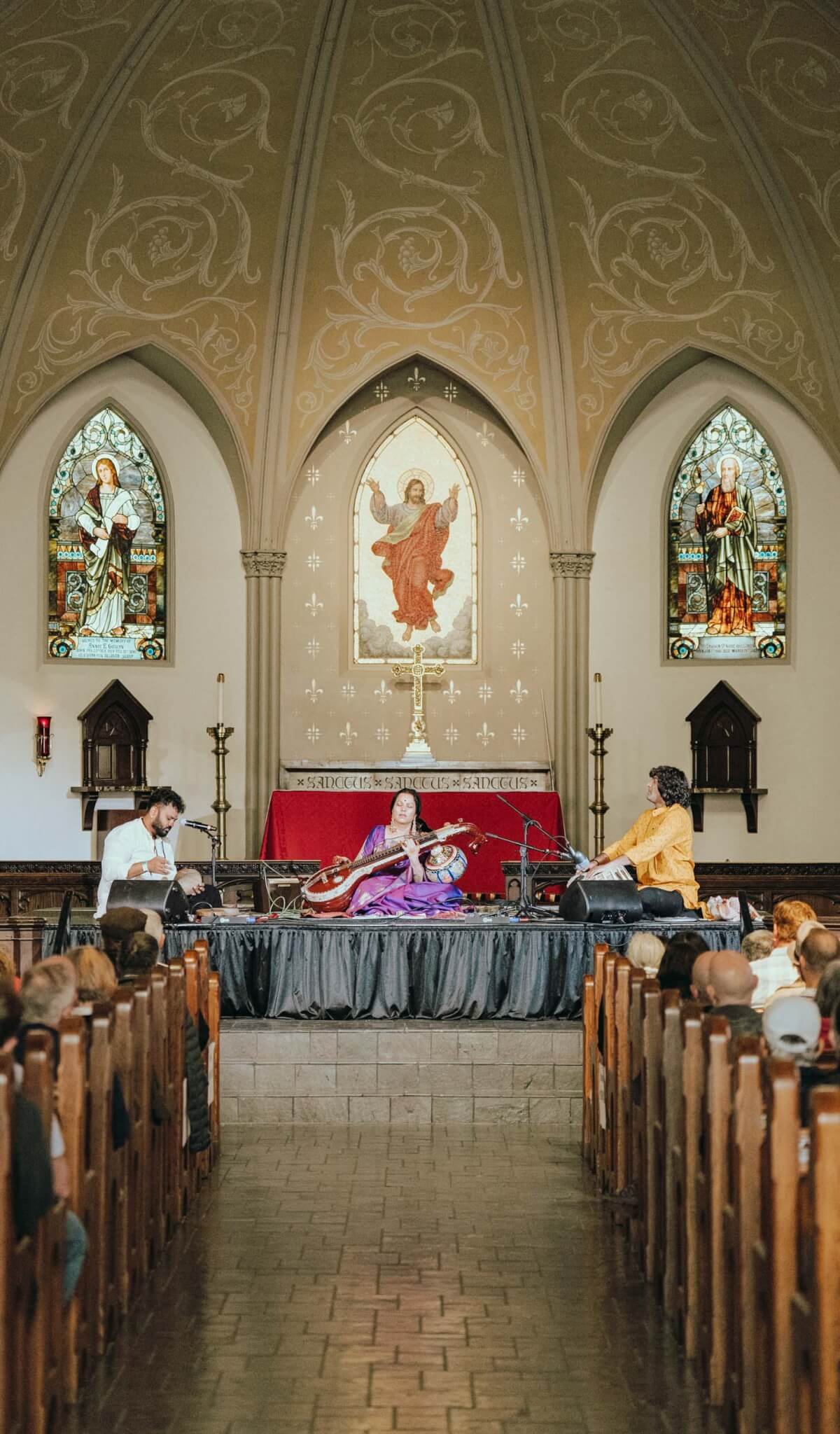
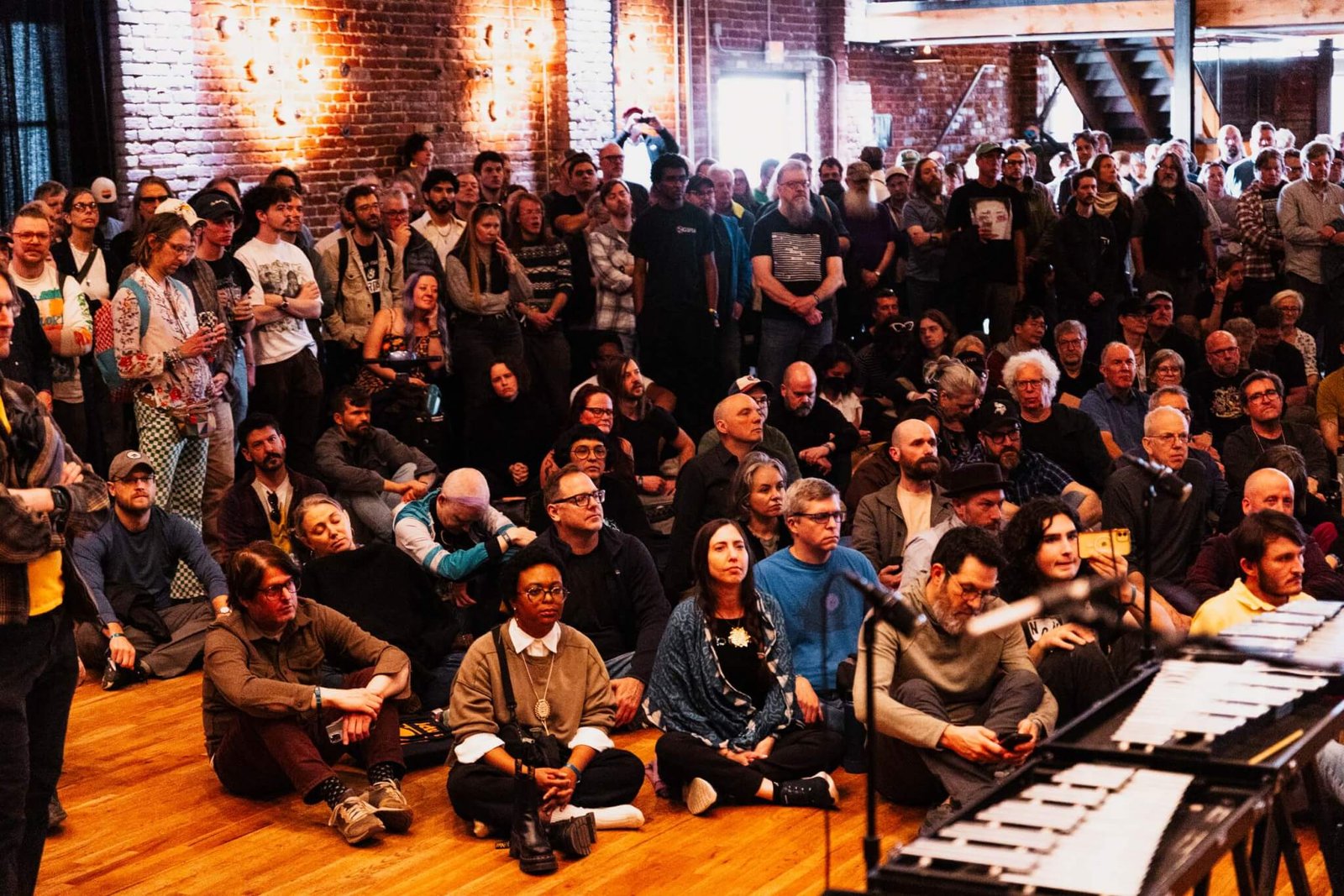
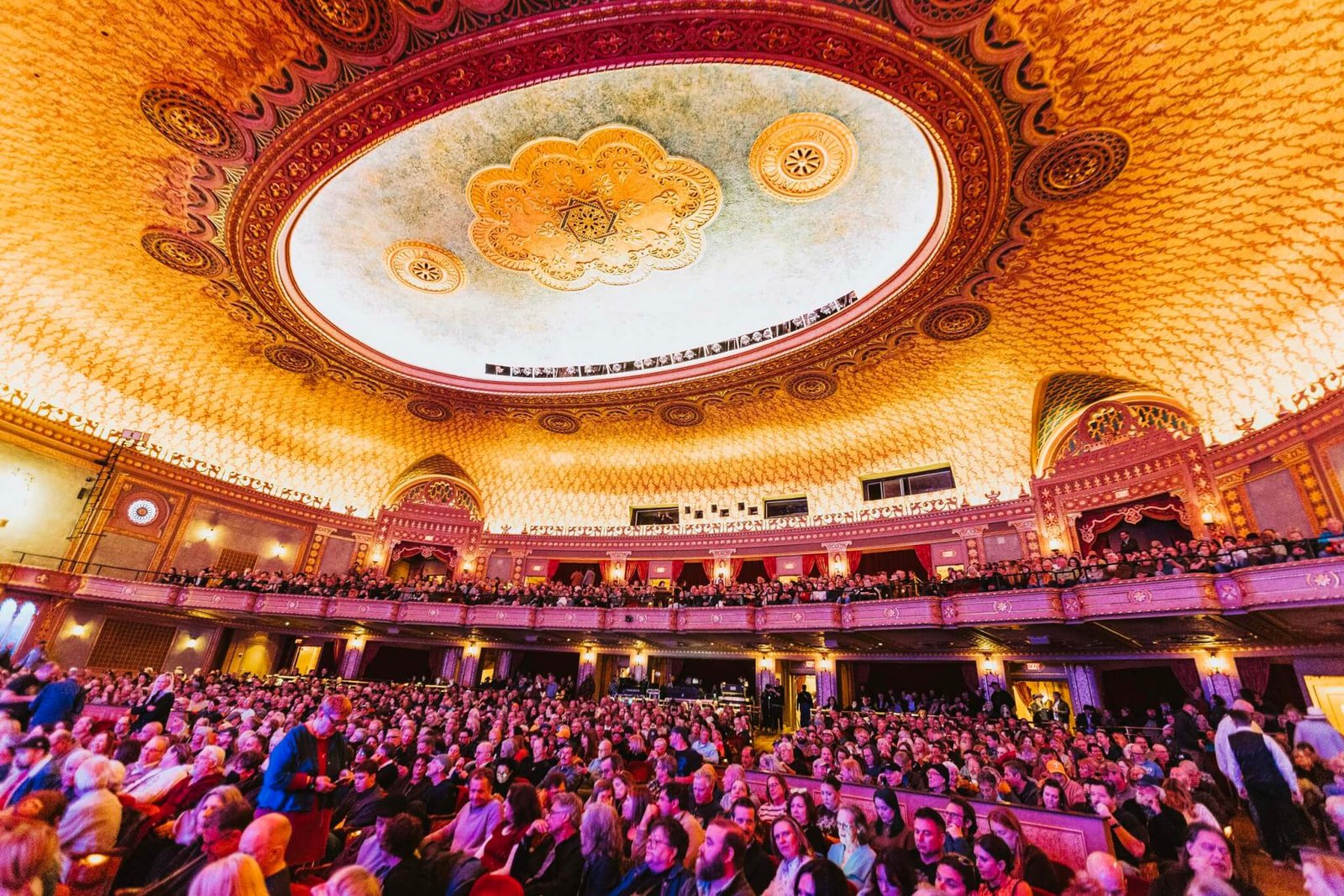
Big Ears, an experimental musical festival in Knoxville, has quickly become the country’s insider event for forward-thinking, genre-defying music. It was founded in 2009 by Ashley Capps, a Knoxvillian and longtime concert promoter who previously developed Bonnaroo. But unlike that event, held in a farm field, this four-day confluence hosts concerts in historic theaters, clubs, bars, and venues throughout Knoxville’s hilly downtown. It stages musicians in intimate settings: A scan through the 2026 schedule, which took place March 26 through 29, shows leading names from jazz, ambient, classical, and pop stylings. Yes, there were big names—David Byrne, Laurie Anderson, John Zorn, Pat Metheny, and Chris Thile were headliners, among others—but, more importantly, so many emerging talents.
The festival has notable impacts for Knoxville: In 2025, it attracted over 35,000 attendees from 49 states and over 20 countries, generating a local annual economic impact of $68.9 million with a program budget of $3.5 million, per its website. I attended this year for the first time as a second-generation jazzhead and lapsed musician with an eye toward how design can shape collective cultural experiences. I had a great time.
As cities across the country study how to support artists affected by the affordability crisis and limited federal support, Big Ears is a case study in urban activation.
Attendees Reflect
It makes sense that music-loving architects would be attracted to the Big Ears cause. John Sanders, a founding partner of Sanders Pace Architects in Knoxville, previously served on the board of Big Ears for two terms, helping it to grow its local footprint. (He also hosted me at Little Switzerland, a compound of regional modernist houses designed by Alfred and Jane West Clauss that he is restoring. The residences are the core of Seeds of Regionalism, Sanders’s compelling exhibition about the Clausses that was on view last year at the Knoxville Museum of Art.)
Sanders told me that the weekend serves as a guidepost for his listening over the course of the next year. He appreciated the “diverse group of people that come together as one, even here in the South, to appreciate all that the arts have to offer.”
Sanders said a key lesson that Big Ears teaches is curiosity, which is applicable to most design practitioners or enthusiasts. “Not knowing what you are about to see or hear,” Sanders offered, is a key part of discovery, which exposes you to new sights and sounds. Previously Sanders used to chart a comprehensive journey through the program, sometimes seeing 30 or 40 individual performances, but now he prioritizes seeing entire sets and practices with a “willingness to engage in the unknown.” That element of surprise, discovery, and gratitude is a crucial part of a weekend named for close listening.
Alexa Colas, a Philadelphia-based designer, operates her design and art project Clubfriends to use music as social infrastructure. At Big Ears, she noticed the “intimacy in sharing a sidewalk with an artist who just performed on an international stage” and “the closeness of being able to discuss their performance, a sound, a moment, like you’re among friends.” The city becomes a sonic landscape ripe for exploration: “Big Ears was a utopia where the public experience was transformed by a map of music and the people who make it,” Colas said.
Brian Phillips, founding principal and creative director of the Philadelphia-based design and research office ISA, currently serves on Big Ears’s board of directors. (ISA’s principal and managing director Deb Katz is a former AN editor.) Phillips observed that “the music line-up is filled out mainly by musicians who are rooted in their places and are not coming out of big corporate music industry. When they gather in Knoxville, they celebrate their communities with spontaneous, only-at-Big-Ears collaborative events. It’s a meeting of cities as much as a meeting of musicians.”
Farre “Faye” Nixon, assistant professor in the School of Landscape Architecture within the College of Architecture and Design at the University of Tennessee, Knoxville, has experienced all scales of music festivals. For her, “Big Ears is in a league of its own.” She said Big Ears is uniquely suited for Knoxville’s history as a “crossroads of musical traditions, Southern and Appalachian identities, and rural and urban ways of life.”
She noted that while part of its success is due to a curated schedule of musicians, the festival’s magic also emerges from the city. In the activated downtown, “buildings that are often sporadically programmed or underutilized for much of the year suddenly become interconnected venues in a walkable constellation of music, art, and discovery.” This is great, but Nixon has also heard the complaint that the festival passes are too expensive for locals.
Charlie Vinz, founder of Adaptive Visions in Chicago and a first-time visitor to Knoxville, told me that he was impressed by “how legible the festival helped make downtown Knoxville.” On foot, he “quickly recognized the landmarks and locations that helped orient and guide festival goers on their quests for deep listening experiences, with stops for food and socializing everywhere in between.”
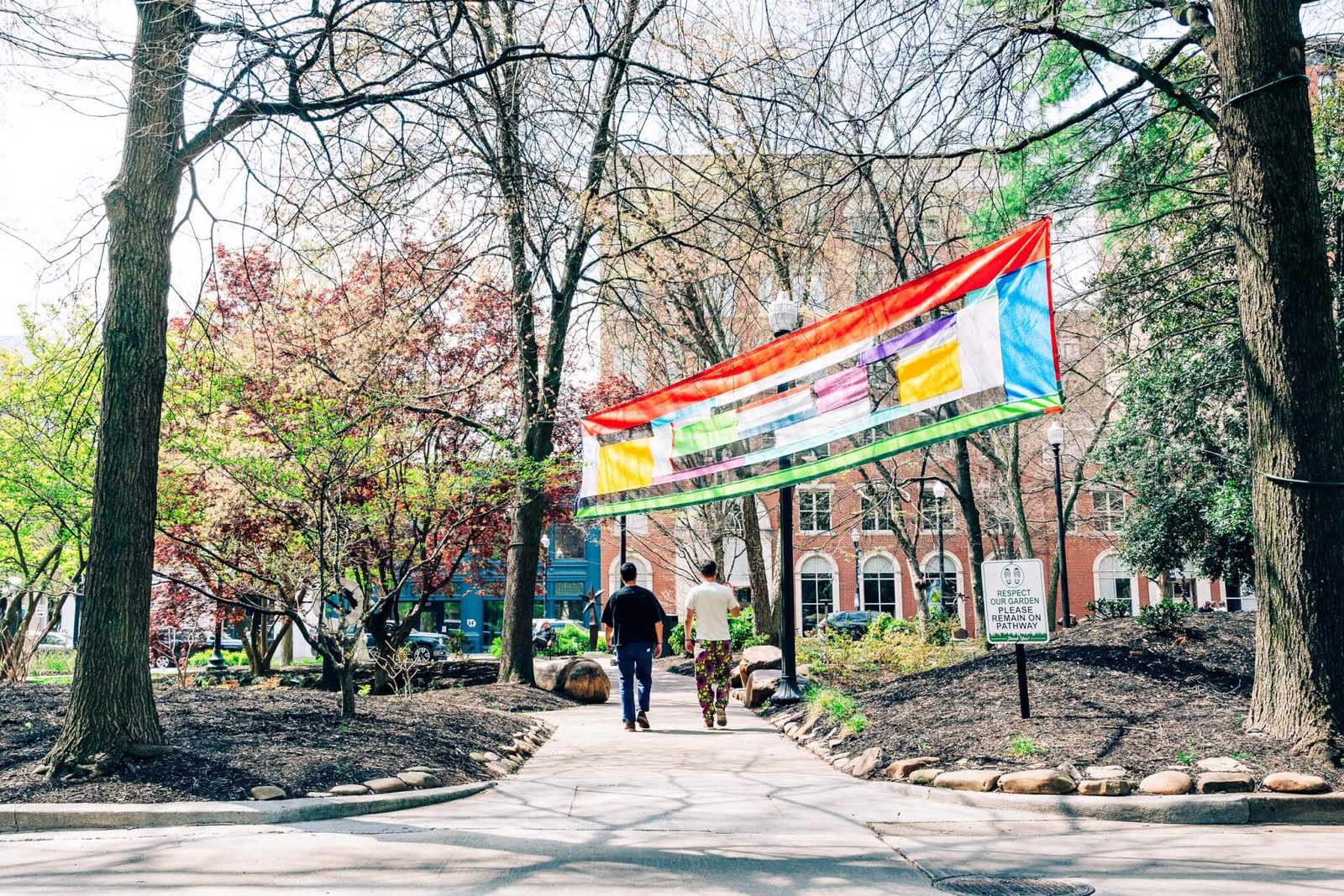
Vinz also thought about how design was—and wasn’t—present. This year, there were collaged banners strung up between trees, but no large installations. Prior festivals did have temporary outdoor stages, but these proved difficult due to the weather. Vinz said Big Ears felt “like an anti-spectacle festival. Having Coachella-like follies sprinkled around would more likely alienate locals and visitors alike.” Still, there are non-bombastic places where designers could help, like in outlying venues with long lines that might benefit from some kind of shade/shelter amenity.
SML XL
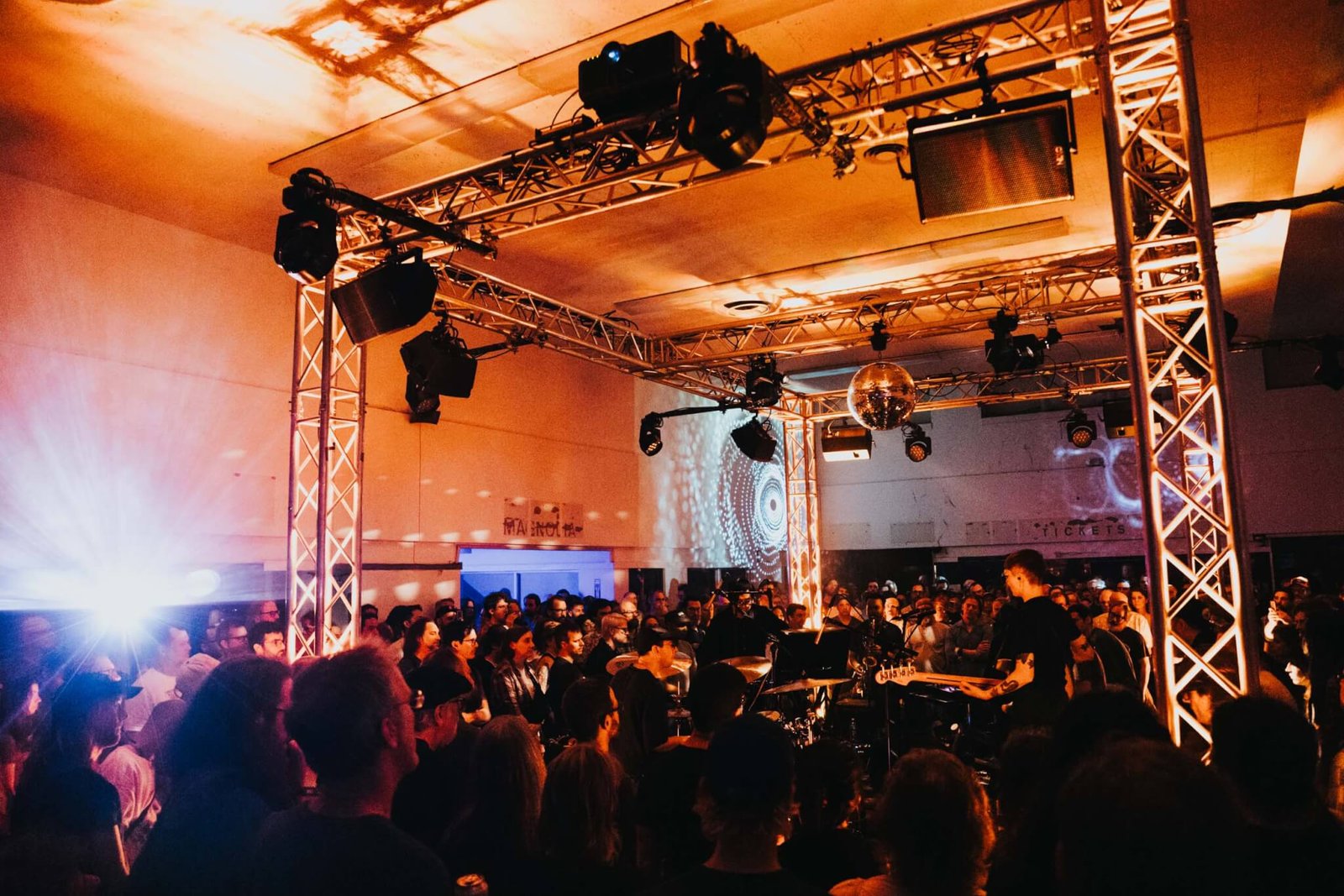
For me, the weekend’s highlight was the concluding two sets on Saturday night by SML, a Los Angeles–based quintet of musicians who set up for a residency in the round within the waiting room of a decommissioned Greyhound bus station. Atop of a stage ringed by onlookers, the group expanded for a second set with guests, hence the Koolhaasian SML XL titling. When I saw them, they were joined by Chicago/Los Angeles guitar god Jeff Parker and percussionist Mikel Patrick Avery. Loopy, textural, and mesmerizing, the music is entirely improvised. These two performances were face-meltingly good.
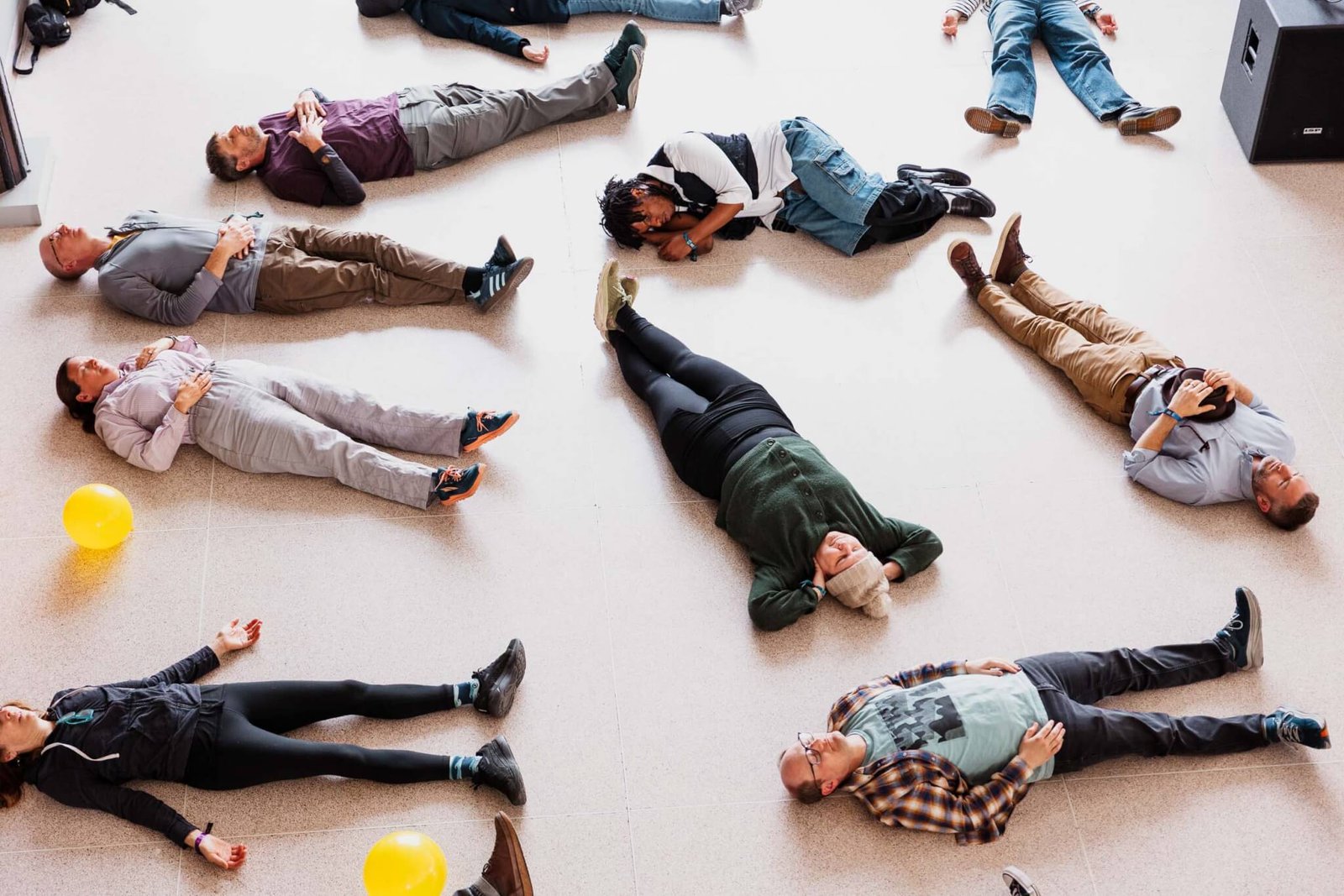
Phillips was also impressed with the tactical activation of the terminal, which offered a different experience beyond the grandeur of historic theaters like the Tennessee and the Bijou. The next day, I returned to stand in a meditative wall of sound created by stacks of Lou Reed’s amplifiers. “Music can animate architecture (purpose-built or abandoned) with the dynamic creative and social experiences that make cities worth living in,” Phillips said.
He knows this well, as he also leads Meantime, a Philadelphia nonprofit that activates underutilized storefronts in service of urban communities. First created within ISA, Meantime works with a range of constituents to “facilitate connections, test ideas, reach new audiences, and support local economies.” Its current project is open now on Market Street and includes Colas’s living room as a Clubfriends listening environment in addition to a pop-up Rarify store.
Big Ears’s takeover of an old Greyhound bus terminal similarly turned an underutilized building into a cultural venue. These spaces “have a sense of discovery and accessibility that are different than traditional theaters spaces,” Phillips said. “It’s an example of how non-traditional spaces can create innovative program expressions.”
Vinz said the Greyhound venue reminded him of the DIY venues he experienced growing up in the 1990s. These places “present a ton of opportunities for short-term design interventions that enhance their temporary adaptive reuse.”
Design-world analogues include Bethel Woods Art and Architecture Festival and Exhibit Columbus in Columbus, Indiana, where architects, educators, and designers partner with local groups to create installations in the city’s downtown, often in response to its modernist heritage. Vinz’s Adaptive Operations just finished a temporary, porch-like structure on the side of the Crump Theatre. A comprehensive renovation of the nearly decommissioned venue was announced last November.
Continued Activation
In Knoxville, how might the specialness of a temporary activation impact long-term use? Sanders also attended the SML show. He described it as “a serendipitous collective improvisation” that was pure kismet. But afterward, he scanned for people to debrief with about the experience and only saw one local; the crowd was nearly all out-of-towners. That made him “a bit sad for Knoxville and Knoxvillians. That experiential DNA is selfishly something that I wanted more of my local community to experience and retain for future use here at home.”
He continued, “The conversations that were being had among strangers, visitors, and new acquaintances created a bond between us all that centered around the coming together of a phenomenal group of musicians. If you were there, you were there.”
Nixon said that “Big Ears demonstrates that downtown Knoxville’s greatest asset may be the relationship between its scale and its cultural ambition. For many small Southern and Appalachian cities with remnants of historic Main Streets, it’s an inspiring example of how cultural investment can transform existing urban assets rather than relying on large-scale redevelopment. While part of the festival’s appeal comes from its rarity, like me I suspect many folks leave wishing they could experience this version of the city more often.”
Coda: Frozen Music?
In its classical and modernist eras, architecture had significant creative ties to music. The relationship has dimmed in the 21st century, but I think there is a healthy parallel trajectory to be observed between the worlds of jazz and architecture. Lately, jazz’s avant-garde prizes collectivity; there is reduced interest in a soloist supported by background players and instead more focus on co-creating soundscapes. Here, technique is deployed in pursuit of vibe, not virtuosity.
The same is true in architecture, with many in the field adopting a widened appreciation of authorship and collectivity. This registers in offices partnering to chase work in a way that undoes traditional hierarchies and structures. And it appears in an increasingly popular recognition of the material flows and organizing frameworks that allow the built environment to be constructed, maintained, or unbuilt. I think this trajectory is a good thing.
Mark your calendars: Next year’s Big Ears is scheduled for April 1–4, 2027.