

Villa Mimosa
Time is a fundamental value for analyzing a site, which always precedes the design phase. In some cases, the sites to be remodeled have been revisited multiple times and long abandoned. When there is no human intervention, and nature is not tamed, it takes over, and this is where the restoration process begins. It is an important moment that dictates the rules of the project approach.
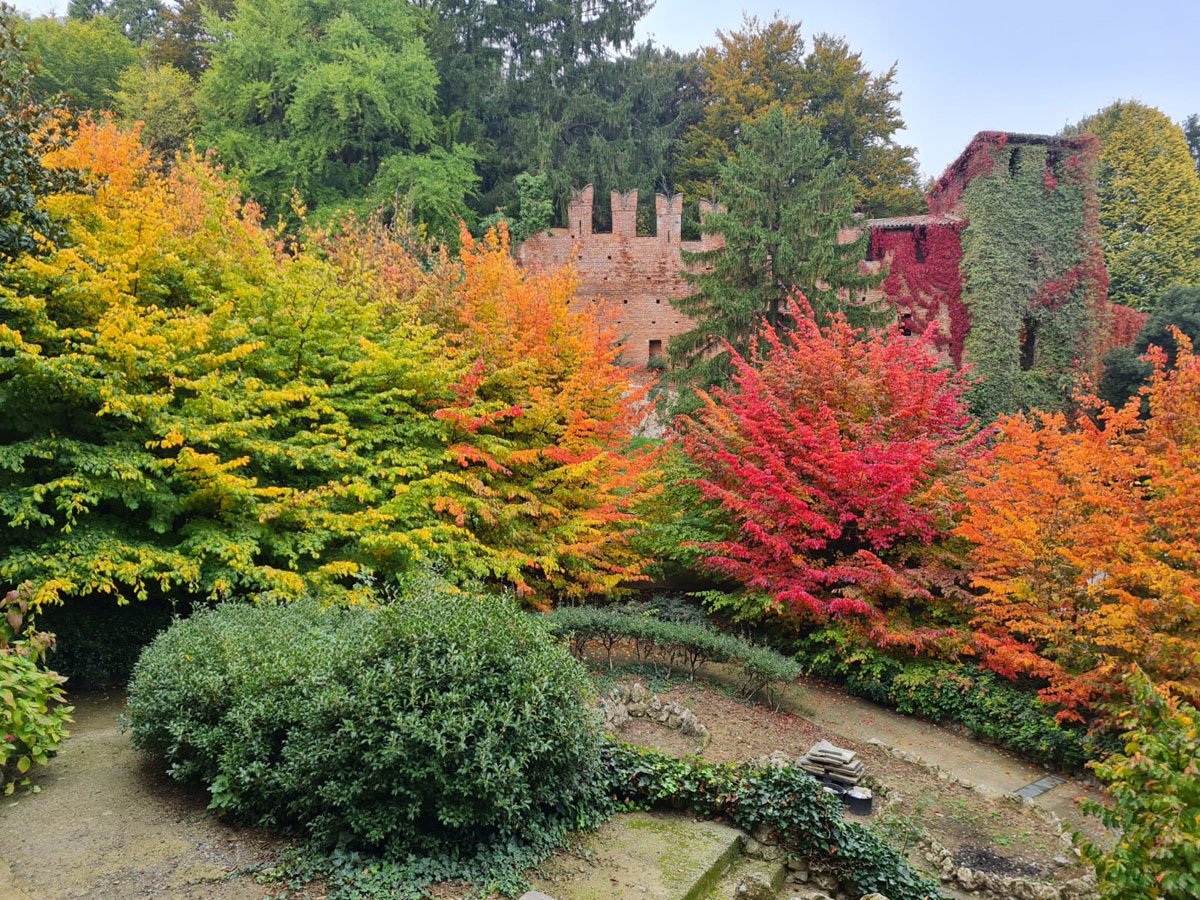
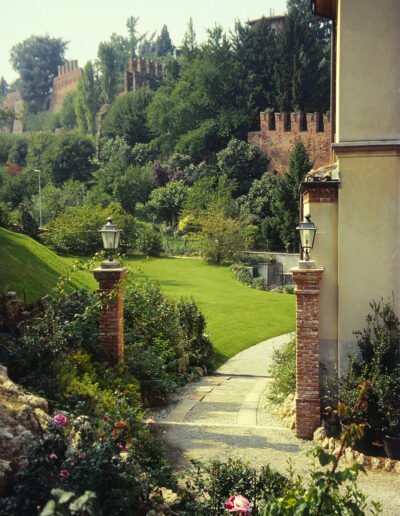
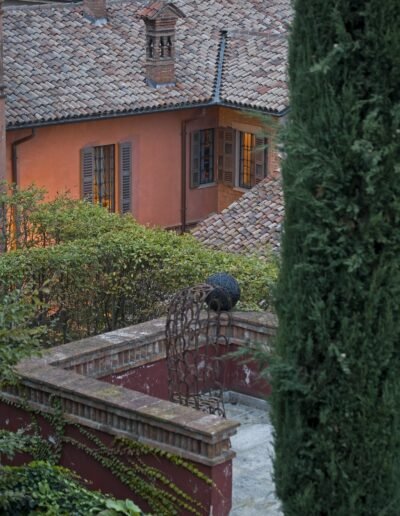
This site belonged to a medieval castle in the Lodi area that had been divided several times. It contained a series of buildings constructed at different times that needed to be reconnected. The surrounding landscape was a fragmented space that needed to be reconnected to the architecture; it needed to be reclaimed for its identity.
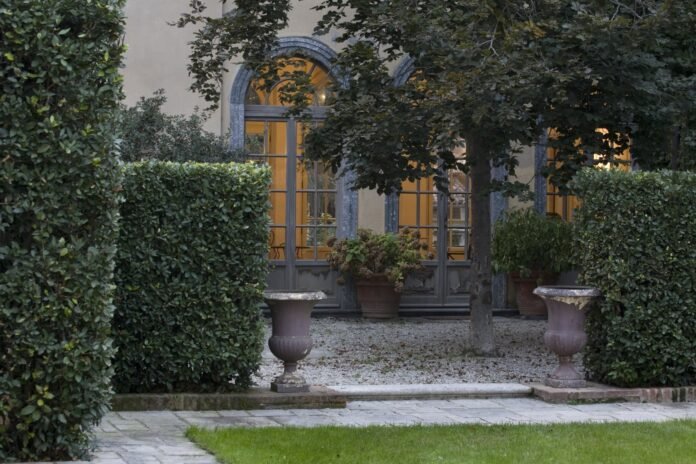
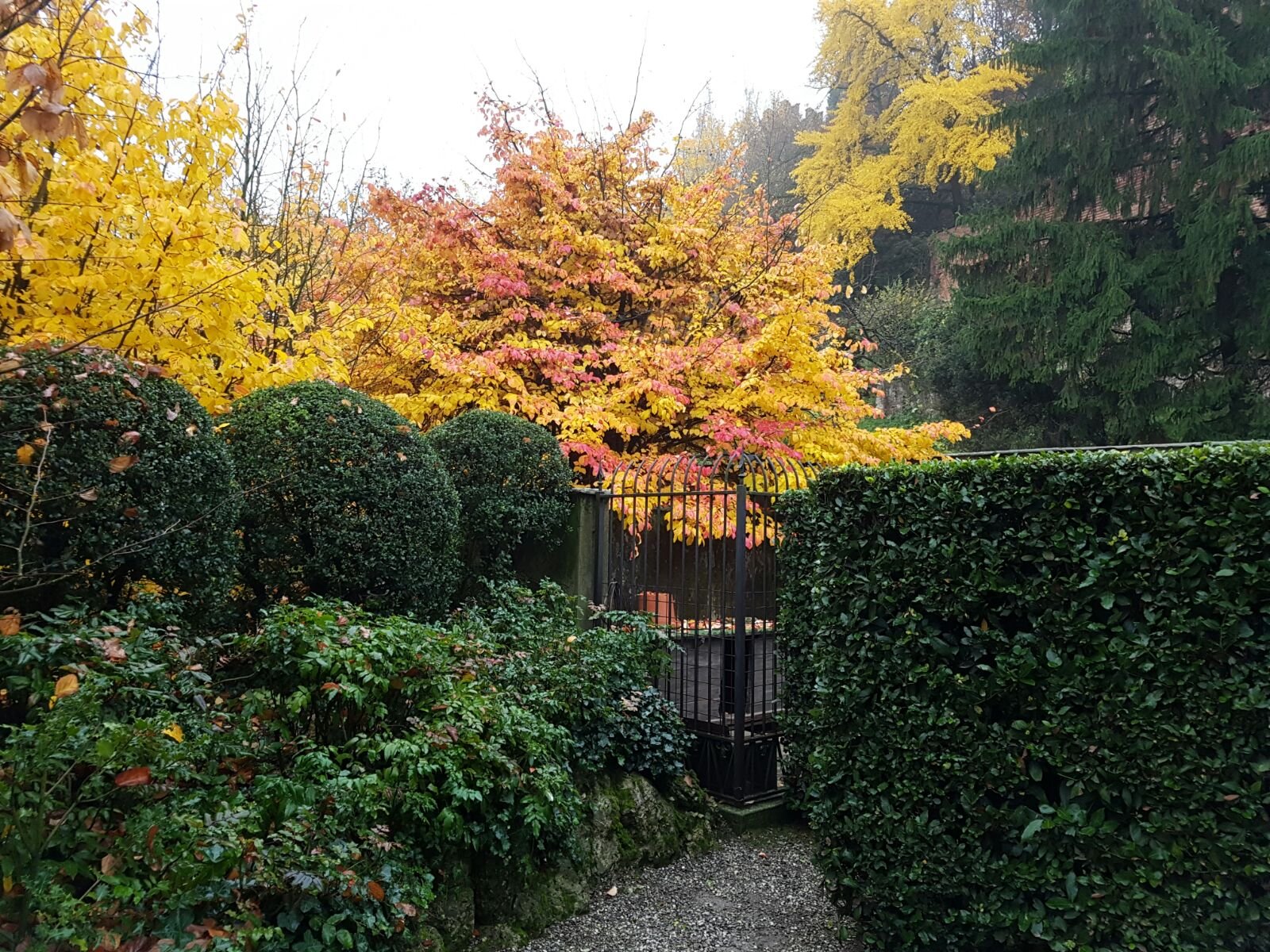
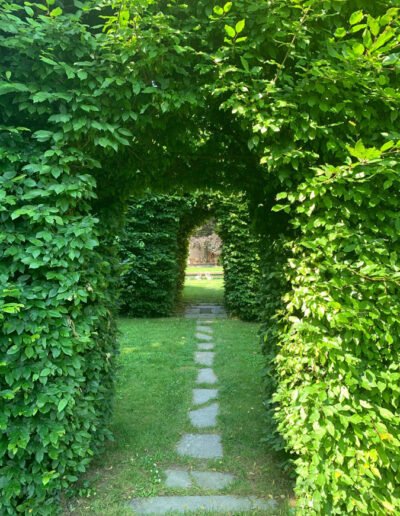
The historical matrix was reinterpreted through the harmonious proportions of the topiary plants used. Each element was inserted following a formal design, giving the domestic landscape both representation and habitability. The entire project, therefore, aimed to restore dignity to a green space with historical significance, attempting to intervene precisely, without distorting either the site or its history. The landscape was thus recomposed, eliminating the signs of damage through an organic reconstruction of the site without distorting the original atmosphere.
The site’s complexity and its original state of decay led to the work being organized into distinct phases, which were carried out over several years in a precise order to achieve the desired objectives.
Various topics were addressed:
- rediscovering the site’s soul and vocation, restoring its vitality
- establishing continuity with the castle
- enhancing the existing structures and not simply masking their ugliness
- creating green spaces through the use of topiary
- adding an orangery to house the plants, which also serves as a “winter garden” during the colder months
- adding an outdoor swimming pool
- restoring the particularly dilapidated “Temple of Love”
- introducing the element of “water” through the addition of a waterfall and a fish pond
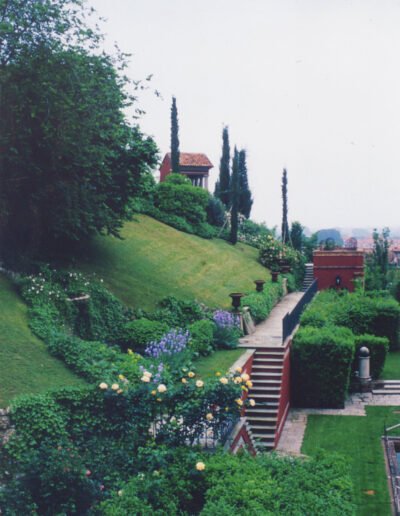
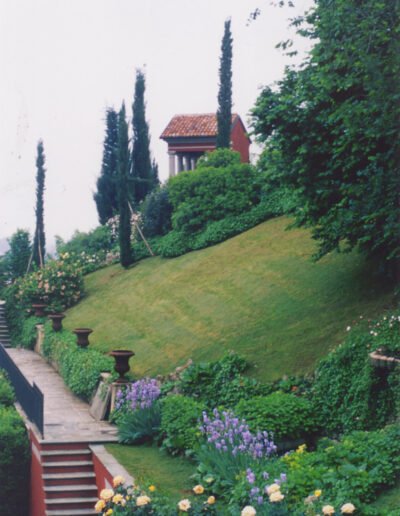
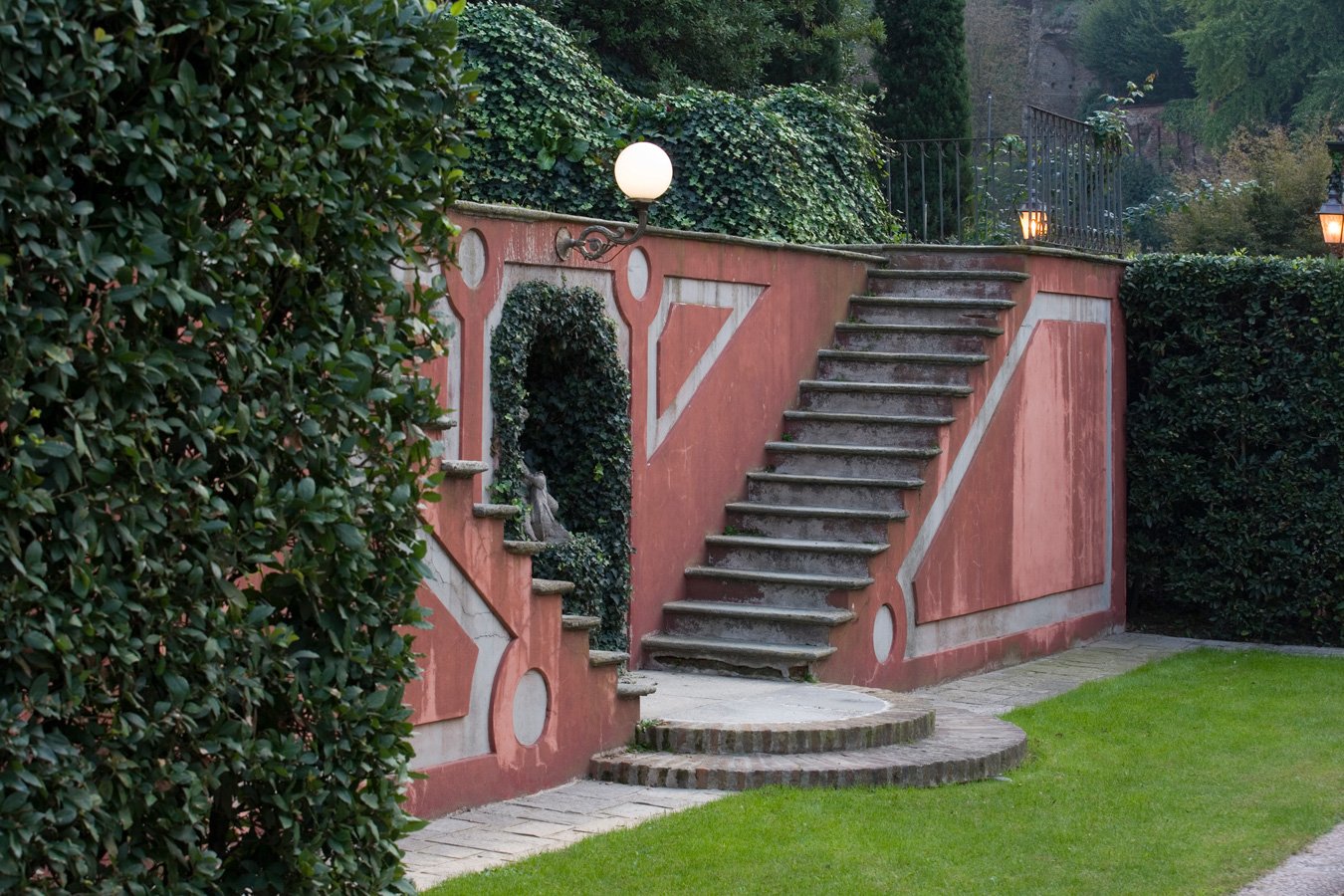
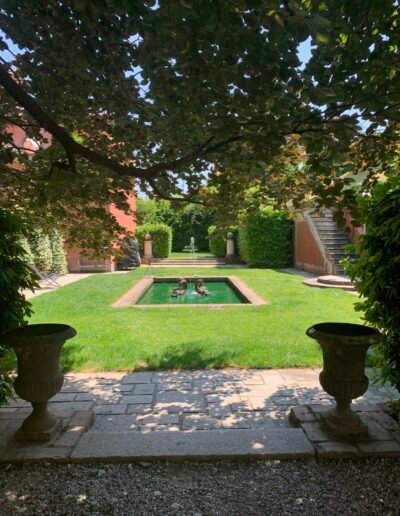
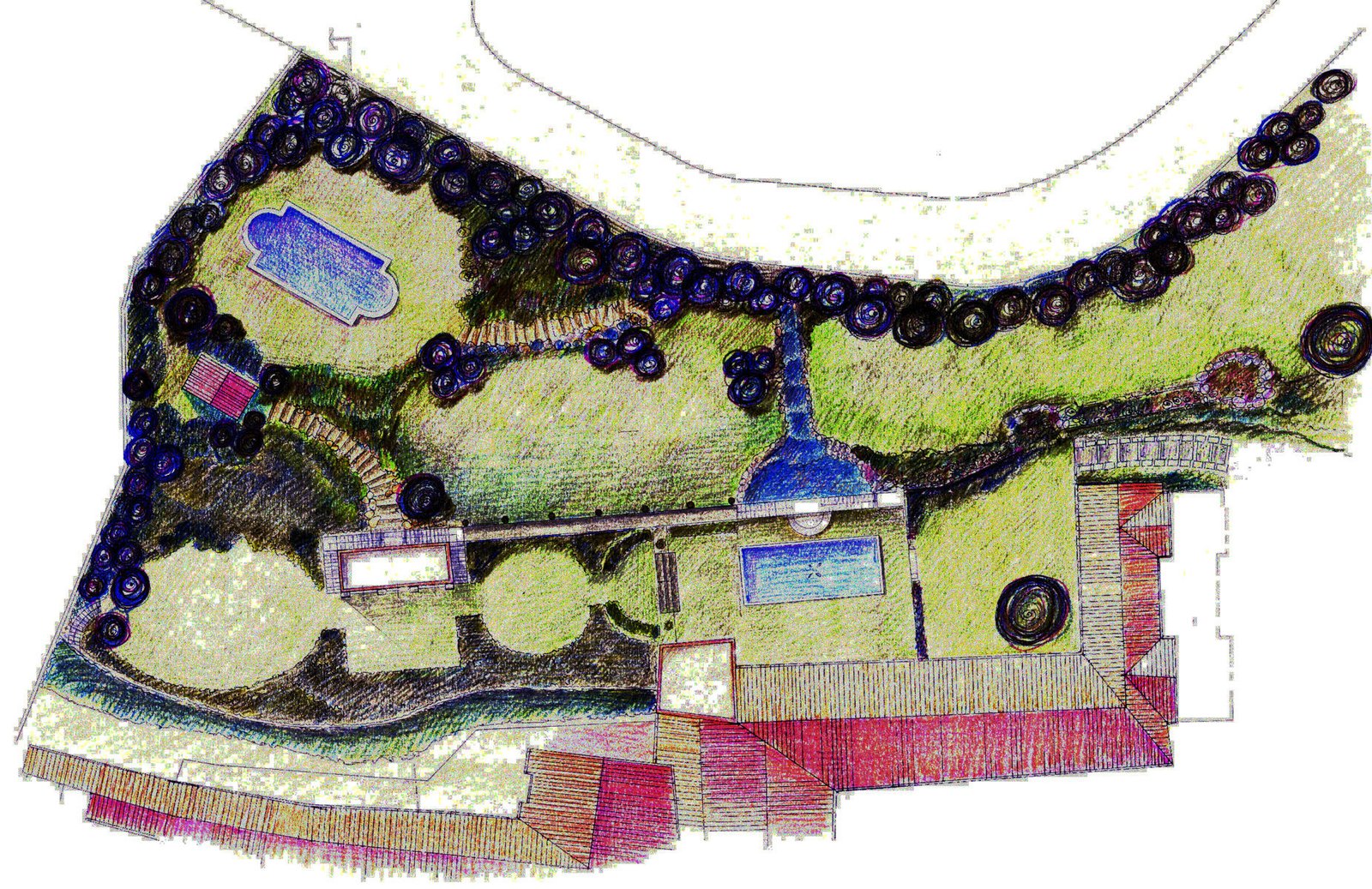
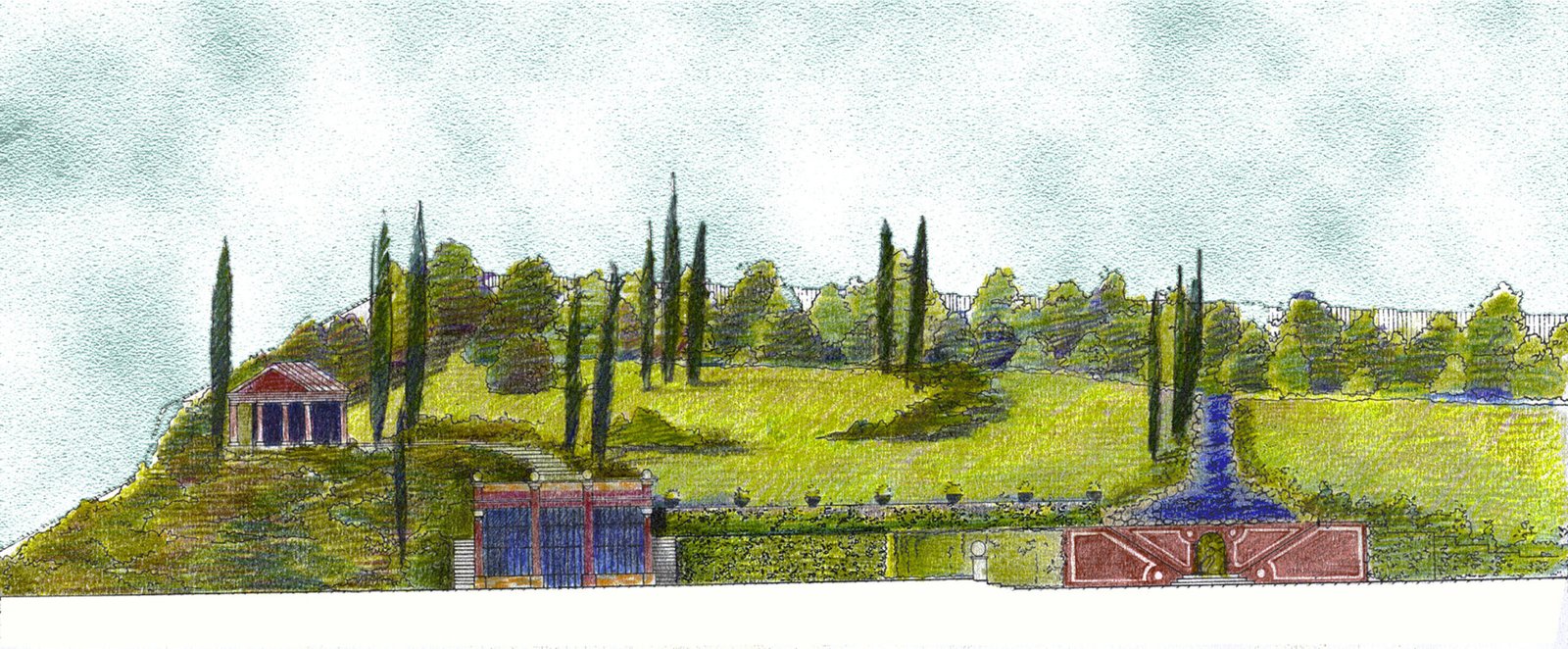
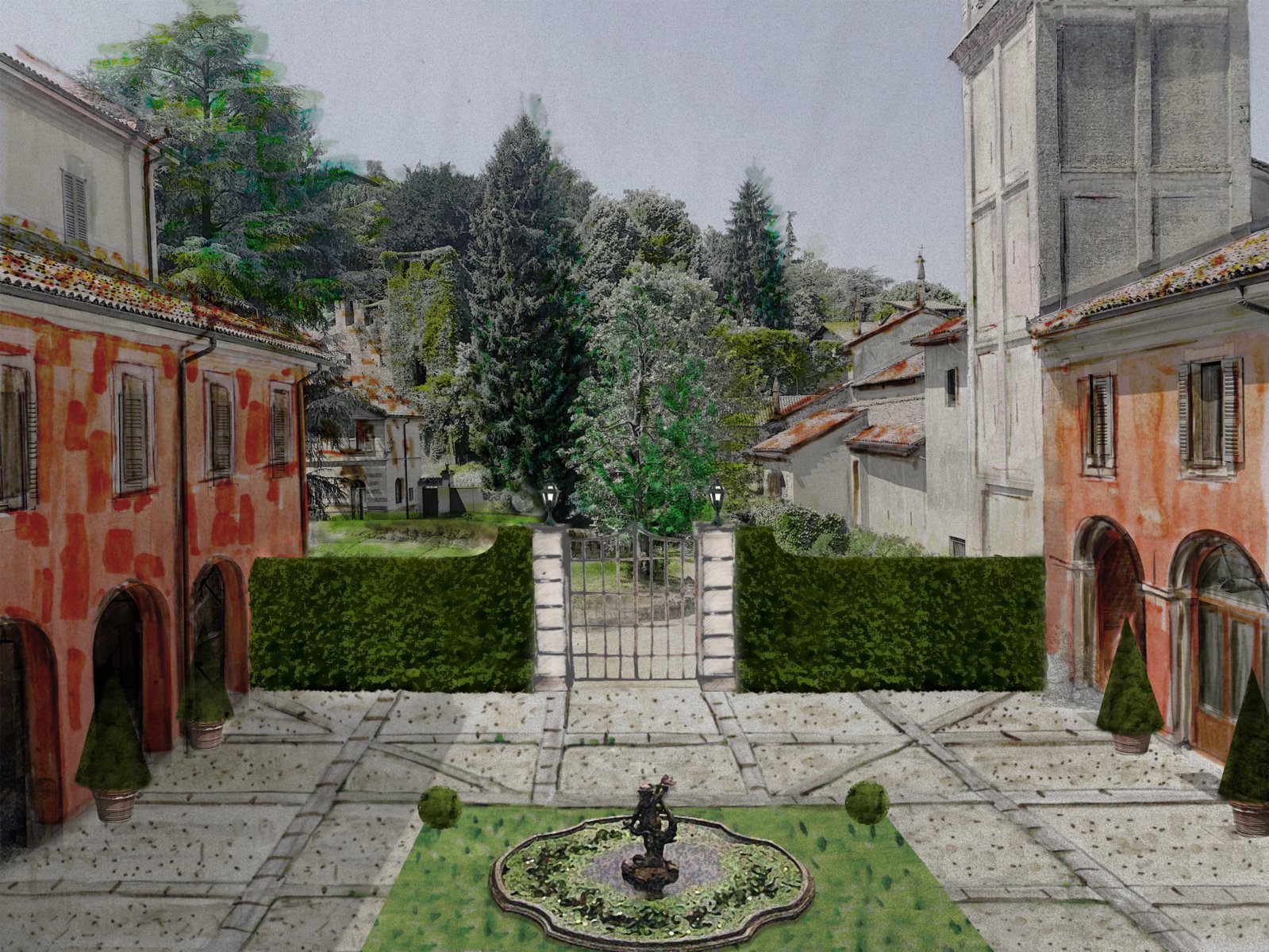
The garden was organized into a series of themed rooms that fit into the vertical rhythms of three main terraces connecting the highest part of the temple to the lowest part of the building. Behind the house, a sort of secret garden was created, symmetrically arranged around a pool with a fountain decorated with four bronze dolphins and a double staircase that restrains the slope of the hill. The space is deliberately understated, and everything, from the shapes to the materials, to the colors of the plaster, follows a precise design that recreates the garden’s original imagery.
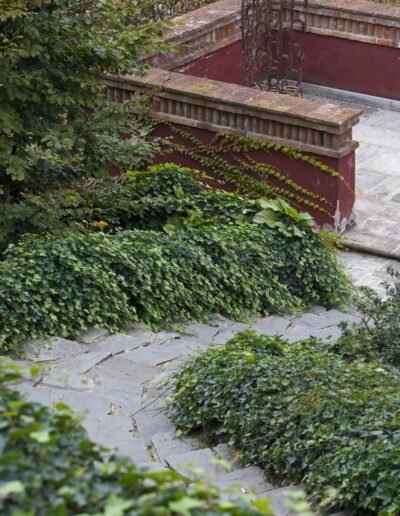
The highest terrace houses the swimming pool, with the restored temple serving as a solarium and service area. The entire path opens onto the view of the center of the small village nestled at the foot of the hill. Descending to the second terrace, again taking advantage of the natural contours of the terrain, a waterfall made Ceppo stone was inserted. The same stone was used for all the enclosures and cladding.
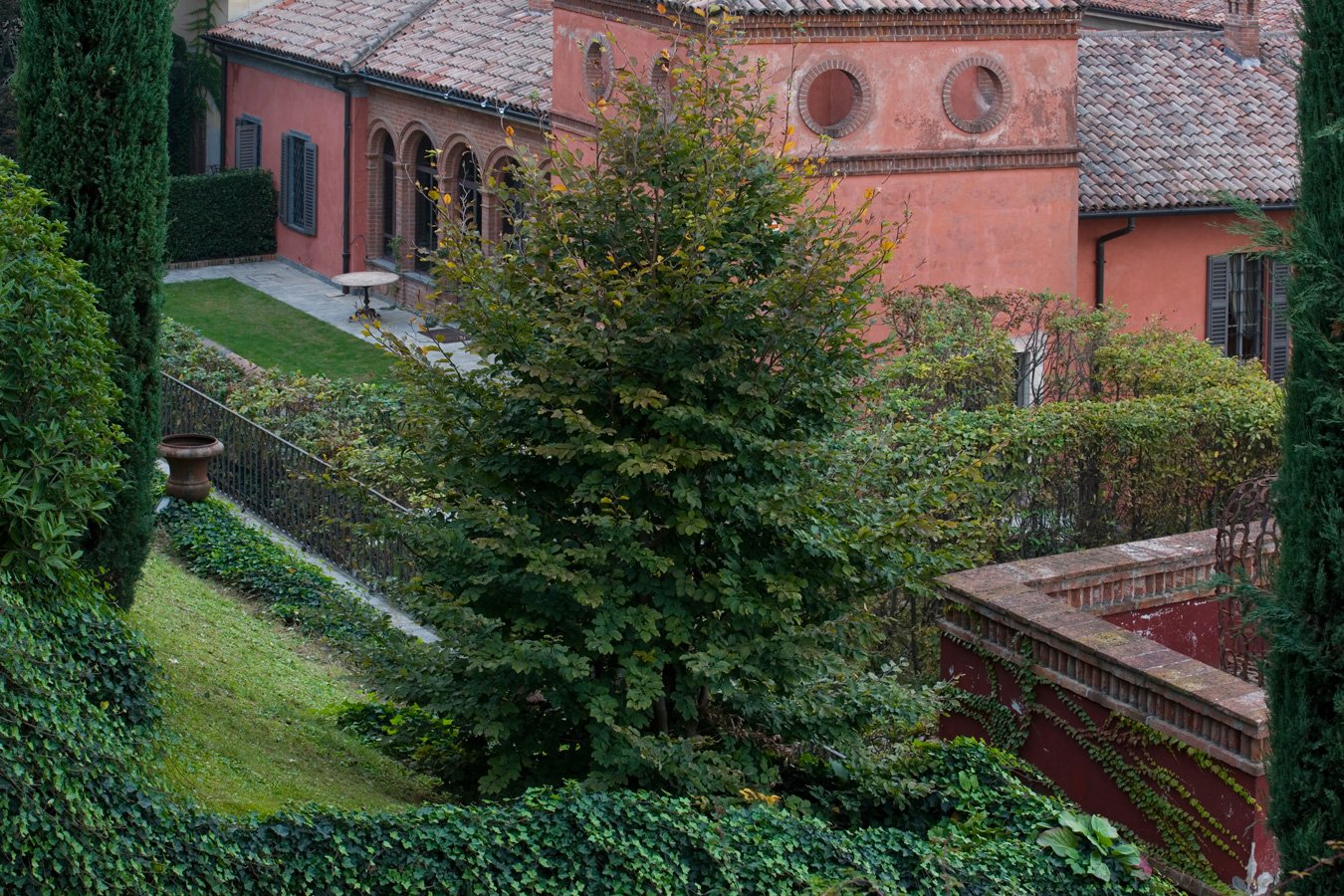
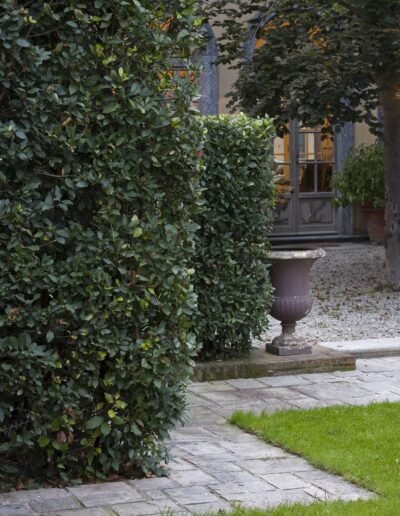
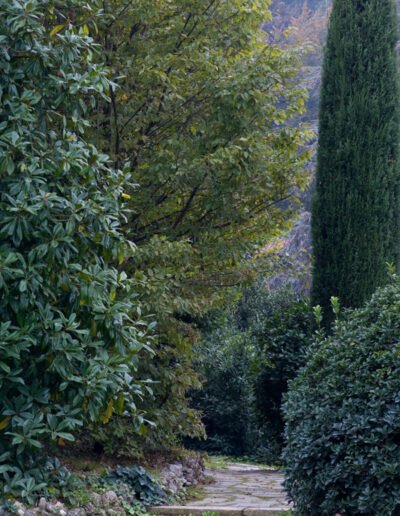
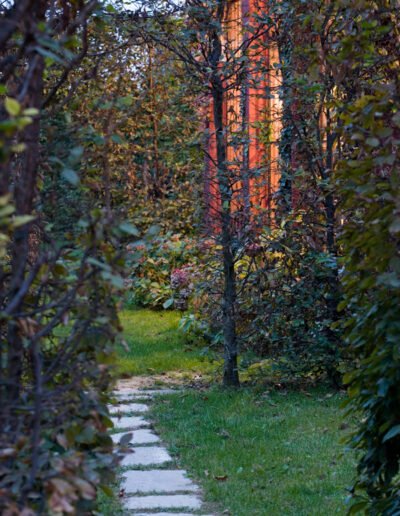
The choice of vegetation was dictated by the desire not to create an overly rich overall effect, even though it was a garden and not a park, but rather to maintain a simple, clean appearance through the use of a few, predominantly rustic species. In the area near the house, hornbeams (Carpinus betulus) and laurels (Laurus nobilis) were chosen, pruned to create, through the use of topiary, continuity with the austere layout of the 18th-century building.
As it gradually fades upward, the composition becomes more natural with the introduction of a few cypress trees, which emphasize the sense of assertive verticality of the composition. Large shrubby masses complete the decor of the slopes and soften and interrupt the geometric rhythms of the complex, connecting it with the softer forms of the natural landscape.
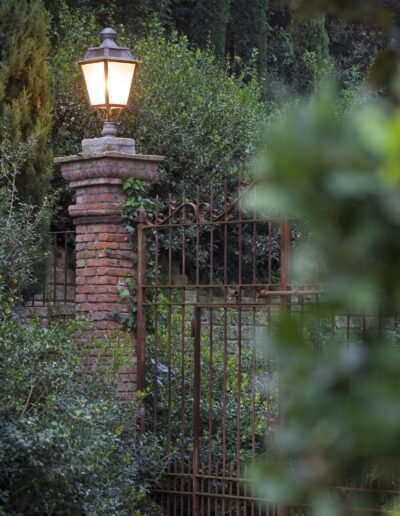
The newly constructed orangery was designed to maintain continuity with the existing buildings, both in terms of layout and materials, such as handmade bricks, wrought-iron fixtures, plaster, large stripes plastered inside, and terracotta floor tiles.
Project vegetation:
Mitigation trees – Magnolia galloniensis, Laurus nobilis
Isolated specimen trees – Fagus asplenifolia, Fagus sylvatica, Fagus sylvatica “Atropurpurea”, Cupressus sempervirens
Topiary shrubs – Laurus nobilis, Carpinus betulus
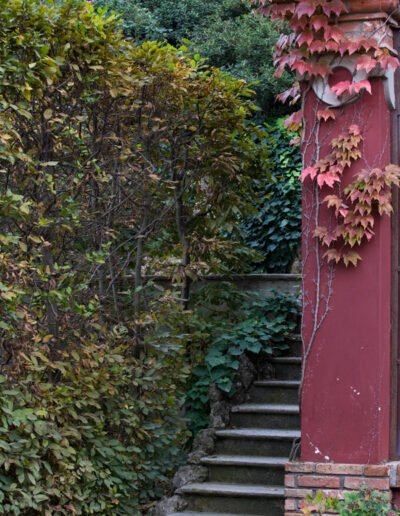
Ornamental shrubs – Osmanthus fragrans, Nandina domestica, Vinca major, Ficus repens, old Hydrangea varieties, old rose varieties, and Hedera varieties
www.landscapefirst.com