

In the May/June issue of The Architect’s Newspaper, AN spoke to several lighting designers about illumination for architectural projects. Conversations with designers from TM Lighting, HOK, HLB, Studio Atomic, L’Observatoire International, and Loop revealed several design trends that highlight the fixtures, applications, venues, and technologies today’s lighting consultants are working with.
Vanishing Fixtures
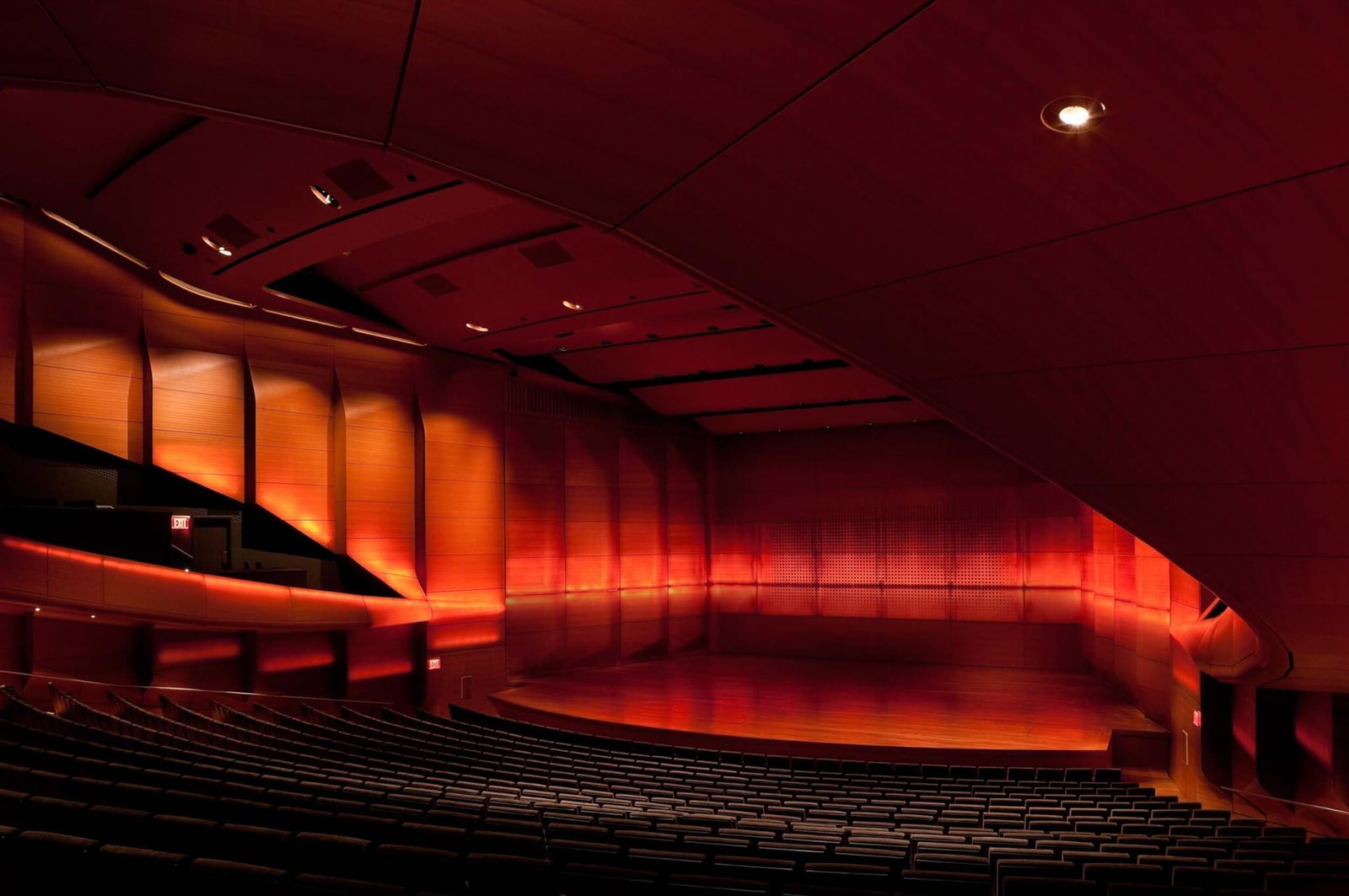
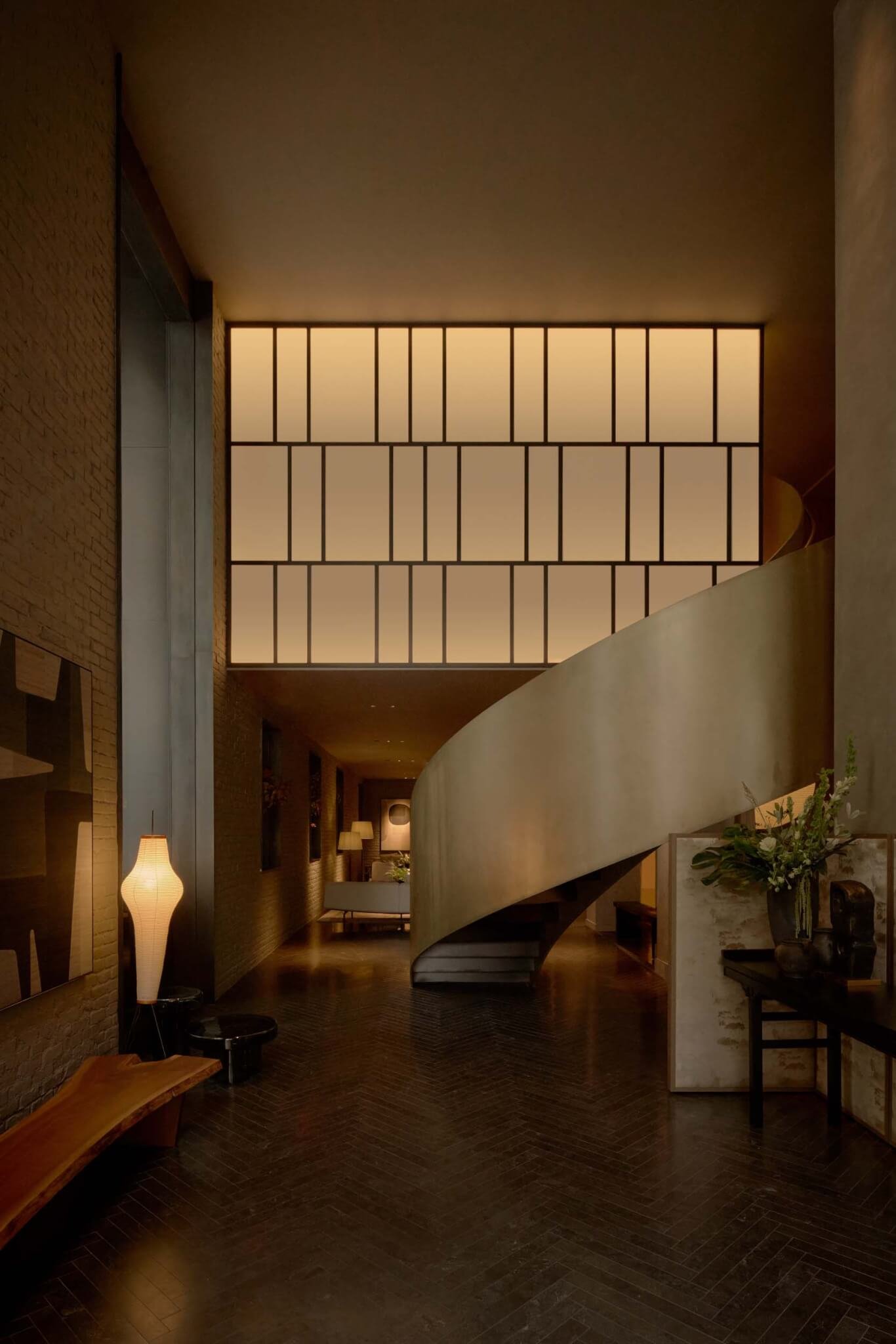
Light sources that disappear are trending for a few reasons. “Architects are always going towards minimalism,” said B. Alex Miller, a founding partner of TM Light, about the lack of visible fixtures in spaces. Alina Ainza, founder of Loop Lighting, notes that while interior designers want one decorative fixture to be the focal point of a space, it doesn’t illuminate enough, so discreet fixtures come in to create “the illusion that the decorative fixture is doing all the magic,” she said.
Hospitality Everywhere
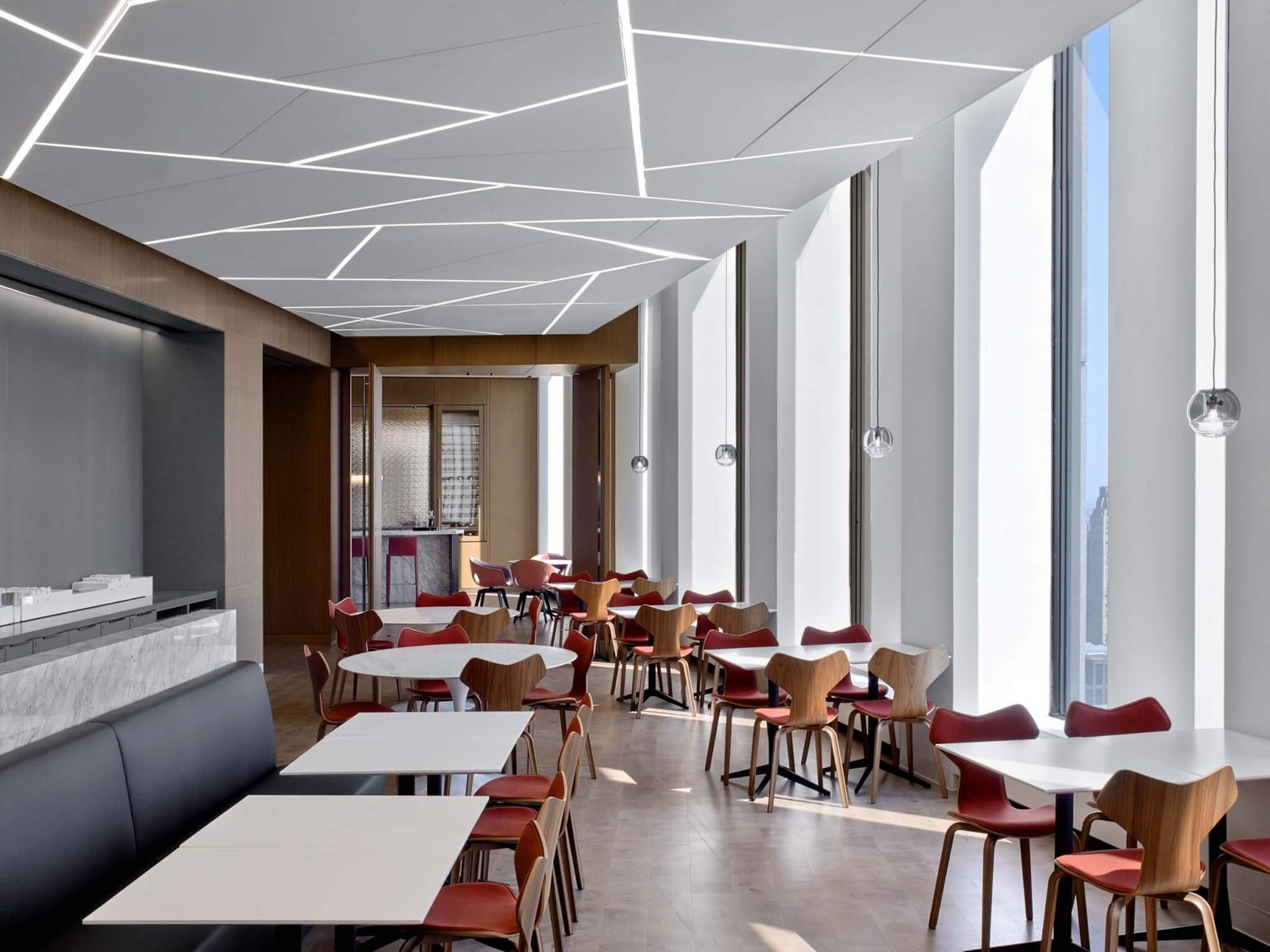
The lighting designers AN spoke to said that locker rooms, airport terminals, retail spaces, and offices, especially, are receiving hospitality-style lighting—warmer tones, dimmer levels, and more dramatic applications. “We say hospitality, but it’s really about what makes people feel comfortable,” said Christine Vandover, a principal and senior interior designer at HOK. She thinks that because people spent more time at home during COVID, “they kind of expect that comfort in all spaces.” Ainza also mentioned that more workspaces are accepting shadow, meaning some darker spaces in contrast to the usual bright illumination, “which used to be a scary word to hear in the corporate environment.” Hospitality lighting is changing, too. Paola Pietrantoni, a cofounder of Studio Atomic, has noticed color temperatures drop lower and lower. “We’re going into a trend of 1800 kelvin for linear-tape light for millwork and details,” she said.
Designing for Technology
HLB Lighting Design has been designing flexible, plug-and-play lighting systems for research labs because of automation. “Labs could be anything from 100 percent human to hybrid, meaning humans overseeing robots, to 100 percent robotic,” said Carrie Hawley, HLB’s CEO. “And they don’t know, at any given moment, when there’s going to be a change. They want to be able to have the flexibility to not have to completely rip everything out.”
Sustainability
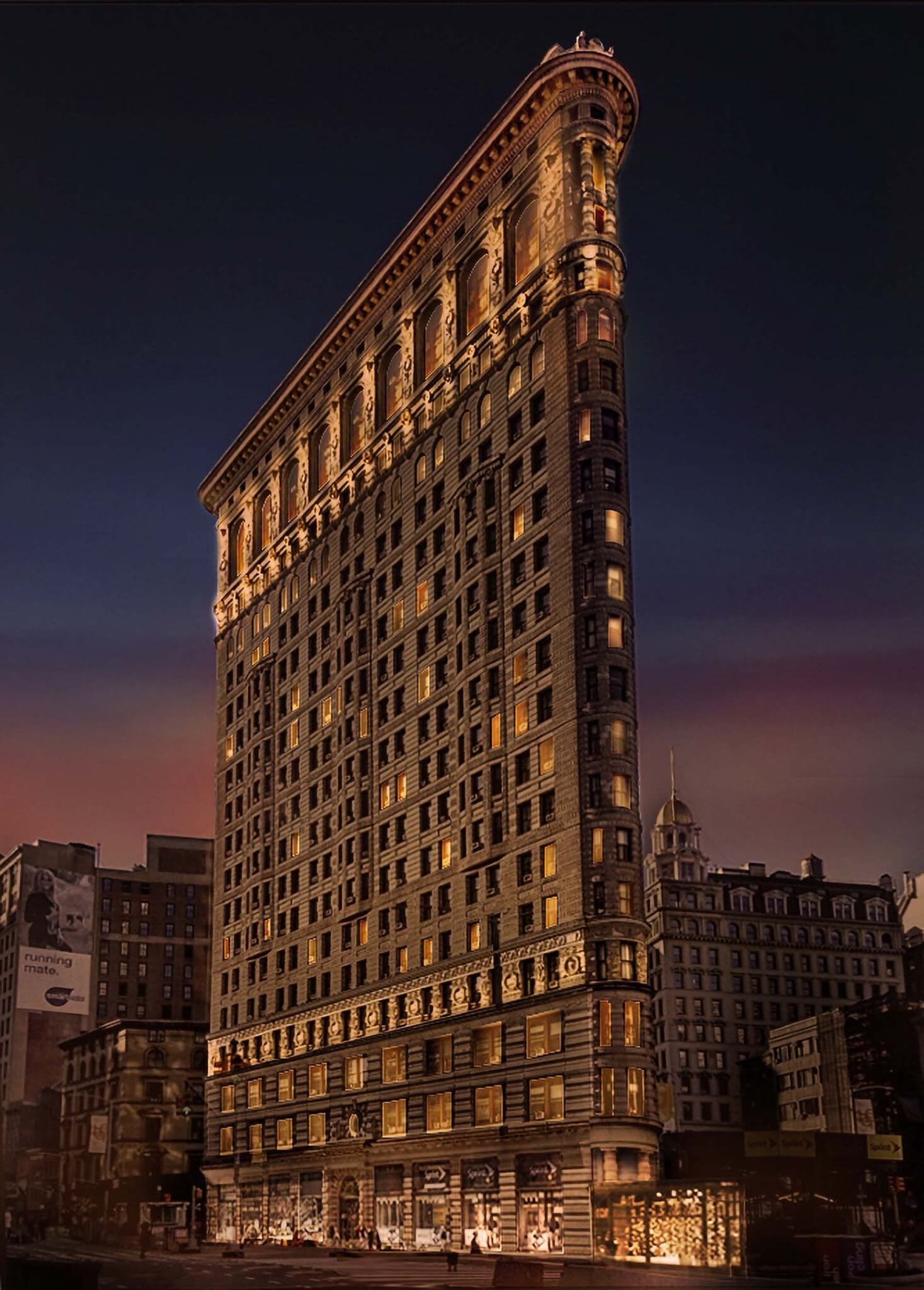
Minimizing the negative environmental effects of lighting, which includes energy efficiency and Dark Sky light-pollution protocols, is a top priority for L’Observatoire International. “We cannot even think of a project without thinking about sustainability,” said Hervé Descottes. For the company’s recent project illuminating the facade of the Flatiron Building, it installed shielded fixtures that prevent light from shining upward. In addition to increasingly strict energy codes, there are also more sustainability benchmarks—from LEED to Living Building Challenge and the AIA 2030 Challenge—that must be met while adhering to American Society of Heating, Refrigerating and Air-Conditioning Engineers (ASHRAE) minimum light levels. Vandover notes that balancing daylight and artificial light is becoming more critical because of this.
Wellness
Circadian lighting, or lighting that automatically adjusts its color temperature to mimic that of natural light, is inescapable on the marketplace. But designers are skeptical. “Every manufacturer has their different gimmick about it,” said Bien Jacinto, a lighting designer at HOK. While areas with zero natural light might benefit from it, it’s an added expense and not always needed, especially in areas with windows. Meanwhile, adding more light in the name of wellness might contradict energy-efficiency goals. “The best thing to do is design buildings with a narrow footprint with an east–west access,” Hawley said. “There’s only so much that we can do as lighting designers to fix the problem.”
Diana Budds is a design journalist based in Brooklyn, New York.