
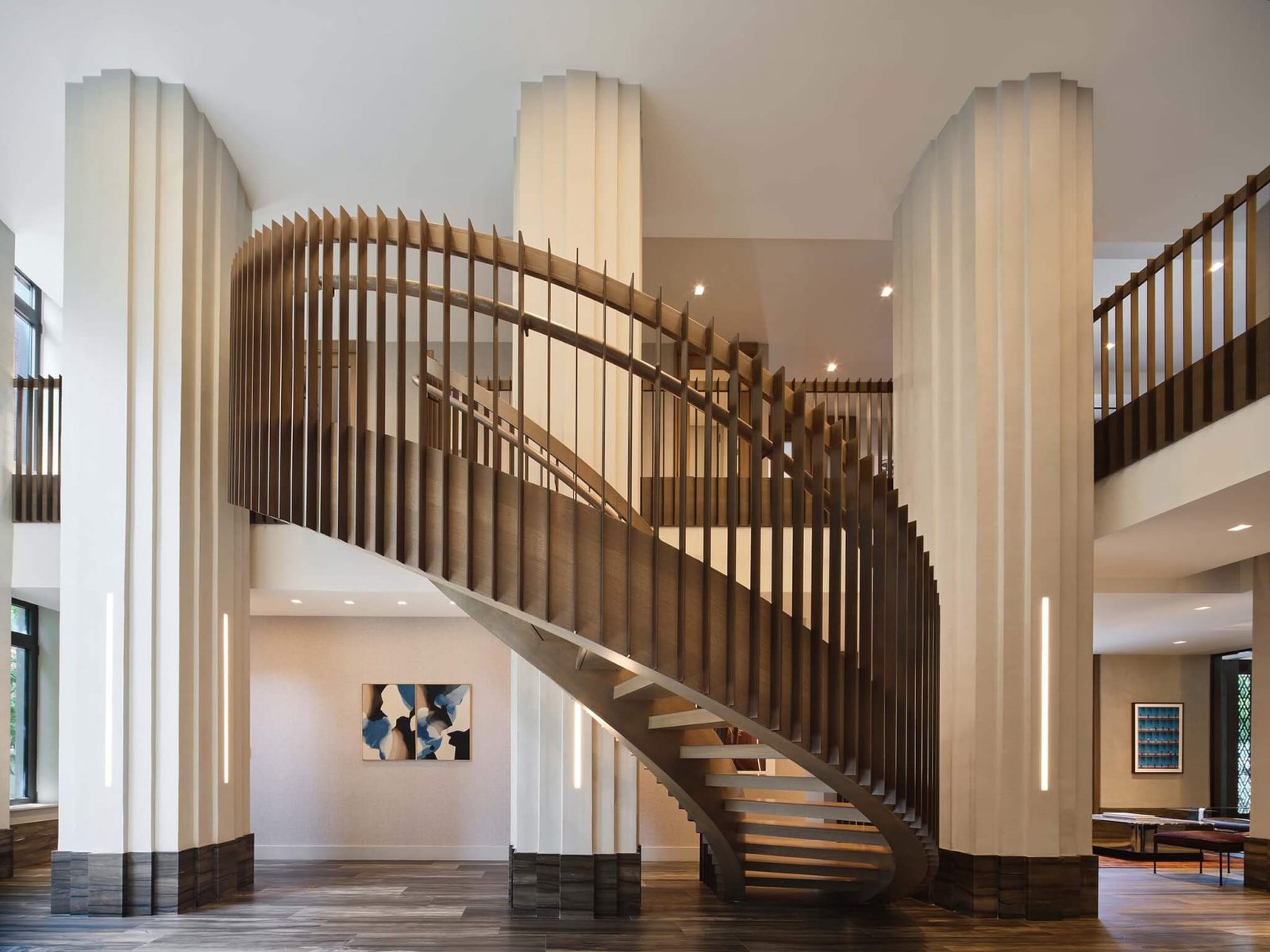

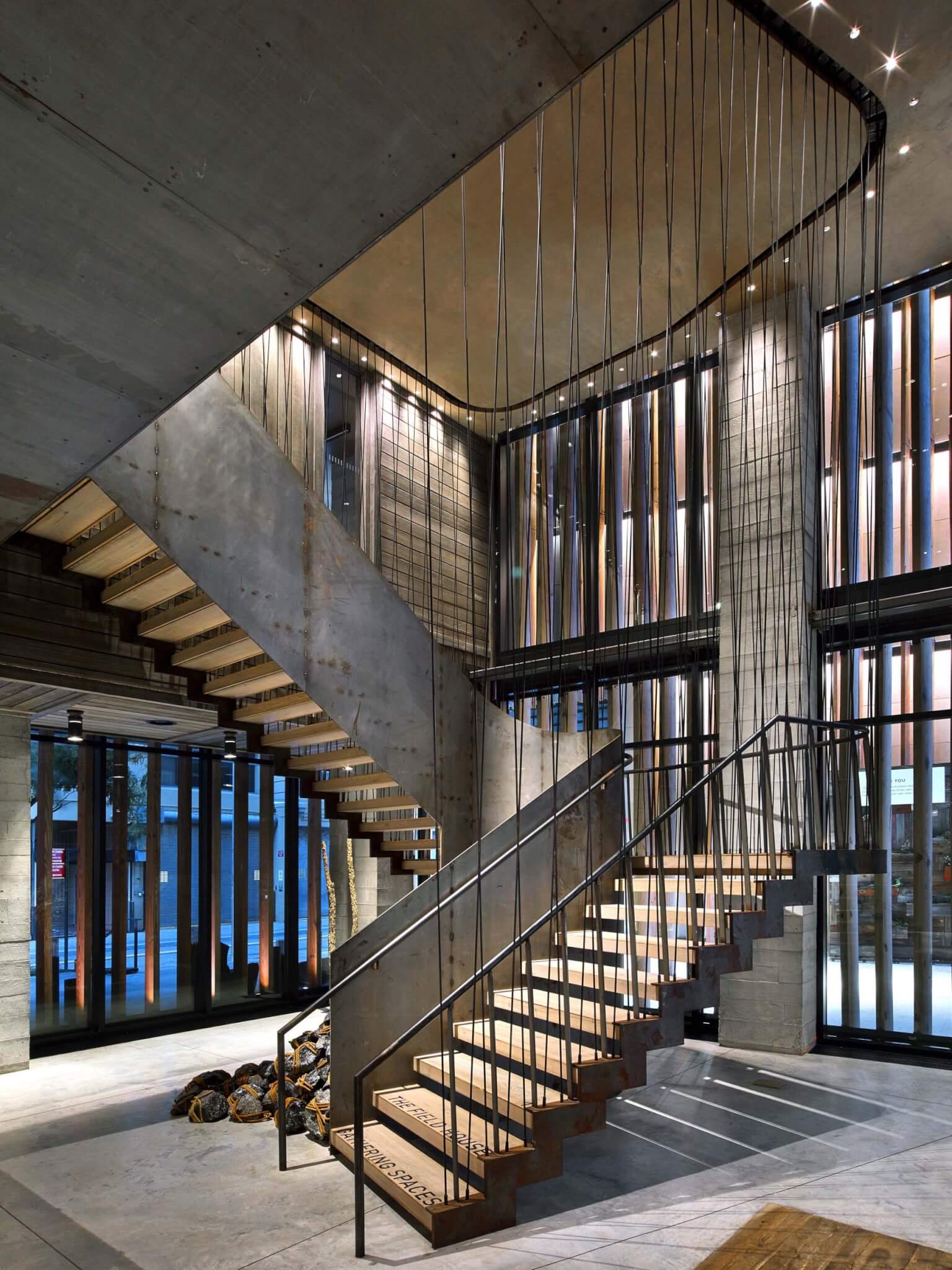
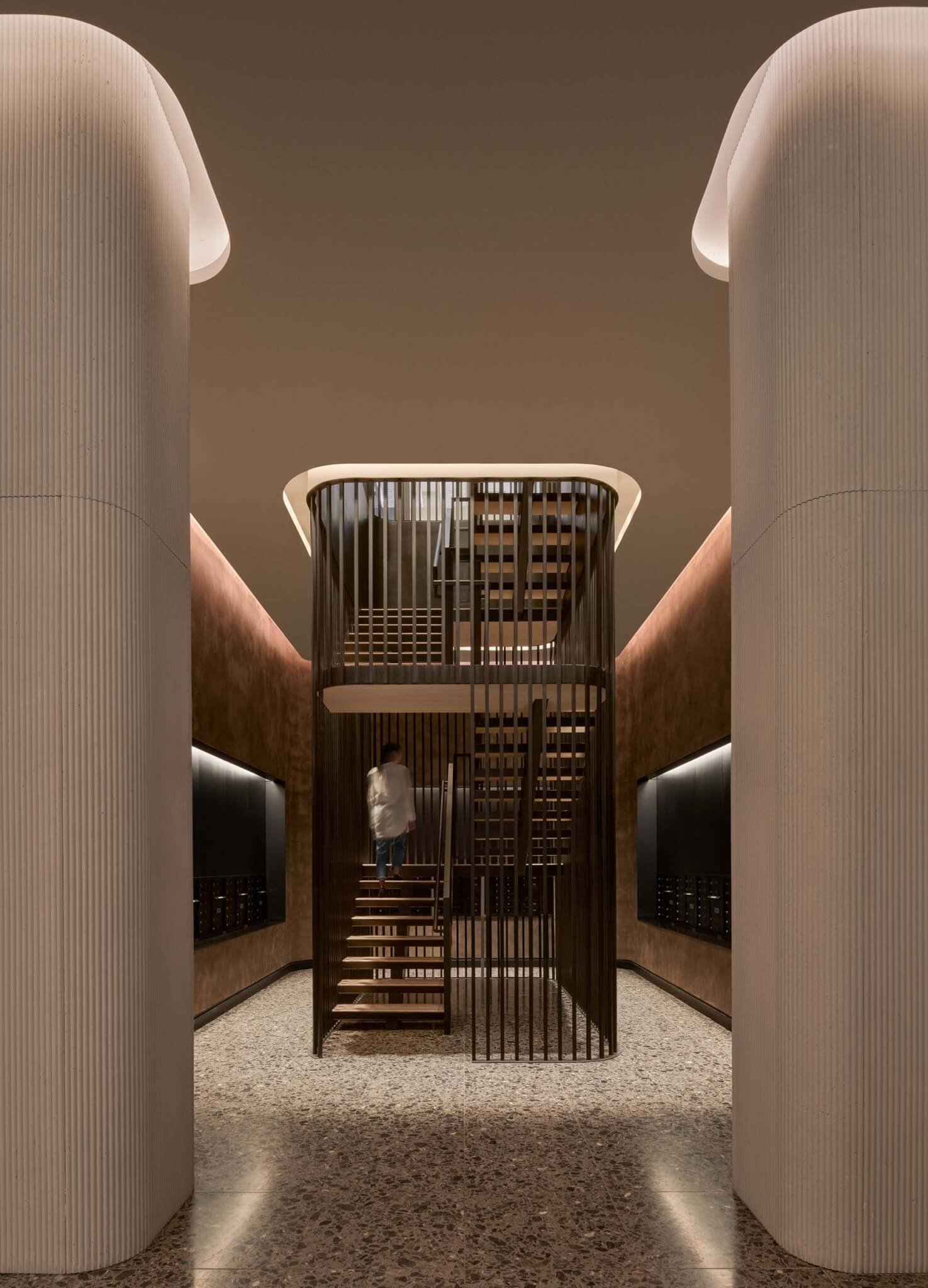
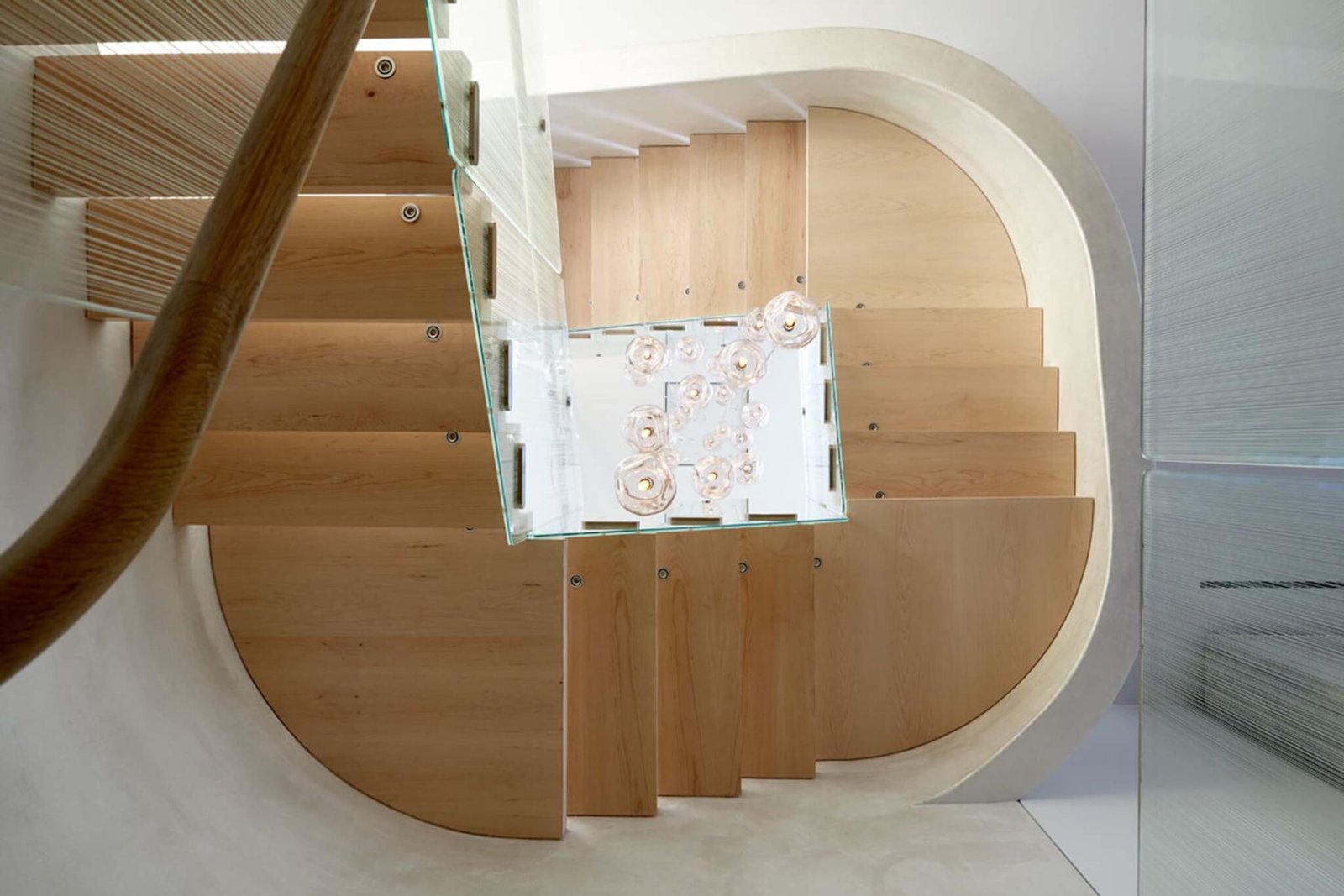
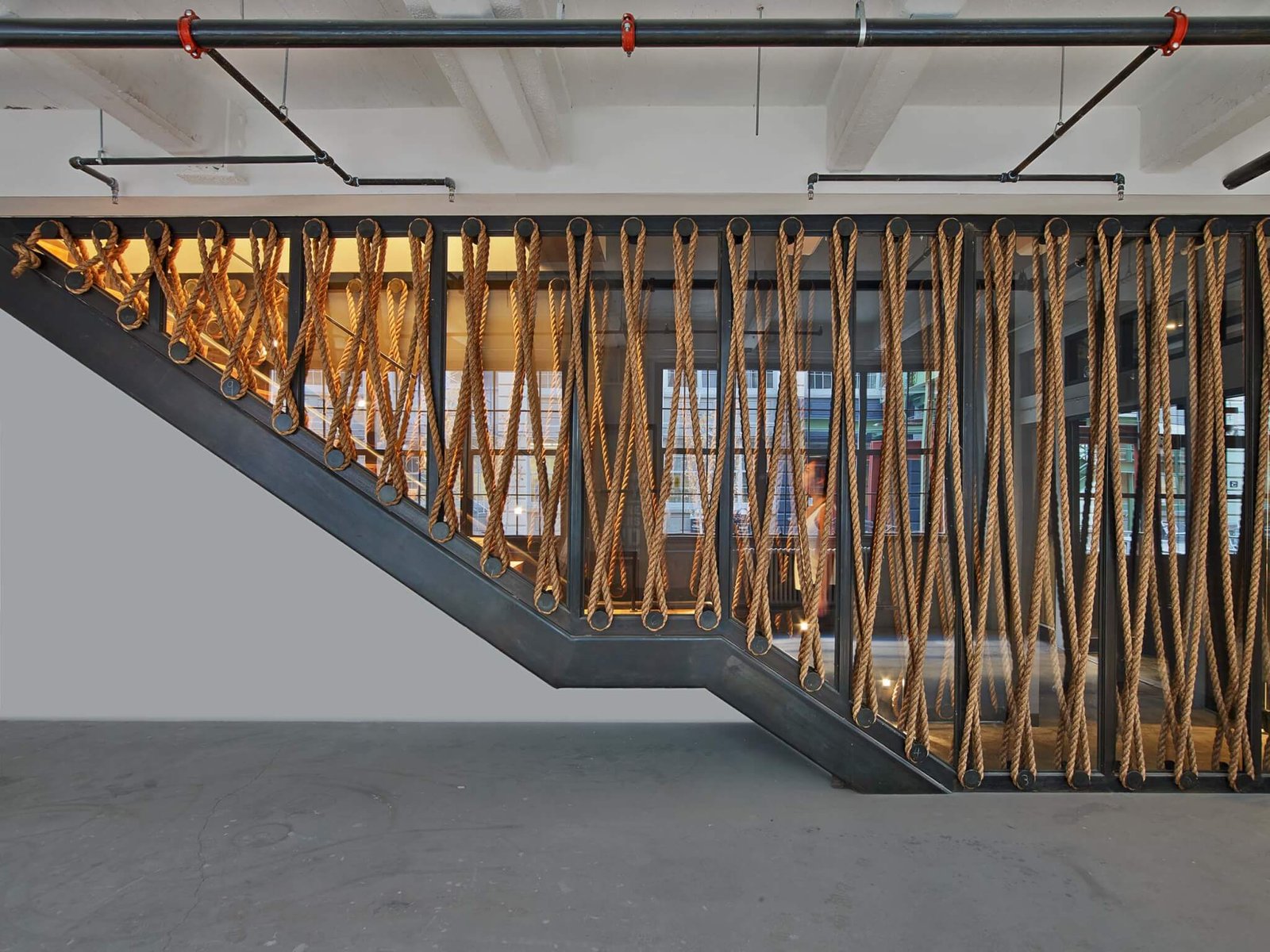
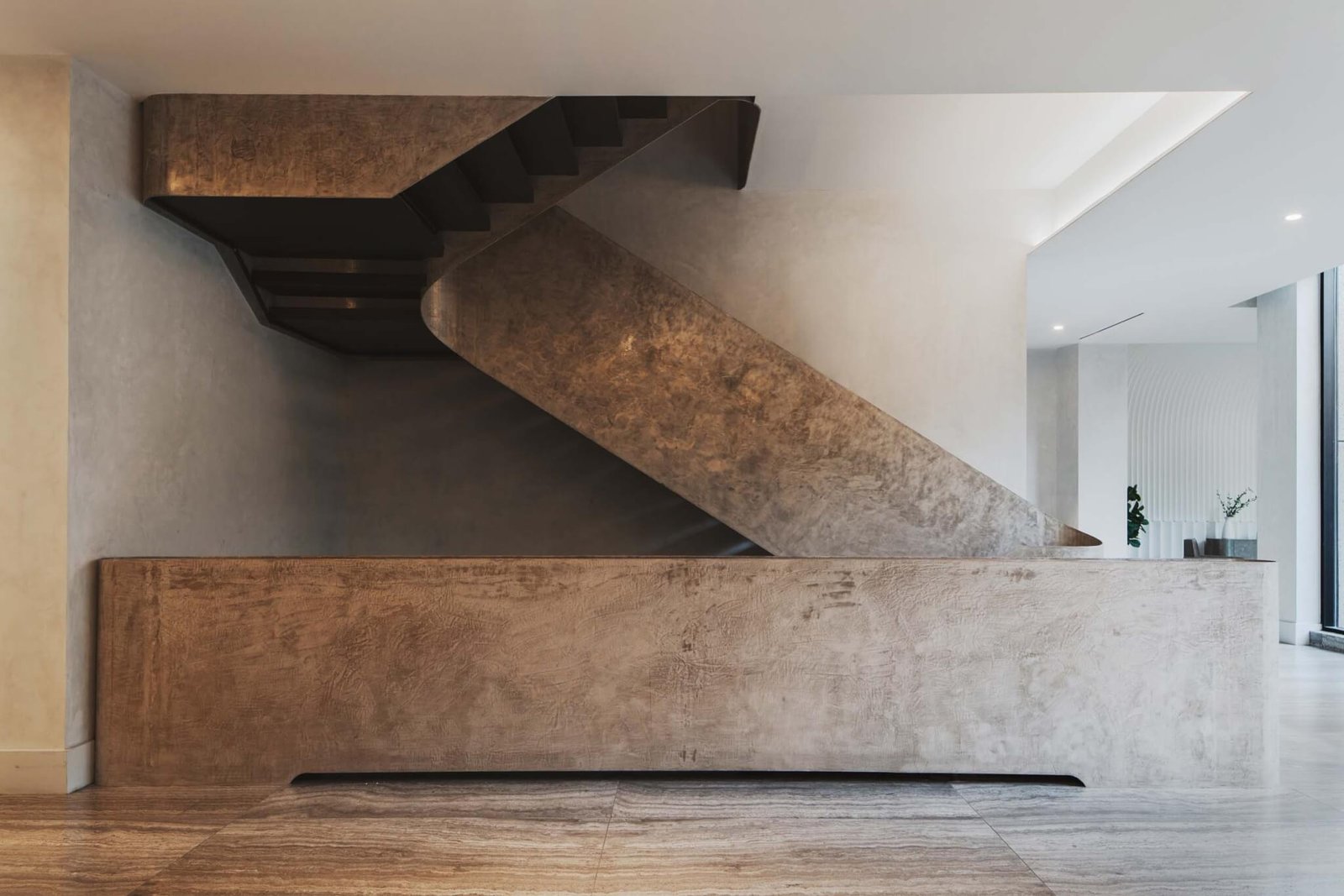
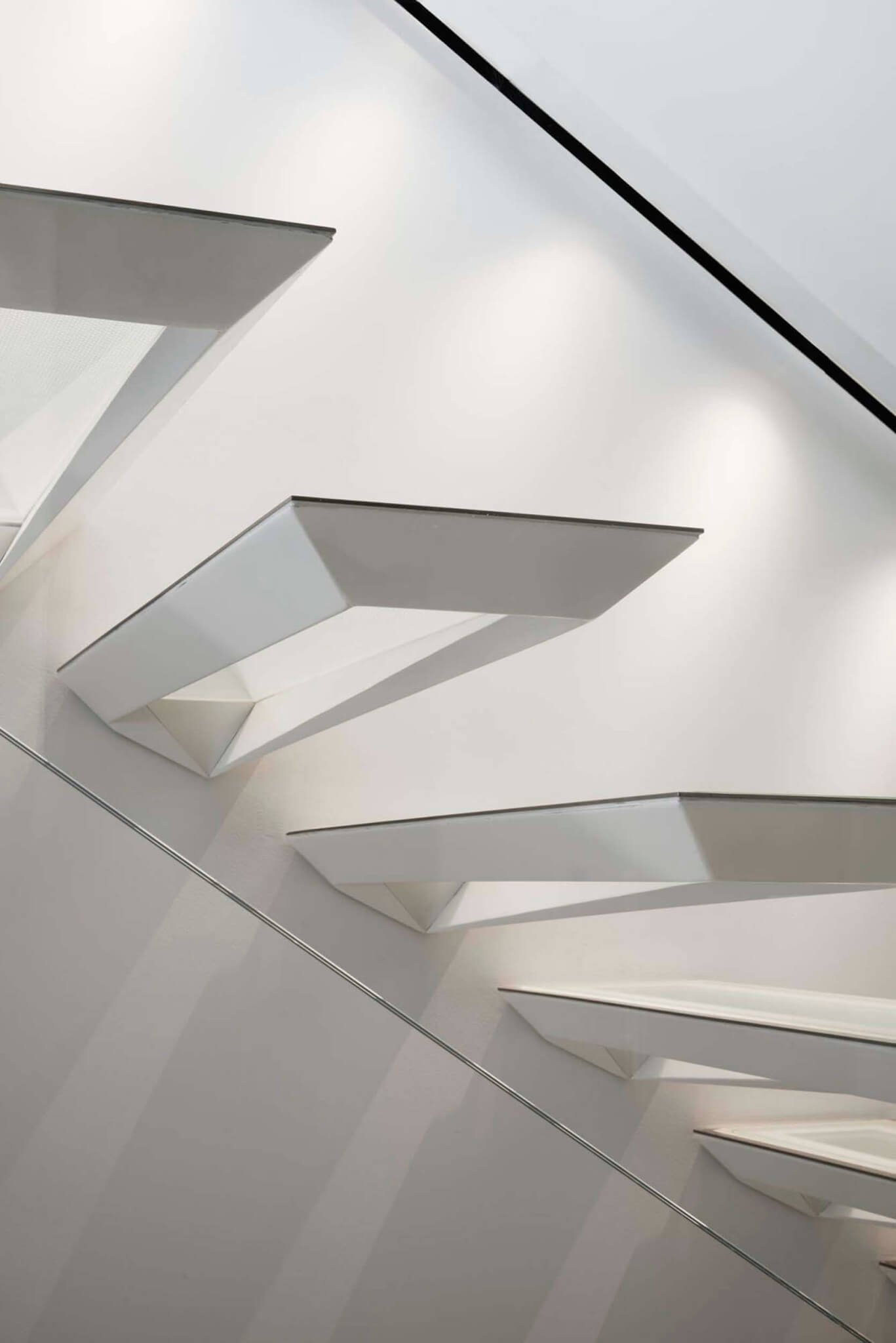
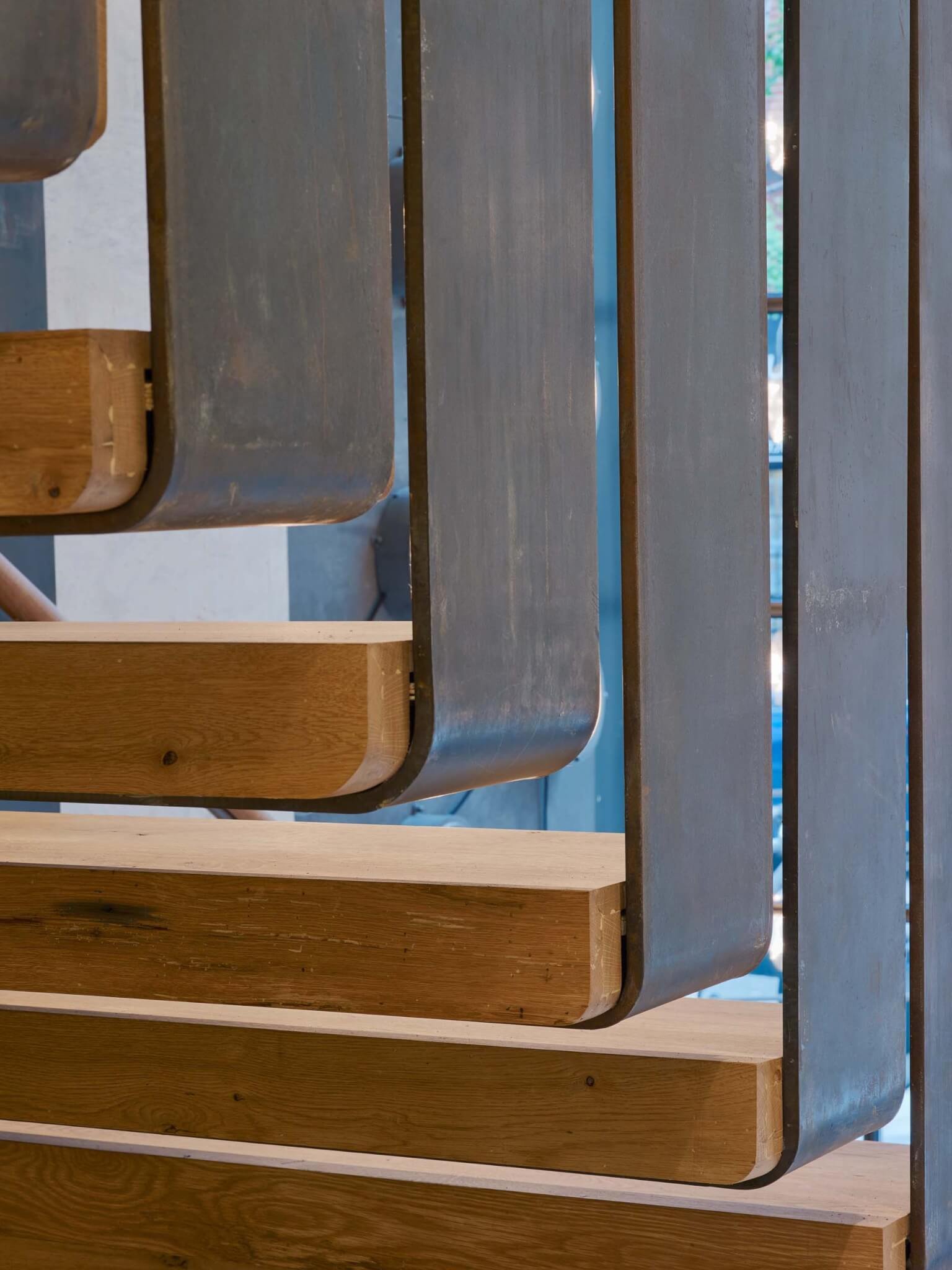
There is a moment, fleeting but precise, when the body shifts weight from one foot to another in upward movement. The heel lifts, the thigh engages, and a subtle recalibration of balance occurs. This is the essence of a proprioceptive—and, hopefully, joyful—engagement with architecture. Nowhere is this sensibility more concentrated, more available to both maker and inhabitant, than in the stair.
The stair is not just another architectural element. It is an event, a space of becoming, a threshold stretched in time and folded into movement. Here is a place of passage where spaces are connected and the distance between them felt. A stair is the most architectural of all thresholds. When we use it, we enter its in-between place.
Unlike a doorway, a stair slows us down. We ascend or descend, step by step. The stair converts transition into ritual. To borrow from Georg Simmel, it is a bridge of sorts, but not across horizontal distance, but across vertical states of being. We begin in one place and end in another; the stair, like the bridge, compels us to feel everything in between.
A stair demands attention from the whole body, from feet to hands and head. When thoughtfully composed, it becomes a site of corporal attunement. A stair is a liminal space. Anthropologists use this term, “liminal,” to describe the transitional phase in rites of passage, the time between identities. In this suspended state, participants are no longer who they were, but not yet who they will be. This is the power of the stair: It holds us in that interval. It denies us immediate arrival. It insists we dwell, however briefly, in the moment.
This has profound architectural implications. Too often, buildings prioritize destination over journey. The stair challenges that logic. It cannot be rushed without risk. It invites, and sometimes enforces, slowness. Stairs are venues for temporal complexity and precarity.
This means the stair is more than mere circulation. It is a narrative. Each step is a word, and each landing a pause. What does the resulting sentence say? When properly conceived, a stair does not simply take us somewhere. It tells us something—about the place, about ourselves, about the nature of becoming.
Constructed Movement
A stair is not just seen. It is experienced. The materials architects select for stairs—textured stone, warm wood, hand-welded metal—are not merely visual. Stairs are touched, heard, and even smelled. In our digital world it can be easy to forget about how different finishes act on our bodies. Materials are never passive; they have a color and a temperature, and they carry memory. They are part of how a stair tells its story.
A stair must meet established performance requirements, but beyond that it carries sensation. A solid oak tread, worn slightly at the nose, does not simply serve function—it evokes history, use, and passage. The light drag of the hand along a cast-bronze rail is not just tactile—it is a conversation across time. When revealed and detailed to show its joining, steel is a diagram of force and intention. And when the structure is not hidden but articulated, it shows that ascent is not effortless elevation has a cost, and beauty resides in what holds us up.
But materials are animated with light. A stairwell illuminated by a clerestory window or filtered through slats becomes a theater of shadow and motion. As the body moves, the eye follows. This interplay activates proprioception—that deep, often unconscious sense of where the body is in space. This fundamental awareness allows us to ascend a stair without looking down, and it’s what orients us in the dark. When a stair is well-designed, it aligns with bodily intelligence. The rhythm of the riser height, the width of the tread, and the placement of the handrail all conspire to create a felt knowledge.
Proprioception also has emotional consequences. It’s one thing to walk up a dimly lit fire stair; it’s another to ascend a stair where each step is invited: a warm surface, a curving wall, a changing shaft of light. The first says, “get through.” The second says, “Be here.” This is the difference that design makes. The stair doesn’t just carry us; it conditions us.
In this sense, the stair is an active agent. It makes space not only for movement but for reflection. It becomes a site for the metaphysical as much as the physical.
The philosopher Maurice Merleau-Ponty wrote, “The body is our general medium for having a world.” This is true for architects. Design is not merely about objects or spaces—it is about the conditions that allow a person to have a world and make meaning through experience. Stairs can be exemplary because they are ontological. A stair is made—calculated, drawn, modeled, built—before it then shapes our perception, posture, awareness, and presence.
This doesn’t require monumentality. Some of the most meaningful stairs encountered are not the grand ones, not the ones made to be photographed, but those that carry a quiet attention. A narrow stair in a Kyoto townhouse, worn down by generations of footsteps. A vertiginous five-story straight run stair in a Soho loft. A hybrid meandering stair in a hill town where the light at each turn deepens just slightly, like chapters in a book. These stairs are not statements. They are invitations.
A stair is never just a stair. It can be how power is expressed, class is divided, and intimacy is staged. The grand staircase in a palace or theater—sweeping, symmetrical, performative—is a social architecture. It offers elevation as spectacle. The fire escape—a grid of pressed metal bolted to the outside of a building—is a pragmatic afterthought and a symbol of escape, contingency, and survival. Even the domestic stair carries layers of meaning: the creak of someone coming home, the hush of someone sneaking away.
A stair asks: What kind of transition will this be? Is it cinematic—curved, slow, theatrical? Is it direct and honest, revealing its structure like a backbone? Is it meant to compress and release, to expand the experience of a constricted site? Will the tread be short and efficient or long and luxurious? These are not simply aesthetic questions. They are questions about becoming.
Stairs live in our memory. We remember falling on them. We remember sitting on them during phone calls or waiting for someone who never came. We remember them from childhood—how tall they seemed, how steep. We remember where the third step creaked. We remember counting them. The stair records the body and its habits.
In some way, all architecture is ontological—it contributes to shaping the self. But only some architecture does so with care. Joyful and enriching spaces and objects heighten our capacity for awareness, connection, and wonder. Done right, the stair is Joyspace in miniature—it is where the functional becomes poetic, where the body is not simply accommodated but awakened.
Up and Down
You can go two directions on stairs. To ascend a stair is to assert intention, and to descend is to yield to gravity. Both are acts of movement, but their orientations carry distinct philosophical and ontological directives.
Ascension is generative. It requires exertion, alignment, and decision. It is a forward-facing motion—literally and symbolically. When one ascends, one becomes, upward. The breath quickens, the spine elongates, the eye lifts. Each step is a protest against gravity. This vertical progression echoes ancient symbolic orders: the sacred mountain, the ladder to enlightenment, and the high ground as the position of clarity or power. In architecture, to ascend is often to arrive.
Descent, by contrast, is an exercise in vulnerability. It is the return, the retreat, the relinquishing. To descend is to submit to gravity rather than resist it, to lean back into uncertainty. The movement is no less intentional, but it carries risk of a potential fall or a loss of control. In architectural history, descent often takes on a mythic or tragic quality. The drama of descent lies in its ambiguity: Are we going down for revelation or to be lost?
Crucially, neither direction is superior: What goes up must come down. Both are aspects of being. One stretches the body toward the possible while the other draws it into reflection. Ascension expands; descent intensifies.
This ontological polarity is what makes the stair such a profound architectural form. It stages, again and again, one step at a time, our fight with gravity. To ascend is to become; to descend is to remember. Through using stairs, we discover the poetics of both.
There is something paradoxical about the stair. It is one of the oldest elements in architecture. It is humble, repetitive, and delineated by the building code, and yet it remains capable of immense intimacy and revelation. It embodies how architects can add wonder through the thoughtful consideration of things that hide in plain sight or that earn their meaning not through spectacle but through use. Understanding design as an ontological act raises the central question of its meaning: What does space do to us? It alters our mood, attention, and sense of time.
The stair, in this regard, is a teacher. It teaches slowness, intention, and care—both in how it must be designed and in how it must be used. Ignore a stair at your own mortal risk. You cannot glide through it untouched. In its navigation, you are pulled out of your thoughts into a physical encounter—your muscles versus gravity. Through that negotiation, you become aware of where you are and who you are becoming.
You are suspended in motion, held in architecture. And in moment of this suspension, where effort and awareness are choreographed together, Joyspace becomes possible.
Adam Rolston, senior founding partner of INC Architecture & Design, has spent more than four decades working at the intersection of architecture, interiors, and object design. As creative and managing director of INC, Rolston’s leadership of this multidisciplinary practice is grounded in the conviction that design is a social and relational act. His work and writing explore how architecture can function as both a social catalyst and an emotional infrastructure, shaping environments that deepen our relationship to place, community, and the shared life of the city. Most importantly, he holds that beauty is a human entitlement.