

Mumbai-based Studio Urban Form + Objects (Studio UF+O) has a knack for putting a spin on traditional architectural elements to freshen up contemporary homes. In 2025, founding architects Prachi Parekh Vora and Vineet J. Vora dry-clad black granite onto the chamfered faces of a house in Andhra Pradesh. In 2024, they wrapped a rural Rajasthan home in a CNC-cut stone jaali facade. Most recently, the duo completed House Between Walls, a home in Rewatra, Rajasthan for a multigenerational family with a glass-block frontage facing the village square.
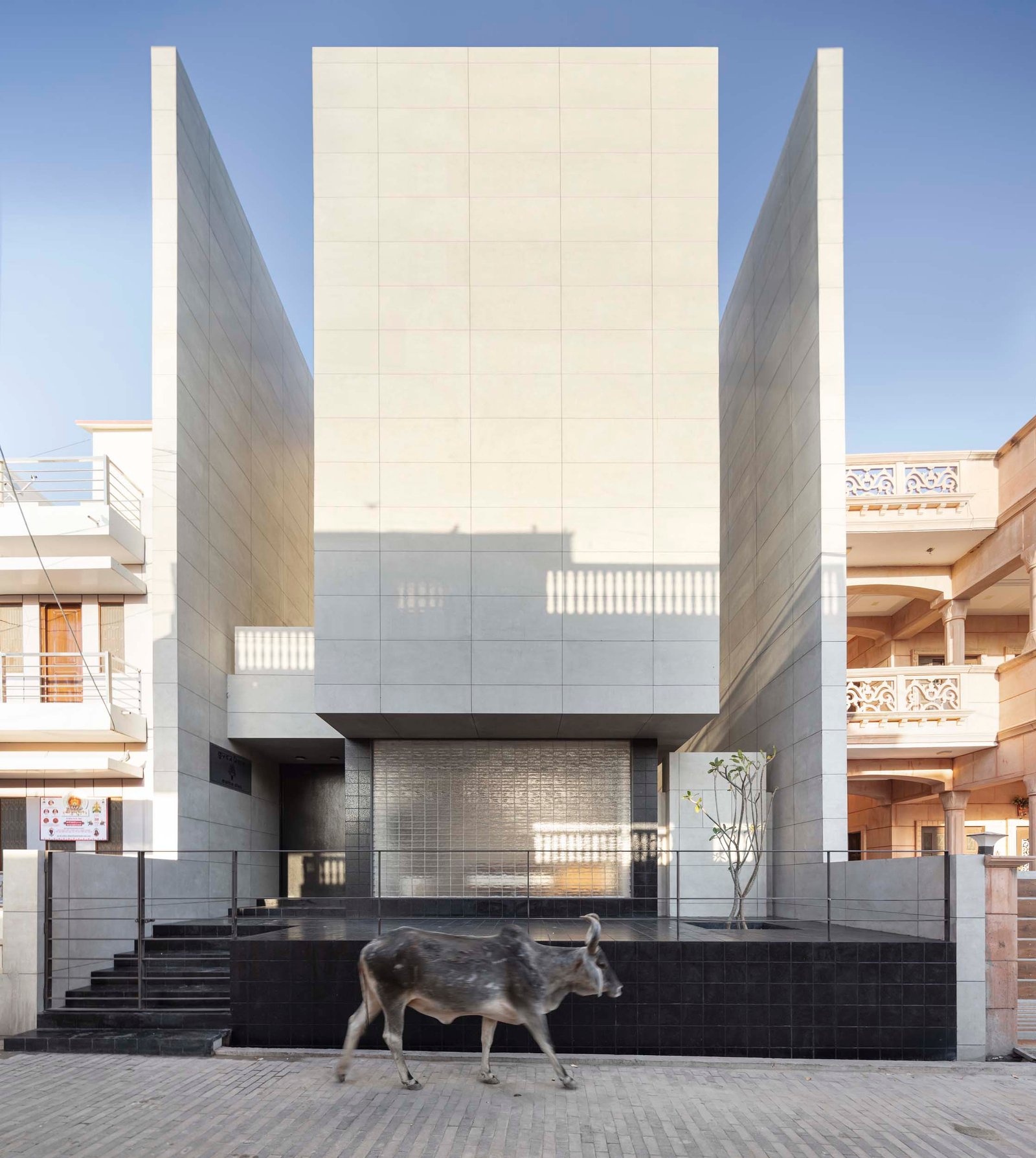
On the 9-by-24-meter (30-by-78 foot) plot, surrounded by low-rise residences on three sides, the architects lifted 3-story walls along the longer edges, with open-to-sky courtyards running parallel to act as deep light wells and enable natural ventilation in a rural setting with unreliable electricity supply.
“When we look at older homes in the region,” explained Vineet, “they have a clear hierarchy of space—the courtyard ties it all together and serves both as a central gathering space and a climate buffer. But because we were working with a tight footprint, we broke this out into open spaces along the sides.”
Learning from an earlier project in the same village, the architects have an understanding that many of these homes are ancestral properties belonging to large families whose younger generations now live in bigger cities for work or education. The village home therefore hosts the occasional rendezvous for weddings, festivals, and community events. This created two opposing conditions to design for: a house that could open up for large gatherings while supporting contemporary lifestyle preferences, yet close itself off securely against robberies when left unoccupied.
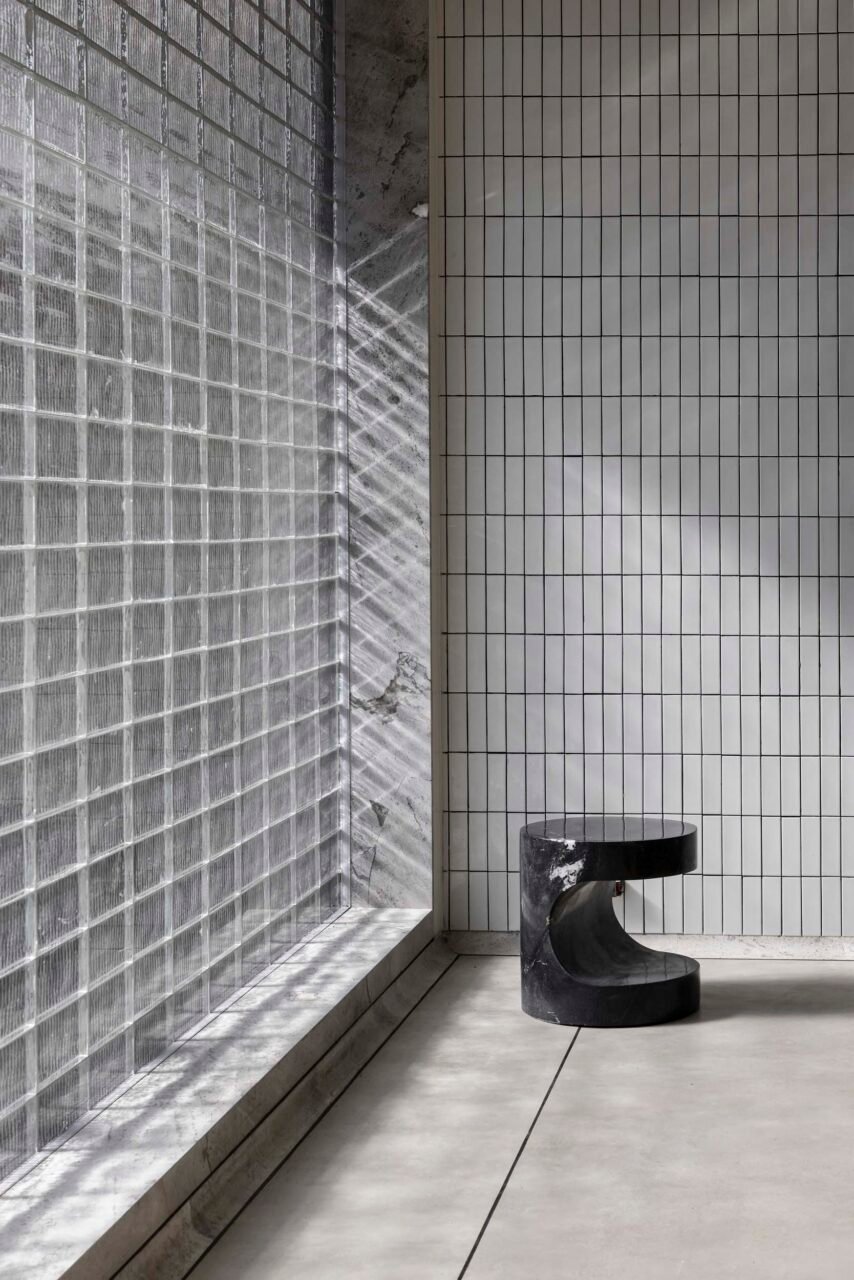
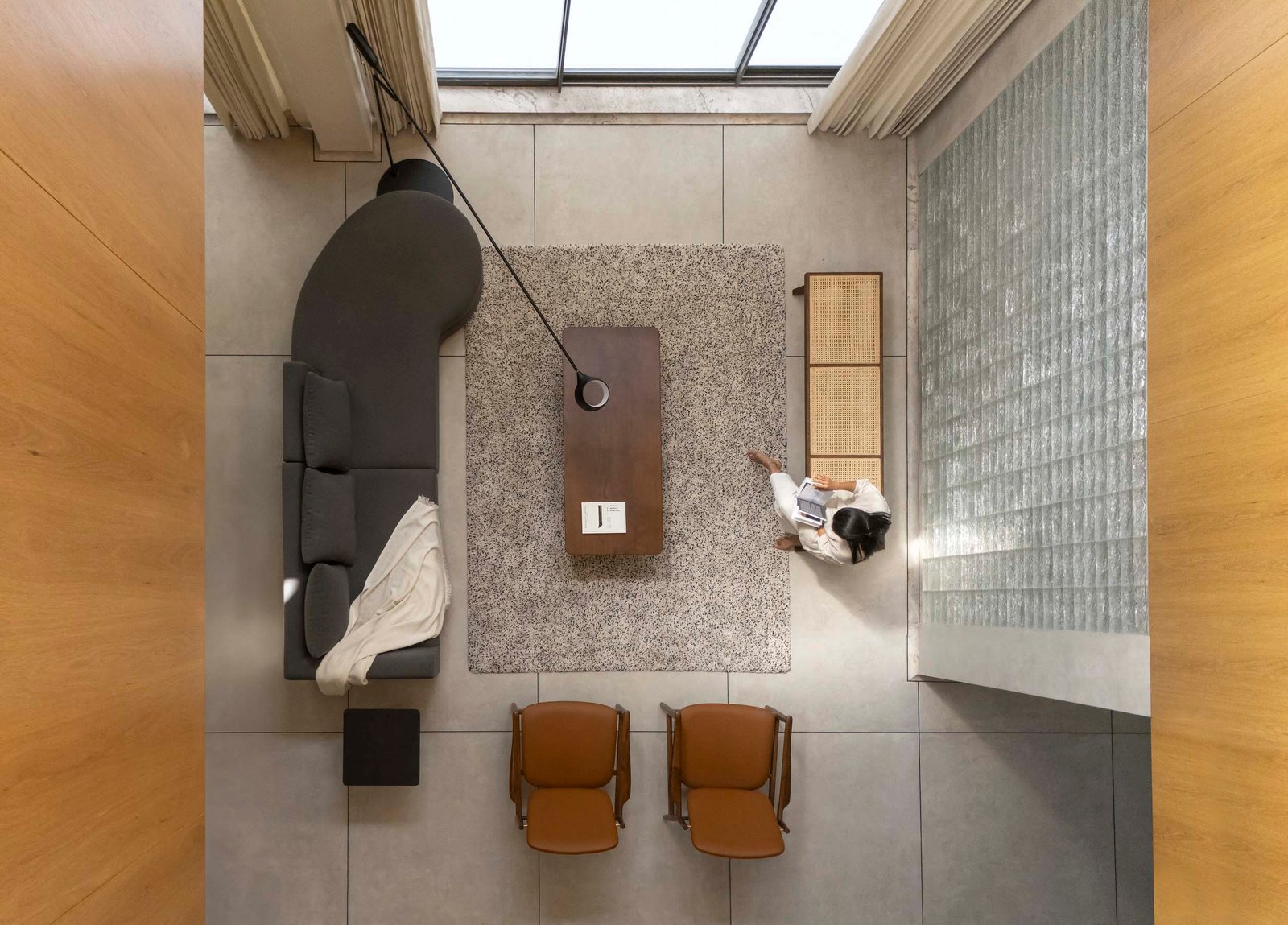
Responding to this duality, the home features steps rising directly from the street to the plinth, with a light, see-through metal railing demarcating the boundary without concealing the veranda from view, yet the facade has no windows offering direct views inside. Instead, the formal sitting room sits behind a glass-block wall that reveals only hazy silhouettes, and above, a blank neutral-toned tiled volume cantilevers like a protective overhang. “The neighbors know they can pop in to say hello when they see the glass-brick wall lit up,” said Prachi.
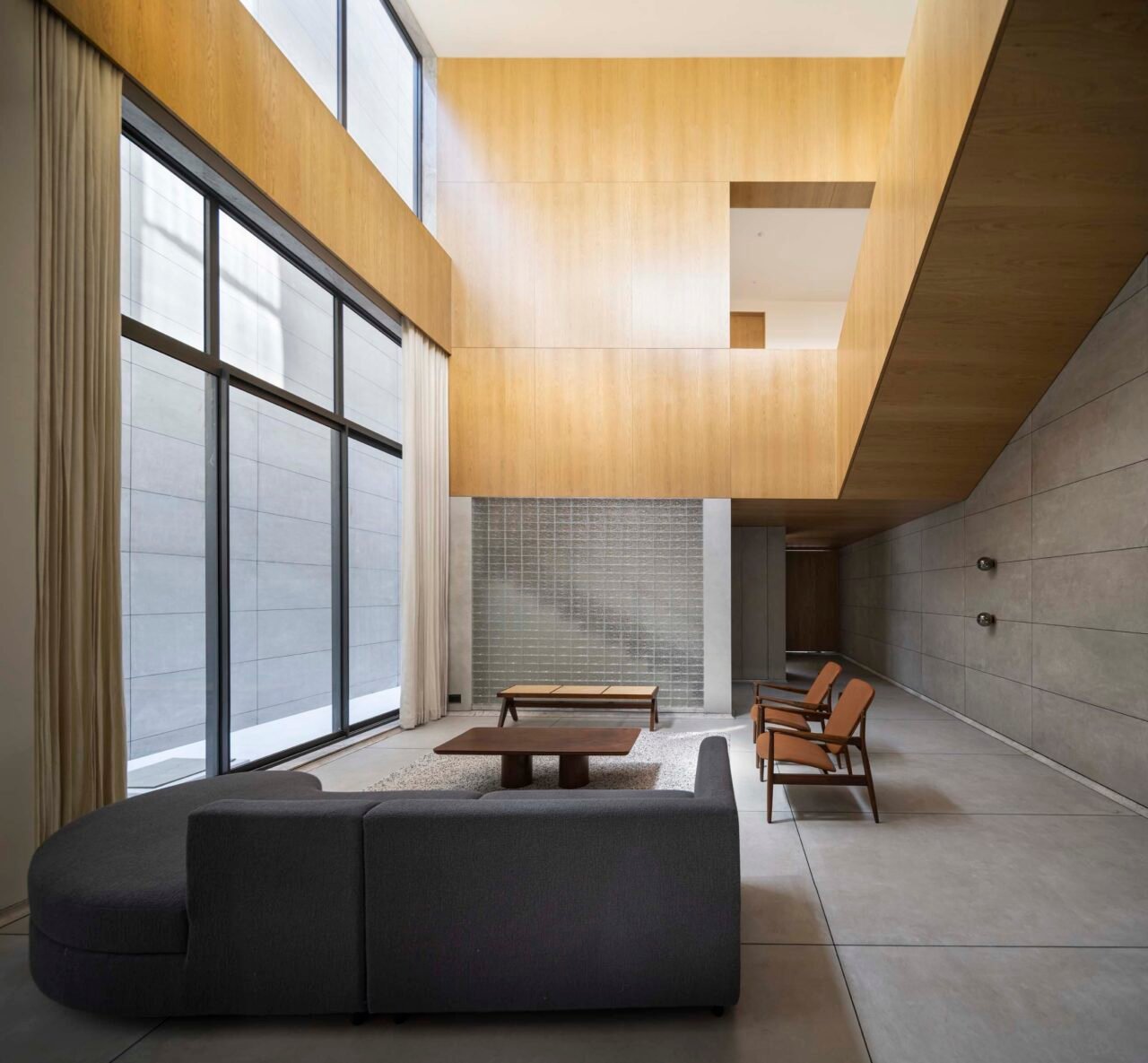
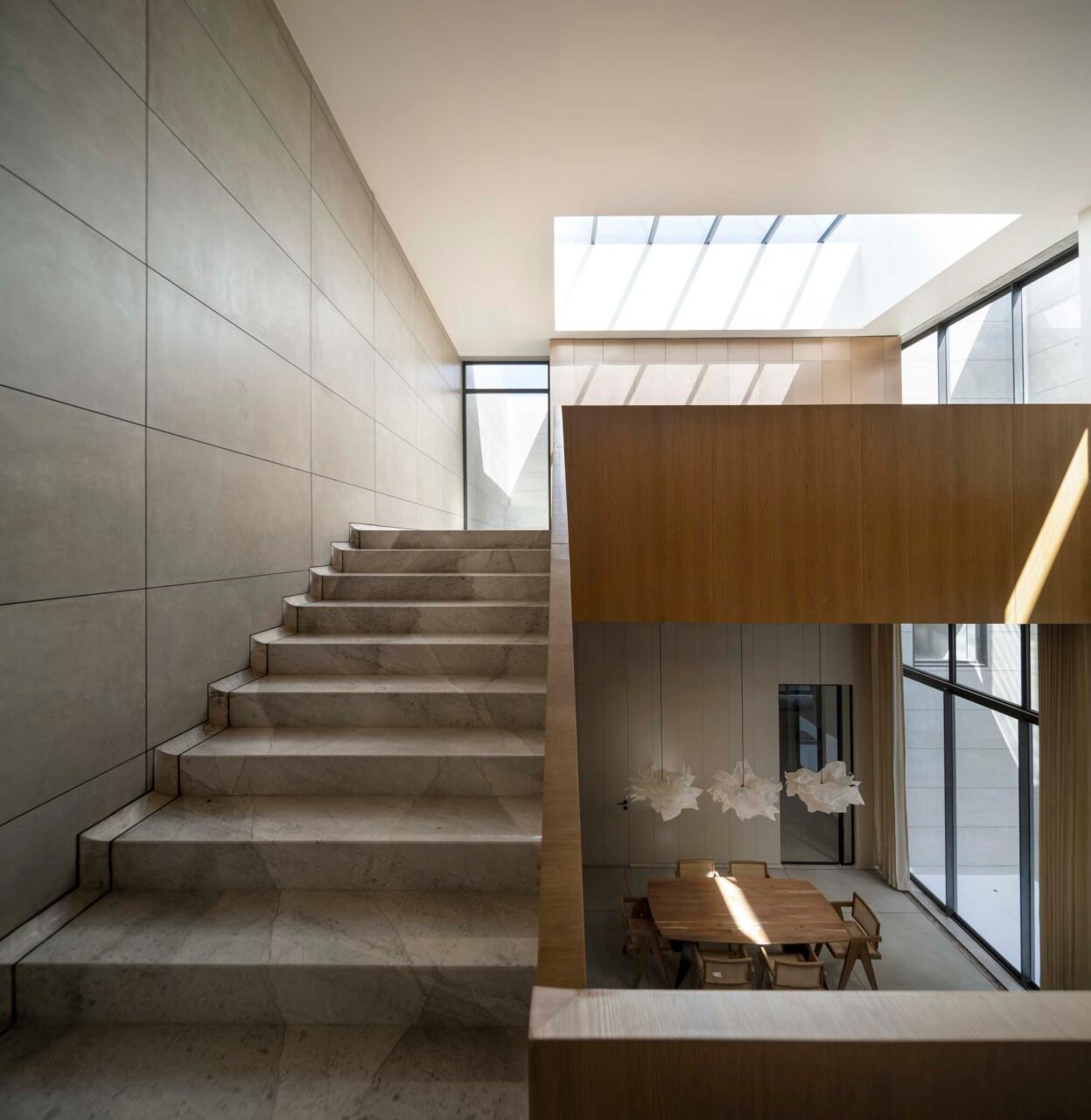
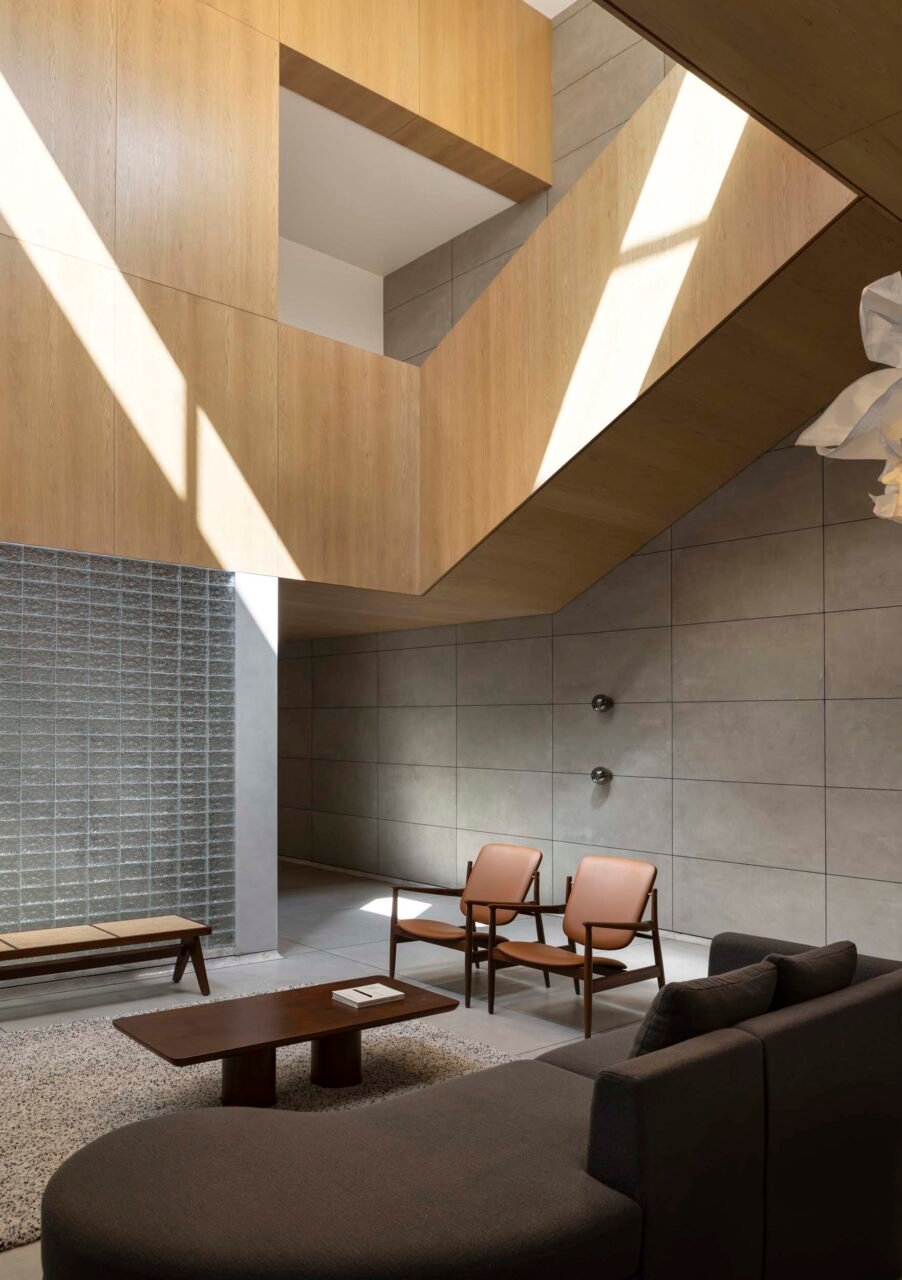
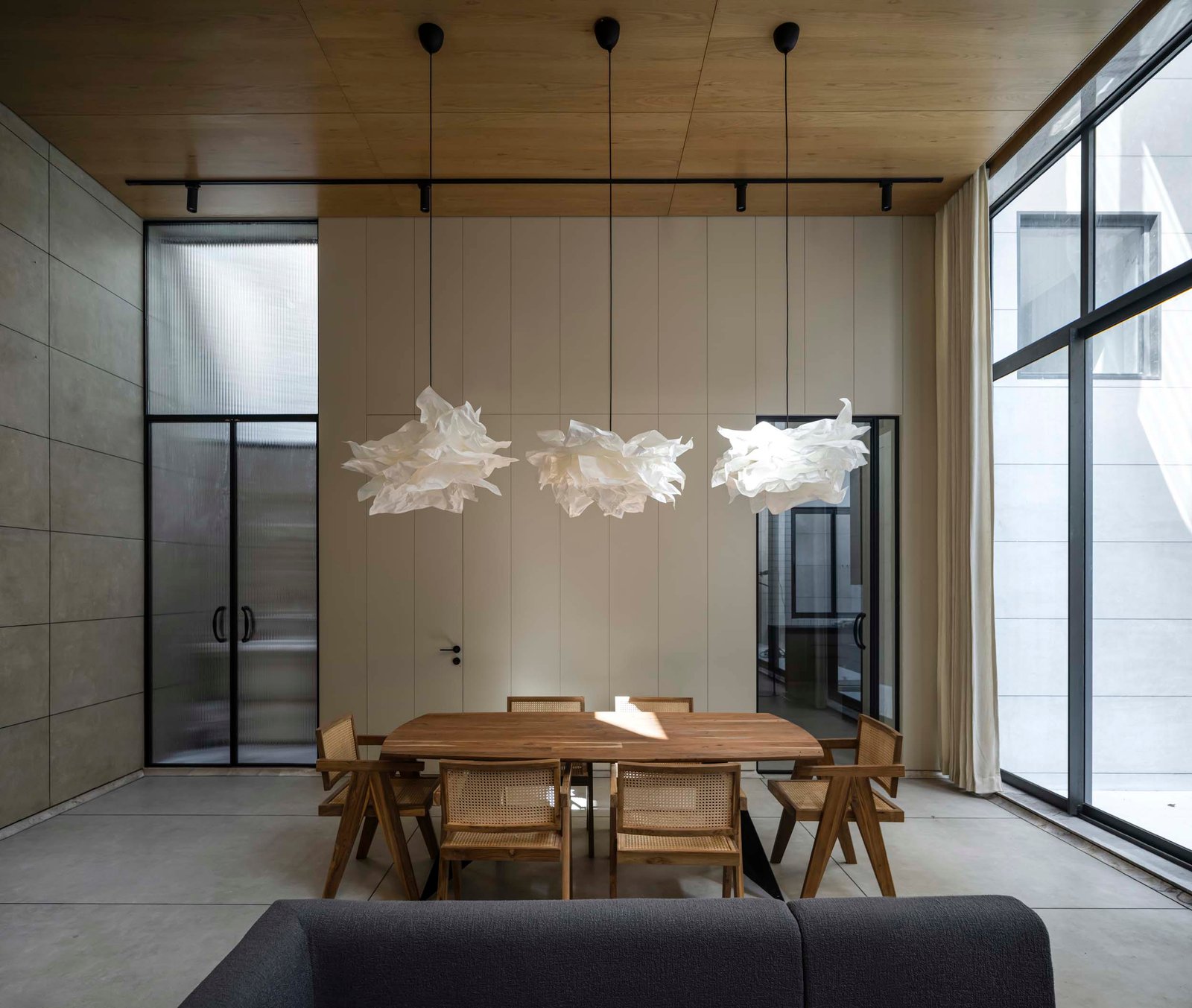
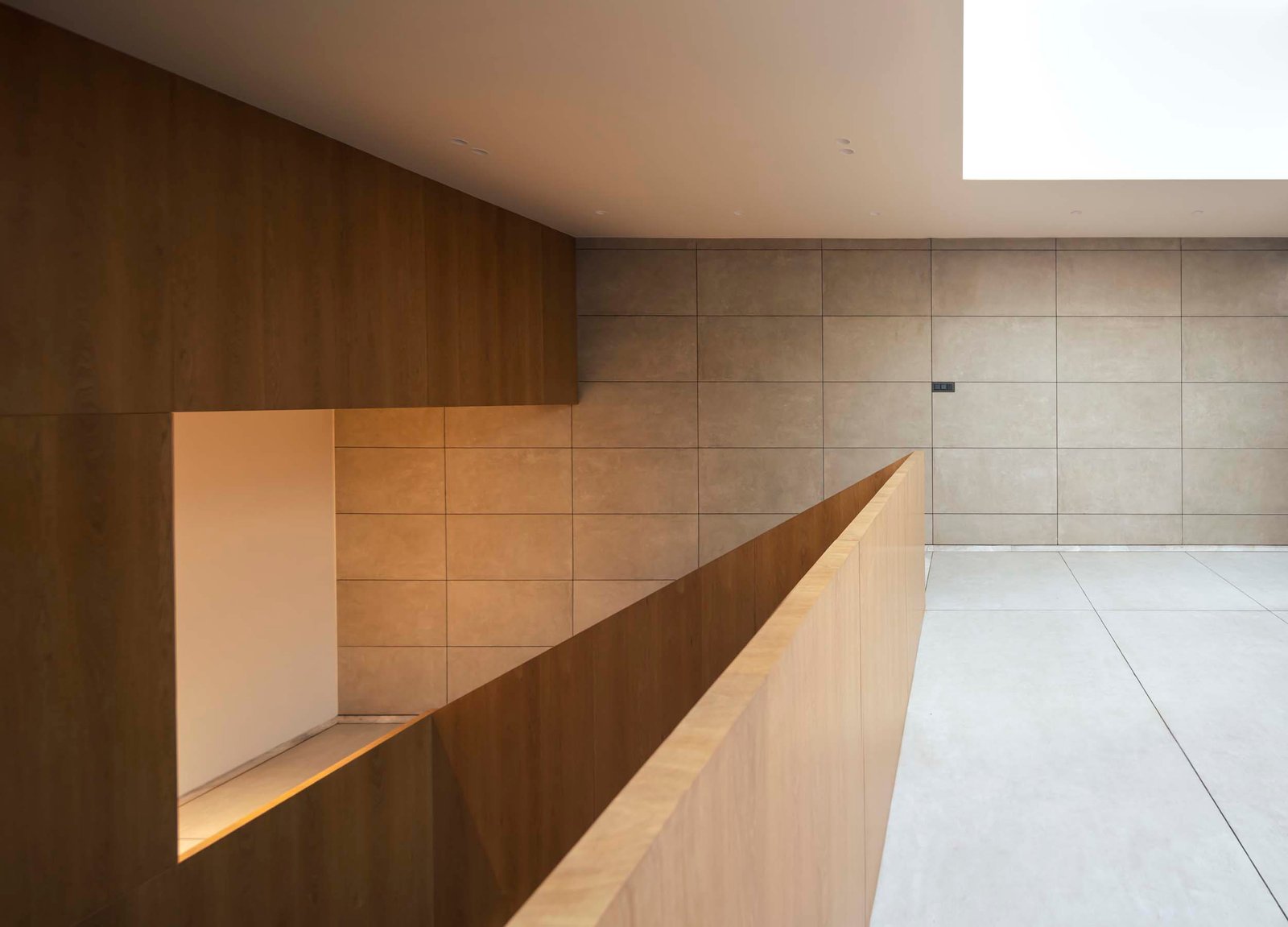
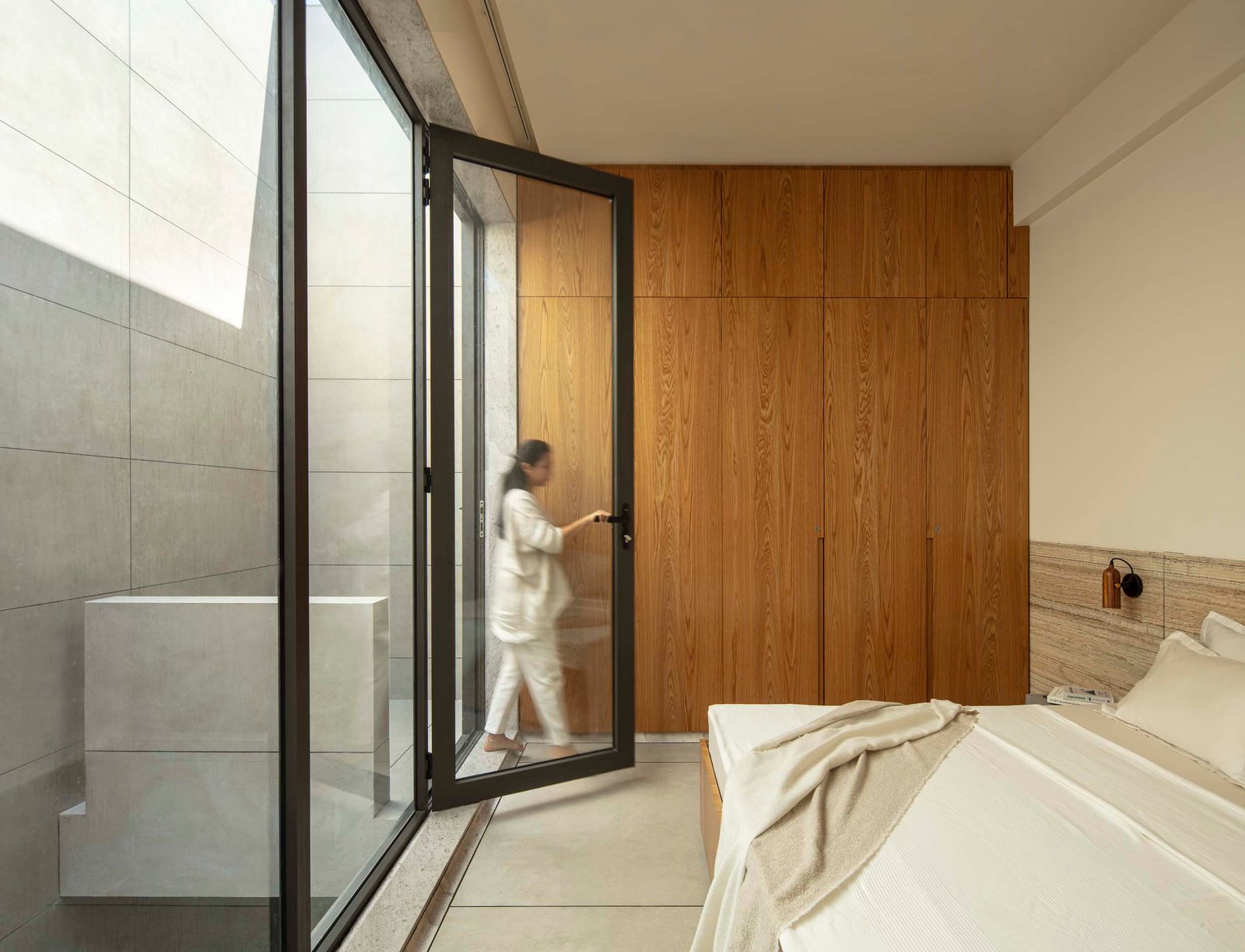
Inside, the architects organized the interiors around a large, flexible living and dining space overlooked by a wood-finished mezzanine illuminated by a skylight. On top of the front sitting room sits the master bedroom, which breathes through the adjacent courtyard while remaining completely hidden from the street. At the rear are the kitchen and three guest bedrooms distributed across two levels. The topmost floor opens onto a generous terrace designed as overspill social space.
During the house’s 2-year construction, Studio UF+O took on the additional challenge of working with local craftspeople unfamiliar with some of the project’s newer materials. “To build the glass-brick wall, for instance, we ultimately had to ask a carpenter to install it because he happened to be more precise than the mason,” laughed Vineet with a shrug.
The House Between Walls does what it was built for—keeping the family together while remaining attractive to younger people so they keep coming back.