






Each June architects and designers descend on Logroño, Spain, to stage immersive exhibitions on themes related to urbanism. This year Concéntrico’s program centered on three topics: Identity and Fiction, which presented projects that link storytelling with urban space; Urban Ecologies, which looks at the connection between the city and the environment; and Ephemeral Agents, which exhibited projects geared toward initiating change within the public realm.
Participants in this year’s festival hail from across the globe; they include the 2026 Pritzker Prize–winning architect Smiljan Radić from Chile, Palestinian firm AAU Anastas, and from Mexico PPAA.
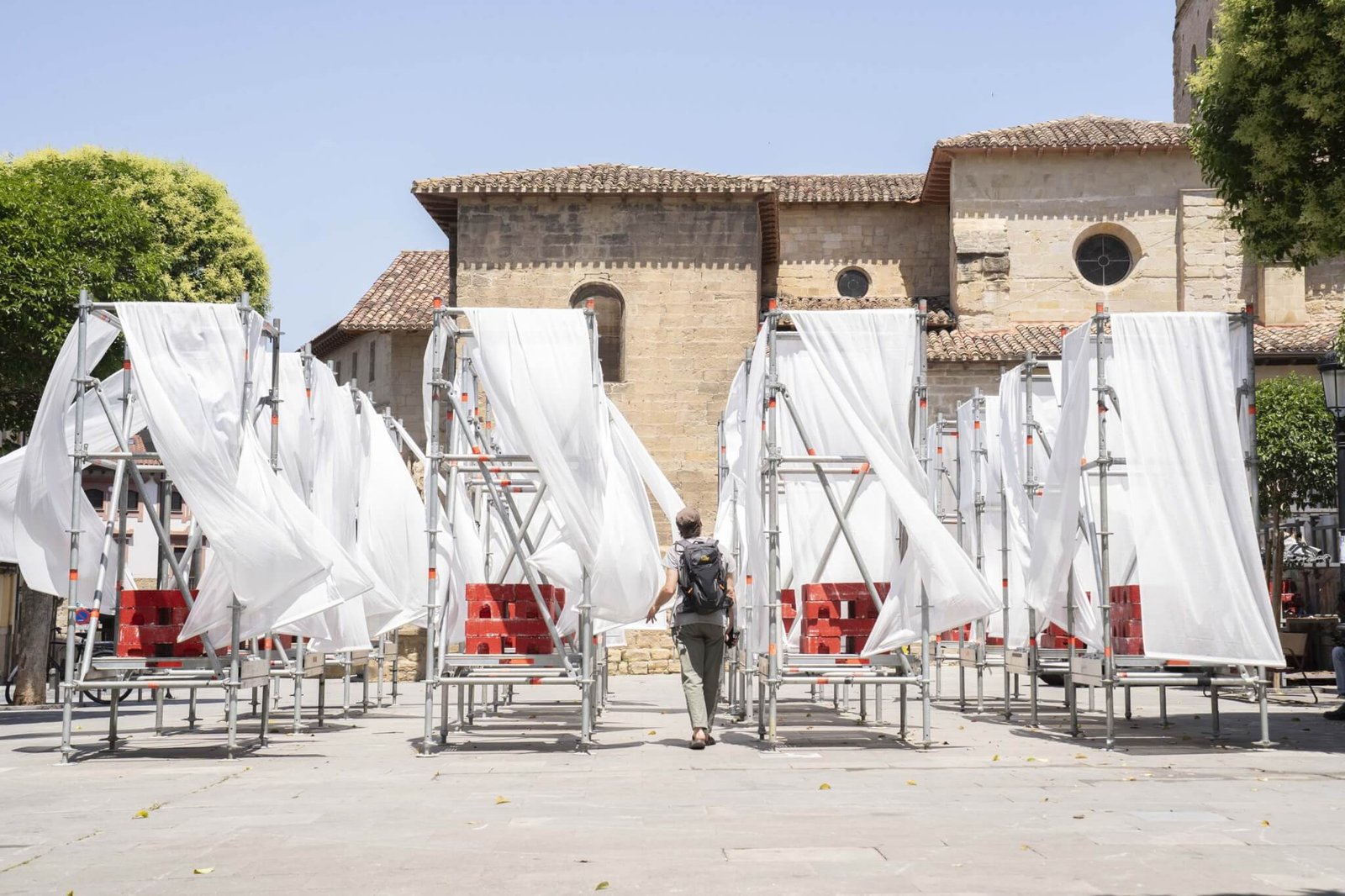
Installations exhibited as part of Concéntrico take on various forms: pavilions, tent-like structures, sheds, and gardens. These built objects are wedged between buildings, they occupy narrow alleyways in the historic Spanish city, rest atop bridges, and are staged in plazas.
Beyond aesthetics, each activation responds to urban environmental needs: some were designed as respite from the sun, others carved out places to play or relax, while some support community health. Many of the interventions took an experimental or participatory approach. Below are a few that stood out. More projects can be viewed on the festival’s website.
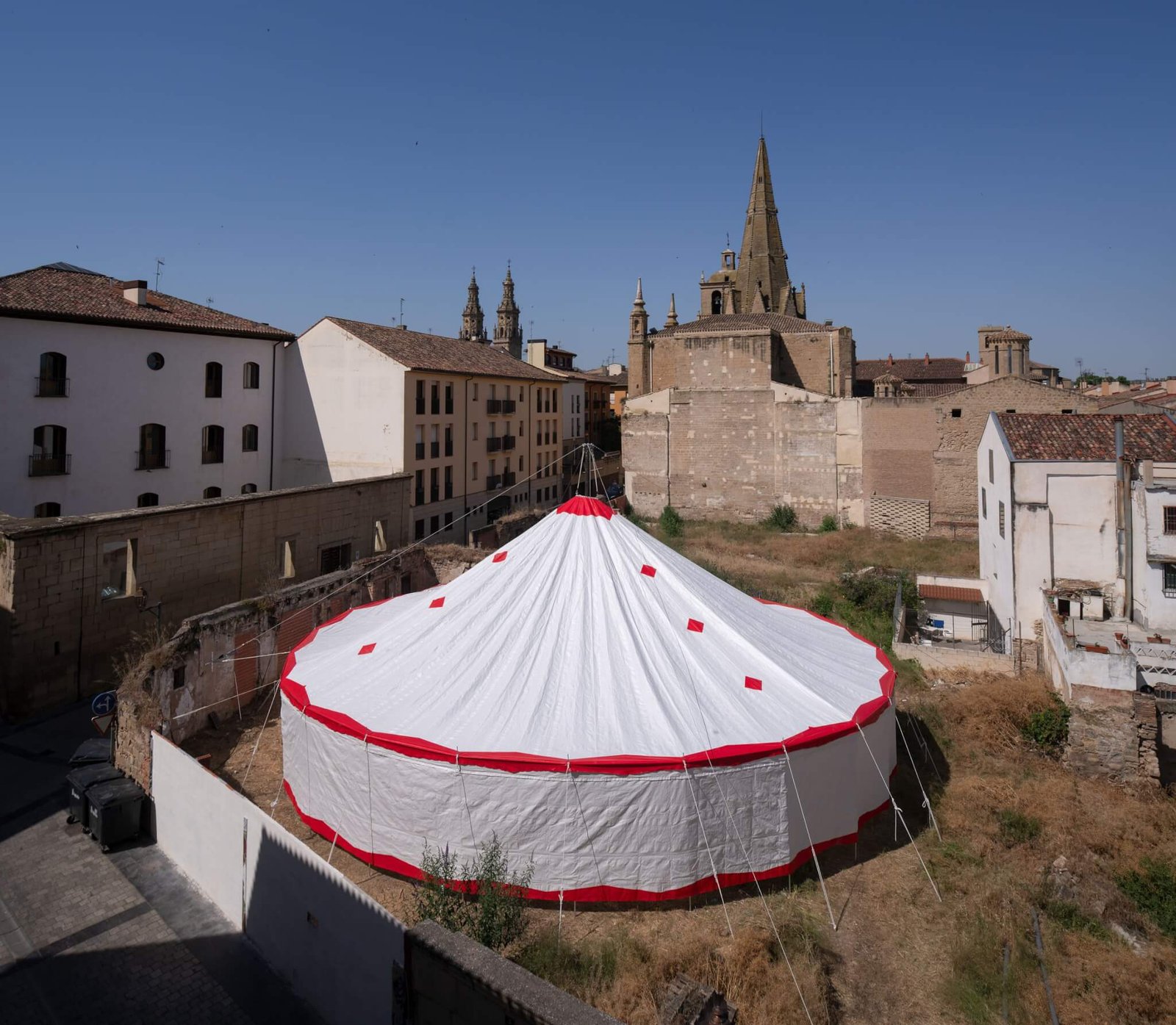
Circo by Smiljan Radić
The Pritzker Prize–winner’s projects of Radić fall in the Identity and Fiction category. Radić looked to his own country for inspiration, finding it in traveling circuses and work from the Chilean artist Eugenio Dittborn. Radić’s contribution to the festival plops a red and white circus tent, built out of plastic fabrics, inside the hollowed out remains of a masonry building.
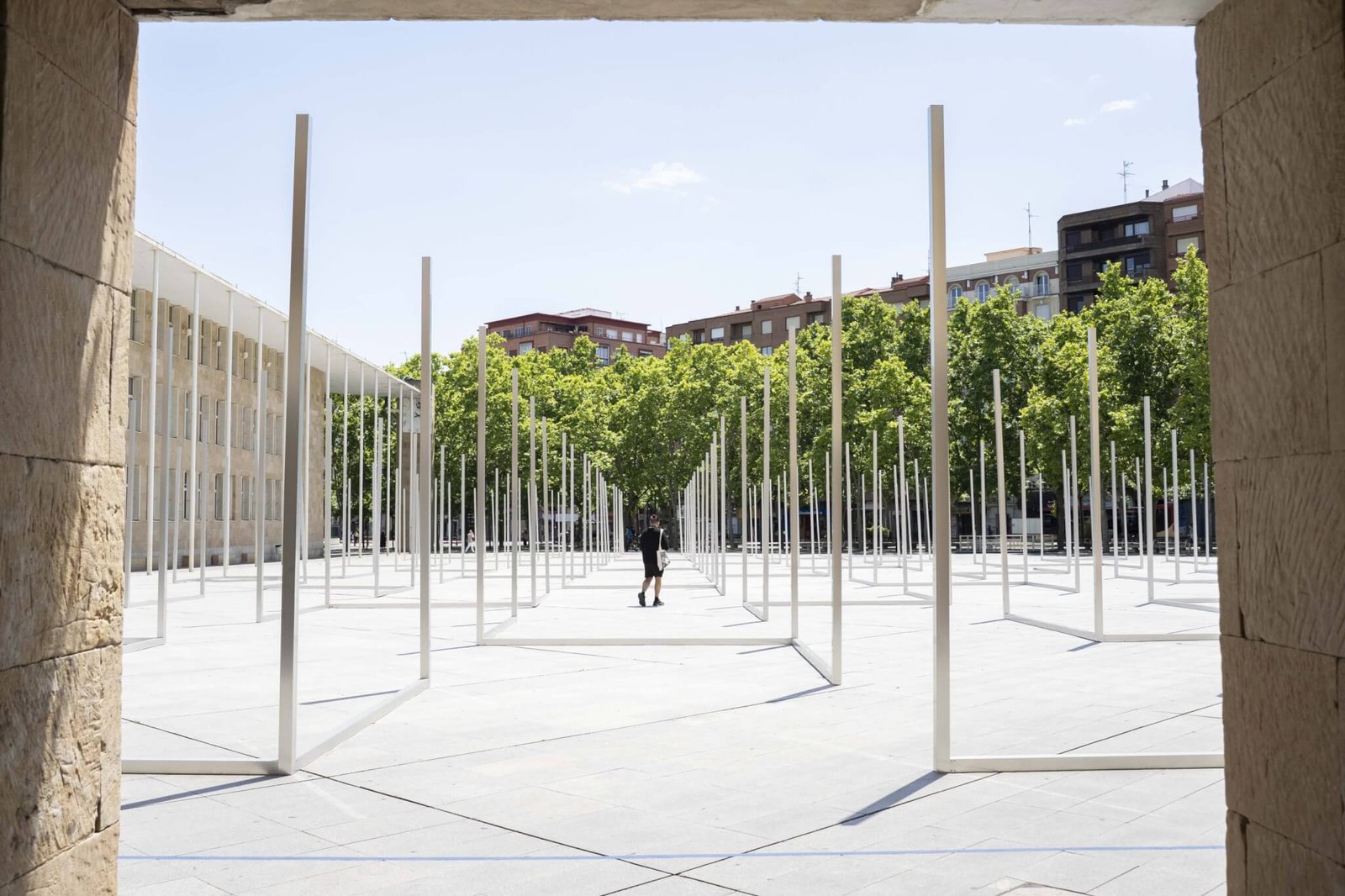
Resonancia by PPAA
Flanking Logroño’s Plaza del Ayuntamiento is a building by Rafael Moneo. Mexican firm PPAA took cues from the porticos fronting the building for its intervention, which lined up a series of thin pillars in the open plaza.
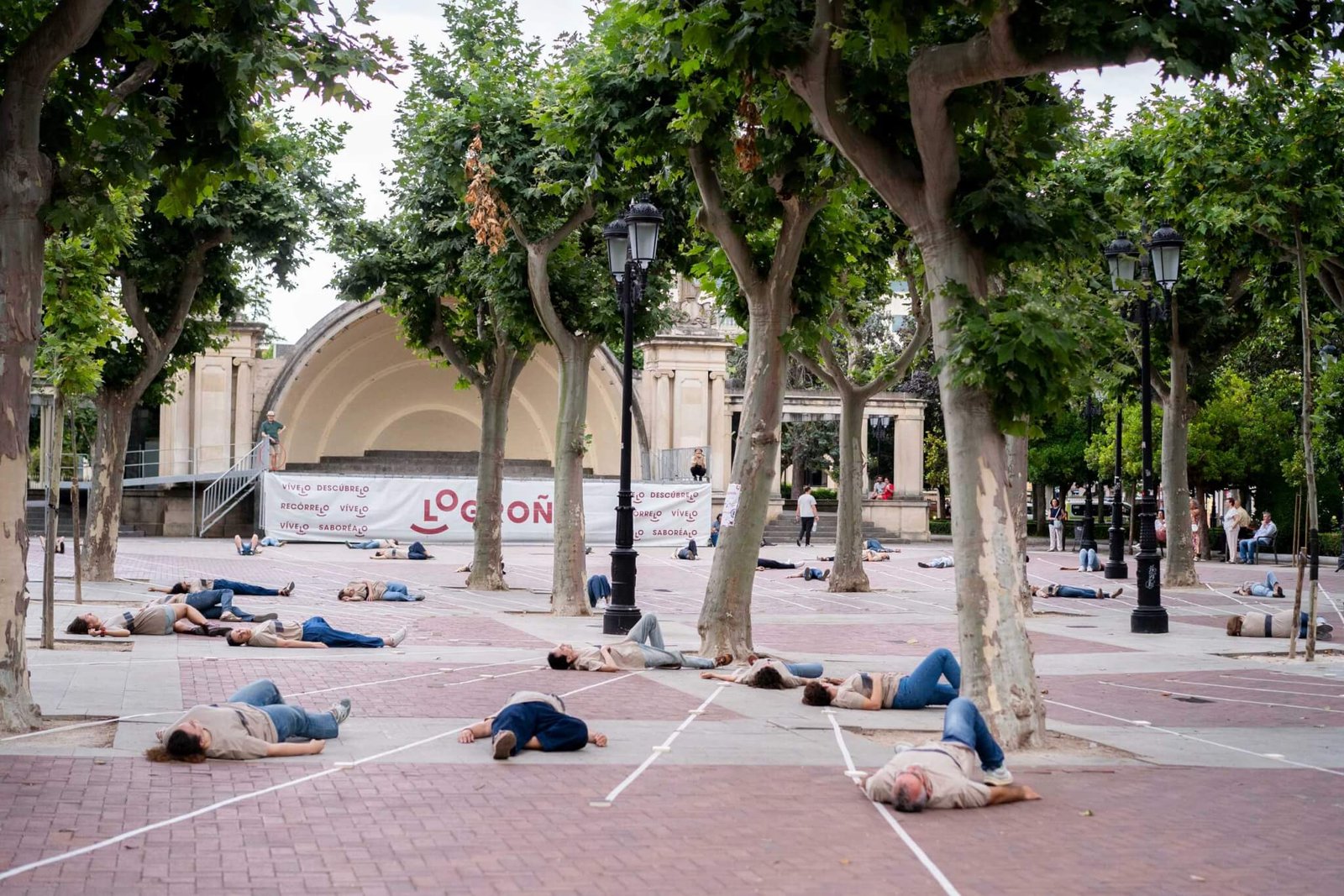
El Plano Latente by Dancing on Architecture
El Plano Latente may be one of the 2026 program’s most immersive or interactive. On the pavement of Paseo del Espolón the designers installed radial lines that were activated by 200 citizens and 12 dancers who moved together in a performance of sorts that was held on June 21.
The Library Garden by Sahra Hersi
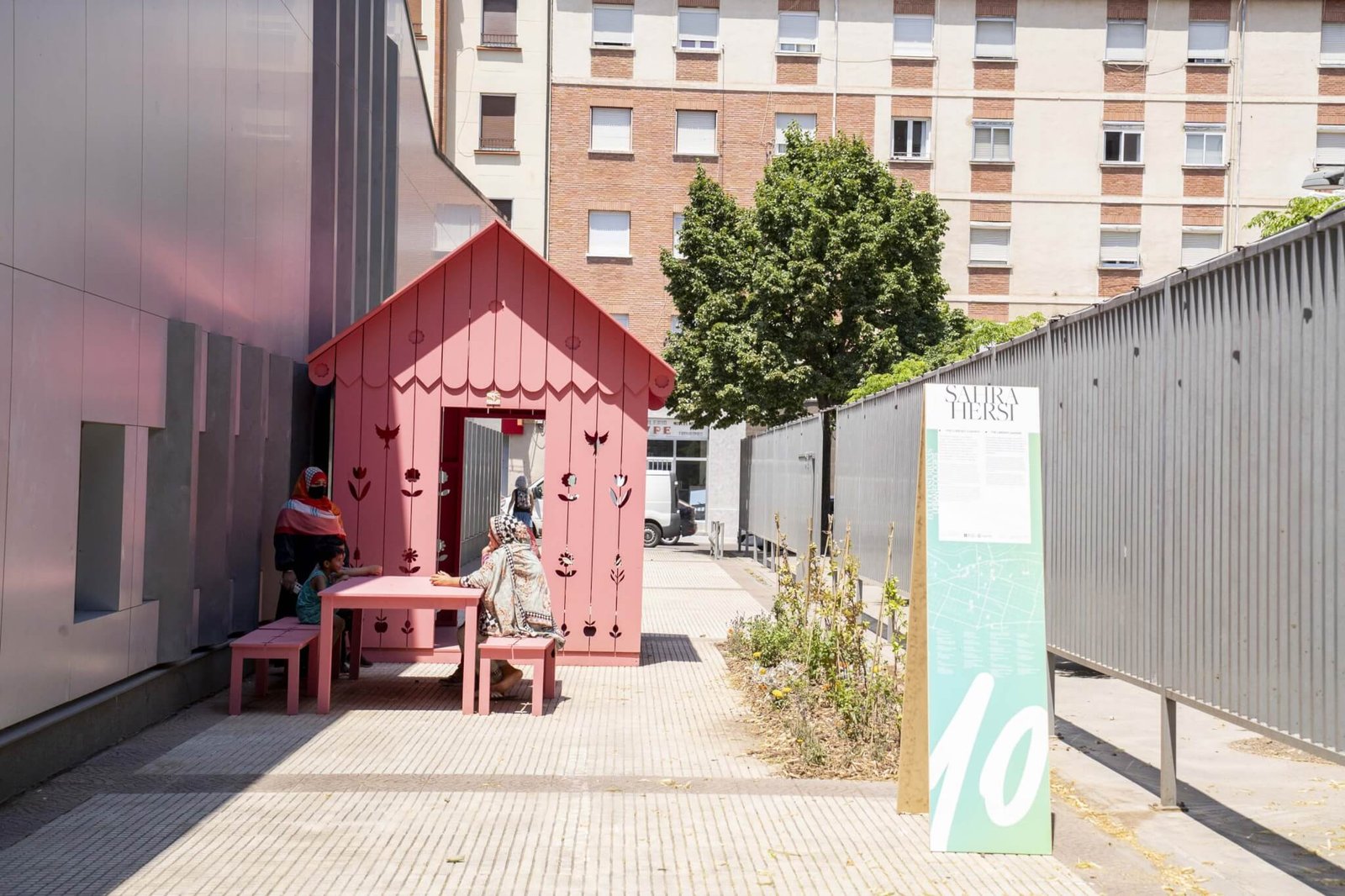
The Library Garden whole-heartedly embraces the Urban Ecologies theme by envisioning space for city-dwelling green thumbs. Adjacent to the installation’s built component is a small pink shed and garden beds planted with drought-resistant vegetation and picnic tables to support community gathering. Inside, the shed shelves are lined with pots and seeds for visitors to take home for their own gardens.
Transtation by Parabase
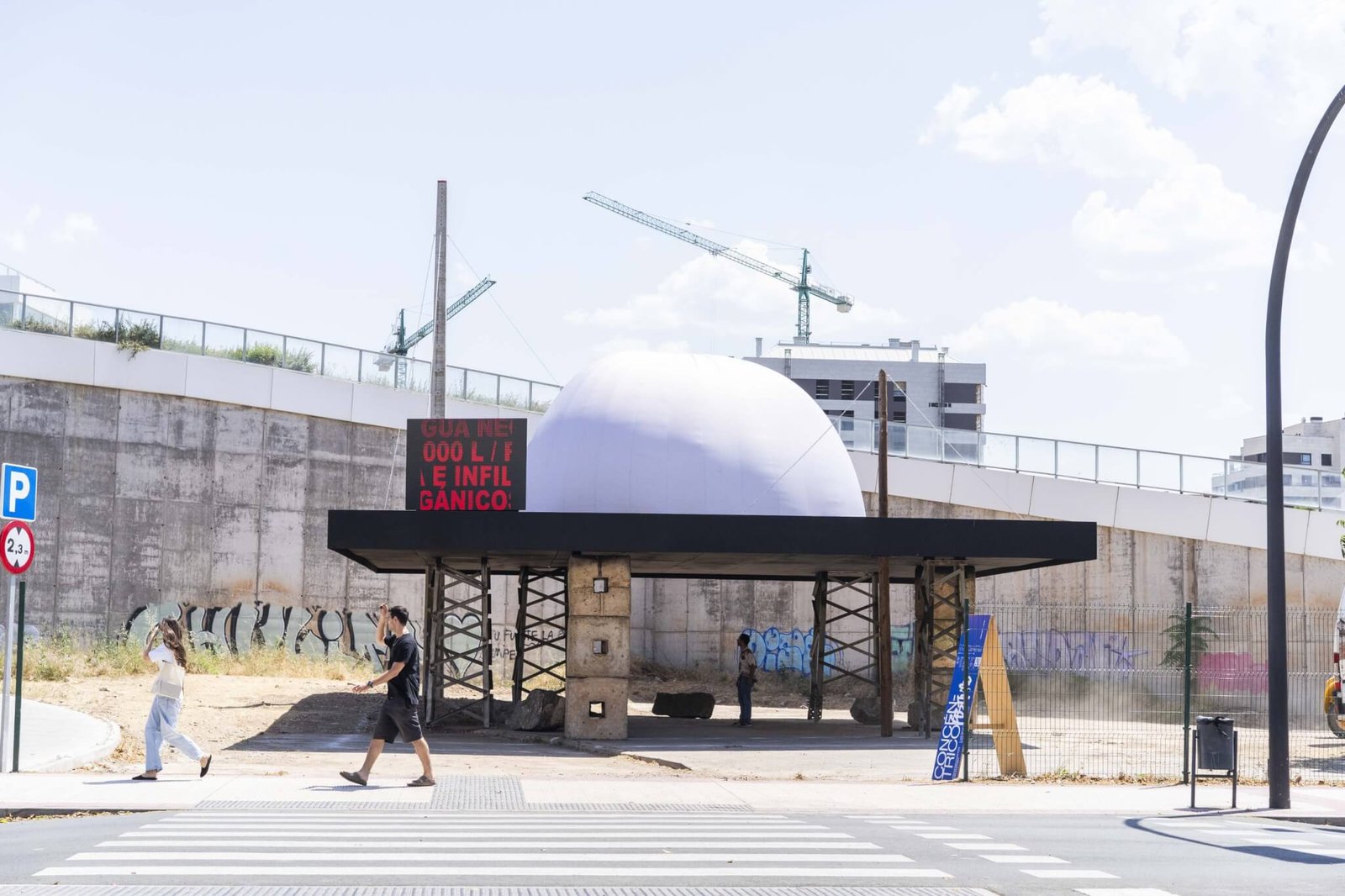
Transtation appears both foreign and synchronous, staged against the industrial backdrop of Logroño’s railway station. The pavilion supports a dialogue about transportation and energy use. The installation proposed a system to generate bio-gas that is then stored in the roof of the pavilion to be later converted into electricity.
Catedral para Uno by AAU Anastas
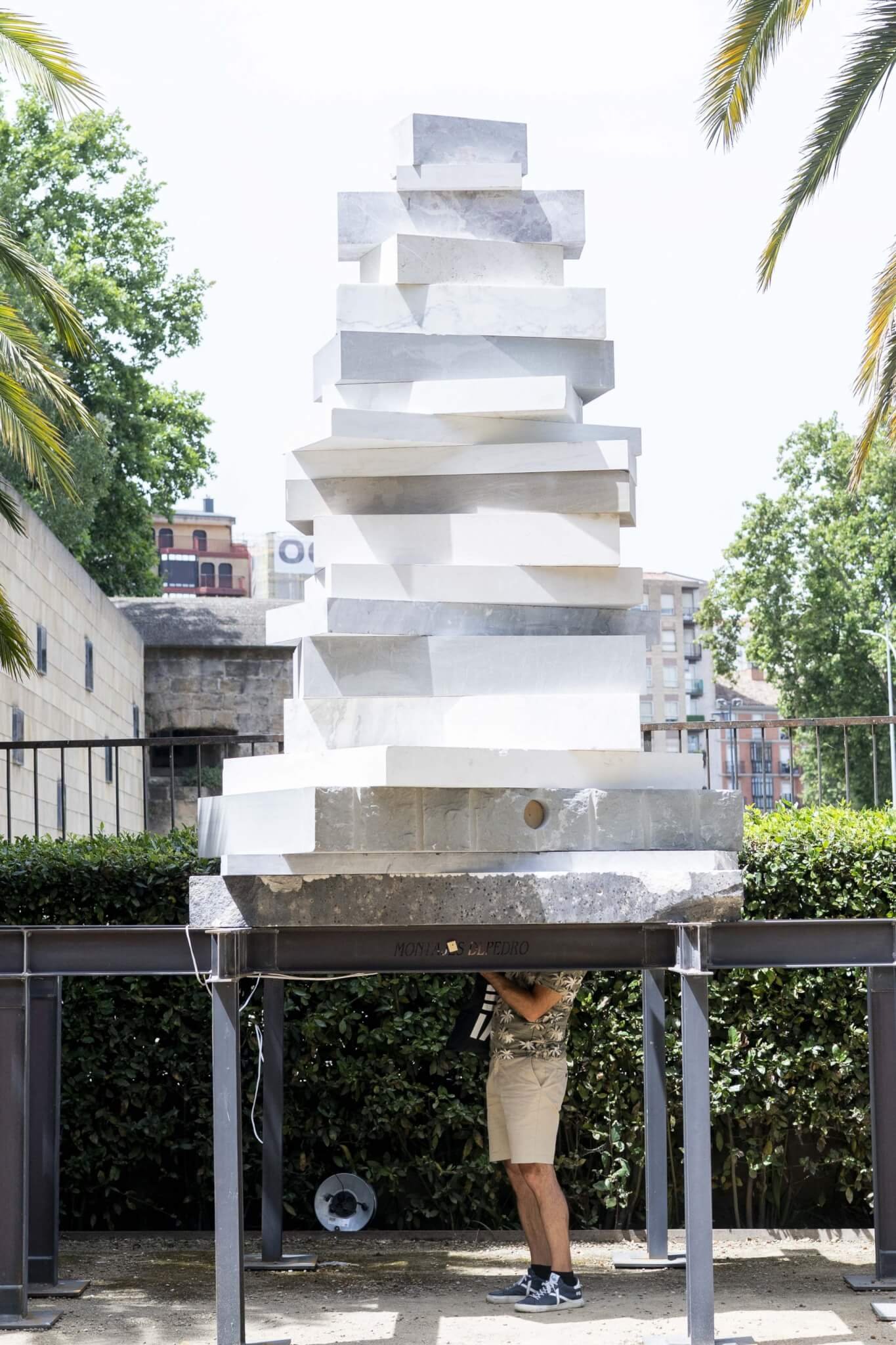
If, traditionally, ecclesiastical structures invite collective gathering, Catedral para Uno was designed for just one patron. AAU used stone slabs discarded from a factory to build the culturally rooted installation. Sound further activates the building; two services, with their own soundtrack program, take place each morning and evening.
La escalera de la cigüeña by Future Firm
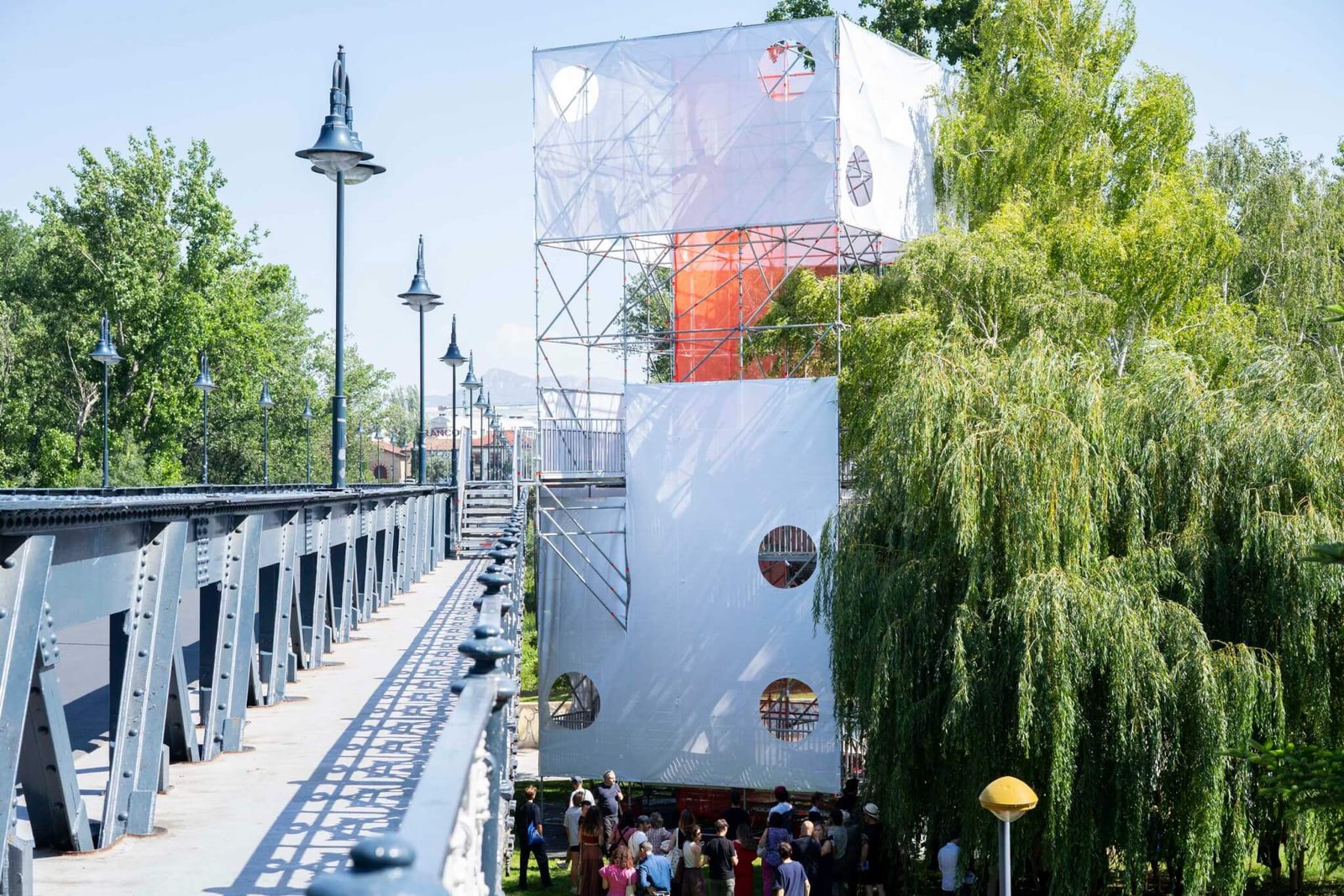
Like in so many cities, a river flows through Logroño’s center, and bridges were erected to cross it. The body of water and the infrastructure complementing it were integral to Chicago-based Future Firm’s intervention. Through architecture, the practice drew connections to the city’s leg of the Ebro River and its Iron Bridge.
Concéntrico was held from June 18–23. It was organized by the Fundación Cultural de los Arquitectos de La Rioja and Javier Peña Ibáñez, founder of the initiative, in collaboration with Logroño City Council and the Government of La Rioja.