
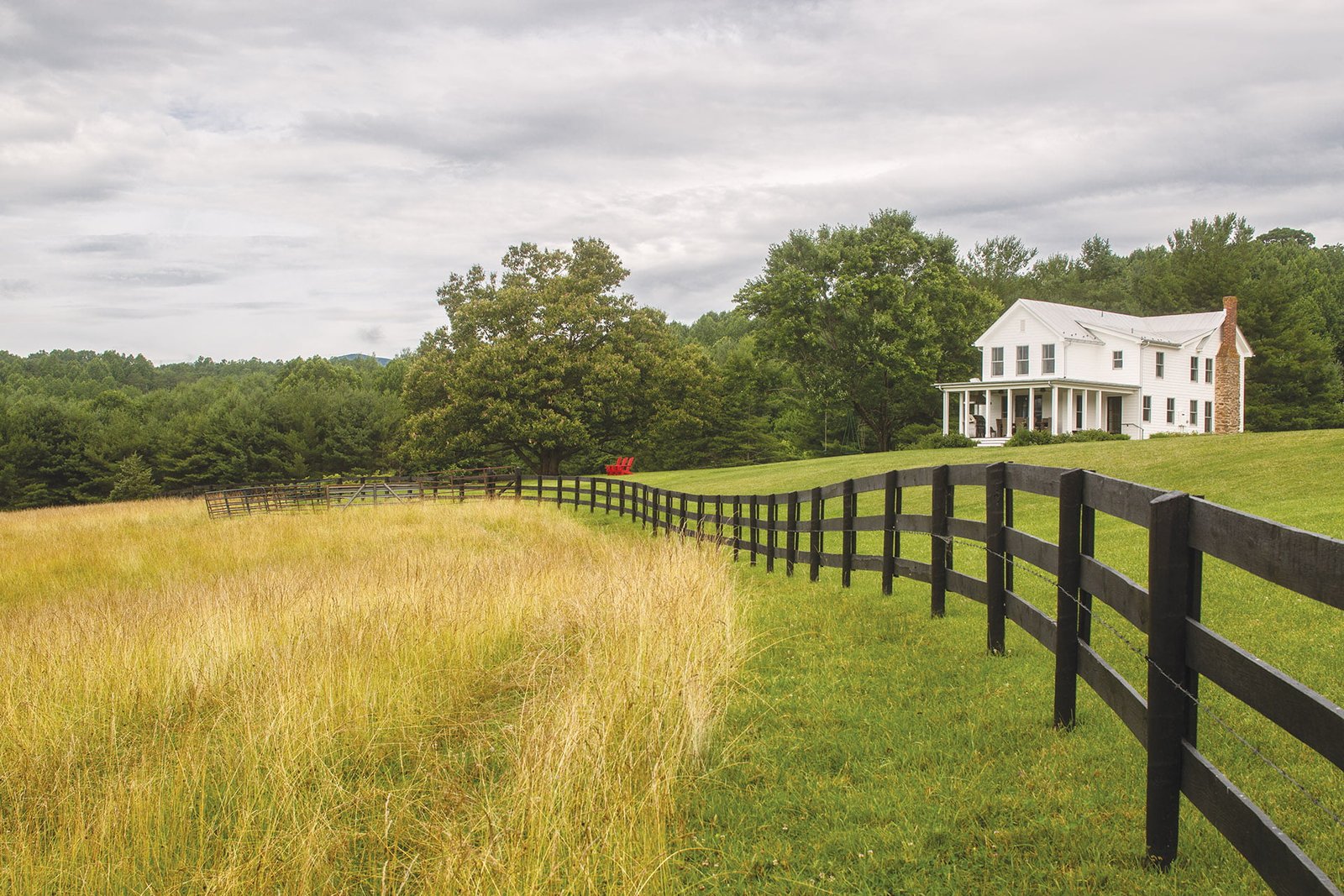

Muse | Kirwan Architects marries a vintage farmhouse with sleek, minimalist outbuildings on an expansive property near Charlottesville
In the late 1980s, an Annapolis college professor with deep Virginia roots bought 40 acres and a hilltop home outside Charlottesville. For nearly three decades, he and his wife passed summers and holidays in that 2,000-square-foot farmhouse overlooking the Blue Ridge Mountains and foothills, welcoming their adult progeny and grandchildren.
Seven years ago, the widowed academic, now 87, gave the property to his son and daughter-in-law. They sought to preserve and expand the house, creating a compound where life seemed slower and gentler and the family—and visiting friends of all ages—could gather together or spend time alone.
They enlisted Stephen Muse, principal of Muse | Kirwan Architects, and project architect Kuk-Ja Kim—who both designed a starkly contemporized addition behind the couple’s Tudor-style Washington home—to rehab the two-story, 1890s abode and conceive several modernist outbuildings close by.
The architects kept the farmhouse remodel simple, adding 375 square feet to the existing structure. “I wanted to give them only the space they needed, nothing more,” recounts Muse. “There was already a living room addition on one side of the house. It would have been seductive to put a matching addition on the other side—but it’s a farmhouse, not a manor. It didn’t need symmetry.”
It did, however, need lots of work: foundation repair and a new roof; electrical, heating, plumbing and cooling systems; and new doors, windows, porches and paint. But first on the agenda: a three-bay garage where the family could store their possessions during the 10-month renovation. Muse and Kim also conceived a decidedly contemporary guest cottage close by, which spills out to a new pool.
Geoff Pitts of Ace Contracting in Charlottesville handled the project and recalls his “disgruntled” workers rooting for a farmhouse teardown so they wouldn’t have to contend with the deteriorating stone foundation, mud-floored cellar and tight crawl spaces. By project’s end, however, the Ace team proudly marveled at what they’d created. “The project was ideal,” Pitts says, “because we got to bring an ancient house back to life while also building a contemporary garage and guest cottage.”
Indeed, there was plenty to preserve. Original pine floors and stairs were refinished. The library to the left of the entrance, a favorite of the professor, got new custom cabinetry and bookshelves. The wood-burning fireplaces in both rooms were refurbished.
The biggest changes were to the rear of the house. A wall at the far end of the dining room was replaced by pocket doors that open the view from the front entry to the back porch and beyond. The kitchen was extended by 10 feet in the rear. The right wall bump-out, measuring 12 feet long and 30 inches wide, houses new cabinets below the stovetop, sink and dishwasher and ceiling-height windows above. A seating and storage island anchors the room, while the new L-shaped porch provides another alluring gathering space. Directly over the kitchen, the larger, updated primary suite features added windows and a sleek new bathroom. The kids, now teenagers, sleep down the hall in a pair of reconfigured en-suite bedrooms.
Interior designer Kim Caplan says her longtime clients, both lawyers, had a clear mandate: It’s a country home, and they wanted it to be relaxed. “I tried to incorporate the antiques they agreed on without making the house a museum,” she notes. The family room, a stone-floored addition dating back decades, was furnished for comfort. Pale, neutral walls play up the changing light and landscape.
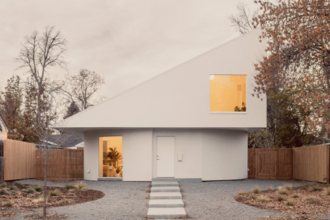
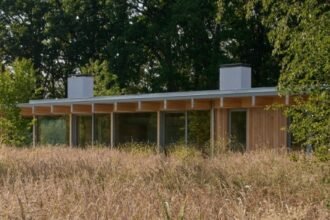
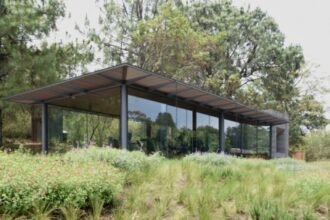
Muse and Kim took inspiration from both the farmhouse and local vernacular materials in their conception of the property’s stained-cedar outbuildings, with their gabled metal roofs and clean interior and exterior lines. The wife calls the single-story guest cottage “fabulous,” explaining that “we wanted it all on one level for mobility reasons.”
The cottage would have been too big as part of the main house, says Muse, so it became a separate, two-volume structure, “one for the bedrooms and one for the living room—with a connecting hyphen that contains the kitchenette, laundry and storage.” Reducing the building’s overall scale, he adds, gave it “a better relationship with the adjacent pool pavilion,” a diminutive third structure just steps from the minimalist pool.
The garage now boasts stairs leading to a game loft for playing ping-pong and darts. And nearly hidden down a steep slope is the latest building, finished in 2020: a tractor shed and workshop where the husband likes to tinker.
The family spent many pandemic months in Virginia, working and learning remotely as well as hiking, biking, gardening, reading and watching movies. An outdoor fireplace with a tall chimney was constructed behind the shed and quickly became a favorite hangout.
What did the family patriarch think when he first visited? “I was impressed. I thought they did a marvelous job,” he says. As for his cherished library, “It’s pretty much unchanged except for a new look.”
Or as Kim observes, “you build buildings, and you build memories.”
DRAWING BOARD
Q&A with architect Stephen Muse
How do you meld different styles in an older home?
Because few homes are tied to aspecific style, we seldom focus on that when designing renovations. After analyzing every feature of the existing home, we extend and celebrate what is good, mitigate problems and maximize site potential so it looks as if it could have always been there.
What is a common remodeling mistake?
We often see designs focusing on the project’s new architecture rather than the entire home, which can result in a product that is not fully integrated. Additions should only be considered successful if the entire house is greatly improved.
What are the advantages of a multi-structure site?
A multi-structured compound allows more possibilities. A comprehensive site plan locates and organizes the main house and all outbuildings within a series of gardens and terraces. This approach yields a smaller, more energy-efficient main house, with secondary buildings for guest rooms, artist studios and home offices.
Renovation Architecture: Stephen Muse, FAIA, principal; Kuk-Ja Kim, AIA, LEED AP, project architect, Muse | Kirwan Architects, Bethesda, Maryland. Interior Design: Kim Caplan, KC Interior Design, Sarasota, Florida. Renovation Contractor: Geoff Pitts, Ace Contracting, Charlottesville, Virginia. Landscape Design: Anna Boeschenstein, PLA, ASLA, Grounded Landscape Architecture & Design, Charlottesville, Virginia.