

As the United States prepares to mark its 250th anniversary, the Community Design Collaborative is quietly celebrating a milestone of its own: 35 years of service to Philadelphia. Standing at the intersection of these two anniversaries prompts a reflection that goes far deeper than nostalgia. Pro bono design has pumped millions into Philadelphia’s neighborhoods. Now, it’s fighting its toughest opponent yet: digital isolation. We find ourselves wrestling with a fundamental question that will shape the future of our city and the entire field of public-interest design: How do we sustain a model built entirely on civic engagement at a moment when the fabric of civic life is fraying?
Across the country, the infrastructure of community design is vast, encompassing over 60 design centers and nearly 200 collaborative partners. In Philadelphia, the impact remains tangible. This past year alone, more than 70 volunteer architects, planners, landscape architects, engineers, interior designers, and cost estimators donated their expertise to help local nonprofits advance projects that strengthen our neighborhoods. According to Community Design Collaborative, that represents over hundreds of thousands of pro bono service hours injected directly into community-led initiatives. Over three and a half decades, thousands of design professionals have stepped up to help grassroots organizations transform abstract ideas into physical spaces that serve the public good.
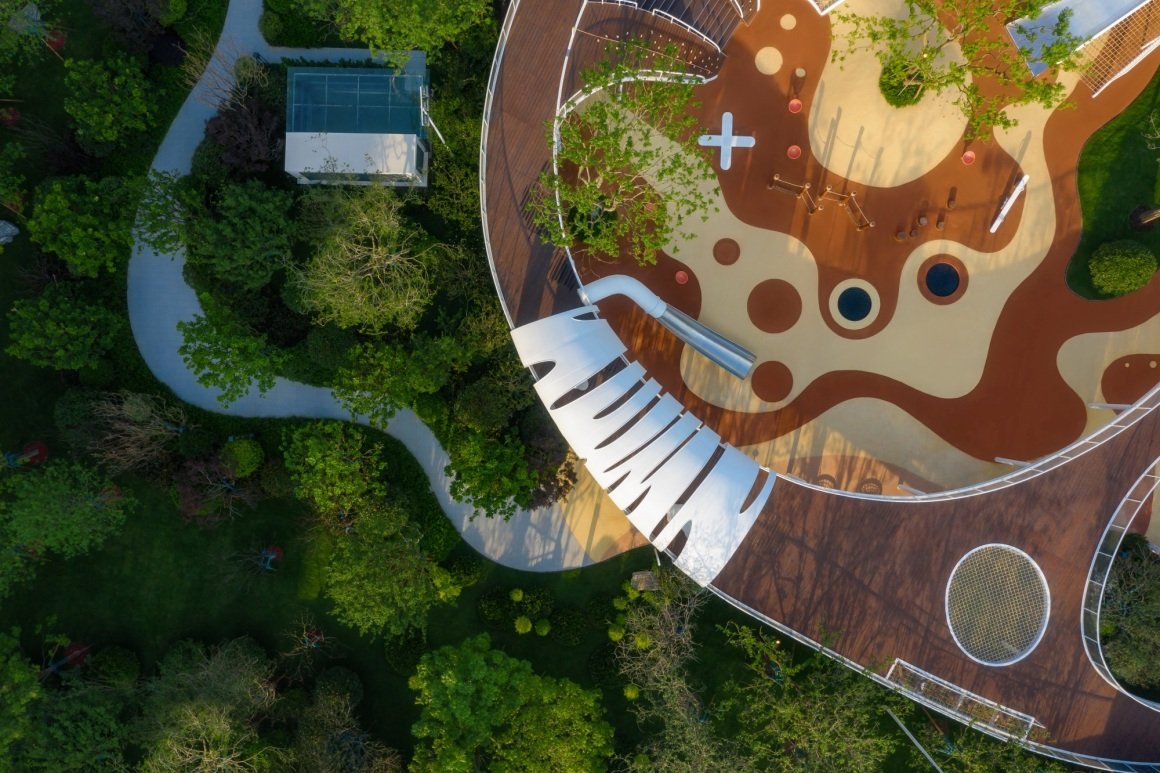
The proof of this investment is woven into the geography of Philadelphia. These volunteer hours have materialized as schools, parks, community centers, affordable housing developments, and vital neighborhood anchors. Their success demonstrates an enduring truth: Design is a powerful lever for community change, but only when people are willing to invest their time, expertise, and energy in one another.
Today, that investment is becoming harder to sustain. It is no secret that confidence in civic institutions has weakened, public participation has become more fragmented, and community engagement often feels uphill. For organizations like ours, whose entire methodology depends on bringing people into the same room, these trends are impossible to ignore.
The challenge isn’t a lack of compassion; it is that our relationship with work, time, and community has fundamentally shifted. While organizational volunteer rates have largely recovered from their post-pandemic decline with over 28 percent of Americans contributing time to organizations according to the Census Bureau and AmeriCorps civic engagement survey, the hours individuals volunteer remains low. With nearly a quarter of the population working remotely, the physical ties to our shared spaces have loosened. For the first time, the federal survey registered virtual volunteer hours, revealing that 18 percent volunteer online.
Previous generations viewed volunteer service as a civic responsibility and a primary pathway to leadership. Serving on a nonprofit board or a neighborhood committee was where you learned to manage budgets, navigate politics, and lead complex projects long before those responsibilities appeared on a resume.
Today’s younger professionals face a different reality. Rising costs of living, historic student debt, and the complete blurring of work and personal life leave very little margin for long-term volunteer commitments. People still care deeply about their communities; they simply have less time to give. Consequently, organizations can no longer assume that people will automatically show up. Participation now requires greater flexibility, stronger incentives, and a crystal-clear demonstration of impact.
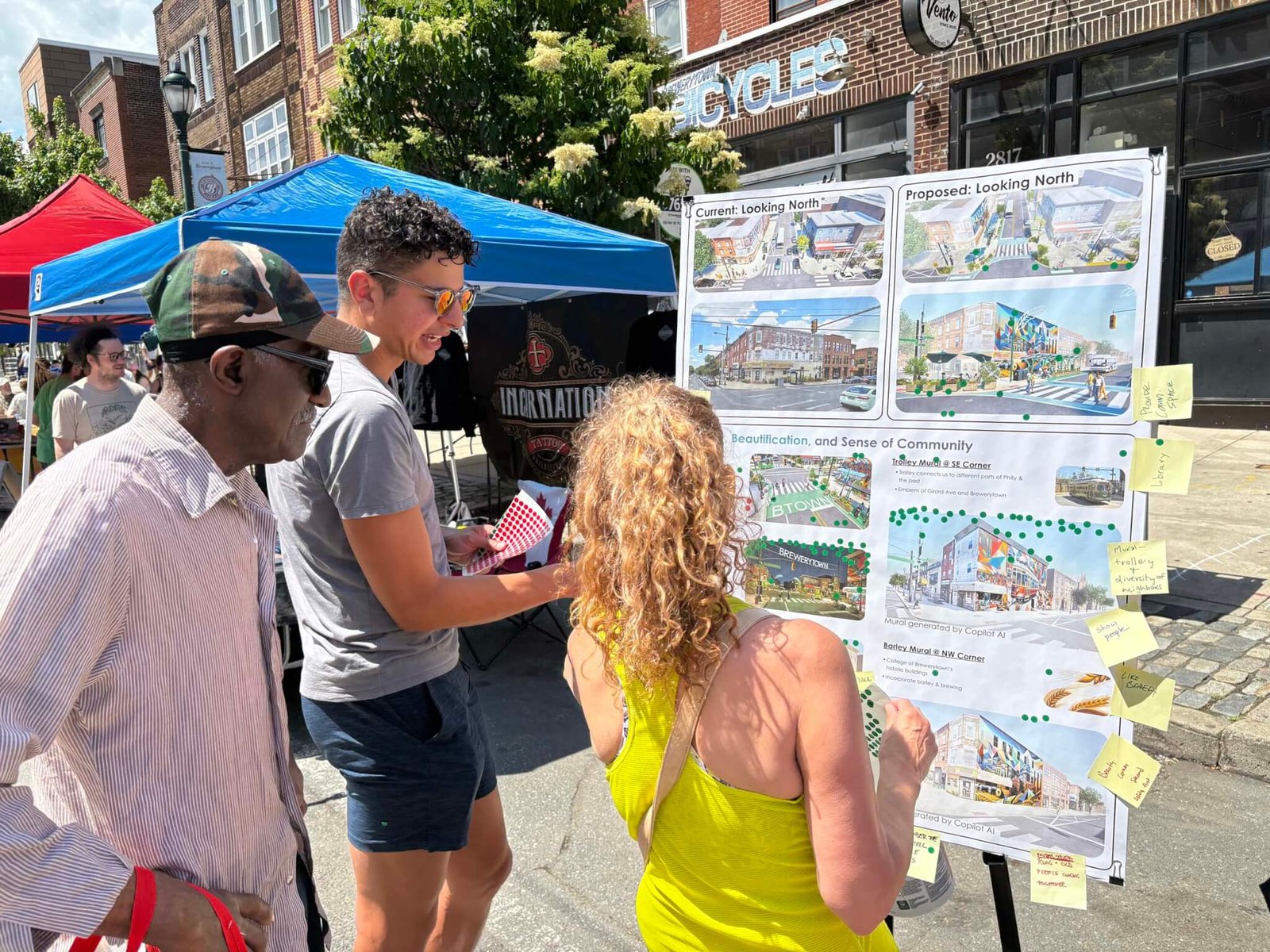
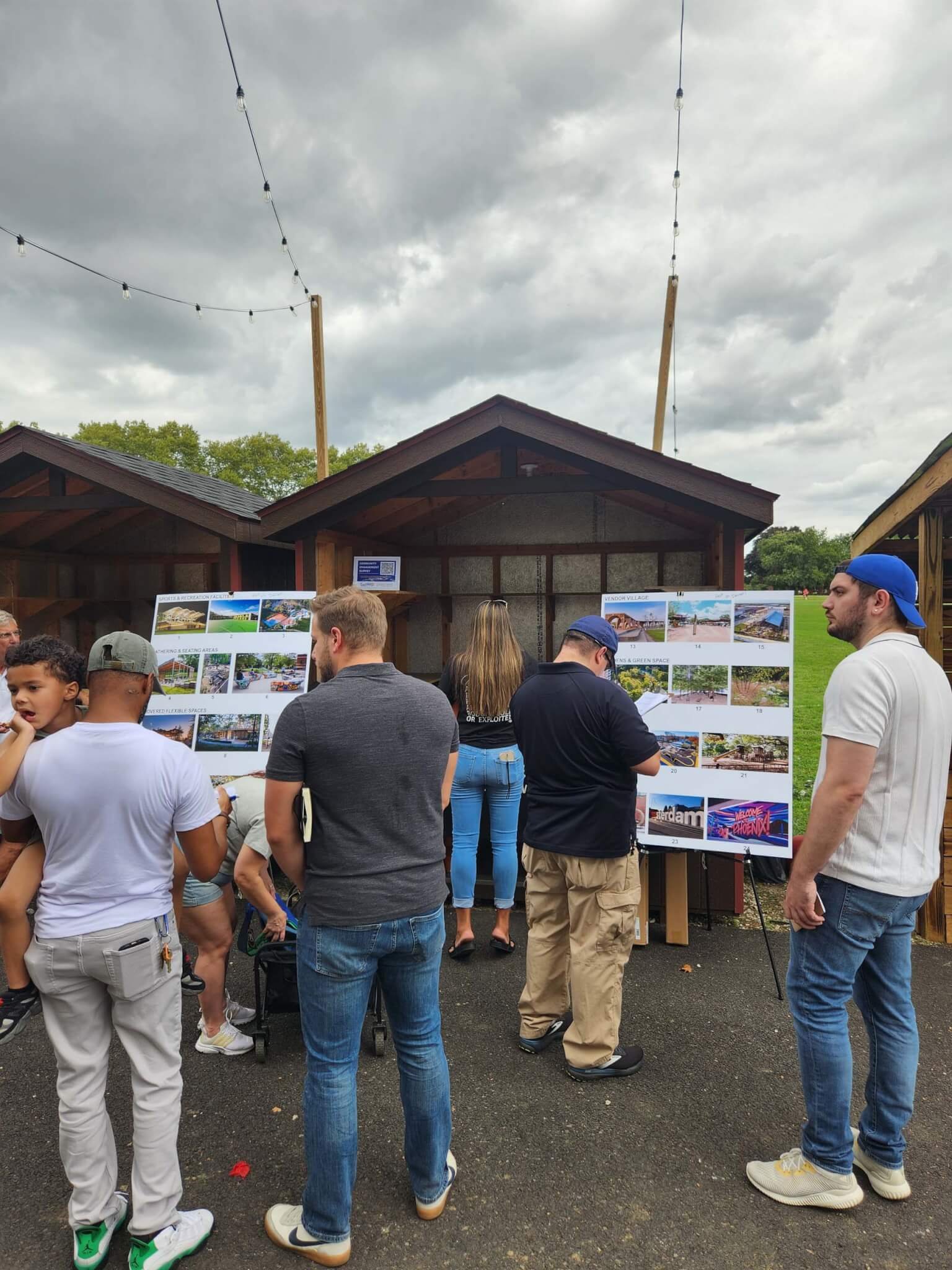
This shift creates a profound friction for community design. Our work is inherently visceral and localized. It depends on face-to-face interaction. Success is marked by the numbers gathering in church halls, recreation centers, neighborhood libraries, and school cafeterias to share their insight. It relies on the slow, unglamorous and often underfunded conversations that build trust, surface unaddressed concerns, and ensure residents are the true authors of their neighborhood’s future.
Yet, in an era dominated by social feeds, remote work, and digital convenience, convincing people to participate in person is one of our greatest operational hurdles. On average, our typical project now gathers 75 people for in-person workshops, while attracting 30 community members and volunteers to our online conversations. The numbers were approximately 30 percent higher prior.
The Internet popularized a phrase for escaping digital isolation: “touch grass.” It is a call to step away from the screen and reconnect with physical reality. For community design, touching grass isn’t a metaphor. It is the work itself.
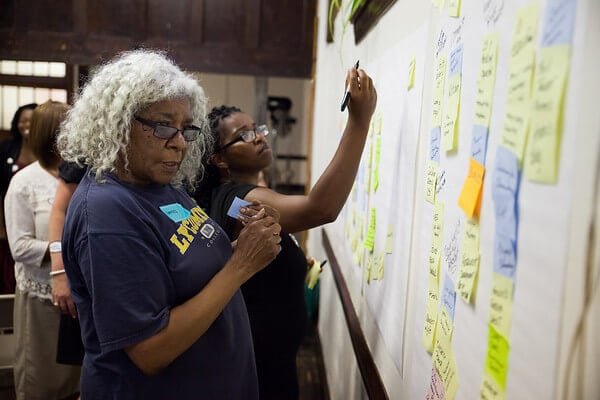
This challenge is especially acute in under-resourced and immigrant communities, where language barriers, financial strain, and systemic fears can discourage public participation. Culturally responsive engagement and professional translation services are costly and deeply underfunded. Building trust takes time, and meaningful engagement requires resources that many community organizations simply do not possess. These realities inevitably extend project timelines, complicating the urgent work of keeping community voices at the center of civic development. These are problems that cannot be solved with post-its, or can they? It reminds us daily that our model relies on the physical act of being present.
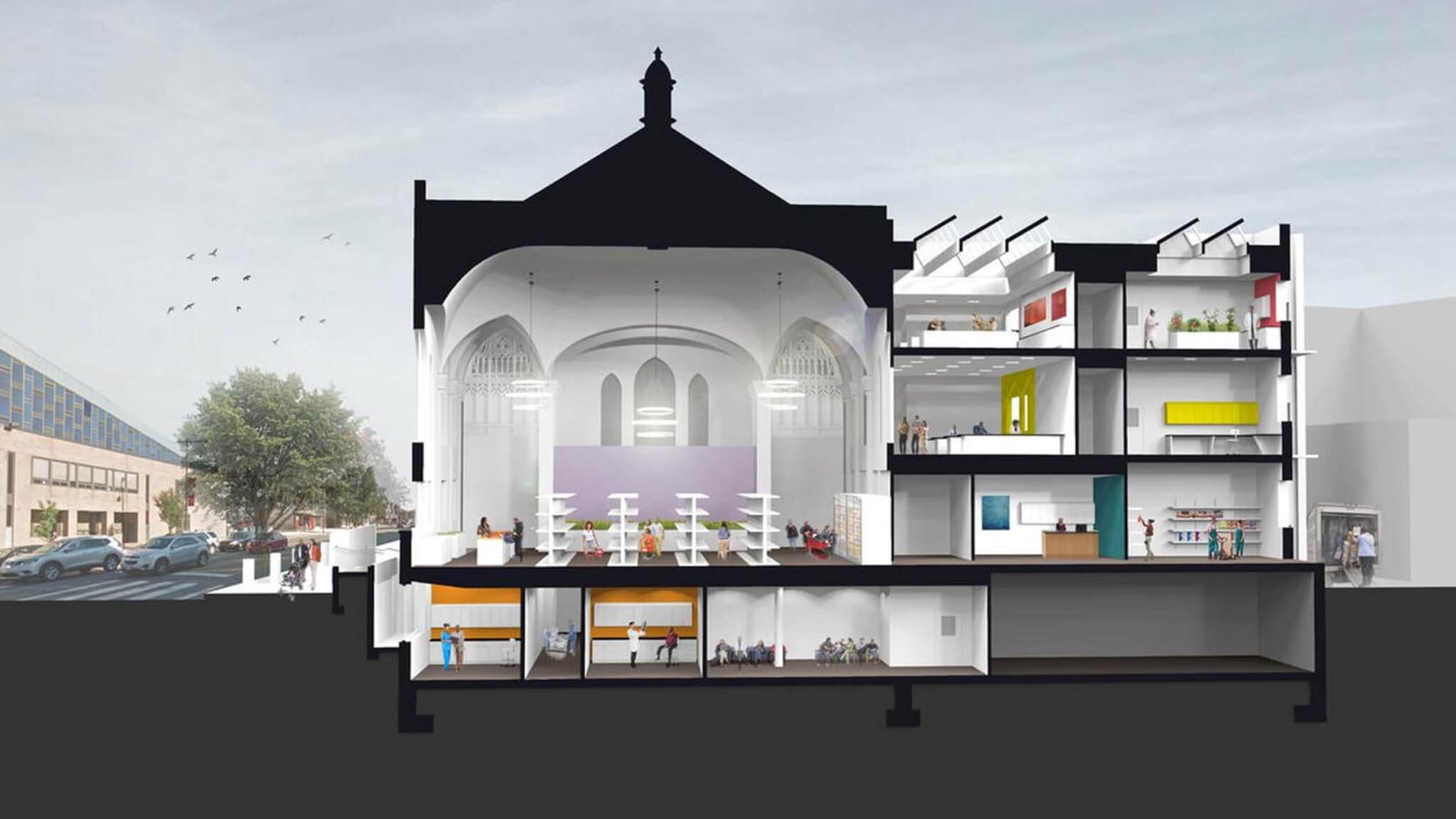
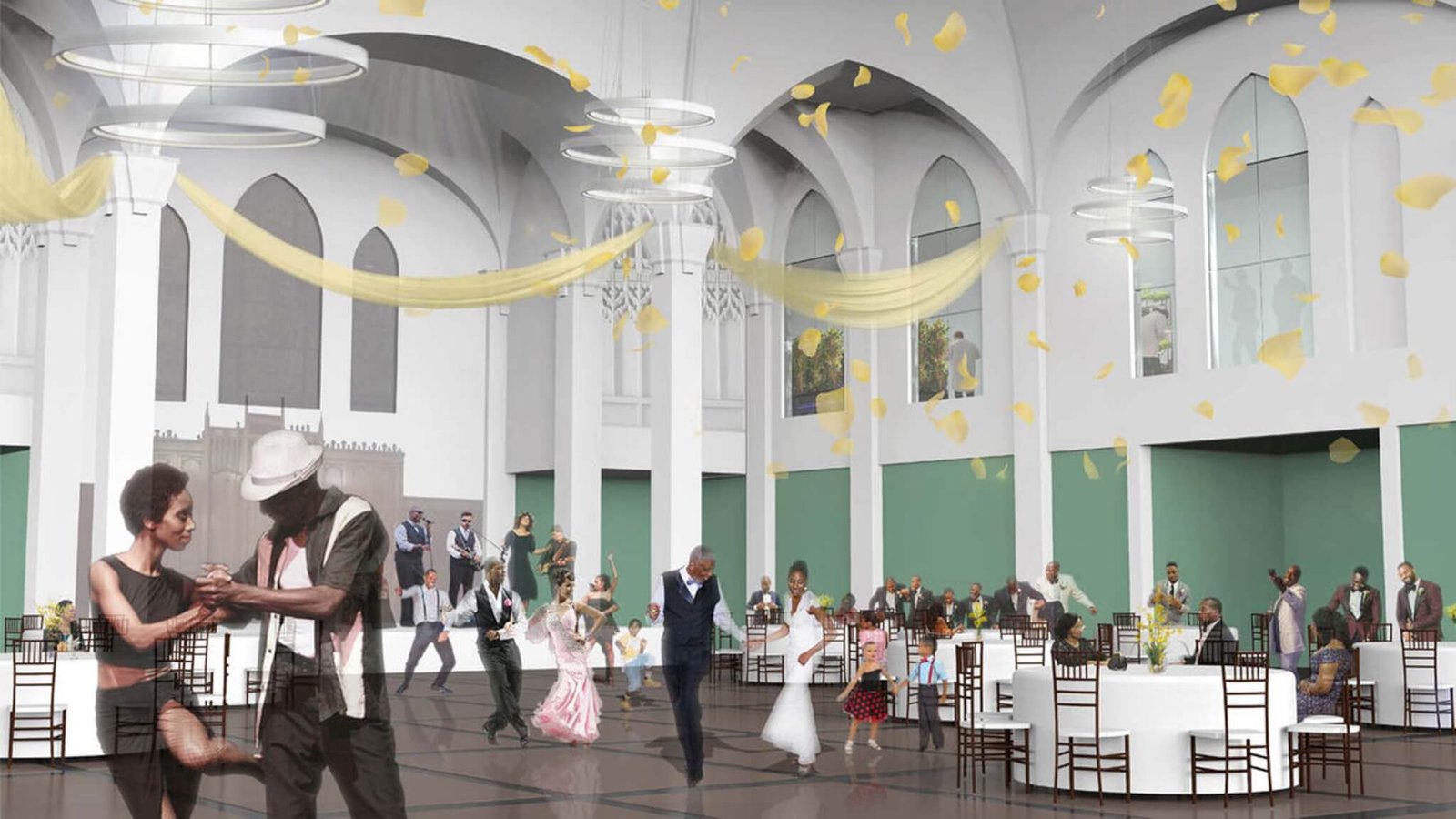
A recent project in North Philadelphia, led by Community Design Collaborative, perfectly illustrates both the immense promise and the inherent complexity of this approach. In early 2025, Zion Baptist Church broke ground on the Rev. Leon H. Sullivan Community Impact Center—an $18 million transformation of its historic annex into a modern hub for community wellbeing.
This achievement was years in the making. It required exhaustive planning, deep community listening, complex fundraising, and multi-sector partnerships. More than 200 architects, planners, engineers, and designers contributed hundreds of volunteer hours to push this vision across the starting line. It succeeded because a dedicated coalition remained committed through a lengthy, grueling process. To learn more about the Zion Baptist Church project, its volunteers, and Sacred Places/Civic Spaces initiative, visit the report.
But as the community celebrates the Sullivan Center, we ask a candid question: Will the next legacy project take twice as long to realize if the consistency of volunteer expertise continues to dwindle?
The broader ecosystem of public-interest design is evolving to meet this moment. We are seeing the rise of “citizen architects” serving on civic commissions, emerging design firms building entire practices around mission-driven clients, and universities expanding their community design-build studios. This energy is vital.
Yet, communities still need trusted, independent intermediaries. Neighborhoods need an entity that can connect grassroots nonprofits with high-level professional talent, steward projects through years of conceptualization, and translate community aspirations into implementable, fundable realities. That has been the role of community design centers for decades; it cannot be automated or outsourced. Technology will continue to reshape our workflows, and funding models will inevitably shift. But the future of our built environment—and the health of our democracy—ultimately depends on something far more fundamental: our willingness to participate in civic life.
Every successful project begins the same way: with a group of people sitting around a table, listening to one another, and imagining a better future together. For 35 years, the Community Design Collaborative has witnessed the extraordinary outcomes of that commitment. The challenge before us now is ensuring that the next generation still finds a way to show up.
Tya Winn is the executive director of Philadelphia’s Community Design Collaborative, a NOMA member, and board member of AIA Philadelphia and DesignPhiladelphia. As a trained architect, Winn comes to the Collaborative after serving as the Director of Project Planning & Design for Habitat for Humanity Philadelphia. Her experience also includes working for the Philadelphia Housing Authority and Logan Community Development Corporation. She brings a deep understanding of the Philadelphia design and community development landscape to the work of the Collaborative, and has a deep commitment to using design as a way to tackle social justice issues.