


OCEANIUMS
A Biomimetic Generation of Floating and Sustainable Stadiums,
San Francisco 2022,
United States of America
THEME : 2026 FIFA World Cup
LOCATION : San Francisco, U.S.A.
STATUS : Research & Development
OCEANUMS, A NEW BIOMIMETIC GENERATION OF FLOATING STADIUMS
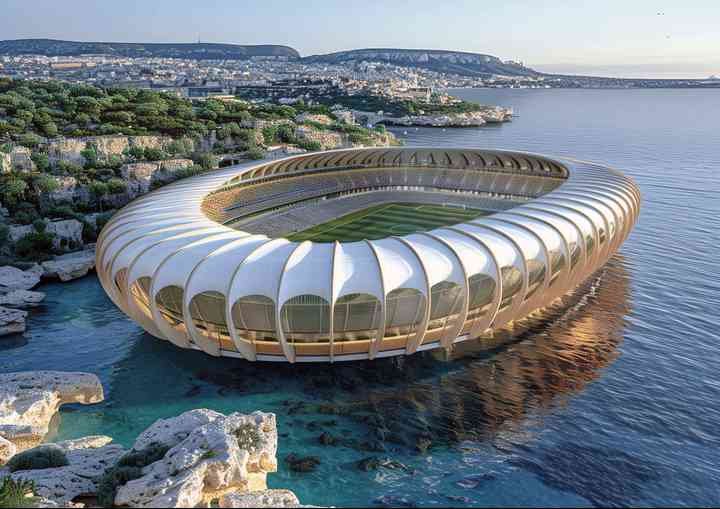
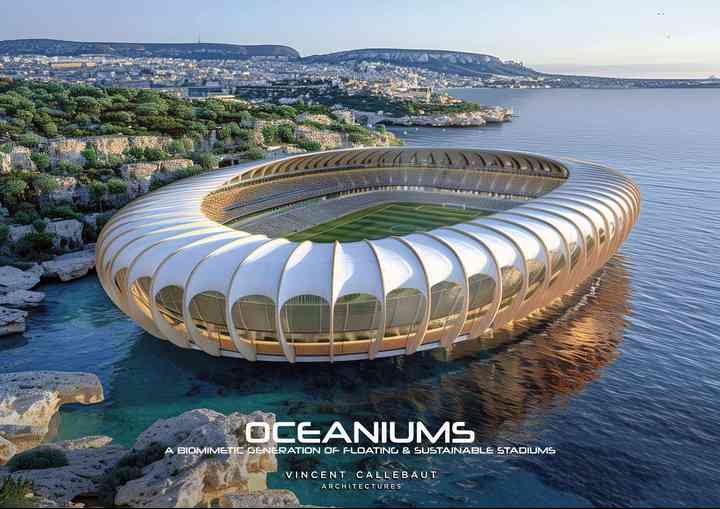
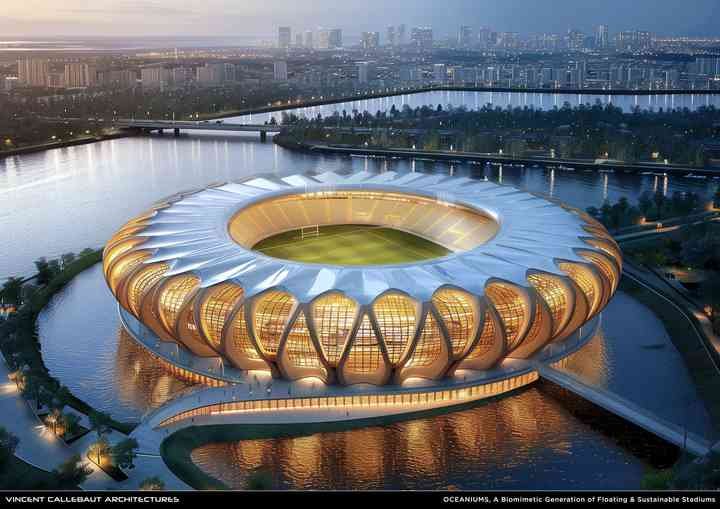
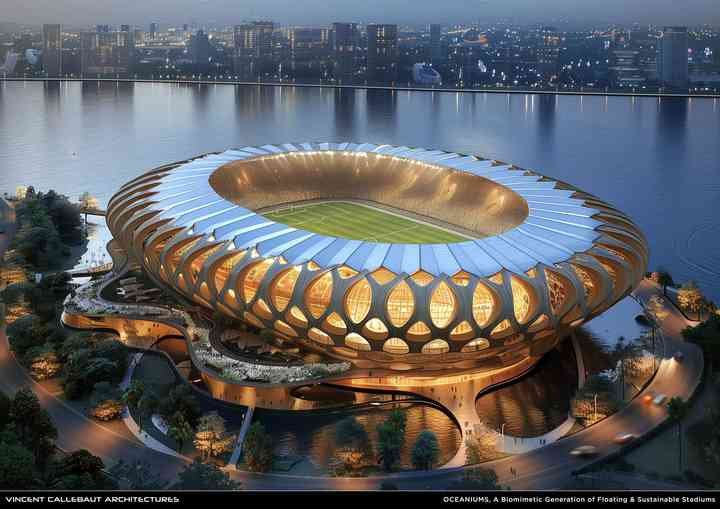
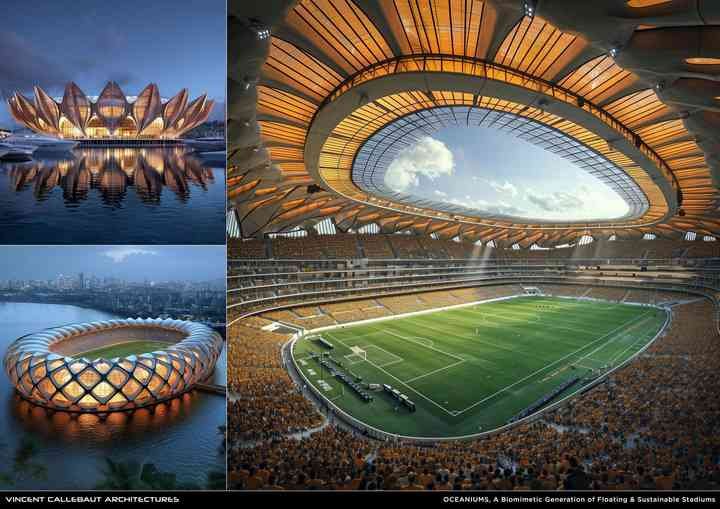
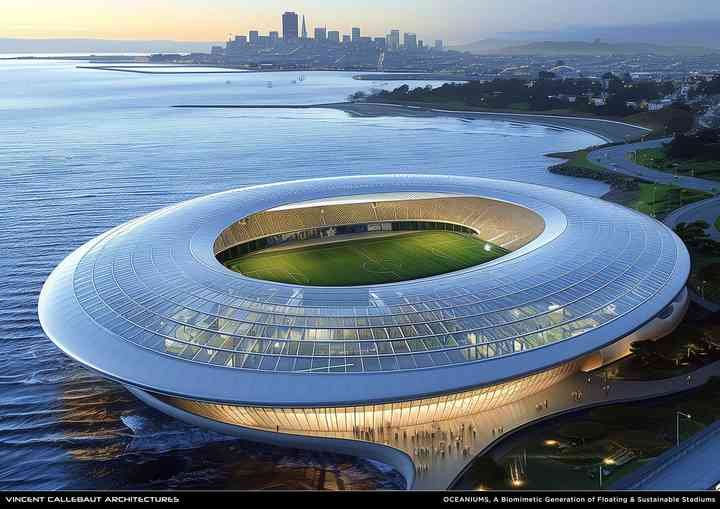
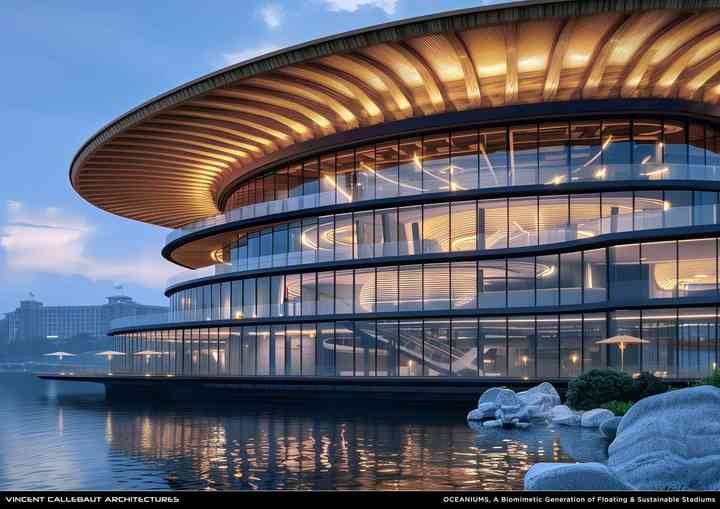
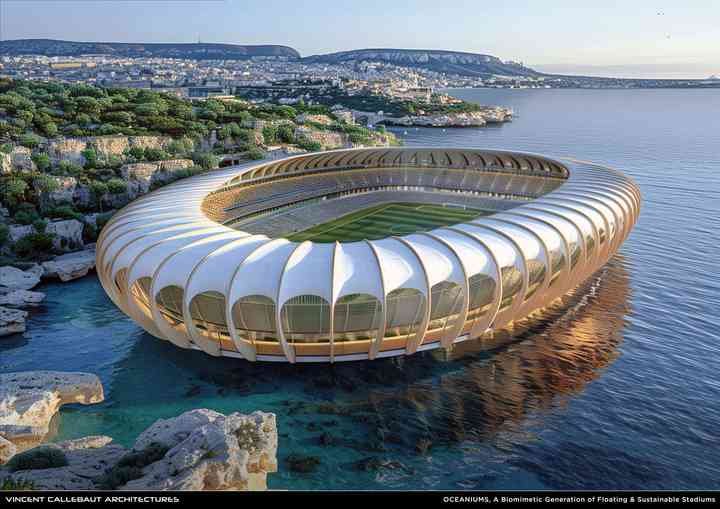
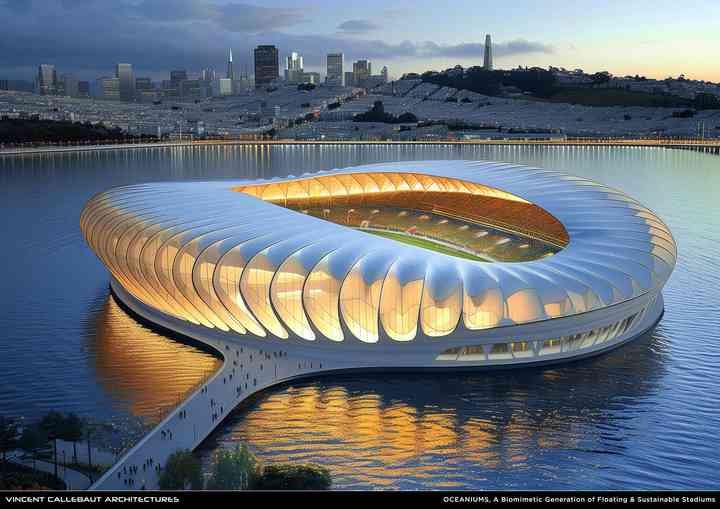
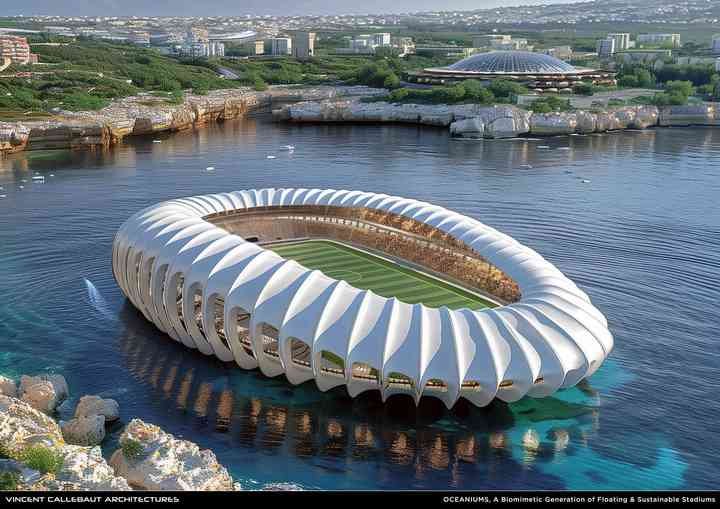
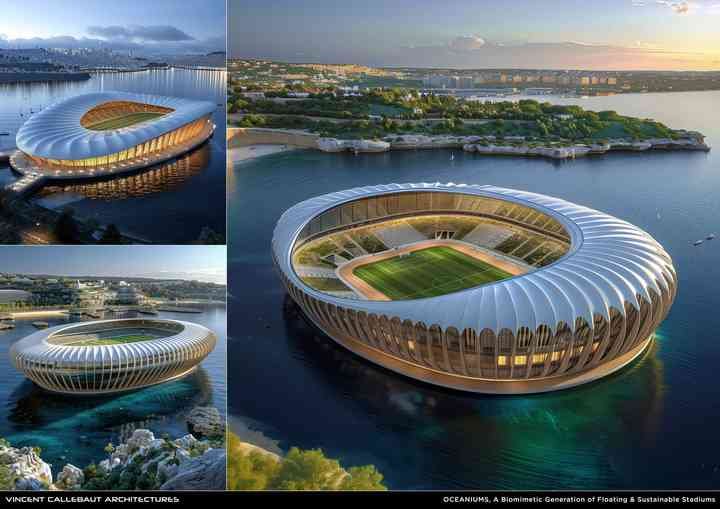
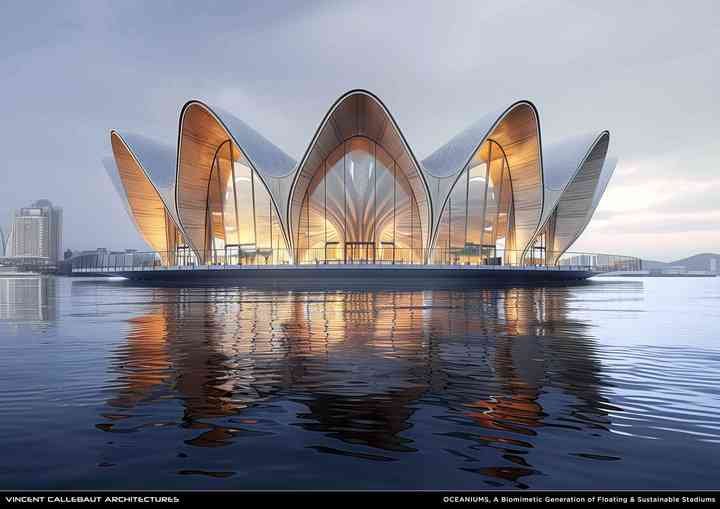
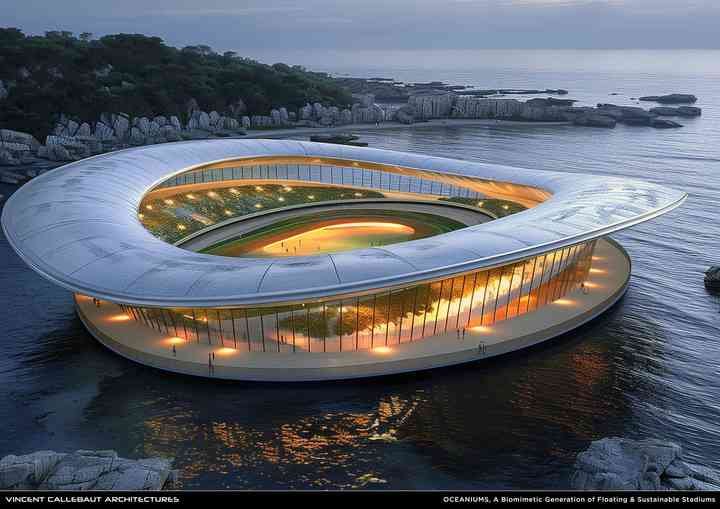
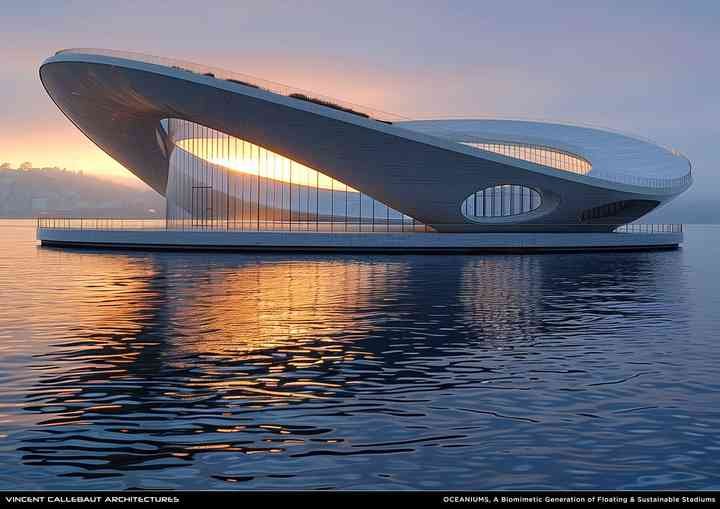
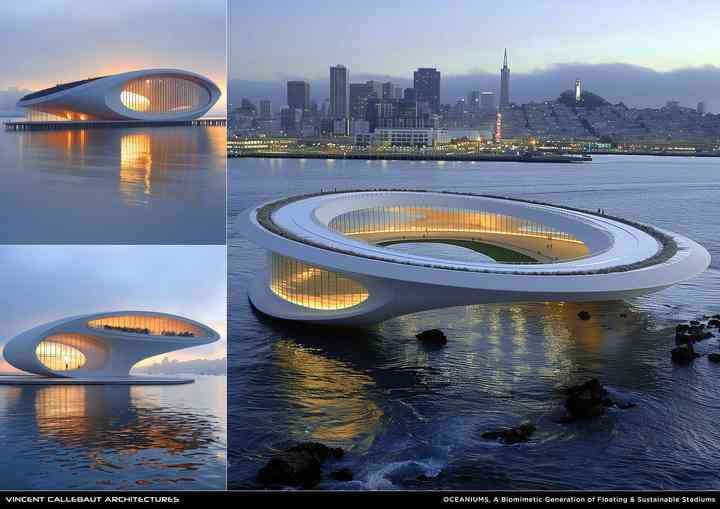
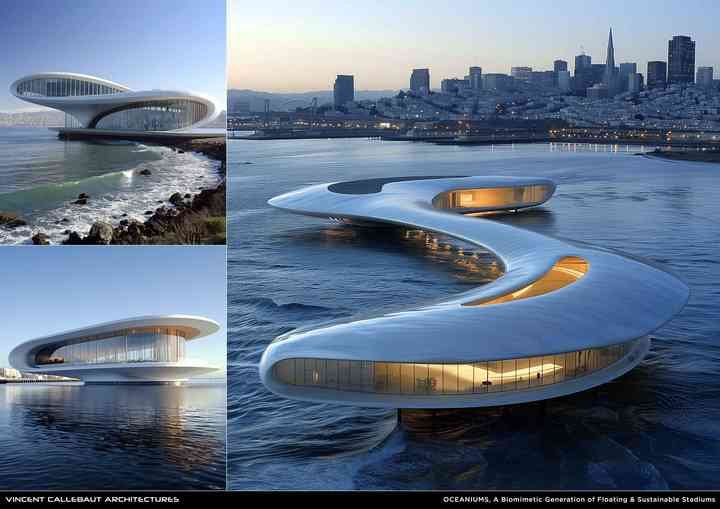
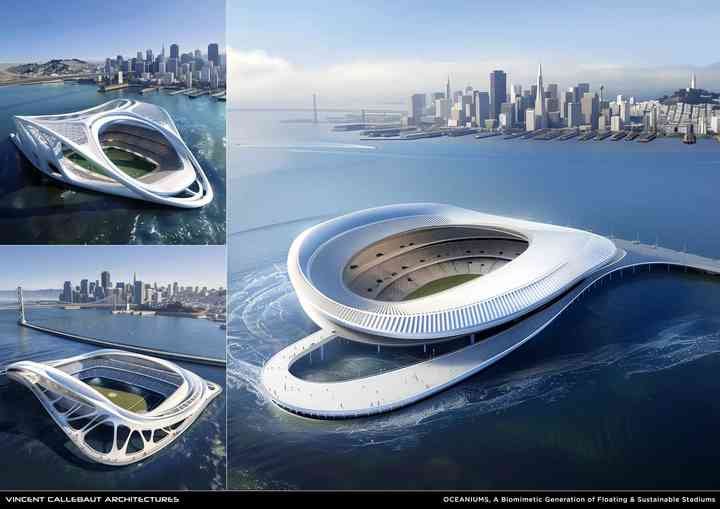
Rather than perpetually building new stadiums for each new World Cup and Olympic Games, we propose to build cultural and sports hubs intended for nomadism at sea. Half boat, half stadium, these low-carbon community hubs would navigate thanks to renewable energies by using solar radiation and the strength of the prevailing winds, as well as the cold ocean currents of Labrador and the warm Gulf Stream. In this nomadic vision of new sporting and cultural practices, it is no longer the supporters who go to obsolete stadiums but sustainable and ecological stadiums that go to the supporters.
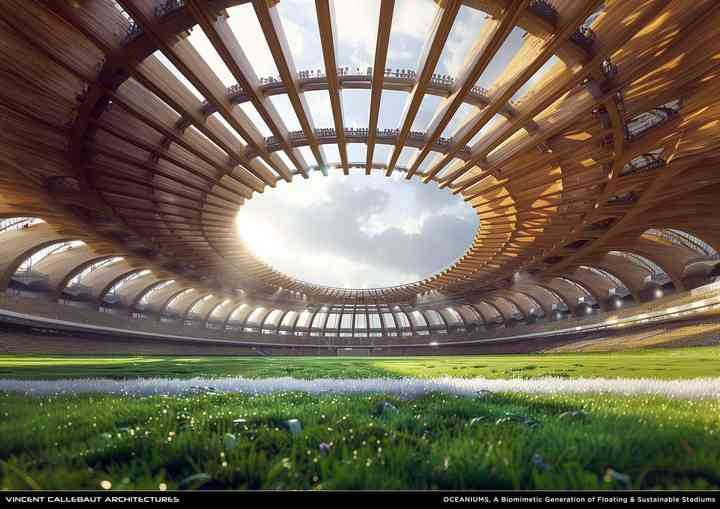
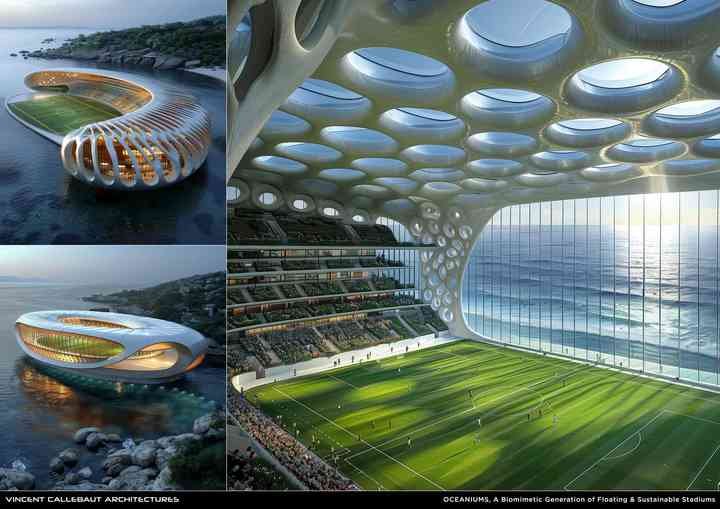
These Oceaniums, true stadiums of the oceans, would be built using only biosourced and recycled materials such as solid wood, recycled aluminum, green algae and plastic waste from the 7th continent concentrated in the five oceanic gyres. This plastic waste would become new construction materials feeding 3D printers connected to human-orchestrated artificial intelligence processors. The development of a multitude of algorithms and especially the predictive learning offered by AI and 3D printing make it an essential tool for limiting human risks on these future augmented construction sites.
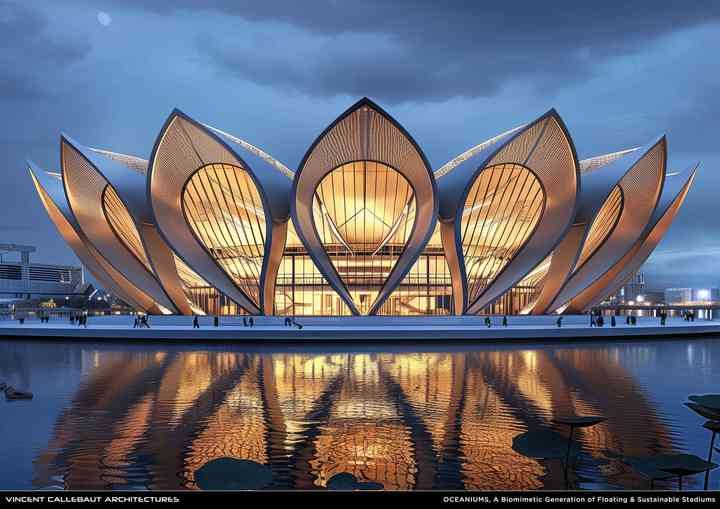
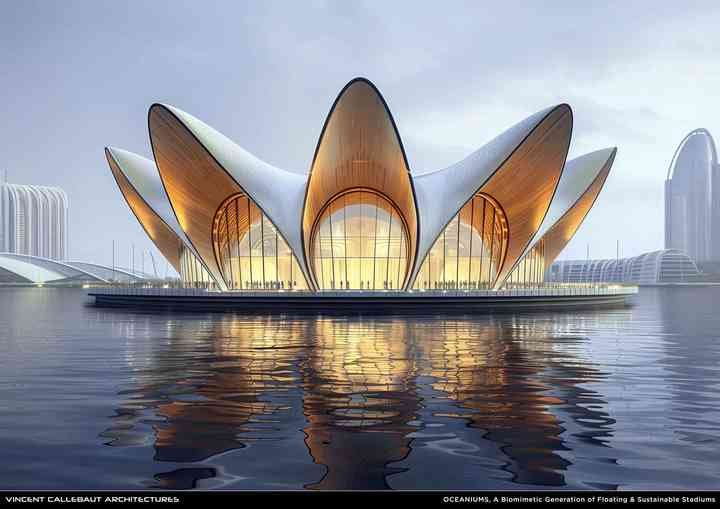
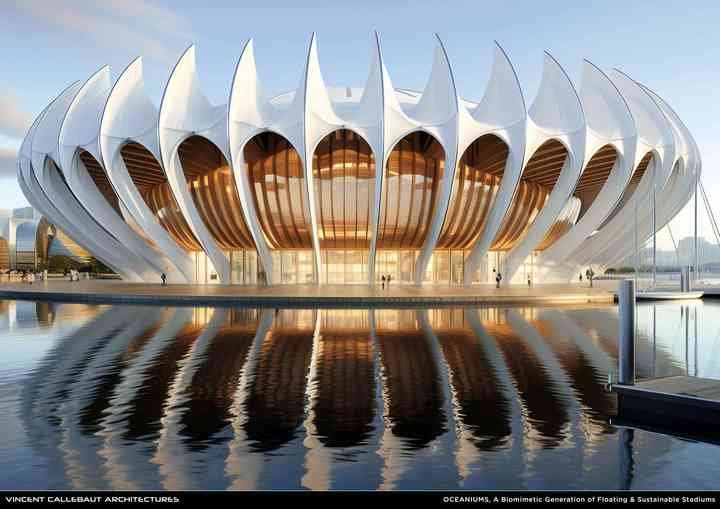
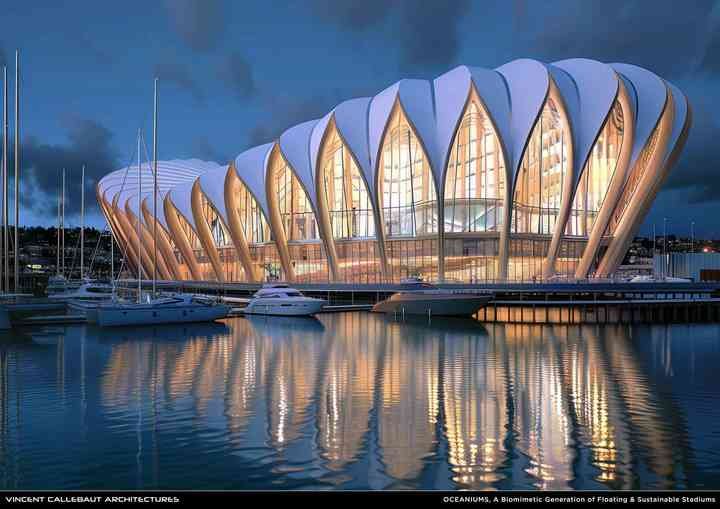
Architecturally, the organic geometries of these floating stadiums are inspired by biomorphism, their optimized structures by bionics and their ecosystem life cycle by biomimicry. Resembling coral reefs in the process of calcification, skeletons of cetaceans filtering seawater and bioluminescent organisms, they are havens of biodiversity dedicated to the flourishing of ocean flora and fauna.
During the World Cup in Qatar, our ambition is to transform the constraints of our time into an opportunity to invent a new ecology of sport based on the circular economy – which aims to be regenerative, where nothing is lost, nothing is created, everything gets recycled. A virtuous economy where waste and pollution are transformed into resources and debts into solidarity. The gradual abandonment of fossil fuels for the sole benefit of renewable energies will boost the development of ocean-energy technologies and tidal power, as well as scientific research around marine biomimicry.
Long live sustainable sport, respectful of the planet, humanity and biodiversity!
Vincent Callebaut, Lead Architect
VINCENT CALLEBAUT ARCHITECTURES
OCEANUMS, UNE NOUVELLE GENERATION BIOMIMETIQUE DE STADES FLOTTANTS ET ECOLOGIQUES
Plutôt que de construire
perpétuellement de nouveaux stades pour chaque nouvelle coupe du monde et jeux
olympiques, nous proposons de construire des hubs culturels et sportifs
destinés au nomadisme en mer. Mi-bateau, mi stade, ces pôles communautaires
bas-carbone navigueraient grâce aux énergies renouvelables en utilisant le
rayonnement solaire et la force des vents dominants, ainsi que les courants
marins froids du Labrador et chauds de Gulf Stream. Dans cette vision nomade des
nouvelles pratiques sportives et culturelles, ce ne sont plus les supporters
qui vont vers des stades obsolescents mais des stades pérennes et écologiques
qui vont vers les supporters.
Ces Oceaniums, véritables stades des océans, seraient construits uniquement en matériaux biosourcés et recyclés comme par exemples le bois massif, l’aluminium recyclé et les déchets plastiques du 7ème continent concentrés dans les cinq gyres océaniques. Ces déchets plastiques deviendraient de nouveaux matériaux de construction alimentant des imprimantes 3D connectées aux processeurs d’intelligence artificielle orchestrés par l’Homme. Le développement d’une multitude d’algorithmes et surtout l’apprentissage prédictif qu’offre l’IA et l’impression 3D en font un outil indispensable pour limiter les risques humains sur ces futurs chantiers augmentés.
Sur le plan architectural, les géométries organiques de ces stades flottants s’inspirent du biomorphisme, leurs structures optimisées de la bionique et leur cycle de vie écosystémique du biomimétisme. Aux allures de récifs coraliens en cours de calcification, à de squelettes de cétacées filtrant l’eau de mer, ou à des micro-organismes bioluminescents, ils constituent des écrins de biodiversité dédiés à l’épanouissement de la flore et de la faune océaniques.
En pleine coupe du monde au Qatar, notre ambition et de métamorphoser les contraintes de notre époque en opportunité pour inventer une nouvelle écologie du sport basée sur l’économie circulaire – qui se veut régénérative, où rien ne se perd, rien ne se crée, tout se recycle. Une économie vertueuse où les déchets et la pollution sont transformés en ressources et les dettes en solidarité. L’abandon progressif des énergies fossiles au profit unique des énergies renouvelables va dynamiser le développement des énergies maréthermiques et marémotrices, ainsi que la recherche scientifique autour du biomimétisme marin.
Vive le sport durable, respectueux de la planète, de l’humanité et de la biodiversité !
Vincent Callebaut, Lead Architect
VINCENT CALLEBAUT ARCHITECTURES
Source: Vincent Callebaut Architectures