




In recent years, Texas Parks and Wildlife Department (TPWD) archaeologists have uncovered a pit house near the Rio Grande in Far West Texas inside Big Bend Ranch State Park (BBRSP). It’s believed to be the first such site to be excavated since the 1940s, when the archaeologist J. Charles Kelley uncovered other pit houses in the La Junta village in nearby Redford. Pit houses are housing structures dug into the earth, typically used for shelter or storage. There are some variations to the uncovered pit houses in the region, but the similarities in the architecture reveal that other communities formed downstream.
David Keller, a local archeologist and historian, helped the TPWD team with the new site when he could, but he stopped once he learned about the impending construction of a border wall planned for the Big Bend region; if built, it would threaten this site. He felt that he was being called to duty, so he joined the fight against it.
“The work that Kelley did was significant, but there’s just so much more that we need to do to even begin to understand what was going on here,” Keller told AN. “For [the border wall] to be happening without oversight, it makes archeologists want to pull their hair out, because it’s like we don’t even know what’s there, and you’re going to destroy it before we even have a chance to document it.” He is now part of No Big Bend Wall (NBBW), a group of residents who are organizing against the wall. A resident of Redford, Keller helps as a landowner coordinator.
Pushing Back
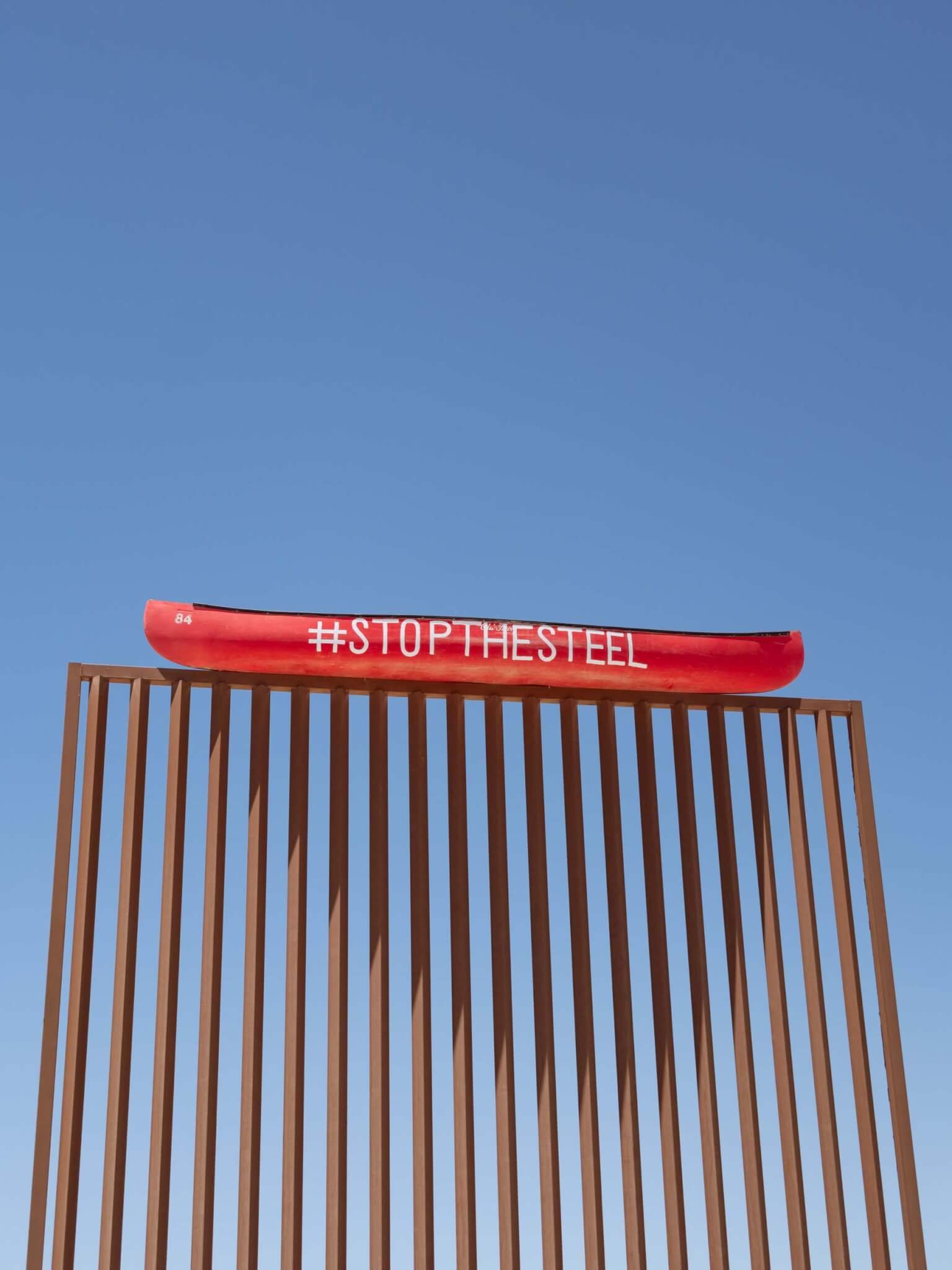
The projected 30-foot-high steel border wall is part of President Donald Trump’s 2025 Executive Order and funded by the One Big Beautiful Bill Act. It also includes detection technology, cameras, and lighting. The wall is planned to run for 150 miles along the Rio Grande in Hudspeth, Jeff Davis, and Presidio counties. Big Bend National Park (BBNP), in neighboring Brewster County, and BBRSP, which traverses Brewster and Presidio counties, are also slated for new border security infrastructure.
In March, then–Secretary of Department of Homeland Security (DHS) Kristi Noem waived 28 environmental laws that protected historic and archeological sites and resources to expedite the construction, claiming that the Big Bend Sector had a high level of illegal entry with over 89,000 crossings between 2021 through 2025. But CBP recently reported that crossings drastically reduced by 74 percent in the last fiscal year.
In the months since the Big Bend Sentinel first reported on early stages of the wall’s construction, progress has moved at an accelerated pace. DHS hasn’t released information in a timely manner, and changes happen rapidly without notice. Most details are learned through the letters sent to the affected landowners, the few statements to the media, and by monitoring public records, such as the interactive map on CBP’s website.
Local opposition has formed just as swiftly as these plans have been put into motion. In March, five regional sheriffs came together to oppose a physical border wall. They issued a statement that they felt it was not the most practical or strategic approach to border security. And in April, Texas state representative Eddie Morales shared a letter signed by the 14 county judges representing the entire Texas border that asked for more transparency and communication.
Environmental Concerns Find Traction
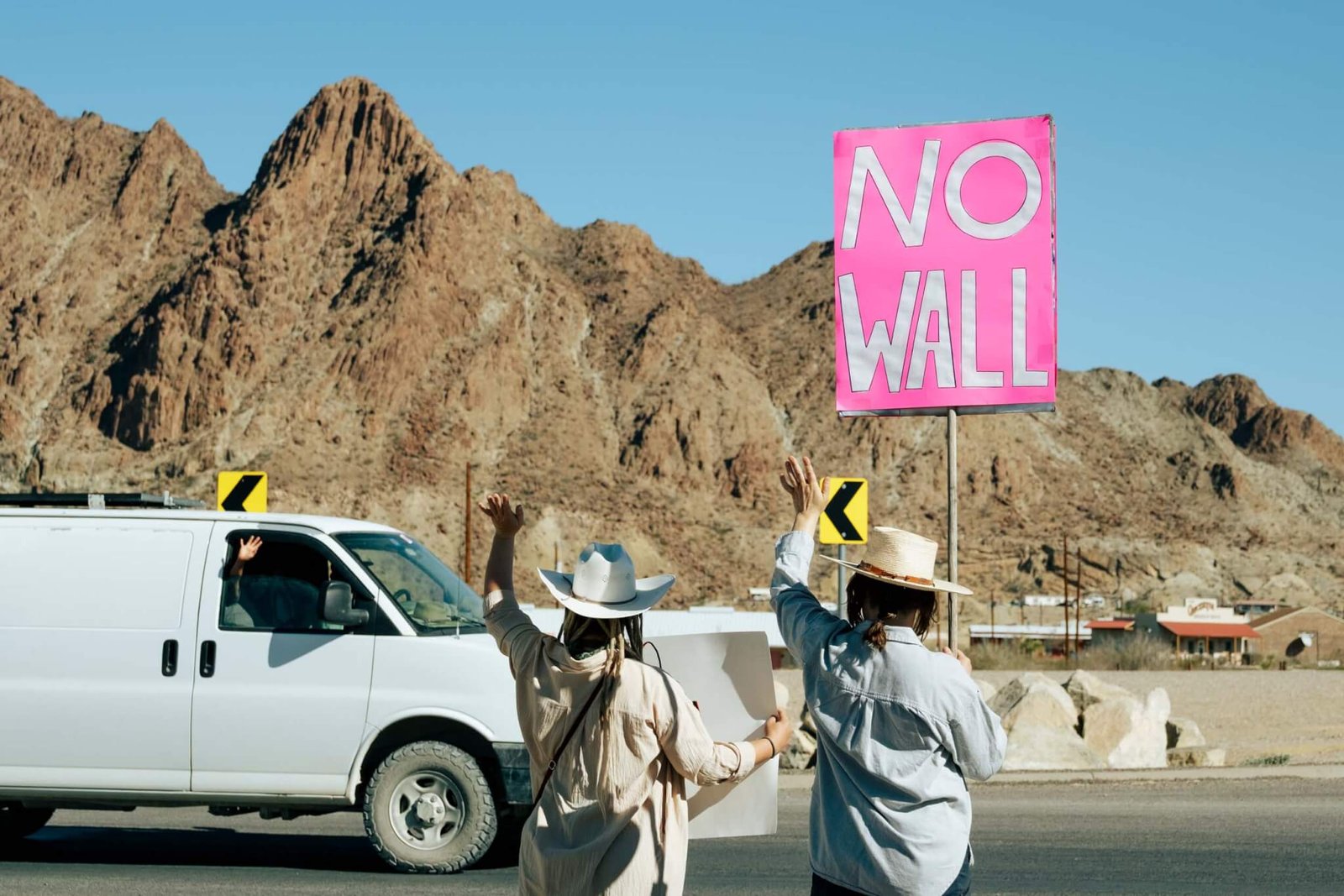
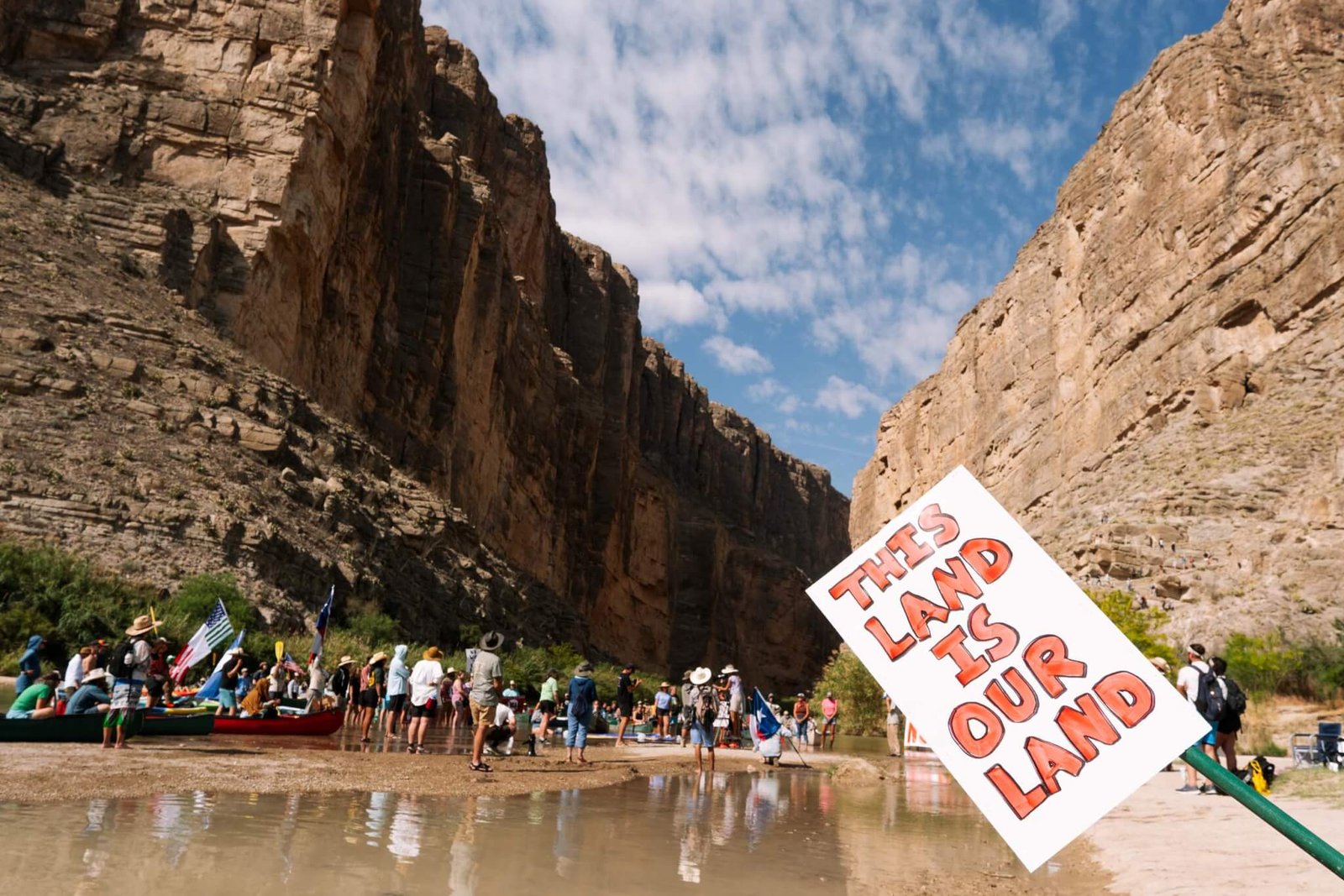
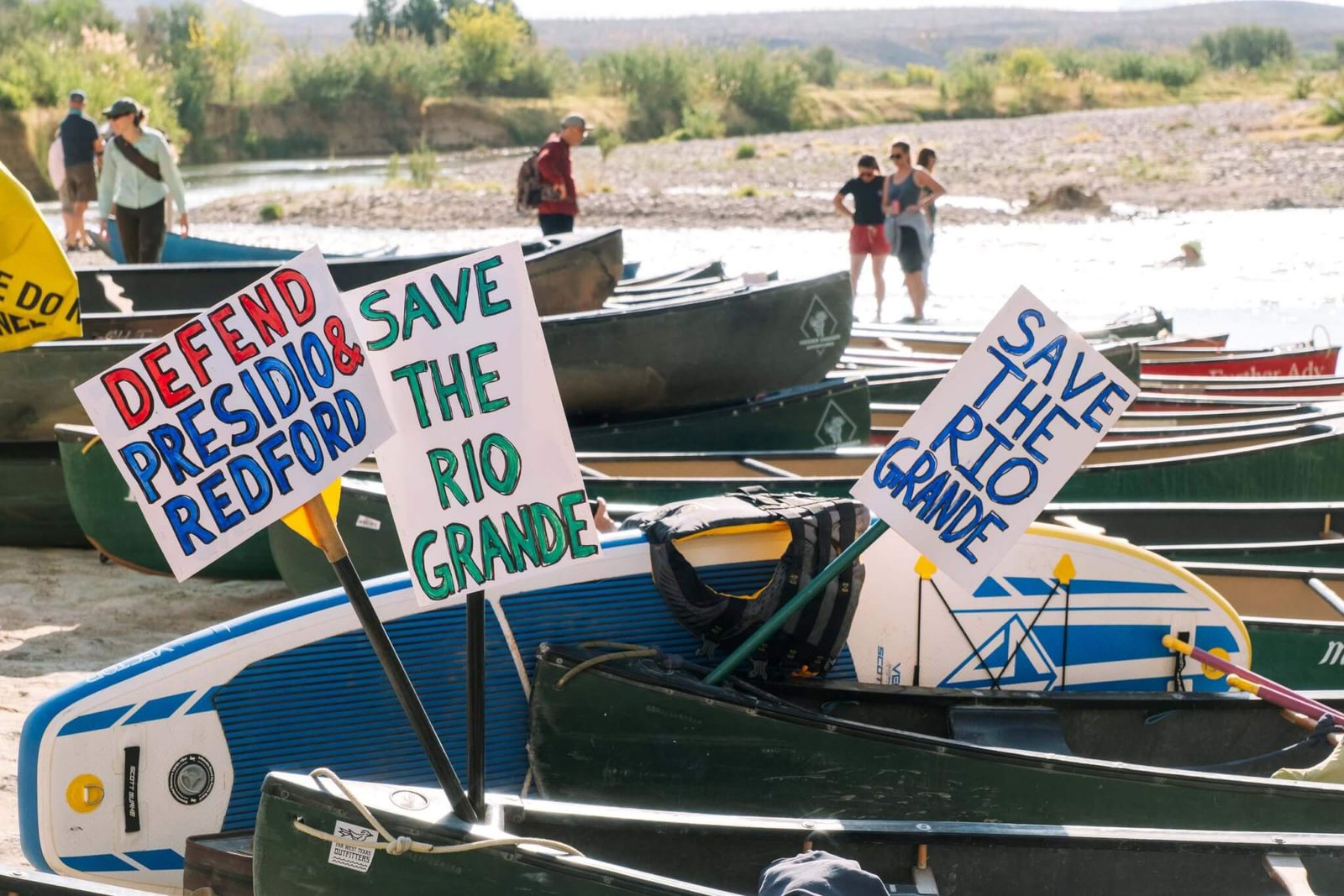
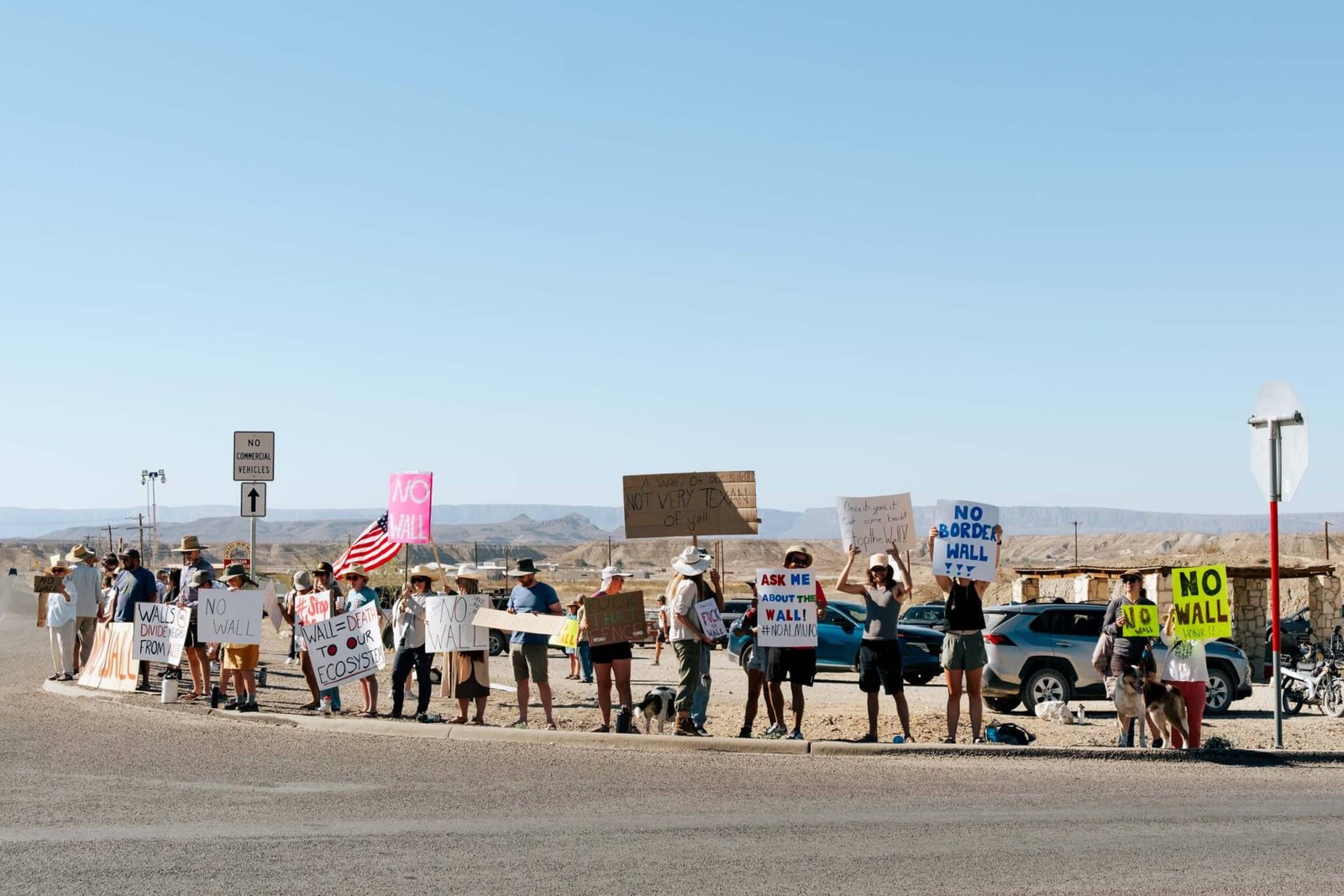
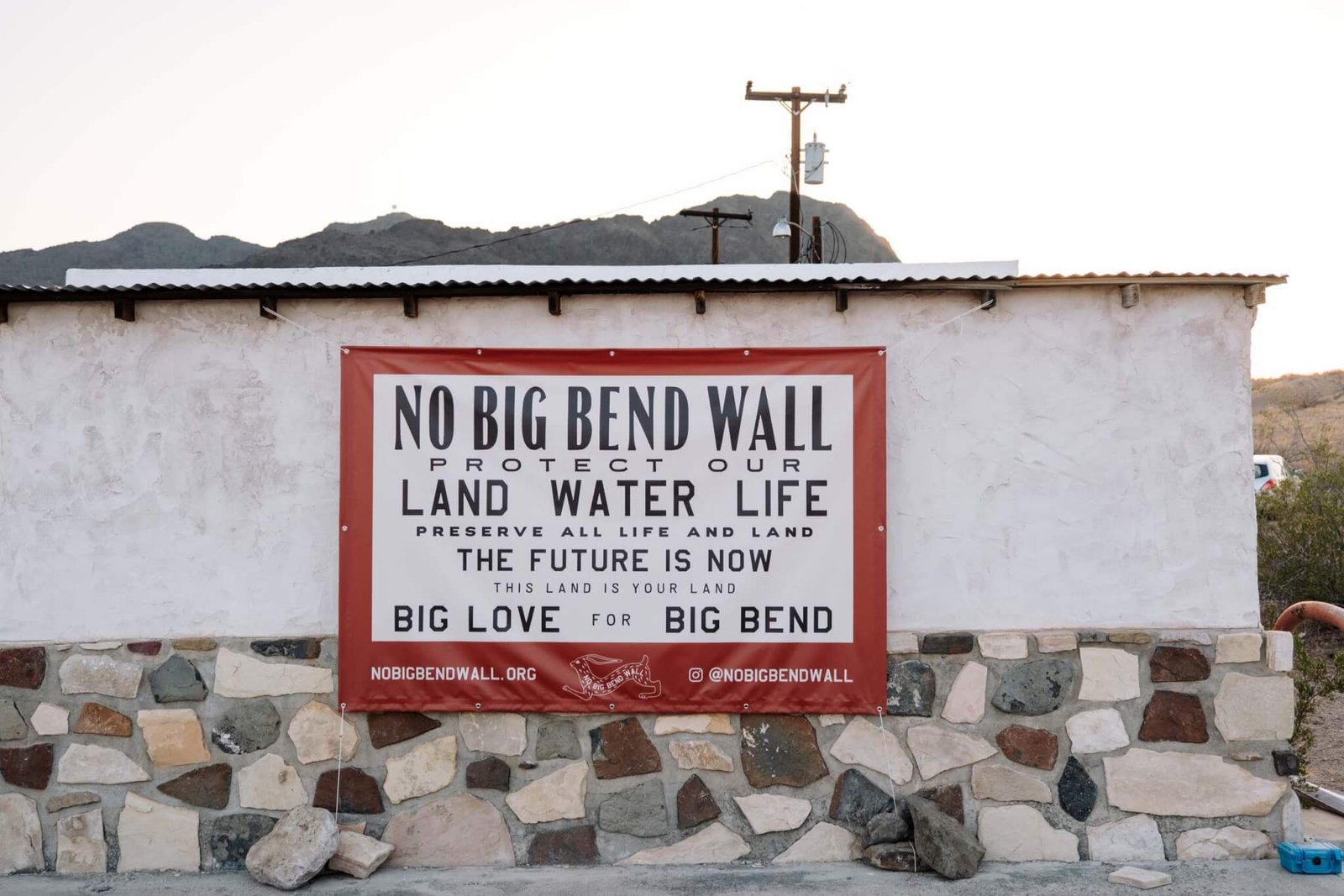
Social media has been key for NBBW in its organizing against the wall. The group’s volunteers monitor the smart wall map for updates while hosting roundtable discussions and protests to bring more awareness to the issue. They’ve hosted recurring protests at the intersection of Highway 118 and FM 170 in Terlingua, visible to everyone heading in the direction of BBNP. In early April, over 100 people gathered with signage protesting the wall in canoes and kayaks in the Santa Elena canyon for the Big Bend Big Picnic, the same day over 2,000 protesters stood at the front steps of the State Capitol in Austin.
NBBW’s concern is that a physical border wall will destroy the wildlife corridors and historical sites that define this region, harm the tourism that fuels the economy, and interrupt the Greater Big Bend International Dark Sky Reserve, which is the largest Dark Sky Certified place in the world. Previously, similar groups coalesced to protest the expansion of oil and gas infrastructure like the Trans-Pecos Pipeline. The region’s pristine environment is also what attracted the artist Donald Judd to relocate to Marfa. He later campaigned against environmental hazards like a proposed nuclear waste repository near Sierra Blanca, the facility wasn’t built.
NBBW’s conservation-based organizing has been echoed by other authorities concerned about the border’s environmental impact. In June, the city of Presidio, which serves as the northwestern gateway to BBRSP, filed a lawsuit against the Trump administration for its plans to build the 30-foot wall atop the town’s levee system without obtaining proper permissions. City officials argued the move would leave the community vulnerable to deadly flood risks. The lawsuit asks for the federal judge to temporarily block construction on the wall.
At one point, the DHS’s plans for BBNP included a physical wall, but then the map was removed from the CBP site. Coincidentally, this happened soon after local pushback. Currently, the Smart Wall Map shows that the park will only have detection technology and patrol roads, but these still will require additional infrastructure in a remote part of the park. A CBP spokesperson told Marfa Public Radio that the recently awarded federal contract, valued at $1.7 billion, will be used to construct a “vehicle barrier system,” not a physical wall. DHS Secretary Markwayne Mullin recently waived more environmental regulations, and the Austin American-Statesman reported that there will be 17 miles of four-foot tall metal barriers installed inside the park to prevent off road vehicles from crossing over the border.
Marring the Landscape
Ronald Rael, an architect, artist, and educator whose work often engages the U.S.–Mexico border, feels that the wall will cause ecological and cultural devastation.
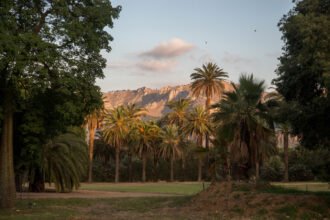
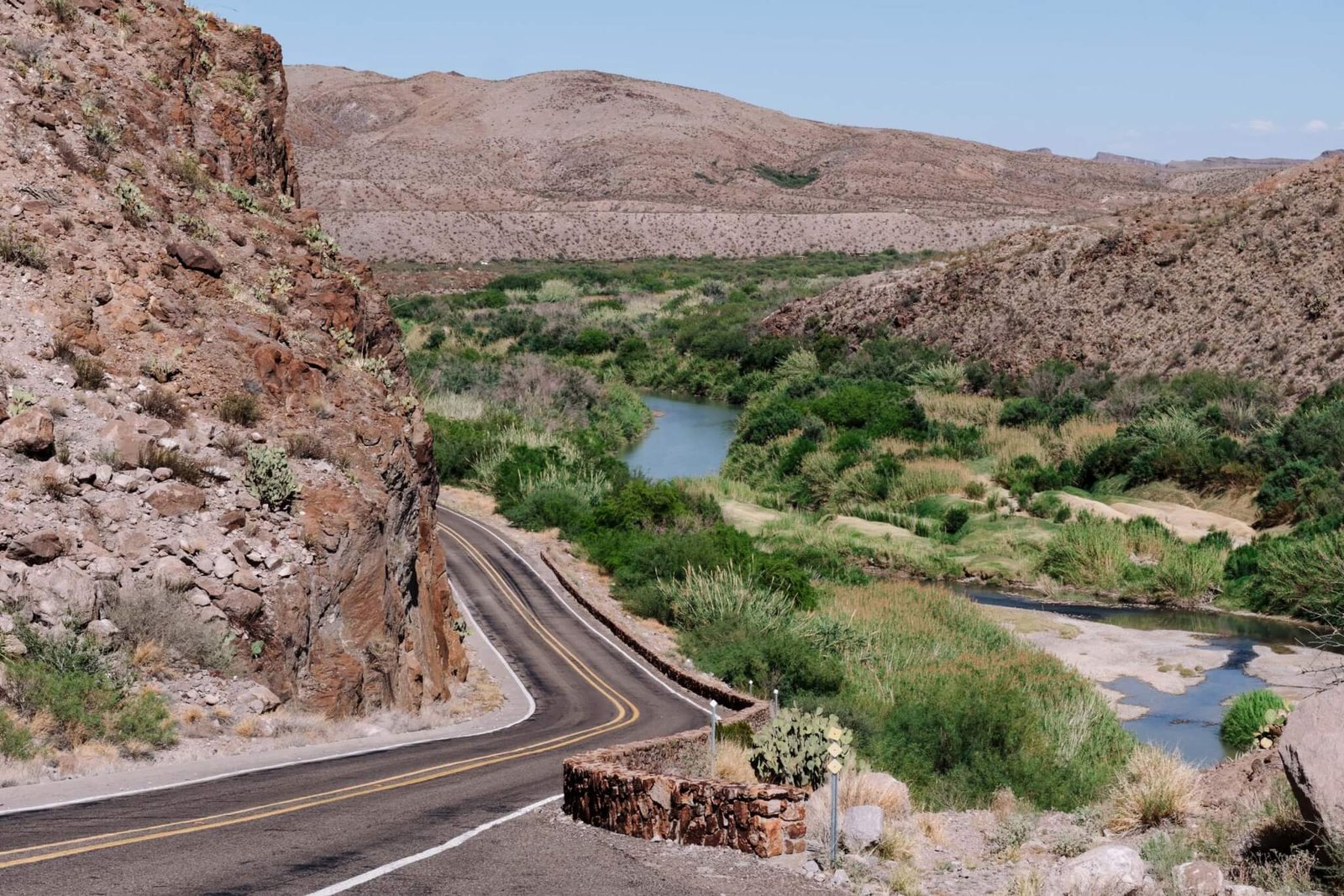
“That whole West Texas region along the river is some of the oldest continuously occupied part of North America, so there’s bound to be a tremendous archeological heritage and cultural heritage,” Rael said. “It’s also incredibly biodiverse. It’s one of the most beautiful landscapes, one of the most pristine landscapes, and it’s so difficult for me to understand how the bulldozing and explosions and scarring makes America great in any way. It just seems like marring the landscape, marring the United States.”
A Love of Land
Bob Krumenaker, chair of Keep Big Bend Wild and former BBNP superintendent, joined six other former superintendents in authoring two letters to Mullin earlier this month, urging him to reject federal laws that would allow for construction inside the park. Their most recent letter states that they feel that there are ways to enhance border security “without destroying what makes it one of America’s most treasured landscapes.” They feel the natural barriers, such as the rugged terrain and expansive distance to the highways, contribute to the low number of crossings in the Big Bend Sector.
In his over 40 years of NPS service, Krumenaker said he has never seen a coalition built as quickly and as broadly as the current fight against the border wall in this region. It has brought together ranchers, river guides, artists, and public officials, regardless of political affiliation.
“I think part of what is different… is that there is just a tremendous love of land that unites people in West Texas,” said Krumenaker. “I don’t know if it’s unique, but it certainly is coming to the forefront here in ways that neither you nor I have ever seen anywhere else.”
NBBW and others continue to raise awareness about the problems of further border hardening in a remote region with ecological and cultural significance. The situation continues to develop. For local updates on border-wall construction, follow Marfa Public Radio or the Big Bend Sentinel.
Sarah Vasquez is a writer and photographer based in Marfa, Texas. Her writing has appeared in Texas Highways, Glasstire, and Texas Observer, and her photography has appeared in NBC News, New York Times, and Texas Tribune. She was previously a reporter for the Big Bend Sentinel newspaper and an intern at Marfa Public Radio.